General News
Ayariga Backs Polluter-Pays Principle as Accra Waste Tour Exposes System Gaps


Minister for Local Government, Chieftaincy and Religious Affairs, Mahama Ayariga, has called for a comprehensive overhaul of Ghana’s waste management system, warning that significant gaps exist across the collection, transportation, treatment and final disposal of waste.
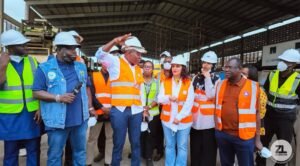

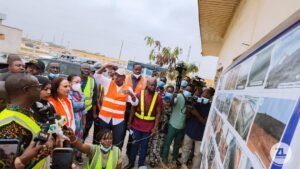
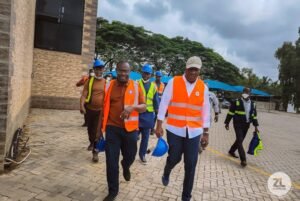
The Minister made the call on Tuesday, September 1, 2026, after touring key waste management facilities in the Greater Accra Region to assess challenges within the sector and explore opportunities for investment in sanitation infrastructure.
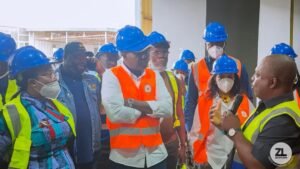
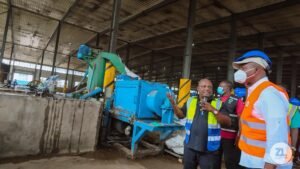
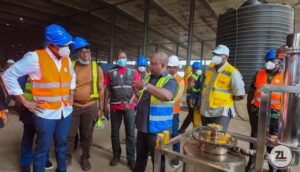
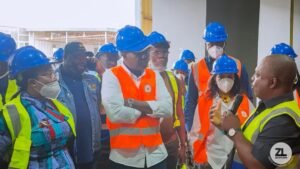
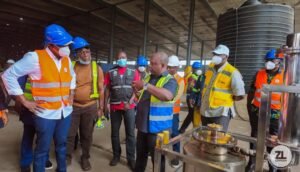
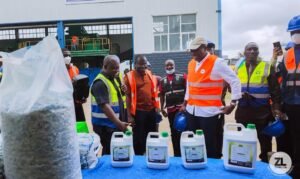
The tour covered the Accra Compost and Recycling Plant (ACARP), the Achimota Waste Transfer Station, the Jamestown Waste Transfer Station, all subsidiaries of the Jospong Group of Companies (JGC), as well as the Kpone landfill site.
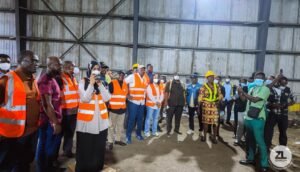

The engagement also included officials from the Arab Bank for Economic Development in Africa (BADEA) and formed part of Mr Ayariga’s early engagements with stakeholders following his appointment as Minister.
He was accompanied by the Mayor of Accra, Michael Allotey, officials from the Ministry, representatives of the Accra Metropolitan Assembly (AMA) and other dignitaries.
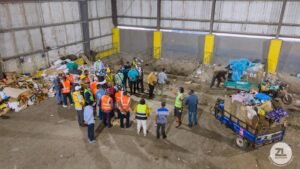

Speaking after the tour, Mr Ayariga said the situation observed in Accra demonstrated the need to review Ghana’s entire waste management chain.
“There are clearly a lot of gaps in terms of the systems that we have for collecting and managing waste,” he said.
According to him, the government must first address challenges at the point where waste is generated, particularly households.
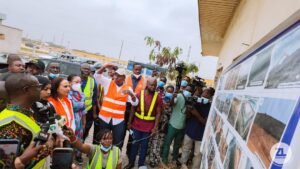
He noted that most households do not properly separate waste before disposal, making subsequent processes such as recycling and composting more difficult.
Mr Ayariga said the government would work towards establishing systems that encourage residents to separate waste at source.
He said households should be provided with appropriate bins and receptacles to enable different forms of waste to be sorted before collection.
“From the homes where the waste is generated, we don’t separate it. We must put in place a system for separating it right from the homes,” he said.
He added that proper receptacles would also make it easier to collect and transport waste efficiently.
The Minister further identified the transportation of waste as another major area requiring reform.
He said transfer stations should be strategically located closer to communities to reduce the distances waste trucks travel.
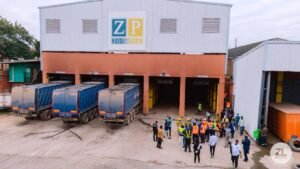
According to him, treatment and composting facilities should also be positioned closer to major urban centres.
“We must overhaul the system of transporting the waste to the transfer stations. We must bring the transfer stations closer to our communities,” he said.
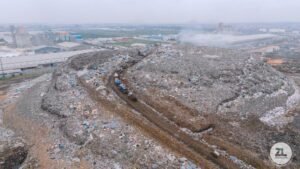
He added that treatment and composting centres must also be brought closer to cities.
Mr Ayariga stressed that Ghana already possesses much of the technology and infrastructure required to improve waste management, but said organisational challenges remain a major obstacle.
“The infrastructure, the technology to do all this is available. A lot of it is organisational,” he noted.
The Minister said the facility tour was also intended to provide government with information needed to mobilise investment into the waste management sector.
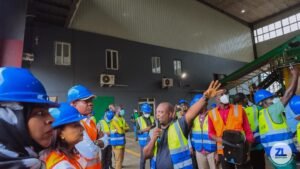
He disclosed that the government was exploring possible financing support from BADEA to strengthen infrastructure across the waste management value chain.
The tour was undertaken alongside BADEA’s Vice President for Operations and Secretary General, Dr Fatima Elsheikh.
Mr Ayariga said the government was interested in mobilising resources for all stages of waste management, including collection, transportation, treatment, recycling and final disposal.
“This will serve as the basis for planning and seeking investment,” he said.

Mr Ayariga said the challenges observed in Accra were not unique to the capital but likely reflected conditions in other major cities across Ghana.
He indicated that similar infrastructure and organisational challenges could be found in cities such as Kumasi and Takoradi.
“What we’ve seen here, I believe, is just a microcosm of the infrastructure across the country,” he said.
A key proposal raised by the Minister was the implementation of the polluter-pays principle, under which individuals, households and properties that generate waste would contribute towards the cost of managing it.
Mr Ayariga argued that those who generate waste should take responsibility for the cost associated with its collection and management.
“I believe in the principle of the polluter pays. If you pollute, you pay for the management of the pollution,” he said.
He stressed that every property should contribute a fair share towards waste management.
“Every property must pay its fair share of the cost of managing the waste,” he added.
However, the Minister assured residents that government would simultaneously seek to make waste management more efficient and reduce the financial burden on households.
Mr Ayariga attributed the relatively high cost of waste collection partly to inefficiencies in the current system.
He explained that long distances travelled by waste trucks, coupled with high operational expenses for private waste collectors, ultimately increase the fees paid by households.
He said improved organisation of the system could potentially reduce household waste management costs significantly.
“If we organise it well, we could reduce the cost per household of waste management by even 50 per cent,” he said.
According to him, the high cost currently experienced by households is partly the result of an inefficiently managed system.
The Minister also pledged that government would ensure accountability and transparency in the management of resources mobilised for the waste sector.
He assured residents that they would be able to see how funds contributed towards waste management are utilised.
“We promise to be accountable. We promise to be efficient. We promise to be transparent, so that you see exactly how your resources are being used,” he said.
Dr Fatima Elsheikh of BADEA expressed satisfaction with the government’s determination to improve waste management in Ghana.
She said waste should not be regarded solely as an environmental problem, arguing that the sector could generate employment, improve livelihoods and contribute to economic development.
“Waste is not about actual waste. It’s actually about the employment opportunities that it gives people a livelihood,” she said.
Dr Elsheikh also noted that improving sanitation would enhance Accra’s attractiveness as a major business and economic centre on the African continent.
“Accra is not the capital of Ghana only. It’s one of the hubs of Africa,” she said.
She subsequently expressed BADEA’s willingness to support Ghana’s efforts to develop a more sustainable waste management system.
“We’ll be happy to contribute as a development bank,” she said.

The bank, she added, was prepared to work with the Ghanaian government as it seeks to address the country’s waste management challenges and build a more sustainable sanitation system.