Entertainment
Build Hospitals, Not Just Chapels – Leila Djansi Challenges Wealthy African Churches for a strong


Ghanaian-American filmmaker Leila Jewel Djansi has challenged wealthy African churches to reconsider how they use their financial resources, arguing that more investment should go into hospitals, schools, medical research and rehabilitation centres.
In a lengthy Facebook post, Djansi questioned why many Africans turn to prayer, religious donations and so-called seed offerings when faced with serious health conditions, yet travel outside the continent when they require advanced medical treatment.
She used the late Nigerian televangelist TB Joshua as an example, noting that he was reportedly flown to Turkey by air ambulance after suffering a stroke, even as some stroke patients were seeking healing at his church.
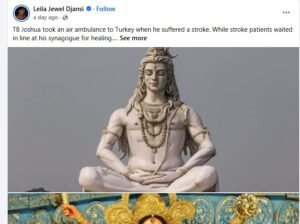

Djansi said she had no problem with prayer or religious practices and acknowledged that such activities could help Christians maintain a strong prayer life.
However, she argued that faith should not replace the development of strong healthcare systems.
According to her, the situation surrounding stroke treatment in Ghana illustrates the problem. She referred to a dedicated stroke unit with 15 beds, clarifying that the facility had 15 beds rather than 24, and recalled her sister’s experience there.
She suggested that while Africans devote enormous amounts of time to prayer, there is comparatively less attention to developing the medical infrastructure needed to treat the conditions they pray about.
Djansi then turned her attention to cancer treatment and the number of Africans who travel to countries such as India for specialised medical care.
She pointed out the apparent contradiction in the practice, noting that some Christians who strongly reject other religions still willingly travel to countries where those religions are practised to seek life-saving medical treatment.
She mentioned religious figures and symbols associated with Hinduism and Buddhism, including Shiva, Kali, Krishna and Buddha, and asked why people who may regard those faiths as wrong would nevertheless place their lives in the hands of medical institutions established in such societies.
Her argument, she said, was not simply about ordinary hospitals.
She highlighted research hospitals, medical schools, cancer treatment centres, laboratories and specialist facilities capable of performing complex procedures, including heart, liver and bone-marrow transplants.
Djansi questioned why African societies have struggled to establish comparable institutions on a scale that can significantly reduce the need for patients to travel abroad.
“How did people whose theology we condemn build institutions whose medicine we trust with our lives?” she asked.
Drawing comparisons with the United States, Djansi noted that churches, religious orders and other faith-based organisations have historically played roles in establishing hospitals and schools, while governments provided regulation and oversight.
She therefore questioned why African churches with substantial financial resources could not pursue similar projects.
According to her, wealthy churches could invest in hospitals, train doctors and nurses, establish laboratories, support medical research and create rehabilitation facilities for people recovering from strokes and other debilitating conditions.
She argued that such projects would create a legacy that could continue benefiting communities long after the founders and current leaders of the churches are gone.
Djansi questioned the emphasis some churches place on constructing huge chapels, hotels and Bible schools when other pressing social needs remain.
She argued that religious institutions could consider directing some of their resources towards children’s cancer research, healthcare infrastructure and other projects that directly improve people’s lives.
Despite her criticism, Djansi made it clear that she was not arguing against religious institutions or prayer.
She praised the contributions of churches such as the Catholic and Seventh-day Adventist denominations to education and healthcare.
She recalled visiting an Adventist hospital in Simi Valley while scouting a location for a film and noticing a chapel inside the facility.
For her, the presence of the chapel represented an important balance between spirituality and medical care.
She also recalled the Catholic chapel at the Korle Bu Teaching Hospital, where a priest would reportedly visit the wards around 4 p.m. to pray with patients.
Djansi said she had personally shed many tears in that chapel, emphasising that faith and modern healthcare do not necessarily have to be competing ideas.
Djansi stressed that she was not calling on Christians to stop praying or giving money to their churches.
Instead, she urged believers to demand that their contributions produce tangible and lasting benefits for society.
She argued that money described as a seed could be channelled into building hospitals, laboratories and schools, training healthcare professionals, supporting medical research and establishing rehabilitation centres for stroke survivors.
In her view, such institutions would continue serving communities long after the individuals who collected the donations were no longer around.
She also suggested that healthcare, education and social welfare could themselves become powerful expressions of Christian values and service to humanity.
Djansi referenced Matthew 25:35–40 in making the case that caring for people in need can be considered an important part of Christian responsibility.
She also referred to Acts 17:24 while questioning the continued emphasis on massive religious buildings.
Djansi also cited figures concerning medical tourism in India, stating that more than 644,000 foreign visitors travelled there for medical purposes in 2024.
She further made a claim about the reported $2.3 million cost of cancer treatment for a person she referred to as “Aba” in the United States, saying the treatment was covered through insurance associated with a faith-based Baptist corporation.
Using humour and sarcasm, she questioned the logic of asking people to contribute “cancer seed” to religious leaders while depending on expensive medical systems developed and funded elsewhere when serious illness strikes.
She also joked that the medical professionals caring for patients abroad may themselves come from backgrounds or communities that some conservative Christians disapprove of.
Djansi ended her post with a humorous reference to Jesus and the biblical trumpet, before returning to the central message of her argument.
Her final question was aimed at Africans who travel abroad for specialised healthcare: what does it say about African societies when they trust the expertise of doctors and medical institutions abroad but have not invested enough in building similar systems at home?
“That Indian Dr. treating your dad? That’s his god,” she wrote, using the statement to reinforce her broader argument about the relationship between religious beliefs, healthcare investment and the practical institutions people rely on when their lives are at stake.