From his early days as a seaman to leading the Carousel 7, transforming traditional Osode music and becoming one of Ghana’s celebrated highlife musicians, the remarkable journey of Charles Kofi Amankwaa Mann.
Long before contemporary Ghanaian musicians began filling international arenas, C.K. Mann had already established himself as a major name in Ghana’s entertainment industry.
His music was popular during a period when live bands dominated the country’s nightlife and recorded songs travelled through radio stations, vinyl records and cassette tapes.
He built a career around highlife, drawing inspiration from Ghanaian musical traditions while incorporating modern instruments and arrangements.
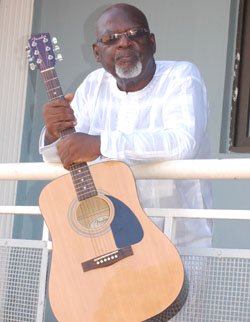
His influence extended beyond singing. He was a guitarist, bandleader, composer and producer who helped introduce a wider audience to Osode, the traditional music associated with Ghana’s coastal fishing communities.
Although many older Ghanaians remember his songs, younger listeners may not fully appreciate the story behind the man who became known as the King of Highlife.
His real name, birthplace and early beginnings
C.K. Mann was born Charles Kofi Amankwaa Mann in 1936 in Cape Coast, in Ghana’s Central Region.
He grew up in a country where music was closely connected to community life, traditional celebrations and entertainment.
Ghana’s highlife scene was developing through the work of dance bands, guitar bands and musicians who combined local rhythms with influences from abroad.
Mann would eventually become one of the musicians who helped carry the genre into a new era.
Although detailed accounts of every aspect of his childhood are limited, his later oral-history interview at the Smithsonian Institution provides a valuable record of his recollections about growing up in Ghana, learning the guitar, performing and forming musical groups.
Before fame, he worked as a seaman
One interesting aspect of Mann’s story is that music was not his only early occupation.
Before becoming a recognised highlife musician, he worked briefly as a seaman.
He later joined the Kakaiku musical group, founded by Moses Kweku Oppong.
The experience introduced him to the professional music scene and allowed him to develop his skills as a guitarist.
Mann’s journey illustrates how musicians of his generation often entered the industry through practical experience, apprenticeship and participation in established bands rather than through formal music-business systems.
His time with Kakaiku’s band
Mann became a member of Moses Kweku Oppong’s Kakaiku band, a guitar-band group that was part of Ghana’s musical landscape in the 1960s.
The guitar-band tradition differed from the larger dance bands that often featured extensive brass sections.
Guitar bands placed considerable emphasis on guitars, vocals and percussion, creating a sound that could be performed in a variety of social settings.
His time with Kakaiku helped him become familiar with the demands of band performance and the Ghanaian music industry.
It also formed an important early chapter in his development as a musician.
Leading Ocean Strings
After his time with Kakaiku, Mann joined Ocean Strings, a band he eventually led until 1965.
This was a significant stage in his career because it gave him leadership experience before he became associated with the Carousel 7.
When Ocean Strings disbanded, an opportunity emerged in Takoradi.
The owner of the Princess Cinema invited Mann to lead a newly formed band that would perform at the Princess nightclub.
That group became known as the Carousel 7.
The Carousel 7: The band that changed his career
The formation of the Carousel 7 marked a turning point in Mann’s career.
Based in Takoradi, the group became the platform through which he developed his own musical identity.
He was no longer simply a guitarist working with other musicians. He was leading a band and developing a sound that would eventually distinguish him from many of his contemporaries.
Mann combined highlife with elements of traditional music, particularly the rhythms of Osode.
His work with the Carousel 7 helped establish him as one of the leading highlife musicians of the period.
The band also became an important part of the musical life of Ghana’s Western Region, demonstrating that influential highlife music was not produced exclusively in Accra.
The 1969 breakthrough: “Edina Benya”
In 1969, Mann achieved a breakthrough with the release of “Edina Benya.”
The song brought him to wider prominence and helped establish his reputation as a highlife star.
It was an important moment for both Mann and the Carousel 7 because it demonstrated that their music could attract a much broader audience.
The success of the recording also strengthened Mann’s position as a bandleader and songwriter.
From that point, his career became increasingly associated with the development of a distinctive highlife sound rooted in Ghanaian musical traditions.
How he transformed Osode into popular highlife
One of Mann’s most significant contributions was his modernisation of Osode, a traditional musical form associated with Ghanaian fishermen.
Osode was connected to the recreational and cultural life of fishing communities.
Mann recognised that the tradition had a distinctive rhythm and vocal character that could appeal to audiences beyond those communities.
He incorporated Western musical instruments and modern arrangements while retaining important elements of the traditional sound.
This approach helped bring Osode into the mainstream highlife scene.
His achievement was not simply a matter of adding instruments to traditional music. It involved adapting a culturally rooted musical form for a wider audience without abandoning its identity.
The result became one of the defining characteristics of his work.
The sound that made C.K. Mann different
Mann’s music was recognised for its use of guitars, rhythms and arrangements that blended highlife with traditional influences.
Music writer Adam Greenberg, in his AllMusic biography, describes Mann’s Carousel Seven sound as combining the Osode beat with solo guitar.
The result was a distinctive style that became popular along Ghana’s western coast.
Mann’s music also incorporated influences from other musical traditions, including salsa and Afrobeat.
His willingness to experiment helped demonstrate that highlife could evolve while maintaining a recognisably Ghanaian identity.
Another important chapter in Mann’s career involved Paapa Yankson, who later became a celebrated highlife musician in his own right.
Mann reportedly encouraged the owner of the Carousel 7, Anis Mubarak, to sign Yankson to the group.
This connection is significant because it illustrates how established bands served as important spaces for musicians to develop their talents.
The history of Ghanaian music is filled with musicians who learned, performed and gained experience within bands before pursuing individual careers.
Mann’s role in bringing Yankson into the group forms part of that wider history.
The albums that helped establish his reputation
Mann’s success was not limited to individual singles.
He also released albums that became part of Ghana’s highlife catalogue.
Among the releases associated with his career are:
Party Time with “Ceekay” (1973)
This album is one of the important releases associated with Mann and the Carousel 7.
It represents the period when his Osode-influenced highlife sound was attracting significant attention.
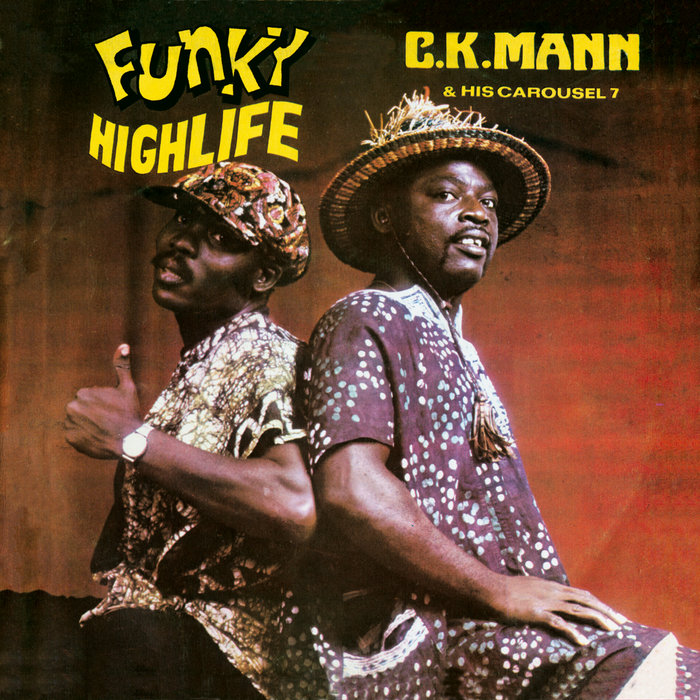
Funky Highlife (1975)
The title reflects the willingness of Mann and his musical collaborators to explore arrangements and influences beyond conventional highlife.
With Love from C.K. (1976)
Another release associated with his productive period during the 1970s.
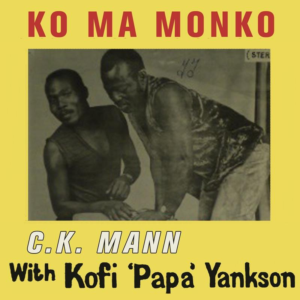
Ko Ma Monko
This is among the releases associated with his discography.
Salsa Con Gana
The title reflects his interest in combining Ghanaian musical traditions with other influences.
Wope Nye Ho (2013)
This album was reported as his final album, produced by West Gold Music Studio in Takoradi and released in 2013.
The releases demonstrate that Mann’s career extended well beyond the success of “Edina Benya.”
C.K. Mann’s songs: The music many Ghanaians should rediscover
For people who want to revisit Mann’s music, his catalogue offers a useful starting point.
Some of the songs associated with his career include:
Edina Benya
Adwoa Yankey
Asafo Beesuon
Obaa Yaa Aye Me Bone
Kolomashie
Dofo Bi Akyerew Me
Ankwasema Dede
Okwan Tsentsen Awar
Aboa Akonkoran
Beebi A Odo Wo
Tsie M’afotusem
Ebusua Ape Adze Aye Me
Yebeyi Wo Aye
Do Me Ma Mondo Wo Bi
Mber Papa
Funky Hi-Life
Chechekule
These titles are drawn from published discography and music-history listings. Spellings may vary between releases and online catalogues, particularly where Ghanaian-language titles have been transcribed differently.
The list is not intended to represent every recording he made. Mann’s career extended over several decades, and his complete catalogue is much larger than a short selection of songs.
“Adwoa Yankey” and the lasting appeal of his music
“Adwoa Yankey” is among the recordings associated with Mann’s musical career.
Songs such as this help illustrate the storytelling tradition that has long been part of Ghanaian highlife.
Highlife musicians often drew on familiar names, relationships and social experiences to create songs that audiences could recognise and discuss.
This connection between music and ordinary life was an important part of the genre’s appeal.
Mann’s work belonged to a tradition in which the musician was not only an entertainer but also an observer of society.
A musician who wanted Ghanaian music to reach wider audiences
Mann’s career took him beyond Ghana.
He performed internationally, including in Britain and the United States.
His oral-history interview preserved by the Smithsonian Institution offers a particularly valuable perspective on his experiences abroad.
In the interview, he discussed his migration to Canada and then the United States, the places where he performed, and his views about the promotion of African music.
He expressed concern about the limited promotion of Ghanaian and African musical traditions in some overseas environments.
He also spoke about the need to preserve indigenous culture, including music and dress.
These recollections reveal a musician who was concerned not only with his own career but also with the visibility of African cultural expression.
His experience of the music industry
The Smithsonian oral-history record also notes that Mann spoke about being exploited on several occasions.
The available summary does not provide enough detail to reconstruct every incident or identify all the people involved.
Nevertheless, the subject is significant in the broader history of African musicians working in an industry where recording agreements, distribution and control of musical works could be complicated.
His experiences provide a reason to examine the business side of Ghana’s older music industry, not just the songs and performances.
For many musicians of his generation, sustaining a career involved navigating both the creative and commercial sides of the profession.
Mann’s reputation eventually earned him recognition as the King of Highlife.
The Smithsonian’s oral-history record notes that he discussed being crowned in Ghana in 1988.
The title reflected his standing in the music scene and the importance audiences attached to his contribution.
It was a recognition that came after years of performing, recording and developing his own musical style.
His story is a reminder that the status of a musician is often built over many years rather than through a single hit.
Mann’s life was not limited to the recording studio and stage.
The Smithsonian interview summary records that he spoke about his house, nightclub and children in Ghana.
These details provide a glimpse of his life beyond music, although the available summary does not give enough information to make detailed claims about his family relationships or private affairs.
He was also associated with Anaji, a suburb of Takoradi, where the street on which his house was located was renamed C.K. Mann Avenue.
The naming of the street is a lasting public reminder of his connection to the city and its musical history.
The awards and honours he received
Mann’s contribution to Ghanaian music was recognised through several awards and honours.
One of the most notable was the Grand Medal of Ghana, which he received in 2006 during the national honours ceremony.
The honour was presented by President John Agyekum Kufuor in recognition of his contribution to Ghanaian music.
It was a significant moment in his career because it represented national recognition beyond the entertainment industry.
His achievements also included recognition from organisations associated with Ghana’s music and entertainment sectors.
Although Mann’s influence on highlife remained significant, his public performances became less frequent as he grew older.
A 2018 report by Graphic Online noted that by 2015, he had not performed publicly for several years, with old age and ill health cited in accounts of his later period.
His final album, Wope Nye Ho, had been released in 2013.
His later years therefore marked a gradual withdrawal from the active performance scene after a career that had lasted more than four decades.
C.K. Mann’s death
C.K. Mann died on March 20, 2018, at the Ghana Ports and Harbours Authority Hospital in Takoradi.
He was reported to have been 81 years old.
His death marked the end of a remarkable life in music, but his recordings and influence remained part of Ghana’s cultural heritage.
For fans who had followed his career from the days of the Carousel 7, his passing represented the loss of a musician whose work had accompanied several generations.
Why C.K. Mann’s legacy matters
C.K. Mann’s contribution to Ghanaian music can be understood in several ways.
He helped popularise Osode. By adapting the traditional music of fishing communities for a wider audience, he helped bring a distinctive Ghanaian musical form into popular highlife.
He developed a recognisable band sound. His work with the Carousel 7 gave him a platform to experiment with guitars, rhythms and arrangements.
He contributed to highlife’s evolution. His music demonstrated how the genre could incorporate new influences while retaining Ghanaian musical characteristics.
He helped create opportunities for other musicians. His work with the Carousel 7 helped create a band-based environment in which musicians such as Paapa Yankson developed.
He took Ghanaian music abroad. His international performances and experiences helped spread highlife beyond Ghana.
These contributions explain why Mann remains an important figure in discussions about Ghana’s musical history.
There is a difference between remembering a musician’s name and preserving the work that made the musician important.
C.K. Mann’s catalogue deserves to be explored beyond a few familiar songs.
His recordings provide a connection to a period when live bands were central to Ghanaian entertainment and when musicians drew heavily on local traditions to create popular music.
His story also raises questions about how Ghana preserves its cultural heritage.
Older recordings can become difficult to find. Album information may be scattered across archives, and younger listeners may have limited access to the music that shaped earlier generations.
Digitising recordings, documenting musicians’ experiences and making historical albums accessible would help ensure that Mann’s contribution remains available to future audiences.
His Smithsonian oral-history interview is particularly valuable because it preserves his own recollections about music, migration, performance and cultural preservation.
C.K. Mann was more than a highlife musician
When people remember C.K. Mann, they often begin with his songs.
But his story is also about a young man from Cape Coast who worked as a seaman, entered the music industry through established bands, developed his leadership skills with Ocean Strings and found his breakthrough with the Carousel 7.
It is the story of a musician who drew inspiration from Ghanaian fishing communities and helped bring Osode to wider audiences.
It is the story of an artiste who recorded music, performed internationally, received national recognition and became associated with the title King of Highlife.
His life demonstrates how Ghana’s older musicians built careers through persistence, creativity and close relationships with audiences.
Final reflection: Will the next generation remember C.K. Mann?
Ghana’s contemporary music industry continues to evolve, with new artistes experimenting with sounds and reaching audiences around the world.
But the country’s musical story did not begin with the current generation.
C.K. Mann was among the musicians who helped build the foundation.
His songs remain a reminder of a time when highlife was closely connected to everyday Ghanaian life, when bands were central to entertainment and when traditional rhythms could be transformed into popular music.
For younger Ghanaians, discovering Mann is an opportunity to understand the history behind the music they enjoy today.
He was not just a musician who made hit songs. He was one of the artistes who helped shape the sound of Ghana.









:format(jpeg):mode_rgb():quality(40)/discogs-images/A-98707-1473955827-9001.jpeg.jpg)