Entertainment
Grammys Honour Fela Kuti, Recognising Afrobeat Pioneer’s Political and Cultural Legacy


Nearly three decades after his death, legendary Nigerian musician and activist Fela Anikulapo Kuti is receiving formal recognition from the global music establishment, as the Recording Academy prepares to award him a posthumous Lifetime Achievement Award at the Grammy Awards.
Widely revered by fans as the undisputed pioneer of Afrobeat, Fela Kuti will become the first African recipient of the prestigious honour, an award first introduced in 1963. His family, friends, and longtime collaborators are expected to attend the ceremony to receive the award on his behalf.
“For a long time, Fela has lived in the hearts of the people,” his son, musician Seun Kuti, told the BBC. “Now the Grammys have acknowledged it. It brings balance to his story.”
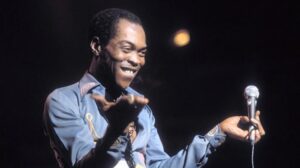

The recognition comes amid growing global acceptance of African music, particularly following the international rise of Afrobeats, a contemporary genre rooted in the sound Fela helped create. In 2024, the Grammys introduced the Best African Music Performance category, while Nigerian superstar Burna Boy has earned a nomination this year for Best Global Music Album.
Music historian and longtime Fela associate Michael Stein noted that Africa has historically been marginalised within major global music institutions but said the tide appears to be turning. He stressed that Fela’s legacy cannot be separated from his politics.
“Fela consistently challenged injustice, corruption, and poor governance,” Stein said. “Ignoring that part of his legacy would be impossible.”
Fela Kuti was far more than a musician. He was a political agitator, cultural theorist, and outspoken critic of Nigeria’s military governments. Alongside drummer Tony Allen, he pioneered Afrobeat, blending West African rhythms, jazz, funk, highlife, and politically charged lyricism into a sound that doubled as protest music.
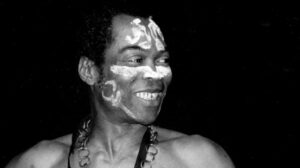
Across a career spanning three decades until his death in 1997, Fela released over 50 albums and built a movement that fused art with ideology. His outspoken opposition to authoritarian rule made him a frequent target of state repression. In 1977, following the release of his album Zombie, which mocked military obedience, his Lagos compound, known as the Kalakuta Republic, was violently raided by soldiers. The attack left many injured and led to the death of his mother, Funmilayo Ransome-Kuti, a prominent feminist and political activist.
Rather than retreat, Fela turned grief into resistance, famously delivering his mother’s coffin to government offices and releasing the song Coffin for Head of State as a direct act of protest.
His political philosophy drew from pan-Africanism, anti-imperialism, and African-centred socialism. Influenced by his mother and later by US-based activist Sandra Izsadore, Fela rejected Western cultural dominance, even dropping “Ransome” from his name due to its colonial associations.
Fela’s musical identity was also shaped by Ghana. Highlife, pioneered by Ghanaian musicians such as E.T. Mensah, Ebo Taylor, and Pat Thomas, heavily influenced his early sound. Time spent in Ghana helped refine the melodic and structural elements that would later define Afrobeat, underscoring the genre’s West African and pan-African roots.
On stage, Fela was a commanding presence. Leading bands of more than 20 musicians, his performances at the Afrika Shrine in Lagos blurred the line between concert, political rally, and spiritual gathering. According to Stein, audiences were participants rather than spectators, united in what he described as musical communion.
Artist and designer Lemi Ghariokwu, who created many of Fela’s iconic album covers, described the Grammy recognition as symbolic immortality. “His legacy continues to grow,” he said.
Today, Fela Kuti’s influence remains evident in global music and culture, inspiring artists across continents, including Burna Boy, Kendrick Lamar, and Idris Elba. Despite enduring arrests, beatings, and censorship during his lifetime, Fela remained uncompromising in his mission.
“He was not interested in awards,” Stein said. “He was interested in liberation, freeing the mind.”
For Seun Kuti, who was 14 when his father died, the honour is less about global validation and more about historical justice. “Fela belonged to himself,” he reflected. “But in a way, we all belonged to him.”
The Grammy Lifetime Achievement Award, though long overdue, cements Fela Kuti’s place not only as a musical pioneer but as a political force whose work reshaped African identity, resistance, and expression on the world stage.