Entertainment
Nana Kwame Ampadu: The Extraordinary Life, Music and History of Ghana’s Highlife Legend


Long before Ghanaian musicians were chasing YouTube views, Spotify streams, TikTok trends and international collaborations, there was a generation of artistes who built their careers with guitars, live bands, vinyl records, cassettes and an extraordinary ability to tell stories.
One of the most important names from that generation was Nana Kwame Ampadu.
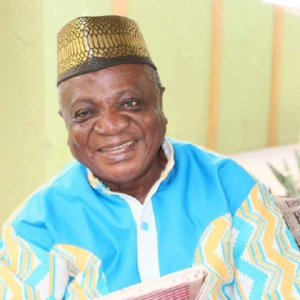

For more than five decades, Ampadu remained one of the most prolific figures in Ghanaian highlife music. He wrote and recorded songs about love, marriage, money, poverty, death, morality, politics, family, religion, road safety, social inequality and everyday life.
His music was so extensive that remembering him through only one or two songs would barely scratch the surface of his contribution.
He is widely credited with composing more than 800 songs, while the African Brothers Band’s catalogue alone contained hundreds of recordings.
Yet for many young Ghanaians today, the man behind these songs is becoming increasingly distant.
This is the story of the musician who became known as Odwontofoohene — the Chief or King of Singers.
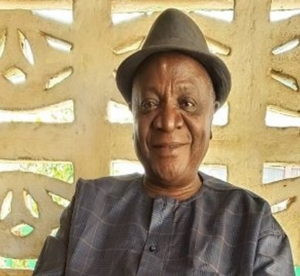

The boy from Obo Kwahu
Nana Kwame Ampadu was born on March 31, 1945, at Obo Kwahu in Ghana’s Eastern Region.
His parents were Opanin Kwame Ampadu, who was associated with the Asona Clan of Obo Kwahu, and Mercy Afua Ntiriwaa, a Presbyterian.
Music became part of his life at a very young age.
According to his official biography, young Kwame had a naturally captivating singing voice. At school, teachers noticed his musical ability and frequently selected him to lead songs and musical activities.
He was not simply interested in music as a hobby.
It was already becoming part of his identity.


His education
Ampadu began his education at Obo Roman Catholic Primary School, where he studied between 1950 and 1952.
His parents later moved to Adeemmra near Aboam in the Afram Plains, where he continued his education.
He completed his primary education in 1955.
From 1956 to 1959, he attended Obo Anglican Middle Boys School.
There, his musical talent became even more obvious.
School authorities reportedly recognised both his academic ability and his singing talent. He served as a chorister and became involved in musical activities at the school.
He passed the Common Entrance Examination in 1957 and gained admission to Abuakwa State College with a partial scholarship.
However, his family faced financial difficulties, and his father could not afford to support his continued education.
That changed the direction of his life.
Instead of continuing his formal education, the young Ampadu moved toward employment—and eventually toward music.


His first journey to Accra
In 1960, Ampadu moved to Accra in search of work.
At the time, he was young and physically small, and finding employment was not easy.
He eventually secured work as a messenger with the Ministry of Agriculture at Kwahu Mpraeso, through arrangements involving his father.
But employment did not extinguish his passion for music.
Even when he did not have musical instruments available, Ampadu would compose songs in his head and entertain friends and colleagues by singing.
He was already developing the songwriting habit that would later define his career.
Ampadu eventually left his employment and returned to Accra after encouragement from a schoolmate named Noah, a guitarist who had hopes of forming a musical group.
The plan did not immediately work out.
Noah later moved to Agogo, but Ampadu remained committed to music.
He stayed with his elder brother, Rover Amo Ampadu, who would later become an important figure in the management of the African Brothers Band.
Ampadu also had early contact with established musicians.
He was introduced to P.K. Yamoah, founder of Yamoah’s Band, and was accepted as a treble singer.
However, when the band planned to move to Kumasi, Ampadu’s relatives would not allow the young musician to travel with them.
His journey was delayed, but his ambition was not.
Ampadu worked with the United Ghana Farmers Council Corporation, initially as a messenger and later as a canteen supervisor.
He also worked briefly at Faith Drug Store in Okaishie, Accra.
But music remained his real passion.
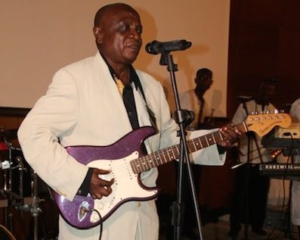

By the early 1960s, he was moving closer to the career that would eventually make him one of Ghana’s most celebrated musicians.
In 1963, Ampadu and a group of young musicians formed what became the African Brothers Band.
The official inauguration took place at the Park Cinema Theatre in Adabraka, Accra.
Among the early members were Ampadu, his brother Rover Amo, Eddie Donkor, Kwame Anim, Yaw Asante and Kwadwo Ofori, with other musicians joining later.
One of the important things about the group was the age of its members.
They were remarkably young.
At a time when established musicians were generally older, these teenagers were trying to establish themselves in Ghana’s competitive music scene.
They performed at funerals, Muslim wedding ceremonies known as Sunna, beer bars and other social gatherings.
The name African Brothers Band was not chosen randomly.
The group formed during a period when African unity was an important political and cultural idea.
Ghana had gained independence in 1957 under Kwame Nkrumah, and the wider movement for African unity was strongly present in public life.
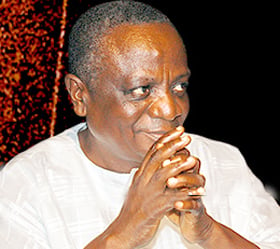

The band’s name reflected that atmosphere.
It represented an idea of African brotherhood and unity.
That political and cultural consciousness would later appear repeatedly in Ampadu’s music.
The African Brothers Band initially struggled like many young groups.
Then came the recording that changed their fortunes.
On November 14, 1966, the band recorded its first 45 RPM singles at the Ghana Film Industries Corporation through Philips West Africa Ltd.
The recordings were: Agyanka Dabere and Suminaso Ntonko
They were released in December 1966 and became successful.
The recordings gave the young band national attention and helped establish Ampadu as a serious songwriter and bandleader.
If there is one song that transformed Nana Kwame Ampadu into a national phenomenon, it is “Ebi Te Yie.”
Released in 1967, the song became a breakthrough for the African Brothers Band.
Ebi Te Yie can be understood as Some Are Sitting Well or, in a broader interpretation, a reflection on how some people are doing well while others struggle.
The song addressed the growing divide between comfortable people and those facing hardship.
The song became so significant that it was later adapted into a stage play.
It also attracted political interpretation.
Some listeners viewed it as criticism of the government of the time, and the song reportedly disappeared from the airwaves during military rule before returning later.
Ampadu, however, rejected the suggestion that the song was intended as a direct political attack.
This episode demonstrated something important about his music: people did not simply listen to Ampadu’s songs; they interpreted them.

The songwriter who sang about everything
Nana Kwame Ampadu’s catalogue was enormous.
He wrote about practically every aspect of Ghanaian life.
His songs addressed: Love, Marriage, Money, Poverty, Death, Religion, Friendship, Family, Politics, Good citizenship, Greed, Drunkenness, Parenting, Road safety, Social inequality.
This was one of the reasons his music connected so strongly with ordinary people.
You did not have to be a music critic to understand Ampadu.
You only needed to understand life.
His catalogue was enormous, but songs associated with Nana Kwame Ampadu and the African Brothers Band include: Ebi Te Yie, Obra, O man Bo Adwo, Kofi Nkrabea, Y aw Berko, A gartha, Aku Sika, M other, Mentumi Ngyae Wo, A ye Se Ye Do Wo, O biaa Ba Nnye, W oyoo Woyoo, Anibere Nnye, D rivers / Driver Adwuma, Kwaata, Agyanka Dabere, Suminaso Ntonko.
These are only a selection from a much larger body of work. Contemporary sources describe his overall songwriting output as running into hundreds of songs, with some accounts putting it at more than 800 compositions.
“Obra” and Ghanaian television
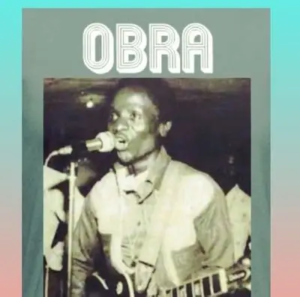
Another important part of Ampadu’s legacy was Obra.
The song became associated with the popular Ghanaian television drama series Obra.
This demonstrated how far his music had travelled beyond the dance floor.
His songs were entering homes through television and becoming part of the emotional soundtrack of Ghanaian life.
“Obra” itself reflected one of his recurring interests: human existence, its difficulties and the lessons people learn as they move through life.

Ampadu’s songwriting ability also took him into national campaigns.
He composed the theme song for Ghana’s Operation Feed Yourself programme in 1974.
The campaign, introduced during the National Redemption Council era, encouraged Ghanaians to increase domestic food production.
For Ampadu to contribute music to such a national campaign showed how influential musicians could be in communicating public messages.
His songs were not limited to entertainment venues.
They could become tools for national communication.
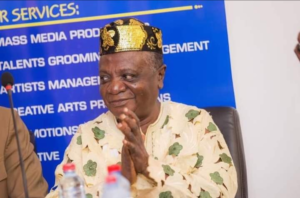

A band that changed highlife
The African Brothers Band did not simply produce popular songs.
The group experimented with the highlife form.
The band became known for innovations including longer recordings and songs released in Part 1 and Part 2 formats.
They also developed and popularised rhythmic styles described as Afro-Hili, while later incorporating reggae and other influences into their music.
One music archive notes that between 1968 and 1978, the group released about 400 single tracks.
That is an extraordinary volume of recorded music.
The African Brothers Band eventually moved beyond Ghana.
Their growing popularity opened opportunities for international performances.
They toured countries including Britain, the United States, Canada, France, Germany, Belgium, and the Netherlands.
Sources differ on the exact years and sequence of some tours, but the band’s international reach is well documented.
A music-history archive records a 1976 tour of the United States and Canada, while the band’s own historical account also records international tours beginning with Britain in 1970.
This was significant because Ghanaian musicians were taking highlife directly to audiences outside Africa decades before the current global Afrobeats boom.
In 1973, the group officially added International to its name.
It became the African Brothers Band International.
That name reflected the group’s growing reach outside Ghana.
By this point, Ampadu had become one of the country’s leading highlife figures.
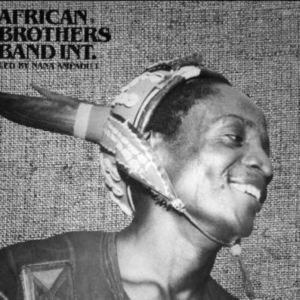
Ampadu became “Nnwontofohene”
In 1973, another major honour came.
The Arts Council of Ghana conferred on him the title:
“Nnwontofohene Nana Kwame Ampadu I.”
The title is associated with the idea of a Chief/King of Singers.
It was a recognition of his contribution to Ghanaian music.
He had moved from being a young guitarist struggling to find opportunities in Accra to becoming a nationally recognised musical authority.
The band also became a drama group.
One of the lesser-known aspects of Ampadu’s career was his involvement in theatre.
The African Brothers Band developed a drama troupe, and Ampadu wrote plays for the group.
Among the productions associated with the troupe were: Abotion, Abusua, Kwaata, Aku Sika, Ntwatoso, Dea Onyame Ahyira No, Awaregyae Bi Ye Mmusuo
The group eventually commercialised some of its stage productions on audiocassette.
According to the band’s official history, its stage recordings had sold more than 200,000 copies by 2001.
This reveals another side of Ampadu that is sometimes overlooked.
He was not only a musician.
He was also involved in theatre, storytelling and cultural production.
The African Brothers Band became something of a training ground for musicians.
Several musicians who passed through the group later developed careers of their own.
They included figures such as: Eddie Donkor, Teacher Boateng, Oppong Kyekyeku, Joe Dee, Anthony Scorpion, Prince Osei Kofi, Nanaba Amoako, Kwame Seth, Paa Alex Obeng, Captain Newman, Akosua Agyapong.
This means Ampadu’s influence was not limited to the songs he personally recorded.
The band also helped develop other musicians.
Before becoming a star in his own right, Ampadu also interacted with established musicians.
One important figure was Jerry Hansen, founder of the Ramblers Dance Band.
Ampadu reportedly gave Hansen songs including Ntoboase, Afutusem, Scholarship, and Me Nsoromma Bepue.
The success of these songs helped draw attention to Ampadu’s songwriting ability.
Hansen later helped introduce him to Phillips West Africa, creating the opportunity that eventually led to the African Brothers Band recording its first singles.
One reason Ampadu’s songs remain historically valuable is that they provide a picture of Ghanaian society.
He could discuss the pressures created by money.
He could question greed.
He could talk about family.
He could warn people about irresponsible behaviour.
He could discuss relationships.
He could reflect on death.
He could comment on national issues.
This was the traditional strength of highlife: entertainment and commentary could exist in the same song.
Ampadu mastered that combination.
Ampadu’s influence eventually extended beyond performing.
He became active in the Musicians Union of Ghana (MUSIGA).
He served as First Vice President of MUSIGA from 1984 to 1991 and later served as General Secretary in 1992, according to his official biography.
He also served on the Ghana Folklore Board of Trustees and participated in other music-related committees.
This was important because his contribution was no longer simply about producing songs.
He was also involved in discussions about the welfare and development of musicians.
Ampadu also entered public service.
He served as a government appointee to the Kwahu South District Assembly from 1993 to 2000.
His career therefore moved between entertainment, cultural leadership and public service.
It was an unusual journey for a musician who had started life as a young man struggling to find work in Accra.
Awards and recognition
Ampadu received several awards and honours during his lifetime.
Among the notable recognitions associated with him were:
Winner of the National Dance Band Competition in 1972
The Nnwontofohene title in 1973
Various recognitions from institutions including ECRAG, COSGA and ACRAG
The State Grand Medal, awarded in 1997 by President Jerry John Rawlings
The State Grand Medal was particularly significant because it represented national recognition of his contribution to Ghana.
Despite his enormous public career, Ampadu’s life was not entirely lived on stage.
He married several times and had eight children, according to his official biography.
His family life existed alongside a career that demanded constant travel, rehearsals, recordings and performances.
Like many musicians of his generation, his life was closely tied to the changing Ghanaian entertainment industry.
Even after decades in music, Ampadu continued to be associated with highlife.
His music did not disappear simply because newer genres emerged.
Older Ghanaians continued to listen to his recordings, while musicians and researchers continued to revisit his catalogue.
His work also became increasingly valuable to people interested in the history of Ghanaian music.
The African Brothers Band’s recordings have continued to be reissued and preserved, including releases made available digitally in more recent years.
His final chapter
Nana Kwame Ampadu died on September 28, 2021, in Accra at the age of 76.
His death brought to an end the life of one of the most prolific figures in Ghanaian highlife.
But it did not end his music.
His recordings remain.
His songwriting remains.
His stories remain.
And the musicians he influenced remain part of the larger history of Ghanaian music.
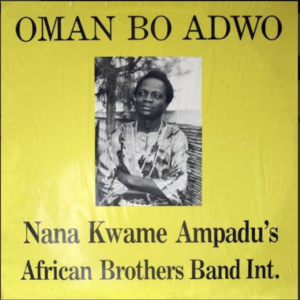
Why Nana Kwame Ampadu’s story matters today
There is a temptation to describe older musicians simply as legends and move on.
But Ampadu’s career deserves more than a title.
He represents an entire period in Ghana’s history.
He grew up in a Ghana where traditional culture and modern popular music were constantly interacting.
He moved to Accra as a young man looking for work.
He formed a band with other young musicians.
He recorded songs when the industry was still built around physical records.
He became a star through live performances and word of mouth.
He travelled internationally with Ghanaian highlife.
He entered theatre.
He participated in national campaigns.
He became involved in musicians’ leadership.
He served in public office.
And throughout it all, he continued writing songs.
Perhaps the most astonishing part of Ampadu’s legacy is the sheer quantity of his work.
He is widely credited with composing more than 800 songs.
The African Brothers Band itself recorded hundreds of singles during its most productive period.
That means there are potentially many songs from his career that younger Ghanaians have never heard.
This is why remembering him through Ebi Te Yie alone does not tell the full story.
There is an enormous musical archive behind that one song.
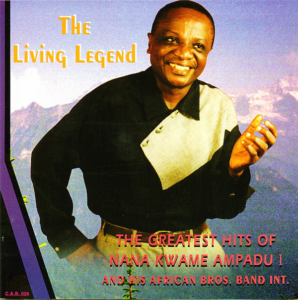

Why young Ghanaians should listen to Nana Kwame Ampadu
For a young listener accustomed to Afrobeats, hip-hop, drill and contemporary highlife, Ampadu’s music may initially sound very different.
But listen closely, and the similarities become obvious.
He told stories.
Modern musicians tell stories too.
He addressed relationships.
Modern musicians do the same.
He talked about money, hardship and social pressure.
Those subjects remain relevant.
He used music to comment on society.
That tradition continues today.
The difference is the sound and the era.
His legacy can be divided into several parts.
As a songwriter, he produced an enormous catalogue.
As a singer, he developed a distinctive voice.
As a bandleader, he created and sustained the African Brothers Band.
As a cultural figure, he preserved Ghanaian stories and expressions through music.
As a social commentator, he addressed issues affecting ordinary people.
As a theatre practitioner, he helped turn music and storytelling into stage productions.
As a music leader, he participated in MUSIGA and other industry institutions.
As a public figure, he served in local government.
That is why his place in Ghana’s history goes far beyond entertainment.
The music that should not be forgotten
When people talk about the history of Ghanaian music, attention often goes to the biggest names of the current generation.
But before the international success of today’s artistes, there were musicians who spent decades developing Ghana’s musical identity.
Nana Kwame Ampadu was one of them.
From Ebi Te Yie to Obra, Oman Bo Adwo, Kofi Nkrabea, Yaw Berko, Agartha, Aku Sika, Mother, Mentumi Ngyae Wo, Aye Se Ye Do Wo, Obiaa Ba Nnye, Woyoo Woyoo, Anibere Nnye, Driver Adwuma, and many others, his music created a soundtrack for generations of Ghanaians.
His catalogue is not merely a collection of old songs.
It is a record of Ghanaian life.


The forgotten question?
Perhaps the question today is not whether Nana Kwame Ampadu was important.
The historical record shows the scale of his contribution.
The more important question is:
A country that celebrates its contemporary musical exports also has a responsibility to preserve the musicians who built the foundation.
Ampadu’s story should therefore not remain confined to memories of older generations.
His songs can be digitised.
His albums can be reissued.
His interviews can be archived.
His lyrics can be studied.
His life can be taught.
And his music can be introduced to a new generation.
Because Nana Kwame Ampadu did not merely sing about Ghana.
He helped Ghana sing about itself.