General News
PHOTO: AfCFTA Success Requires Infrastructure and Political Will, Not Agreements Alone – Vice President Prof. Opoku-Agyemang


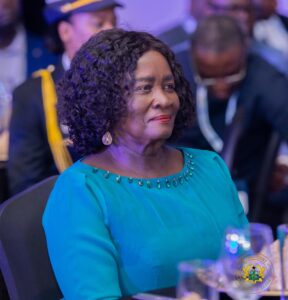
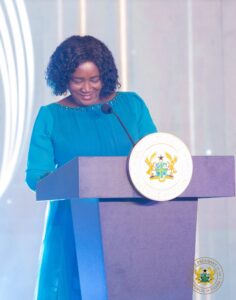
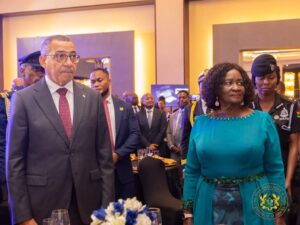
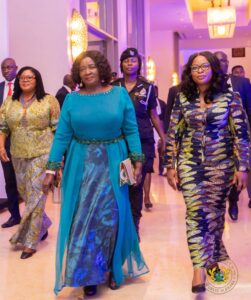
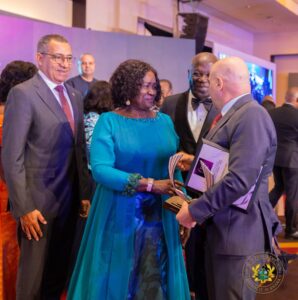
Vice President of the Republic of Ghana, Prof. Jane Naana Opoku-Agyemang, has stressed that Africa’s economic integration under the African Continental Free Trade Area (AfCFTA) will only succeed if trade agreements are backed by strong infrastructure, capable institutions, and sustained political commitment.
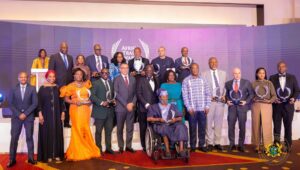
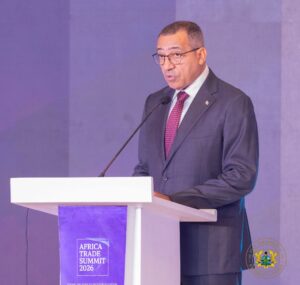
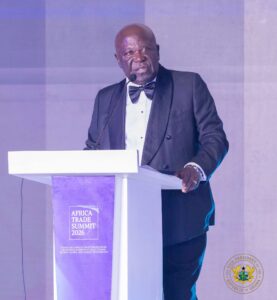
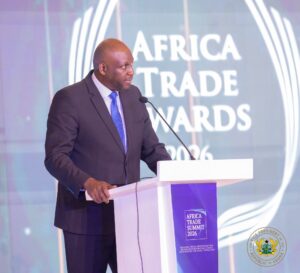
Speaking at the Africa Trade Awards 2026, where leaders from across the continent gathered to honour individuals and institutions advancing African trade and industrialisation, the Vice President highlighted the growing role of African enterprises, particularly small and medium-sized enterprises (SMEs), in driving job creation, manufacturing, and regional trade.


Prof. Opoku-Agyemang noted that although AfCFTA has created the world’s largest free trade area by number of participating countries, intra-African trade still accounts for a relatively small share of the continent’s total trade. According to her, this reality underscores the need to move beyond declarations to practical implementation.
“Agreements alone do not deliver integration,” she said, adding that Africa must invest in infrastructure, strengthen institutions, and demonstrate consistent political will to achieve meaningful economic transformation.
Referencing the vision of Ghana’s first President, Dr. Kwame Nkrumah, the Vice President emphasized that political independence without economic independence remains incomplete. She described Pan-African integration as essential to Africa’s economic sovereignty, calling for greater focus on processing local resources, building reliable infrastructure, and ensuring continuity in policy implementation.
Prof. Opoku-Agyemang explained that successful regional integration depends on consistent implementation of commitments, mutual recognition of standards, efficient transport and communication systems, and institutions that enjoy public trust. She warned that short-term approaches undermine reform efforts, weaken institutions, and erode confidence, noting that industrialisation and regional integration are long-term projects that require patience, coordination, and sustained investment.
She further stated that Africa’s progress will ultimately be measured not by speeches and agreements, but by improved competitiveness, reduced trade costs, resilient infrastructure, and trusted governance systems.
Reaffirming Ghana’s commitment to continental transformation, the Vice President highlighted initiatives such as the 24-Hour Economy, which she said is designed to unlock productivity by aligning infrastructure, finance, and institutions to eliminate inefficiencies. She added that this initiative complements the government’s broader infrastructure and industrialisation agenda aimed at boosting trade, value addition, and job creation.
Prof. Opoku-Agyemang emphasized that Africa’s youth, women, entrepreneurs, and innovators remain central to this vision, stressing that the continent’s transformation will not occur by chance but through deliberate partnership, discipline, unity, and sustained action.
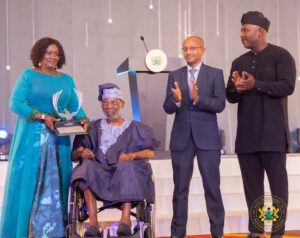
On behalf of President John Dramani Mahama, she congratulated the recipients of the Africa Trade Awards for their leadership and innovation in advancing African trade and industrial development.