Entertainment
Ras Caleb Appiah-Levi: Humans Love the Dead More Than the Living


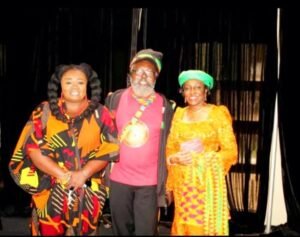
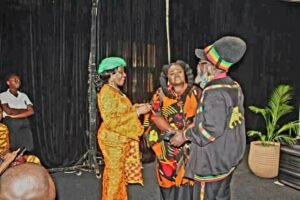
Musician and Pan-Africanist Ras Caleb Appiah-Levi has criticised what he describes as society’s tendency to celebrate people more after their death than while they are alive and in need of support.
In a passionate reflection, Appiah-Levi said he had observed the phenomenon for many years through his experiences as a musician, Pan-Africanist, community worker and son of the soil.

According to him, living people who are struggling to create, work and contribute to society are often ignored, criticised, envied or denied the support they need.
“When a man is alive, walking among us, struggling, creating, sweating, crying for support, we ignore him,” he said.
He argued that society sometimes labels people who are ambitious, outspoken or controversial negatively while failing to support their work.
Appiah-Levi said people could watch an individual’s phone calls go unanswered, attend poorly patronised programmes and see someone struggle to raise funds for projects without offering meaningful assistance.
However, he noted that the situation often changes dramatically after the person dies.
“But the moment he dies, we suddenly love him,” he said.
He explained that after death, society often puts up large banners bearing the deceased’s image, writes lengthy tributes, composes songs, travels long distances to attend funerals and raises substantial sums of money in their honour.

According to him, some of the same people who refused to provide financial assistance when the deceased needed medical treatment or support while alive later describe them as legends, heroes and icons.
Appiah-Levi identified three major reasons he believes contribute to the phenomenon.
He argued that living people can sometimes be perceived as competitors or threats because their achievements may expose the shortcomings or limitations of others.
He cited the late visual artist Yaa Padiki as an example, saying that while she was alive and engaged in her artistic work, some people viewed her activities as competition.
He also referenced his own experience as a musician who performs revolutionary songs, saying some people may perceive such work as a threat.
However, he said death eliminates the perceived competition, making it easier for people to praise the deceased without feeling that the person’s achievements diminish their own.
The musician further argued that it is easier for people to express affection towards someone who can no longer respond or challenge them.
He said the living can disagree with others, demand accountability or express dissatisfaction, whereas the dead remain silent.
“The dead are silent. They accept all flowers, even from those who poisoned them while alive,” he stated.
He therefore suggested that some public displays of affection after death may come at little personal cost compared with supporting someone while they are alive.
Appiah-Levi also blamed what he described as a culture that places greater emphasis on remembering the dead than building and supporting the present.
He linked this partly to colonial education, arguing that Africans have been conditioned to place significant emphasis on history while failing to invest adequately in living people and present-day visions.
He acknowledged the importance of honouring ancestors but questioned why people sometimes fail to provide basic support to living elders and other members of society.
“We pour libation to ancestors — which is good — but we forget to give water to the living elder who is thirsty today,” he said.
Appiah-Levi described the trend as a dangerous culture and warned that society could become one that mourns people after their deaths while failing to support their visions during their lifetime.
“If we continue this way, we will always be a continent that cries at funerals but sleeps during visions,” he said.
He subsequently called on Africans to change the way they demonstrate appreciation and support for people making contributions to society.
He urged the public to support artists by purchasing their work while they are alive, attend programmes organised by people while they can still appreciate the support, and provide assistance to musicians, inventors, teachers, farmers, beach cleaners and other community workers during their lifetime.
According to him, the support people receive after death often comes too late.
“Yaa Padiki did not need our tears today as much as she needed our hands yesterday,” he said.
He questioned how many other talented and hardworking people may currently be living without recognition, encouragement or financial assistance.
“And how many more Yaa Padikis are among us today, walking unknown, unsung, unsupported?” he asked.
Appiah-Levi concluded his reflection with a call for society to stop waiting until death before recognising the value of individuals.

He argued that while the dead cannot experience the love and support shown to them after death, living people can benefit directly from encouragement and assistance and potentially use that support to make a greater impact on society.
“For what is the use of loving the dead more than the living?” he asked.
His message ended with a call for people to embrace and support the living while they still have the opportunity to feel that appreciation and use it to continue changing their communities and the world.