Entertainment
Ebony Reigns: The Life, Music, Controversies and Lasting Legacy of Ghana’s 90s Bad Gyal


Priscilla Opoku-Kwarteng, popularly known as Ebony Reigns, lived only 20 years, but within the short period she spent in Ghana’s music industry, she achieved what many artistes spend decades trying to accomplish.
She arrived on the music scene as a young, relatively unknown singer, faced criticism over her image and lyrics, released a string of songs that dominated Ghanaian airwaves, built a recognisable brand and eventually became the first female artiste to win the overall Artiste of the Year award at the Ghana Music Awards.
Then, just as her career seemed to enter its biggest chapter, it ended abruptly.
Ebony died in a road crash on February 8, 2018, while returning to Accra from Sunyani after visiting her mother.
She was only days away from turning 21.
Yet years after her death, her songs continue to stream, play at parties, and be remembered by Ghanaians, while academics continue to study the cultural questions raised by her music, image, and public persona.


Who was Ebony Reigns?
Ebony was born Priscilla Opoku-Kwarteng on February 16, 1997.
She was the daughter of Nana Opoku Kwarteng, popularly known as Starboy Kwarteng, and Beatrice Oppong Martin.
She grew up in Accra and was affectionately called Nana Hemaa or Ohemaa by people close to her.
Her family roots were associated with the Brong-Ahafo area, although she was raised in the capital.
She attended Seven Great Princess Academy in Dansoman for her basic education before continuing to Methodist Girls’ High School at Mamfe in the Eastern Region.
It was during her teenage years that music began to take over her ambitions.
Rather than completing senior high school, she decided to pursue music professionally.
Her decision was risky.
At the time, she was a teenager attempting to enter an industry where established musicians already dominated the attention of the public.
But she believed music was the path she wanted to follow.


The teenager who chose music over school
Ebony’s decision to leave school became an important part of her story.
She had already begun nurturing her interest in music while she was still in school.
Eventually, she made the decision to leave formal education and concentrate on becoming a musician.
A University of Cape Coast study on Ebony describes this as part of her attempt to remake herself and establish an identity through music.
The research is particularly useful because it looks beyond the celebrity image and examines how Ebony’s music and public persona reflected aspects of contemporary Ghanaian youth culture.
Her choice was controversial, but it ultimately became the beginning of a career that would change Ghana’s female music landscape.
Ebony’s breakthrough was closely connected to music entrepreneur Bullet, formerly of the duo Ruff n Smooth.
In 2015, Bullet discovered the young singer and signed her to RuffTown Records.
The label became the home from which Ebony’s career would take off.
At the time, she was not yet a household name.
She had to establish herself one song at a time.
Her first major step came with her debut single, Dancefloor.


Dancefloor — the beginning
Ebony released “Dancefloor” in December 2015.
The song announced the arrival of a new female voice in Ghanaian music.
It did not immediately make her one of the country’s biggest stars, but it gave her the platform she needed.
The song eventually earned her a nomination in the Unsung category at the 2016 Ghana Music Awards.
For a new artiste, the nomination was an important signal that the industry was beginning to notice her.
But Ebony had not yet released the song that would transform her career.


Then came Kupe
In March 2016, Ebony released Kupe.
That song changed everything.
“Kupe” became one of the songs that established her as a major young artiste in Ghana.
It also introduced listeners to the personality that would become central to the Ebony brand.
She was bold, confident, and outspoken.
And she did not appear interested in fitting comfortably into the traditional expectations placed on female Ghanaian performers.
The song became a major hit and helped move Ebony from an emerging artiste into the national spotlight.


The birth of the 90s Bad Gyal
Ebony eventually embraced the identity of the 90s Bad Gyal.
The name was more than a nickname.
It became part of her branding.
She presented herself as a young woman who was confident, independent and unwilling to apologise for her personality.
Her clothing, dance moves, music videos and lyrics all formed part of this image.
That image attracted a huge following.
But it also attracted criticism.
Some members of the public believed her appearance and performances were too provocative, particularly for a young Ghanaian woman.
Others argued that Ebony was simply exercising artistic freedom and creating a character that allowed her to stand apart from her competitors.
Academic research has since treated this tension as an important part of understanding Ebony’s cultural impact.


Why Ebony became controversial
Ebony’s popularity was not based only on music.
Her appearance became part of the national conversation.
Her revealing outfits and sexually suggestive lyrics were frequently discussed in the Ghanaian media.
She was criticised by some religious figures, parents and commentators who felt that she was setting a bad example for young girls.
Others defended her.
For them, Ebony represented a young woman exercising control over her image and refusing to conform to expectations about how female artistes should dress or behave.
This created a strange contradiction.
The same public that criticised her was also consuming her music.
Her songs were everywhere.
Her videos were being watched.
Her performances were attracting large crowds.
And her name was constantly appearing in the media.
A University of Cape Coast study describes this contradiction as central to Ebony’s public reception: she was simultaneously criticised as an unacceptable role model and celebrated for her music and distinctive persona.

Poison takes her even higher
After “Kupe,” Ebony continued releasing songs that strengthened her position.
One of the biggest was Poison.
The song helped establish her as one of Ghana’s most recognisable young female performers.
By this stage, Ebony’s voice, fashion and performance style were becoming difficult to ignore.
She had moved beyond being simply another new singer.
She was becoming a brand.
Sponsor and another major hit
Ebony’s next major success was Sponsor.
The song became one of her signature records.
It was heavily played on radio and at social gatherings and helped maintain her dominance over Ghana’s music conversation.
By 2017, songs such as Sponsor, Poison, Kupe, Date Ur Fada, Hustle and Maame Hw3 were regularly heard across the country.
Spotify’s current catalogue also continues to list Date Ur Fada, Sponsor, Hustle, Poison and Maame Hw3 among Ebony’s most-streamed recordings, showing that her music has continued to find listeners years after her death.


Date Ur Fada
“Date Ur Fada” became another song strongly associated with Ebony’s identity.
The song was playful, provocative and deliberately different from the more conservative expectations surrounding female performers.
Its popularity demonstrated Ebony’s understanding of her audience.
She knew how to create songs that generated conversation.
Even people who criticised the lyrics often knew the words.
That ability to dominate conversation became one of her greatest strengths as an entertainer.


Hustle
Hustle was another important record.
The song demonstrated that Ebony could use wordplay and a commercially accessible sound while maintaining the personality that had become central to her brand.
Academic research on contemporary Ghanaian women’s music has since examined “Hustle” as part of a wider discussion about women’s agency, sexuality, work and self-expression in popular music.


The deeper meaning of Maame Hw3
Perhaps the song that most clearly showed another side of Ebony was Maame Hw3. Translated roughly as Mother, look, the song addressed domestic violence and the plight of women in abusive relationships.
It was a significant departure from the image of Ebony as simply the provocative “90s Bad Gyal.”
The song allowed her to address a social issue.
Its music video also helped communicate the message.
Ghana’s academic literature has subsequently examined Maame Hw3 through the lens of womanism, female self-expression and liberation.
A 2023 peer-reviewed study concluded that the song raises issues relating to women’s liberation, relationships and social behaviour.
That aspect of Ebony’s catalogue is important because it demonstrates that her music could carry social commentary alongside entertainment.


Aseda
Ebony also released Aseda, a song with a more reflective and grateful tone.
The song became another popular recording associated with her short career.
It showed that her catalogue was not limited entirely to provocative dancehall records.
She could move between different moods and themes.
Although Ebony was frequently described as a dancehall artiste, her music drew from several Ghanaian and international styles.
Her recordings incorporated elements of dancehall, Afropop, highlife and hiplife.
Her voice was often placed prominently over relatively sparse productions driven by bass, percussion and keyboard sounds.
The University of Cape Coast research into her music describes this production style as characteristic of contemporary Ghanaian dancehall and popular music.
This flexibility helped her reach a wide audience.


Her debut album: Bonyfied
In 2017, Ebony released her debut album, Bonyfied.
The album consolidated the success she had built through her singles.
It became a major part of the story of her rise.
By the end of 2017, Ebony was no longer simply a promising young artiste.
She was one of the biggest names in Ghanaian music.
Her album would eventually become even more significant after her death.
2017: The year Ebony took over
The year 2017 was arguably the defining year of Ebony’s career.
She was everywhere.
Her songs dominated radio.
Her videos attracted attention.
She performed at major events.
Her image became a regular subject of public discussion.
And she continued releasing music while other established artistes competed for the same audience.
Graphic Showbiz later described her as an artiste whose brand had become so powerful that she controlled conversations across Ghanaian society.


She was not afraid of criticism
One of Ebony’s defining characteristics was her apparent willingness to ignore criticism.
She understood that her image would not be accepted by everyone.
But instead of abandoning it, she used the controversy to strengthen her identity.
This became an important part of the “Ebony Reigns” brand.
The public knew what to expect when she appeared.
The clothes.
The confidence.
The dancehall sound.
The attitude.
The stage presence.
Everything formed part of a recognisable identity.


Ebony’s stage presence
Her popularity was not based only on recorded music.
She was also known for her performances.
She had a distinctive stage presence and a style of movement that helped her connect with audiences.
Graphic Showbiz described her stagecraft as one of the elements that helped distinguish her from her contemporaries.
Her performances reinforced the idea that Ebony was not simply a singer.
She was an entertainer.

Her relationship with her father
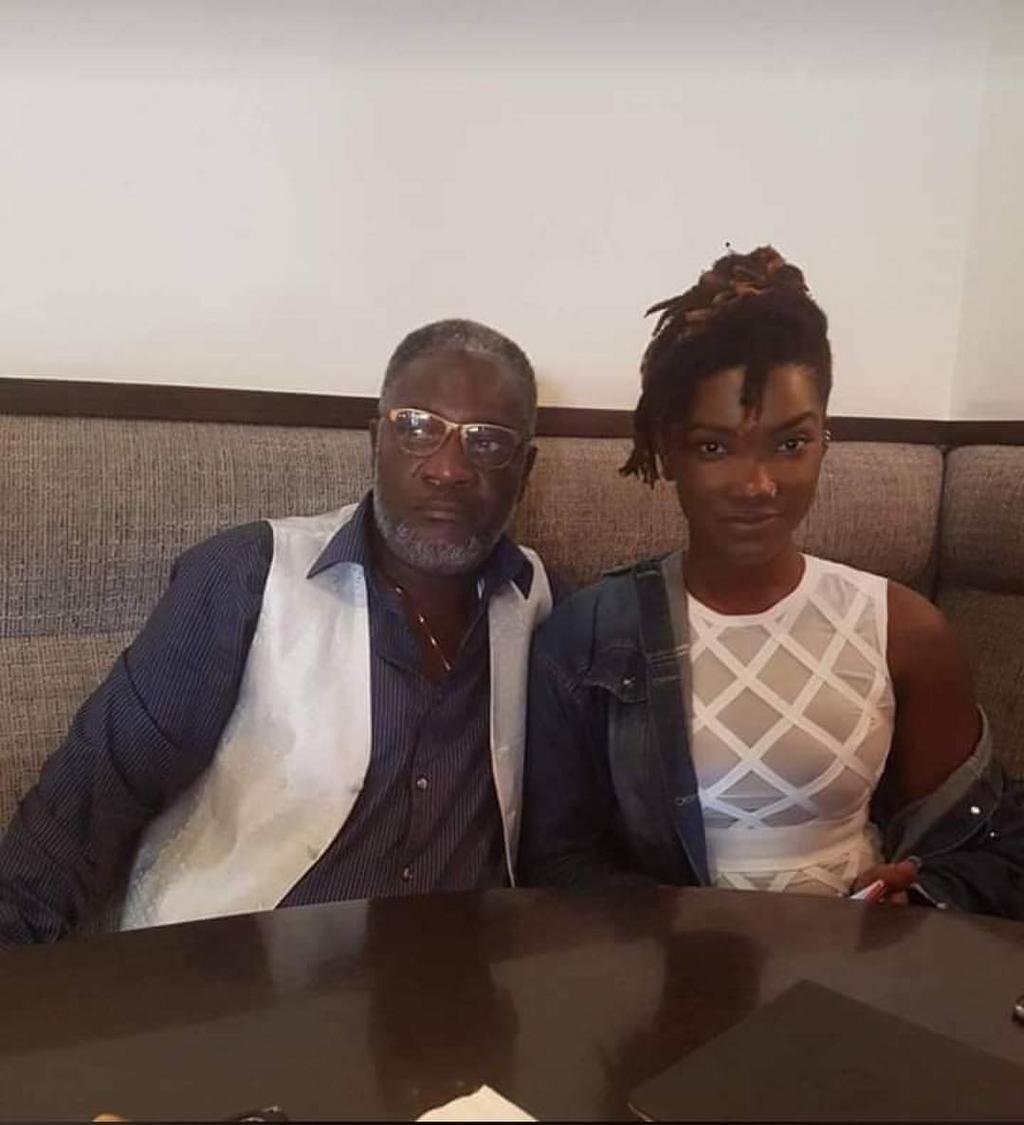
Ebony’s father, Nana Opoku Kwarteng, was closely involved in her career and became one of the most visible members of her family after her death.
Images from the period show Ebony with her father during the filming of the video for “Sponsor.”
He later became an important voice in preserving her memory and speaking publicly about his daughter.
MyJoyOnline has documented his visits to Ebony’s grave with other members of the family during later anniversaries of her death.

The tragedy that shocked Ghana
On February 8, 2018, Ghana woke up to devastating news.
Ebony Reigns had died in a road accident.
She had been travelling from Sunyani towards Kumasi and Accra after visiting her mother.
The vehicle in which she was travelling was involved in a collision with a VIP bus on the Sunyani-Kumasi road.
Ebony died alongside her friend Franky Kuri and military officer Lance Corporal Francis Atsu Vondee.
The driver survived.
Ebony was only 20 years old and was just eight days away from her 21st birthday.

A career that ended just before a new chapter
The tragedy was made even more painful because Ebony’s career was still expanding.
According to her father, she had a visa and was preparing to travel to Europe for a music tour.
The international trip was expected to help introduce her music to a wider audience.
Instead, her career ended before she could make that next step.
It was a painful reminder of how quickly fame and life can change.

The shock across Ghana
Ebony’s death generated an extraordinary reaction.
Fans who had followed her music mourned.
Celebrities paid tribute.
Politicians expressed condolences.
People who had previously criticised her music also joined the national mourning.
Her one-week observance in Dansoman attracted thousands of people.
The event was described as more than a traditional mourning ceremony; it became a public celebration of her short but remarkable life.
Ebony’s funeral
Ebony was buried on March 24, 2018, following a funeral service at the forecourt of the State House in Accra.
She was later laid to rest at the Osu Cemetery.
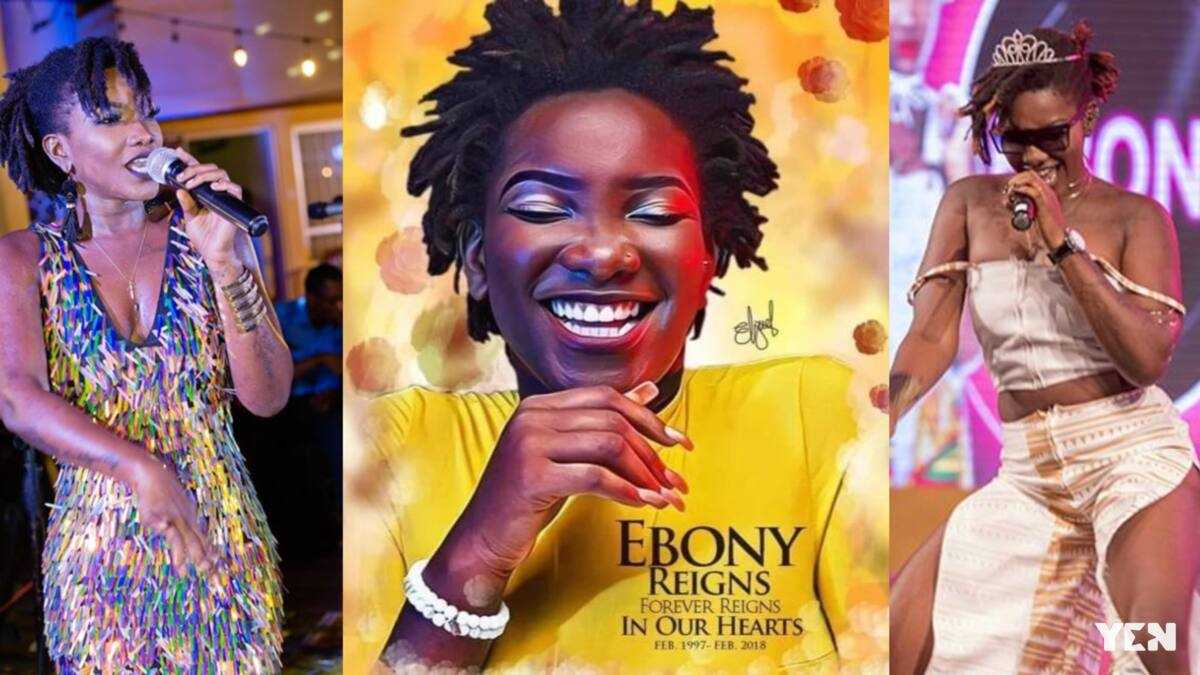
Her funeral attracted musicians, entertainment personalities, government officials, religious leaders, family members and thousands of fans.
Songs such as Sponsor, Maame Hw3, Kupe and Aseda were central to the atmosphere surrounding her farewell.

The awards that came after her death
One of the most remarkable chapters in Ebony’s story came after her burial.
On April 14, 2018, less than three months after her death, Ebony made Ghanaian music history.
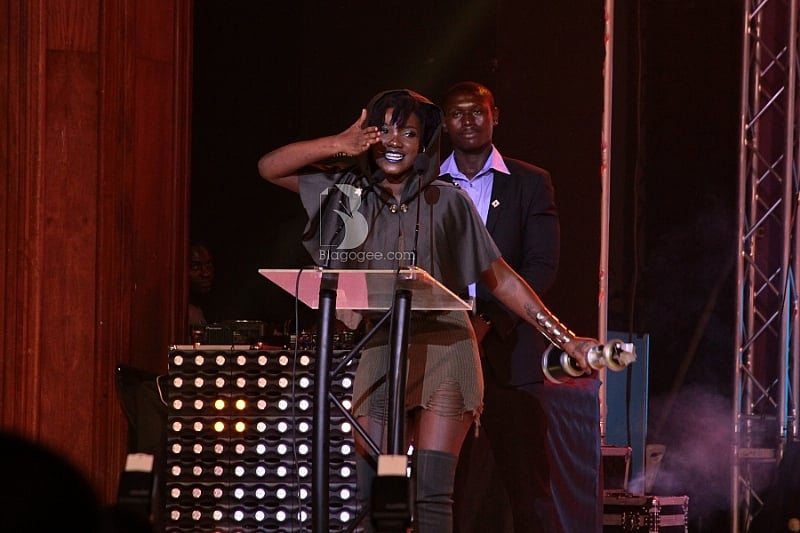
At the 19th Vodafone Ghana Music Awards, she was crowned Artiste of the Year.
She also won:
Album of the Year – Bonyfied
Afro Pop Song of the Year – Sponsor
Her manager, Bullet, won Songwriter of the Year for Maame Hwe.

The first female Artiste of the Year
Ebony’s Artiste of the Year victory was historic.
She became the first female artiste to win the overall Artiste of the Year category at the Ghana Music Awards.
She had competed against major names including Joe Mettle, Sarkodie, Shatta Wale and Stonebwoy.
The significance of the victory was heightened by the fact that she was not alive to receive it herself.
Her parents and management team accepted the awards on her behalf.

The irony of her biggest achievement
There was a painful irony surrounding the award.
Ebony had spent the previous year battling criticism and proving that she deserved to be taken seriously.
By the time the biggest recognition arrived, she was gone.
But the award confirmed what her supporters had argued throughout 2017: Ebony had become one of Ghana’s most important music acts.
Her death did not erase her achievement.
If anything, it made the achievement even more symbolic.
Tributes at the Ghana Music Awards
The 2018 awards ceremony also became a major tribute to Ebony.
Artists performed some of her songs in her memory.
MzVee performed Date Ur Fada.
Akosua Agyapong, Adina and Efya were also involved in performances paying tribute to the late singer.
The ceremony demonstrated the extent to which her absence had affected Ghana’s music community.

Nana Hemaa — the industry remembers her
Four years after her death, the Ministry of Tourism, Arts and Culture, MUSIGA and GHAMRO organised an all-star tribute to Ebony.
The tribute, titled Nana Hemaa, featured female artistes including Adina, MzVee, Efya, Freda Rhymz, eShun, Feli Nuna and Adomaa.
The event was significant because many of the women involved had been part of the generation of artistes Ebony influenced or inspired.
It demonstrated that her impact had extended beyond the songs she recorded.
Her music survived her
Ebony’s death did not stop her music from reaching new audiences.
Her catalogue continues to be available on streaming platforms.
Spotify currently lists songs including Date Ur Fada, Sponsor, Hustle, Poison and Maame Hw3 among her most popular recordings.
Her debut album Bonyfied remains part of her recorded legacy.
This is important because music consumption has changed dramatically since 2018.
A song that once depended on radio and television can now reach listeners years after an artiste’s death.
John 8:7 and the continuation of her catalogue
Ebony’s posthumous catalogue also continued to grow.
In 2021, Bullet released John 8:7, featuring Wendy Shay, using previously recorded material associated with Ebony.
The release allowed fans to hear new Ebony material years after her passing.
It also demonstrated how the RuffTown team attempted to preserve and extend her musical legacy.

Why Ebony remains culturally important
Ebony’s importance is not simply that she died young.
Many young musicians have died before reaching their full potential.
What makes Ebony different is the speed and scale of her rise.
She entered the mainstream around 2016.
By 2017, she had become one of Ghana’s biggest music stars.
By April 2018, after her death, she had become the first woman to win Ghana’s biggest overall music award.
That happened in a career that lasted only a few years.

She changed conversations about female artistes
Ebony’s career also contributed to a wider conversation about female musicians in Ghana.
Women in the industry have often faced expectations concerning how they should dress, behave and perform.
Ebony openly challenged many of those expectations.
That did not make everyone comfortable.
But it forced the public to discuss questions around:
Who decides how a female artiste should look?
Can a woman use sexuality as part of her artistic identity?
Where should society draw the line between entertainment and morality?
Can provocative music still carry a meaningful social message?
Ebony’s career did not provide simple answers to these questions.
Instead, it forced them into the public conversation.
Academic researchers continue to examine those issues through her music.
Maame Hw3 changed the conversation
The importance of Maame Hw3 is particularly clear in retrospect.
The same artiste who was heavily criticised for provocative performances produced a song addressing domestic abuse.
That contrast demonstrated that Ebony could not easily be placed into one category.
She could be provocative and socially conscious.
She could make party songs and songs about serious social issues.
She could be controversial and commercially successful at the same time.
That complexity is part of what made her interesting.


Ebony as a symbol of youth culture
A University of Cape Coast study describes Ebony’s public persona as representing aspects of contemporary urban youth culture.
Her confidence, fashion, lyrics and rejection of traditional expectations reflected the attitudes of some young Ghanaians who wanted greater freedom to define themselves.
This is one reason her music attracted such a strong youth following.
She was not presenting herself as an older person telling young people how to behave.
She was one of them.
She was young, outspoken and experimenting with her identity in public.

Ebony’s influence can also be seen in the generations of young female musicians who followed.
She demonstrated that a young Ghanaian woman could build an enormous commercial music brand around dancehall and Afropop.
She showed that female artistes could create strong visual identities.
She showed that controversy could become part of a marketing strategy.
And she proved that a female artiste could compete directly with Ghana’s biggest male stars for the overall top prize.
Her 2018 Artiste of the Year victory remains one of the most important milestones in the history of Ghanaian female music.


Her legacy seven years later
In 2025, seven years after her death, Radio Univers at the University of Ghana revisited Ebony’s career.
The station noted that her influence remained visible and highlighted the continuing popularity of songs such as Kupe, Sponsor, Date Ur Fada, and Hustle.
The tribute also described her as an artiste who had redefined aspects of Ghana’s music industry through her lyrics, style and stage presence.
That continuing interest shows that Ebony has not disappeared from Ghana’s cultural memory.
Ebony’s family has continued marking anniversaries of her death.
In 2020, her father and sister visited her grave at Osu Cemetery on the second anniversary of her passing.
In 2022, her parents and other family members again visited the gravesite on the fourth anniversary.
These visits have become part of the family’s ongoing remembrance of the young woman they lost.
The music she left behind
Although her career was short, Ebony left behind a catalogue that continues to be associated with an important period in Ghanaian pop music.
Some of her best-known songs include: Dancefloor, Kupe, Poison, Sponsor, Hustle, Date Ur Fada, Maame Hw3Aseda
Her album Bonyfied remains the defining album of her career.
She also appeared on collaborations and had additional material released after her death.

What Ebony never got to do
Perhaps the saddest part of Ebony’s story is the list of things she never got the opportunity to accomplish.
She never got to see how far her music could travel internationally.
She never got to experience the full impact of winning Artiste of the Year.
She never got to turn 21.
She never got to release the many albums that might have followed Bonyfied.
She never got to see the young female artistes who would later enter the industry and draw inspiration from her.
And she never got to see how technology would continue introducing her music to new listeners.
Her career ended just as it was beginning to reach another level.


The woman behind the brand
It is easy, years later, to remember Ebony only as the bold woman in music videos.
But behind the 90s Bad Gyal image was a young woman who had dreams, a family, friends and ambitions.
She was a daughter, a sister and friend.
A young woman trying to establish herself in a difficult industry.
Her rapid transformation from an aspiring teenager into a national star happened in only a few years.
That makes her story both inspiring and heartbreaking.
Why Ebony’s story still matters
Ebony Reigns should not be remembered only because she died young.
She should be remembered because she changed the conversation.
She entered Ghana’s music industry at a young age and refused to disappear into the crowd.
She created a recognisable identity.
She released music that dominated the airwaves.
She addressed social issues.
She challenged traditional expectations of female performers.
She became a major commercial force.
And she made history at the Ghana Music Awards.
Her career may have lasted only about three years, but its influence has lasted much longer.

A legacy bigger than her age
Ebony was 20 when she died.
Yet her achievements were already those of an established artiste.
She had a hit catalogue.
A successful debut album.
A loyal fan base.
Major industry recognition.
International ambitions.
And a historic Artiste of the Year award.
That is why her death remains one of the most painful moments in Ghanaian entertainment history.
She did not simply leave behind unfinished plans.
She left behind a career that had already begun changing the industry.
The legacy of the 90s Bad Gyal
Years after her death, Ebony’s name still appears whenever discussions turn to Ghana’s most influential female musicians.
Her songs continue to play.
Her image remains familiar.
Her story is still studied.
Her family continues to honour her.
Musicians continue to pay tribute to her.
And young listeners who were children or had not yet been born when she became famous can still discover her through streaming platforms.
That is perhaps the clearest definition of legacy.
A musician’s life ends, but the music keeps moving.

Ebony Reigns may have left Ghana’s music industry in February 2018, but she never really left the country’s musical memory.
From Dancefloor to Kupe, Poison, Sponsor, Hustle, Date Ur Fada, Maame Hw3 and Aseda, she compressed an extraordinary musical journey into a remarkably short life.
She became the first female Artiste of the Year at the Ghana Music Awards.
She challenged ideas about how a female artiste should look and behave.
She used music to address issues such as domestic violence.
She created a brand that was impossible to ignore.
And she left behind a story that continues to provoke admiration, debate and nostalgia.
Ebony Reigns did not live long enough to see the full extent of her potential. But she lived long enough to leave a mark.
And in Ghanaian music, that mark remains.

