Entertainment
Free Speech Is Not a Licence to Abuse– Shatta Wale Tells Mahama


Ghanaian dancehall star Charles Nii Armah Mensah Jr., popularly known as Shatta Wale, has urged President John Dramani Mahama to support measures aimed at tackling defamation, harassment and abuse on social media while protecting the constitutional right to free expression.
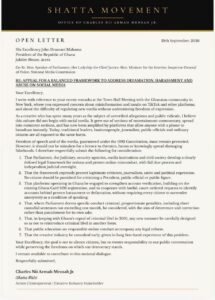
In an open letter dated September 28, 2026, the musician called for a national conversation on how Ghana can respond to harmful online behaviour without creating laws that could be used to suppress legitimate criticism or public debate.
Shatta Wale said the increasing misuse of social media had created the need for clearer rules governing online conduct, particularly in cases involving threats, harassment and the deliberate circulation of false information.
He said his own encounters with what he described as unverified allegations, public ridicule and damaging claims had given him a personal understanding of the impact such conduct could have on individuals.
According to him, Ghana’s commitment to freedom of speech and media freedom under the 1992 Constitution must remain intact.
However, he argued that those freedoms should not be interpreted as giving people unrestricted permission to threaten others, engage in sustained harassment or knowingly circulate false claims that cause serious harm.
Shatta Wale proposed a collaborative approach involving Parliament, the Judiciary, security agencies, media organisations and civil society groups to develop clearly defined rules for serious online misconduct.
He said any such framework must be based on due process and independent judicial oversight, particularly where criminal sanctions or the identification of anonymous social media users are involved.
The artiste also stressed that the law must draw a clear line between harmful conduct and legitimate public expression.
He specifically called for protection for journalism, satire, political commentary and criticism of public officials, arguing that citizens should not face punishment merely because they disagree with or criticise the President, government officials or other public figures.
Shatta Wale further proposed discussions with social media companies operating in Ghana to improve account verification and strengthen cooperation with lawful investigations.
Under his proposal, platforms could respond to court-ordered requests seeking information about accounts involved in proven cases of serious harassment or defamation.
However, he said such measures should not amount to a blanket requirement for every social media user to disclose their identity before participating in public discussions.
He maintained that anonymity can have a legitimate place in public discourse and should not automatically be treated as evidence of wrongdoing.
On possible penalties, Shatta Wale suggested that Parliament could consider proportionate sanctions for specific forms of online conduct that are clearly established as criminal offences.
He proposed that, in appropriate cases, short custodial sentences of no more than one month could be considered, with the broader objective being deterrence, accountability and correction rather than excessive punishment.
At the same time, he cautioned against using new legislation to effectively bring back criminal libel, which Ghana abolished in 2001.
His position comes amid an ongoing national debate over how authorities should respond to allegedly false, threatening or defamatory online statements while respecting constitutional freedoms.
Shatta Wale also called for public education to form part of any response to social media abuse.
He argued that Ghanaians need greater awareness of responsible online behaviour alongside any changes to the law.
He further urged the government to involve members of the creative industry in consultations on the issue, noting that musicians, entertainers and other public figures are among those who frequently experience the effects of social media activity.
For Shatta Wale, the proposed approach should strike a balance between individual accountability and the protection of democratic freedoms.
“The goal is not to silence citizens, but to restore responsibility to our public conversation while preserving the freedoms on which our democracy stands,” he said.