Health & Fitness
Ghana Tightens Borders and Boosts Disease Surveillance as Hantavirus Claims Three Lives on Cruise Ship


WHO and US CDC assess global risk as low, but urge all nations to strengthen preparedness
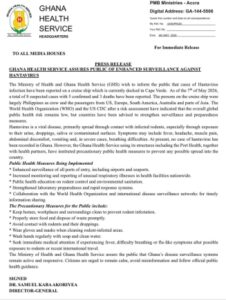
Ghana has ramped up its disease surveillance systems and activated precautionary public health measures at all entry points following a deadly Hantavirus outbreak aboard a cruise ship that has since docked in Cape Verde, the Ghana Health Service (GHS) has announced.
The GHS confirmed that no case of the viral disease has been recorded on Ghanaian soil, but said the proximity of the outbreak and the international profile of those aboard the vessel warranted an immediate and coordinated national response.
Eight suspected cases have been reported on the cruise ship, five of which have been laboratory-confirmed. Three passengers have died. The vessel’s crew were predominantly from the Philippines, while passengers came from the United States, Europe, South America, Australia and parts of Asia.
What Is Hantavirus?
Hantavirus is a viral infection spread primarily through contact with infected rodents — specifically through exposure to their urine, droppings or saliva, or through contaminated surfaces. The disease does not spread from person to person under normal circumstances. Symptoms include fever, severe headaches, muscle pain, abdominal discomfort and vomiting, with serious cases progressing to acute respiratory distress.
The World Health Organisation (WHO) and the United States Centers for Disease Control and Prevention (CDC), following a joint risk assessment, have concluded that the overall global public health risk remains low. However, both bodies have urged countries to strengthen surveillance and preparedness systems as a precaution.
Ghana’s Response
The Ministry of Health and the GHS, working through Port Health authorities and health partners, have instituted a multi-pronged response. Measures now in place include enhanced surveillance at all ports of entry — airports and seaports alike — increased monitoring and reporting of unusual respiratory illnesses at health facilities across the country, strengthened laboratory preparedness, and rapid response systems capable of acting on emerging threats.
Ghana has also intensified collaboration with the WHO and international disease surveillance networks to ensure timely access to evolving information on the outbreak.
A public health education drive on rodent control and environmental sanitation has been launched as part of the response.
Advice to the Public
The GHS has issued a set of practical guidelines for the public, urging Ghanaians to keep their homes, workplaces and surroundings clean to deter rodent infestation; store food properly and dispose of waste promptly; avoid direct contact with rodents or their droppings; wear gloves and masks when cleaning infested areas; and wash hands regularly with soap and water.
Anyone experiencing fever, difficulty breathing or flu-like symptoms following possible exposure to rodents — or after recent international travel — is advised to seek immediate medical attention.
“The Ministry of Health and Ghana Health Service assure the public that Ghana’s disease surveillance systems remain active and responsive,” the GHS statement read, urging citizens to remain calm, disregard misinformation and follow only official public health guidance.