
Health & Fitness
Ghana Tightens Borders and Boosts Disease Surveillance as Hantavirus Claims Three Lives on Cruise Ship

WHO and US CDC assess global risk as low, but urge all nations to strengthen preparedness
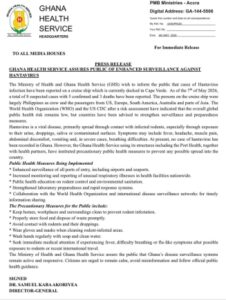
Ghana has ramped up its disease surveillance systems and activated precautionary public health measures at all entry points following a deadly Hantavirus outbreak aboard a cruise ship that has since docked in Cape Verde, the Ghana Health Service (GHS) has announced.
The GHS confirmed that no case of the viral disease has been recorded on Ghanaian soil, but said the proximity of the outbreak and the international profile of those aboard the vessel warranted an immediate and coordinated national response.
Eight suspected cases have been reported on the cruise ship, five of which have been laboratory-confirmed. Three passengers have died. The vessel’s crew were predominantly from the Philippines, while passengers came from the United States, Europe, South America, Australia and parts of Asia.
What Is Hantavirus?
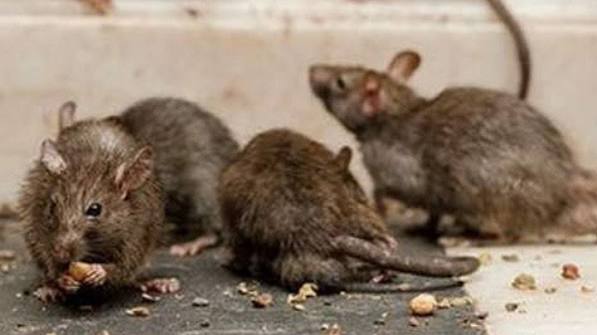
Hantavirus is a viral infection spread primarily through contact with infected rodents — specifically through exposure to their urine, droppings or saliva, or through contaminated surfaces. The disease does not spread from person to person under normal circumstances. Symptoms include fever, severe headaches, muscle pain, abdominal discomfort and vomiting, with serious cases progressing to acute respiratory distress.
The World Health Organisation (WHO) and the United States Centers for Disease Control and Prevention (CDC), following a joint risk assessment, have concluded that the overall global public health risk remains low. However, both bodies have urged countries to strengthen surveillance and preparedness systems as a precaution.
Ghana’s Response
The Ministry of Health and the GHS, working through Port Health authorities and health partners, have instituted a multi-pronged response. Measures now in place include enhanced surveillance at all ports of entry — airports and seaports alike — increased monitoring and reporting of unusual respiratory illnesses at health facilities across the country, strengthened laboratory preparedness, and rapid response systems capable of acting on emerging threats.
Ghana has also intensified collaboration with the WHO and international disease surveillance networks to ensure timely access to evolving information on the outbreak.
A public health education drive on rodent control and environmental sanitation has been launched as part of the response.
Advice to the Public
The GHS has issued a set of practical guidelines for the public, urging Ghanaians to keep their homes, workplaces and surroundings clean to deter rodent infestation; store food properly and dispose of waste promptly; avoid direct contact with rodents or their droppings; wear gloves and masks when cleaning infested areas; and wash hands regularly with soap and water.
Anyone experiencing fever, difficulty breathing or flu-like symptoms following possible exposure to rodents — or after recent international travel — is advised to seek immediate medical attention.
“The Ministry of Health and Ghana Health Service assure the public that Ghana’s disease surveillance systems remain active and responsive,” the GHS statement read, urging citizens to remain calm, disregard misinformation and follow only official public health guidance.



A medical director at C4C Liver Specialist Hospital, Dr George Asiamah Jr., has warned Ghanaians about the potential health risks associated with the frequent consumption of junk and highly processed foods.
According to him, the increasing popularity of junk food has become a major concern as busy lifestyles and demanding work schedules continue to push many people toward convenient food choices.
Speaking to a source at KPDOnline.com, Dr Asiamah said many people now rely on foods such as burgers, pizzas and fried foods because they are easily accessible and require little time to obtain or prepare.
He cautioned, however, that regular consumption of such foods could contribute to several health complications, particularly when combined with a lack of physical activity.

Obesity and Joint Problems
Dr Asiamah identified obesity as one of the major health risks associated with excessive consumption of junk food.
He explained that frequent intake of high-calorie foods can result in excess weight gain and the accumulation of fat, particularly around the abdomen.
He noted that obesity could subsequently contribute to joint pain and arthritis, as the additional body weight places greater pressure on the joints and can affect mobility.
Diabetes and Energy Crashes
The medical director also warned about the high sugar content of many processed foods.
He explained that although sugary foods can provide a quick source of energy, the effect may not last long, potentially resulting in what he described as energy crashes.
In the long term, he cautioned that excessive consumption of sugary foods, particularly when associated with obesity, could increase the risk of Type 2 diabetes.
He explained that the pancreas plays an important role in regulating blood sugar levels and also contributes to digestion, making healthy dietary habits important for its proper functioning.

Heart and Kidney Health
Dr Asiamah also referred to emerging research concerning possible links between exposure to certain chemicals found in some food packaging and fertility problems, mentioning phthalates in particular.
He also pointed to fried and fatty foods as concerns because of their potential contribution to unhealthy cholesterol levels and cardiovascular problems.
According to him, poor circulation and conditions associated with diabetes and high blood pressure can also have implications for vital organs, including the kidneys.
He cautioned that diabetes can particularly place additional strain on the kidneys as the body attempts to remove excess sugar.
Liver Health
As a doctor associated with C4C Liver Specialist Hospital, Dr Asiamah also emphasised the potential impact of poor dietary habits on the liver.
He explained that the liver processes substances entering the body and can be placed under significant strain when a person regularly consumes highly processed and unhealthy foods.
He warned that unhealthy dietary patterns can contribute to fatty liver disease and other liver-related complications.
Fertility and Dental Problems
Dr Asiamah also referred to emerging research concerning possible links between exposure to certain chemicals found in some food packaging and fertility problems, mentioning phthalates in particular.
He further warned that frequent consumption of sugary foods can increase the risk of dental problems such as cavities, tooth decay and gum disease, including gingivitis.
How Can People Reduce the Risks?
Dr Asiamah advised people to gradually reduce their dependence on junk food rather than making it a regular part of their daily diet.
He recommended reducing portion sizes and avoiding the habit of eating junk food every day.
He also advised people who consume such foods to eat them earlier rather than late at night and to engage in physical activity afterwards.
According to him, activities such as walking, dancing, jogging, running and playing football can help people remain physically active and manage their weight.
He stressed the importance of discipline and healthier lifestyle choices, noting that people should be conscious of what they put into their bodies.
“You know, we are what we eat,” Dr Asiamah said, urging the public to make healthier food choices to maintain good health and prevent diet-related conditions.
Dr George Asiamah Jr. is the Medical Director of C4C Liver Specialist Hospital. The hospital operates under the C4C healthcare group and has locations in several Ghanaian cities.
Health & Fitness
Ghana Inflation Drops to 4.6% in July as Price Pressures Ease and Investment Outlook Improves


Ghana’s inflation rate fell to 4.6% in July, marking the first decline after three consecutive months of increases and signalling a gradual easing of consumer price pressures in the economy.
The latest data released by the Ghana Statistical Service (GSS) indicate that headline inflation declined by 0.7 percentage points, moving from 5.3% in June to 4.6% in July.
The reduction means that although prices of goods and services are still increasing, the pace of price growth has slowed, providing some relief to households and businesses affected by rising living costs.
The decline in inflation strengthens expectations that Ghana could continue to maintain price stability within the Bank of Ghana’s medium-term inflation target of 8 ± 2 percent, provided current economic conditions remain favourable.
Food and Non-Food Inflation Decline
The slowdown in inflation was largely driven by reduced price increases in both food and non-food categories.
Food inflation dropped to 3.1% in July from 3.9% in June, reflecting a slower increase in the prices of food items. Meanwhile, non-food inflation eased to 6.1% from 6.3% recorded in the previous month.
Services inflation also recorded an improvement, falling from 9.4% in June to 8.5% in July, indicating a moderation in the cost of services across the economy.
Imported Goods Benefit from Cedi Stability
The GSS report showed that inflation for locally produced goods stood at 5.9%, significantly higher than the 2.0% inflation rate recorded for imported goods.
The lower inflation rate for imported products suggests reduced external price pressures, supported by improved stability in the Ghana cedi and a moderation in global inflation trends.
Food Remains Biggest Driver of Inflation
Government Statistician Dr. Alhassan Iddrisu explained that food and non-alcoholic beverages remained the largest contributor to headline inflation, accounting for 32.4% of total price changes across the 13 divisions of the Consumer Price Index (CPI).
The figures highlight the continued importance of food price stability in improving household welfare and strengthening Ghana’s economic recovery.
Regional Inflation Differences
The latest inflation report also revealed significant differences among regions.
The North East Region recorded the highest inflation rate at 10.8%, while the Bono East Region posted the lowest rate at -3.8%, indicating that average prices in the region were lower compared with the same period last year.
Inflation Decline Boosts Ghana Investment Opportunities
The fall in Ghana’s inflation rate adds to growing signs of improved macroeconomic stability, which could enhance Ghana investment opportunities by creating a more predictable environment for businesses, investors and consumers.
A sustained decline in inflation, combined with exchange rate stability and disciplined fiscal management, could encourage stronger investor confidence, improve purchasing power and support economic growth.
Analysts believe that continued progress on inflation control may also provide room for the Bank of Ghana to consider further monetary policy adjustments, including possible reductions in interest rates, which could lower borrowing costs and stimulate investment activity.
As Ghana continues efforts to strengthen economic stability, the latest inflation figures provide a positive outlook for businesses, investors and households seeking improved financial conditions.
Health & Fitness
KNUST, Breast Care International and International Partners Deepen Cancer Care Partnership

The Kwame Nkrumah University of Science and Technology (KNUST) has reaffirmed its commitment to advancing cancer care, research and healthcare innovation following a high-level courtesy visit by officials from Breast Care International (BCI), Peace and Love Hospitals (PLH) and the University of Washington (UW).

The delegation, which included Dr Mark Fauver from the University of Washington, paid a courtesy call on the Vice-Chancellor of KNUST, Prof. Christian Agyare, to congratulate him on his appointment and discuss ways of strengthening the long-standing collaboration between KNUST, Peace and Love Hospitals/Breast Care International, the University of California, Davis (UC Davis) and the University of Washington.

The meeting focused on expanding partnerships aimed at improving healthcare delivery, enhancing cancer research, promoting innovation and building the capacity of healthcare professionals in Ghana.

Support for Cancer Centre of Excellence
A major outcome of the engagement was Prof. Christian Agyare’s pledge to continue supporting the Otumfuo Osei Tutu II Comprehensive Cancer Centre of Excellence (OOTII CCCOE).

The Vice-Chancellor also expressed his commitment to fostering stronger collaboration between the Centre and KNUST’s Department of Pathology and Department of Biomedical Engineering. The proposed partnership is expected to strengthen training, research, technological innovation and multidisciplinary collaboration in cancer diagnosis and treatment.

According to the delegation, the discussions reaffirmed the shared vision of all partner institutions to improve cancer care through strategic partnerships that combine academic excellence, medical expertise and international collaboration.
Longstanding Partnership
The courtesy visit marked another milestone in the enduring relationship between KNUST, Breast Care International, Peace and Love Hospitals and their international partners.

The institutions noted that continued collaboration with UC Davis and the University of Washington will help accelerate research, enhance medical training and improve access to quality cancer care for patients across Ghana.

The delegation expressed appreciation to Prof. Christian Agyare for his warm reception, continued support and commitment to strengthening partnerships that will contribute to improved healthcare outcomes.
They also reiterated their collective resolve to build a stronger future for cancer care in Ghana through sustained collaboration, innovation and capacity bui
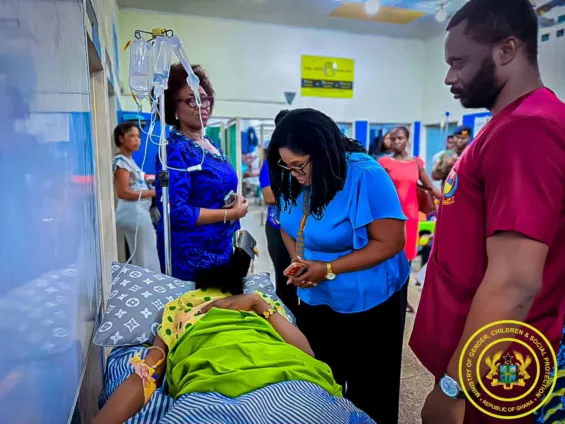
The Minister for Gender, Children and Social Protection, Dr Agnes Naa Momo Lartey, has visited schoolchildren injured in the Dzorwulu-Accra Mall crash, assuring their families of the government’s full support throughout their recovery.
The children are currently receiving treatment at the 37 Military Hospital after a school bus carrying pupils collided with a tipper truck on the Dzorwulu-Accra Mall stretch on Thursday, July 30.
During her visit, Dr Lartey described the accident as heartbreaking and expressed her deepest sympathy to the injured children and their families. She assured them that the government remains committed to supporting their recovery and ensuring they receive the necessary care.

The Gender Minister’s visit to the injured schoolchildren also highlighted the government’s appreciation for the efforts of the Ghana National Fire Service, the Ghana Police Service, other security agencies, emergency responders, and members of the public whose swift intervention helped rescue the children and ensure they received prompt medical attention.

Dr Lartey further commended the management and medical staff of the 37 Military Hospital for their professionalism, quick response, and dedication in treating the injured pupils.
She noted that investigations into the cause of the Dzorwulu-Accra Mall crash are ongoing, expressing confidence that the appropriate authorities will establish the facts and ensure accountability where necessary.

The Minister is expected to continue visiting the remaining injured children receiving treatment at other health facilities to offer the government’s support and monitor their recovery.
Dr Agnes Naa Momo Lartey was accompanied by the Ministry’s Chief Director, Dr Marian W. A. Kpakpah, and the Director of Social Protection, Madam Francisca Atuluk, during the visit.
Videocredit@DAT NEWS
Health & Fitness
KETEWA BIAA NSUA Campaign Calls on Ghanaians to Support Otumfuo Osei Tutu II Comprehensive Cancer Centre

KETEWA BIAA NSUA Campaign Launched to Support Ghana’s Premier Cancer Centre
The Otumfuo Osei Tutu II Comprehensive Cancer Centre of Excellence (OOTII CCCOE) has intensified efforts to raise funds for the construction and development of what it describes as “The Sanctuary of Excellence” through the KETEWA BIAA NSUA Campaign.
The nationwide fundraising initiative is calling on Ghanaians, corporate organisations, philanthropists and the international community to contribute towards the establishment of a world-class cancer treatment and research facility in Ghana.
Leading the campaign is Dr Beatrice Wiafe Addai, Founding Director of the OOTII CCCOE and Founder of Breast Care International. She is joined by prominent national figures including Former President John Agyekum Kufuor, who serves as Patron of the OOTII CCCOE, Otumfuo Osei Tutu II, the Asantehene, and Bishop Dr Evans Glover, Chairman of the Ghana Faith-Based and Institutional Trust (GFTII) CCCOE.
According to the campaign, every contribution, no matter how small, will help bring the vision of the Otumfuo Osei Tutu II Comprehensive Cancer Centre of Excellence closer to reality. The centre is expected to become a state-of-the-art facility dedicated to cancer prevention, diagnosis, treatment, research and patient care.
To make donations easier, the organisers have provided several payment options. Supporters can contribute via the official MTN Mobile Money number 059 615 8527, which has been dedicated exclusively to the project.
Bank transfers can also be made through Fidelity Bank Ghana Limited using the following details:
GHS Account: 1951273352017
USD Account: 1851273352012
SWIFT Code: FBLIGHAC
The organisers have also encouraged individuals and institutions interested in partnering with the initiative to contact them on 0241918187 or 0502243388.
For more information about the campaign and the cancer centre project, the public is encouraged to visit www.cccoegh.org.
The campaign is supported by Breast Care International, the Otumfuo Osei Tutu II Comprehensive Cancer Centre of Excellence, the Global Health Catalyst Summit, and the Otumfuo Osei Tutu II Charity Foundation.


Afenyo-Markin Sues Sammy Gyamfi, Multimedia Over Alleged ‘Extortionist’ Remark

Mahama’s Adamus Intervention Tests Ghanaian Ownership in Large-Scale Mining

Ghana targets 70% local medicine production under five-year plan – Mahama



-

 Education2 weeks ago
Online Classes and Education: Are They the Future of Learning?
-

 Entertainment2 weeks ago
Let Them Come Home: Ras Caleb Urges Africa to Embrace Diaspora Returnees
-

 General News1 week ago
KFC Ghana Faces Legal Scrutiny Over Customer Safety During GH¢15 Anniversary Promotion
-

 Entertainment2 weeks ago
Say a Prayer and Make a Move – Sarkodie to Fans
-

 Entertainment2 weeks ago
Tima Kumkum Confirms Marriage Has Ended After One Year, Nine Months
-

 General News2 weeks ago
IGP Promotes 25 Police Personnel for Exceptional Performance in the Fight Against Crime
-

 General News1 week ago
BOST Makes Over GH¢10 Million From Faulty Flow Meter Charges, Tanker Drivers Claim
-

 Entertainment2 weeks ago
Tourism Minister responds to concerns over support for comedians, says Creative Arts Agency will engage industry