Entertainment
Let Them Come Home: Ras Caleb Urges Africa to Embrace Diaspora Returnees


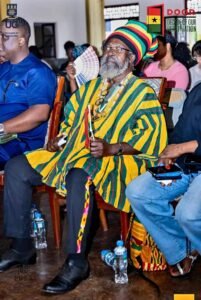
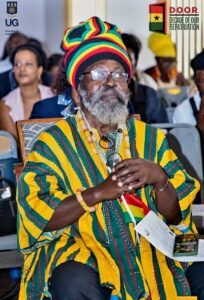
Pan-Africanist musician and Founder of PanAfrica-Ghana (PAG), Ras Caleb Appiah-Levi, has called on African Heads of State, traditional rulers and policymakers to establish a formal framework for the voluntary repatriation and resettlement of Africans in the Diaspora who wish to return to the continent.
In an open letter titled The Slave Route Project and Africans in the Diaspora: Back to Africa Agenda (BATAA), Ras Caleb appealed to African leaders to recognise the historical connection between the continent and Africans living in the Caribbean, the Americas, England and Europe.
He said many Africans in the Diaspora have, for centuries, sought to return to Africa and contribute their skills and resources to the continent’s development.
Ras Caleb, who is also the Founding President, Project Initiator and Coordinator of PanAfrica-Ghana and Prodigy International Productions Association (PIPA), said the issue of repatriation had previously been brought before the Organisation of African Unity (OAU), now the African Union (AU), but called for a clear continental position on the matter.
His advocacy for Pan-African cooperation is consistent with his previous work through PanAfrica-Ghana, including participation in continental initiatives and engagements aimed at strengthening African unity and cultural cooperation.
Call for repatriation status
At the centre of the open letter is a demand for African governments to introduce a repatriation status for Africans in the Western Hemisphere who voluntarily choose to return to Africa.
Ras Caleb proposed that returnees should be granted permanent residency leading to citizenship within three to five years, while also proposing citizenship upon arrival for appropriate categories.
He argued that Africans from the Diaspora who return to the continent should not simply be treated as visitors whose visas expire after a limited period.
According to him, the historical circumstances surrounding the displacement of Africans through slavery make the return of those who wish to settle in Africa different from ordinary immigration.
He therefore urged African governments to develop immigration policies that recognise the unique relationship between Africa and its Diaspora.
Land for resettlement
Ras Caleb also called for African governments to make land available for the resettlement of returning Africans.
He proposed that land be allocated around agricultural areas and supported with basic infrastructure such as roads, water and electricity.
He said the initiative could provide opportunities for Africans in the Diaspora to invest their knowledge, skills and resources in Africa while helping to strengthen food production and economic self-sufficiency.
According to him, resettlement could take place on both individual and cooperative bases.
He said returning Africans could participate in farming, construction, manufacturing, healthcare, education, technology and other productive sectors.
Diaspora skills for Africa’s development
The Pan-Africanist said the African Diaspora possesses a wide range of professional expertise that could contribute significantly to the continent’s development.
He listed doctors, nurses, pharmacists, engineers, technicians, teachers, fishermen, farmers, scientists, musicians, actors and other professionals among those who could contribute to Africa’s economic transformation.
He argued that a structured repatriation programme could help Africa benefit from the knowledge, skills and experience of people who have lived and worked outside the continent.
Ras Caleb also proposed the establishment of cooperative structures through which returnees could jointly invest in agriculture and other economic activities.
He referred to the late Professor Joshua Naphtali Mkhululi, formerly Ken Edwards, whom he described as an African born in Jamaica who self-repatriated and settled in Tanzania in 1976.
Ras Caleb said Professor Mkhululi played a role in the creation of the Faculty of Management at the University of Dar-es-Salaam and later worked as a management consultant for Ghana’s State Enterprises Commission between 1991 and 1995.
He further stated that Professor Mkhululi attended an OAU Summit in Abuja, Nigeria, in 1991, where he obtained documents relating to reparations.
Ras Caleb cited a proposal contained in those documents which called for Africans in the New World to be allowed to enjoy dual citizenship of an African country they chose as their home.
Immigration and visa concerns
Another major concern raised in the letter is the immigration status of Africans returning to the continent.
Ras Caleb argued that requiring Diaspora returnees to enter Africa only on temporary visitor visas fails to reflect their intention to permanently reconnect with their ancestral homeland.
He questioned what happens when such visas expire, and a person is required to leave Africa.
He said some returnees could also face difficulties if they are unable to secure employment within a short period after arrival.
According to him, such circumstances could result in people being classified as prohibited immigrants despite their intention to settle and contribute to Africa.
He therefore called for immigration systems that would provide returning Africans with permanent residency or citizenship.
The letter also addresses the long-standing issue of reparations for Africa and people of African descent.
Ras Caleb argued that Africans and people of African descent suffered extensive human and economic losses as a result of the transatlantic slave trade and colonialism.
He said Africans were subjected to killing, torture, exploitation, brutalisation and dehumanisation during the slave trade, while colonialism subsequently subjected African societies to further suppression and economic exploitation.
He argued that these historical experiences contributed to some of the challenges facing the continent today.
However, he said Africans must not focus only on seeking compensation from Western countries.
Instead, he called for Africans to organise themselves and take practical measures to rebuild the continent.
He linked this approach to his proposed Healing Africa Tour (HAT) initiative, which he said is aimed at encouraging practical action towards the development and healing of African societies.
Four key demands
In the letter, Ras Caleb outlined four specific requests to African governments and traditional authorities.
Repatriation status:
He called for Africans in the Western Hemisphere who choose to return to Africa to be granted repatriation status, with permanent residency leading to citizenship within three to five years or citizenship upon arrival for appropriate categories.
Land and infrastructure:
He urged governments to pledge suitable land for resettlement, particularly around agricultural areas, and assist with infrastructure development, including roads, water and electricity.
Duty-free access:
He called for returning Africans to be granted duty-free access for their material possessions when relocating permanently to the continent.
Concessionary building materials:
He also requested concessionary prices on building materials to help returnees establish homes, businesses and communities.
Ras Caleb also said one of the biggest challenges facing the African unity agenda is the historical divide between Africans on the continent and Africans in the Diaspora.
He argued that centuries of slavery, colonialism and displacement created misconceptions on both sides.
According to him, some Africans in the Diaspora developed negative perceptions about Africans on the continent, while some Africans at home viewed Diaspora Africans as outsiders.
He said these divisions must be overcome if Africa is to achieve genuine unity.
He also highlighted the contribution of Pan-African and Rastafari communities to the campaign for reconnecting Africans in the Diaspora with the continent.
He said many members of the Diaspora have faced discrimination and other challenges because of their commitment to African causes.
Agriculture and food security:
The letter places considerable emphasis on agriculture.
Ras Caleb argued that Africa should strengthen its ability to produce enough food for its population rather than relying heavily on food imports.
He believes returning Africans could help develop agricultural land through individual investments and cooperative farming projects.
He said such initiatives could contribute to employment, food security and rural development while allowing returnees to build sustainable livelihoods.
Historical OAU involvement
Ras Caleb also referred to an OAU Council of Ministers meeting held in Addis Ababa, Ethiopia, from February 19 to 24, 1990.
He said Professor Mkhululi participated in the proceedings in connection with his work as a temporary United Nations Development Programme (UNDP) management consultant assigned to improve the administrative and management capacity of the OAU.
Ras Caleb said discussions at the time included calls for African institutions to be concerned about the freedom and welfare of Africans around the world.
He argued that such historical discussions should inform current efforts to strengthen relations between Africa and the Diaspora.
Government responsibility
Ras Caleb acknowledged that large-scale resettlement would require significant financial resources and cooperation from governments.
He cited historical examples of governments supporting the relocation and resettlement of populations and argued that African governments could similarly develop structured programmes for members of the African Diaspora who voluntarily wish to return.
He said the responsibility should not be left entirely to individuals but should involve governments, traditional authorities, civil society organisations and development partners.
A call for African unity
The Pan-Africanist concluded by urging African leaders to consider his proposals as part of a broader agenda for African unity, development and self-sufficiency.
He said the return of Africans in the Diaspora should be viewed not only as a historical issue but also as an opportunity to mobilise human capital, investment, skills and expertise for the development of the continent.
He called for an organised system that would make it easier for Africans in the Diaspora to return, acquire land, establish businesses, participate in agriculture and contribute to their communities.
Ras Caleb said a positive response from African leaders would be historically significant and could strengthen the relationship between Africans on the continent and those living abroad.
He signed the letter as Musician and Pan-Africanist, Founding President, Project Initiator and Coordinator of PanAfrica-Ghana (PAG) and Prodigy International Productions Association (PIPA).
Ras Caleb has previously represented PanAfrica-Ghana in international Pan-African activities, including the 2024 Africa Youth Congress in Kampala, Uganda, where the organisation was involved in discussions on Africanism, culture and development.
He ended the letter with a call for greater solidarity among Africans across the world.
Long Live Africa, Long Live Africans, Long Live World Solidarity.”