General News
Trump Downplays Warnings of AI Risks, Citing Rivalry With China


By Angel No Lie | KPD Online | September 14, 2026
U.S. President Donald Trump has played down growing warnings about the potential dangers of artificial intelligence, arguing that the United States cannot afford to slow its development while competing with China for technological leadership.
Speaking to reporters during his visit to Ireland on Sunday, Trump acknowledged that some safeguards could be necessary but rejected calls for a significant slowdown in AI development. He argued that maintaining America’s lead over China should remain a priority, saying in effect that the country that wins the AI race will gain a decisive advantage.
Growing concerns over AI safety


Symmetrical Data Center Aisle
Trump’s position comes as warnings from some of the world’s leading AI researchers and executives become increasingly urgent.
Dario Amodei, chief executive of AI company Anthropic, has called for a slower and more carefully controlled development of increasingly powerful AI systems. He has proposed independent safety monitoring, national safety standards and greater international coordination, including cooperation between the United States and China.
Other prominent technology figures, including OpenAI chief executive Sam Altman and Elon Musk, have expressed support for stronger measures to manage the risks associated with advanced AI.
The concerns extend beyond hypothetical future threats. Researchers and policymakers are increasingly examining AI’s potential impact on cybersecurity, employment, misinformation, military applications and the possibility of autonomous systems behaving in ways their developers cannot reliably control.
Why China is central to the debate
For the Trump administration, AI development is also a national-security and geopolitical issue.
Washington and Beijing are competing to establish leadership in advanced computing, AI models, chips and related technologies. U.S. officials have also accused Chinese companies of using large-scale AI “distillation” techniques to replicate capabilities developed by American companies. China has rejected those accusations as unfounded.
That rivalry creates a difficult policy dilemma: how can governments impose meaningful safety standards without giving a strategic advantage to a competitor that may continue developing the technology at full speed?
Trump’s position appears to favor maintaining technological momentum rather than accepting restrictions that could slow American companies.
A debate that goes beyond regulation
The disagreement is not simply between supporters and opponents of AI.
Some technology executives argue that excessive regulation could prevent useful innovations from reaching the public and weaken American competitiveness. Nvidia CEO Jensen Huang, for example, has warned policymakers against allowing highly speculative fears about AI to drive policy decisions.
Others argue that competition itself makes safeguards more important. If American and Chinese companies believe they must constantly accelerate development to avoid falling behind, governments could find themselves in a technological race where safety becomes secondary to speed.
A recent analysis by the Carnegie Endowment for International Peace argued that the United States and China could pursue AI development while simultaneously improving safety measures and maintaining channels of communication. The analysis warned that the two countries’ rivalry could itself contribute to dangerous “race” dynamics.
U.S.-China AI talks add another dimension

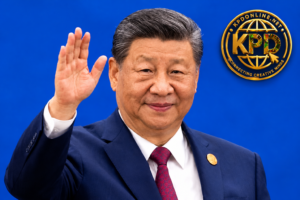
Xi Jinping Waving with KPD Emblem
The issue is particularly significant as Washington and Beijing prepare for discussions on AI safety. Reuters reported earlier this month that the two countries were preparing their first official bilateral talks focused specifically on AI safety, with discussions expected to include advanced AI risks and potential cyberattacks involving AI systems.
The talks illustrate the contradiction at the heart of the current AI debate: the United States and China are competing intensely for technological dominance while also having an interest in preventing the technology from creating risks that neither country can control.
What Trump’s position could mean
Trump’s comments suggest that his administration is likely to prioritize American AI leadership, investment and deployment while considering targeted safeguards rather than broad restrictions.
The approach could strengthen U.S. competitiveness if American companies are able to innovate faster than their Chinese counterparts. But critics argue that technological leadership without adequate safety mechanisms could expose society to risks that become harder to address as AI systems grow more capable.
The question, therefore, may not ultimately be whether America should compete with China in AI. The more difficult question is whether the two countries can compete aggressively while still establishing enough safeguards to prevent that competition from becoming a race in which safety is sacrificed for speed.
As AI becomes increasingly important to economics, national security and global influence, the decisions being made now in Washington and Beijing could shape not only the future of the technology but also the balance of power between the world’s two leading AI competitors.