Entertainment
A.B. Crentsil: The Highlife Legend Many Ghanaians Are Slowly Forgetting


Long before Ghanaian music became a global phenomenon, before Afrobeats dominated international charts and before musicians could promote songs instantly through TikTok, YouTube and Instagram, Ghana had a generation of highlife musicians who entertained, educated and documented society through music.
One of the most remarkable among them was A.B. Crentsil, a musician whose name was once synonymous with Ghanaian highlife.
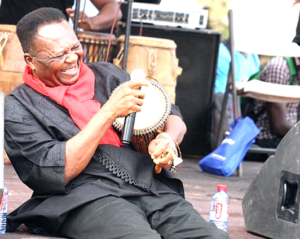

For decades, his songs could be heard at parties, drinking spots, weddings, funerals, homes and social gatherings across the country. He had a remarkable ability to transform ordinary Ghanaian experiences into memorable songs.
Today, however, many young Ghanaians know his music without necessarily knowing the man behind it.


Who Was A.B. Crentsil?
A.B. Crentsil was born Alfred Benjamin Crentsil on January 25, 1943, in Prestea in the Western Region, and became one of the prominent figures in Ghana’s highlife tradition.
He rose to prominence during a period when live bands were the heartbeat of Ghana’s entertainment industry. Unlike today’s musicians, who can record a song in a studio and distribute it worldwide within minutes, musicians of Crentsil’s generation depended heavily on live performances, record production, radio airplay and word-of-mouth promotion.
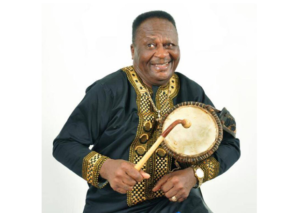

He developed a unique musical identity built around highlife rhythms, humour, storytelling and social commentary.
A major reason Crentsil became so popular was his ability to sing about things ordinary people could relate to.
His songs touched on love, relationships, marriage, money, family, social behaviour, temptation, politics and everyday struggles.
Rather than making his music unnecessarily complicated, he often used simple language and situations familiar to his audience.
That made his songs easy to remember and sing along to.


Some of His Best-Known Songs
Among the songs most strongly associated with A.B. Crentsil is “Angelina,” one of the enduring highlife songs of his career.
The song became a major part of Ghana’s popular music culture and helped cement Crentsil’s reputation as an artiste who could combine humour, storytelling and infectious rhythms.
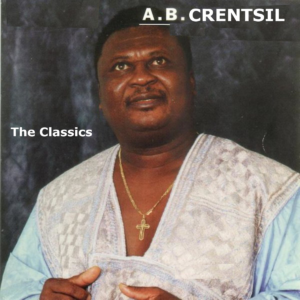
His other widely remembered recordings include “Juliana,” “Moses,” “Atia,” “Obuoba,” “Papa Samo,” “Akpeteshie,” “Adwoa Yankyera,” “I Don’t Know Why,” and other songs that formed part of his extensive highlife catalogue.
His repertoire was much larger than the few songs that continue to receive occasional radio play today.

“Angelina” and the Crentsil Sound
“Angelina” remains particularly important when discussing Crentsil’s legacy.
The song demonstrates several characteristics that made his music distinctive: an entertaining storyline, a memorable rhythm and lyrics that connected with everyday listeners.
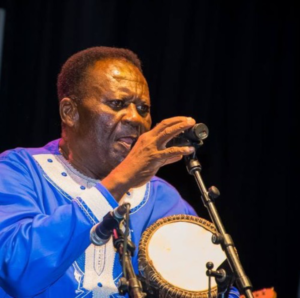

Crentsil understood that a highlife song did not have to be complicated to be powerful.
A simple story, when combined with the right rhythm and delivery, could become a national favourite.


Crentsil was not simply making music for people to dance to.
Like many great Ghanaian highlife musicians, he used music to comment on society.
His songs could poke fun at human behaviour, discuss relationships or highlight social problems.
This made his music something of an informal record of Ghanaian society.
Listening to older highlife recordings today can therefore reveal how people lived, spoke, loved, argued and interacted with one another several decades ago.


The World That Created A.B. Crentsil
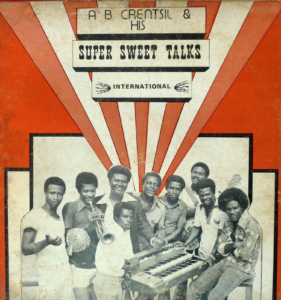
Crentsil’s career belongs to an era when Ghanaian musicians were often inseparable from live bands.
Musicians rehearsed together, travelled to different communities and performed for hours.
There was no social media campaign to announce a new single.

There were no streaming numbers to determine whether a song was successful.
A musician had to win over the audience directly.
The relationship between the band and the crowd was therefore extremely important.
Crentsil’s ability to entertain audiences helped him remain relevant for many years.
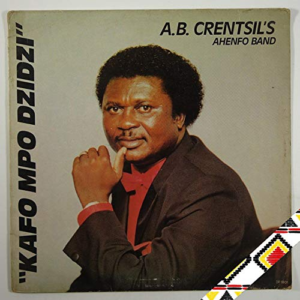
One of the most interesting things about Crentsil’s music is that it was not restricted to one particular age group.
Older Ghanaians grew up with his songs, while younger people encountered them through parents, parties, radio programmes and social gatherings.
Some of his songs eventually became cultural references.
Even people who may not have followed his career closely could recognise some of his melodies.
That is the mark of an artiste whose music has entered popular culture.

Why His Music Should Be Preserved
The decline in the popularity of older Ghanaian music presents a serious cultural challenge.
Many recordings from the country’s highlife era are not easily accessible on modern streaming platforms.
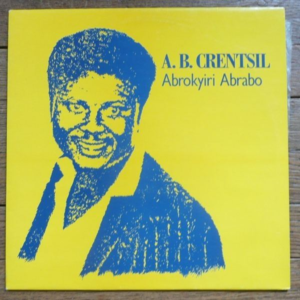
Some songs can only be found through old vinyl records, cassettes, private collections, radio archives or recordings shared by enthusiasts.
This means that Ghana could potentially lose part of its musical history if the recordings are not properly preserved and digitised.
Crentsil’s catalogue deserves particular attention because it represents a significant period in the development of Ghanaian popular music.
A.B. Crentsil’s Place in Ghanaian History
When the history of Ghanaian music is written, A.B. Crentsil should not be remembered simply as the man who sang “Angelina.”
He was much more than one hit song.
He was a storyteller, entertainer, bandleader and chronicler of Ghanaian life whose career spanned generations.
His music captured a Ghana that is gradually changing.
The language, social situations, humour and musical arrangements found in his recordings provide today’s listeners with a window into an earlier Ghana.


The Forgotten Question
Perhaps the biggest question is not whether A.B. Crentsil was successful.
He clearly was.
The bigger question is whether Ghana is doing enough to ensure that musicians like him remain known to future generations.
Today’s young artistes are building the next chapter of Ghanaian music.
But every new chapter needs the pages that came before it.
A.B. Crentsil was one of those important pages.
His music deserves to be heard again—not only as nostalgia, but as part of Ghana’s cultural history.

Some A.B. Crentsil songs worth rediscovering
Angelina
Juliana
Moses
Atia
Obuoba
Papa Samo
Akpeteshie
Adwoa Yankyera
I Don’t Know Why

These songs offer only a glimpse into a much larger catalogue that deserves renewed attention from music historians, radio stations, streaming platforms and younger Ghanaian listeners.
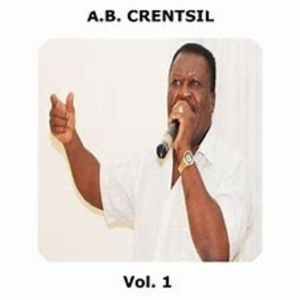
A.B. Crentsil may belong to an older generation, but his music remains part of the Ghanaian story.