
Politics
GH¢70,000 MEMO BOMBSHELL: Speaker Backs OSP Probe Into Patricia Appiagyei Allegation

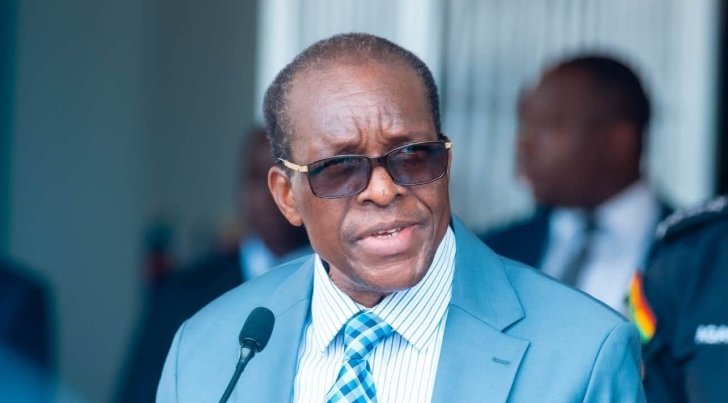
Bagbin demands answers as Parliament opens its doors to investigators over controversial memo — fabricated document or explosive truth?
The controversy surrounding the alleged GH¢70,000 payment linked to the vetting of ministerial and Supreme Court nominees has taken a dramatic turn, with the Speaker of Parliament, Alban Sumana Kingsford Bagbin, throwing his full support behind an investigation by the Office of the Special Prosecutor (OSP).
The development follows the circulation of a controversial memorandum purportedly authored by Asokwa MP and Deputy Minority Leader Patricia Appiagyei, alleging that she received and subsequently returned GH¢70,000 connected to the work of Parliament’s Appointments Committee.
But there is a major twist.
Appiagyei has denied authoring the document and described it as fake. The OSP has nevertheless opened a preliminary investigation to establish whether the document is genuine, where the alleged money came from and what purpose it was intended to serve.
Speaker Says: Investigate Everything
Speaker Bagbin has now made it clear that Parliament has nothing to hide.
In a statement issued on September 5, Parliament said the Speaker welcomed the OSP’s investigation and urged the anti-corruption agency to pursue the matter thoroughly and expeditiously.
The investigation, according to the Speaker, must establish both the authenticity of the disputed memorandum and the truth or otherwise of the allegations contained in it.
This means investigators are expected to follow the evidence wherever it leads — whether the allegations turn out to be genuine or the entire memo is ultimately exposed as a fabrication.
What Is the GH¢70,000 Controversy About?
The disputed memo allegedly claimed that Patricia Appiagyei had returned GH¢70,000 said to have been allocated to her as an advance from the Majority Chief Whip in connection with the vetting of two ministerial nominees and three Supreme Court nominees.
The purported document also raised questions about the source and purpose of the money and suggested concerns over whether such payments could create the appearance of improper financial inducement during parliamentary vetting.
The allegations have triggered significant public interest because of the constitutional importance of Parliament’s Appointments Committee.
Appiagyei: “I Did Not Write It”
Despite the contents of the document, Appiagyei has categorically rejected the memo.
In a statement from her office, she said she did not write, authorise or circulate the document and described it as fake.
That denial has transformed the controversy into two major questions:
Did the alleged GH¢70,000 payment actually exist?
And if the memo is fake, who created it and why?
The OSP has indicated that both issues fall within the scope of its preliminary investigation.
Speaker: If It Is Fake, Find the Culprits
Speaker Bagbin has gone further, warning that the matter should not end simply because investigators establish that the document was fabricated.
If the investigation confirms that the memo was falsely attributed to Appiagyei, the Speaker wants the relevant authorities to identify the individuals behind its creation and circulation.
Parliament has indicated that the Cyber Security Authority and other relevant law-enforcement agencies could be enlisted to help identify those responsible if evidence establishes that the document was fabricated.
Parliament Warns Against Attacks on Its Integrity
The Speaker says the controversy goes beyond one MP or one disputed document.
According to Parliament, deliberately creating and circulating false documents purporting to originate from MPs or parliamentary offices would constitute a serious attack on the integrity and reputation of Parliament.
The institution therefore wants the matter resolved conclusively.
If the allegations are true, the facts must come out.
If the document is fake, the people behind it must also be exposed.
OSP Already Has Appiagyei in Its Sights
The OSP has confirmed that it has invited Patricia Appiagyei to assist with its preliminary investigation.
The anti-corruption agency says its probe is examining three critical issues:
- The authenticity of the disputed memorandum;
- The source of the alleged GH¢70,000; and
- The purpose for which the money was allegedly provided.
The OSP has also stated that it is actively investigating allegations of extortion involving Members of Parliament.
Bagbin: Let the Facts Speak
For now, Parliament says it has not independently verified the authenticity of the memo and will not prejudge the competing claims.
The Speaker is therefore urging the public and the media to exercise caution and avoid drawing definitive conclusions before investigators establish the facts.
But his message is unmistakable:
Investigate it. Establish the truth. And if anyone broke the law, let the law take its course.
The Big Questions Remain
As the OSP probe gathers momentum, attention is now fixed on what investigators will uncover.
Was the GH¢70,000 payment real?
Was the controversial memo genuinely authored by Patricia Appiagyei?
Or was the document deliberately fabricated and circulated to damage her reputation and undermine confidence in Parliament?
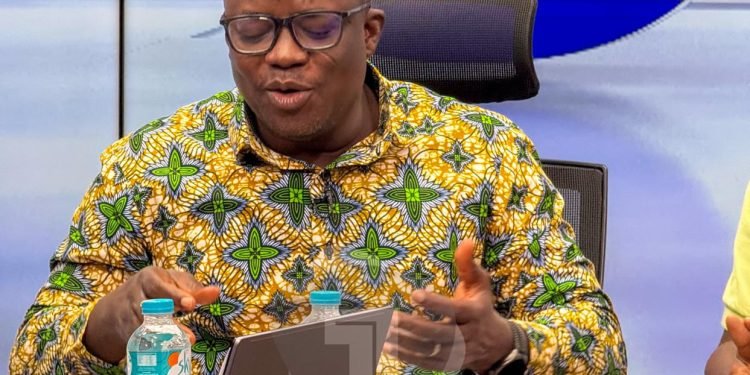
Political scientist says Chief Justice’s remarks on SSNIT, MIIF could damage public confidence in judicial independence
The controversy surrounding Chief Justice Paul Baffoe-Bonnie’s comments on the performance of state-owned enterprises (SOEs) has taken another dramatic turn, with University of Ghana political scientist Dr Joshua Ebuntie Zaato warning that the remarks could undermine the independence and credibility of the Judiciary.
Dr Zaato, a Senior Lecturer at the University of Ghana’s Department of Political Science, argued that the Chief Justice must be particularly cautious about entering areas that could be interpreted as political commentary.
According to him, the Judiciary occupies a unique constitutional position and must remain sufficiently removed from political contestation to preserve public confidence.
“THIS IS AN ATTEMPT TO CANNIBALISE THE JUDICIARY”
Speaking on The Big Issue on Channel One TV, Dr Zaato launched a strong defence of the separation of powers, insisting that citizens depend on the Judiciary as a protection against abuse and tyranny.
He argued that the Chief Justice’s comments risk pulling the judicial arm of government into the political arena.
Dr Zaato described the situation as an attempt to “cannibalise” the Judiciary by drawing it closer to the Executive and political discourse.
His concern is that once the head of the Judiciary is perceived as taking positions on the performance of governments or state institutions, questions about judicial neutrality could inevitably arise.
WHY IS THE CHIEF JUSTICE TALKING ABOUT GOVERNMENT’S RECORD?
Dr Zaato questioned why the Chief Justice would comment on the performance of state institutions when government already has officials responsible for defending its record.
He pointed specifically to the government’s communication machinery, arguing that there was no need for the Chief Justice to become an apparent defender of the performance of state institutions.
For him, the issue goes beyond whether the Chief Justice’s observations were factually correct.
The bigger concern, he suggested, is how such comments are perceived by the public and whether they could weaken confidence in the Judiciary as an independent arm of government.
“WHY ONLY THE LAST EIGHT YEARS?”
Dr Zaato also took issue with the apparent focus on the performance of SOEs over the previous eight years.
He questioned why an assessment of institutions such as SSNIT should be limited to the period of the Akufo-Addo administration rather than examining the institution’s performance across a much longer period.
He argued that comparing an eight-year period with only two years of the current administration could create an impression of political selectivity.
“If you’re trying to use eight years and two years, it’s wrong,” he argued.
NPP ALREADY DEMANDS RETRACTION
The latest criticism comes after the New Patriotic Party (NPP) also attacked the Chief Justice’s comments, describing them as political and calling on him either to retract the remarks and apologise or resign.
The controversy followed the Chief Justice’s recent outreach engagements with state institutions, including SSNIT and the Minerals Income Investment Fund (MIIF).
During the engagements, Baffoe-Bonnie commented on the performance of the institutions and referred to improvements he said had been recorded.
JUDICIAL SERVICE FIRES BACK
But the Judicial Service has rejected suggestions that the Chief Justice intended to compromise judicial independence.
In a statement issued by Judicial Secretary Musah Ahmed, the Service said the observations were made in good faith and were not intended to serve any purpose inimical to judicial independence.
The statement further reaffirmed the Chief Justice’s commitment to protecting the integrity and independence of the Judiciary and promoting justice and equality before the law.
THE BIG QUESTION
The unfolding controversy has now placed Chief Justice Baffoe-Bonnie at the centre of an increasingly heated national debate over where judicial commentary should end and political commentary should begin.
While the Judicial Service insists the remarks were made in good faith, critics such as Dr Zaato believe the perception created by the comments could be damaging enough to warrant serious concern.
And with political actors already weighing in, the debate is unlikely to disappear anytime soon.
For Dr Zaato, the warning is blunt: the Judiciary must guard its independence fiercely — because once public confidence begins to erode, rebuilding it could be far more difficult.
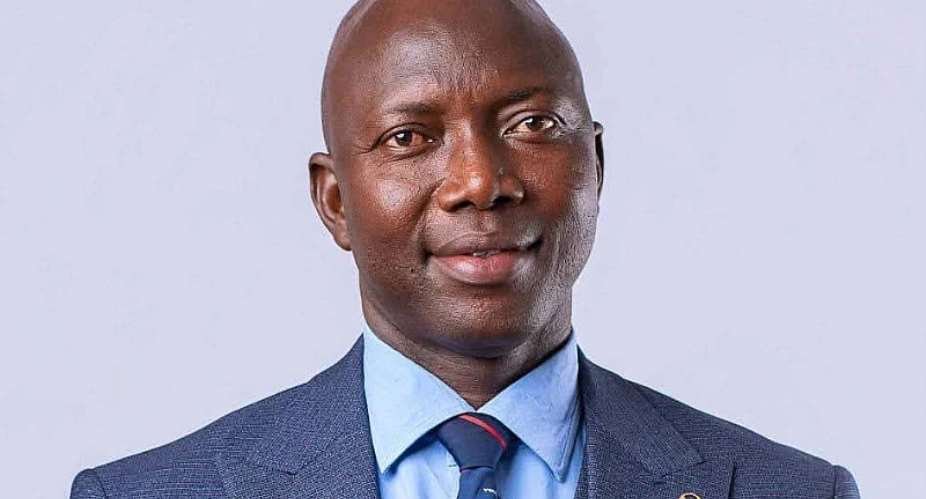
Former Dean of Presiding Members brings 16 years of party mobilisation, local governance and academic experience into the contest
The race for the Upper East Regional Secretary position of the National Democratic Congress (NDC) is gathering momentum following the declaration of James Gbandan Konzabre, former Dean of Presiding Members in the region.
Mr. Konzabre has formally announced his intention to contest the position, entering the race with a profile that combines grassroots party organisation, local government experience, education, youth mobilisation and public service.
16 YEARS OF GRASSROOTS MOBILISATION
Mr. Konzabre’s campaign is being built around what he describes as “Leadership That Works.”
A significant part of his political experience comes from his 16-year tenure as the Upper East Regional Coordinator of the NDC’s Tertiary Education Institutions Network (TEIN), where he was involved in organising, mentoring and mobilising young members of the party.
He has also served the NDC at constituency and regional levels, giving him considerable exposure to the party’s grassroots structures.
FROM ASSEMBLY LEADERSHIP TO REGIONAL POLITICS
Beyond party politics, Mr. Konzabre has an extensive local government background.
He served as Presiding Member of the Talensi-Nabdam/Talensi District Assembly for four years before becoming Dean of Presiding Members in the Upper East Region, a position he held for two years.
He also served as Assembly Member for the Kulpeliga Electoral Area and participated in the work of the Assembly’s Executive Committee and the Upper East Regional Coordinating Council.
His governance experience includes chairing the Audit Report Implementation Committee (ARIC) and the Public Relations and Complaints Committee of the Assembly.
AN NDC CAMPAIGNER WITH ELECTION EXPERIENCE
Konzabre has also been deeply involved in the NDC’s electoral machinery.
He served as the party’s Presidential and Parliamentary Elections Collation Agent for the Talensi Constituency in 2015, 2016, 2020 and 2024, while also serving on the constituency campaign team during those four election cycles.
He was additionally a Campaign Coordinator for the Talensi East Zone Campaign Team in 2016 and 2020 and served on the NDC Upper East Regional Youth Working Committee.
His political record further includes serving as a polling agent for former President John Dramani Mahama during the NDC’s 2019 presidential primary and working as NDC Branch Secretary of Kulpeliga Primary School ‘A’.
ACADEMIC AND PROFESSIONAL BACKGROUND
Mr. Konzabre’s professional career is rooted largely in education.
He spent 16 years as a lecturer at St John Bosco’s College of Education, where he was involved in teaching, mentoring, coaching, research and community service.
He subsequently headed the Social Studies Unit for four years and the Arts and Social Sciences Department for seven years, while also serving as Recording Secretary of the college’s Governing Council.
He has additionally lectured part-time at the University of Cape Coast and the University of Education, Winneba.
His academic credentials also include published research, including a 2018 study examining the impact of Ghana’s School Feeding Programme on enrolment and retention in the Talensi District.
NOW HE WANTS THE REGIONAL SECRETARY SLOT
Mr. Konzabre currently serves as the Upper East Regional Coordinator of the National Apprenticeship Programme, a position he has held since 2025.
His wider public-service record includes roles on educational governing bodies and other public institutions, as well as experience in sports administration.
His declaration therefore adds another experienced figure to what promises to be a closely watched contest for the NDC’s top administrative position in the Upper East Region.
A BATTLE OF EXPERIENCE AND ORGANISATIONAL SKILLS
The Regional Secretary position is critical to the day-to-day organisation and administration of any political party at the regional level.
For Mr. Konzabre, his combination of party organisation, grassroots mobilisation, electoral experience, local governance and academic leadership is likely to be a major selling point as he takes his message to delegates.
The contest is now set to test whether his long-standing involvement in the NDC’s grassroots and organisational structures can translate into the support needed to secure the regional secretary position.
The Upper East NDC race has officially become even more interesting.
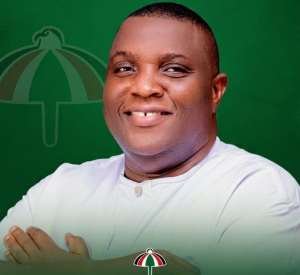
Richard Ahiafor says delegates, branch executives and activists must feel valued, heard and included
Aspirant Ho Central Constituency Chairman of the National Democratic Congress (NDC), Hon. Richard Ahiafor, has called for a major reconnection between the party’s constituency leadership and its grassroots members.
According to him, the strength of the NDC in Ho Central depends largely on how effectively the leadership engages and supports the people who keep the party machinery running at the branch and ward levels.
“WHO IS LOOKING AFTER US?”
In a message titled “When Home No Longer Feels Like Home: The Story of Ho Central Constituency and Its Delegates,” Mr Ahiafor raised concerns over what he described as a weakening relationship between constituency leadership and ordinary party members.
He recalled a time when Ho Central was regarded as a closely knit political family where delegates, branch executives, activists and leaders could easily interact and have their concerns heard.
But, he argued, some grassroots members now feel disconnected despite continuing to sacrifice their time, energy and resources for the NDC.
“Who is looking after us?” he asked, highlighting what he says is a growing concern among some grassroots members.
LEADERSHIP MUST COME DOWN TO THE PEOPLE
Mr Ahiafor insisted that constituency leadership should mean more than occupying an office or holding a party position.
For him, true leadership must be built around accessibility, listening, accountability and service.
He wants constituency leaders to engage regularly with branch structures and party members instead of waiting until elections are around the corner before reconnecting with the grassroots.
YOUTH, WOMEN, ELDERS — EVERYONE MATTERS
The chairman hopeful specifically highlighted the contributions of branch executives, ward coordinators, women activists, young people, party elders and delegates.
He said these groups form the backbone of the party and deserve meaningful recognition and support.
His proposed approach is to create a constituency where delegates can confidently say their leaders know them, listen to them, respect their sacrifices and support their aspirations.
“HO CENTRAL IS OUR HOME”
Mr Ahiafor stressed that his message should not be interpreted as an attack on previous constituency leadership.
Rather, he said, it is a call for reflection and a new direction for Ho Central.
He believes rebuilding trust will require greater inclusiveness, accountability and a leadership structure that brings the party closer to its members.
“Ho Central is our home. And if the home has lost its warmth, then the answer is not to abandon it. The answer is to rebuild it,” he stated.
“SERVING ALL, LEAVING NO ONE BEHIND”
At the heart of Mr Ahiafor’s campaign is the message “Serving All, Leaving No One Behind.”
He says his ambition is to restore confidence among party members, strengthen grassroots engagement and rebuild Ho Central as a political home where no delegate feels forgotten.
The contest for the constituency chairmanship could therefore become more than an internal race for a party position, with the grassroots connection emerging as a major issue in the debate over the future direction of the NDC in Ho Central.
For Mr Ahiafor, the formula is straightforward: bring leadership closer to the people — and make every grassroots member feel at home again.
Politics
NPP TO EMBARK ON CONSTITUENCY DIAGNOSTICS — JB REVEALS BIG PLAN FOR 2026 PARLIAMENTARY ELECTIONS
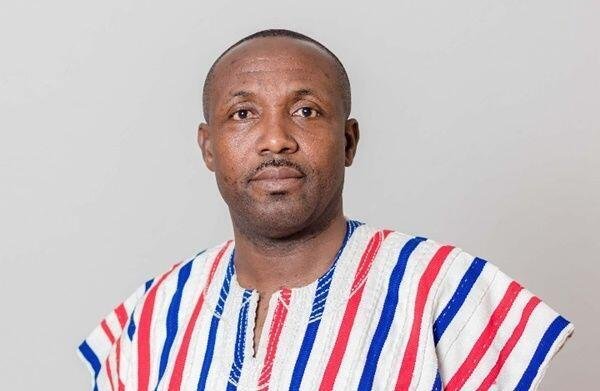
Party to assess constituencies before recommending candidates as NPP intensifies preparations for 2026
The New Patriotic Party (NPP) is set to embark on a comprehensive “constituency diagnostics” exercise as part of efforts to identify and recommend suitable parliamentary candidates ahead of the 2026 general elections.
The move, disclosed by JB, is expected to form part of a broader strategy by the party to carefully assess its fortunes across constituencies before settling on candidates who can give the party the best chance of winning parliamentary seats.
NPP Wants The Right Candidates
According to the disclosure, the exercise will allow the party to take a closer look at the realities on the ground in various constituencies before making decisions on parliamentary representation.
The approach signals a possible shift towards a more data-driven and constituency-specific assessment of candidates, rather than relying solely on internal popularity or political considerations.
The NPP, which is currently preparing for its internal processes ahead of the 2026 elections, appears determined to make candidate selection a critical part of its strategy to rebuild its parliamentary strength.
‘Diagnostics’ To Determine Who Can Win
The proposed constituency diagnostics could provide the party with a clearer picture of the political dynamics in individual constituencies, including the strengths and weaknesses of potential candidates.
For the NPP, the ultimate objective will be to ensure that candidates put forward are capable of connecting with voters and mounting competitive campaigns.
The announcement comes at a crucial time as the party continues its reorganisation and prepares for its next major electoral battle.
A New Strategy For Parliamentary Seats?
The NPP’s decision to conduct constituency-level assessments could also be seen as an attempt to avoid mistakes in candidate selection that may affect the party’s electoral fortunes.
Rather than adopting a one-size-fits-all approach, the diagnostics exercise is expected to consider the peculiar circumstances of individual constituencies before recommendations are made.
This could prove particularly important in constituencies where the party faces stiff competition or where internal disagreements over parliamentary candidates could affect its chances.
2026 Battle Already Taking Shape
With the next general election approaching, political parties are increasingly turning their attention to parliamentary constituencies, where individual candidates can play a decisive role in determining electoral outcomes.
For the NPP, the constituency diagnostics exercise could therefore become a major component of its preparations.
If successfully implemented, the process could give the party valuable insight into who has the strongest electoral appeal, where the party faces challenges, and which candidates stand the best chance of winning.
The latest disclosure has therefore added another layer of intrigue to the NPP’s preparations, with attention now turning to how the diagnostics will be conducted and what criteria will ultimately determine the party’s parliamentary candidates.
The message from the NPP appears clear: this time, getting the parliamentary candidates right could be just as important as winning the elections themselves.
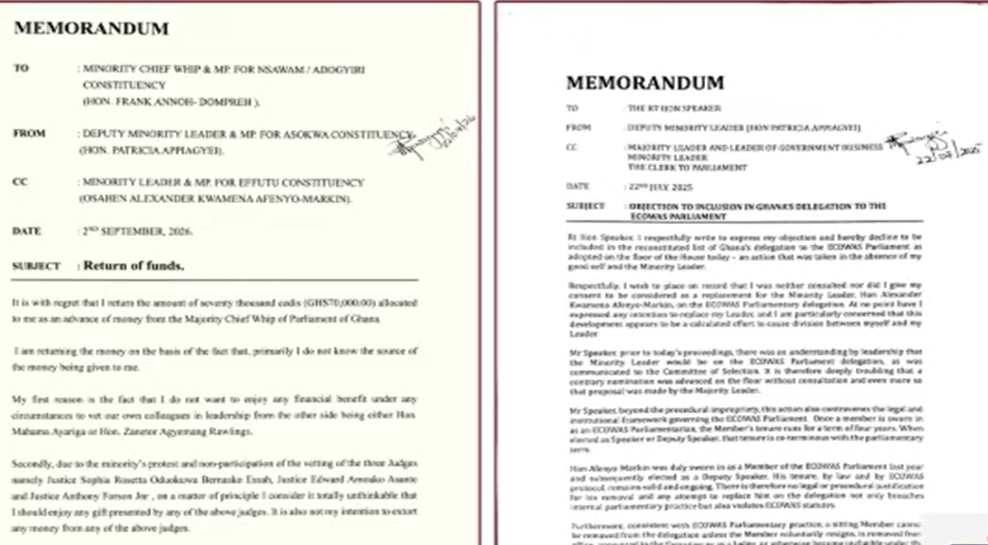
Asokwa MP admits disputed signature bears striking resemblance to hers but insists similarity does not prove she authored the controversial memo
The controversy surrounding the alleged GH¢70,000 “gift” memo has taken another dramatic turn after Deputy Minority Leader Patricia Appiagyei addressed the striking similarity between her signature and the one appearing on the disputed document.
Appiagyei, who has firmly denied authoring the controversial memo, acknowledged that the signature on the document appears remarkably similar to hers.
“The signature is close though,” she reportedly said when asked about the resemblance.
But the Asokwa MP was quick to caution against treating the similarity as proof that she personally signed or authored the document.
“ANYONE CAN FAKE IT”
The issue of the signature has become one of the most closely watched aspects of the controversy.
The disputed memo allegedly suggested that Appiagyei had received and subsequently returned GH¢70,000 allegedly connected to parliamentary vetting activities.
Appiagyei has rejected the document and denied authoring it.
Her position is that the apparent similarity of the signature does not establish that she signed the memo, particularly because signatures can potentially be copied or reproduced.
SIGNATURE COMPARISON FUELS THE CONTROVERSY
The debate intensified after images of the disputed memo were compared with an earlier document bearing Appiagyei’s signature.
The comparison has triggered intense public discussion, with some focusing on the apparent similarities while others insist that only a proper forensic examination can establish whether the signature is genuine.
The fact that the signature looks similar has therefore raised more questions rather than settling the controversy.
Did Appiagyei actually sign the document?
Or did someone reproduce her signature and attach it to a memo she never authored?
Those questions remain at the centre of the developing saga.
OSP PROBE LOOMS
The controversy has already attracted the attention of the Office of the Special Prosecutor (OSP), which is examining issues surrounding the disputed memo and the alleged GH¢70,000 payment.
Appiagyei has indicated that she is prepared to cooperate with the investigation.
The probe could ultimately determine whether the memo is authentic, whether the alleged payment occurred and, crucially, who was responsible for creating or circulating the document.
APP IAGYEI’S DENIAL REMAINS
Despite the signature controversy, Appiagyei’s position remains unchanged: she says she did not author the disputed memo.
Her admission that the signature is “close” therefore does not amount to an admission that the document is genuine.
Instead, it adds another layer to an already explosive political and parliamentary controversy.
THE BIG QUESTION
The signature may look familiar.
It may even look “close.”
But until investigators establish its authenticity, the central question remains unanswered:
Did Patricia Appiagyei really sign the GH¢70,000 memo — or did someone make it look as though she did?
The answer could prove decisive in one of the most talked-about political controversies currently gripping Parliament.

FRIMPONG-BOATENG SPEAKS ON GALAMSEY — ‘ENFORCING ENVIRONMENTAL LAWS CARRIES POLITICAL COST’

CHIEF JUSTICE COMMENTS STIR DEBATE — QUESTIONS RAISED OVER JUDICIAL IMPARTIALITY

ACCRA–KUMASI EXPRESSWAY HITS MAJOR MILESTONE — GAF COMPLETES 175.6KM CORRIDOR CLEARING



-

 General News2 weeks ago
Nana Adwoa Tutuwaa Named Global Humanitarian of the Year 2026
-

 General News2 weeks ago
Police Arrest Suspect in GH¢1.1m Fake Gold Scam at Berekum
-
 General News1 week ago
GES Urged to Review Student Sexual Misconduct Rule Over Alleged Discrimination Against Boys
-

 Entertainment6 days ago
Oswald Okaitei Explains the Real Vision Behind Ghana’s Black Star Experience
-
 General News2 weeks ago
OSP Assesses Extortion Allegations Against Afenyo-Markin
-

 Entertainment2 weeks ago
Stonebwoy Is Not My Rival — Shatta Wale Reveals They Live Minutes Apart
-
 Politics2 weeks ago
Stop The Personal Attacks!” — Vitus Azeem Demands Probe Into Sammy Gyamfi–Afenyo-Markin Feud
-

 Entertainment2 weeks ago
Mzbel Says Age Gap Is No Barrier as She Opens Up About 19-Year-Old Admirer