
Politics
‘No serious country would have Baffoe-Bonnie as Chief Justice’ — Yaw Adomako Baafi explains

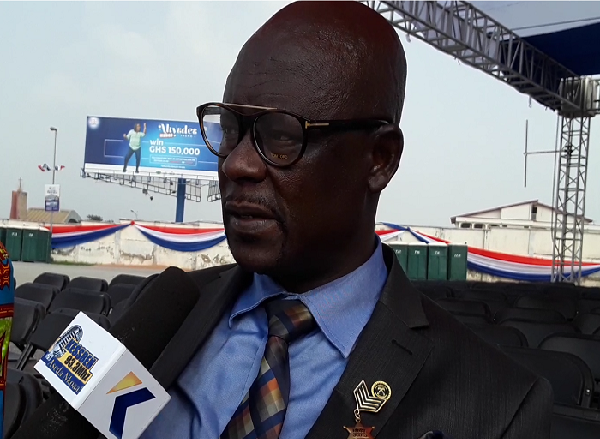
Former NPP Director of Communications Yaw Adomako Baafi has launched a fresh and blistering attack on Chief Justice Paul Baffoe-Bonnie, arguing that his own admission during parliamentary vetting should have raised serious questions about his suitability to head Ghana’s Judiciary.
Speaking on UTV’s Adekye Nsroma, Adomako Baafi focused on Baffoe-Bonnie’s explanation of why he sentenced notorious armed robber Ataa Ayi to 70 years in prison, saying the circumstances surrounding that decision should have disqualified him from becoming Chief Justice.
‘His admission tarnishes his image’
According to Adomako Baafi, the issue goes beyond the length of the sentence.
He argued that Baffoe-Bonnie’s admission that fear for his own safety and that of his family influenced the sentence raises fundamental questions about judicial decision-making.
“First thing that tarnishes his image was his admission that he sentenced Ataa Ayi for more years due to fear for his life.”
Adomako Baafi then delivered his strongest verdict, saying:
“If there is any serious country in this world, we wouldn’t have such a Chief Justice to lead the judiciary.”
The Ataa Ayi sentencing controversy
The controversy stems from comments made by Justice Baffoe-Bonnie during his parliamentary vetting.
The Chief Justice explained that he sentenced Ataa Ayi to 70 years partly because he feared the convicted armed robber could return to harm him and his family after serving a shorter sentence.
Baffoe-Bonnie acknowledged that judges operate within sentencing guidelines but argued that exceptional circumstances can sometimes warrant going beyond the normal framework.
It is that explanation that Adomako Baafi has now seized upon in questioning whether Baffoe-Bonnie should occupy Ghana’s highest judicial office.
‘Can fear influence justice?’
At the centre of Adomako Baafi’s criticism is a broader question about judicial independence and impartiality.
His argument, in essence, is that if a judge’s personal fear can influence the severity of a criminal sentence, then serious questions arise about the principles upon which that decision was reached.
The former NPP communicator believes such concerns should have been carefully considered before Baffoe-Bonnie was appointed Chief Justice.
Fresh controversy around the Chief Justice
Adomako Baafi’s comments come at a time when Chief Justice Baffoe-Bonnie has already faced criticism over remarks he made during official visits to state institutions.
His comments about the performance of institutions such as SSNIT and the Minerals Income Investment Fund (MIIF) have generated a wider debate about judicial neutrality and the extent to which the head of the Judiciary should comment on the performance of an elected government.
The Judicial Service has previously defended the Chief Justice’s remarks, maintaining that they were made in good faith and were not intended to undermine judicial independence.
Adomako Baafi also raises Torkonoo questions
During the same discussion, Adomako Baafi also questioned circumstances surrounding the removal of former Chief Justice Gertrude Torkonoo.
However, the details of those particular concerns were not fully reported in the available account of his interview.
His latest intervention therefore adds another layer to the increasingly heated public debate surrounding the leadership and conduct of Ghana’s Judiciary.
Political criticism or legitimate judicial concern?
Given Adomako Baafi’s former leadership role within the NPP, his comments are likely to attract political scrutiny.
Supporters of Baffoe-Bonnie could view the criticism as partisan opposition, while his critics may argue that the issues raised concern fundamental questions about judicial credibility that deserve public discussion.
Either way, the debate has moved beyond personalities.
At stake is the confidence Ghanaians place in the person occupying the country’s highest judicial office.
The question now hanging over the Judiciary
Adomako Baafi’s intervention has reignited a difficult question:
Should a judge who openly acknowledged that personal security concerns influenced a major sentencing decision ultimately become the person responsible for leading Ghana’s entire Judiciary?
For Adomako Baafi, the answer is emphatic.
He believes a serious country would have asked that question — and acted differently.
Politics
NPP fires back at Sam George over rural telephony — Demands full project status report within 30 days
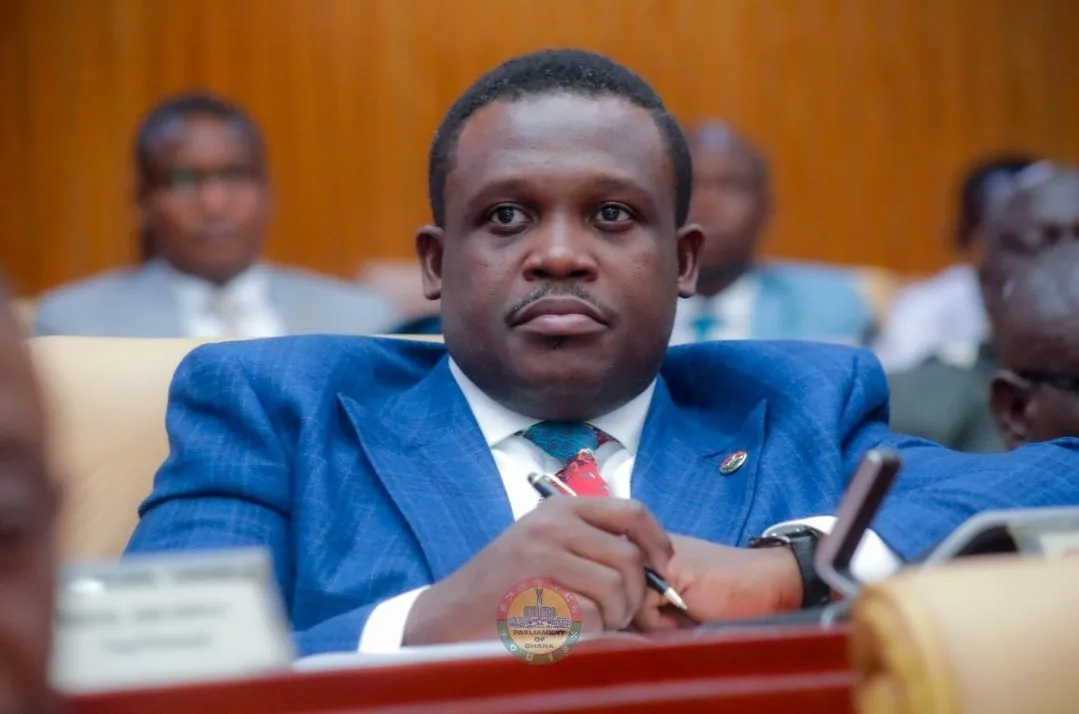
The New Patriotic Party (NPP) has launched a strong rebuttal to Communications Minister Sam George’s account of Ghana’s rural telephony programme, insisting that the figures do not support any suggestion that the previous administration neglected underserved communities.
The NPP Policy Committee on Communications and Digitalisation, chaired by former Communications Minister Kojo Oppong Nkrumah, is now demanding a comprehensive status report from the Ministry and the Ghana Investment Fund for Electronic Communications (GIFEC) on every major component of the project.
NPP challenges Sam George’s account
The response follows comments made by Sam George during a Government Accountability Series press conference on September 7, 2026, as well as his inspection of rural telephony project sites in the Eastern Region on September 4.
The NPP says the Ghana Rural Telephony and Digital Inclusion Project was launched in 2020, not 2022 as it says has been suggested.
According to the party, the project was financed through a €155 million China EXIM Bank facility, with an original target of 2,016 sites intended to provide connectivity to between three and four million people living in underserved and unserved communities.
‘1,961 sites were already constructed’
The NPP is putting its strongest defence behind the figures it says were recorded before the change of government.
The party says an earlier phase of the rural telephony programme resulted in 430 sites being constructed and activated between 2017 and 2018, connecting approximately 700,000 previously unserved and underserved citizens.
It further claims that by the time the Akufo-Addo/Bawumia administration handed over power in January 2025, the rural telephony programme had expanded to 1,961 constructed sites, with equipment available for another 400 sites.
The NPP therefore insists that the record does not support a description of neglect.
Satellite hub controversy erupts
The party has also rejected claims surrounding the connectivity of 46 hard-to-reach communities.
It says a satellite hub at the Kofi Annan Centre of Excellence in ICT had been upgraded, tested and prepared to provide backhaul connectivity for the 46 sites.
According to the NPP, the communities are not technically unreachable.
Instead, it argues that they remain unconnected because the contracted hub service has not been taken up and paid for, describing the issue as a commercial and administrative matter rather than a technical limitation.
NPP questions pace of deployment
The opposition party is now turning the spotlight onto the period since January 2025.
It claims that, based on information available to its committee, no new rural telephony site was constructed in 2025, despite equipment for approximately 400 additional sites being handed over.
The NPP also alleges that a higher proportion of constructed and activated sites are currently non-operational compared with the situation at the time of the January 2025 handover.
The party, however, says the Ministry is in the best position to correct those figures if they are inaccurate — by providing the data.
NPP supports 4G upgrade — but says ‘connect first’
Interestingly, the NPP says it supports the proposed upgrade of rural telephony sites to a minimum of 4G.
It maintains that the equipment installed under the previous administration was designed to be upgradeable.
However, the party wants government to first prioritise communities that already have infrastructure but remain without service.
Its argument is simple: there is little benefit in debating whether an unconnected community should receive 3G or 4G when the community has no service at all.
The party is therefore warning that an upgrade programme should not delay completion of outstanding sites.
NPP gives government 30-day deadline
The NPP Policy Committee is demanding that the Ministry of Communications and GIFEC publish a comprehensive project status report within 30 days.
Among other things, it wants:
- A regional and district breakdown of constructed, connected and operational sites.
- Details of sites built but currently not in service.
- A deployment schedule for equipment earmarked for approximately 400 additional sites.
- The contractual and operational status of the satellite hub.
- A decision on when the 46 affected communities will be connected.
- The cost, financing and sequencing of the proposed 4G upgrade.
- Confirmation that the upgrade will not delay completion of outstanding sites.
- A briefing for Parliament’s Select Committee on Communications.
‘Our interest is a working rural network’
Despite the increasingly political nature of the dispute, the NPP says its main concern is not simply defending the previous administration.
The committee says its interest is to see working rural telecommunications networks serving communities that have historically been left without reliable connectivity.
It has also offered to provide its technical and handover documents to the Ministry and Parliament’s Communications Committee if requested.
Sam George now under pressure to produce the numbers
The latest confrontation has shifted the debate from political claims to hard project data.
The NPP is effectively challenging the Communications Minister to publish the numbers and show exactly how many rural telephony sites have been constructed, connected and are currently operational.
Until then, the two sides remain sharply divided over the state of the programme.
The political battle may have started with claims over the past, but the NPP now wants the argument settled with one thing: the full numbers.
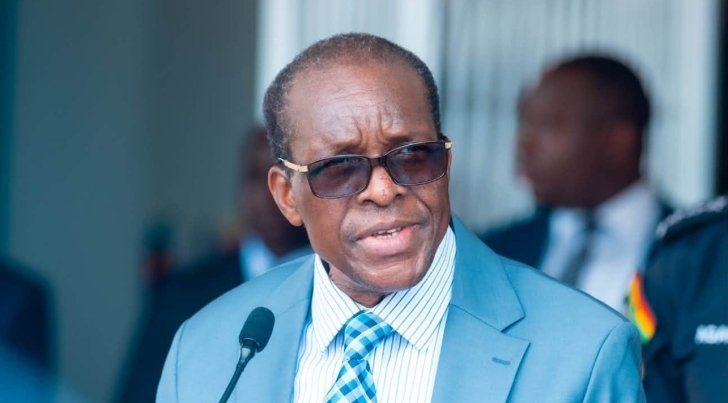
Speaker of Parliament Alban Bagbin has called on the Office of the Special Prosecutor (OSP) to conduct a thorough and expeditious investigation into the controversial GH¢70,000 memorandum circulating in the public domain.
The document, which has generated considerable public attention, has raised questions about an alleged payment reportedly connected to the work of Parliament’s Appointments Committee.
Speaker Bagbin has urged the OSP to establish the facts surrounding the document and determine its authenticity, as well as the circumstances under which it was produced and circulated.
The Speaker’s call comes amid competing claims over the controversial memorandum, with questions being raised about whether the document is genuine or was fabricated.
According to Parliament, the matter is serious enough to warrant a full investigation, particularly given the potential implications for the reputation and integrity of the parliamentary institution.
Bagbin has therefore welcomed the OSP’s involvement and called for the investigation to be conducted thoroughly while ensuring that the process is completed without unnecessary delay.
The investigation is expected to establish the origin of the memorandum, verify its contents and determine whether any wrongdoing occurred.
Parliament has also indicated its readiness to cooperate with the OSP and other relevant investigative authorities to help establish the truth.
The controversy has meanwhile continued to attract public interest, with calls for the facts to be established before any definitive conclusions are drawn.
The outcome of the OSP’s investigation is therefore expected to provide clarity on the disputed GH¢70,000 memorandum and determine whether there is any basis for further action.
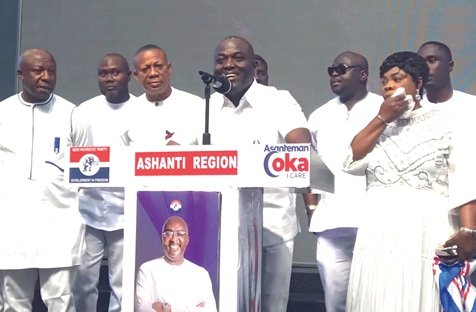
COKA has pledged to run an all-inclusive administration, promising to build a leadership structure where every stakeholder has a voice and an opportunity to contribute.
Speaking on his leadership vision, COKA said inclusiveness would be a major pillar of his administration, with a focus on unity, participation and collective decision-making.
According to him, leadership should not be concentrated in the hands of a few individuals. Instead, all relevant stakeholders must be given the opportunity to participate and contribute meaningfully to the administration.
His commitment comes amid growing discussions about the need for broader participation and stronger collaboration within the political space.
COKA believes an all-inclusive approach will help strengthen unity, improve cooperation and create an environment where different perspectives can be considered in making important decisions.
He further stressed the importance of bringing people together rather than creating divisions, arguing that collective effort is essential to achieving meaningful progress.
The pledge has therefore positioned inclusiveness as a key component of COKA’s proposed administration, as he seeks to convince stakeholders of his leadership approach.

Dr Ayew Afriye secures police enquiry bail for Efya Royal

President Mahama tasks Independent Fiscal Council to safeguard Ghana’s economic stability

North Korea and Russia Open First Road Bridge Linking the Two Countries



-

 Entertainment1 week ago
Oswald Okaitei Explains the Real Vision Behind Ghana’s Black Star Experience
-
 General News2 weeks ago
GES Urged to Review Student Sexual Misconduct Rule Over Alleged Discrimination Against Boys
-

 Entertainment1 day ago
Mahama Is First President to Put GH¢40m Seed Money into Creative Arts Fund: Kojo Preko Dankwa
-
 General News2 weeks ago
Oti Region Youth Endorse John Boadu, Cite Experience as Key to NPP Victory
-

 General News2 weeks ago
Zanetor and Ayariga Face Parliamentary Vetting Today
-
 General News2 weeks ago
President Mahama makes further ministerial changes
-
 General News2 weeks ago
Police Suspend Concrete Mixer Truck Operations in Accra, Tema From August 28
-
General News2 weeks ago
GES Opens WAEC Portal for 2026 School Placement Data Upload