
Politics
Chief Justice has Lost Everything” – Yaw Anokye Frimpong Laments Pension Wipeout

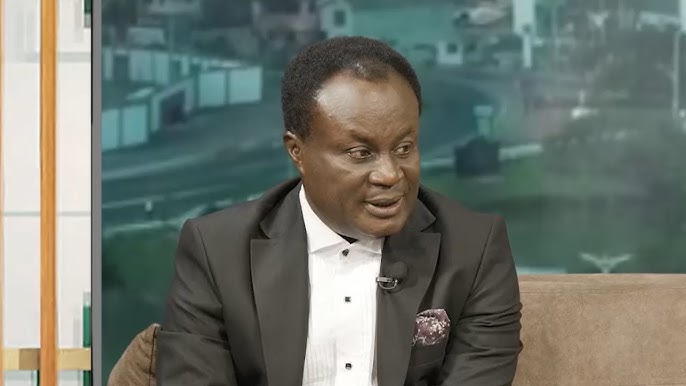
Legal practitioner Yaw Anokye Frimpong has disclosed that the sacked Chief Justice Gertrude Torkornoo has lost all his entitlements, including pension benefits accrued over 22 years of service.
Speaking in an interview, Mr. Frimpong explained that the situation amounts to a total forfeiture of the Chief Justice’s retirement benefits, an outcome he described as highly unprecedented in the history of Ghana’s judiciary.
According to him, the development underscores the seriousness of the matter and serves as a cautionary reminder to public office holders about the potential consequences of their actions while in service.
“The Chief Justice has lost everything, including 22 years of pension. This is not something anyone should take lightly. It is a painful lesson for anyone who serves in high office,” Mr. Frimpong said.
The revelation has sparked discussions among legal practitioners and governance experts, with some calling for deeper reforms to protect the sanctity of the judiciary while ensuring accountability at the highest levels of leadership.
Meanwhile, stakeholders await further clarification from the Judicial Service regarding the broader implications of this loss on the office of the Chief Justice and the judiciary as a whole.
Politics
Stan Dogbe Orders Immediate Restoration of Reclaimed Kpeshie Lagoon Lands After Demolition Exercise

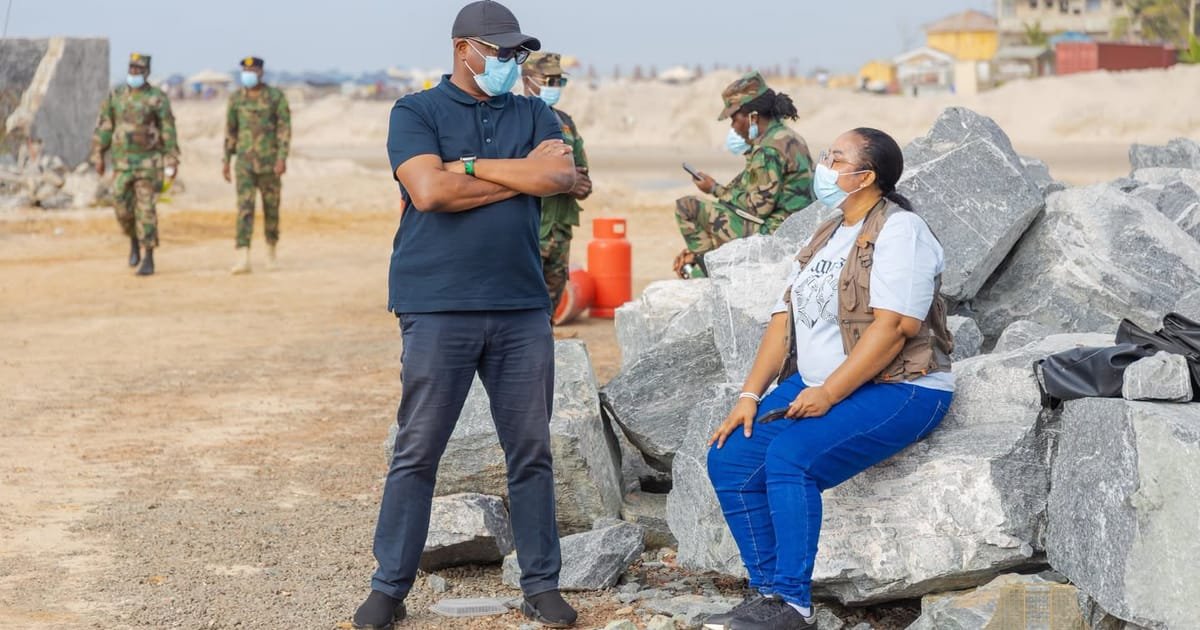
Deputy Chief of Staff, Operations, Stan Xoese Dogbe, has directed the Greater Accra Regional Coordinating Council (GARCC) to immediately begin the ecological restoration of reclaimed portions of the Kpeshie Lagoon.
The directive follows the removal of illegal structures that had encroached on sections of the wetland’s legally protected buffer zone.
Mr. Dogbe’s order forms part of efforts to restore the ecological integrity of the Kpeshie Lagoon and protect the wetland from further encroachment and human activities that could threaten its natural function.
Following the clearance exercise, the reclaimed areas are expected to undergo ecological restoration to return the affected portions of the wetland to a healthier and more sustainable state.
The Kpeshie Lagoon and its surrounding wetlands serve important environmental functions, including supporting biodiversity, helping to manage stormwater and providing a natural buffer against flooding.
Authorities have increasingly raised concerns about the development of illegal structures around wetlands and waterways, particularly in urban areas where rapid development has placed pressure on environmentally sensitive lands.
The removal of structures from the protected buffer zone is therefore seen as a significant step toward reclaiming and protecting the lagoon.
The directive to the GARCC signals a move beyond demolition and clearance, with emphasis now being placed on restoring the affected environment and preventing future encroachment.
Residents and stakeholders are expected to cooperate with the authorities as efforts continue to protect the Kpeshie Lagoon and preserve the remaining wetland ecosystem for future generations.
The development is likely to renew calls for stronger enforcement of regulations governing wetlands and protected environmental zones across the Greater Accra Region.
Politics
Experts Break Down “Right-of-Way” in Road Construction — Here’s What Every Road User Needs to Know
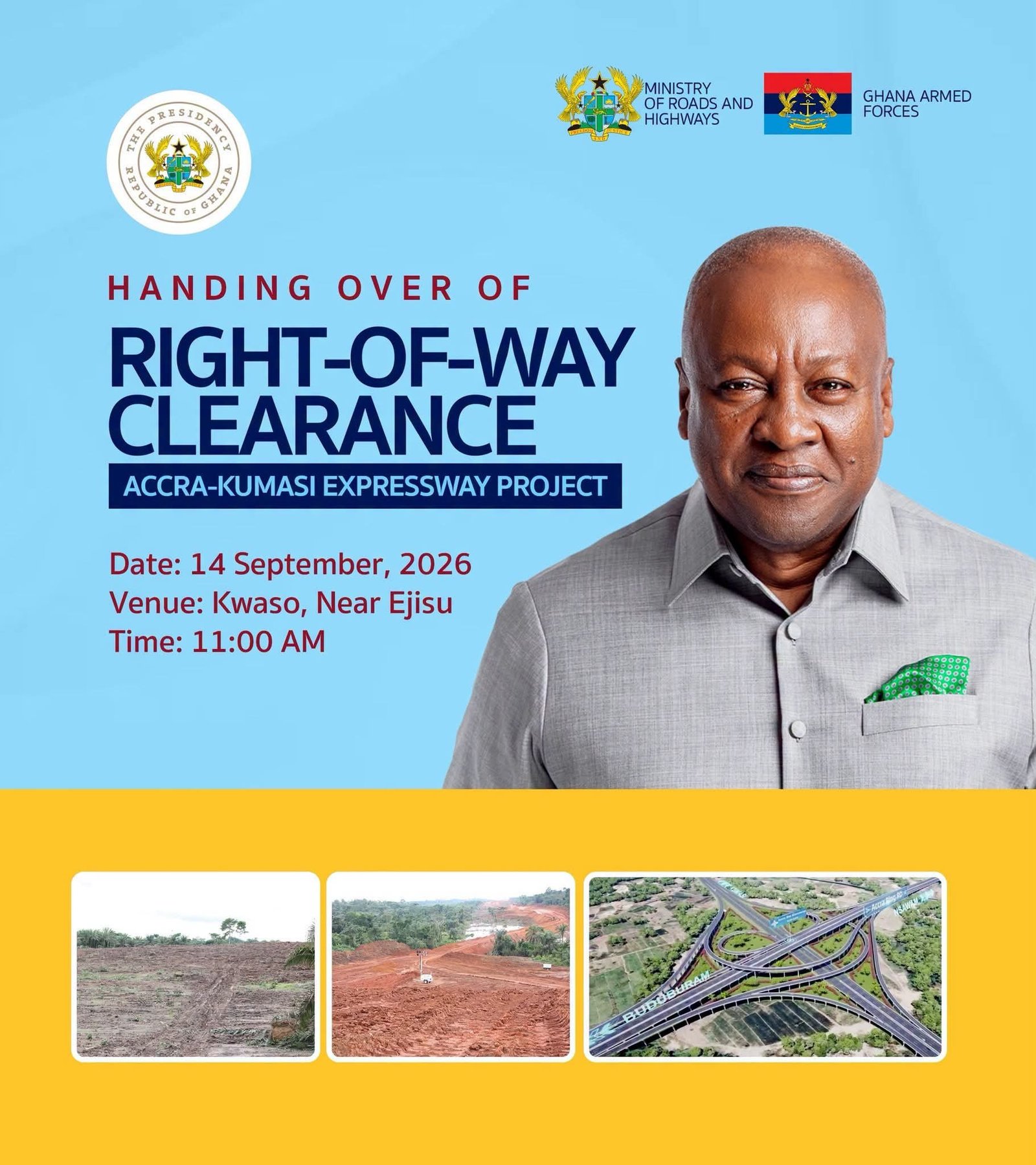
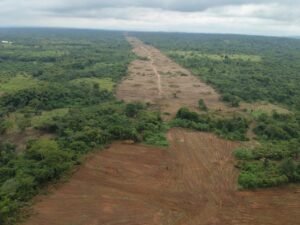
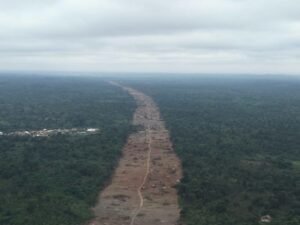
- Experts have shed more light on the meaning of “right-of-way” in road construction, explaining the crucial role it plays in the development, maintenance and future expansion of roads and highways.
According to experts, right-of-way (ROW) refers to the total width of land legally acquired and reserved for the construction, operation, maintenance and future expansion of a road or highway.
The explanation highlights that a road is not limited to the portion of land occupied by the asphalt or concrete surface.
Rather, the legally designated right-of-way may cover a much wider area, including space required for road infrastructure, drainage systems, pedestrian facilities, utility installations, safety features and possible expansion of the road in the future.
Why Right-of-Way Matters
Experts say securing adequate right-of-way is a critical part of road planning because it allows authorities to develop transportation infrastructure without being severely restricted by surrounding buildings, properties or other developments.
The reserved land provides room for the road authority to construct and maintain the road while also accommodating future improvements as traffic volumes increase.
In some cases, the right-of-way may extend beyond the visible road itself, meaning properties or structures located within the legally acquired road reserve could be affected by road development or expansion projects.
More Than Just the Road Surface
Experts stress that the concept of right-of-way should not be confused with the actual width of the carriageway.
While motorists may primarily see the paved section of a road, the right-of-way can include additional land on both sides of the road.
This space can be required for facilities such as drainage channels, shoulders, sidewalks, road signs, utility lines, embankments, intersections and other road-related infrastructure.
It can also provide the necessary space for future widening or upgrading of the road.
Planning for the Future
The reservation of right-of-way is particularly important in rapidly growing communities, where population growth and increased vehicle usage can eventually place pressure on existing roads.
Experts therefore maintain that properly planned road reserves can help authorities expand and improve roads when the need arises, rather than having to acquire heavily developed land at significantly higher costs.
The clarification comes as discussions surrounding road construction, development and property boundaries continue to attract public attention.
Understanding what right-of-way means, experts say, is essential for property owners, developers, motorists and residents living along major road corridors.
- Ultimately, the right-of-way represents the legally protected land corridor that allows a road to function today while preserving the space needed for its maintenance, improvement and expansion in the future.
Politics
‘You can’t stop what God has ordained for Bawumia’ – Ghana Muslim Forum blasts Rev. Owusu Bempah

The Ghana Muslim Forum for Peace and Unity has fired back at Reverend Isaac Owusu Bempah over his public opposition to the political ambitions of New Patriotic Party (NPP) flagbearer Dr Mahamudu Bawumia.
The Forum has argued that no individual has the power to determine who will become President of Ghana, insisting that political leadership ultimately rests with God and the will of the people.
In a strongly worded statement, the group said Rev. Owusu Bempah’s reported threat against Dr Bawumia was “hollow” and had no power to alter what God may have ordained.
‘You cannot stop what God has ordained’
The Muslim Forum based its position on passages from both the Holy Qur’an and the Bible.
It cited Qur’an 3:26, which speaks about God granting and taking away sovereignty, as well as Psalm 75:6-7 and Daniel 2:21, which refer to God raising and removing rulers.
The Forum argued that these scriptures demonstrate that Rev. Owusu Bempah cannot determine whether Dr Bawumia will become President.
“If God has destined that Dr Bawumia will be President, Rev Owusu Bempah cannot stop it. If God has destined that he will not be President, Rev Owusu Bempah cannot make it happen either,” the group stated.
Forum describes Bempah’s position as dangerous
The group further criticised what it described as an attempt to position the pastor as a gatekeeper of Ghana’s presidency.
According to the Forum, political leadership should not be reduced to religious threats or personal declarations, particularly in a country that prides itself on religious tolerance and peaceful political competition.
It warned against introducing religious bigotry into Ghana’s political discourse.
Bempah’s opposition to Bawumia
The controversy follows earlier comments by Rev. Owusu Bempah in which he openly declared his opposition to Dr Bawumia’s political ambitions.
According to reports, the pastor said he would not sit back and allow Bawumia to win political power, while also warning that he would curse anyone who voted for the NPP.
He reportedly linked his stance to grievances he has with the NPP.
The comments have since triggered reactions from individuals and groups sympathetic to Dr Bawumia.
Pro-Bawumia group also fires back
The Ghana Muslim Forum’s intervention is not the only response to Rev. Owusu Bempah.
A group calling itself the Action Movement for Bawumia has also accused the pastor of engaging in what it described as “psychological and pulpit blackmail” against the NPP flagbearer.
The group has urged him to stop his repeated attacks on Dr Bawumia, warning that his comments could have implications for Ghana’s religious and political harmony.
Meanwhile, the NPP Ashanti Regional Youth Wing has reportedly petitioned security authorities over allegations made by Rev. Owusu Bempah concerning Dr Nana Ayew Afriye and alleged plans to attack him and his church.
The youth wing has denied the allegations and described them as false and without foundation.
Religious tolerance becomes a major concern
The Ghana Muslim Forum has urged both Christians and Muslims to reject attempts to inject religious hostility into Ghana’s politics.
The group stressed that Ghana’s democratic system allows citizens to support or oppose political candidates freely, but such disagreements should not threaten the country’s longstanding religious coexistence.
Its intervention adds another dimension to the growing controversy surrounding Rev. Owusu Bempah’s comments about Dr Bawumia.
Bawumia’s 2028 ambition
Dr Bawumia is already positioning himself for the 2028 presidential election after securing the NPP’s presidential nomination.
His political journey has consequently become a major subject of public debate, with supporters defending his candidacy while opponents question his prospects of defeating the governing National Democratic Congress.
The latest religious controversy has now added another layer to the political conversation.
For the Ghana Muslim Forum, however, the matter is ultimately bigger than partisan politics.
Its position is that no pastor, politician or individual can single-handedly determine Ghana’s next President.
If God has ordained Dr Bawumia for the presidency, the Forum insists, no individual can stop it.
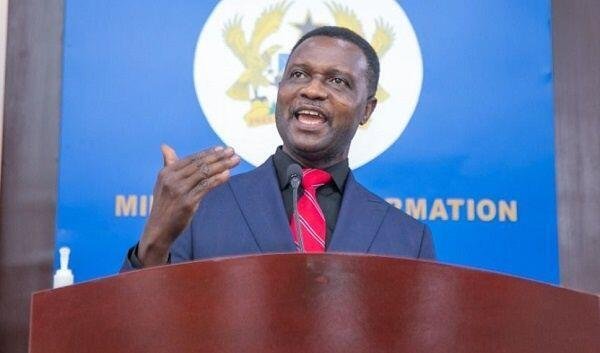
Former Education Minister and Bosomtwe MP, Dr Yaw Osei Adutwum, has expressed concern over Ghana’s education system following the release of the 2026 West African Senior School Certificate Examination (WASSCE) results.
Dr Adutwum has argued that politicians themselves sometimes worsen the country’s education challenges by turning examination results into partisan political weapons rather than focusing on solutions.
“We are our own worst enemies,” he said, criticising the tendency of politicians to attribute good or bad examination results to whichever political party is in power.
‘Politicians are our own worst enemies’
According to Dr Adutwum, Ghana’s political class needs to approach education with greater responsibility.
He recalled how strong examination performances in previous years were sometimes dismissed by political opponents as evidence of examination malpractice, rather than being celebrated as achievements for the country.
His argument is that such partisan interpretations ultimately do little to improve learning outcomes.
Instead, he believes politicians should work together to identify weaknesses in the education system and provide interventions that can help students perform better.
Poor results point to deeper problems
Dr Adutwum has described the poor performance in some core subjects as a serious national concern.
He pointed particularly to Mathematics and English Language, arguing that weaknesses in these subjects can have serious consequences for students seeking admission to tertiary institutions.
In his assessment, the problem should not be discovered only after students have written their final examinations.
The education system, he argues, must identify struggling students much earlier and provide targeted support before they reach the WASSCE stage.
‘You don’t wait till WASSCE’
The former Education Minister has advocated a stronger system of continuous assessment and academic monitoring.
He believes schools should be able to identify students who are consistently struggling with particular subjects and intervene while they are still in school.
Dr Adutwum has also proposed a transcript system that would provide a cumulative record of students’ academic performance throughout their secondary education.
Such a system, he argues, would allow teachers and schools to identify learning gaps early rather than waiting for a single final examination to determine a student’s future.
Calls for resits and stronger teacher support
Dr Adutwum has further advocated opportunities for students to retake subjects they fail, similar to arrangements in tertiary institutions.
He believes students who repeatedly struggle with Mathematics, English or other subjects should receive additional support and opportunities to improve before leaving the education system.
He has also called for stronger teacher professional development, particularly following concerns about students using social media expressions and informal language in formal examination scripts.
According to him, teachers should be equipped to identify such weaknesses during classroom assessments and guide students before they sit external examinations.
A political lesson from the results
For Dr Adutwum, the debate surrounding the WASSCE results should go beyond blaming one government or another.
His “we are our own worst enemies” argument is essentially a call for politicians to stop using education outcomes primarily as ammunition against their opponents.
Instead, he wants the country to focus on what the results reveal about teaching, learning, assessment and student support.
The former minister’s comments have therefore reignited a wider debate about whether Ghana’s education system is doing enough to identify struggling students before they reach the crucial WASSCE stage.
The bigger challenge
Ghana’s latest examination performance has once again exposed the need for sustained interventions rather than short-term reactions whenever results are released.
For Dr Adutwum, the solution lies in earlier intervention, stronger teacher development, continuous assessment, better academic counselling and giving struggling students opportunities to recover.
The political class, he suggests, must also take responsibility for changing the nature of the debate.
Because when education becomes another battlefield for partisan politics, the students — rather than the politicians — ultimately bear the consequences.
Politics
‘I’m very committed to agriculture’ – Bawumia empathizes with farmers unable to sell their produce

Former Vice President and 2028 flagbearer of the New Patriotic Party (NPP), Dr Mahamudu Bawumia, has expressed concern over the difficulties confronting Ghanaian farmers, particularly those struggling to find markets for their produce.
Dr Bawumia said he remains deeply committed to the agricultural sector and believes Ghana must do more to ensure that farmers can sell what they produce at remunerative prices.
His comments come amid growing concerns about market access, falling producer prices and the financial difficulties facing farmers across the country.
‘I’m very committed to agriculture’
Dr Bawumia stressed his commitment to agriculture, describing the sector as critical to Ghana’s economic transformation and food security.
He said farmers should not be left in a situation where they invest heavily in seeds, fertiliser, labour and other inputs only to struggle to find buyers when their crops are ready for the market.
For him, supporting farmers must go beyond encouraging production.
There must also be deliberate measures to create reliable markets for agricultural produce.
Farmers struggling to find buyers
The concerns come against the backdrop of reports of farmers in parts of Ghana struggling to sell crops such as maize, rice and other food commodities.
Some farmers have reportedly been forced to store produce for extended periods or sell at low prices because of limited demand and inadequate purchasing arrangements.
The situation can have a devastating effect on farming households, particularly smallholder farmers who depend on proceeds from a harvest to repay loans, support their families and finance the next farming season.
Recent reports have also highlighted difficulties within Ghana’s cocoa sector, where farmers have faced challenges getting buyers with sufficient funds to purchase their beans.
‘Producing without a market is a problem’
The former Vice President’s comments highlight a longstanding challenge in Ghana’s agricultural value chain: increasing production without simultaneously guaranteeing adequate markets.
When farmers cannot sell their produce, increased production can paradoxically become a source of financial distress.
In some farming communities, reports have emerged of maize and other crops remaining on farms or being sold at heavily reduced prices because buyers are unavailable.
This has raised calls for stronger linkages between farmers, processors, institutional buyers and government-backed procurement programmes.
Agriculture and food security
Agriculture remains central to Ghana’s food security ambitions, with thousands of households depending directly on farming for their livelihoods.
For agricultural production to become more attractive to young people, farmers need confidence that their investment will translate into sustainable income.
This requires attention not only to farm inputs but also to storage, transportation, processing, financing and access to domestic and international markets.
Bawumia’s message to farmers
Dr Bawumia’s expression of concern is likely to resonate with farmers who have repeatedly complained about the difficulties involved in marketing their produce.
His position suggests that agricultural policy must focus on the entire value chain — from planting to harvesting, processing and marketing.
Without a dependable market, farmers can remain vulnerable even when they achieve good harvests.
The bigger agricultural challenge
Ghana’s agricultural sector faces several interconnected problems, including high input costs, inadequate storage facilities, limited processing capacity, transportation challenges and inconsistent market access.
Addressing these challenges will be crucial if the country is to reduce dependence on imported food and encourage more people to view farming as a viable business.
For farmers, the ultimate measure of agricultural policy is simple: after working for months to produce food, there must be a buyer willing and able to pay a fair price.
Dr Bawumia’s latest comments have therefore placed the spotlight once again on the need to make Ghana’s agricultural sector not only productive, but profitable for the people who feed the nation.

Stan Dogbe Orders Immediate Restoration of Reclaimed Kpeshie Lagoon Lands After Demolition Exercise

The Pitt Is Up for 25 Emmys — But Its Biggest Fans Are Real-Life Doctors

Trump Downplays Warnings of AI Risks, Citing Rivalry With China



-

 Entertainment7 days ago
Mahama Is First President to Put GH¢40m Seed Money into Creative Arts Fund: Kojo Preko Dankwa
-

 Entertainment2 weeks ago
Oswald Okaitei Explains the Real Vision Behind Ghana’s Black Star Experience
-
 General News2 weeks ago
COCOBOD Settles GH¢2.3 Billion DDEP Bond Obligations for 2026
-

 Entertainment2 weeks ago
Joana Gyan Cudjoe Ends Seven-Year Professional Ties with Keche Global
-
 General News1 week ago
Don’t Punish Them Retrospectively – Educationist Challenges New CSSPS Placement Rule
-

 Entertainment6 days ago
Government Repatriates Musician Barosky from UK
-

 Culinary2 weeks ago
Pineapple: The Spiky Tropical Fruit Packed With Sweetness and Nutrients
-

 Culinary7 days ago
The Green Heart of Ghanaian Cuisine: Celebrating Nkontomire and the Art of Abom