
General News
President Mahama Signs New GIPA Act to Boost Investment and Position Ghana as West Africa’s Business Hub

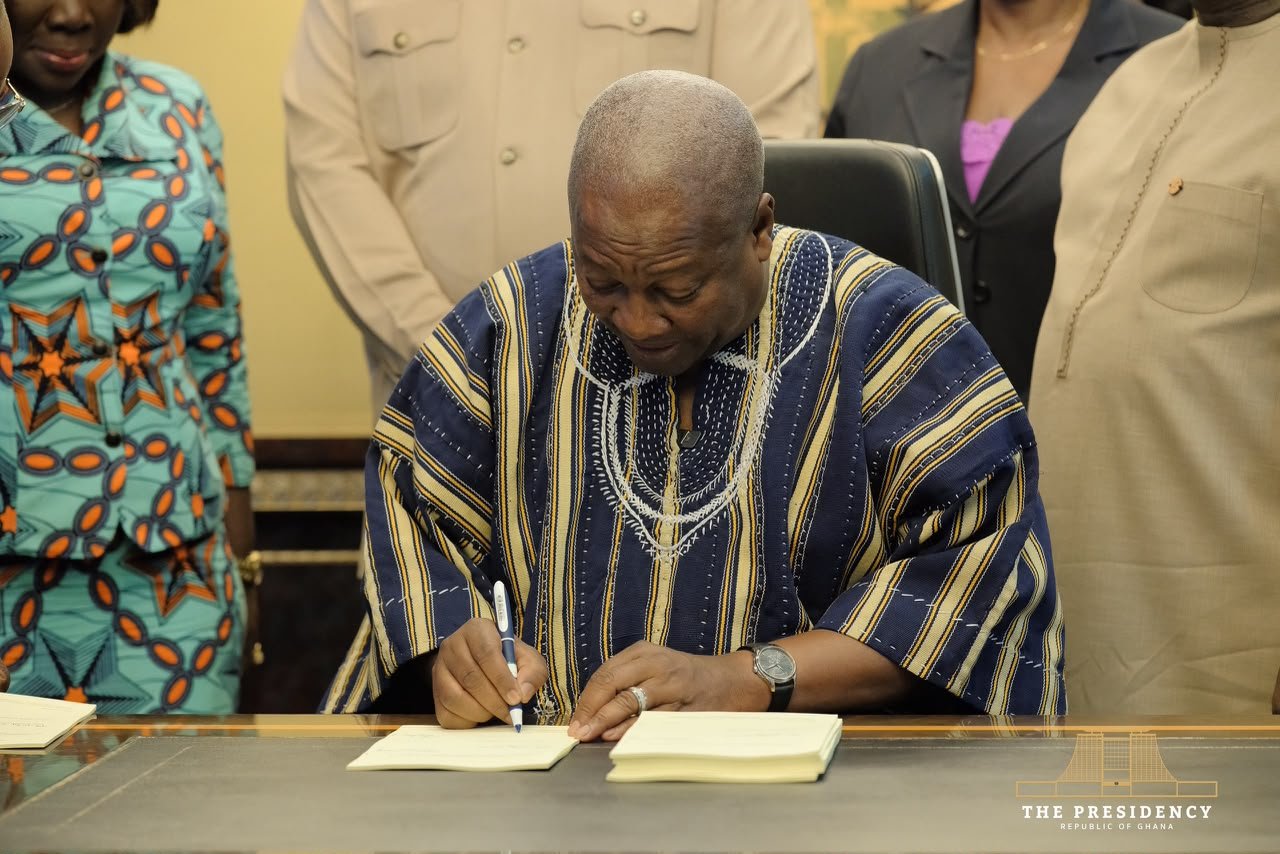
President John Dramani Mahama has signed into law the new Ghana Investment Promotion Authority (GIPA) Act, replacing the former Ghana Investment Promotion Centre (GIPC) Act in a major reform aimed at strengthening Ghana’s investment climate.
The new legislation is expected to reposition Ghana as a leading investment destination in Africa by simplifying investment procedures, reducing bureaucratic bottlenecks, and making it easier for both local and foreign investors to establish and operate businesses.
The Act also strengthens investor protection by providing a more robust legal framework that enhances confidence and security for investors while improving the country’s overall investment environment.
Additionally, the law expands the mandate of the Ghana Investment Promotion Authority, empowering it to more effectively promote, facilitate, regulate, and monitor investments across key sectors of the economy.
A key feature of the Act is its emphasis on supporting Ghanaian businesses, enabling local enterprises to scale up, attract investment, and participate more competitively in the country’s growing investment ecosystem.
The government says the new GIPA Act forms part of its broader economic transformation agenda and is expected to drive sustainable economic growth, create jobs, attract quality investments, and reinforce Ghana’s position as the preferred investment destination in West Africa.
The legislation marks another step in the government’s #ResettingGhana agenda to build a more competitive, business-friendly, and resilient economy.
General News
‘Cheap Justice?’ — Prof. Kwesi Yankah raises 4 ‘explosive’ concerns about Baffoe-Bonnie’s conduct

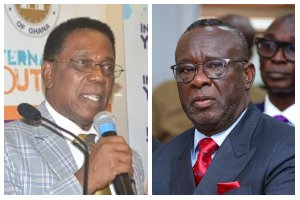
Professor Kwesi Yankah has launched a blistering critique of Chief Justice Paul Baffoe-Bonnie, raising a series of provocative questions about the conduct, public engagements and political neutrality of Ghana’s top judicial officer.
In a strongly worded opinion piece titled “Cheap Justice?”, the academic and former Minister of State for Tertiary Education questioned whether recent actions by the Chief Justice have weakened public confidence in the Judiciary.
Prof. Yankah’s intervention comes amid growing controversy over comments made by Baffoe-Bonnie during visits to state institutions, where he praised what he described as improved performance under the current administration while making comparisons with the previous government.
1. Has the Chief Justice crossed the political line?
At the heart of Prof. Yankah’s criticism is the Chief Justice’s recent engagement with state-owned enterprises.
According to Yankah, Baffoe-Bonnie appeared to venture beyond the traditional boundaries expected of the head of the Judiciary when he commented on the performance of public institutions and contrasted their current output with the situation under the previous administration.
The professor described the episode as the “last straw”, arguing that the Chief Justice appeared to have entered territory that was more political than judicial.
He suggested that such comments could damage the moral authority of the Judiciary, particularly when the institution is expected to remain independent and above partisan political contests.
2. ‘What happened to judicial neutrality?’
Prof. Yankah’s second major concern centres on the perception of judicial independence.
He questioned whether a Chief Justice who publicly comments on the performance of governments and state institutions could continue to command the same level of confidence from citizens across the political divide.
His concern comes against the backdrop of criticism from other prominent voices, including former Auditor-General Daniel Yaw Domelevo, who has warned that comments on politically sensitive matters could create a perception of bias if related issues eventually find their way before the courts.
For Yankah, the issue is not simply what the Chief Justice intended to say — but how those remarks could affect the public’s perception of the Judiciary.
3. From church dancing to political controversy
Prof. Yankah also revisited earlier moments involving Baffoe-Bonnie that, in his view, signalled a departure from the traditionally distant image associated with Ghana’s Chief Justice.
He recalled the Chief Justice’s appearance at a thanksgiving church service shortly after his appointment, where he was seen dancing and celebrating openly.
While acknowledging that there was nothing inherently wrong with such conduct, Yankah used the episode to paint a picture of a judicial leader who appeared increasingly comfortable operating in the public and political space.
He also referenced the Chief Justice’s participation in government delegations during international and national events, saying those developments had raised eyebrows even before the latest controversy.
4. The explosive ‘early retirement’ suggestion
Perhaps the most striking part of Prof. Yankah’s commentary was his suggestion that the controversy surrounding the Chief Justice could ultimately be interpreted as a signal for an early exit.
He noted that Baffoe-Bonnie has only a relatively short period left before his retirement and provocatively suggested that his controversial comments could be interpreted as an “application for early retirement.”
Yankah went even further, arguing that the Chief Justice’s conduct had already affected the prestige attached to his office.
His central warning is that once public confidence in the neutrality of the Judiciary begins to erode, rebuilding that confidence can become extremely difficult.
‘Cheap justice?’ — The bigger question
Prof. Yankah’s intervention has added another powerful voice to an increasingly heated national debate over the limits of public commentary by Ghana’s Chief Justice.
The Judicial Service has maintained that Baffoe-Bonnie’s observations were made in good faith and were not intended to undermine judicial independence, while other groups and individuals have called for restraint in his public engagements.
The Ghana Catholic Bishops’ Conference has also rejected calls for the Chief Justice to resign, arguing that he is entitled to his own convictions.
But Prof. Yankah’s latest intervention has ensured that the controversy is unlikely to disappear quietly.
For now, one question hangs over the Judiciary: can the Chief Justice remain politically neutral in the eyes of the public after making such politically charged observations?
Prof. Kwesi Yankah has fired the latest salvo — and the debate over Baffoe-Bonnie’s conduct is only getting hotter.
General News
FRIMPONG-BOATENG SPEAKS ON GALAMSEY — ‘ENFORCING ENVIRONMENTAL LAWS CARRIES POLITICAL COST’
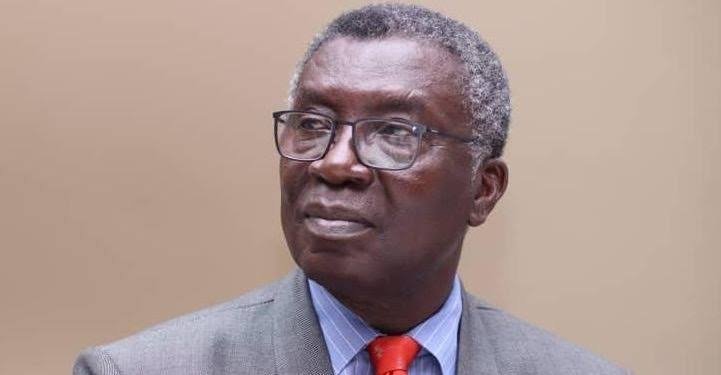
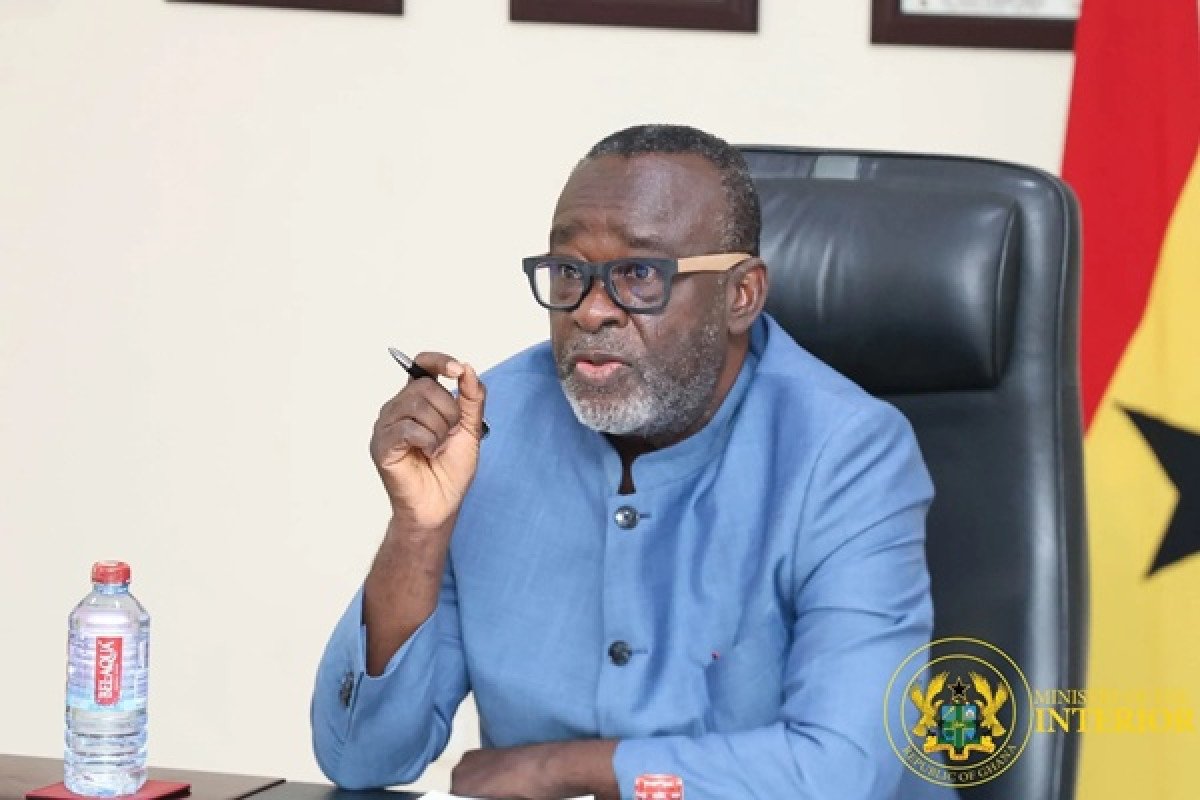
Chief Justice Paul Baffoe-Bonnie has come under intense public scrutiny after remarks about the performance of state institutions triggered concerns over the perceived political neutrality of Ghana’s Judiciary.



‘Cheap Justice?’ — Prof. Kwesi Yankah raises 4 ‘explosive’ concerns about Baffoe-Bonnie’s conduct

Parliament breaks silence on alleged GH¢70,000 memo, calls for probe into circulating document

Abankwah-Yeboah tells NPP to reorganise as he urges Ghanaians to judge NDC over time



-

 General News2 weeks ago
Nana Adwoa Tutuwaa Named Global Humanitarian of the Year 2026
-

 General News2 weeks ago
Police Arrest Suspect in GH¢1.1m Fake Gold Scam at Berekum
-
 General News1 week ago
GES Urged to Review Student Sexual Misconduct Rule Over Alleged Discrimination Against Boys
-

 Entertainment7 days ago
Oswald Okaitei Explains the Real Vision Behind Ghana’s Black Star Experience
-
 General News2 weeks ago
OSP Assesses Extortion Allegations Against Afenyo-Markin
-
 Entertainment2 weeks ago
Stonebwoy Is Not My Rival — Shatta Wale Reveals They Live Minutes Apart
-
 Politics2 weeks ago
Stop The Personal Attacks!” — Vitus Azeem Demands Probe Into Sammy Gyamfi–Afenyo-Markin Feud
-

 Entertainment2 weeks ago
Mzbel Says Age Gap Is No Barrier as She Opens Up About 19-Year-Old Admirer