
General News
10 Memorable Quotes by Late President John Evans Atta Mills


John Evans Fiifi Atta Mills, Ghana’s third President under the Fourth Republic, served from January 7, 2009, until his passing on July 24, 2012. Remembered as “Asomdwehene” (King of Peace), Prof. Mills inspired many Ghanaians with his messages of peace, unity, democracy, and national development.
1. On Supporting Progress
“My doors are always open. We will provide the necessary resources, make the right contacts, and as a government, give you our fullest support.”
2. On Public Service and Accountability
“I can see that some progress has been made, and I know you want to do a thorough job. However, you must remember that commuters have limited patience, so every effort must be made to ease their burden.”
3. On Peaceful Elections
“As we approach the presidential and parliamentary elections, it is my hope and prayer that we will preserve the peace, remain united, and stay focused as one people with a shared destiny. Meaningful development can only be achieved when citizens support and cooperate with their leaders.”
4. On Justice and the Rule of Law
“I will never tolerate actions that set one Ghanaian against another in the name of political revenge. That is not the Ghanaian way. Every violation of our laws must be addressed fairly, lawfully, and with due process.”
5. On National Unity
“I have always maintained that I will be President for every Ghanaian, whether they voted for me or not, and regardless of where they come from. My responsibility is to heal divisions, unite our nation, and work tirelessly to promote peace across the country.”
6. On Building Ghana’s Future
“As a nation, our greatest achievements have come when we embraced the values that unite rather than divide us. Let us reflect on the legacy left by our forebears, build upon it, and leave an even stronger foundation for future generations as we continue to build a Better Ghana.”
7. On Protecting Ghana’s Peace
“Our journey toward growth and development is far from over, but we have made significant progress that we cannot afford to destroy. We must protect the peace we enjoy because our founding fathers sacrificed greatly to build this nation. We must never destroy the dreams of the younger generation who look forward to leading Ghana tomorrow.”
8. On Ghana’s Independence
“Fifty-five years in the life of a nation is a remarkable achievement, and we must remain grateful to God for His grace and abundant mercies.”
9. On Ghanaian Identity
“Today is an opportunity to celebrate the richness of our Ghanaian heritage and the values that define us as a people while inspiring others across the world.”
10. On Unity Beyond Politics
“National progress depends on our ability to rise above political differences and work together for the good of Ghana. Peace, unity, and patriotism must always come before partisan interests.”
President John Evans Atta Mills remains one of Ghana’s most respected leaders. His legacy continues to inspire Ghanaians through his unwavering commitment to peace, humility, justice, and national unity.

The Tema Regional Police Command has arrested two persons and seized 692 parcels of suspected Indian hemp during a snap-check operation at Dawhenya in the Prampram Division.
The suspects have been identified as Godwin Asigeh and Freeman Amedoku.
According to a press release issued by the Tema Regional Police Headquarters’ Public Affairs Unit and signed by ASP Dede Dzakpasu, Head of Public Affairs, the arrest was made in the early hours of Tuesday, September 8, 2026.
Police said officers intercepted an Accra-bound Ford Transit vehicle with registration number GT 6140-22 at about 12:45 a.m.

The vehicle was being driven by Godwin Asigeh, with Freeman Amedoku serving as his assistant.
A search conducted on the vehicle led to the discovery of 692 parcels of a substance suspected to be Indian hemp, wrapped in yellow polythene bags.
Following the discovery, the two suspects, together with the vehicle and the suspected narcotic substance, were conveyed to the Devtraco Police Station for further action.
The police said the suspected substance has been retained as an exhibit, while the Ford Transit vehicle has been impounded.
Both suspects remain in police custody as investigations continue.
The Tema Regional Police Command commended the officers who carried out the operation and assured the public that it would intensify efforts to prevent the trafficking and distribution of narcotic substances in the region.
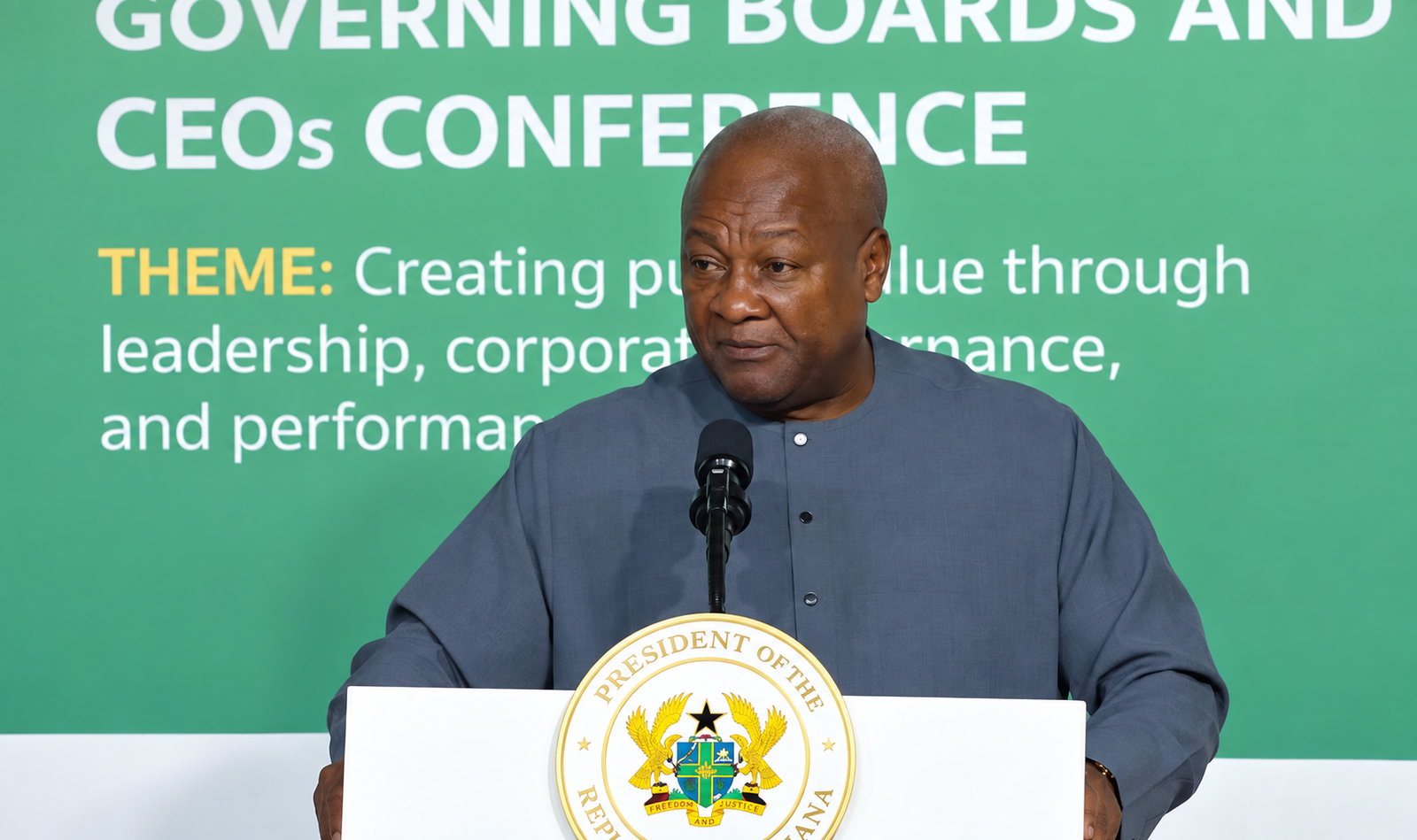
President John Dramani Mahama has commended the Ghana Gold Board (GoldBod) for its strong financial performance, describing the results as deserving of recognition while cautioning that the institution must sustain its gains through stronger core operations.
Speaking at the 2026 Governing Boards and Chief Executive Officers’ Conference organised by the State Interests and Governance Authority (SIGA), President Mahama highlighted GoldBod’s significant improvement in profitability.
According to the President, GoldBod recorded a net profit of approximately US$896.5 million, compared with US$178.5 million in 2024, representing a remarkable turnaround in the institution’s financial performance.
He said the results demonstrated the strategic importance of establishing transparent, accountable and nationally beneficial structures around Ghana’s gold trade.
“This performance reflects the strategic importance of building transparent, accountable and nationally beneficial structures around Ghana’s gold trade,” President Mahama said.
He noted that the financial results deserved commendation, given the substantial increase in GoldBod’s profitability.
“These results deserve commendation,” he stated.
However, President Mahama stressed that the positive performance must be maintained over the long term and should not be dependent solely on favourable external conditions.
He cautioned that GoldBod must strengthen its core operations to ensure that its financial success remains sustainable, rather than relying indefinitely on improvements in the business environment or movements in the exchange rate.
“They must, however, be sustained through stronger core operations and cannot depend indefinitely on just a better business environment and the exchange rate movements,” the President said.
President Mahama added that while the one-year financial turnaround was encouraging, the real measure of GoldBod’s success would be its ability to maintain and build upon the performance in the years ahead.
“A one-year turnaround is encouraging, but sustained performance is the real test,” he emphasised.
The President’s comments refocus attention on GoldBod’s role in Ghana’s gold sector and the need for strong governance, transparency, and operational efficiency to ensure the country derives lasting national benefits from its gold resources.


Britain is expanding its dependence on Elon Musk’s SpaceX for secure satellite communications, with government spending on the company’s Starlink and military-focused Starshield services approaching $40 million.
The United Kingdom has become the first country outside the United States to publicly adopt SpaceX’s encrypted Starshield satellite service, highlighting the growing role of private space companies in national security and military communications.
Figures disclosed by the UK Ministry of Defence show that Britain has acquired about 1,000 Starshield terminals alongside roughly 500 consumer-oriented Starlink terminals. Spending has reached approximately £13 million ($17.6 million) on Starshield and £16.5 million on Starlink, bringing the combined expenditure close to $40 million.
From Starlink to military-grade connectivity
Britain first adopted Starlink in 2022, using SpaceX’s satellite network to provide communications capabilities. The government began shifting toward Starshield in 2024 as military requirements for more secure and resilient connectivity increased.
While Starlink is primarily designed for civilian broadband customers, Starshield is tailored toward government and defence users. It uses SpaceX’s broader satellite infrastructure but incorporates dedicated hardware, ground systems and enhanced security features designed for sensitive communications.
The costs are considerably higher. UK plans for Starshield reportedly range from around £5,500 to £25,000 per month, depending on the service package and requirements.
Security benefits come with strategic concerns
The growing relationship with SpaceX reflects a wider transformation in modern warfare, where satellite communications have become critical to military operations, intelligence gathering and battlefield coordination.
For Britain, access to a large and established satellite constellation offers an immediate capability that would be difficult and expensive to build independently.
However, the arrangement also raises questions about strategic dependence on a U.S.-based private company at a time when European governments are increasingly calling for greater technological sovereignty.
SpaceX has already secured more than $6 billion in U.S. government contracts for Starshield, underscoring the company’s growing importance to Western defence infrastructure.
Europe seeks alternatives
Britain’s growing use of SpaceX comes as European governments debate how to reduce their dependence on American space and communications technology.
The European Union is developing IRIS², a secure satellite communications constellation intended to strengthen Europe’s independent capabilities. The system is not expected to be fully deployed until around 2030, leaving European governments reliant on existing commercial and allied systems in the meantime.
At a space summit in Paris this week, European leaders and industry representatives have placed renewed emphasis on developing stronger domestic launch, satellite and communications capabilities.
The pressure is partly driven by recent conflicts, which have demonstrated how important space-based communications and intelligence have become to national security.
Britain tries to build its own space capabilities
The UK government is simultaneously investing in domestic alternatives. In July, Britain announced more than £62 million for homegrown satellite communications and other space technologies, including £42 million for new satellite communications projects.
The government has also emphasized the importance of strengthening Britain’s ability to protect its own satellites and maintain access to critical space-based services.
That creates a delicate balance: Britain is investing in sovereign space capabilities while increasing its use of one of the world’s most powerful private satellite networks.
A growing role for SpaceX in Western defence
The UK’s Starshield adoption demonstrates how quickly commercial space technology is moving into the defence sector.
SpaceX’s ability to deploy large numbers of satellites, maintain a global network and provide relatively rapid access to communications has made its technology increasingly attractive to governments.
But Britain’s experience also illustrates the strategic dilemma facing Western nations. Commercial satellite networks can provide capabilities much faster than governments can build their own systems, yet relying heavily on a private foreign company can create vulnerabilities if political, regulatory or security relationships change.
For now, London appears willing to accept that trade-off as it strengthens its military communications capabilities.
The deeper question is whether Britain’s growing relationship with SpaceX represents a temporary bridge while domestic and European alternatives develop—or the beginning of a long-term dependence on Musk’s satellite empire.
General News
Joana Gyan Cudjoe Moves to End Schools-Under-Trees in Amenfi Central With New 6-Unit Classroom Block

Member of Parliament for Amenfi Central, Hon. Joana Gyan Cudjoe, is set to intensify efforts to eliminate the practice of children studying under trees in the constituency with the imminent commissioning of an ultra-modern six-unit classroom block.
The facility is expected to serve as a model for similar educational infrastructure projects across Amenfi Central as the MP pursues her broader objective of ensuring that children in the constituency have access to safe, dignified and quality learning environments.
The project forms part of Hon. Gyan Cudjoe’s wider Schools Under Trees Project, an initiative through which she secured a partnership with a cooperative non-governmental organisation (NGO) to provide modern school infrastructure to communities where pupils currently learn under trees or in temporary structures.
The initiative is aimed at addressing longstanding infrastructure challenges affecting schools in underserved communities and improving the conditions under which both teachers and pupils operate.
Beyond the soon-to-be-commissioned facility, the MP has also undertaken and supported several other education infrastructure projects within the constituency.
These include the completion of classroom blocks at Wuratrem DA Primary School and Ankasie DA Primary School, as well as the construction of a new primary school at Kramokrom.
Additional classroom block projects are also ongoing at Bantoma, Agona Camp and Sompre, forming part of efforts to expand access to adequate educational facilities across Amenfi Central.
Ahead of the commissioning, Hon. Joana Gyan Cudjoe reiterated her commitment to education, describing it as a fundamental pillar of her development agenda for the constituency.
“Our vision is to transform communities, improve living standards, and create opportunities for sustainable development,” she said, stressing that no child should be left to learn under a tree.
According to the MP, the new ultra-modern six-unit classroom block will be equipped with ancillary facilities intended to provide a more conducive environment for teaching and learning.
She further indicated that the model would be replicated in other underserved communities where inadequate school infrastructure continues to affect pupils and teachers.
The development has attracted positive reactions from constituents and education stakeholders, who have welcomed the intervention as a timely response to the infrastructure challenges facing some schools in the constituency.
They believe improved classroom facilities could contribute to increased school enrollment, better academic outcomes and improved working conditions for teachers, while also restoring a sense of dignity to pupils who have had to study in difficult environments.
The commissioning date for the ultra-modern six-unit classroom block is expected to be announced in the coming days.

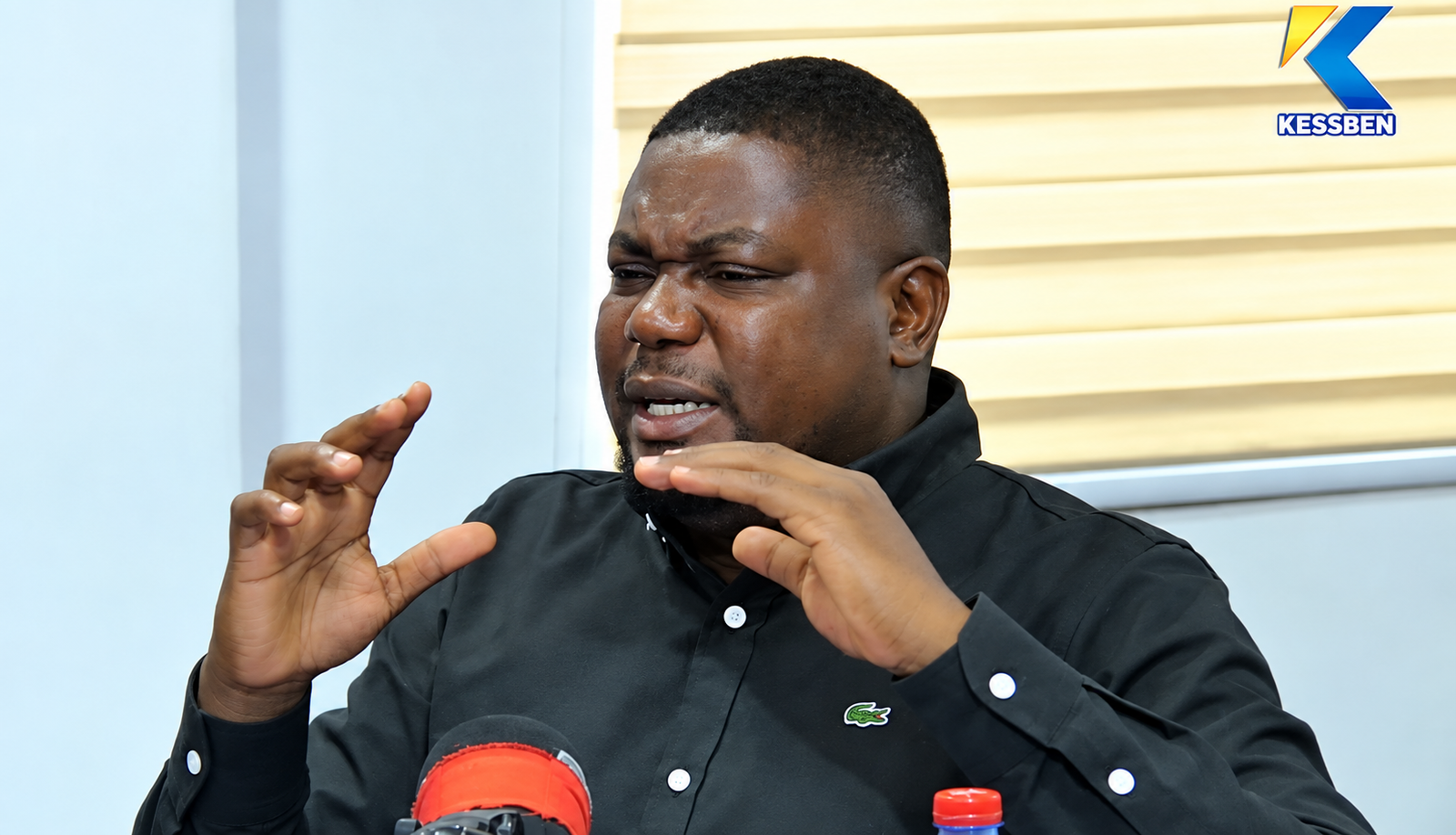
Energy sector analyst and senior researcher at Institute of Energy Security, Smith Prosper Boahene has called for the adoption of a Public-Private Partnership (PPP) model in the management of the Electricity Company of Ghana (ECG) to help address persistent revenue leakages and operational losses.
According to Mr. Boahene, Ghana must prioritize energy security while implementing measures to improve ECG’s efficiency and financial sustainability. In an interview on the Kessben Maakye show in Accra,
he said government should be commended for measures introduced to shield the energy sector from external shocks, but stressed the need to tackle the persistent revenue challenges confronting ECG.
Mr. Boahene argued that every serious government would find ways to stop revenue leakages and stabilize ECG’s operations, even if the utility does not generate direct profits.
He noted that ECG is currently unable to generate enough revenue from electricity supplied by Independent Power Producers (IPPs), resulting in government interventions through subsidies or loans to settle power sector obligations.
He further supported efforts to bring in private-sector participation, saying a properly structured PPP could improve management efficiency and revenue collection.
However, he cautioned that the arrangement must be carefully designed to prevent excessive increases in electricity tariffs, which could trigger complaints from consumers and businesses.
Mr. Boahene also called for an upgrade of Ghana’s transmission infrastructure to reduce technical losses and improve the reliability of power distribution.
He stressed that PPP should not be confused with outright privatization, arguing that the concept must be properly communicated to stakeholders to build public understanding and confidence.
According to him, the focus should be on using private-sector expertise and investment to strengthen ECG while protecting the interests of consumers and the state.
By Maurice Otoo

Heed World Bank, IMF advice to curb future gold trade losses — Jerry Shaib urges government

I Wouldn’t Have Married Simi – Adekunle Gold Opens Up on Genotype

Police arrest two, seize 692 parcels of suspected Indian hemp at Dawhenya



-

 Entertainment1 week ago
Oswald Okaitei Explains the Real Vision Behind Ghana’s Black Star Experience
-

 Entertainment3 days ago
Mahama Is First President to Put GH¢40m Seed Money into Creative Arts Fund: Kojo Preko Dankwa
-
 General News2 weeks ago
GES Urged to Review Student Sexual Misconduct Rule Over Alleged Discrimination Against Boys
-

 General News1 week ago
COCOBOD Settles GH¢2.3 Billion DDEP Bond Obligations for 2026
-

 Entertainment1 week ago
Joana Gyan Cudjoe Ends Seven-Year Professional Ties with Keche Global
-
 General News2 weeks ago
Police Suspend Concrete Mixer Truck Operations in Accra, Tema From August 28
-
General News6 days ago
Don’t Punish Them Retrospectively – Educationist Challenges New CSSPS Placement Rule
-

 Culinary1 week ago
Palm Nut Soup: Ghana’s Rich Bowl of Tradition, Culture and Comfort