
General News
48 Repaired Aayalolo Buses Return to Accra Roads as GAPTE Boosts Operations

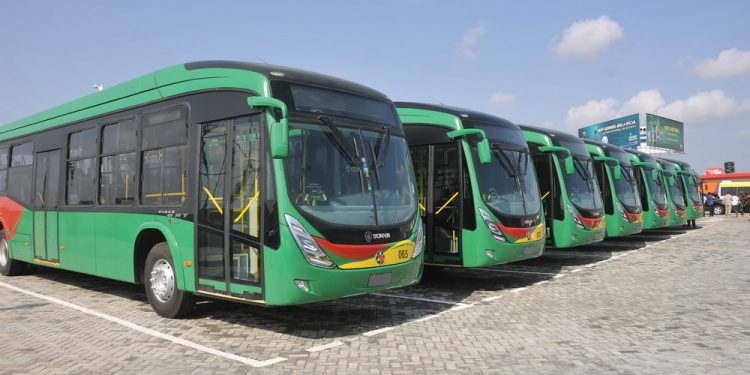
The Greater Accra Passenger Transport Executive (GAPTE) has put 48 previously non-operational Aayalolo buses back into service following repairs, increasing the number of buses currently operating across the Greater Accra Region to 128.
The repaired buses have been assigned to major routes in Accra as GAPTE intensifies efforts to improve public transportation, enhance commuter mobility and reduce the pressure caused by traffic congestion in the capital.
GAPTE Managing Director, Awudu Dawuda, disclosed the development when the Minister for Local Government, Chieftaincy and Religious Affairs, Mahama Ayariga, paid a working visit to the Aayalolo terminal at Madina.
The visit was aimed at assessing the performance of the Aayalolo transport system and identifying ways to strengthen its operations and make public transportation more reliable and efficient for commuters.
According to Dawuda, expanding the number of buses available for daily operations has been one of GAPTE’s major priorities, particularly as the organisation seeks to improve movement within the Greater Accra Region and contribute to efforts to tackle persistent traffic congestion.
He explained that GAPTE initially took over 80 operational buses but embarked on a repair programme to restore additional vehicles that had been grounded.
Dawuda said the repair of the 48 buses has allowed GAPTE to add them to the existing fleet, bringing the total number of operational buses on its routes to 128.
He explained that the figure represents buses currently serving the various routes, or “corridors,” operated by GAPTE across the region.
Dawuda said the decision to restore the buses was largely driven by the need to increase the availability of public transport and make commuting within Greater Accra easier for residents.

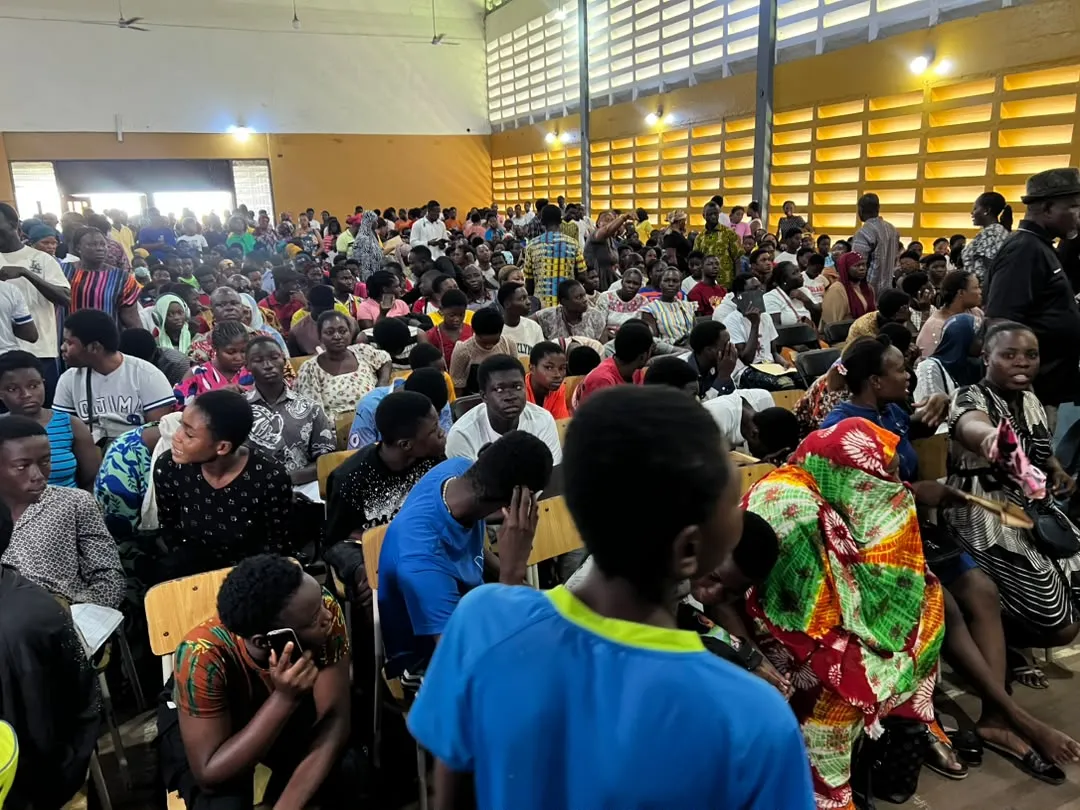
Ghana’s Senior High School (SHS) placement system is facing growing scrutiny as frustrated parents raise concerns over the outcome of the placement exercise and demand urgent answers from the authorities.
For many families, the release of placement results has brought more anxiety than relief, with parents questioning why some students were not placed in their preferred schools despite carefully selecting their choices during the placement process.
The concerns have sparked renewed debate about the effectiveness, transparency and fairness of Ghana’s Computerised School Selection and Placement System (CSSPS).
Parents Left Frustrated
Some parents say they are struggling to understand the placement outcomes given to their children, particularly where students have been assigned schools outside their preferred choices.
For families who had spent months preparing for their children’s transition to SHS, the unexpected outcomes have created financial and emotional pressure.
Some parents are now being forced to consider alternative arrangements, while others are seeking clarification on whether placement changes or transfers are possible.
Students Caught in the Placement Storm
The controversy has also affected students, many of whom had high expectations about the schools they would attend.
For some students, being placed in a school they did not anticipate has resulted in disappointment and uncertainty about their next steps.
Parents are consequently appealing for clear information on the available options, especially for students who believe their placement does not reflect their selections or circumstances.
Calls for Transparency Grow
As concerns continue to emerge, parents and other stakeholders are calling for greater transparency in the placement process.
They want authorities to provide clear explanations about how placements are determined, how vacancies are allocated and what mechanisms are available for students seeking redress.
There are also calls for the authorities to improve communication with parents so that families can better understand the placement process and avoid confusion during the admission period.
Pressure Mounts on Authorities
The latest concerns have placed renewed pressure on the institutions responsible for managing the SHS placement exercise to address complaints and reassure affected families.
Parents insist that every effort must be made to ensure that qualified students secure appropriate placements without unnecessary delays or complications.
With the new academic year approaching, families are anxiously waiting for answers and practical solutions to outstanding placement challenges.
For thousands of parents and students, the demand is straightforward: a placement system that is transparent, fair and responsive to their concerns.
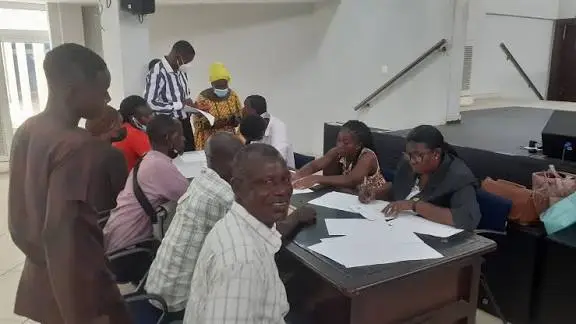
The much-anticipated Senior High School (SHS) placement exercise has triggered frustration among parents and students, with concerns over school choices, placement outcomes and the difficulties some families face in securing preferred schools.
For many families, what should have been a moment of excitement following the release of placement results has instead turned into a stressful battle to secure admission.
Parents have been left scrambling for solutions as they seek clarity on placement decisions and explore available options for their children.
Parents Raise Alarm Over Placement Challenges
Some parents are expressing disappointment over placements that do not match the schools their children selected, while others are worried about the availability of vacancies and the process of securing admission.
The situation has created anxiety for families who fear that delays in resolving placement-related issues could affect their children’s preparations for the new academic year.
Parents are therefore calling for greater transparency and clearer communication throughout the placement process.
Students Caught in the Middle
For students, the placement exercise is more than just an administrative process. It determines the school environment in which they will spend the next three years of their education.
Some students who had hoped to attend particular schools are now facing difficult decisions following their placement outcomes.
The uncertainty has left some families considering whether to accept their assigned schools, seek alternative placements or pursue other available options.
Calls for Urgent Intervention
With frustration mounting, stakeholders are calling for swift intervention to address outstanding placement concerns and ensure that affected students are not left behind.
Parents want authorities to provide timely information and practical solutions for students facing difficulties with their placements.
They also want the process to be handled in a way that reduces unnecessary stress and gives families sufficient time to complete admission requirements.
The Bigger Question
The latest concerns have once again placed Ghana’s SHS placement system under the spotlight, with calls for improvements to make the process more efficient, transparent and responsive to the needs of students and parents.
As families continue to navigate the placement process, attention will now be focused on how quickly outstanding challenges can be resolved and whether every qualified student will secure a place in a suitable second-cycle institution.
For thousands of families, the hope is simple: that the placement exercise ends not in confusion and frustration, but with every student having a clear path forward in their education.

CUPERTINO, CALIFORNIA — Apple is expected to take a major step into the foldable smartphone market as it prepares to unveil its latest iPhone lineup, with the company’s new chief executive, John Ternus, set to lead his first major product launch.
The September 9 event could mark one of the biggest changes to Apple’s flagship smartphone in years, with the company widely expected to introduce its first-ever foldable iPhone. The anticipated device would represent Apple’s entry into a category already occupied by rivals including Samsung, Google and Motorola.
The launch is particularly significant because it comes just days after Ternus officially succeeded Tim Cook as Apple’s CEO. Ternus, who previously served as Apple’s senior vice president of Hardware Engineering, became chief executive on September 1.
A NEW ERA FOR THE IPHONE
Reports suggest the anticipated foldable iPhone could open like a book or passport, providing users with a substantially larger display while remaining compact when closed.
Some reports have suggested a price of more than $2,000, potentially making it one of Apple’s most expensive smartphones. However, Apple has not publicly confirmed the device’s name, specifications or price ahead of the launch.
Apple’s decision to enter the foldable market comes years after competitors introduced their own devices. Analysts believe the company’s late arrival could work to its advantage, allowing Apple to learn from the durability, hinge and display problems that have affected earlier foldable smartphones.
HIGH STAKES FOR TERNUS
For Ternus, the event represents his first major public test as Apple’s chief executive.
Having spent much of his career overseeing Apple’s hardware development, Ternus now faces the challenge of convincing consumers that Apple’s version of the foldable smartphone is worth its expected premium price.
The company is also expected to introduce new premium iPhone models alongside other products, making the event an important moment for Apple’s hardware business.
APPLE’S FOLDABLE GAMBLE
Foldable smartphones remain a relatively small segment of the overall mobile phone market, despite years of investment by competing manufacturers.
Apple’s entry could nevertheless change the industry’s direction. Analysts believe the company’s enormous customer base and influence over smartphone design could help push foldable technology further into the mainstream.
For now, however, the foldable iPhone remains an expected announcement rather than a confirmed product until Apple officially takes the stage.
If unveiled, the device could mark one of the most important changes to the iPhone since the introduction of the iPhone X — and provide the first major statement about the future of Apple under John Ternus.
General News
Iran and US launch major attacks on tankers in biggest shipping escalation since war began


TEHRAN/WASHINGTON — Tensions surrounding commercial shipping have intensified sharply after Iran and the United States were reported to have targeted tankers in what has been described as the largest wave of attacks on maritime vessels since the war began.
The latest incidents have raised fresh concerns about the safety of international shipping routes and the potential impact on global energy supplies, as the conflict continues to spill into strategically important waterways.
Reports indicate that multiple tankers have come under attack, with the developments adding to growing fears that commercial vessels could increasingly become caught up in the widening confrontation.
SHIPPING ROUTES UNDER PRESSURE
The escalation is particularly significant because tankers play a crucial role in transporting crude oil and other energy products around the world.
Any prolonged disruption to shipping could affect the movement of fuel and commodities, potentially placing additional pressure on international markets and increasing transportation and insurance costs.
Maritime operators are already facing difficult decisions over whether vessels should continue using routes considered vulnerable to attacks or take longer alternative journeys.
RISING FEARS OF A WIDER CONFLICT
The attacks come amid heightened tensions between Iran and the United States, with the confrontation increasingly creating risks beyond the immediate battlefield.
Analysts have warned that repeated attacks on commercial shipping could trigger a broader regional crisis if more countries or privately operated vessels become directly involved.
Governments and maritime authorities are expected to closely monitor developments and assess the security situation around major shipping corridors.
GLOBAL ECONOMIC IMPACT
The shipping industry is closely connected to global energy markets, meaning any sustained disruption could have consequences far beyond the region.
A prolonged crisis could lead to higher freight and insurance costs and potentially contribute to increased fuel prices, depending on the scale and duration of the disruption.
For countries heavily dependent on imported energy, further instability could create additional economic challenges.
WHAT HAPPENS NEXT?
The immediate focus will be on whether the attacks represent a temporary escalation or the beginning of a sustained campaign against commercial shipping.
International governments are under increasing pressure to protect civilian vessels and prevent the maritime crisis from developing into a much wider confrontation.
While the reported attacks mark a serious escalation, details surrounding individual incidents, responsibility and the full extent of the damage may continue to develop as authorities investigate.
For now, the latest wave of attacks has placed global shipping firmly at the centre of the Iran-US confrontation — with the potential consequences reaching far beyond the waters where the incidents occurred.
General News
Government Gives 53,887 BECE Candidates Self-Placement Lifeline After English and Mathematics Failure
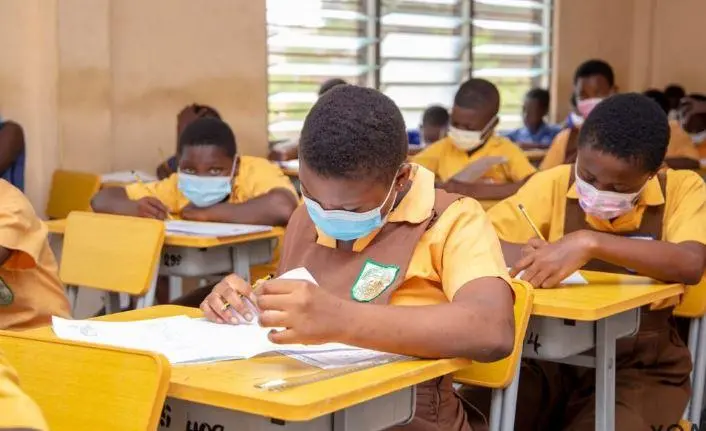
The Government has opened a self-placement opportunity for 53,887 candidates who obtained Grade 9 in English Language, Mathematics, or both subjects in the 2026 Basic Education Certificate Examination (BECE), reversing an earlier position that would have kept thousands of affected candidates out of second-cycle education.
The announcement was made on Monday, September 7, 2026, by the Deputy Minister of Education, Dr Clement Apaak, at a press conference in Accra.
According to Dr Apaak, candidates who scored Grade 9 in either English Language or Mathematics, as well as those who obtained Grade 9 in both subjects, will now be allowed to participate in the self-placement exercise.
Addressing the affected candidates, Dr Apaak said:
“To candidates who obtained a score of nine in English Language or Mathematics or in both subjects, the government is providing you with an opportunity to participate in the self-placement. We encourage you to take advantage of the opportunity and continue your education journey.”
The decision follows growing concerns over the Computerised School Selection and Placement System (CSSPS) and its initial interpretation of the requirements for placement into Senior High Schools (SHS) and Technical and Vocational Education and Training (TVET) institutions.
Before the Government’s latest announcement, CSSPS Coordinator Sherif Sulemana disclosed on Joy FM on September 3, 2026, that approximately 565,000 of the 620,243 candidates who sat the examination had qualified for placement.
He indicated that about 55,000 candidates would not be placed because of their performance in English Language or Mathematics.
The disclosure generated significant concern among parents, candidates and education stakeholders, particularly because the interpretation appeared to represent a departure from the understanding that had existed since the introduction of the Free SHS policy in 2017.
Under the previous understanding, candidates who passed at least one of the two subjects could still obtain access to second-cycle education.
The new interpretation therefore raised questions about whether students who had already sat the 2026 BECE should be subjected to a placement requirement that had not been clearly communicated to them before the examination.
An earlier analysis of the issue estimated that 54,985 candidates, representing about 8.9 per cent of the 2026 BECE cohort, could have been denied access to secondary education under the initial interpretation.
That figure was described as a significant increase compared with the estimated 1.6 per cent to 2.2 per cent of candidates who were unable to transition to second-cycle education between 2022 and 2025.
The concern was therefore not only about individual candidates but also about the potential impact of the policy on access to education across the country.
Questions were also raised about the decision to apply the requirement retrospectively.
The argument was that if candidates were expected to meet a new interpretation of the placement criteria, they should have been officially informed before writing the 2026 BECE.
Reference was made to Articles 23 and 296 of the 1992 Constitution, as well as the doctrine of legitimate expectation, in raising concerns about fairness and administrative decision-making.
The decision to allow the affected candidates to participate in self-placement has since been welcomed as a response to the concerns raised by stakeholders.
The move means that thousands of young people who were previously facing uncertainty over their educational future now have an opportunity to seek available vacancies in SHS and TVET institutions.
However, while the self-placement opportunity has provided immediate relief, questions remain about how the Government intends to address the academic weaknesses of candidates who enter second-cycle education after failing English Language or Mathematics.
One of the major concerns is the absence of a clearly announced compulsory remedial programme for the affected candidates.
If a student obtains Grade 9 in Mathematics but is subsequently admitted to SHS or TVET through self-placement, questions arise about how that student will overcome the weakness during the next three years.
There are also concerns about whether students could eventually proceed to sit the West African Senior School Certificate Examination (WASSCE) or the CTVET Certificate II examination without adequately addressing the foundational problems that contributed to their BECE results.
This has led to calls for the Government to accompany the self-placement policy with a structured academic intervention.
One proposal is for Ghana to formally introduce a Conditional Placement Policy.
Under such a policy, candidates who fail either English Language or Mathematics but are admitted through self-placement would not simply be placed in school without additional support.
Instead, they would be required to participate in compulsory remedial classes in the subject they failed.
The proposed classes could be organised through an enhanced second-cycle school academic intervention programme, specifically designed to help students close the learning gaps identified at the BECE level.
A second proposal has been made for candidates who fail both English Language and Mathematics.
Under the proposal, the Government should pilot a one-year Pre-SHS/TVET Foundation Programme at the district level.
The programme would focus primarily on literacy and numeracy, allowing students to strengthen their basic academic skills before proceeding into the mainstream second-cycle education system.
After completing the foundation programme, affected students could resit the relevant subjects and, upon passing at least one of the two core subjects, progress into second-cycle education.
The argument supporting the remedial proposals is that the Free SHS/TVET policy introduced in 2017 was designed to expand educational access rather than exclude young people from second-cycle education.
If a child reaches the end of nine years of basic education without being able to pass English Language or Mathematics, the education system should also examine what happened during those nine years.
The problem, according to the argument, should not simply be placed on the student at the point of transition.
Among the factors that may contribute to poor learning outcomes are very large class sizes, which can make individualised attention difficult for teachers.
Large classrooms can also make it harder for teachers to identify individual learning difficulties and provide targeted assistance to students who are struggling.
The self-placement decision has also been described as an intervention that goes beyond education.
By allowing thousands of approximately 15-year-old candidates to remain in school, the Government may be reducing their exposure to a number of social and economic vulnerabilities associated with being out of school.
These include illegal mining, commonly known as galamsey; street hawking; okada riding; teenage pregnancy and early parenthood; child labour; drug abuse; truancy; and other forms of juvenile delinquency.
Keeping these young people within the formal education system can therefore be viewed not only as an educational intervention but also as a social protection and national security measure.
The Education Minister, Haruna Iddrisu, Deputy Minister Dr Clement Apaak, and the CSSPS Secretariat have been commended for responding to the concerns and creating the self-placement opportunity.
The Government has also gone beyond the earlier position that would have focused only on candidates who passed one of the two subjects.
Under the new arrangement, candidates who obtained Grade 9 in both English Language and Mathematics are also being allowed to participate in self-placement.
However, the call remains for the Government to go one step further by developing and publishing a clear, written remedial pathway for the affected students.
The argument is that providing access to school should be followed by measures that ensure the students receive the academic support needed to succeed once they are admitted.
How the affected candidates can access self-placement
Candidates eligible for the self-placement exercise have been directed to follow these steps:
1. Visit the CSSPS website:
Go to www.cssps.gov.gh or cssps.org.gh.
2. Select the Self-Placement Module:
Click on the Self-Placement Module on the website.
3. Enter the Index Number:
Candidates should enter their 10-digit Index Number together with the examination year. An example given is 123456789026.
4. Check available schools:
The system will display schools with available vacancies.
5. Select preferred options:
Candidates should select their preferred Region, School, Residential Status (Day or Boarding), and Programme.
6. Review the available choices:
The system will display the available options, and candidates are advised to consider their choices carefully before proceeding.
7. Confirm the placement:
After making a selection, click Confirm and print the placement form.
8. Report to the school:
Candidates should proceed to the selected school to complete the admission process.
Parents and candidates have also been cautioned not to pay money to middlemen or individuals claiming they can secure placement, since the self-placement exercise is free.
The Government’s decision has therefore provided a significant lifeline to the tens of thousands of BECE candidates who faced possible exclusion from second-cycle education. The immediate challenge, however, is ensuring that those admitted through self-placement receive adequate academic intervention so that weaknesses in English Language and Mathematics do not continue to affect their progress through SHS and TVET.

Ghana’s SHS Placement System Under Fire as Parents Demand Answers

School Placement Chaos: Parents, Students Left Frustrated Over SHS Placements

Fameye Opens Up on the Deeper Meaning Behind ‘GenZ’



-

 Entertainment1 week ago
Oswald Okaitei Explains the Real Vision Behind Ghana’s Black Star Experience
-
 General News2 weeks ago
GES Urged to Review Student Sexual Misconduct Rule Over Alleged Discrimination Against Boys
-

 Entertainment2 days ago
Mahama Is First President to Put GH¢40m Seed Money into Creative Arts Fund: Kojo Preko Dankwa
-
 General News2 weeks ago
Oti Region Youth Endorse John Boadu, Cite Experience as Key to NPP Victory
-
 General News2 weeks ago
Zanetor and Ayariga Face Parliamentary Vetting Today
-
General News2 weeks ago
GES Opens WAEC Portal for 2026 School Placement Data Upload
-
 General News2 weeks ago
Police Suspend Concrete Mixer Truck Operations in Accra, Tema From August 28
-

 Entertainment2 weeks ago
Shatta Wale Made Ama Trend Everywhere – Nana Ama McBrown Praises Dancehall Star