
Business
GoldBod Has Not Made Losses — NDC’s Alexander Ackuokoh Fires Back at NPP


NDC former parliamentary aspirant for Bortianor Ngleshie Amanfro , Alexander Ackuokoh, has strongly rejected claims that the Ghana Gold Board (GoldBod) has incurred losses, accusing the opposition NPP of misrepresenting the International Monetary Fund’s (IMF) comments on the state-backed gold trading institution.
In a discussion at Kessben Maakye show in Accra, Ackuokoh said, the debate surrounding GoldBod has been driven by what he described as a “predetermined” attempt to portray the institution negatively.
“A predetermined mind is difficult to convince,” he said, arguing that there is no basis for the NPP to treat the IMF’s statement on GoldBod as though it were a major indictment.
Ackuokoh insisted that GoldBod has not run into losses, stressing that the IMF did not state that the institution had made losses.
He explained that the issue concerns losses associated with operational cost or accounting treatment, rather than GoldBod itself being a loss-making institution.
The NDC parliamentary aspirant further cited the Auditor-General’s report on GoldBod’s 2025 operations, claiming that the institution recorded a surplus of about GH¢5.5 billion.
He questioned why GoldBod should be judged primarily on profit-making when, according to him, the institution was established to help build Ghana’s gold reserves and contribute to financial-sector stability.
Ackuokoh also took aim at former Deputy Finance Minister and current Public Accounts Committee Chairperson Abena Osei Asare, accusing her of engaging in speculation over GoldBod.
He argued that such claims amount to an attempt to mislead the public.
According to him, Ghanaians should instead compare the benefits of GoldBod’s operations with the debt burden associated with what he described as former Finance Minister Ken Ofori-Atta’s “reckless” Eurobond borrowing.
Ackuokoh further argued that GoldBod’s activities are already contributing to greater stability in the local currency.
“Gone are the days that our cedi was running like Usain Bolt,” he said, suggesting that the current stability of the cedi should also be assessed against the impact of GoldBod’s operations.
He maintained that the focus should not be on labelling operational difficulties as losses but on finding practical solutions to challenges confronting GoldBod.
“The issue is how to resolve operational difficulties and not to consider it as a loss,” he stressed.
Ackuokoh’s comments come amid growing political debate over GoldBod’s financial performance, mandate and impact on Ghana’s economy, with the NPP and government supporters offering sharply contrasting interpretations of the institution’s performance.
By Maurice Otoo
General News
Dangote Joins $660 Million Ethiopia–Djibouti Pipeline Project to Strengthen East Africa’s Fuel Supply

By Angel No Lie | KPD Online | September 27, 2026 | BUSINESS NEWS
Aliko Dangote is expanding his investments in East Africa through a major petroleum infrastructure partnership.
Nigerian billionaire Aliko Dangote has joined forces with Ethiopia and Djibouti to develop a $660 million petroleum pipeline designed to improve fuel transportation, strengthen energy security and expand economic cooperation in the Horn of Africa.
The project, announced on September 24, 2026, involves a partnership between Dangote Group and Ethiopian Investment Holdings. It will connect the port of Damerjog in Djibouti to Dewele in Ethiopia through a 120-kilometre pipeline.

Aliko Dangote is expanding his investments in East Africa through a major petroleum infrastructure partnership.
A New Route for Ethiopia’s Fuel Imports
The planned pipeline will transport refined petroleum products, including petrol, diesel and aviation fuel, into Ethiopia.
As a landlocked country, Ethiopia depends heavily on Djibouti’s ports for international trade and petroleum imports. Much of its fuel currently travels by road, creating transportation costs and logistical challenges.
Ethiopian Prime Minister Abiy Ahmed said the new infrastructure is intended to reduce delivery delays and strengthen the country’s fuel supply network.
The project also includes substantial storage facilities at both ends of the pipeline. Developers are targeting operations within 18 months, although the completion date remains subject to construction progress.

Petroleum storage and port infrastructure in Djibouti
Economic Opportunities for Both Countries
The investment is expected to support economic activity in both countries.
For Ethiopia, the pipeline could reduce dependence on long-distance tanker transportation and improve fuel availability for manufacturing, agriculture, aviation and construction.
Djibouti could benefit from increased port activity, additional employment opportunities and greater demand for logistics services.
At the project’s groundbreaking ceremony, Djiboutian President Ismail Omar Guelleh welcomed the investment as part of the country’s efforts to expand its position as a regional logistics and energy hub.

Fuel transportation by road in East Africa
Dangote Expands His African Energy Investments
The Ethiopia–Djibouti pipeline represents another step in Dangote Group’s expansion beyond Nigeria.
The conglomerate operates a major petroleum refinery near Lagos and has interests in cement, fertilisers, manufacturing and other industrial sectors.
Dangote said the new pipeline is intended to improve supply-chain efficiency while creating long-term economic value for Ethiopia and Djibouti.

Dangote’s petroleum refinery in Nigeria
What Happens Next?
Although the groundbreaking ceremony has taken place, the project must still progress through construction before it can begin commercial operations.
Its eventual impact will depend on timely completion, operating capacity, transport costs and the effectiveness of connections to Ethiopia’s wider distribution network.
If successfully delivered, the pipeline could become an important part of the region’s petroleum supply infrastructure and deepen commercial ties between Ethiopia and Djibouti.
By Angel No Lie | KPD Online | September 27, 2026
KIGALI, Rwanda — September 27, 2026: Ghanaian audiologist and hearing-health advocate Rev. Dr. Christian Kwetey Kweitsu, Chief Executive Officer of KRISPAT Hearing Centre Ghana Ltd, has been recognised for his contribution to audiology and hearing healthcare in Ghana.
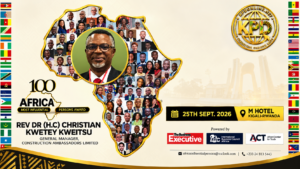
Rev. Dr. Christian Kwetey Kweitsu won 100 Africa Most Influential Persons Award Poster
Kweitsu was presented with an award for Excellence in Audiology Practice during the 100 Most Influential Persons Awards – Africa, held on September 25, 2026, at the M Hotel in Kigali, Rwanda.
The Kigali ceremony brought together personalities from across Africa recognised for contributions in areas including business, community service, leadership and professional development. IGIHE confirmed the September 25 date and M Hotel venue, while a report published after the ceremony documented the recognition of other African changemakers.
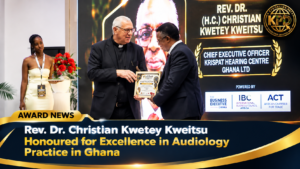
Rev. Dr. Christian Kwetey Kweitsu, presented Audiology Excellence Award Ceremony
Recognition for audiology and hearing healthcare
The award recognises Kweitsu’s professional work in audiology and his efforts to expand awareness and access to hearing healthcare.
Kweitsu’s professional profile identifies him as the CEO of KRISPAT Hearing Centre Ghana Ltd and says he has more than 23 years of experience in hearing healthcare. His professional activities have included hearing assessment, hearing-aid services, industrial audiometry and hearing-conservation programmes.
KRISPAT’s listed services include hearing tests, digital hearing aids, hearing protection, industrial hearing-conservation programmes and general ear and hearing care. A business profile for the centre identifies Kweitsu as its manager.
The recognition places particular attention on a branch of healthcare that remains relatively specialised in Ghana, where hearing loss can affect communication, education, employment and social participation.

Krispat Hearing Centre Ghana Ltd – Tema – Contact Number, Email Address – 3 Reviews
From clinical practice to public education
Kweitsu’s work has extended beyond clinical services into public education about hearing loss and hearing aids.
In 2025, he published Amplifying Life: A Comprehensive Guide to Hearing Aids – Understanding, Choosing and Caring. His professional profile describes the book as a practical resource dealing with hearing loss, hearing-aid technology, selecting appropriate devices and caring for hearing aids, while also addressing the social and emotional experiences associated with hearing impairment.
The publication has also been presented as part of efforts to promote early detection and reduce stigma surrounding hearing impairment in Ghana.
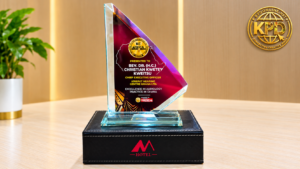
Rev. Dr. Christian Kwetey Kweitsu Award Trophy Display
Academic background
Kweitsu’s involvement in audiology also includes academic research.
A University of Ghana repository record shows that he completed a research dissertation titled Attitudes Towards the Use of Hearing Aids Among Hearing Impaired Population in Accra, Ghana, submitted in 2020 as part of the requirements for an MSc in Audiology.
The research focused on attitudes toward hearing-aid use among people with hearing impairment in Accra, adding an academic dimension to his work in hearing healthcare.
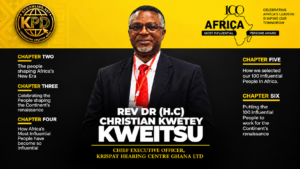
Rev. Dr. Christian Kwetey Kweitsu Continental Leadership Award Portrait
Hearing-health outreach
His professional activities have also included community outreach.
According to a March 2026 professional post, KRISPAT Hearing Centre conducted a hearing-health screening programme at Regworld Training Center in Apowa–Kejabril in Ghana’s Western Region. The programme included clinical ear examinations and education on hearing conservation and preventive ear care.
Such programmes form part of a broader emphasis on identifying hearing problems early and improving public understanding of hearing health.
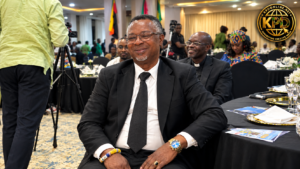
Dignified Banquet Gathering with Rev. Dr. Christian Kwetey Kweitsu
A Ghanaian professional recognised on an African platform
The award in Kigali follows an earlier announcement that Kweitsu had been selected for recognition at the 2026 African awards event. Contemporary reports identified him as one of the Ghanaian professionals being recognised and described the event as a platform bringing together African leaders, business personalities and changemakers.
There is a discrepancy in publicly available descriptions of the event’s edition number: some earlier announcements referred to it as the 2nd Edition, while the updated account supplied for this report refers to the 3rd Edition. The date and venue—September 25, 2026, at M Hotel, Kigali—are independently corroborated.
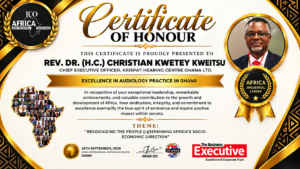
Rev. Dr. Christian Kwetey Kweitsu Gold and Black Africa Excellence Certificate
A recognition of hearing-health advocacy
For Kweitsu, the Kigali presentation represents international recognition of a career centred on audiology, hearing-aid services, hearing conservation, research and public education.
His work combines clinical practice with efforts to increase awareness of hearing loss and encourage people to seek professional assessment and appropriate support.
The Excellence in Audiology Practice recognition therefore places Ghanaian hearing healthcare on an international African platform while highlighting the importance of specialised professionals working to improve hearing-health awareness and services.
Business
CBG Launches Dedicated Loan Scheme to Empower Persons with Disabilities and Boost Financial Inclusion


Consolidated Bank Ghana Limited (CBG) has launched a dedicated loan initiative for persons with disabilities (PWDs), aimed at expanding their access to finance and enabling them to participate more meaningfully in Ghana’s formal financial system.
The CBG PWD Inclusion Loan Initiative, unveiled at the Bank’s Disability Conference at the Du Bois Centre in Cantonments, represents a shift in the Bank’s approach to financial inclusion—from simply providing access to banking services to creating responsible pathways to credit for viable PWD-owned businesses.
Speaking at the launch, Managing Director of CBG, Dr Naomi Wolali Kwetey, said financial inclusion must go beyond opening bank accounts to creating opportunities for people to convert their potential into sustainable economic participation.
She noted that PWDs are entrepreneurs, employers, producers, professionals and customers whose ambitions are no different from those of other business owners.
However, she acknowledged that conventional financial products can sometimes fail to adequately address the barriers faced by entrepreneurs operating outside the formal financial system.
“The CBG PWD Inclusion Loan Initiative is our response to that gap,” Dr Kwetey said.
According to her, the initiative moves CBG’s commitment beyond account opening and financial literacy to responsible access to credit, while recognising beneficiaries as capable economic partners.
Importantly, the facilities being offered under the programme are loans, not grants.
Dr Kwetey explained that this distinction is deliberate because it places beneficiaries within the formal credit system while promoting financial responsibility and accountability.
She said CBG had adopted an approach of “inclusion with discipline”, combining concessionary pricing with carefully considered exceptions to requirements that could unnecessarily exclude viable informal businesses.
At the same time, the Bank will maintain sound credit appraisal, transparency, responsible lending and accountability.
“This balance matters. Inclusion without sustainability will not endure, and credit without responsibility will not empower,” she said.
The initiative builds on CBG’s earlier PWD Financial Inclusion Programme, under which 119 participants were onboarded. The Bank funded the minimum opening balances for the participants and granted approved service-fee waivers to help remove some of the initial barriers to formal banking.
The new initiative brings together financial literacy, concessionary finance and sustained business support, creating a dedicated pathway to credit for PWD entrepreneurs and viable micro-enterprises.
Dr Kwetey said CBG’s ambition extends beyond the initial beneficiaries, with plans to deepen partnerships and expand responsible access to finance for PWD-owned businesses across Ghana.
She said the success of the programme would not be measured simply by the number of loans disbursed, but by the resilience and growth of beneficiaries’ businesses, the quality of their banking relationships, responsible repayment and their confidence in engaging with the formal financial system.
“Our ambition goes beyond the beneficiaries gathered here. We intend to deepen partnerships and expand responsible access to finance for PWD-owned businesses across Ghana,” she said.
The programme is being implemented in partnership with the Korklu Foundation, which has been supporting efforts to promote economic empowerment and inclusion for persons with disabilities.
Founder of the Korklu Foundation, Dorcas Naa Korklu Afotey, urged beneficiaries to use the loans responsibly to strengthen and expand their businesses, improve their livelihoods and contribute to their families and communities.
She stressed that disability should not be a barrier to economic opportunity and commended CBG for adopting a more inclusive approach to financing.
Dr Kwetey also encouraged the beneficiaries to see the initiative as an opportunity to build sustainable enterprises and strengthen their participation in the formal economy.
“To our beneficiaries, CBG sees your potential and respects your enterprise. The opportunity before you is not defined by disability. It is defined by what you can build when ability, finance and commitment come together,” she said.
CBG said the initiative will also lay the foundation for a specialised credit proposition for PWD entrepreneurs as the Bank works to develop accessible, commercially responsible, and sustainable financing solutions.
The Bank’s Managing Director said the initiative was not simply another loan product but part of a broader effort to strengthen CBG’s capacity to serve customers who have historically remained outside formal finance.
General News
Rev. Dr. Christian Kwetey Kweitsu Set for International Recognition at 100 Most Influential Persons Awards in Kigali
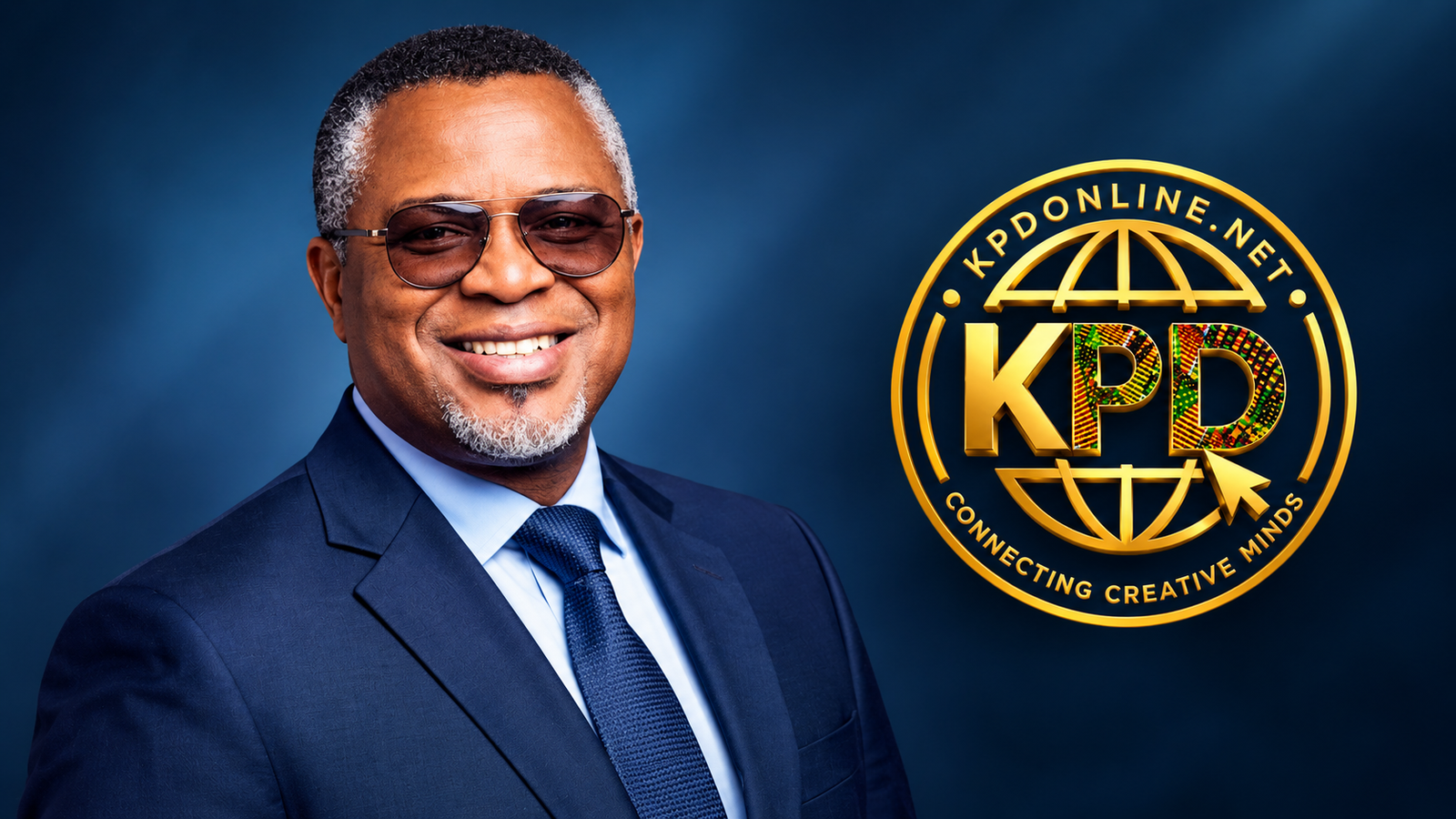
Accra, Ghana — September 22, 2026: Ghanaian audiologist and hearing-health advocate Rev. Dr. Christian Kwetey Kweitsu, Chief Executive Officer of KRISPAT Hearing Centre Ghana Ltd, is set to receive international recognition at the 3rd Edition of the 100 Most Influential Persons Awards – Africa, scheduled for September 25, 2026, at the M Hotel in Kigali, Rwanda.
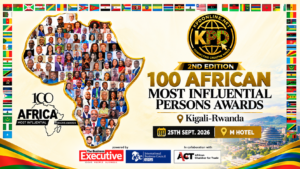
African Influential Persons Awards Poster
The event is being presented as a gathering of African leaders, business personalities and changemakers. Public information about the event identifies The Business Executive Ghana, International Business Council Africa and African Chamber for Trade among the organisations behind the awards.
Krispat Hearing Centre Ghana Ltd – Tema – Contact Number, Email Address – 3 Reviews
Recognition for hearing-health work
According to information provided for the recognition, Dr. Kweitsu is being acknowledged for his work in hearing healthcare and his contribution to improving access to services for people experiencing hearing challenges in Ghana and beyond.
Public professional profiles identify Kweitsu as the CEO of KRISPAT Hearing Centre Ghana Ltd and an audiologist specialising in hearing healthcare and hearing aids. His professional profile states that he has more than two decades of experience in the field.
KRISPAT’s services include hearing assessments, hearing-aid services and hearing-conservation programmes. A business listing for its Tema branch also identifies Kweitsu as the company’s manager and describes services including hearing tests, digital hearing aids, industrial hearing conservation and general ear and hearing care.

Denílson Monteiro entre os “100 Jovens Mais Influentes” em África | Skutam
Author of hearing-health book
Beyond clinical practice, Kweitsu has also worked on public education around hearing loss and hearing aids.
His professional profile lists the 2025 publication “Amplifying Life: A Comprehensive Guide to Hearing Aids – Understanding, Choosing and Caring.” The book is presented as a practical guide covering hearing loss, hearing-aid options, selection and care, while also addressing the experiences of people living with hearing challenges.
Kweitsu has also been involved in academic research. The University of Ghana repository lists his 2020 research work, Attitudes Towards the Use of Hearing Aids Among Hearing Impaired Population in Accra, Ghana, conducted through the Department of Audiology, Speech and Language Therapy.

M Hotel Kigali Rwanda – Turkana Wildlife Safaris
Continuing advocacy
His professional activities have included hearing-health outreach and education. A March 2026 outreach programme associated with KRISPAT Hearing Centre involved hearing-health screening and education at the Regworld Training Center in the Western Region, according to a professional post shared on his LinkedIn profile.
The upcoming Kigali recognition therefore comes as another international platform for highlighting work in a healthcare area that often receives less public attention.
Message to Ghanaians
Reacting to the recognition, Rev. Dr. Kweitsu expressed appreciation for being named among Africa’s influential personalities and encouraged Ghanaians to continue contributing to national development, regardless of how small their individual efforts may appear.
He stressed the importance of perseverance and service to society, expressing the view that sustained contributions to Ghana and humanity can eventually receive recognition.
The 100 Most Influential Persons Awards – Africa is scheduled for September 25, 2026, at M Hotel, Kigali, Rwanda. An event announcement published by IGIHE confirms the date, venue and participation of African leaders, changemakers and business personalities.
For Kweitsu, the Kigali event is expected to provide an international platform to spotlight Ghanaian contributions to hearing healthcare and the wider effort to improve awareness, prevention and support for people living with hearing challenges.
Technology
Inside the Italian Apple Store Walkout: Workers Challenge Conditions as iPhone 18 Pro Arrives
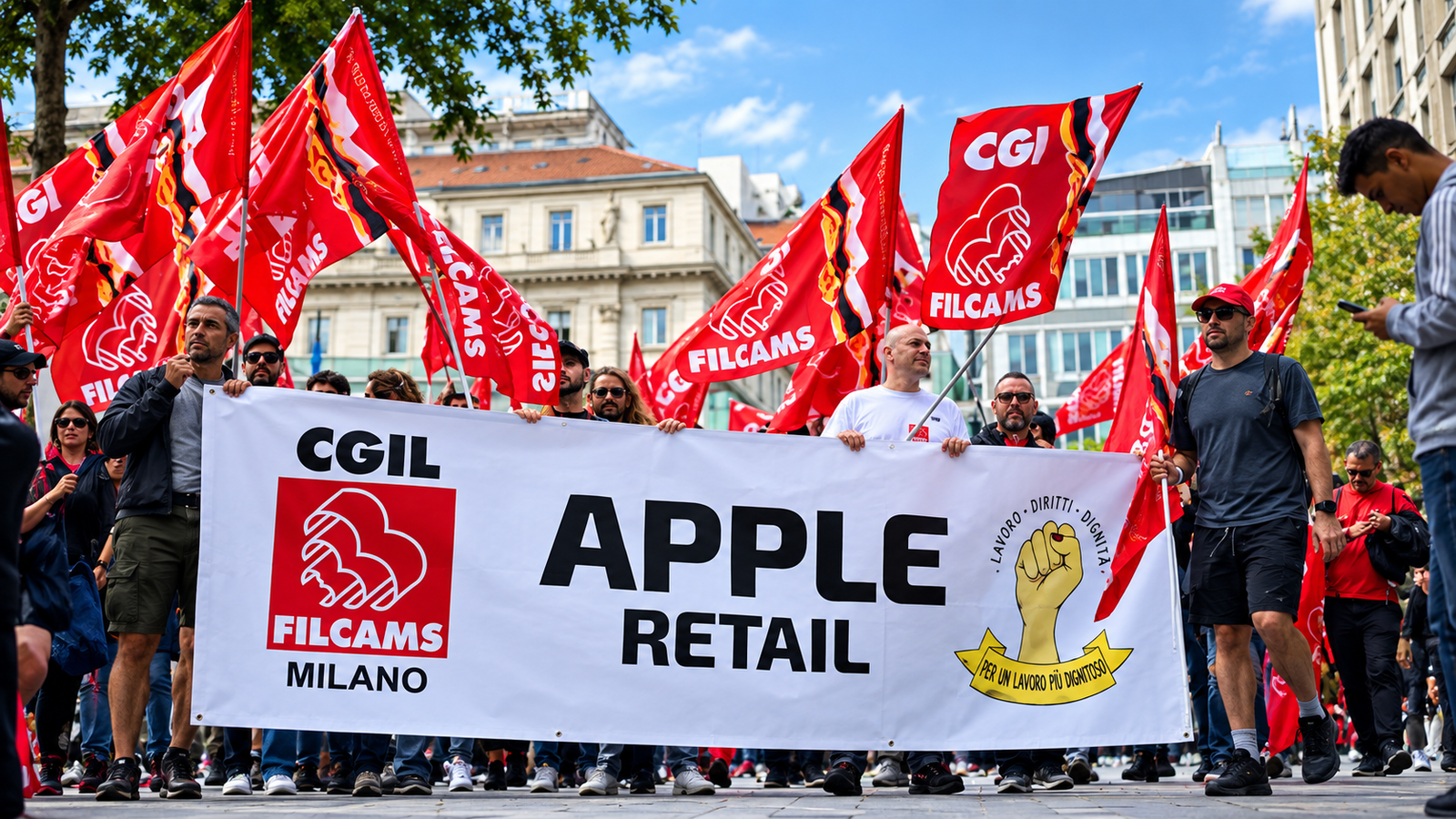
By Angel No Lie | KPD Online | Technology & Business Report
A launch day marked by a labor dispute
Apple’s latest iPhone launch in Italy coincided with a nationwide walkout by Apple retail employees, putting a labor dispute alongside one of the company’s biggest annual retail events.
On 18 September 2026, workers at Apple Retail Italia stores staged a full-shift strike over working conditions. The action was organized by Filcams CGIL, Fisascat CISL and Uiltucs and coincided with the Italian launch of the iPhone 18 Pro and iPhone 18 Pro Max. Reuters reported that the action concerned more than 1,600 employees across 17 Apple stores.
What workers are asking for
The unions say the dispute centers primarily on staffing, workloads and employment arrangements.
Among their demands are:
- Additional permanent hiring
- Conversion of some fixed-term contracts into permanent positions
- The opportunity for part-time employees to voluntarily increase their working hours
- Adequate staffing levels for individual stores
- Changes to working arrangements and job responsibilities
Union representatives have also complained about increasing workloads and what they describe as greater overlap between employees’ responsibilities. According to the unions, new procedures and productivity requirements have added pressure to store personnel.
Fisascat CISL reported an average strike participation rate of 70%, with some locations reaching higher levels. That figure is a union-reported estimate rather than an independently verified participation figure.

Aperto l’Apple Store a Milano, centinaia in fila – Corriere.it
Why launch day was significant
The timing was deliberate.
The iPhone 18 Pro went on sale worldwide on 18 September, generating queues at Apple stores in several countries. In Milan, however, customers arriving for the new device encountered demonstrations by Apple retail workers outside the company’s prominent glass-cube store.
Reuters footage showed employees using flags, whistles and rattlers during the demonstration while customers queued nearby. A union representative told Reuters that the iPhone launch was chosen because of its importance to Apple’s public image.
The result was an unusual contrast: customers arriving to celebrate a major technology launch while employees were using the same event to highlight an unresolved workplace dispute.

Neuer Apple-Flagship-Store in Mailand: Springbrunnen-Eingang und verändertes Innen-Layout | News | MacTechNews.de
Apple’s response
Apple said its Italian retail and online stores remained open during the strike and that it was prepared to welcome customers.
The company also defended its employee compensation and benefits, pointing to medical, dental and vision coverage as well as mental-health and wellness support.
This provides an important distinction in the dispute: the unions’ assessment of working conditions and Apple’s description of its employment package are different perspectives, and neither should be treated as an independently established conclusion about the overall quality of employment without further evidence.

El éxito supera a la producción: más de un mes de espera para conseguir el nuevo iPhone
What happened inside the stores?
Available reporting indicates that the stores continued operating despite the industrial action. Reuters reported that Apple said its outlets would operate normally. At the same time, pickets were organized outside selected stores, including Apple’s flagship location in central Milan.
The strike therefore did not amount to a nationwide closure of Apple’s Italian retail network. Rather, employees withheld their labor while Apple maintained retail operations.
The dispute goes beyond the iPhone
The disagreement is part of a broader negotiation between Apple Retail Italia and employee representatives.
According to Fisascat CISL, discussions have included staffing levels, contract arrangements, working hours and the organization of store duties. The union says an earlier meeting on 29 July 2026 did not produce agreement on its proposed structural staffing measures.
ANSA likewise reported union concerns about staffing shortages, heavier workloads and pressure surrounding hourly productivity.
The commercial backdrop
The labor dispute occurred as Apple launched its latest premium iPhone generation.
Reuters reported that the iPhone 18 Pro starts at €1,489 in Italy. The launch also comes ahead of Apple’s planned release of its Duo foldable smartphone, scheduled for 23 October, which unions say could create another period of heightened activity for retail employees.
The bigger picture
The Italian walkout illustrates how major product launches can become important moments in labor negotiations. For Apple, launch day is designed around customer attention, retail activity and global publicity. For the unions, the same visibility provided an opportunity to put employment concerns before the public.
The immediate effect appears to have been limited: Apple’s stores remained open, while demonstrations took place outside several locations. But the underlying negotiations remain unresolved, according to the unions, and further industrial action could follow.
Bottom line: The 18 September walkout was not a protest against the iPhone 18 Pro itself. It was a labor dispute involving Apple retail employees, centered on staffing, contracts, working hours and workload, and deliberately timed to coincide with one of Apple’s highest-profile retail days of the year.

Death row inmate survives two lethal injections

Dangote’s Kenya refinery faces compensation, environment questions

Man City Ownership Under Spotlight After Financial Rule Verdict



-

 General News1 week ago
Two political parties, one lesson: Afuntummireku and Tikro Nkɔ Agyina for Ghana
-

 Culinary1 week ago
Kofi Brokeman: The Simple Ghanaian Snack That Has Stood the Test of Time
-
 General News1 week ago
Rev. Dr. Christian Kwetey Kweitsu Set for International Recognition at 100 Most Influential Persons Awards in Kigali
-

 General News1 week ago
Free Speech, False Publication and Presidential Criticism in Ghana: Where Does the Law Draw the Line?
-
 General News1 week ago
Don’t Expect Concerts When People Can’t Afford Food – Rex Omar on Black Star Experience
-

 Entertainment1 week ago
Can’t Anything Good Come Out of Ghana? – Ras Caleb Appiah-Levi Fires Back at Critics
-

 Entertainment2 weeks ago
30 Old Ghanaian Songs That Defined Generations
-
 General News2 weeks ago
Shatta Wale Urges UPSA Students to Turn Ideas into Sustainable Ventures