
General News
Ghanaian Evacuee Dies at Accra Airport Shortly After Returning from South Africa


The Ministry of Foreign Affairs has announced the death of a Ghanaian evacuee from South Africa shortly after arriving in Ghana on Friday, August 14, 2026.
According to the Ministry, the deceased died at the Emergency Medical Reception at the Accra International Airport at 6:55 p.m., after arriving as part of the government’s ongoing evacuation exercise.
The deceased was among 50 Ghanaians who arrived in Ghana at 5:50 p.m. on Friday aboard an Air Tanzania flight from South Africa.
The Ministry said reports from other passengers indicated that the health condition of the deceased began to deteriorate approximately 30 minutes before the flight touched down in Accra.
A medical emergency team was already on standby at the airport to receive the returning Ghanaians. The team attended to the passenger immediately upon arrival and made efforts to save his life.
However, despite the medical intervention, the passenger died and was pronounced dead by doctors at 6:55 p.m.
The Ministry of Foreign Affairs said it is currently undertaking the necessary formalities to inform the deceased’s family.
It has also arranged for the remains to be deposited at the Police Hospital, where an autopsy will be conducted to assist in establishing the circumstances surrounding the death.
The Ministry expressed deep sadness over the incident and said it will provide further updates after formally engaging with the bereaved family.
The death comes as the government continues its evacuation exercise to bring Ghanaians back home from South Africa.
General News
World Assemblies of God Congress Planning Committee Calls on Ga Mantse Ahead of Accra Gathering

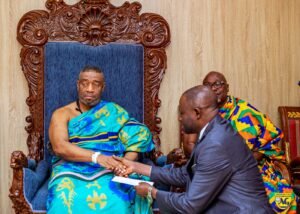
The Planning Committee for the 10th Triennial World Assemblies of God Fellowship Congress has paid a courtesy call on the Ga Mantse, His Royal Majesty King Tackie Teiko Tsuru II, as part of preparations for the international religious gathering scheduled to take place in Accra.

The delegation used the visit to brief the Ga Mantse on the upcoming Congress and formally extend an invitation to him to participate in the event.
The delegation was led by the Chairman of the Local Organising Committee (LOC) and Regional Superintendent of the Greater Accra East Region of Assemblies of God, Ghana, Rev. Andrews Nelson Awintia.
Rev. Awintia represented the General Superintendent of Assemblies of God, Ghana, Rev. Stephen Wengam, during the courtesy call.
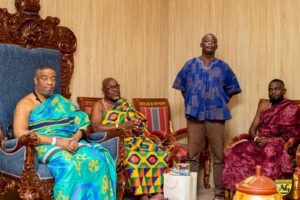
The 10th Triennial World Assemblies of God Fellowship Congress is scheduled for October 14 to 16, 2026, in Accra, under the theme “Commissioned: One Mandate, Every Nation,” drawn from Matthew 28:18–20.
The three-day international gathering is expected to attract thousands of delegates, church leaders and ministers from more than 100 countries.
The Congress will provide a platform for worship, leadership sessions, fellowship and discussions on the mission of the Church and its role in communities across the world.
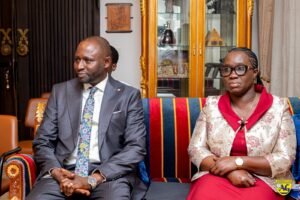
As part of the programme, activities will be held at the Independence Square during the day, while evening programmes are scheduled to take place at the Accra Sports Stadium.
The hosting of the Congress in Ghana is expected to bring together Assemblies of God members and leaders from different parts of the world for a major international gathering centred on Christian fellowship, leadership and the Church’s global mandate.
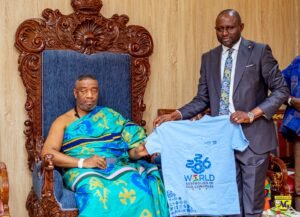
Meanwhile, Assemblies of God, Ghana, is set to hold a press conference on Thursday, October 1, 2026, at its Head Office in Accra ahead of the World Congress.
The General Superintendent of Assemblies of God, Ghana, Rev. Stephen Wengam, is expected to address the media during the press conference.

He is also expected to provide updates on preparations for the international gathering and share important information regarding the upcoming Congress.
The press conference will form part of efforts by the church to officially update the public and the media ahead of the arrival of delegates for the three-day World Assemblies of God Fellowship Congress in Accra.


NASHVILLE, Tennessee — Tennessee death row inmate Christa Pike was taken to a hospital after remaining alive following two injections of pentobarbital during an attempted execution, according to her lawyers and the Tennessee Department of Correction.
Pike, 50, was scheduled to be executed at Riverbend Maximum Security Institution in Nashville on September 30. Her attorneys subsequently filed an emergency motion seeking to halt the procedure, saying she still had a heartbeat after the two injections.
One of Pike’s lawyers told the BBC that she was receiving life-saving medical treatment at a hospital. Witnesses reported that Pike remained alive for an extended period following the injections.
The Tennessee Department of Correction confirmed that Pike had been transported to an off-site medical facility. The department said the state followed its established execution protocol and that the protocol did not provide for additional procedures beyond those carried out that evening.
Pike’s case had already drawn significant legal attention before the execution attempt. Earlier on September 30, a federal appeals court temporarily stayed her execution while considering arguments concerning evidence of childhood abuse and other mitigating circumstances. The U.S. Supreme Court subsequently cleared the way for the execution to proceed.
Pike was convicted of the 1995 murder of 19-year-old Colleen Slemmer, a fellow Job Corps student in Knoxville. Pike was 18 at the time of the killing and was sentenced to death in 1996.
Her execution would have made her the first woman put to death by Tennessee in more than 200 years. Her attorneys had argued that her history of childhood abuse and other circumstances should be considered in determining her sentence.
Following the failed execution attempt, the case has raised new questions about Tennessee’s execution procedures. The state’s Department of Correction maintains that its personnel followed the approved protocol.
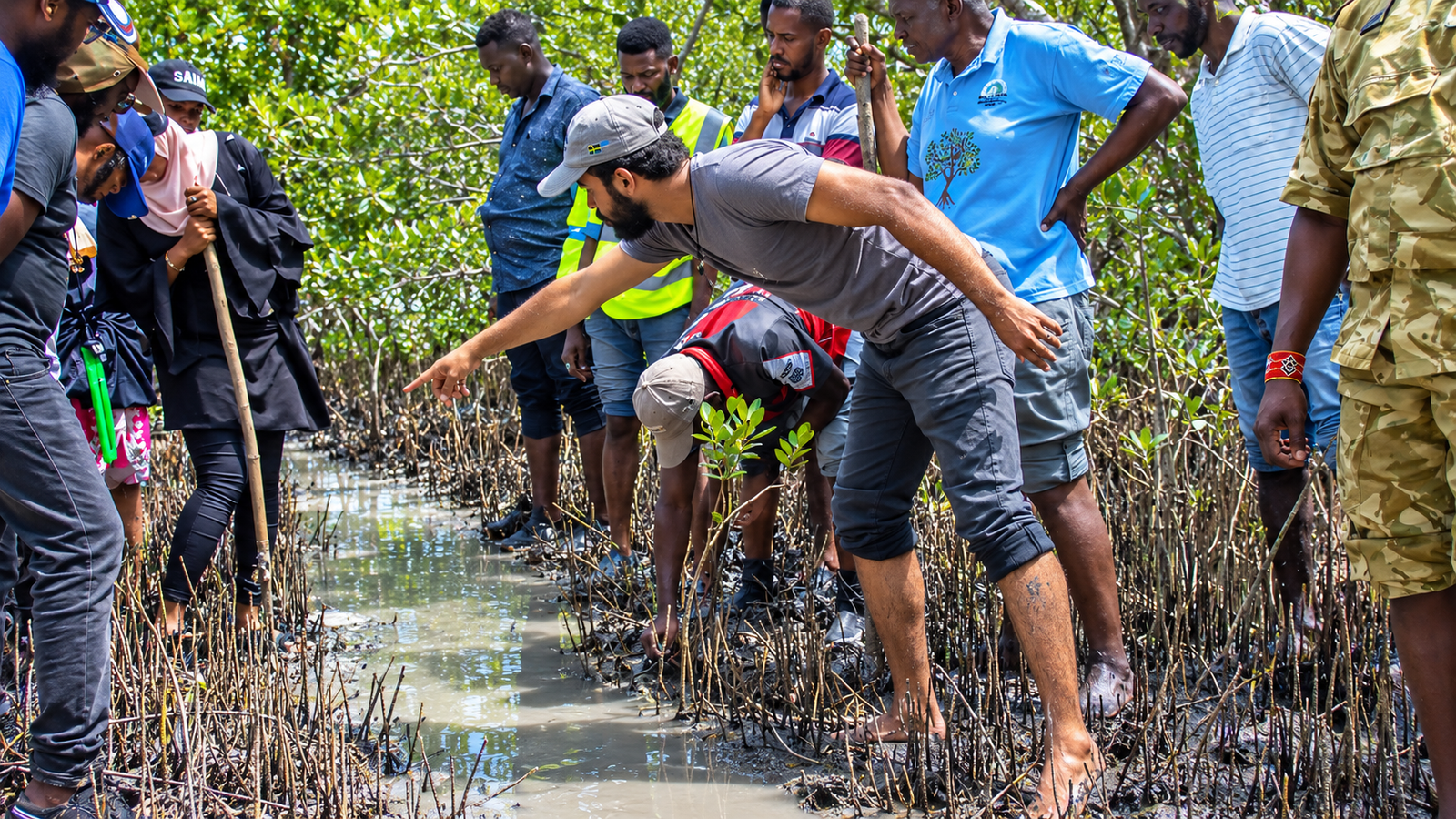
LAMU, Kenya — Construction has formally begun on a proposed $16 billion oil refinery in Lamu, backed by Nigerian industrialist Aliko Dangote, despite an ongoing dispute with local residents over land rights, compensation and environmental safeguards.
The project, officially broken ground on September 30, is designed to process 700,000 barrels of crude oil per day and is expected to be completed by 2030. It is being presented by Dangote and the Kenyan government as a major regional energy and industrial investment that could reduce East Africa’s reliance on imported refined petroleum products.

DANGOTE AND RUTO MARK MAJOR INDUSTRIAL PROJECT
Residents Challenge Land Acquisition
The project’s launch comes amid a legal dispute involving residents who say they have ancestral and other interests in land earmarked for the refinery.
A group of 133 residents filed a case arguing that affected families had not been adequately compensated or provided with appropriate resettlement arrangements. They also raised concerns about the impact of construction on homes, crops, trees, livestock facilities and cultural sites.
A Malindi Environment and Land Court has ordered that the status quo be maintained on the disputed land pending an inter partes hearing scheduled for October 14, 2026. The order did not prevent the official groundbreaking ceremony, but it places restrictions on activities on the disputed parcel while the legal process continues.

DANGOTE PROMISES JOBS AND TRAINING FOR LOCALS
Dangote Defends the Project
Dangote has rejected suggestions that the controversy will derail the refinery.
Speaking ahead of the groundbreaking, he maintained that the project would proceed and argued that opposition to major African infrastructure projects should not prevent industrial development. He has also said the refinery is intended to help Africa process more of its resources within the continent rather than continuing to depend heavily on imported finished products.
Dangote has pledged that local communities will benefit through employment, training and business opportunities. The company says the project could create tens of thousands of jobs during construction, while a proposed training school in Lamu is expected to develop local technical skills.

LAMU REFINERY: A NEW CHAPTER FOR EAST AFRICAN ENERGY
Environmental Questions Remain
Environmental groups and community representatives have also questioned the potential impact of the refinery on Lamu’s coastal ecosystem.
Lamu is home to sensitive marine environments and the historic Lamu Old Town, a UNESCO World Heritage Site. Critics have called for greater transparency around environmental assessments and mitigation measures before the project advances further.
Save Lamu representative Walid Ali told the BBC that the group wants access to the findings of the environmental impact assessment and greater engagement with the affected community.
Regional Energy Ambitions
The refinery is expected to supply petroleum products including petrol, diesel and jet fuel to Kenya and other East African markets. Dangote has said regional governments could collectively take a 30% stake in the project, while the refinery is expected eventually to have a presence on the Nairobi Securities Exchange.
The project is also expected to include a 1,000-megawatt power plant, adding an electricity-generation component to the industrial complex.
For now, the refinery faces two parallel realities: a large-scale industrial project backed by the Kenyan government and Dangote Group, and unresolved questions from some local residents about land rights, compensation, community participation and environmental protection.
The next significant legal development is expected at the October 14 court hearing, when the competing positions over the disputed land will be considered.

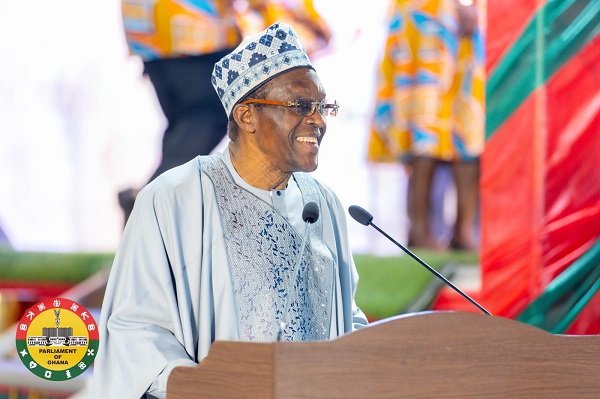
Speaker of Parliament Alban Bagbin has disclosed that 21 people are currently standing trial in four separate narcotics-related cases pending before Ghanaian courts, as he explained his decision to reject a proposed parliamentary inquiry into major cocaine seizures linked to Ghana.
The disclosure came during Parliament’s emergency sitting on Tuesday, September 29, 2026, after the Minority sought the establishment of a bipartisan ad hoc committee to investigate major narcotics consignments allegedly processed, cleared and exported from Ghana.
Why Bagbin Rejected the Inquiry
Speaker Bagbin ruled that the proposed parliamentary investigation could overlap substantially with issues already before the courts.
According to him, the four pending cases involve about 21 accused persons, meaning that a parliamentary inquiry into the same transactions could potentially examine evidence, witnesses and questions of responsibility that are already part of ongoing criminal proceedings.
He therefore ruled the Minority’s motion inadmissible under the relevant Parliamentary Standing Orders, citing concerns that the proposed inquiry could prejudice the interests of parties involved in the court cases.
The Cases Behind the Controversy
The parliamentary debate follows several major narcotics seizures involving consignments linked to Ghana.
Among the cases is the seizure in France of nearly four tonnes of suspected cocaine concealed in a shipment of plastic waste originating from Ghana. Four Ghanaian nationals have been remanded in connection with that case, while a fifth suspect, Dutch national Jos Leijdekkers, is reportedly at large.
The Minority had proposed that Parliament examine issues including how the consignments were processed and cleared, the roles of state agencies and private companies, port security and the progress of investigations.
Minority Challenges Speaker’s Decision
Minority Leader Alexander Afenyo-Markin has rejected the Speaker’s reasoning, arguing that the proposed inquiry was intended to examine institutional and systemic weaknesses rather than determine the guilt or innocence of people before the courts.
He maintained that Parliament could investigate issues such as customs procedures, container scanning, intelligence sharing and coordination between state agencies without conducting a parallel criminal trial.
The disagreement has intensified debate over the limits of parliamentary oversight when related criminal matters are already before the courts.
Cocaine Seizures Put Ghana Under Scrutiny
The parliamentary dispute comes amid growing international attention to narcotics trafficking involving Ghana.
Recent seizures include the 3.9-tonne cocaine shipment intercepted by French Customs at Dunkirk and an earlier seizure of 320 kilogrammes of methamphetamine by Australian authorities from a shipment originating from Ghana.
President John Mahama has already directed security agencies to review Ghana’s systems for detecting and preventing narcotics trafficking through the country’s ports and borders.
For now, the criminal cases involving the 21 accused persons will proceed through the courts, while the political debate over whether Parliament should separately investigate the broader institutional issues surrounding the narcotics seizures continues.

In September 2026, the Ghana Gold Board (GoldBod) in accordance with its mandate under section 2(b) of ACT 1140, generated from its ASM gold trade operations, foreign exchange totaling US$1.871 billion against the announced monthly target of US$1.4 billion.
Of the total amount, US$701.3 million was sold to authorized commercial banks against the set target of US$700 million to support FX market stability, while an amount of US$1.170 billion was provided to the Bank of Ghana against the set target of US$700 million to support reserve accumulation.
In October 2026, GoldBod projects to generate US$1.5 billion in foreign exchange. Of this amount, US$1 billion will be made available to commercial banks to support FX market stability, while up to US$500 million will be provided to the Bank of Ghana to support the building of reserves in line with the GANRAP.
This will be done in accordance with the newly developed Spot FX Sales/Intermediation Framework of the GoldBod to strengthen transparency, fairness and regulatory compliance.
GoldBod remains committed to its statutory mandate to generate foreign exchange for Ghana and will continue to work closely with all stakeholders.

World Assemblies of God Congress Planning Committee Calls on Ga Mantse Ahead of Accra Gathering

Death row inmate survives two lethal injections

Dangote’s Kenya refinery faces compensation, environment questions



-

 General News1 week ago
Two political parties, one lesson: Afuntummireku and Tikro Nkɔ Agyina for Ghana
-

 Culinary1 week ago
Kofi Brokeman: The Simple Ghanaian Snack That Has Stood the Test of Time
-

 General News1 week ago
Free Speech, False Publication and Presidential Criticism in Ghana: Where Does the Law Draw the Line?
-

 General News1 week ago
Rev. Dr. Christian Kwetey Kweitsu Set for International Recognition at 100 Most Influential Persons Awards in Kigali
-

 General News1 week ago
Don’t Expect Concerts When People Can’t Afford Food – Rex Omar on Black Star Experience
-

 Entertainment1 week ago
Can’t Anything Good Come Out of Ghana? – Ras Caleb Appiah-Levi Fires Back at Critics
-

 Entertainment2 weeks ago
30 Old Ghanaian Songs That Defined Generations
-

 General News2 days ago
Fidelity Bank Chairman Named Ghana’s Topmost Transformational Board Chair 2026