
Culinary
A Taste of Sunshine: Discovering Ghana’s Wonderful World of Fruits


Ghana’s fertile soils, warm tropical climate and rich agricultural traditions have made the country home to an impressive variety of fresh and flavourful fruits. From busy city markets and roadside stalls to farms and village gardens, colourful displays of seasonal fruits are a familiar part of everyday life, offering a delicious reminder of the country’s agricultural wealth.
Across Ghana, fruits such as mangoes, pineapples, watermelons, oranges, pawpaw, bananas, coconuts and many others are enjoyed in different ways. Some are eaten fresh as quick snacks on hot afternoons, while others are blended into refreshing juices, added to meals or shared among family and friends.
As different fruit seasons arrive, Ghana’s landscape seems to come alive with shades of yellow, orange, red and green. Mango trees become heavy with ripe fruit, pineapples fill markets with their distinctive aroma, and watermelons become a popular choice for families looking for something cool and refreshing.
But Ghana’s relationship with fruit goes beyond taste.
For many people, fruit is closely connected to memories, community and generosity. It is common for a neighbour with a fruit tree to share part of the harvest with others. A farmer may proudly offer visitors mangoes or oranges from the farm, while roadside sellers sometimes cut open a pineapple or watermelon for customers to taste before making a purchase.
These simple moments reveal an important part of Ghanaian culture—the tradition of sharing.
Fruit is also closely connected to Ghana’s seasons. Every fruit has its time, and many Ghanaians eagerly anticipate the arrival of particular harvests. Mango season, for instance, brings excitement to homes, schools and neighbourhoods as ripe mangoes become widely available. The first sweet pineapples of the season can equally be a welcome treat for families and visitors.
This seasonality creates a natural connection between consumers and the farmers who produce the food. Behind every basket of mangoes, bunch of bananas or pile of pineapples is the work of farmers who cultivate the land, nurture their crops and wait patiently for the harvest.
In Ghana’s towns and cities, the fruit trade also provides livelihoods for many people. Vendors at markets, roadside sellers, farmers and small-scale processors all play a role in moving fruits from farms to consumers.
Beyond the economic value, fruits also contribute to healthy diets. Many locally available fruits provide vitamins, minerals, fibre and other nutrients that are important for the body. Their natural sweetness also makes them an appealing alternative to heavily processed snacks and drinks.
Yet perhaps the most beautiful thing about Ghana’s fruits is the way they bring people together.
A neighbour gives you mangoes from a tree in their compound. A roadside seller cuts a pineapple and offers you a slice to prove just how sweet it is. A family buys a large watermelon, cuts it open and, before long, everyone is gathered around sharing pieces.
These are ordinary moments, but they tell a bigger story.
In Ghana, fruit is rarely just fruit. It represents generosity, abundance, changing seasons, childhood memories, farming traditions and the simple joy of sharing food with others.
As we explore Ghana’s wonderful world of fruits, the journey will begin locally—looking at the fruits grown across the country, their seasons, cultural significance, nutritional value, farming communities and the people whose livelihoods depend on them.
From there, the exploration will eventually extend beyond Ghana to discover how fruits connect communities, cultures and economies around the world.
For now, however, the journey begins at home—with the taste, colour and sweetness of Ghana’s own sunshine.

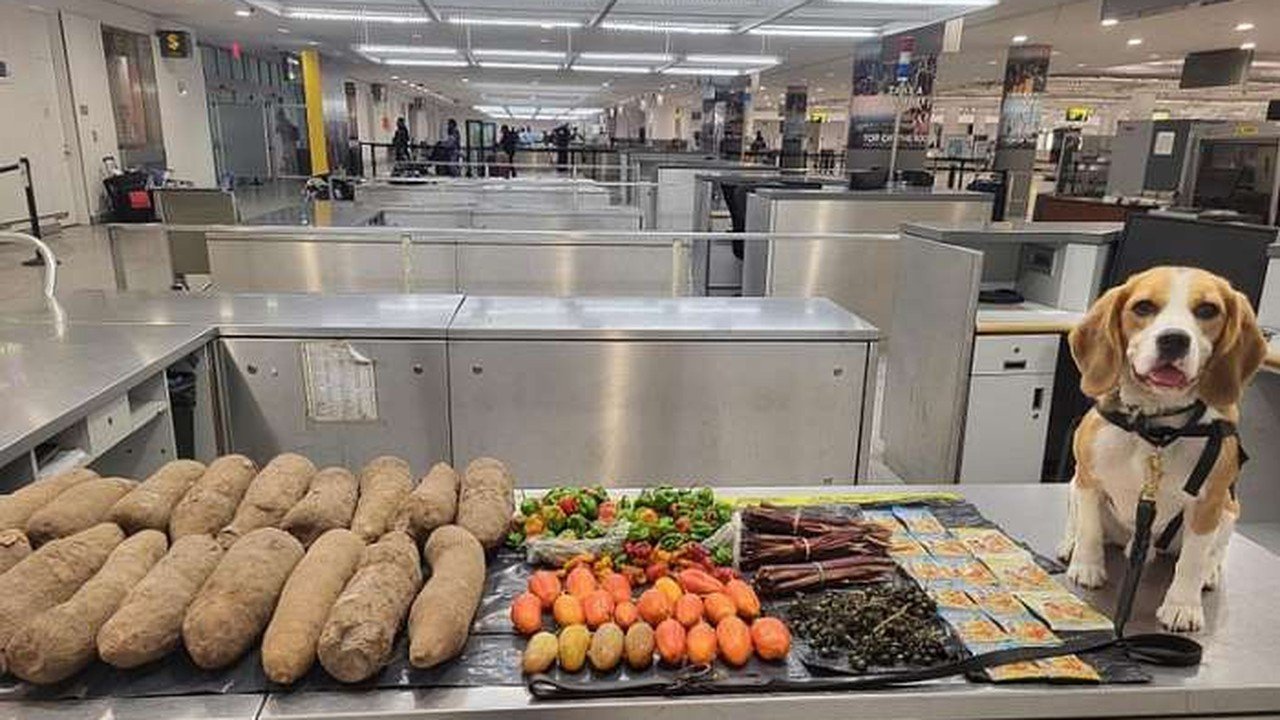
A K9 detection dog at John F. Kennedy International Airport (JFK) has helped authorities uncover approximately 72 pounds of prohibited Ghanaian food items, highlighting ongoing efforts to prevent restricted agricultural and food products from entering the United States.
The shipment was identified during an inspection at the New York airport after the specially trained dog alerted officers to the contents of luggage or a consignment arriving from Ghana.
Authorities subsequently examined the items and determined that they included food products that are restricted or prohibited under U.S. import regulations.
Airport inspection teams routinely screen international baggage and cargo for agricultural products that could introduce pests, diseases or other risks to U.S. agriculture. Certain meat, plant and animal-derived products are subject to strict entry requirements.
The discovery demonstrates the role of detector dogs in assisting customs and agricultural inspection officers at major international gateways. K9 teams are trained to identify specific odors and can help officers locate undeclared or restricted products more efficiently.
Passengers arriving in the United States are required to declare agricultural and food products they are carrying. Depending on the product and its origin, items may be permitted, restricted or prohibited.
Authorities have continued to remind international travelers to check U.S. entry requirements before bringing food products into the country.
The seizure at JFK serves as another example of the screening measures in place to protect U.S. agriculture while enforcing import regulations on food and agricultural products.

If you enjoy bold flavours and a good dose of heat, Meko Gravy is one Ghanaian sauce that deserves a place on the dining table.
Known for its spicy kick, rich colour and aromatic combination of fresh ingredients, Meko Gravy is a traditional Ghanaian pepper sauce that can transform a simple meal into a flavour-packed experience.
The sauce is made mainly from fresh peppers, tomatoes and onions, with salt, oil and herrings, locally known as eman sesawa, adding to its distinctive taste.
Meko Gravy is particularly popular as an accompaniment to ampesi, but its versatility means it can also be served alongside other stews, sauces and everyday Ghanaian dishes.
One of the appealing aspects of Meko Gravy is that it does not require complicated ingredients. Its flavour comes from the freshness of the produce and the traditional preparation method.
For a typical preparation, the ingredients include 20 fresh peppers, although the quantity and type of pepper can be adjusted depending on how much heat is preferred.
Other ingredients include one tomato, two medium-sized onions, one ladle of vegetable oil or palm oil, salt to taste and herrings (eman sesawa).
The combination produces a sauce that is spicy, savoury and aromatic, with the fish adding another layer of flavour.
How Meko Gravy is prepared
The preparation begins by washing all the ingredients thoroughly to remove dirt and impurities.
The peppers, tomato and onions are then steamed gently for about 10 minutes. This helps soften the ingredients while allowing their natural flavours to develop.
Once steamed, the ingredients are transferred into an asanka, the traditional Ghanaian earthenware grinding bowl.
They are ground according to the desired texture. Traditionally, the mixture does not necessarily have to be completely smooth. A slightly coarse texture can help retain the individual character of the ingredients while allowing their flavours to blend.
The use of the asanka also forms part of the traditional experience of preparing Ghanaian pepper-based sauces.
Cooking the gravy
After grinding, oil is heated in a saucepan over medium heat. Some chopped onions are added and sautéed until fragrant.
The pepper and tomato mixture is then carefully added to the saucepan and stirred well.
The sauce is allowed to cook over medium-low heat, with occasional stirring to prevent it from sticking to the bottom of the pan.
Patience is particularly important at this stage. The Meko Gravy is allowed to simmer until much of the water has reduced and the oil begins to separate from the sauce.
This slow cooking process helps deepen the colour and flavour of the gravy while reducing the raw taste of the fresh pepper and tomato.
Once the sauce has cooked sufficiently, the herrings are added before the gravy is removed from the heat.
A key part of preparing Meko Gravy is allowing it enough time to cook properly.
Rather than rushing the process, the sauce is cooked gently until the oil rises to the surface. This is an important stage because it signals that the ingredients have cooked down and their flavours have developed.
The amount of pepper can also be adjusted according to individual preference. Those who enjoy intense heat can use hotter varieties or increase the quantity, while those who prefer a milder sauce can reduce the amount.
Best served with ampesi
Meko Gravy is particularly well suited to ampesi, creating a combination that brings together the simplicity of boiled plantain, yam, cocoyam or other starchy foods with the heat and richness of the pepper sauce.
Its versatility, however, means it can complement other Ghanaian meals as well.
For many spice lovers, Meko Gravy is more than just an accompaniment. Its combination of fresh pepper, tomato, onion, oil and fish creates a distinct taste that can turn an otherwise simple meal into something much more memorable.
And while its fiery character may leave diners reaching for water or wiping away a little sweat, that same heat is part of its appeal.
A little heat, a lot of flavour — that is the magic of Meko Gravy.
For many Ghanaians, some of the most memorable meals are not defined by expensive ingredients but by the traditional flavours that have been passed down through generations.
One such ingredient is koobi, the salted and dried tilapia that has quietly earned a place in Ghanaian kitchens and continues to play an important role in the preparation of soups, stews and sauces.
Often used as a seasoning ingredient, koobi is known for its strong aroma, salty taste and rich savoury flavour. It can transform an otherwise simple meal into one with the unmistakable taste associated with traditional Ghanaian cooking.
Koobi is traditionally prepared from fresh tilapia. The fish is cleaned thoroughly, generously salted and left to dry until it develops its characteristic texture and concentrated flavour.
Before it is used in cooking, the fish is usually rinsed to remove excess salt. Depending on the meal being prepared, it may be lightly fried before being added to the dish or placed directly into a soup or stew to allow its flavour to gradually infuse the food.
For generations, Ghanaian households have relied on koobi to add depth to their meals. Its distinctive taste makes it particularly useful in traditional dishes where the goal is to create a rich and satisfying flavour without relying heavily on modern seasoning products.
Koobi can commonly be found in Ghanaian markets alongside other traditionally preserved fish. Its preparation method reflects an age-old approach to preserving fish at a time when refrigeration was not readily available.
Salting and drying help extend the fish’s shelf life while also concentrating its natural flavour. The result is a preserved fish product that serves both a practical and culinary purpose.
Once it enters the cooking pot, koobi releases a strong aroma that many Ghanaians immediately associate with home cooking.
For people who grew up eating traditional Ghanaian meals, that aroma can evoke memories of family kitchens, weekend meals and food prepared by parents and grandparents.
Although koobi is primarily valued for its flavour, salted and dried tilapia also provides protein and minerals.
However, its importance goes beyond its nutritional value. Koobi represents a part of Ghana’s culinary heritage, particularly the traditional knowledge surrounding fish preservation and food preparation.
It demonstrates how generations of cooks found ways to preserve locally available ingredients while turning them into essential components of everyday meals.
Whether it is added to a stew, soup or sauce, koobi can give food a deep, savoury character that is difficult to replicate.
There is also a humorous side to the relationship between Ghanaians and koobi.
Anyone who has kept koobi in the house knows that its powerful smell can attract an unexpected audience—flies.
There is a popular joke among Ghanaians that the flies often know koobi is in the house before the rest of the family does.
Its strong aroma can announce its presence long before the cooking begins. Yet once the fish is fried, simmering in a pot or incorporated into a stew, the attention quickly shifts from the smell to the food itself.
For many lovers of traditional Ghanaian cuisine, the aroma is simply part of the experience.
As Ghanaian cuisine continues to gain attention both locally and internationally, traditional ingredients such as koobi remain an important part of the country’s food identity.
From homes and chop bars to traditional kitchens, the salted and dried tilapia continues to give familiar dishes a distinctive taste.
It may not always receive the attention given to more celebrated Ghanaian foods such as jollof, banku, fufu or waakye, but koobi plays a quiet yet important role in many of the meals enjoyed across the country.
Its strong smell may announce its arrival before dinner does, but once it enters the pot, it can become the ingredient that brings the entire meal together.
Koobi may be the unsung hero of Ghanaian cuisine, but for those who know its flavour, there is nothing quiet about its contribution to the plate.
For generations, the smoky aroma of roasted plantain has been a familiar part of life on Ghana’s streets. Sold by roadside vendors, at busy markets, bus stations and neighbourhood corners, roasted plantain served with groundnuts remains one of the country’s most loved and affordable snacks.
Popularly known as Kofi Brokeman, the snack is a simple combination of roasted plantain and roasted groundnuts. Despite its humble ingredients, it has become deeply woven into Ghanaian food culture and continues to appeal to people of different ages.
The origin of the name Kofi Brokeman is largely rooted in Ghanaian folklore. One popular account suggests that a man named Kofi, who was known for selling roasted plantain, became so associated with the snack that his name eventually became attached to it.
Over time, the name became synonymous with roasted plantain served alongside groundnuts, giving the snack a distinctive identity that has survived through generations.
A Simple Combination With a Distinctive Taste
The appeal of Kofi Brokeman lies largely in its simplicity.
Plantains, which can be ripe or semi-ripe depending on personal preference, are placed directly over hot charcoal and carefully roasted. As the plantain cooks, its skin gradually becomes blackened while the inside softens and develops a rich, sweet and slightly smoky flavour.
The level of ripeness can significantly influence the final taste. Riper plantains tend to become sweeter and more caramelised when roasted, producing the soft, golden interior that many people associate with the perfect Kofi Brokeman.
The roasted plantain is traditionally paired with roasted groundnuts, creating a combination of soft and crunchy textures. The natural sweetness of the plantain blends with the nutty flavour of the groundnuts, making the snack both satisfying and filling.
More Than Just Plantain and Groundnuts
Although plantain and groundnuts remain the traditional pairing, Ghanaians have found different ways to enjoy the snack.
Some people eat roasted plantain with fresh coconut, while others prefer it with avocado, locally known as pear. Spicy pepper can also be added to give the snack an extra kick.
These combinations have helped keep Kofi Brokeman interesting while maintaining the basic character of the traditional snack.
Beyond its taste, the combination also provides a mixture of carbohydrates, fats, protein and fibre. Plantain provides carbohydrates and fibre, while groundnuts contribute protein and fats, making the pairing more substantial than many ordinary quick snacks.
Kofi Brokeman can be found in many parts of Ghana, particularly around busy roads, markets, lorry stations and residential areas.
Vendors often roast the plantains over charcoal in simple metal grills. The process produces smoke and a distinctive aroma that can travel through the surrounding area, often attracting customers before they even reach the vendor.
The preparation may appear straightforward, but achieving the right texture requires attention. The plantain has to be turned regularly so that it cooks properly without becoming excessively burnt on the inside.
Once ready, the blackened skin is peeled away to reveal the soft, roasted plantain inside. It is then served with groundnuts and, depending on the customer’s preference, other accompaniments.
A Snack Full of Memories
For many Ghanaians, Kofi Brokeman is about more than food.
It can bring back memories of buying roasted plantain after school, enjoying it during a long journey, stopping at a roadside vendor during a trip or sharing a plate with friends and family in the evening.
Its affordability has also contributed to its popularity. For many years, it has provided a convenient option for people looking for something filling without spending too much.
The snack has therefore remained relevant despite the growing number of modern food options available across Ghana.
Why Ghanaians Still Love Kofi Brokeman
Part of Kofi Brokeman’s enduring appeal is that it does not require complicated ingredients or elaborate preparation.
At its heart, it is simply roasted plantain and groundnuts. Yet the combination delivers sweetness, smokiness, crunch and a satisfying texture.
It also represents an important part of Ghana’s street-food culture, where ordinary ingredients are transformed through simple cooking methods into foods enjoyed by millions.
From the roadside vendor working over a charcoal grill to the customer waiting patiently for a fresh batch, Kofi Brokeman remains a familiar feature of everyday Ghanaian life.
The snack is also a reminder that some of the country’s most cherished foods do not necessarily come from expensive ingredients or elaborate recipes.
Sometimes, all it takes is a ripe plantain, a handful of roasted groundnuts, hot charcoal and a little patience.
And for many Ghanaians, that simple combination is enough to make Kofi Brokeman one of the country’s unforgettable street-food treasures.
Nkatenkwan, popularly known as Ghanaian peanut soup, remains one of the country’s most beloved traditional dishes. Rich, creamy and packed with flavour, the soup has earned a special place in Ghanaian homes and continues to be enjoyed at family gatherings, celebrations and everyday meals.
Prepared mainly with roasted groundnuts, tomatoes, fresh peppers, ginger and meat or fish, Nkatenkwan is known for its distinctive nutty aroma and naturally rich texture.
The soup can be enjoyed with a variety of Ghanaian staples, including fufu, omotuo (rice balls), banku and plain white rice, making it a versatile dish for different tastes and occasions.
Ingredients for Nkatenkwan:
To prepare a delicious pot of Ghanaian peanut soup, you will need:
- 2 cups smooth peanut paste made from 100% peanuts
- 2 medium onions
- 4 large tomatoes
- 2–3 fresh peppers, depending on your preferred level of heat
- 1-inch piece of fresh ginger
- 1 full chicken, mutton, beef, smoked fish or dried fish
- Salt, to taste
- Natural spices, including Malaispice Natural Seasoning
- 6–8 cups of water
How to Prepare Ghanaian Peanut Soup
1. Cook the peanut paste
Begin by placing the groundnut paste in a pot and adding about one cup of water.
Put the pot over low heat and stir continuously to prevent the paste from sticking to the bottom of the pot or forming lumps.
Allow the peanut paste to cook until it becomes smooth and the natural peanut oil begins to rise to the surface. Once it is properly cooked, remove it from the heat and set it aside.
Cooking the peanut paste properly is an important part of the process because it helps produce the characteristic rich flavour and smooth texture of traditional Nkatenkwan.
2. Prepare and cook the meat or fish
Wash your preferred meat thoroughly and place it in a separate pot.
Season it with salt, your preferred spices and Malaispice Natural Seasoning. Add enough water to cover the meat and allow it to cook until tender.
Chicken, mutton and beef can all be used, while smoked or dried fish can provide a different depth of flavour.
Once the meat is cooked and tender, check the amount of stock in the pot. Add more water if necessary to achieve the desired quantity of soup.
3. Add the peanut paste
Dilute the cooked groundnut paste with a little water until it becomes easier to pour.
Pass the diluted paste through a strainer directly into the pot containing the meat stock.
Straining the peanut mixture helps remove any remaining lumps and produces the smooth, creamy consistency associated with a well-prepared Nkatenkwan.
Stir gently and bring the soup to a gentle boil.
4. Add the tomatoes and peppers
Blend the tomatoes and fresh peppers until smooth.
Pour the blended mixture into the soup and stir gently to combine the ingredients.
Allow the soup to simmer until the tomatoes are properly cooked and the flavours have had enough time to blend together.
At this stage, the aroma of the groundnuts, meat, tomatoes and spices begins to come together to create the distinctive smell associated with Ghanaian peanut soup.
5. Know when your Nkatenkwan is ready
Nkatenkwan is ready when the natural peanut oil rises to the surface and the soup develops a rich, nutty aroma.
The consistency can be adjusted according to preference. If the soup is too thick, a little water can be added and allowed to simmer. If it is too light, it can be left to cook for longer until it reaches the desired thickness.
The final result should be rich, smooth and flavourful.
Ghanaian peanut soup can be paired with several popular staples.
It is traditionally enjoyed with fufu, but it also goes well with omotuo (rice balls), banku and plain white rice.
For many Ghanaian households, the combination of hot Nkatenkwan and fufu remains a particularly satisfying meal.
Tips for Making Rich and Creamy Nkatenkwan
For the best results, it is important to use 100% natural peanut paste without added sugar or oils. This allows the natural flavour of the groundnuts to shine through.
The peanut paste should also be cooked carefully over low heat. Stirring continuously helps prevent it from burning or sticking to the bottom of the pot.
Another important tip is to allow the soup to simmer gently rather than boil rapidly. Gentle cooking gives the groundnuts enough time to cook properly while allowing the flavours from the meat, tomatoes, peppers and spices to blend.
The soup should also be stirred occasionally during cooking to ensure that the peanut mixture remains evenly distributed.
Beyond its rich taste, Nkatenkwan represents the enduring appeal of traditional Ghanaian cooking. It’s simple combination of groundnuts, vegetables, spices and meat or fish can produce a deeply satisfying meal that has remained popular across generations.
Whether served during a family gathering, prepared for a special occasion or enjoyed as an ordinary home meal, Nkatenkwan continues to be one of the dishes that keeps Ghanaian culinary traditions alive.
At Malaifoods, the goal is to celebrate these familiar flavours and make it easier for people to appreciate and recreate Ghanaian dishes, one recipe at a time.

Calm Restored at Larteh Ahenease After Odwira Festival Disturbance

Spain Defeat Czech Republic 3-1 to Extend Winning Run

Ghana Begins Search for New Black Stars Coach After Ministry-GFA Talks



-

 General News2 weeks ago
Two political parties, one lesson: Afuntummireku and Tikro Nkɔ Agyina for Ghana
-

 General News2 weeks ago
Free Speech, False Publication and Presidential Criticism in Ghana: Where Does the Law Draw the Line?
-

 Culinary2 weeks ago
Kofi Brokeman: The Simple Ghanaian Snack That Has Stood the Test of Time
-

 General News2 weeks ago
Rev. Dr. Christian Kwetey Kweitsu Set for International Recognition at 100 Most Influential Persons Awards in Kigali
-

 General News5 days ago
Fidelity Bank Chairman Named Ghana’s Topmost Transformational Board Chair 2026
-

 Culture2 weeks ago
Odwira Festival: History, Meaning, Traditions and the Full Celebration in Akuapem
-

 General News2 weeks ago
Don’t Expect Concerts When People Can’t Afford Food – Rex Omar on Black Star Experience
-

 Entertainment2 weeks ago
Can’t Anything Good Come Out of Ghana? – Ras Caleb Appiah-Levi Fires Back at Critics