
Entertainment
Ras Caleb Appiah-Levi Calls for End to Insults on Social Media

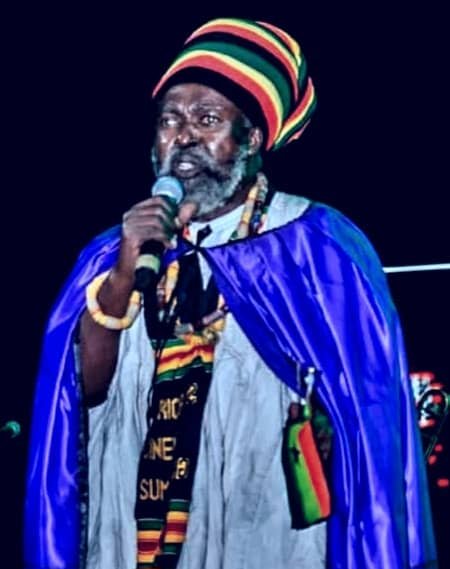
Ras Caleb Appiah-Levi has called on Ghanaians, particularly young people, to stop using insults and abusive comments when engaging with issues on social media.
In a message titled “Stop These Stupid Comments. Insults Don’t Make You a Wise and Intelligent Person,” Ras Caleb said the growing culture of insults on platforms such as Facebook, TikTok and news pages was undermining constructive public discourse.
He argued that many social media users resort to personal attacks when discussing national issues, politics, religion and public figures, believing that the ability to insult others demonstrates intelligence or courage.
According to him, insults do not make a person wise or intelligent but rather expose a lack of meaningful ideas.
He urged people to distinguish between genuine criticism and personal attacks, stressing that disagreement should be based on facts, ideas and possible solutions.
Ras Caleb said hiding behind a phone to insult another person should not be mistaken for courage.
He maintained that true bravery involves confronting issues honestly and respectfully, while wisdom is demonstrated through the ability to correct others without resorting to abuse.
He also challenged young people who frequently insult successful individuals online to examine their own achievements rather than use social media as a platform for personal attacks.
He further warned that abusive online comments could have consequences beyond social media.
According to him, potential employers, business partners, future spouses and other important people may come across a person’s social media activity and form opinions based on what they see.
He described social media comments as a reflection of an individual’s character, cautioning that constant negativity, insults and bitterness could damage future opportunities.
Ras Caleb also urged people to focus on ideas when they disagree with public officials or other individuals.
Using Ghana’s independence struggle as an example, he cited Osagyefo Dr Kwame Nkrumah, arguing that meaningful change comes from advancing stronger ideas rather than simply attacking opponents with insults.
He said people should be able to identify what they believe is wrong and explain how it can be improved.
For him, criticism without facts, ideas or solutions amounts to “noise” and does little to contribute to national development.
Ras Caleb further appealed to Ghanaians and Africans to maintain respect in their interactions, particularly when disagreeing with elders, leaders and other public figures.
He said being outspoken or “woke” should not be confused with being rude or disrespectful.
He encouraged people to remain critical while maintaining civility, stressing that it is possible to be firm, radical and passionate without becoming abusive.
Addressing young people directly, Ras Caleb urged them to think carefully before commenting on social media.
He encouraged those who disagree with an issue to use facts, those who are angry to channel their anger into solutions, and those who have nothing constructive to contribute to consider remaining silent.
He said people should strive to make their contributions bring “light, not darkness” to public discussions.
Ras Caleb concluded his message with a call for people to focus less on winning arguments through insults and more on building, planting, improving and contributing positively to society.
His central message was that wisdom should be demonstrated through constructive ideas and meaningful action, rather than through insults and abusive social media comments.
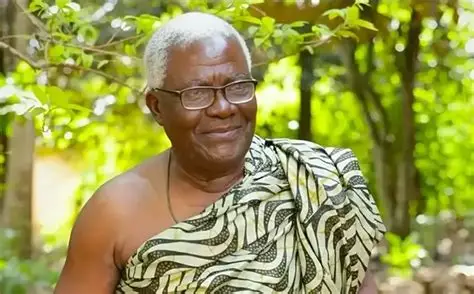
Veteran Kumawood actor Paa George has expressed gratitude to President John Dramani Mahama for providing him with financial assistance over several years, describing the support as a major source of help in his life.
The 89-year-old actor said this during an interview on TV3, where he acknowledged President Mahama and other individuals who have supported him throughout his long-acting career and into his old age.
According to Paa George, President Mahama has consistently assisted him financially for several years.
He also singled out veteran actress Mabel Amétor Asso, whom he said has been paying his monthly bills for more than three years.
The actor further expressed appreciation to actress Nana Ama McBrown and other colleagues who have supported him at various stages of his life and career.
“I am grateful to President John Dramani Mahama for helping me financially for several years, and actress Mabel Amétor Asso pays my bills every month for over three years.”
Looking back on his remarkable career in Ghana’s entertainment industry, Paa George said his journey in acting dates back to 1957, the year Ghana gained independence.
He recalled beginning his acting career through Brigade Concert, where he worked with several entertainers who have since passed away.
“I started acting during brigade concert, since 1957. Many people I started with are no more,” he said.
Paa George also attributed his continued physical strength and activity in old age to the demands of his profession.
He explained that travelling to different locations for film productions has kept him physically active over the years.
“Acting gave me the privilege to exercise because I go to different locations like the Atwea Mountains to film. Which is why I am still strong,” he noted.
Paa George remains one of Ghana’s longest-serving screen personalities, having contributed significantly to the country’s theatre and film industry for decades.
He rose to prominence through the popular Concert Party tradition, performing alongside notable personalities including Agya Ntow, Bob Vans, Lord Bob Cole and Appiah Agyekum.
He was also a member of the Ebibiman drama group, further establishing his presence in Ghana’s theatre scene.
In the 2000s, Paa George experienced renewed popularity in Ghana’s mainstream film industry. During that period, he appeared in numerous productions alongside prominent actors including Agya Koo, Mercy Asiedu, Nana Ama McBrown, Kyeiwaa, Miracle Afranie and Bill Asamoah.

Oswald Okaitei has provided a detailed explanation of the original concept behind the Black Star Experience, arguing that the programme was designed as a straightforward and executable government initiative aimed at using Ghana’s culture, arts and tourism sectors to drive national identity, tourism and job creation.
Speaking on the Kessben Entertainment show on Kessben Radio/TV with host Kojo Preko Dankwa, Mr Okaitei said the initiative, as outlined from the perspective of the NDC Manifesto Committee, was fundamentally intended to be a deliberate government-led investment in Ghana’s cultural and creative heritage.
According to him, the programme was built around three main objectives: reviving Ghanaian cultural heritage and strengthening national self-identity, making Ghana a preferred tourism destination—at least within the sub-region—and creating employment opportunities.
Mr Okaitei explained that the manifesto had already outlined several ways through which the objectives of the Black Star Experience could be achieved.
The first, he said, was through investment in the existing domains of the Ministry responsible for tourism, culture and the arts, which are already managed through government institutions and agencies.
He mentioned institutions such as the Ghana Tourism Authority (GTA), National Commission on Culture, Ghana Tourism Development Company (GTDC) and the Creative Arts Agency (CAA) as examples.
He argued that under this approach, the performance and achievements of the various agencies could directly contribute to measuring the success of the Black Star Experience.
“By this, any success achieved by any of the agencies is a success measure of the flagship programme,” he explained.
The second component, according to Mr Okaitei, involved special initiatives and investments designed to strengthen Ghana’s cultural and tourism infrastructure.
He cited proposals such as the construction of a second National Theatre in Kumasi and the development of a new city in the Volta Region as examples.
He noted that if such projects were successfully executed, they would also constitute tangible success measures of the Black Star Experience.
Mr Okaitei said another major component of the programme, which has attracted considerable public attention, is Tourism 360.
He explained that Tourism 360 was conceived as a year-round tourism programme intended to boost both domestic and international tourism by creating a structured calendar around Ghana’s diverse cultural heritage.
Under the concept, different aspects of Ghanaian culture would be highlighted and celebrated each month.
Among the examples he mentioned were a month dedicated to Ghanaian food and medicine, another focusing on Ghanaian sports heritage, a month for Ghanaian clothing and fashion, and another dedicated to Ghanaian literary heritage.
The monthly activities, he said, could take different forms, including colloquiums, conversations, festivals, concerts and other cultural events.
Mr Okaitei further explained that the Tourism 360 component was not necessarily intended to mean that government would personally organise every event on the calendar.
Instead, he said, the model was expected to encourage individuals, institutions, organisations and corporate bodies with an interest in promoting Ghanaian culture and tourism to submit proposals for consideration.
He compared the proposed approach to the model used for Ghana Month, where interested stakeholders can develop activities around the celebration.
According to him, successful proposals would be incorporated into the Black Star Experience activities for the relevant month, while the proponents would largely take responsibility for funding their projects.
This, he suggested, would allow government to provide coordination, promotion and an overarching national framework without necessarily bearing the entire financial burden of every activity.
Based on this structure, Mr Okaitei expressed the view that implementing the Black Star Experience should not be particularly difficult.
He maintained that the initiative was designed around existing government institutions, targeted investments and partnerships with private-sector and other stakeholders.
“By this, I do not think executing this beautiful programme should be a problem,” he said.
Mr Okaitei said his explanation formed the basis of his submission during his appearance on the Kessben Entertainment programme on Kessben Radio/TV.
He argued that the Black Star Experience should therefore be understood as a broad national framework for coordinating investments, cultural activities, tourism promotion and creative-sector development rather than being limited to a single event or activity.
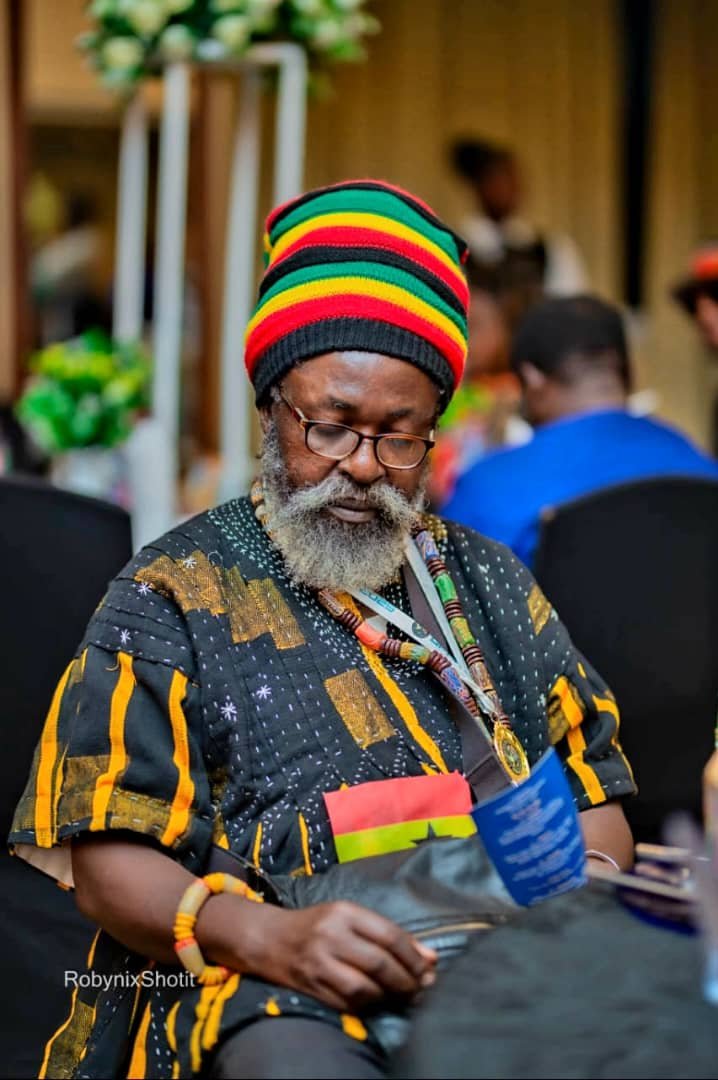
Ras Caleb Appiah-Levi has called on Africans, particularly Ghanaians, to cultivate better attitudes, arguing that the continent’s biggest challenge is not a lack of resources but a lack of proper conduct and social refinement.
In a thought-provoking piece titled “Uncouth Attitude,” Ras Caleb Appiah-Levi argued that resources and opportunities alone cannot guarantee progress if people lack discipline, courtesy and good character.
He used a series of analogies to emphasise his point, noting that a person with an uncouth attitude could be given a golden throne and still turn it into a dirty stool.
According to him, even a luxury vehicle could be misused by someone who lacks proper values, while a beautiful marriage could be destroyed by a partner whose behaviour causes constant pain.
“Because attitude is the engine, not the car,” he wrote.
Ras Caleb described an uncouth attitude as the behaviour of someone who is “uncultured, untrained, unrefined and unmannered,” particularly a person whose actions bring shame to themselves and their communities.
He identified several areas where he believes uncouth behaviour has become prevalent in Ghanaian society.
He criticised what he described as the growing lack of courtesy in public conversations, especially on radio and social media.
According to him, some young people insult elders on radio under the guise of exercising freedom of speech, while others attack their employers online and describe the conduct as expressing an “honest opinion.”
He also criticised callers on radio programmes who resort to insults and shouting instead of engaging in respectful debate.
He questioned whether society still values expressions such as “please,” “thank you” and “I beg to differ,” warning that careless speech can eventually translate into careless living.
“We talk anyhow. And anyhow talk leads to anyhow life,” he stated.
Ras Caleb also raised concerns about how some Ghanaians treat public spaces and property.
He pointed to the practice of people throwing sachet-water plastics from moving vehicles, even after keeping their own homes clean.
He further cited incidents of football fans damaging stadium seats after their teams lose matches and members of the public verbally abusing healthcare workers who are attending to them.
He argued that such behaviour reflects a failure to appreciate that public facilities and spaces belong to everyone.
“We treat what belongs to all of us as if it belongs to nobody. That is uncouth,” he wrote.
The writer described the misuse of authority as one of the most damaging forms of uncouth behaviour.
He argued that some individuals become disrespectful when given even small amounts of power or authority.
He cited examples of security personnel abusing their positions at barriers, individuals in administrative positions refusing to show basic courtesy, and political appointees allegedly becoming inaccessible after attaining office.
According to him, acquiring power does not fundamentally change a person’s character but rather exposes what was already there.
“Power does not change a man; it exposes him,” he stated.
He added that someone who was uncouth before attaining a position of influence could become even more difficult to deal with after gaining authority.
Ras Caleb further criticised aspects of social media culture, arguing that technology has amplified some negative behaviours.
He lamented the tendency of people to mock others who are suffering, record accidents instead of helping victims and circulate intimate images of people for online attention.
He also expressed concern about the manner in which some people insult Presidents, Chiefs, Pastors and Imams online.
According to him, freedom of expression should not be separated from responsibility and good manners.
“Freedom without manners is madness. Technology without culture is disaster,” he wrote.
Ras Caleb invoked the legacy of Ghana’s first President, Osagyefo Dr Kwame Nkrumah, as an example of leadership combined with culture and refinement.
He argued that Nkrumah’s influence was not based solely on intelligence but also on his ability to communicate, show respect, inspire others and conduct himself with dignity.
He maintained that these qualities contributed to the respect Nkrumah commanded internationally.
Ras Caleb urged Ghanaians and Africans to deliberately rebuild a culture of courtesy, discipline and respect.
Among the values he encouraged people to embrace are learning to greet others, apologising when they are wrong, observing queues, listening before responding aggressively, respecting the elderly and showing regard for public offices, uniforms and traditional authority.
He also called for greater responsibility towards the environment, stressing that people should keep public spaces as clean as they keep their personal surroundings.
He concluded his message by describing good manners as a valuable quality that can open doors that money cannot.
“An uncouth attitude is a cheap dress on an expensive body. It reduces your value.”
He urged individuals to change their attitudes as a pathway to improving their personal lives and society as a whole, ending with the message: “Change your attitude, and you change your altitude. Blessed times.”

Ghana’s capital, Accra, has been ranked among the 20 best cities for nightlife in the world in 2026, according to a global ranking published by Time Out.
Accra placed 18th on the list, earning recognition for its vibrant entertainment scene, established nightlife hotspots, growing number of bars and clubs, live music venues and alternative entertainment spaces.
The ranking was based on feedback from more than 24,000 residents, combined with evaluations by Time Out city editors, culture experts and nightlife specialists.
Cities were assessed using several factors, including the quality and affordability of nightlife, club and cocktail-bar experiences, sense of community, safety, excitement, diversity and hospitality.
Accra performed particularly well in terms of affordability, community and friendliness. About 62 per cent of residents surveyed described nightlife in the city as affordable, while 75 per cent said it was easy to find a sense of community when going out. In addition, 65 per cent of respondents considered Accra welcoming and friendly.
Time Out also pointed to the continued expansion of Accra’s nightlife scene, with Osu maintaining its position as one of the city’s leading entertainment centres. East Legon, meanwhile, is increasingly becoming another major destination for nightlife and social activities.
Beyond the dominance of Afrobeats, Accra’s after-dark culture has also embraced electronic music, alté, R&B and other emerging music genres, further broadening the city’s nightlife appeal.
To give cities from different parts of the world a stronger representation, the ranking included only the highest-performing city from each country.
Johannesburg emerged as the highest-ranked African city, coming in at seventh place globally. It ranked ahead of several well-known nightlife destinations, including Amsterdam, Madrid and Seoul.
The South African city was praised for its ability to constantly reinvent its nightlife culture. Its entertainment scene ranges from its traditional warehouse-party culture to modern venues featuring house, techno, Afro-house, gqom, drum and bass and experimental music.
Johannesburg also recorded strong scores for affordability and community. Some 66 per cent of residents rated its nightlife positively in terms of affordability, while 80 per cent said it was easy to build connections and find a sense of community.
According to the ranking, the city’s strongest nightlife offerings include nightclubs, casual pubs and cocktail bars.
Accra and Johannesburg were the only African cities to feature in the global top 20.
The overall ranking was topped by Bangkok, followed by Berlin and Melbourne.
Accra’s inclusion in the ranking further underscores the city’s growing reputation as an international destination for music, culture, entertainment and vibrant nightlife.
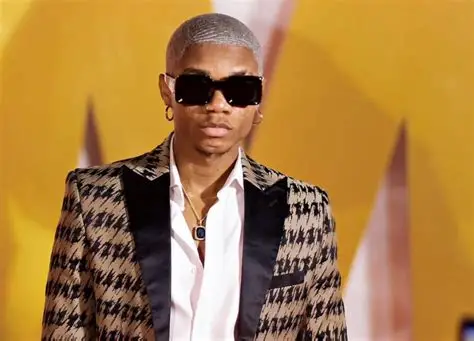
Ghanaian musician Dennis Nana Dwamena, popularly known as KiDi has opened up about his childhood, revealing that his father once kicked him out of the family home when he was just five or six years old because of his stubborn and mischievous behaviour.
The singer made the revelation during an interview with Kafui Dey, where he took listeners back to some of his earliest childhood memories.
According to KiDi, he was a particularly adventurous child and was known for getting into trouble at home and at school.
He recalled that whenever his parents bought him new shoes for school, he would often use them to play with stones, returning home with the shoes badly damaged.
“When they buy me shoes for school, I use the shoes to go and play with stones,” KiDi recounted.
He also described how unusually dirty his school uniform would become compared to those of other children.
According to him, his parents were often left wondering why he repeatedly came home in such a state.
KiDi recounted one particular incident that eventually became the last straw for his father.
He said that one day after school had closed, he was waiting with his teacher because his father had not yet arrived to pick him up.
The teacher reportedly asked him to go and get something from her table. However, KiDi said he did not hear the instruction properly and assumed that she had asked him to eat the waakye on the table.
Thinking that his father had delayed because he might have been hungry, the young KiDi went into the classroom and ate the waakye.
He said the incident led to reports being made to his father, although he chose not to go into all the details of what happened before they got home.
According to KiDi, his father was extremely upset and instructed his older sister to remove all the clothes he was wearing.
“Remove everything he’s wearing. He takes nothing away from this house. If he wants to be a notorious child, he should go and live somewhere else,” KiDi recalled his father saying.
He said he was eventually left wearing only his church shoes before being sent out of the house.
KiDi said he was around five or six years old at the time and recalled walking out of the house in tears.
The family was then living at Darkuman, he explained.
“I was crying, crying with my church shoe and nothing else,” he said.
However, while he was walking away, his father called him back and used the incident to teach him a lesson about obedience.
KiDi recalled his father telling him that if he continued to disobey instructions, he could eventually lose the people around him.
“You see how you are crying because you’re going to lose all of us next time. Next time when we tell you something, do it,” he recalled.
Interestingly, KiDi admitted that the punishment did not completely change his behaviour.
Asked whether the experience served as a lesson, he responded humorously that he “kept doing it” and continued to be a notorious child.
Beyond the humorous childhood stories, KiDi explained that his behaviour was largely driven by his adventurous nature and his desire to experience different things.
He said his parents sometimes had to feed him well before leaving the house because they knew he could be tempted to ask other people for food.
Looking back, KiDi said he now wonders where some of his childhood behaviour came from.
He believes, however, that his curiosity and willingness to explore different activities eventually became an important part of his personality.
The musician revealed that while in high school, he became involved in several activities, including football, athletics, basketball, drawing, music and Taekwondo.
He said he wanted to try virtually everything and experience as much as possible.
KiDi suggested that, in a different environment, his parents or teachers might have recognised his wide range of interests as signs of multiple talents rather than simply seeing him as a troublesome child.
He explained that his childhood desire to explore and participate in different activities eventually contributed to the versatility he developed later in life.

At Least Seven Injured in Shooting Over Land Dispute at Gomoa Oguaakrom and New Winneba

COCOBOD Settles GH¢2.3 Billion DDEP Bond Obligations for 2026

Gloria Owusu Extends Educational Support to 1,500 Trobu Students



-

 General News1 week ago
Nana Adwoa Tutuwaa Named Global Humanitarian of the Year 2026
-
 Entertainment2 weeks ago
Interfaith Tourism World Club Calls for Faith-Based Tolerance to Strengthen National Peace
-

 Education2 weeks ago
Cybersecurity Education in Schools: Should Students Learn Online Safety?
-

 General News1 week ago
Assemblies of God Ghana Clears Headquarters Loan, Slashes Overdraft by GH¢3.2m
-
 General News2 weeks ago
LMI Holdings: The Ghanaian Company Chosen to Revive the Saglemi Housing Project
-

 General News4 days ago
GES Urged to Review Student Sexual Misconduct Rule Over Alleged Discrimination Against Boys
-

 General News1 week ago
Police Arrest Suspect in GH¢1.1m Fake Gold Scam at Berekum
-

 General News2 weeks ago
Energy Analyst Calls on GRIDCo to Explain Recurring Power Outages