
Entertainment
Interfaith Tourism World Club Calls for Faith-Based Tolerance to Strengthen National Peace

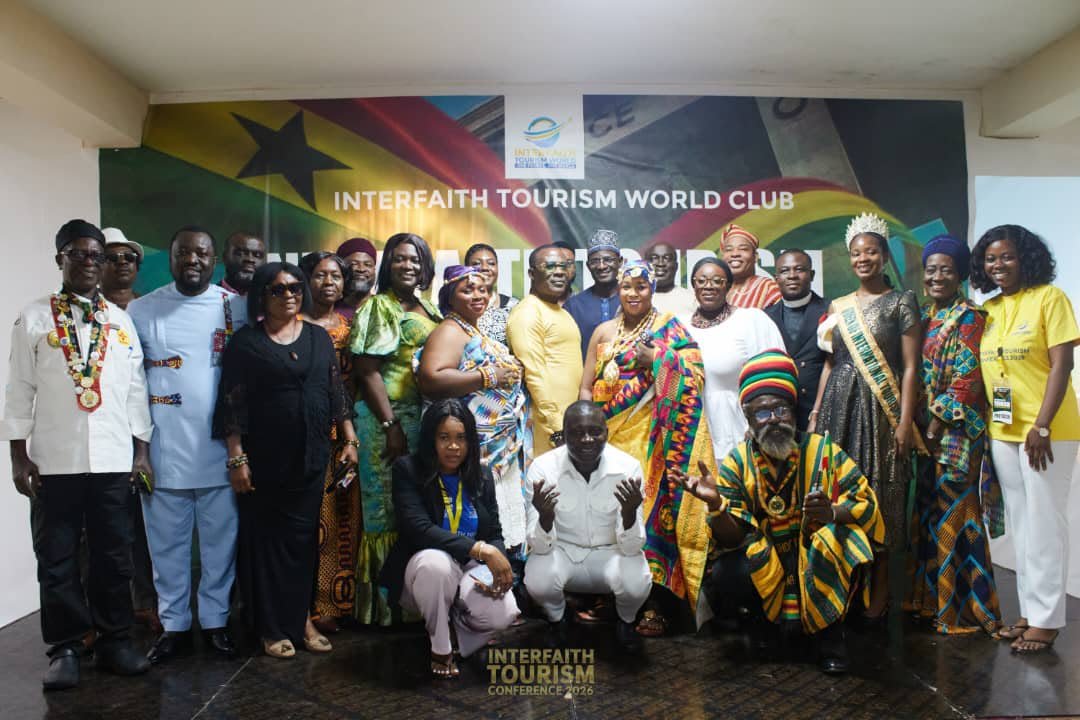
The Interfaith Tourism World Club (ITW Club) has called on Ghanaians to embrace faith-based tolerance and use tourism and cultural exchange as tools for promoting peace, unity and social cohesion across the country.
In a statement issued on August 20, 2026, the organisation said Ghana’s religious diversity should be regarded as a source of strength rather than division, stressing that people of different faiths can coexist peacefully despite differences in their beliefs and forms of worship.
The statement, issued by the Chief Executive Officer and President of the Interfaith Tourism World Club, Ernest K. Boateng, noted that Ghana is a country where church bells, calls to prayer and traditional drums can be heard within the same communities.
According to the organisation, this religious diversity demonstrates the country’s ability to accommodate different faith traditions while maintaining national unity.
“Faith-based tolerance” was described as the willingness to live peacefully with people who do not share the same beliefs, while working together, trading together and contributing to the development of Ghana.
The ITW Club said Christianity, Islam, African Traditional Religion and other faith traditions share important values, including love for neighbours, compassion and respect for the dignity of every human being.
The organisation further highlighted the role tourism can play in promoting understanding among people of different religious backgrounds.
It said visits to mosques, cathedrals, shrines, sacred groves and other religious and cultural sites should not be viewed as a threat to an individual’s faith.
Instead, the organisation believes such experiences can help people gain a deeper understanding of other religious traditions and cultures.
The ITW Club encouraged Christians to participate in Muslim festivals, Muslims to explore Christian heritage sites and all Ghanaians to respect traditional customs and sacred practices.
According to the organisation, such interactions can help people recognise the shared values of peace and human dignity that exist across different faith traditions.
The Interfaith Tourism World Club stressed that religious tolerance should not be passive but should involve deliberate actions aimed at protecting peace and strengthening relationships among communities.
It said tolerance should involve choosing dialogue instead of insults, protecting places of worship and teaching children that religious differences should not be viewed as threats.
The organisation also urged Ghanaians to recognise religious diversity as an asset that can contribute to national development.
The ITW Club called on young people to use tourism as an opportunity to learn about different communities, cultures and faiths.
It urged the youth to travel, interact with people from different religious backgrounds and become “Ambassadors of Harmony” who can promote peaceful coexistence.
The organisation believes increased interaction among young people from different faith traditions can help reduce prejudice and create stronger bonds across communities.
Faith leaders were also encouraged to play a greater role in promoting religious unity.
The ITW Club called on religious leaders to continue preaching unity from their pulpits, minbars and traditional shrines while openly condemning hate and supporting peaceful coexistence.
It said religious leaders have an important responsibility to influence their followers positively and ensure that places of worship become platforms for peace rather than division.
The organisation further appealed to communities to collectively protect sacred and religious sites across the country.
It called for festivals and cultural celebrations to be used as opportunities for interaction and understanding, rather than occasions that create barriers between people.
The ITW Club said communities can strengthen national unity by allowing cultural and religious festivals to serve as bridges connecting people from different backgrounds.
The organisation also appealed directly to all Ghanaians to reject hostility towards people of different faiths.
It stressed that a person with a different religious belief should not be regarded as an enemy, but as a fellow Ghanaian who can be a neighbour, brother, sister, business partner and contributor to national development.
The ITW Club said its mission extends beyond tourism, explaining that it seeks to unite people of diverse faiths across Africa and the diaspora through travel and cultural exchange.
Through its activities, the organisation aims to promote interfaith dialogue and mutual understanding while contributing to peace, social cohesion and sustainable tourism.
The organisation described Ghana’s peaceful coexistence among different religious communities as one of the country’s most important tourism assets.
It said Ghana’s tourism appeal should not be measured only by its beaches, castles and other physical attractions, but also by the country’s ability to maintain peace despite religious differences.
The ITW Club said the ability of Ghanaians to disagree on matters of faith while remaining united as citizens is a strength that should be protected and promoted.
The organisation concluded its appeal by urging Ghanaians to live in harmony, travel in unity and work together towards building a peaceful and united Ghana.
The statement was issued by Ernest K. Boateng, CEO and President of the Interfaith Tourism World Club (ITW Club).
For further information, the organisation provided info@itwclub.org and +233 246362838.
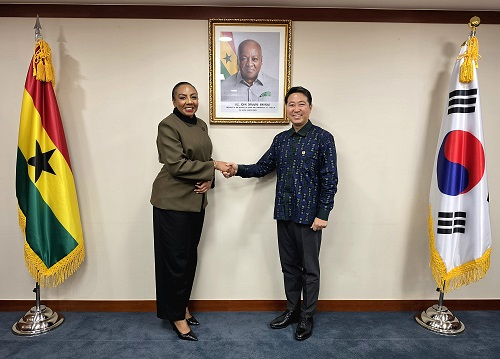
Ghana and the Republic of Korea are exploring new opportunities to strengthen cooperation in culture, tourism and the creative industries as the two countries prepare to mark significant national and bilateral milestones.
The discussions were held in Seoul last month when Ghana’s Ambassador to the Republic of Korea, H.E. Kojo Choi, senior officials of the Ghanaian Embassy and Managing Director of Exclusive Events Ghana Limited, organisers of the Miss Ghana pageant, Inna Patty, met to explore possible areas of collaboration.
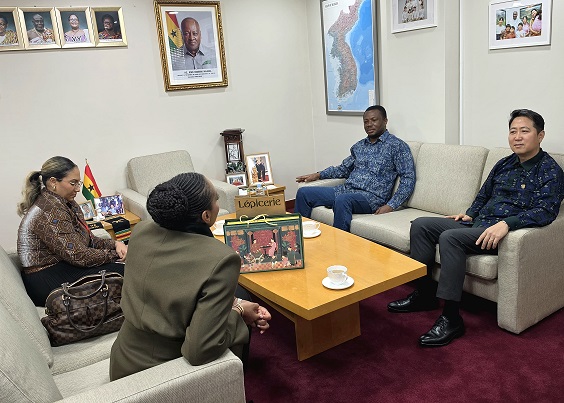
The meeting focused on leveraging Ghana’s rich cultural heritage, tourism attractions and creative industries to strengthen people-to-people relations while creating opportunities for cultural exchange and business partnerships between Ghana and Korea.
The discussions come as Ghana prepares to celebrate the 70th anniversary of its independence, while the Miss Ghana brand also approaches its 70th anniversary. Ghana and Korea are also set to mark 50 years of diplomatic relations.
A key area of the discussions was the use of culture and tourism as a bridge to deepen relations between the two countries.
The parties explored opportunities to showcase Ghana’s heritage, tourist attractions, fashion, textiles, craftsmanship and creative talent to Korean audiences, while promoting Ghana as a destination for tourism, cultural experiences and investment.
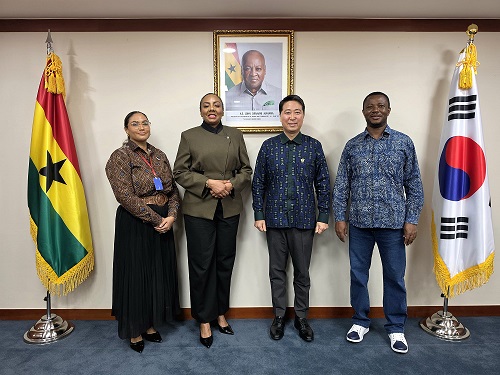
Proposed initiatives could include cultural showcases, tourism promotion campaigns, creative-industry exhibitions and exchange programmes involving stakeholders from both countries.
The Miss Ghana platform and the Miss Ghana Foundation were identified as potential avenues for promoting Ghanaian culture, heritage and tourism while fostering stronger people-to-people connections.
The meeting also considered ways to introduce Ghanaian fashion, textiles, handcrafted accessories and other creative products to the Korean market.
Under the proposed collaboration, selected Ghanaian designers, creative entrepreneurs, as well as representatives of the Miss Ghana and Mr Ghana platforms, could engage with their Korean counterparts through exhibitions, cultural showcases and business networking events.
Such exchanges could provide Ghanaian creative businesses with opportunities to establish contacts in Korea, access new markets and develop long-term commercial partnerships.
The discussions further highlighted Ghana’s historical and cultural heritage as an important component of tourism promotion.
With Ghana approaching its 70th Independence Anniversary, stakeholders believe the celebrations could provide an opportunity to showcase the country’s history, culture, tourism attractions and contemporary creative industries to Korean audiences.
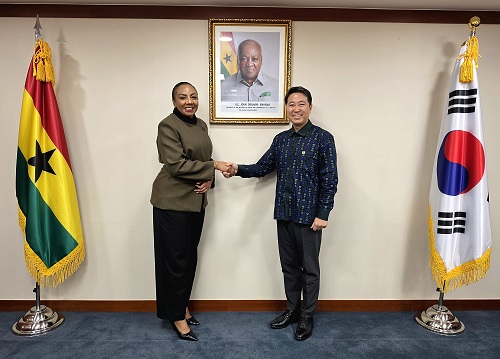
The meeting agreed on the need for further engagement with relevant Ghanaian and Korean institutions to develop the proposed ideas into practical programmes.
The Ghanaian Embassy is expected to engage relevant stakeholders on possible areas of collaboration as discussions continue.
The proposed partnership is expected to strengthen cultural and tourism relations between Ghana and Korea while creating opportunities for greater exchange and collaboration in the creative and tourism sectors.
Source: Graphics Online

Ghanaian rapper DBlack has revealed that he and fellow musician EL once dated the same woman without either of them knowing at the time.
In an interview shared on TikTok, DBlack recounted how he eventually discovered the situation. He explained that the woman visited him shortly after he had moved back to North Kaneshie following the end of a long-term relationship.
According to DBlack, after spending some time at his house, the woman told him she was heading home the following day. She later texted him to say she had arrived safely and even sent him a video of her dog.
However, DBlack said he became suspicious when he unexpectedly spotted the woman’s car parked outside EL’s house while he was driving to buy drinks for his studio.
“I decided to drive myself to the supermarket that day. After she left, she texted me that she was home and sent me a video of her dog. But when I was leaving the gas station, I saw the girl’s car in front of EL’s house. I said, ‘Oh wow, interesting,’ and she had just texted me that she was home. So EL’s house was home,” he recounted.
DBlack noted that he decided not to confront the situation because his relationship with the woman was not serious at the time.
EL, who was also part of the interview, admitted that he only recently discovered that they had both been seeing the same woman.
“I just found out recently because she didn’t tell me back then. The girl I was dating, he also had something to do with her,” EL said.
Entertainment
Agya Koo Nimo: The Extraordinary Life of Ghana’s Palmwine Music Legend Who Became a Cultural Treasure
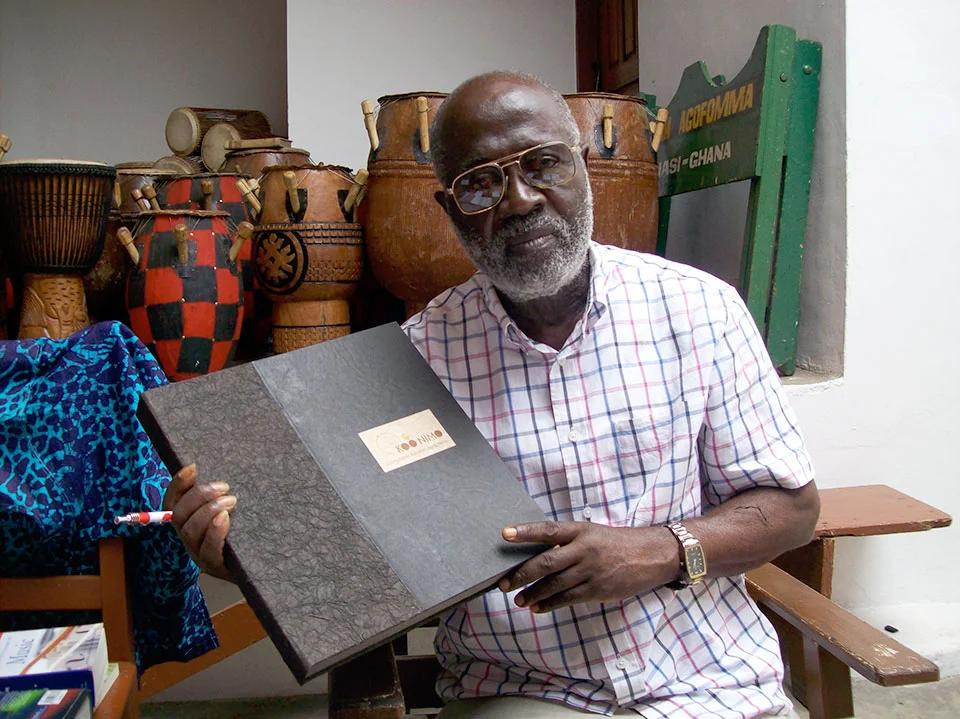
Long before Ghana’s music industry was transformed by hiplife, Afrobeats, streaming platforms and social media, there were musicians whose guitars, voices and stories carried the sounds of Ghana from village gatherings to international stages.
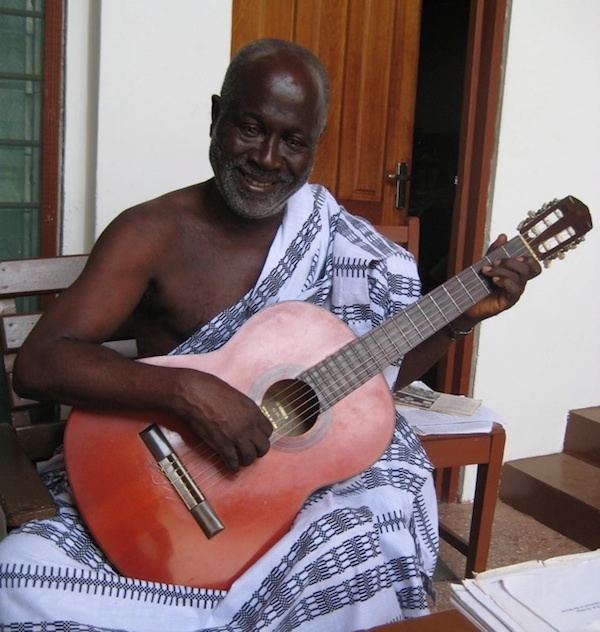
Among the most important of these musicians is Agya Koo Nimo, the legendary guitarist, composer, singer, storyteller and cultural custodian whose career has become inseparable from the history of Ghanaian palmwine music and acoustic highlife.
Born Kwabena Boa-Amponsem on October 3, 1934, at Foase in the Ashanti Region, he was later christened Daniel Amponsah. Over the years, Ghanaians came to know him simply as Koo Nimo, and later affectionately added “Agya” to his name as a mark of respect.
Today, his name represents much more than an old highlife musician.
It represents a generation of Ghanaian music in which songs were stories, guitars were voices, and proverbs were an important part of entertainment.
His music preserved aspects of Ghanaian culture at a time when Western musical influences were rapidly changing the country’s sound.

Koo Nimo was born into a family where music was already part of everyday life.
His father was a trumpeter, while his mother was a singer and member of the local Methodist church choir.
Music therefore surrounded him from childhood.
In an interview with the Daily Graphic’s Springboard programme, Koo Nimo famously joked that his music career started from the moment he was born because, as he put it, When I cried, that was my first melody.
His childhood environment exposed him to both church music and traditional Ghanaian sounds.
He recalled joining elderly women in his community who woke up at dawn on weekends to sing songs they described as songs for nation-building.
He also received early musical training from a teacher identified as D.K. Sam, who taught him music while he was still a child.
At one point, when his teacher was ill, the young Koo Nimo was asked to rehearse hymns for church.
He successfully played the organ and was subsequently allowed to play regularly during church services.
Those early experiences would later influence the musician he became.

From Kwabena Boa-Amponsah to Daniel Amponsah
The musician’s names tell part of his story.
He was born Kwabena Boa-Amponsah and was baptised Daniel Amponsah as a Methodist.
When he began performing professionally, he adopted the name Koo Nimo.
According to Koo Nimo himself, Koo refers to a male born on Friday in Akan naming tradition, while “Nimo” refers to someone who accepts blame for something he did not do.
The public later added Agya, meaning father, to his name as a sign of affection and respect.
That name would eventually become known across Ghana and among lovers of African music around the world.
Koo Nimo was not only interested in music. He was also academically inclined.
He attended Adisadel College in Cape Coast from 1947 to 1952.
His connection with the school was also influenced by his relationship with the late Asantehene Otumfuo Opoku Ware II, who had also attended Adisadel College.
After secondary school, Koo Nimo pursued technical and scientific training.
He spent a year taking a technician’s course at the Medical Research Institute at Korle Bu.
He later worked at Komfo Anokye Teaching Hospital from 1955 to 1960 as a technician.
His professional life would eventually take him much further into the scientific world.
One of the lesser-known aspects of Agya Koo Nimo’s story is that he was not initially a full-time professional musician.
While many people knew him primarily for his guitar, he also built a career in science.
He eventually worked in the chemistry field and became a chief laboratory technician in the Chemistry Department of the University of Science and Technology in Kumasi, now known as Kwame Nkrumah University of Science and Technology (KNUST).
He remained in the profession for years and retired from it in 1998, according to AllMusic’s biographical record.
This unusual combination of science and music became one of the most fascinating features of his life.
By day, he could work in a laboratory.
Outside his professional duties, he could pick up his guitar and perform music deeply rooted in Ghanaian tradition.

His guitar journey
Koo Nimo eventually became one of Ghana’s most respected guitarists.
His approach was different from the large electric dance bands that dominated sections of Ghana’s popular music industry.
He became particularly associated with palmwine guitar music, an acoustic style that combines intricate guitar patterns with traditional rhythms, percussion, storytelling and vocals.
His guitar playing became famous for its two-finger picking technique.
But his sound was not completely isolated from foreign musical influences.
His guitar style absorbed ideas from Ghanaian brass-band highlife, Western guitar traditions and even Spanish guitar techniques.
AllMusic also identifies the influence of American guitarist Charlie Christian on his playing.
The result was a sound that was both sophisticated and unmistakably Ghanaian.

The birth of Addadam Agofomma
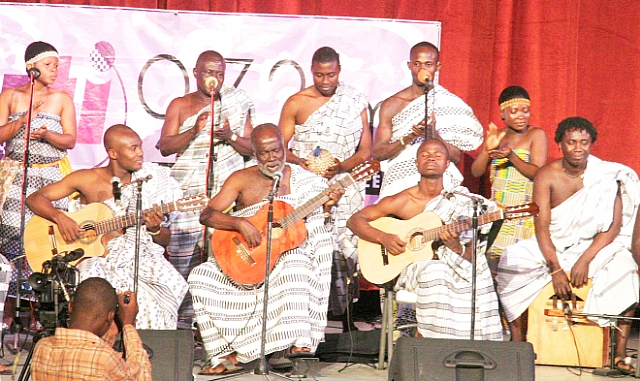
In 1957, the year Ghana gained independence, Koo Nimo formed the Addadam Agofomma ensemble.
The group became an important vehicle for his musical work.
The ensemble concentrated on traditional Ghanaian music, particularly palmwine music and acoustic highlife.
It used guitars, voices and traditional percussion rather than relying on the large arrangements and electric instrumentation associated with some contemporary bands.
The group became recognised for combining music with storytelling.
Through the ensemble, Koo Nimo helped preserve a form of highlife that was closely connected to Ghanaian oral traditions.

What exactly is palmwine music?
To understand Koo Nimo’s importance, one must understand palmwine music.
Palmwine music developed around informal social gatherings, particularly places where people gathered to drink palm wine and socialise.
Guitarists performed intimate acoustic music, often accompanied by percussion.
The songs could be humorous, philosophical, romantic or reflective.
The musician could observe what was happening around him and immediately turn it into a song.
This made palmwine music more than entertainment.
It became a form of social commentary.
Koo Nimo became one of its most important modern custodians.
In 2025, the Kwan Pa Band specifically credited Koo Nimo and Agya Osei Korankye with helping prevent Ghana’s palmwine music tradition from disappearing.

Koo Nimo’s music is notable because of the variety of traditional instruments used alongside the guitar.
His ensembles have featured instruments including: Apentemma, Dondo, Frikyiwa, Prempensua, Nnawuta, Ntowa, Dawuro
The frikyiwa, for example, provides a metallic rhythmic sound, while the prempensua is a Ghanaian lamellophone sometimes described as a type of rhumba box.
The ntowa is a hollow gourd rattle covered with beads or seeds, while the dawuro is a traditional bell.
These instruments provide the rhythmic foundation over which the guitar and vocals tell the story.
Perhaps Koo Nimo’s greatest strength was not simply his guitar technique.
It was his ability to tell stories through music, and his compositions frequently deal with everyday experiences, including love, Poverty, Illness, Death, Migration, human relationships, Farming, Friendship, and moral behaviour.
His songs often use Twi proverbs and traditional expressions, making them both entertaining and educational.
That is why his work has attracted the attention of ethnomusicologists and cultural researchers.
Some of his best-known songs
Koo Nimo’s catalogue includes several compositions that have become associated with Ghanaian traditional highlife.
Among them are:
Odɔnsɔn — translated as a call for love to prevail.
Akuafo Monno Mfuo — a song encouraging farmers to cultivate the land.
Abrokyire Abrabo— reflecting on life abroad.
Mewu Na Agoro Agu — dealing with death and its impact on a musical group.
“Ohia Ne Yareɛ Yɛ Ya — reflecting on the pain of poverty and illness.
Adampa/Wo Wu a Na Wadane Saman — reflecting on death and the transition into the spiritual realm.
These titles demonstrate how far his songwriting moved beyond conventional love songs.
Aburokyire Abrabo
One of the most recognised recordings associated with Koo Nimo is Aburokyire Abrabo.
The song examines life abroad, a subject that became increasingly relevant to Ghanaians as migration and international travel grew.
It is also featured on his album Osabarima, a major recording in his catalogue.
Through songs such as this, Koo Nimo turned personal and social experiences into musical commentary.
Osabarima and Ghana’s recording history
Koo Nimo’s Osabarima is one of the most important recordings associated with his career.
The recording dates to the 1970s, while the album was later released internationally.
AllMusic records the recording date as 1976, with the album later released outside Ghana in 1990 and subsequently issued again in 1994.
The project is particularly important because Koo Nimo is widely credited as the first Ghanaian musician to have a CD released, making him part of an important transition in the country’s recording history.
The first Ghanaian CD
The significance of this achievement cannot be underestimated.
Ghanaian music had traditionally circulated through live performances, vinyl records, cassettes and other physical formats.
The arrival of the CD represented a technological shift.
Koo Nimo’s association with the first Ghanaian CD demonstrated that traditional acoustic music could move into a modern recording format without losing its cultural identity.
It was a bridge between Ghana’s traditional music heritage and the technological future of recorded music.
A career outside Ghana
Koo Nimo’s music eventually reached audiences outside Ghana.
He performed in several countries and became known internationally as one of the leading practitioners of African acoustic music.
One of his notable international performances was at Lincoln Centre in New York in 1988.
His work also appeared on international music compilations, helping introduce Ghanaian palmwine guitar music to listeners who might otherwise never have encountered it.
His songs were included on collections such as The Rough Guide to Highlife and The Rough Guide to Acoustic Africa.

Koo Nimo’s international career was not limited to performing. He also became involved in academic work.
In 1998, he went to the University of Washington in Seattle as a professor/visiting artist in ethnomusicology.
He later joined the University of Michigan, according to Ghanaian biographical accounts.
His academic involvement was particularly significant because he was not merely explaining Ghanaian music from a textbook.
He was teaching from decades of lived experience, having performed the music and studied the instruments.
He had preserved the tradition, and he had watched Ghanaian popular music change across generations.
His role at MUSIGA
Koo Nimo also played an important role in Ghana’s music administration.
In 1979, he was elected President of the Musicians Union of Ghana (MUSIGA).
He reportedly served in the position for about a decade.
His leadership came at a time when musicians were increasingly concerned about issues including professional welfare, copyright, industry organisation and recognition.
He therefore contributed to the music industry both as a performer and administrator.
In 1985, Koo Nimo was appointed interim chairman of the Copyright Society of Ghana (COSGA), which preceded today’s Ghana Music Rights Organisation, GHAMRO.
His involvement reflected his understanding that musicians needed stronger systems to protect their creative work.
This is another side of his career that is often forgotten when discussions focus only on his guitar playing.
Koo Nimo was also appointed to the National Folklore Board of Trustees in 1991.
The appointment was important because folklore preservation requires people who understand traditional songs, stories, instruments and oral traditions.
Koo Nimo’s career placed him in a unique position to contribute to that work.
He was both an active musician and a custodian of traditional knowledge.
Koo Nimo also had a close professional relationship with another Ghanaian highlife legend, Nana Kwame Ampadu.
The two first encountered each other in London in the early 1960s.
According to Koo Nimo, Ampadu visited a music shop where Koo Nimo was working part-time, tuning guitars and fixing strings while studying laboratory technology.
Their meeting eventually developed into a lasting friendship.
Later, when Koo Nimo became president of MUSIGA, Nana Kwame Ampadu served as his secretary.
The two also served together on the National Folklore Board of Trustees.
Their relationship is an example of the close networks that existed among Ghana’s older generation of musicians.
A musician who avoided partisan politics
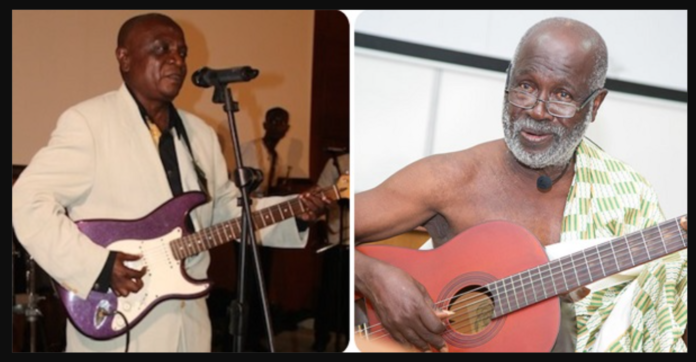
Unlike some musicians who became strongly associated with political parties, Koo Nimo largely avoided partisan political music.
The Graphic reported that despite witnessing several governments from the colonial period through Ghana’s later democratic administrations, he did not build his career around political songs or party endorsements.
Instead, his music focused largely on love, death, morality and human experiences.
That helped him maintain a reputation as a cultural figure rather than a musician tied to a particular political camp.
Koo Nimo’s contribution has been recognised repeatedly.
In March 1997, as Ghana marked the 40th anniversary of independence, he was among 40 distinguished citizens awarded Gold Medals for their contributions to the country.
His recognition was specifically connected to his efforts to preserve traditional culture.
A month later, in April 1997, he received the Konkoma Award for his contribution to Ghanaian highlife music.
These honours confirmed that his contribution went beyond commercial entertainment.
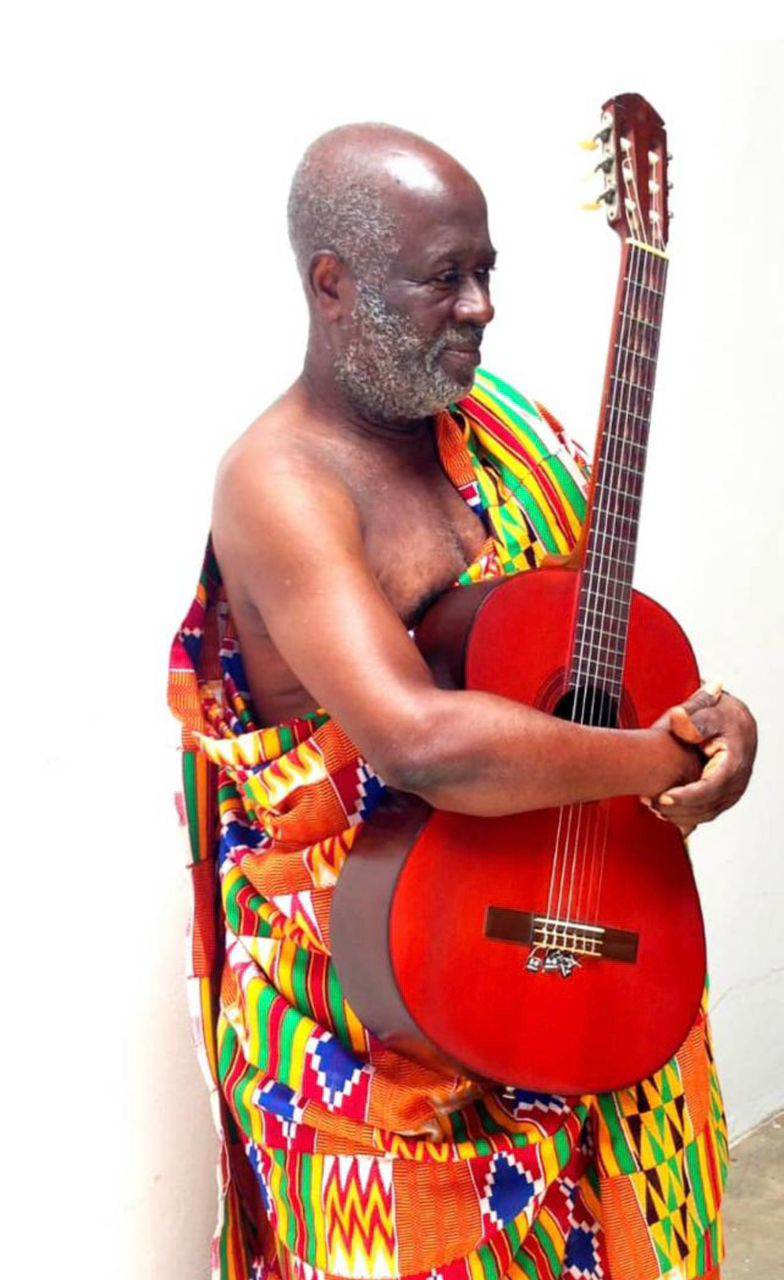
In 2017, the University of Education, Winneba honoured Koo Nimo with a Lifetime Achievement Award through its Music Department.
The honour recognised his decades of work in Ghanaian music and cultural preservation.
In 2022, Koo Nimo received a Lifetime Achievement Award at the Vodafone Ghana Music Awards in Accra.
The award recognised his enormous contribution to Ghana’s music industry and his role in preserving highlife and palmwine music.
By this point, he had already spent more than six decades connected to music.
In 2023, the African University College of Communications (AUCC) presented Koo Nimo with its inaugural Baobab Lifetime Achievement Award.
The ceremony celebrated him as one of Ghana’s foremost living exponents of acoustic guitar highlife.
Although he could not attend because of ill health, the organisers still proceeded with the celebration.
The Graphic reported that Koo Nimo’s music with the Addadam Agofomma group had long been known for compositions dealing with everyday life, often with humour.

Koo Nimo’s wisdom has become almost as interesting to audiences as his music.
In a 2021 interview on Joy FM’s Springboard, he discussed the principles that guided his life.
Among the principles he listed were: Determination, Order, Excellence, Practice, Mentoring, Systematic building, Promptness, Resourcefulness
He also spoke about discipline and healthy living.
His approach to life reflected the same patience and consistency that characterised his music.
Why his music matters today
It would be easy for younger audiences to dismiss palmwine music as something belonging to an older generation.
But that would mean overlooking one of the foundations of Ghanaian popular music.
Palmwine music helped develop the guitar-based musical language that later influenced different forms of highlife.
And Koo Nimo helped keep that tradition alive.
In 2025, the Kwan Pa Band said its decision to explore palmwine music was partly driven by concern that Ghana was losing touch with its musical heritage.
The group specifically mentioned Koo Nimo’s contribution and said that without pioneers such as him and Agya Osei Korankye, the tradition could have faded.
Koo Nimo’s cultural importance was highlighted again in May 2025.
During the launch of the Black Star Experience at Black Star Square in Accra, President John Dramani Mahama asked the Minister of Tourism, Culture and Creative Arts, Abla Dzifa Gomashie, to organise a ceremony to honour the legendary musician while he is still alive.
The President specifically described palmwine music as part of Ghana’s musical archive and folklore and argued that people such as Koo Nimo should be honoured during their lifetime rather than only after their death.
That statement underlined a concern frequently raised about Ghana’s treatment of its cultural legends.
Koo Nimo’s influence can be seen in musicians and bands trying to revive traditional Ghanaian music.
The growth of groups such as Kwan Pa and the Legon Palm Wine Band demonstrates that there remains interest in the acoustic traditions associated with musicians such as Koo Nimo.
Kwan Pa has openly acknowledged Koo Nimo as one of the pioneers whose work helped keep palm wine music alive.
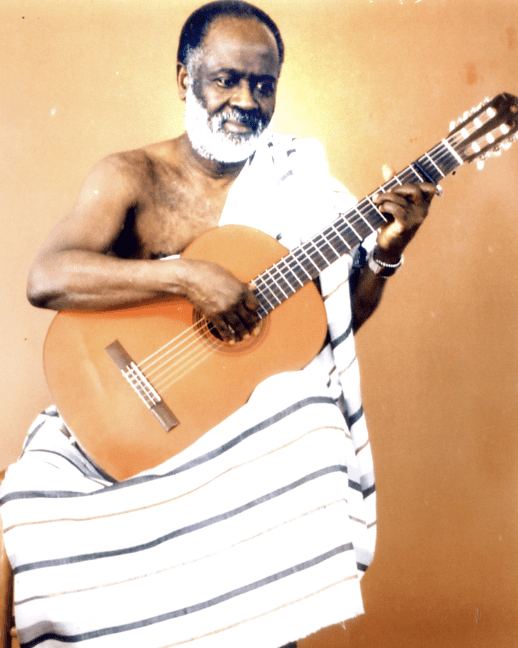
His music is not just old music
One of the biggest misconceptions about traditional music is that it is simply old music.
Koo Nimo’s work shows otherwise.
His music contains observations about migration, relationships, poverty, health, death, work and human behaviour.
These subjects remain relevant.
What has changed is the musical technology surrounding them.
The stories themselves remain familiar.
The albums that preserve his legacy
Among the recordings associated with Koo Nimo are: Osabarima, Tete Wobi Ka, Vintage Palmwine, Highlife Roots Revival
AllMusic also documents his appearance on several international compilations, including The Rough Guide to Highlife, The Rough Guide to Acoustic Africa, African Troubadours and Music from the Source.
His work therefore exists both as individual albums and as part of broader collections documenting African music.
Highlife Roots Revival
His 2012 album, Highlife Roots Revival, was particularly appropriate for an artist whose career had always been concerned with preserving the roots of Ghanaian music.
The project brought his acoustic sound to an international audience at a time when Ghana’s younger music industry was increasingly moving towards hiplife and Afrobeats.
Rather than competing with the new genres, Koo Nimo continued doing what he had always done — telling Ghanaian stories through traditional musical forms.
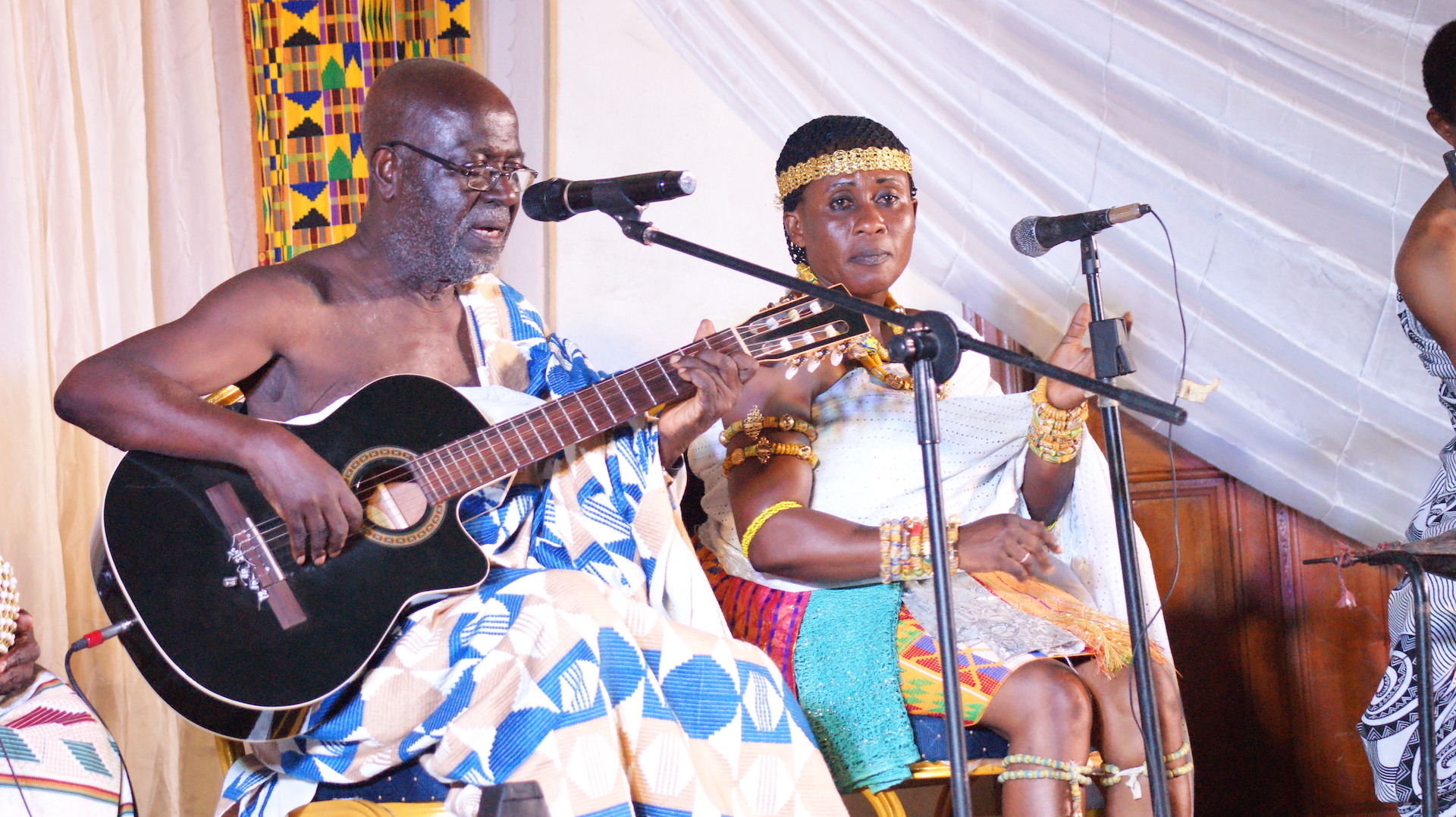
The importance of Vintage Palmwine
The album Vintage Palmwine, released in 2003, also captures the musical identity for which Koo Nimo became famous.
The palmwine tradition is not simply about the location where the music was played.
It is a musical approach built around intimacy, guitar technique, percussion, storytelling and interaction with listeners.
Koo Nimo became one of the musicians who preserved that approach for future generations.
Koo Nimo has effectively become a living archive.
He carries memories of Ghanaian music from before independence.
He witnessed independence in 1957.
He saw highlife develop through different eras.
He witnessed the rise of recording technology.
He worked in the laboratory while building his musical career.
He led MUSIGA.
He participated in folklore preservation.
He taught music internationally.
And he watched younger genres emerge.
Few Ghanaian musicians have lived through such a wide stretch of the country’s musical history.
The word Agya is significant.
It means father.
It is a term of respect.
For Koo Nimo, the name reflects the position he eventually occupied within Ghanaian music.
He was no longer simply one of the musicians performing highlife.
He had become an elder whose knowledge was sought by younger musicians.
His advice, stories and memories became part of the country’s musical heritage.
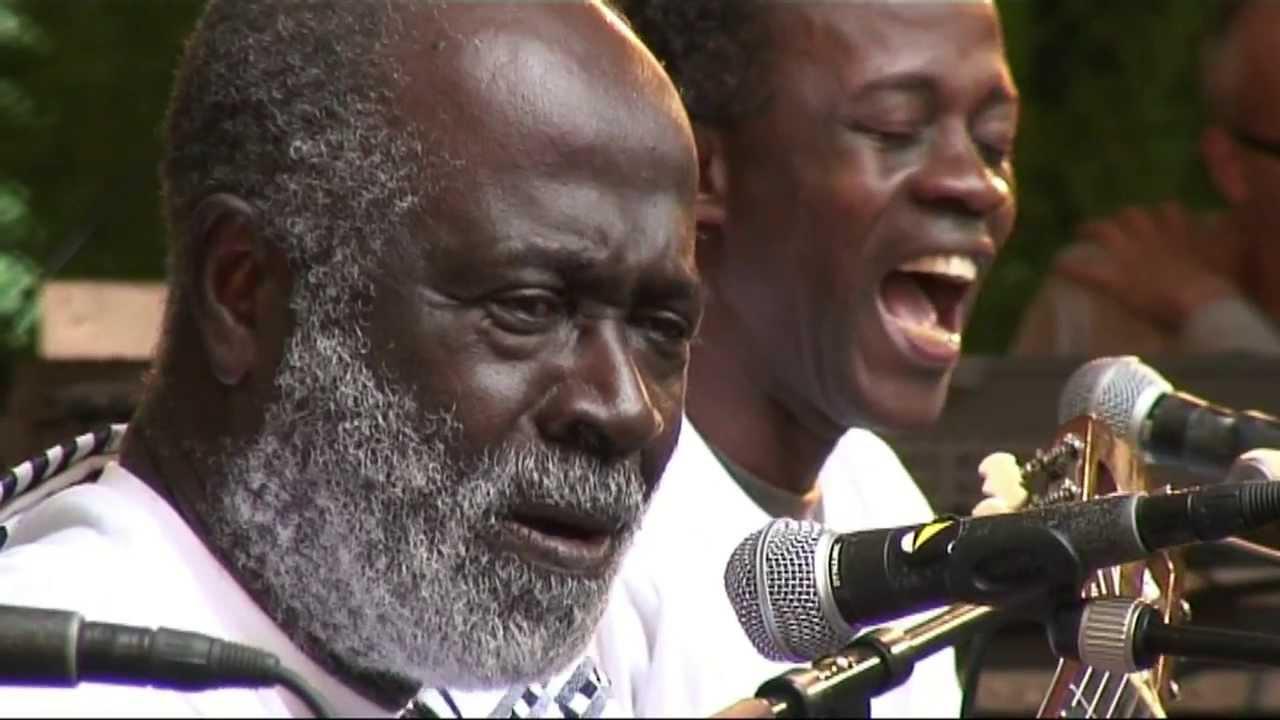
In February 2025, highlife musician Kwabena Kwabena and his team paid a courtesy call on Koo Nimo at his residence in Kumasi.
During the visit, the veteran musician shared advice on healthy living, including warnings against excessive consumption of hard liquor.
He spoke from his own experience and encouraged the younger musician to take care of his health.
The encounter showed that even in advanced age, Koo Nimo remained a respected figure whose words carried weight among younger artistes.
Some musicians are remembered mainly because of their biggest hits.
Koo Nimo’s legacy is different.
His importance cannot be measured only by chart positions or commercial sales.
His contribution lies in preservation, including preserving guitar techniques and rhythms. preserved instruments. He preserved stories. He preserved proverbs. He preserved musical arrangements.
And he helped ensure that Ghanaian palmwine music remained part of the national conversation.
Why Ghana must remember Agya Koo Nimo
At a time when the Ghanaian music industry is increasingly focused on international charts, streaming numbers and digital popularity, Koo Nimo represents another measure of success.
He shows that an artist can influence generations without relying on social media.
He shows that an acoustic guitar can compete with an entire modern production.
He shows that a song can entertain while teaching, and he shows that music can function as an archive of a people’s history.
Agya Koo Nimo’s story is still ongoing. He remains one of the country’s most respected traditional musicians and a living link to Ghana’s early highlife tradition.
His music continues to be studied, performed and rediscovered.
Young bands continue to draw inspiration from his palmwine sound.
Academics continue to examine his contribution.
And cultural institutions continue to recognise his role in preserving Ghanaian heritage.
His career, which began in the early decades of the 20th century, has crossed colonial Ghana, independence, military governments, democratic administrations and the digital age.
Few Ghanaian musicians can claim such a journey.
From Foase to Kumasi, from the laboratory to the stage, from palmwine gatherings to international concert halls, Agya Koo Nimo has spent a lifetime proving that Ghanaian music does not have to abandon its roots in order to travel the world.
His guitar has carried stories that might otherwise have disappeared.
His songs have preserved memories.
His music has kept traditional rhythms alive.
And his life has become part of the history he spent decades documenting through sound.
For a younger generation that knows Ghanaian music mainly through Afrobeats and hiplife, discovering Agya Koo Nimo is therefore more than discovering an old musician.
It is discovering one of the roots of the music Ghana is proud to export to the world today.
And that is why the story of Agya Koo Nimo deserves to remain in Ghana’s headlines — not only as nostalgia, but as a living part of the country’s cultural history.
Entertainment
Kojo Antwi Donates Piano to Aburi Arts and Crafts Centre to Support Ghana’s Creative Heritage
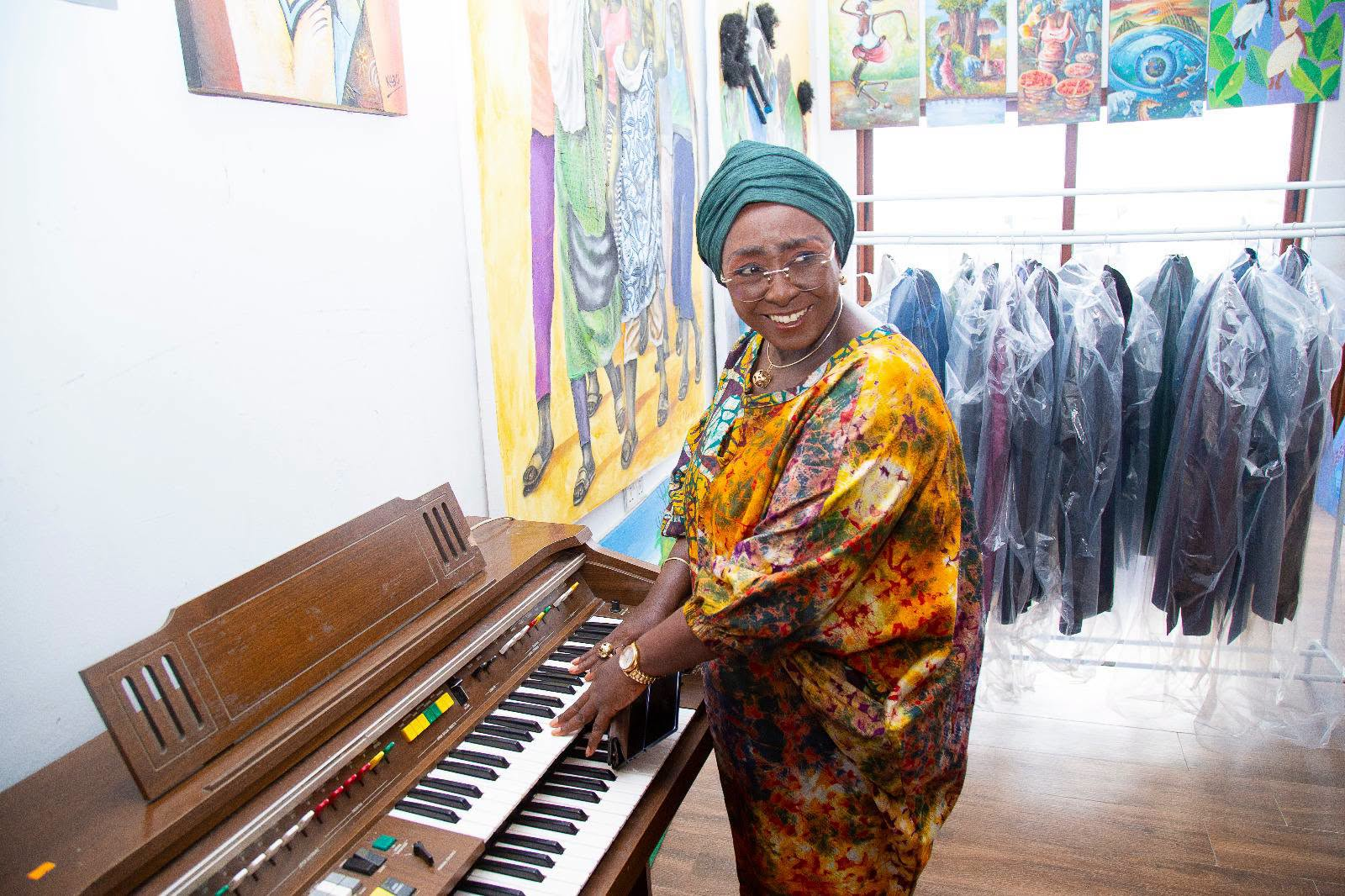
Legendary Ghanaian musician Kojo Antwi has donated a piano to the Aburi Arts and Crafts Centre in the Eastern Region as part of efforts to support creativity and preserve Ghana’s cultural heritage.
The donation came during a visit by the Minister of Tourism, Culture and Creative Arts, Abla Dzifa Gomashie, to the centre as part of her familiarisation tour of tourism and cultural sites in the Eastern Region.

The Minister praised Kojo Antwi for the gesture and said such contributions could help provide more opportunities for creative activities at the centre.
Her visit also allowed her to interact with the management of the Aburi Arts and Crafts Centre and assess the condition of the facility.

Madam Gomashie commended the centre for maintaining a clean and welcoming environment, while encouraging those managing tourism facilities to pay greater attention to maintenance and the overall experience offered to visitors.

The Aburi Arts and Crafts Centre is one of the locations where visitors can experience Ghanaian craftsmanship and purchase locally made products from artisans.
The Minister also urged Ghanaians to support local products and the artisans behind them, noting the important role that indigenous creativity plays in Ghana’s tourism and creative economy.

Her Eastern Region tour included visits to other tourism attractions, including the Aburi Botanical Gardens, Aburi Craft Village and Papaye Recreation Village.
At the various locations, she engaged facility managers and examined ways to improve the sites, attract more visitors and ensure that Ghana’s tourism attractions remain appealing to both local and international tourists.

Kojo Antwi, one of Ghana’s most celebrated musicians, has over the years remained involved in initiatives promoting Ghanaian music, culture and the creative arts.

The piano donation adds a musical resource to the Aburi centre at a time when greater attention is being placed on linking tourism, culture and the creative industries.
For generations, Kyekye Kule was simply a playful Ghanaian children’s chant — a rhythmic game passed from one generation to another without a fixed dictionary meaning.
Today, however, the chant has travelled far beyond Ghana. It has become a teaching resource in classrooms in parts of Africa, Britain and the United States, where teachers use it to help children learn body parts, rhythm, coordination, call-and-response and aspects of African culture.
The journey of Che Che Kule, as it is now commonly written, offers an unusual lesson in how oral traditions can change as they cross cultures: something that began as a meaningless playground chant has acquired a practical educational purpose thousands of miles from where it was played.
From Ghanaian playgrounds to classrooms
The traditional form of the chant is commonly rendered in Ghanaian oral tradition as:
“Kyekye Kule, Kyekye Kofisa, Kofisa Langa, Lala Kyi Langa, Kum Alele.”
Over time, however, different spellings and pronunciations have emerged, including:
“Cheche Kule, Cheche Kofisa, Kofisa Langa, Langa ti Langa, Kum Adende.”
In some foreign classrooms, it is further rendered as:
“Che Che Kule, Che Che Kofi sa, Kofi sa Langa, Langa ti Langa, Kum Abele.”
The differences are not surprising. Unlike written songs with an identifiable composer and official lyrics, the chant belongs to an oral tradition. It was transmitted by hearing, repetition, movement and memory rather than through books.
For many older Ghanaians, the words were never understood as a sentence carrying a particular literal meaning.
The game was the point.
Children sang together, followed a rhythm and often passed an object, such as a stone, around a circle while responding to the leader. Its value was therefore found in participation, concentration, timing and togetherness rather than in translating each word.
The chant is often described in musical and educational literature as a call-and-response song, a structure deeply associated with Ghanaian and wider African musical traditions.
A song without a dictionary
One of the most interesting features of Kyekye Kule is the absence of a universally accepted literal translation.
There is no established Ghanaian dictionary definition that conclusively says “Kule” means head, “Langa” means waist or that each phrase corresponds to a particular body part.
Instead, many of the words are treated as vocables — sounds used primarily for their rhythm and musical function rather than for a literal lexical meaning.
That distinction became important when the song travelled outside Ghana.
The chant survived because it was remembered and performed. One generation taught another through sound and movement.
Its oral nature also explains why its spelling has become so inconsistent.
Osibisa takes Che Che Kule abroad
The chant’s international journey is often associated with Ghanaian Afro-rock group Osibisa, which helped expose Che Che Kule to audiences outside Ghana during the band’s influential international career.
Rather than attempting to provide a literal translation, the song was presented as a joyful Ghanaian children’s song.
Its rhythm made it particularly suitable for audiences unfamiliar with the original Ghanaian playground context.
The chant therefore began another stage of its life: moving from Ghanaian children’s games into international music and cultural education.
The classroom gives the chant a new meaning
The biggest transformation came when Che Che Kule entered multicultural and world-music programmes in schools outside Ghana.
Teachers needed songs that could introduce children to music and cultures from different parts of the world. The Ghanaian chant fitted the requirement because it was short, repetitive, rhythmic and easy for children to participate in.
But there was a challenge.
How could a teacher explain a song to children when the words themselves did not have a straightforward translation?
The solution was to attach movements and educational meanings to the different lines.
In some British teaching materials, the chant is presented through movements such as:
Che Che Kule — hands on the head
Che Che Kofisa — hands on the shoulders
Kofisa Langa — hands on the hips or waist
Langa ti Langa — hands on the knees
Kum Abele — hands on the toes
The precise wording and body parts vary between versions.
The important development is that a chant whose original words were not intended as a vocabulary lesson became a structured activity for teaching children about their bodies.
Britain turns it into a multicultural music lesson
British music education services have incorporated Che Che Kule into lessons designed around movement, rhythm, participation and world music.
One such teaching approach associated with the Westmorland and Furness Music Service presents the song as a movement exercise in which children follow instructions involving different parts of the body.
This turns the chant into more than a song.
It becomes a classroom activity that combines music, physical movement, memory and coordination.
A teacher can sing a line and demonstrate a movement while pupils repeat the line and imitate the action.
That simple structure makes it particularly useful for younger children.
Its popularity in American classrooms
The song has also found a home in American educational spaces.
Educational resources, including materials shared through platforms such as Teachers Pay Teachers, have described Che Che Kule as a Ghanaian or West African folk song accompanied by movements resembling the familiar Head, Shoulders, Knees and Toes format.
Teachers can therefore use it to introduce children to:
body parts;
rhythm;
movement;
coordination;
call-and-response singing;
group participation;
African musical traditions; and
Ghanaian culture.
The chant’s simplicity is one of its greatest strengths.
Children do not need to understand the original linguistic background before they can participate.
They simply listen, repeat and move.
From playground chant to educational technology
In this sense, Che Che Kule has become an unlikely form of educational technology.
The original Ghanaian game already contained several elements that modern educators value.
It required children to:
Listen.
A child had to pay attention to the leader.
Wait.
The game required children to follow the rhythm and their turn.
Repeat.
The same sounds returned repeatedly, helping children remember the sequence.
Move.
The physical nature of the activity connected sound with action.
Participate.
Children were not passive listeners. They were part of the performance.
Belong.
The activity brought children together around a shared rhythm.
The original chant may not have contained a dictionary lesson, but the game itself contained a powerful social and developmental function.
The Ghanaian television connection
The chant also became familiar to another generation of Ghanaians through television.
In the early 1990s, Kyekyekule was used as the title and central feature of a children’s programme broadcast on GTV.
The programme was associated with George Laing, popularly known as Uncle George, who directed and produced the children’s show with his team.
For many Ghanaian children of that period, Kyekyekule was not something encountered in a foreign music textbook.
It was part of Saturday morning television.
Uncle George’s energetic presentation, children’s responses and memorable expressions such as “Kiddie booms and Kiddie babs” helped make the programme part of the childhood memories of many viewers.
His familiar call of Che Che Kule! and the children’s enthusiastic response turned the phrase into a television-era cultural reference.
Thus, the chant had already travelled through several forms:
traditional playground game → international music → children’s television → classroom resource → digital children’s content.
The arrival of YouTube and other digital platforms gave Che Che Kule another major boost.
From the mid-2010s onward, numerous children’s channels began producing versions of the song, often presenting it as an African or Ghanaian alternative to Head, Shoulders, Knees and Toes.
Some versions teach:
Che Che Kule — head
Che Che Kofisa — shoulders
Kofisa Langa — waist
Koko Shi Langa — knees
Kum Adende — toes or ankles
Again, the exact words and movements differ from one version to another.
That variation is one of the defining characteristics of the song’s modern international life.
A child in Ghana, Britain or the United States may therefore be singing substantially different lyrics while believing they are singing the same song.
Why does the spelling keep changing?
The spelling question is perhaps one of the most fascinating parts of the story.
Why do we see:
Kyekye Kule
Kye Kye Kule
Che Che Kule
Cheche Kule
and different versions of Kofisa, Langa, Kum Alele, Kum Abele and Kum Adende?
The answer lies largely in oral transmission.
When a song is written down by its original composer, the written version can establish an authoritative spelling.
But when a chant is passed from mouth to mouth, each listener interprets the sounds through his or her own language, accent and understanding.
A foreign teacher may write what they hear.
A Ghanaian child may pronounce it differently.
A publisher may simplify the spelling for children.
A YouTube creator may write another version after hearing it from someone else.
The process can continue indefinitely.
Consequently, there is no single universally accepted spelling that governs every version of the chant.
What Ghana created and what the world added
The story is not necessarily one of Ghana creating something and the West simply “stealing” or “changing” it.
It is more complicated.
Ghanaian communities preserved the chant as an oral children’s game.
Musicians helped introduce it to international audiences.
Educators then adapted it for their own classrooms.
Publishers packaged it into teaching resources.
Digital creators transformed it into children’s videos.
Each stage added something different.
The original remained rooted in play, rhythm and communal participation, while later versions gave the words an educational function.
That distinction is important.
The body-part meanings found in many modern versions should not automatically be presented as the original literal meaning of the Ghanaian chant.
Rather, they are educational interpretations or adaptations that have developed around the song.
A lesson about oral culture
The story of Che Che Kule also illustrates the vulnerability and resilience of oral traditions.
Written history leaves documents.
Oral history leaves memories.
When an oral song travels, its words can change. Its spelling can disappear. Its original context can become unclear.
But the song can also survive precisely because it is flexible.
A child does not need a book to learn it.
One child sings.
Another listens.
The second child remembers.
Years later, that child teaches another generation.
That is how a chant can survive for decades without a definitive written manuscript.
Calling Kyekye Kule meaningless therefore requires some qualification.
The individual syllables may not possess the literal meanings later assigned to them.
But the chant itself was never meaningless.
It had a social meaning.
It brought children together.
It created rhythm and order.
It encouraged participation.
It developed attention and memory.
It created moments of collective joy.
Its meaning was therefore not necessarily contained in the words.
Its meaning was contained in what people did with the words.
That distinction may explain why the chant survived long enough to travel around the world.
From Ghanaian compounds to global classrooms
Today, a Ghanaian child may hear Che Che Kule at home, while a child in Britain may encounter it during a multicultural music lesson, and a child in America may learn it through a YouTube classroom video.
They may all sing different versions.
They may even attach different meanings to the words.
Yet they are participating in the same remarkable journey.
What began as a simple Ghanaian children’s chant has become a tool for teaching music, movement, coordination, body awareness and cultural diversity.
And perhaps that is the most important lesson of all.
Not everything valuable begins with a dictionary definition.
Sometimes a community creates a sound simply because it is enjoyable to sing.
Generations preserve it because it is fun.
Musicians carry it across oceans.
Teachers discover that it can help children learn.
Publishers put it into textbooks.
And eventually, something that once seemed like nothing more than a playground chant becomes part of a global classroom.
For older Ghanaians who remember Kyekye Kule simply as a game, there is something almost poetic about watching the chant acquire a new life.
Before it became a lesson about heads, shoulders, waists, knees and toes, it was already teaching something less tangible: how to listen, follow a rhythm, wait for your turn, respond to another person and participate in a community.
The world may have found a new use for Che Che Kule.
But Ghana had already found its value long before the textbooks arrived.


Police Investigate Death of Three Children at Kobilmahigu; IGP Deploys Special Team

Tema May or Accuses MP of Refusing to Engage Assembly

President Mahama Pardons 863 Convicted Persons to Mark Ghana’s 70th Independence Anniversary



-

 General News2 weeks ago
Free Speech, False Publication and Presidential Criticism in Ghana: Where Does the Law Draw the Line?
-
 General News2 weeks ago
Rev. Dr. Christian Kwetey Kweitsu Set for International Recognition at 100 Most Influential Persons Awards in Kigali
-

 General News7 days ago
Fidelity Bank Chairman Named Ghana’s Topmost Transformational Board Chair 2026
-

 General News2 weeks ago
Don’t Expect Concerts When People Can’t Afford Food – Rex Omar on Black Star Experience
-

 Entertainment2 weeks ago
Ras Caleb assesses institutions under the Tourism Ministry, highlighting key roles.
-
 Entertainment2 weeks ago
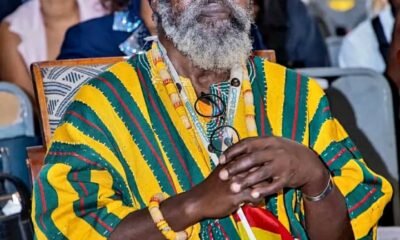
Ras Caleb Appiah-Levi: The musician, Pan-Africanist and organiser whose career spans four decades
-

 Technology2 weeks ago
Rolls-Royce Expands Aviation Business with Major Philippine Airlines Engine Agreement
-

 Entertainment2 weeks ago
Kojo Preko Dankwa calls for investigation into GTA’s World Cup visa affairs