
Entertainment
Don’t Let Your Wife Feed You – Pete Edochie Warns Men Over Financial Dependence

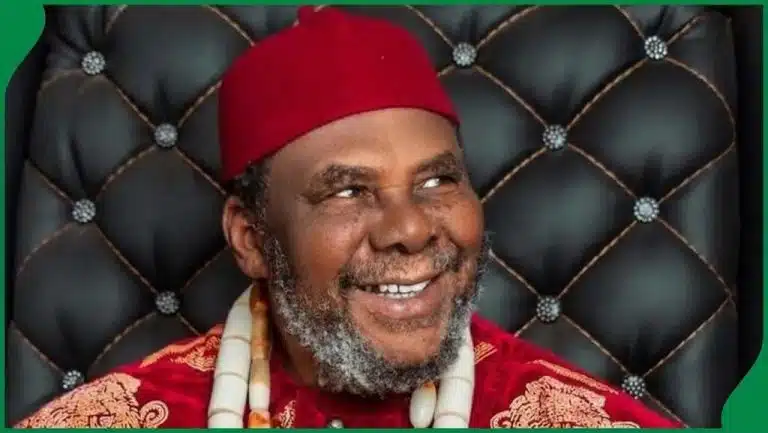
Veteran Nollywood actor Pete Edochie has cautioned men against becoming financially dependent on their wives, arguing that such dependence could have serious consequences for them.
The respected actor made the remarks while speaking on content creator Bae U Barbie’s podcast, Curiosity Made Me Ask.
Edochie also shared his views on marriage proposals, particularly the practice of men kneeling before women while presenting engagement rings.
According to the actor, kneeling to propose is not merely a romantic gesture. Still, it could symbolically suggest that a man is surrendering his position as head of the family even before the marriage begins.
“Don’t pray for your wife to feed you. If you get into such a situation, you’d like to take poison and die. If you step down on your knee and you offer a woman a ring, you are conceding headship of the family to that woman,” Edochie said.
He further questioned why marriages in Western countries often end in divorce, linking the issue to what he described as changing marital dynamics.
“I will not take it back. Have you ever asked yourself why marriages don’t last in Western countries? Oh yeah, but that’s the reason. So, if your wife decides to divorce you, she’s entitled to maybe half or 75 per cent of what you have,” he added.
Source:NajiaNews
Entertainment
Mahama Is First President to Put GH¢40m Seed Money into Creative Arts Fund: Kojo Preko Dankwa
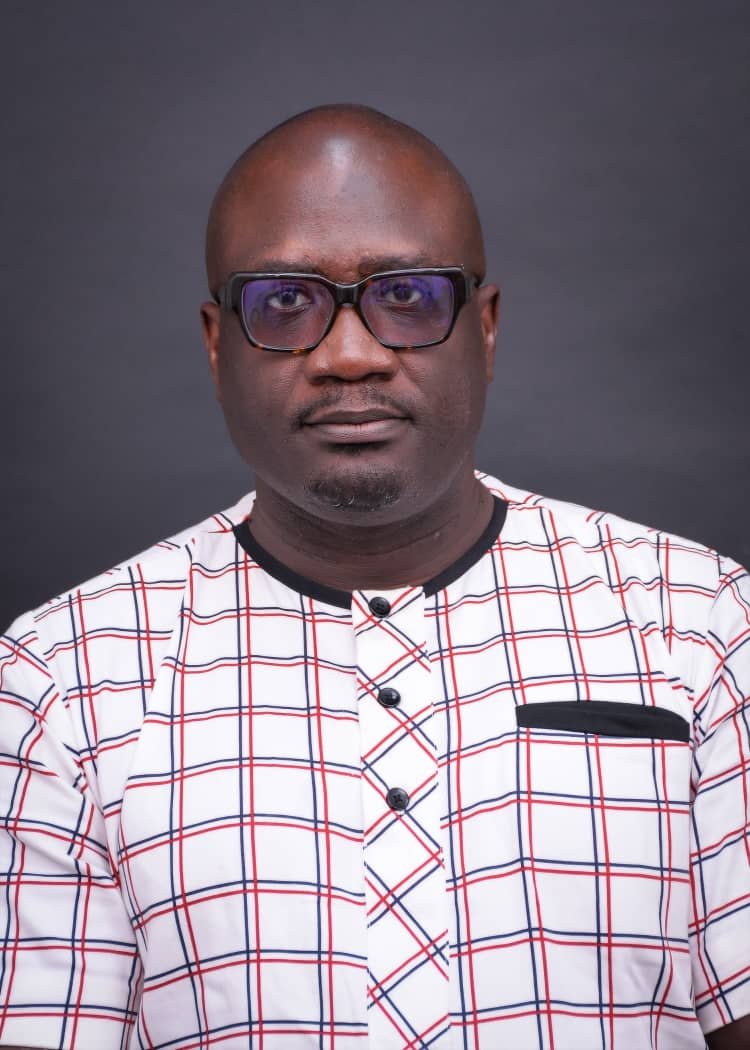
President of the Foundation of Concerned Arts Professionals (FOCAP), Kojo Preko Dankwa, has praised President John Dramani Mahama for what he described as an unprecedented financial commitment to Ghana’s creative arts sector.
Preko Dankwa said Mahama had distinguished himself from previous administrations by providing GH¢40 million in seed funding for the Creative Arts Fund, which he believes could provide a major boost to the industry if properly managed.
Speaking to KPDonline.com, Preko Dankwa argued that the Creative Arts Fund had existed as a policy objective for years, but successive governments had failed to provide meaningful financial resources to make it effective.
He noted that the legal framework for the fund was provided through legislation, including the Film Act, 935, and the Creative Arts Agency Act, 1048, but said the industry had continued to wait for actual funding.
According to him, previous governments repeatedly promised to support the fund, but no substantial amount was released.
He therefore described Mahama’s decision to inject GH¢40 million as a significant departure from what had happened in the past.
Preko Dankwa also said the President had indicated that the fund could receive additional money if the initial allocation was properly utilised.
For him, the financial commitment is one of several reasons he believes Mahama should become an official ambassador for the creative arts sector.
He said the President’s interest in creative content is evident whenever he speaks at public programmes, where he often references comedians, skits, films and other creative works.
Preko Dankwa argued that Mahama’s personal familiarity with developments in the creative industry could help him effectively champion the sector and attract greater attention to its needs.
He also praised the government for creating opportunities for creatives to occupy positions and represent Ghana internationally.
He pointed to appointments involving personalities such as Akofa Edjeani, Dr Abdela and Selom Kwakye, saying their involvement in diplomatic and cultural engagements could help promote Ghana’s creative identity abroad.
Preko Dankwa further called for more creatives to be included in presidential delegations, particularly during international trips.
He mentioned musicians, writers, sculptors and other creative professionals as potential members of such delegations, arguing that their presence could help Ghana market its culture and creative products internationally.
He expressed disappointment that no creative industry representative was included in President Mahama’s delegation during his visit to Jamaica.
He believes the creative sector could gain greater international exposure if prominent Ghanaian creatives were regularly included in presidential and diplomatic engagements.
Preko Dankwa also linked the proposed ambassadorial role to the welfare of people working in the industry.
He said a stronger presidential focus could help address concerns relating to insurance, housing, welfare and other social protections for creatives.
He argued that the ultimate objective should not only be to provide financial support but also to establish sustainable structures and systems capable of serving the creative sector beyond the tenure of any particular government.
Preko Dankwa therefore urged the creative industry to support the idea of making President Mahama an ambassador for the sector, saying his influence could help attract the attention, resources and international exposure needed to strengthen Ghana’s creative economy.
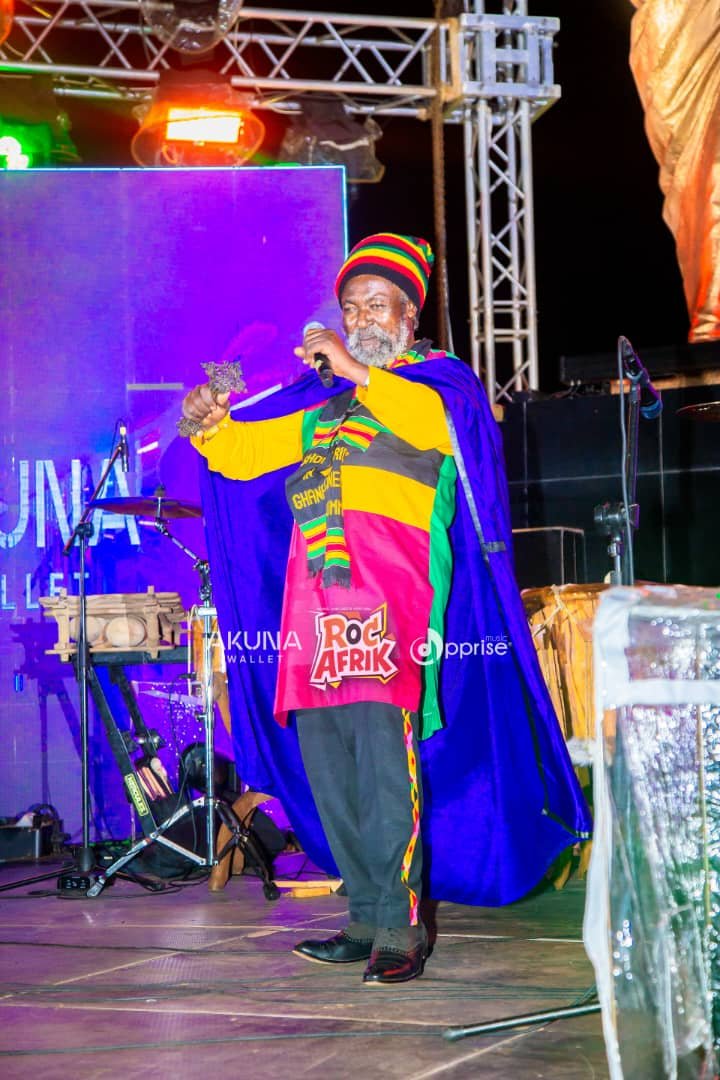
Musician and Founding President of PanAfrica-Ghana (PAG) and PanAfrica-Ghana Musique Group, Ras Caleb Appiah-Levi, has criticised the practice of asking award nominees to pay money or sponsor award schemes to receive recognition.
According to him, awards should be a genuine reflection of talent, hard work and contribution to society rather than a transaction determined by the financial capacity of nominees.
In a statement addressing the issue, Ras Caleb described an award as a form of honour that traditionally recognises an individual’s service and contribution to the community.
He argued that, within African traditions, recognition was not treated as a commodity but as a symbol of appreciation from the community.
“In our African tradition, an award is not a commodity. It is a stool, a crown, a recognition from the community that says: ‘We have seen your work, we have seen your sacrifice, and we thank you,’” he stated.
He recalled that traditional figures, including warriors and cultural practitioners such as drummers, were honoured for their service and contribution rather than being required to purchase their recognition.
Ras Caleb said the development of pay-to-win practices within Ghana’s creative industry therefore raises serious questions about the credibility and integrity of contemporary award schemes.
The musician argued that the fundamental principle behind any credible award scheme should be meritocracy.
He explained that an award should communicate that a particular individual emerged as the best among equally talented nominees based on their work and impact during a given period.
However, he said requiring nominees to pay before receiving recognition changes the basis of the award.
“The moment you ask the nominee to pay money to receive the award, you change the formula,” he said.
According to him, the intended formula should be:
Work + Impact = Award
But when nominees are required to pay, he argued, the system effectively becomes:
Work + Money = Award
Ras Caleb said such a system risks favouring financially powerful artistes over talented but less financially endowed creatives.
He cited the example of a young Highlife musician in Cape Coast who may produce outstanding music but lack the financial backing to purchase tables or meet sponsorship demands, while another artiste with greater financial resources could potentially gain an advantage by paying.
“That is not an award. That is a sale,” he argued.
Ras Caleb also accused some award schemes of exploiting the desire of artistes to receive public recognition.
He noted that musicians already incur significant expenses in the course of their careers, including studio recording, instrumental production, music videos, promotion and transportation.
In his view, award schemes should provide artistes with additional visibility, validation and exposure rather than creating another financial burden.
He questioned practices where nominees are allegedly asked to pay for plaques and citations or purchase multiple tickets as a condition for participating in an awards programme.
“If you have been nominated, now pay GHS2,000 for your plaque and citation, or you must buy 10 tickets to qualify,” he said, describing such demands as a form of psychological exploitation.
He argued that nominees may feel pressured to find money to meet such requirements because they do not want to lose after being publicly nominated.
According to him, some artistes could even borrow money to meet these demands because of the fear of embarrassment or losing an opportunity for recognition.
“This is not empowerment. It is extortion,” he stated.
As the Founding President of PanAfrica-Ghana, Ras Caleb further linked the debate to what he described as African and Pan-African cultural values.
He said his organisation, which operates under the philosophy “LIVING AS ONE,” teaches young people that African culture, dignity and honour should not be treated as commodities.
He argued that commercialising awards could send the wrong message to young people by creating the impression that recognition can simply be purchased.
“When awards are bought, we teach the next generation that honour can be purchased. We teach them that you don’t need to work hard; you just need to pay hard,” he said.
Ras Caleb also invoked Ghana’s traditional systems of honour and leadership, questioning why modern recognition of Pan-African excellence should be treated differently.
He referenced historical and traditional figures including Okomfo Anokye and Queenmothers, arguing that their status and recognition were not based on purchasing titles.
“Okomfo Anokye did not sponsor his own reverence. The Queenmothers of our lands were enstooled by merit,” he said.
While criticising compulsory financial contributions from nominees, Ras Caleb clarified that he does not oppose sponsorship of award schemes.
He acknowledged that organising major awards events requires substantial financial resources for venues, lighting, sound, production and broadcasting.
However, he believes those costs should primarily be covered through corporate institutions, businesses, media partners and individuals who genuinely want to support the creative and cultural industries.
“The right model is: companies and brands sponsor the event; the media partners promote it; the nominees are celebrated for free; and the public votes or the academy judges,” he proposed.
He distinguished between voluntary support from a winner and compulsory payment required from a nominee.
According to him, an artiste who voluntarily decides to support an award scheme after winning may be expressing gratitude to the organisers. However, he said requiring payment before an award is received changes the relationship from recognition to transaction.
“If a nominee, out of love, voluntarily decides to support the scheme after winning, that is gratitude. If he is required to pay before winning, that is a transaction,” he stated.
Ras Caleb has consequently proposed several reforms aimed at improving the credibility of Ghanaian music awards.
First, he called for greater transparency from award organisers.
He said organisers should disclose their revenue and funding models and clearly explain how their events are financed.
He added that if nominees are expected to make any financial contribution, the requirement should be communicated before nominations are opened rather than being introduced after artistes have already been nominated.
He also called for free nominations and free awards, arguing that the act of being nominated and receiving the award itself should not come with compulsory charges.
Where awards events include dinners or ticketed programmes, he suggested that tickets should be sold to the general public rather than imposed on nominees as a condition for participation.
His third proposal is the creation of an Artist Support Fund by award organisers.
Rather than collecting money from nominees, he suggested that award schemes should establish funds that directly benefit winners through support such as studio recording opportunities, promotional assistance or small grants.
Ras Caleb said Ghana’s award industry must change if local awards are to achieve the level of credibility associated with internationally recognised award institutions.
He argued that Ghanaian music awards should strive for systems in which excellence, impact and contribution remain the primary determinants of recognition.
He maintained that the central purpose of an award should be to honour an artiste rather than place a price tag on that honour.
“An award must remain what it was in our villages: a free, honest, community thank-you. If you have to buy it, it is not an honour. It is a purchase. And you cannot purchase respect,” he stated.
Ras Caleb Appiah-Levi signed off the statement with the Pan-African expression “ABIBITUMI! ABIBIFAHODIE!”
He identified himself as Musician and Founding President, PanAfrica-Ghana (PAG) / PanAfrica-Ghana Musique Group.

Deputy Chief Executive Officer of the Ghana Tourism Authority (GTA), Abieku Santana, has challenged Ghanaians to change their perception of opportunities in the country, insisting that Ghana has more opportunities than the United States.
According to him, the challenge is not necessarily the absence of opportunities but the inability of many Ghanaians to identify, pursue and maximise the opportunities available to them.
Speaking in a video shared on X on September 6, 2026, Santana said he would choose to remain in Ghana even if he were offered a highly lucrative salary to relocate to the United States or the United Kingdom.
“If you gave me a $100,000 monthly salary to live in America or to live in the UK, I’ll choose Ghana. Ask me why.”
He argued that Ghana presents significant opportunities across various sectors, but many citizens fail to take advantage of them.
“There are more opportunities in Ghana than in America. We see the opportunity, but we are not able to seize the opportunity,” he said.
Santana further observed that foreigners and expatriates often recognise and exploit opportunities that many Ghanaians overlook.
He explained that while Ghanaians may focus on the challenges confronting particular sectors, foreigners often examine the same challenges and identify business opportunities within them.
“Then foreigners or expatriates come; they see it, and they seize it. We see the opportunity, but we lament. We always complain.”
The tourism executive stressed that challenges should not always be viewed negatively, arguing that problems can create opportunities for innovation, entrepreneurship and job creation.
“Anything that people are complaining about is an opportunity. Opportunity is work. Opportunity is problems. But we don’t like problems,” he added.
Santana has also been advocating for African-led tourism storytelling, encouraging Africans and Ghanaians to take greater ownership of how the continent’s culture, tourism attractions and opportunities are presented to the world.
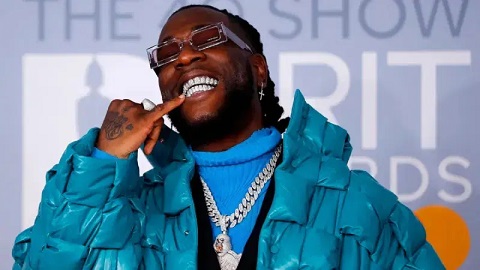
Nigerian music superstar Burna Boy, born Damini Ebunoluwa Ogulu, has become one of Africa’s most successful and influential contemporary artistes, taking his distinctive sound from the streets of Nigeria to some of the world’s biggest stages.
Born on July 2, 1991, in Port Harcourt, Rivers State, Nigeria, Burna Boy is a singer, songwriter and performer known for blending Afrobeats, Afrobeat, reggae, dancehall, hip-hop, and pop into a style he describes as Afro-fusion.
Early Life and Musical Background
Burna Boy grew up in a family with a strong connection to music. His grandfather, Benson Idonije, was once associated with and managed the legendary Nigerian Afrobeat pioneer Fela Kuti, an influence that would later become evident in Burna Boy’s musical identity.
He reportedly began experimenting with music and producing beats at a young age. He attended school in Nigeria before spending time in London for further studies. However, music eventually became his primary focus, leading him back to Nigeria to pursue a professional career.
The Beginning of Burna Boy’s Career
Burna Boy began attracting major attention in 2012 with the release of “Like to Party,” a song that introduced his sound to a wider Nigerian audience.
The single became a breakthrough moment and helped pave the way for his debut studio album, L.I.F.E, released in 2013. The album established him as one of the promising new voices in Nigeria’s rapidly growing music industry.
Over the years, Burna Boy continued to develop his sound and expand his audience beyond Nigeria.
The Songs That Made Him a Global Star
Burna Boy has released numerous successful songs throughout his career. Among his most popular and influential records are:
Like to Party
Ye
On the Low
Anybody
Dangote
Gbona
Wonderful
Way Too Big
Kilometre
Last Last
For My Hand featuring Ed Sheeran
Alone
City Boys
Sittin’ On Top of the World
Higher
Songs such as “Ye” and “On the Low” played important roles in expanding his international popularity, while “Last Last” became one of his biggest global hits, earning widespread success across streaming platforms and international charts.
A Career Built on Major Albums
Burna Boy’s discography reflects his growth from a Nigerian star into a global music figure. His major albums include:
L.I.F.E (2013)
On a Spaceship (2015)
Outside (2018)
African Giant (2019)
Twice as Tall (2020)
Love, Damini (2022)
I Told Them… (2023)
No Sign of Weakness (2025)
His 2019 album African Giant significantly strengthened his international profile and earned him major recognition.
However, Twice as Tall became one of the defining projects of his career when it won the Grammy Award for Best Global Music Album, making Burna Boy one of Nigeria’s Grammy-winning music stars.
The “African Giant”
Burna Boy is widely known by the nickname “African Giant,” a title that reflects both his confidence and his ambition to position African music prominently on the global stage.
His music often combines entertainment with messages about African identity, social issues, success, struggle and personal experiences. He has also drawn inspiration from different cultures and musical traditions, helping him create a sound that appeals to audiences across Africa, Europe, the United States and other parts of the world.
Breaking International Barriers
Over the years, Burna Boy has performed at some of the world’s most prominent venues and music festivals and collaborated with international artistes including Ed Sheeran, Beyoncé, Justin Bieber, 21 Savage and Brandy, among others.
His success has also translated into historic chart achievements. In 2023, I Told Them… became the first international Afrobeats album by an artiste from outside the UK to reach number one on the UK Official Albums Chart, according to the Official Charts Company.
He also made history as the first African artiste to perform at the 2024 Grammy Awards, further highlighting the growing influence of African music on the global stage.
Awards and Recognition
Burna Boy’s career has earned him numerous international nominations and awards. His achievements include a Grammy Award and multiple Grammy nominations, as well as recognition at major African and international music awards.
According to the Recording Academy, Burna Boy had accumulated one Grammy win and 13 nominations through the 2026 Grammy Awards.
In 2026, his album No Sign of Weakness received a nomination for Best Global Music Album, while “Love” was nominated for Best African Music Performance.
Beyond the Music
Away from the stage, Burna Boy has built a powerful public identity around his music and the promotion of African culture. He has consistently expressed pride in his Nigerian and African roots, while using his international platform to demonstrate that African artistes can compete at the highest level of the global entertainment industry.
His journey from Port Harcourt to the world’s biggest music stages has made him one of the leading figures of his generation.
With a catalogue of hit songs, critically acclaimed albums, international collaborations and historic achievements, Damini Ebunoluwa Ogulu — Burna Boy — remains one of the most important Nigerian artistes of the modern era and a major force in the continued global rise of African music.
Entertainment
Shatta Wale Breaks Silence: Here’s Why Ashanti Regional Police Commander Advised Him to Cancel KNUST Show

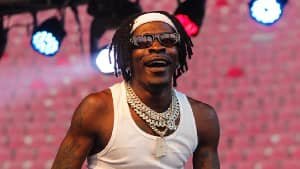
Ghanaian dancehall heavyweight Shatta Wale has opened up about the circumstances surrounding a recent decision to cancel his planned performance at the Kwame Nkrumah University of Science and Technology (KNUST).
The outspoken musician explained that the decision came after the Ashanti Regional Police Commander reportedly advised him against going ahead with the show, citing security concerns.
According to Shatta Wale, the advice was not something he could simply ignore, especially given the potential risks associated with hosting a major entertainment event involving thousands of students and fans.
The development reportedly left many fans disappointed, as anticipation had been building for the dancehall star’s appearance at the university.
Shatta Wale, however, appears to have taken the situation seriously, stressing the importance of prioritising safety when authorities raise concerns about a public event.
The revelation has since sparked conversations among fans and social media users, with many questioning what specific security issues prompted the police commander’s warning.
For an artiste with a reputation for attracting massive crowds, cancelling a highly anticipated show is no small decision. The situation has therefore generated significant interest among his followers and Ghana’s entertainment community.
Shatta Wale’s explanation also highlights the growing importance of security planning at major concerts and university events, where large crowds can present significant challenges for organisers and law enforcement.
While fans may have been looking forward to seeing the self-proclaimed dancehall king take the stage at KNUST, the latest revelation suggests that security considerations ultimately played a major role in the decision.
The question now on the minds of many fans is: What exactly did the police discover that led to the recommendation to cancel the show?
More details surrounding the incident are expected to emerge as the story develops.

Mahama Is First President to Put GH¢40m Seed Money into Creative Arts Fund: Kojo Preko Dankwa

Ras Caleb Appiah-Levi Rejects Pay-to-Win Awards, Calls for Greater Transparency

Ghana Has More Opportunities Than America: Abieku Santan



-

 Entertainment7 days ago
Oswald Okaitei Explains the Real Vision Behind Ghana’s Black Star Experience
-
 General News1 week ago
GES Urged to Review Student Sexual Misconduct Rule Over Alleged Discrimination Against Boys
-
 General News2 weeks ago
OSP Assesses Extortion Allegations Against Afenyo-Markin
-
 Politics2 weeks ago
Stop The Personal Attacks!” — Vitus Azeem Demands Probe Into Sammy Gyamfi–Afenyo-Markin Feud
-

 Entertainment2 weeks ago
Stonebwoy Is Not My Rival — Shatta Wale Reveals They Live Minutes Apart
-

 Politics2 weeks ago
Swallow Your Pride and Apologize – Cape Coast Mayor Fires At Afenyo-Markin Over Sammy Gyamfi Claims
-

 General News2 weeks ago
Zanetor and Ayariga Face Parliamentary Vetting Today
-
 General News2 weeks ago
Oti Region Youth Endorse John Boadu, Cite Experience as Key to NPP Victory