
Entertainment
Ghana Has More Opportunities Than America: Abieku Santan


Deputy Chief Executive Officer of the Ghana Tourism Authority (GTA), Abieku Santana, has challenged Ghanaians to change their perception of opportunities in the country, insisting that Ghana has more opportunities than the United States.
According to him, the challenge is not necessarily the absence of opportunities but the inability of many Ghanaians to identify, pursue and maximise the opportunities available to them.
Speaking in a video shared on X on September 6, 2026, Santana said he would choose to remain in Ghana even if he were offered a highly lucrative salary to relocate to the United States or the United Kingdom.
“If you gave me a $100,000 monthly salary to live in America or to live in the UK, I’ll choose Ghana. Ask me why.”
He argued that Ghana presents significant opportunities across various sectors, but many citizens fail to take advantage of them.
“There are more opportunities in Ghana than in America. We see the opportunity, but we are not able to seize the opportunity,” he said.
Santana further observed that foreigners and expatriates often recognise and exploit opportunities that many Ghanaians overlook.
He explained that while Ghanaians may focus on the challenges confronting particular sectors, foreigners often examine the same challenges and identify business opportunities within them.
“Then foreigners or expatriates come; they see it, and they seize it. We see the opportunity, but we lament. We always complain.”
The tourism executive stressed that challenges should not always be viewed negatively, arguing that problems can create opportunities for innovation, entrepreneurship and job creation.
“Anything that people are complaining about is an opportunity. Opportunity is work. Opportunity is problems. But we don’t like problems,” he added.
Santana has also been advocating for African-led tourism storytelling, encouraging Africans and Ghanaians to take greater ownership of how the continent’s culture, tourism attractions and opportunities are presented to the world.
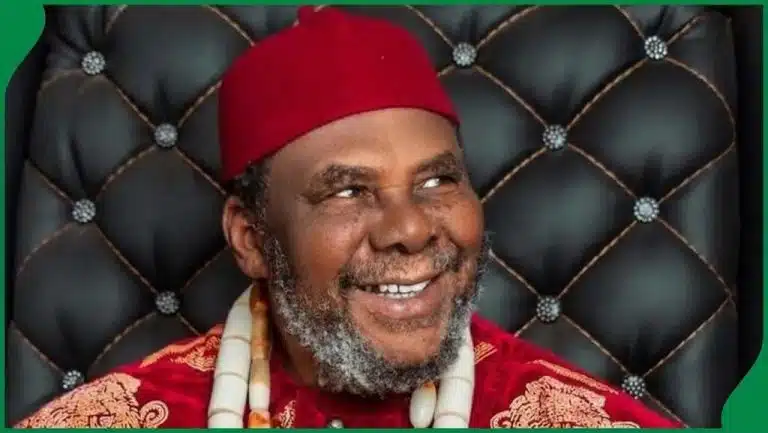
Veteran Nollywood actor Pete Edochie has cautioned men against becoming financially dependent on their wives, arguing that such dependence could have serious consequences for them.
The respected actor made the remarks while speaking on content creator Bae U Barbie’s podcast, Curiosity Made Me Ask.
Edochie also shared his views on marriage proposals, particularly the practice of men kneeling before women while presenting engagement rings.
According to the actor, kneeling to propose is not merely a romantic gesture. Still, it could symbolically suggest that a man is surrendering his position as head of the family even before the marriage begins.
“Don’t pray for your wife to feed you. If you get into such a situation, you’d like to take poison and die. If you step down on your knee and you offer a woman a ring, you are conceding headship of the family to that woman,” Edochie said.
He further questioned why marriages in Western countries often end in divorce, linking the issue to what he described as changing marital dynamics.
“I will not take it back. Have you ever asked yourself why marriages don’t last in Western countries? Oh yeah, but that’s the reason. So, if your wife decides to divorce you, she’s entitled to maybe half or 75 per cent of what you have,” he added.
Source:NajiaNews
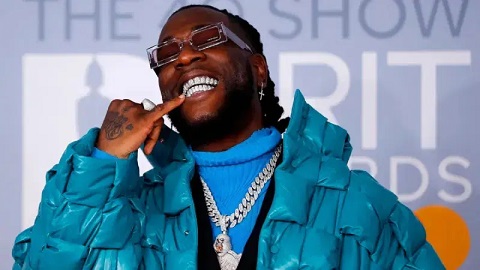
Nigerian music superstar Burna Boy, born Damini Ebunoluwa Ogulu, has become one of Africa’s most successful and influential contemporary artistes, taking his distinctive sound from the streets of Nigeria to some of the world’s biggest stages.
Born on July 2, 1991, in Port Harcourt, Rivers State, Nigeria, Burna Boy is a singer, songwriter and performer known for blending Afrobeats, Afrobeat, reggae, dancehall, hip-hop, and pop into a style he describes as Afro-fusion.
Early Life and Musical Background
Burna Boy grew up in a family with a strong connection to music. His grandfather, Benson Idonije, was once associated with and managed the legendary Nigerian Afrobeat pioneer Fela Kuti, an influence that would later become evident in Burna Boy’s musical identity.
He reportedly began experimenting with music and producing beats at a young age. He attended school in Nigeria before spending time in London for further studies. However, music eventually became his primary focus, leading him back to Nigeria to pursue a professional career.
The Beginning of Burna Boy’s Career
Burna Boy began attracting major attention in 2012 with the release of “Like to Party,” a song that introduced his sound to a wider Nigerian audience.
The single became a breakthrough moment and helped pave the way for his debut studio album, L.I.F.E, released in 2013. The album established him as one of the promising new voices in Nigeria’s rapidly growing music industry.
Over the years, Burna Boy continued to develop his sound and expand his audience beyond Nigeria.
The Songs That Made Him a Global Star
Burna Boy has released numerous successful songs throughout his career. Among his most popular and influential records are:
Like to Party
Ye
On the Low
Anybody
Dangote
Gbona
Wonderful
Way Too Big
Kilometre
Last Last
For My Hand featuring Ed Sheeran
Alone
City Boys
Sittin’ On Top of the World
Higher
Songs such as “Ye” and “On the Low” played important roles in expanding his international popularity, while “Last Last” became one of his biggest global hits, earning widespread success across streaming platforms and international charts.
A Career Built on Major Albums
Burna Boy’s discography reflects his growth from a Nigerian star into a global music figure. His major albums include:
L.I.F.E (2013)
On a Spaceship (2015)
Outside (2018)
African Giant (2019)
Twice as Tall (2020)
Love, Damini (2022)
I Told Them… (2023)
No Sign of Weakness (2025)
His 2019 album African Giant significantly strengthened his international profile and earned him major recognition.
However, Twice as Tall became one of the defining projects of his career when it won the Grammy Award for Best Global Music Album, making Burna Boy one of Nigeria’s Grammy-winning music stars.
The “African Giant”
Burna Boy is widely known by the nickname “African Giant,” a title that reflects both his confidence and his ambition to position African music prominently on the global stage.
His music often combines entertainment with messages about African identity, social issues, success, struggle and personal experiences. He has also drawn inspiration from different cultures and musical traditions, helping him create a sound that appeals to audiences across Africa, Europe, the United States and other parts of the world.
Breaking International Barriers
Over the years, Burna Boy has performed at some of the world’s most prominent venues and music festivals and collaborated with international artistes including Ed Sheeran, Beyoncé, Justin Bieber, 21 Savage and Brandy, among others.
His success has also translated into historic chart achievements. In 2023, I Told Them… became the first international Afrobeats album by an artiste from outside the UK to reach number one on the UK Official Albums Chart, according to the Official Charts Company.
He also made history as the first African artiste to perform at the 2024 Grammy Awards, further highlighting the growing influence of African music on the global stage.
Awards and Recognition
Burna Boy’s career has earned him numerous international nominations and awards. His achievements include a Grammy Award and multiple Grammy nominations, as well as recognition at major African and international music awards.
According to the Recording Academy, Burna Boy had accumulated one Grammy win and 13 nominations through the 2026 Grammy Awards.
In 2026, his album No Sign of Weakness received a nomination for Best Global Music Album, while “Love” was nominated for Best African Music Performance.
Beyond the Music
Away from the stage, Burna Boy has built a powerful public identity around his music and the promotion of African culture. He has consistently expressed pride in his Nigerian and African roots, while using his international platform to demonstrate that African artistes can compete at the highest level of the global entertainment industry.
His journey from Port Harcourt to the world’s biggest music stages has made him one of the leading figures of his generation.
With a catalogue of hit songs, critically acclaimed albums, international collaborations and historic achievements, Damini Ebunoluwa Ogulu — Burna Boy — remains one of the most important Nigerian artistes of the modern era and a major force in the continued global rise of African music.
Entertainment
Shatta Wale Breaks Silence: Here’s Why Ashanti Regional Police Commander Advised Him to Cancel KNUST Show


Ghanaian dancehall heavyweight Shatta Wale has opened up about the circumstances surrounding a recent decision to cancel his planned performance at the Kwame Nkrumah University of Science and Technology (KNUST).
The outspoken musician explained that the decision came after the Ashanti Regional Police Commander reportedly advised him against going ahead with the show, citing security concerns.
According to Shatta Wale, the advice was not something he could simply ignore, especially given the potential risks associated with hosting a major entertainment event involving thousands of students and fans.
The development reportedly left many fans disappointed, as anticipation had been building for the dancehall star’s appearance at the university.
Shatta Wale, however, appears to have taken the situation seriously, stressing the importance of prioritising safety when authorities raise concerns about a public event.
The revelation has since sparked conversations among fans and social media users, with many questioning what specific security issues prompted the police commander’s warning.
For an artiste with a reputation for attracting massive crowds, cancelling a highly anticipated show is no small decision. The situation has therefore generated significant interest among his followers and Ghana’s entertainment community.
Shatta Wale’s explanation also highlights the growing importance of security planning at major concerts and university events, where large crowds can present significant challenges for organisers and law enforcement.
While fans may have been looking forward to seeing the self-proclaimed dancehall king take the stage at KNUST, the latest revelation suggests that security considerations ultimately played a major role in the decision.
The question now on the minds of many fans is: What exactly did the police discover that led to the recommendation to cancel the show?
More details surrounding the incident are expected to emerge as the story develops.
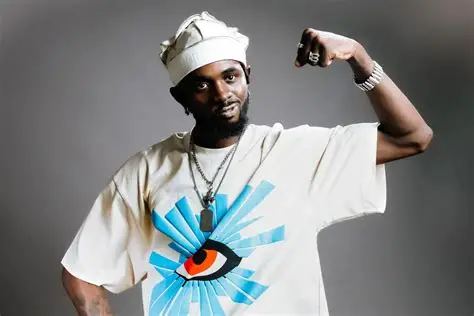
Ghanaian music sensation Black Sherif has officially released his highly anticipated six-track EP, Sun Sherif, introducing fans to a more personal and vulnerable side of his artistry.
The project, released through RBA/EMPIRE, comes after the success of his second studio album, Iron Boy. Unlike the heavier themes of his previous project, Sun Sherif delves deeper into love, self-discovery, life experiences and emotional resilience.
The EP opens a new window into Black Sherif’s personal world, particularly his struggles with intimacy and accepting love. Its lead single, “Love Again,” featuring Trinidadian artiste Full Blown, highlights this softer dimension of his music.
Explaining the motivation behind the project, Black Sherif said his difficulty with receiving and maintaining affection has become an important part of his personal reflection.
“Almost all of the necessary affections that I have needed, and have gotten, came from afar, physically and figuratively,” he said.
He explained that this experience has made it difficult for him to receive and hold on to love, despite having a strong desire for intimacy.
“With this project, I have allowed you a glimpse of it,” he added.
The EP takes listeners through different emotional and personal experiences.
“Expresso” reflects on the pressures that come with rapid success, including loneliness, excess, risk and the challenge of staying grounded.
“Run Around” explores romantic relationships, with Black Sherif expressing a desire for understanding, while “Jolie” focuses more directly on affection and devotion.
On “Forever,” featuring AratheJay, the artiste embraces themes of faith, solitude and spirituality, while “Frontline” restores the tougher energy associated with some of his earlier work. The song touches on betrayal, money, pride and the importance of remaining prepared for life’s challenges.
The release follows a message from Black Sherif encouraging his fans to listen to the project with an open heart and mind.
“Open your ears and your heart,” he told them.
Beyond his music, Black Sherif has increasingly established himself as a cultural force, with growing influence in fashion, sports and discussions about African identity.
In 2024, he walked for Labrum London during London Fashion Week and later made his Paris Fashion Week debut with Off-White. He also wore Christian Louboutin for the brand’s event with GQ during BRIT Awards week.
He has also expanded his commercial reach through major global collaborations, including “Find A Way,” released as part of Puma’s World Cup campaign celebrating Ghana’s participation in the tournament.
With Sun Sherif, Black Sherif continues to evolve as an artiste, offering listeners a more intimate look at the emotions, experiences and reflections shaping his journey.
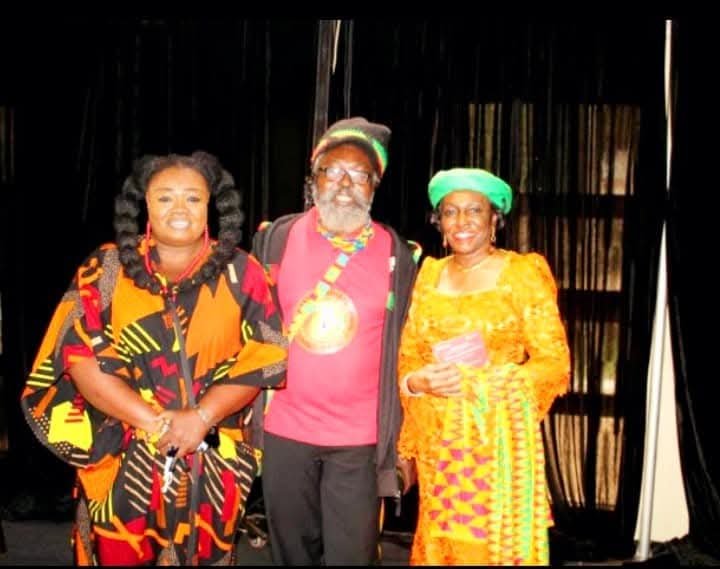
Musician and Pan-Africanist Ras Caleb Appiah-Levi has criticised what he describes as society’s tendency to celebrate people more after their death than while they are alive and in need of support.
In a passionate reflection, Appiah-Levi said he had observed the phenomenon for many years through his experiences as a musician, Pan-Africanist, community worker and son of the soil.

According to him, living people who are struggling to create, work and contribute to society are often ignored, criticised, envied or denied the support they need.
“When a man is alive, walking among us, struggling, creating, sweating, crying for support, we ignore him,” he said.
He argued that society sometimes labels people who are ambitious, outspoken or controversial negatively while failing to support their work.
Appiah-Levi said people could watch an individual’s phone calls go unanswered, attend poorly patronised programmes and see someone struggle to raise funds for projects without offering meaningful assistance.
However, he noted that the situation often changes dramatically after the person dies.
“But the moment he dies, we suddenly love him,” he said.
He explained that after death, society often puts up large banners bearing the deceased’s image, writes lengthy tributes, composes songs, travels long distances to attend funerals and raises substantial sums of money in their honour.

According to him, some of the same people who refused to provide financial assistance when the deceased needed medical treatment or support while alive later describe them as legends, heroes and icons.
Appiah-Levi identified three major reasons he believes contribute to the phenomenon.
He argued that living people can sometimes be perceived as competitors or threats because their achievements may expose the shortcomings or limitations of others.
He cited the late visual artist Yaa Padiki as an example, saying that while she was alive and engaged in her artistic work, some people viewed her activities as competition.
He also referenced his own experience as a musician who performs revolutionary songs, saying some people may perceive such work as a threat.
However, he said death eliminates the perceived competition, making it easier for people to praise the deceased without feeling that the person’s achievements diminish their own.
The musician further argued that it is easier for people to express affection towards someone who can no longer respond or challenge them.
He said the living can disagree with others, demand accountability or express dissatisfaction, whereas the dead remain silent.
“The dead are silent. They accept all flowers, even from those who poisoned them while alive,” he stated.
He therefore suggested that some public displays of affection after death may come at little personal cost compared with supporting someone while they are alive.
Appiah-Levi also blamed what he described as a culture that places greater emphasis on remembering the dead than building and supporting the present.
He linked this partly to colonial education, arguing that Africans have been conditioned to place significant emphasis on history while failing to invest adequately in living people and present-day visions.
He acknowledged the importance of honouring ancestors but questioned why people sometimes fail to provide basic support to living elders and other members of society.
“We pour libation to ancestors — which is good — but we forget to give water to the living elder who is thirsty today,” he said.
Appiah-Levi described the trend as a dangerous culture and warned that society could become one that mourns people after their deaths while failing to support their visions during their lifetime.
“If we continue this way, we will always be a continent that cries at funerals but sleeps during visions,” he said.
He subsequently called on Africans to change the way they demonstrate appreciation and support for people making contributions to society.
He urged the public to support artists by purchasing their work while they are alive, attend programmes organised by people while they can still appreciate the support, and provide assistance to musicians, inventors, teachers, farmers, beach cleaners and other community workers during their lifetime.
According to him, the support people receive after death often comes too late.
“Yaa Padiki did not need our tears today as much as she needed our hands yesterday,” he said.
He questioned how many other talented and hardworking people may currently be living without recognition, encouragement or financial assistance.
“And how many more Yaa Padikis are among us today, walking unknown, unsung, unsupported?” he asked.
Appiah-Levi concluded his reflection with a call for society to stop waiting until death before recognising the value of individuals.

He argued that while the dead cannot experience the love and support shown to them after death, living people can benefit directly from encouragement and assistance and potentially use that support to make a greater impact on society.
“For what is the use of loving the dead more than the living?” he asked.
His message ended with a call for people to embrace and support the living while they still have the opportunity to feel that appreciation and use it to continue changing their communities and the world.

Ghana Has More Opportunities Than America: Abieku Santan

Don’t Let Your Wife Feed You – Pete Edochie Warns Men Over Financial Dependence

Teacher Allegedly Fakes His Death to Escape $600 Loan in Malawi



-

 General News1 week ago
GES Urged to Review Student Sexual Misconduct Rule Over Alleged Discrimination Against Boys
-

 Entertainment7 days ago
Oswald Okaitei Explains the Real Vision Behind Ghana’s Black Star Experience
-

 General News2 weeks ago
OSP Assesses Extortion Allegations Against Afenyo-Markin
-

 Politics2 weeks ago
Stop The Personal Attacks!” — Vitus Azeem Demands Probe Into Sammy Gyamfi–Afenyo-Markin Feud
-

 Entertainment2 weeks ago
Mzbel Says Age Gap Is No Barrier as She Opens Up About 19-Year-Old Admirer
-

 Entertainment2 weeks ago
Stonebwoy Is Not My Rival — Shatta Wale Reveals They Live Minutes Apart
-

 Politics2 weeks ago
Swallow Your Pride and Apologize – Cape Coast Mayor Fires At Afenyo-Markin Over Sammy Gyamfi Claims
-

 General News2 weeks ago
Zanetor and Ayariga Face Parliamentary Vetting Today