
General News
Shot 15 times: How a cheating suspicion turned deadly for Ghanaian-American woman


A devastating case of jealousy, suspicion and violence has ended with a Texas man receiving a 50-year prison sentence after killing his Ghanaian-American wife in a brutal shooting.
What began with a suspicion of infidelity ultimately turned into a deadly confrontation, leaving a young mother dead and a family shattered.
The case has once again raised disturbing questions about how unchecked jealousy and accusations of cheating can escalate into irreversible violence.
A deadly suspicion
The victim, Alexis Walls, was killed in February 2025 at a residence in Bryan, Texas.
Her partner, Brandon Dickerson, later admitted killing her and was sentenced to 50 years in prison after pleading guilty to murder.
According to court records cited in reports on the case, Dickerson told investigators that he shot Walls because he believed she was cheating on him.
But the suspicion would have a devastating consequence.
15 gunshots
Investigators determined that Walls had been shot 15 times.
The fatal shooting happened inside the couple’s home while their 18-month-old child was also present.
The child was unharmed physically, but the circumstances surrounding the mother’s death have left an indelible mark on the family.
After the shooting, Dickerson himself called emergency services and reported that he had killed the mother of his child.
When police arrived at the residence at about 1 a.m., Walls was already dead.
A mother’s life cut short
Walls was described in reports as a loving mother whose life was violently taken away.
Her death has left her family to pick up the pieces while her child is now being raised by her parents.
The circumstances have made the case particularly heartbreaking: a dispute rooted in a suspicion of infidelity ended with a mother losing her life and a child losing the chance to grow up with her.
50 years behind bars
Dickerson was arrested after the killing and subsequently faced a murder charge.
In February 2026, he pleaded guilty to the murder of Walls.
A judge then sentenced him to 50 years in prison, bringing a major chapter in the case to a close.
The sentence means Dickerson will spend decades behind bars for a crime that prosecutors say destroyed a family.
When suspicion turns deadly
The tragedy has also reignited concerns about the dangers of possessiveness and relationship-related violence.
An accusation of cheating — whether true or false — can never justify violence.
In this case, a suspicion became a fatal decision, with the consequences extending far beyond the two adults involved.
Fifteen gunshots. One devastated family. One child left without a mother — and a 50-year prison sentence for a man whose jealousy ended in murder.
What began as suspicion ended in tragedy, leaving behind a painful reminder of how quickly relationship conflict can spiral into irreversible violence.
General News
‘May God forgive them’ — Prof. Frimpong-Manso speaks on painful attacks over National Cathedral
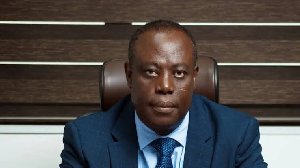
Renowned theologian and former General Superintendent of the Assemblies of God, Ghana, Reverend Professor Yaw Frimpong-Manso, has opened up about what he describes as painful attacks and criticism surrounding the controversial National Cathedral project.
The respected clergyman has expressed deep disappointment over the treatment he and others associated with the project have received, saying some of the attacks have been hurtful.
In an emotional reflection, Prof. Frimpong-Manso called for forgiveness, leaving a striking message for those he believes have unfairly criticised or attacked him over the project.
‘May God forgive them’
Prof. Frimpong-Manso did not hide his pain over the criticism.
While discussing the controversy, he appealed to God to forgive those behind what he considers unfair attacks.
His remarks highlight the deeply personal dimension of a debate that has largely centred on the finances, construction and political controversy surrounding the National Cathedral.
From vision to controversy
The National Cathedral was conceived as a major Christian landmark and a symbol of Ghana’s faith and national identity.
However, the project has faced intense public scrutiny over its financing, construction progress and expenditure, with critics repeatedly questioning whether public resources should have been committed to it.
The controversy has continued to generate political and religious debate, placing several prominent figures associated with the initiative under the spotlight.
‘The attacks have been painful’
For Prof. Frimpong-Manso, however, the issue goes beyond political disagreements.
His latest comments suggest that the criticism has taken a personal toll, particularly given his involvement in the broader religious conversation surrounding the project.
Rather than responding with an equally aggressive attack, he chose a more conciliatory message — asking God to forgive those who have caused him pain.
A controversy that refuses to die
The National Cathedral remains one of Ghana’s most fiercely debated public projects.
Supporters continue to view it as an important national Christian monument, while critics have questioned its cost, management and the government’s role in financing it.
The continuing debate has ensured that individuals who supported or championed the project remain under public scrutiny.
A powerful message amid the storm
Prof. Frimpong-Manso’s latest intervention adds an emotional dimension to the long-running National Cathedral controversy.
His response suggests that, despite the criticism and personal attacks, he would rather leave the matter in God’s hands.
“May God forgive them.”
Those few words capture the pain behind his response — and show that the National Cathedral controversy is no longer simply about a building, money or politics. For some of those involved, it has become deeply personal.
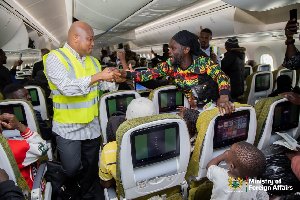
Fresh figures surrounding Ghana’s evacuation of citizens from South Africa have triggered questions over how much the government spent to bring affected Ghanaians home — and how much direct support they received after arrival.
The government, through the Ministry of Foreign Affairs, has been undertaking an evacuation exercise for Ghanaians affected by xenophobic attacks and unrest in parts of South Africa.
Since May 2026, more than 1,300 Ghanaians had been evacuated, with the government assuring returnees of support to help them restart their lives in Ghana.
The eye-catching figures
The latest discussion centres on the cost of the exercise, with reports putting the overall expenditure at about GH¢38 million.
The amount has raised eyebrows, particularly when compared with the financial assistance provided directly to returnees.
Earlier government disclosures indicated that the first phase, involving 926 Ghanaians, cost approximately GH¢5.1 million, while the second phase, which brought another 1,000 people home, cost about GH¢5.5 million.
The government subsequently continued the evacuation, with the final groups also being brought home.
GH¢10 support? Here’s what the figures actually show
The headline figure referring to GH¢10 appears to relate to the broader expenditure calculation rather than suggesting that each evacuee literally received GH¢10 in cash.
Government previously announced a GH¢5,000 reintegration grant for returnees, in addition to GH¢500 for travel and transportation for each person evacuated.
The Ministry has also said the returnees would be assessed according to their skills and aspirations so they could receive appropriate livelihood and employment support.
Government insists it footed the bill
The Foreign Affairs Ministry has been emphatic that Ghana did not rely on financial or material assistance from South Africa to conduct its evacuation.
The government said the exercise was financed by Ghana and Ghanaian partners, meaning Ghana would not be among the countries asked by South Africa to reimburse costs associated with repatriating foreign nationals.
That clarification became necessary after reports emerged that South Africa was seeking reimbursement from some countries for expenses incurred in repatriating their nationals.
More than 1,300 Ghanaians brought home
By August 4, the Ministry announced that another 150 Ghanaians had arrived safely in Accra, pushing the total number evacuated from South Africa since May to 1,324.
The government described the evacuation as part of its responsibility to protect Ghanaian citizens abroad, particularly amid reports of xenophobic attacks.
Returnees were received at the Kotoka International Airport and were promised assistance with reintegration.
The bigger question
While the government says human life is invaluable and no cost should stand in the way of protecting Ghanaians, the figures have inevitably placed the financial side of the operation under the spotlight.
How much was ultimately spent on flights, buses, logistics, accommodation and other evacuation arrangements?
How much came from the government, and how much came from private-sector partners?
And, perhaps most importantly, how much did each returning Ghanaian actually receive to rebuild their lives?
The Foreign Affairs Ministry has indicated that it will provide a comprehensive account of expenditure and donations received later in the year.
For now, the evacuation may have brought hundreds of distressed Ghanaians safely home — but the millions spent on the operation are likely to remain a subject of intense public scrutiny.
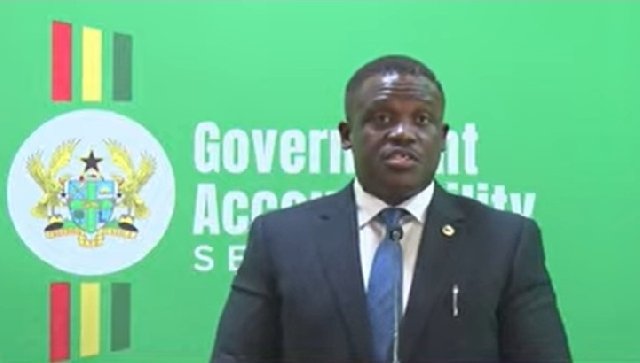
The Minister for Communication, Digital Technology and Innovations, Sam Nartey George, has disclosed that road construction under the government’s Big Push programme accounts for nearly half of all fibre cuts recorded in Ghana, making it the leading cause of damage to the country’s telecommunications infrastructure.
Speaking at the Accountability Series on Monday, September 7, 2026, the Minister revealed that Ghana had recorded 8,578 fibre cuts so far in 2026, with repairs costing telecommunications operators more than US$20 million.
According to Sam George, the frequent damage to fibre infrastructure is disrupting telecommunications services while forcing network operators to spend millions of dollars on repairs instead of investing those resources in expanding network coverage.
“That’s money that without the fibre cut we could have used to build new sites… The biggest source of fibre cuts is from the Big Push project because the Ministry of Roads is carrying out an aggressive project to construct roads across the country,” he said.
The Minister explained that road construction projects account for approximately 49% of all fibre cuts recorded across the country.
He said the extensive road works being undertaken under the government’s Big Push programme have increased the risk of telecommunications cables being damaged during construction activities.
The resulting disruptions not only affect mobile and internet services but also create an additional financial burden for telecommunications companies, which must repeatedly repair damaged fibre networks.
Sam George said fibre cuts have remained a major challenge to Ghana’s telecommunications sector over the past several years.
Ghana recorded approximately:
3,900 fibre cuts in 2021
More than 10,000 in 2022
Over 6,000 in 2023
More than 5,600 in 2024
About 8,000 in 2025
By the end of June 2026, the country had already recorded nearly 4,300 fibre cuts.
The Minister said that if the current trend continued, Ghana could record close to 9,000 fibre-cut incidents by the end of 2026.
Sam George stressed that the financial implications go beyond the immediate cost of repairing damaged cables.
He explained that money spent by telecommunications companies on restoring fibre infrastructure could otherwise be used to construct new telecommunications sites and improve network coverage, particularly in underserved areas.
The repeated cuts therefore make it more difficult for operators to direct sufficient resources towards expanding and strengthening Ghana’s digital infrastructure.
Despite the challenges, the Minister said government remained committed to expanding telecommunications infrastructure and improving connectivity across the country.
He disclosed that the government had significantly increased its target for new telecommunications sites, moving from 50 sites in 2025 to 800 sites in 2026.
Sam George maintained that protecting existing fibre infrastructure would be essential to achieving the country’s telecommunications expansion goals.
He stressed that reducing fibre damage would help ensure that funds allocated for expanding telecommunications infrastructure are not continually diverted towards costly repairs.
General News
2026 BECE Placement Results: 527,932 Students Placed; Government Opens Self-Placement for 53,887 Candidates

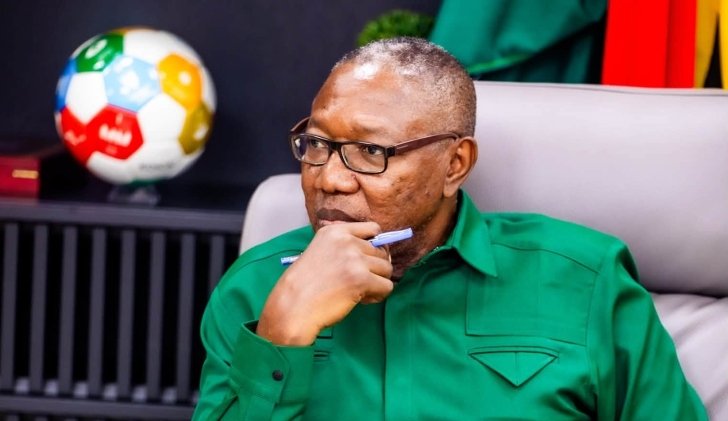
The Ministry of Education has released the 2026 Computerized School Selection and Placement System (CSSPS) results, with 527,932 candidates successfully placed in Senior High Schools (SHSs), Senior High Technical Schools (SHTSs), and technical and vocational institutions across the country.
Speaking at a press briefing in Accra on September 7, 2026, Deputy Minister for Education, Dr. Clement Abas Apaak, disclosed that the placement results were released at 10:00 p.m. on September 4, 2026.
According to the Ministry, a total of 623,072 candidates sat for the 2026 Basic Education Certificate Examination (BECE), representing an increase of 19,744 candidates compared to the 603,328 who sat for the examination in 2025.
Out of the 623,072 candidates, 604,567 qualified for placement, while 527,932 were automatically placed, representing 87.3 percent of all qualified candidates.
Of those automatically placed, 276,521 are females and 251,411 are males.
The Ministry explained that the failure of some qualified candidates to secure automatic placement was largely due to the high demand for Category A schools.
Data from the placement exercise shows that 313,283 candidates selected Category A schools as their first choice, while 176,614 selected Category B schools, 123,577 selected Category C schools, and 995 opted for private Senior High Schools.
However, the available vacancies stood at 76,417 in Category A schools, 250,366 in Category B schools and 468,652 in Category C schools, bringing the total declared vacancies to 859,828.
Dr. Apaak explained that the challenge was not a shortage of school places but rather a mismatch between the school’s candidates preferred and where vacancies were available.
“The issue is not simply the availability of spaces. It is largely a mismatch between where vacancies exist and where candidates most strongly prefer to be placed,” he said.
The Ministry further disclosed that 57,259 candidates did not meet the requirements for automatic placement.
This figure includes 3,372 candidates who did not sit for the BECE, 35,382 candidates who obtained Grade 9 in either English Language or Mathematics, and 18,505 candidates who obtained Grade 9 in both subjects.
Government has, however, decided to allow candidates who obtained Grade 9 in English Language and/or Mathematics to access the self-placement portal and select schools with available vacancies.
The 3,372 candidates without examination results will not be placed at this stage but will be given another opportunity to resit the examination.
Meanwhile, 85 private Senior High Schools will participate in the Free SHS programmed for the 2026/2027 academic year.
The Ministry said the inclusion of the private schools is aimed at expanding access to secondary education while reducing pressure on highly subscribed public schools.
To make the admission process easier, the CSSPS has also been upgraded to include an admission portal through which parents can enroll their children and download admission forms without having to travel to the schools.
Heads of schools have been cautioned against admitting students outside the official placement system.
The Ministry has also established resolution centers at all regional Ghana Education Service (GES) and Ghana TVET Service offices to assist parents and candidates with placement-related concerns.
The GNAT Hall in Accra has been designated as the National Placement Resolution Centre.
Dr. Apaak stressed that the school placement process is completely free and warned parents against paying money to individuals who claim they can secure or change placements.
“No parent should pay money to any individual, whether that person claims to be an official of the Ministry, GES, TVET Service, a school official or intermediary, to secure or change placement. There is no legitimate protocol placement that requires payment,” he said.
He urged parents and candidates to report anyone demanding money for placement to the Ghana Police Service or the Office of the Special Prosecutor.
Parents and candidates who require assistance can contact the official CSSPS call center on 055 037 7388, 059 952 5926, 059 844 5898, 059 797 4847, or 055 855 5431.
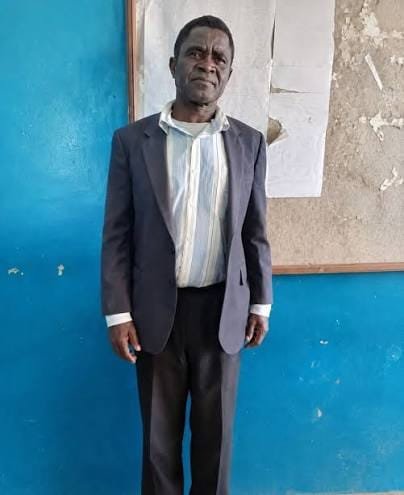
A 41-year-old primary school teacher in Malawi has allegedly faked his own death and submitted forged documents to have an outstanding loan cancelled, only to be discovered alive after reportedly returning to the same financial institution to apply for another loan.
The incident, which has sparked widespread discussion about fraud, financial hardship and the welfare of teachers, reportedly occurred in Kasungu, Malawi.
According to reports attributed to the Malawi Police Service and Select Financial Services Limited, the teacher, identified as Francis Peter Mtema of Kalimanyungu Primary School, allegedly attempted to convince the financial institution that he had died to have his outstanding loan written off.
Mtema had reportedly taken a loan of K1,114,128.15 Malawian Kwacha (MWK), equivalent to about US$641.87, with an outstanding balance of K1,043,497.52 MWK, approximately US$601.15.
To support the alleged claim of his death, he was said to have presented documents including a death certificate, burial permit and a letter from a village headman.
However, the alleged scheme reportedly unravelled when Mtema returned to Select Financial Services Limited to seek a top-up loan.
An auditor at the institution reportedly recognised that the man seeking the new loan was the same borrower who had supposedly died.
The matter was subsequently reported to the authorities, leading to his alleged arrest at Kalimanyungu Primary School.
While the case has attracted condemnation from some members of the public, a commentary by Seth Afum A. Dankwah of the J. G. Knol Technical Institute in Adukrom-Akuapem has drawn attention to the broader economic circumstances that may have contributed to the alleged act.
Dankwah argued that although allegations of fraud and forgery must be dealt with under the law, the incident should also raise serious questions about the financial struggles faced by teachers and other public sector workers across Africa.
“A teacher should teach to live, not fake death to live,” he wrote.
The commentary described the incident as more than an alleged case of financial fraud, arguing that it reflects the desperation of workers who may resort to extreme measures when overwhelmed by debt and economic hardship.
The writer called on governments to improve the welfare and living conditions of teachers, while urging the legal system to ensure that justice is balanced with consideration of the circumstances surrounding the case.
He also appealed to philanthropists and well-meaning individuals to support people facing severe financial difficulties.
The incident has since reignited discussions about teacher welfare, low incomes, personal debt and the growing reliance on loans for survival.
However, authorities in Malawi are expected to handle the matter in accordance with the country’s laws, as allegations of fraud and forgery remain serious criminal offences.

NPP October 3 national officers’ election: Party sets Sept. 9 for balloting

‘My journey from running mate to former Vice President is by God’s divine will’ — Bawumia

NPP Treasurer aspirant involved in accident — campaign suspended



-
 General News1 week ago
GES Urged to Review Student Sexual Misconduct Rule Over Alleged Discrimination Against Boys
-

 Entertainment7 days ago
Oswald Okaitei Explains the Real Vision Behind Ghana’s Black Star Experience
-

 General News2 weeks ago
OSP Assesses Extortion Allegations Against Afenyo-Markin
-
 Politics2 weeks ago
Stop The Personal Attacks!” — Vitus Azeem Demands Probe Into Sammy Gyamfi–Afenyo-Markin Feud
-

 Entertainment2 weeks ago
Stonebwoy Is Not My Rival — Shatta Wale Reveals They Live Minutes Apart
-

 Politics2 weeks ago
Swallow Your Pride and Apologize – Cape Coast Mayor Fires At Afenyo-Markin Over Sammy Gyamfi Claims
-
 General News2 weeks ago
Zanetor and Ayariga Face Parliamentary Vetting Today
-
 General News2 weeks ago
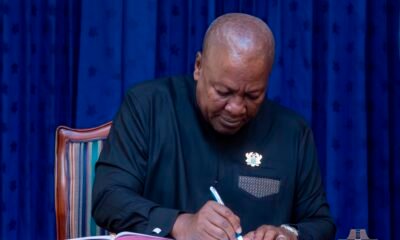
President Mahama makes further ministerial changes