
Entertainment
Government Repatriates Musician Barosky from UK

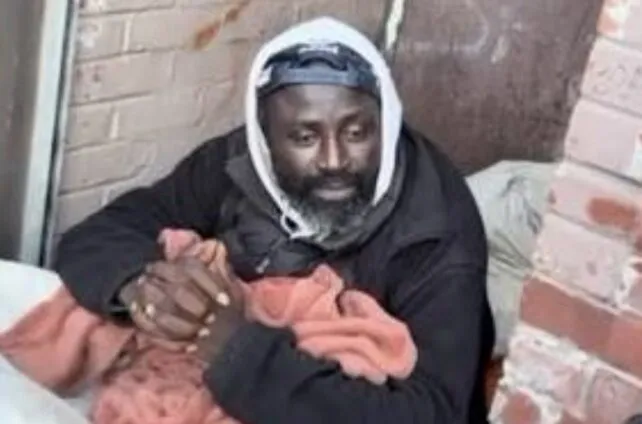
Foreign Affairs Minister Samuel Okudzeto Ablakwa has confirmed that Ghanaian Highlife musician Barosky has been brought back to Ghana from the United Kingdom following concerns about his difficult situation.
The musician was repatriated to Ghana on Monday, September 7, 2026, with the Ministry of Foreign Affairs covering the cost of his return.
Mr Ablakwa said the government will also provide Barosky with psychosocial support and financial assistance to help him settle back into life in Ghana.
He expressed gratitude to Ghana’s High Commission in the UK for coordinating the repatriation, as well as individuals, particularly Nana Romeo, who helped bring attention to the musician’s plight.
Barosky had reportedly been living in difficult conditions in Manchester for several months before his situation attracted public attention.
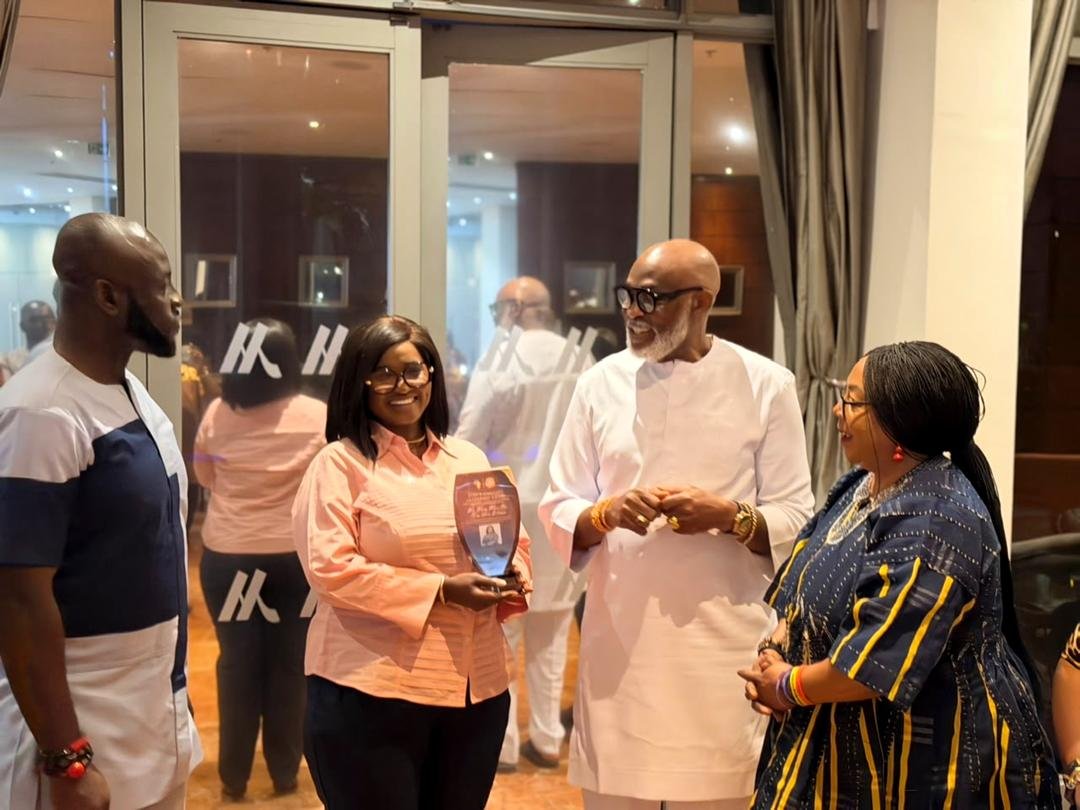
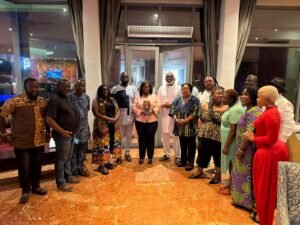
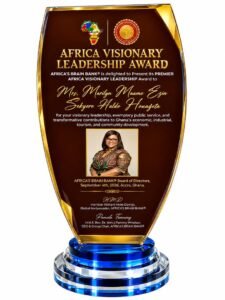
The Chief Executive Officer of the Ghana Tourism Authority (GTA), Maame Efua Houadjeto, has been honoured at the 7th Africa Brain Bank Annual Summit and Awards in Accra.
Mrs Houadjeto received the Africa Visionary Leadership Award in recognition of what organisers described as her visionary leadership, exemplary public service and transformative contributions to Ghana’s economic, industrial, tourism and community development.
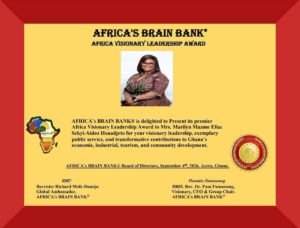
The award was presented during the summit held from September 3 to September 8, 2026, at the Marriott Hotel in Accra.
The event brought together business leaders, investors, government officials and professionals from several sectors, including healthcare, tourism, pharmaceuticals, construction, finance, technology, logistics, real estate and infrastructure.
As part of the annual gathering, the organisers also held a Charity Ball and Medical City Ground-breaking ceremony, aimed at engaging members of the African diaspora to contribute their expertise, investments, professional networks and philanthropic support towards Ghana’s development while reconnecting with the country’s cultural and historical heritage.
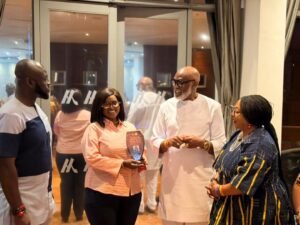
Reacting to the honour, Mrs Houadjeto expressed appreciation to the organisers and dedicated the award to the management and staff of the Ghana Tourism Authority.
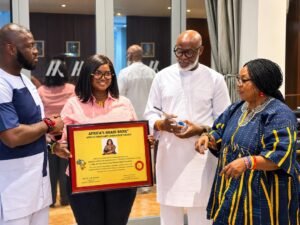
“I am appreciative of the honour done to me by the organisers, but this award is dedicated to the supportive, dedicated and hardworking management and staff of the Ghana Tourism Authority,” she said.
Africa’s Brain Bank describes itself as a repository of African intellect, providing a platform for Africans to contribute their expertise, experience, talent and knowledge towards the continent’s development.
The organisation seeks to bring together leaders and professionals from different fields who share a common interest in advancing Africa’s economic development. Through recurring events and forums across the world, Africa’s Brain Bank promotes the exchange of ideas, policy insights, resources and expertise aimed at helping reshape the future of the continent.
The honour adds to the recognition of Mrs Houadjeto’s leadership at the Ghana Tourism Authority as the institution continues efforts to promote Ghana’s tourism industry and strengthen its contribution to national development
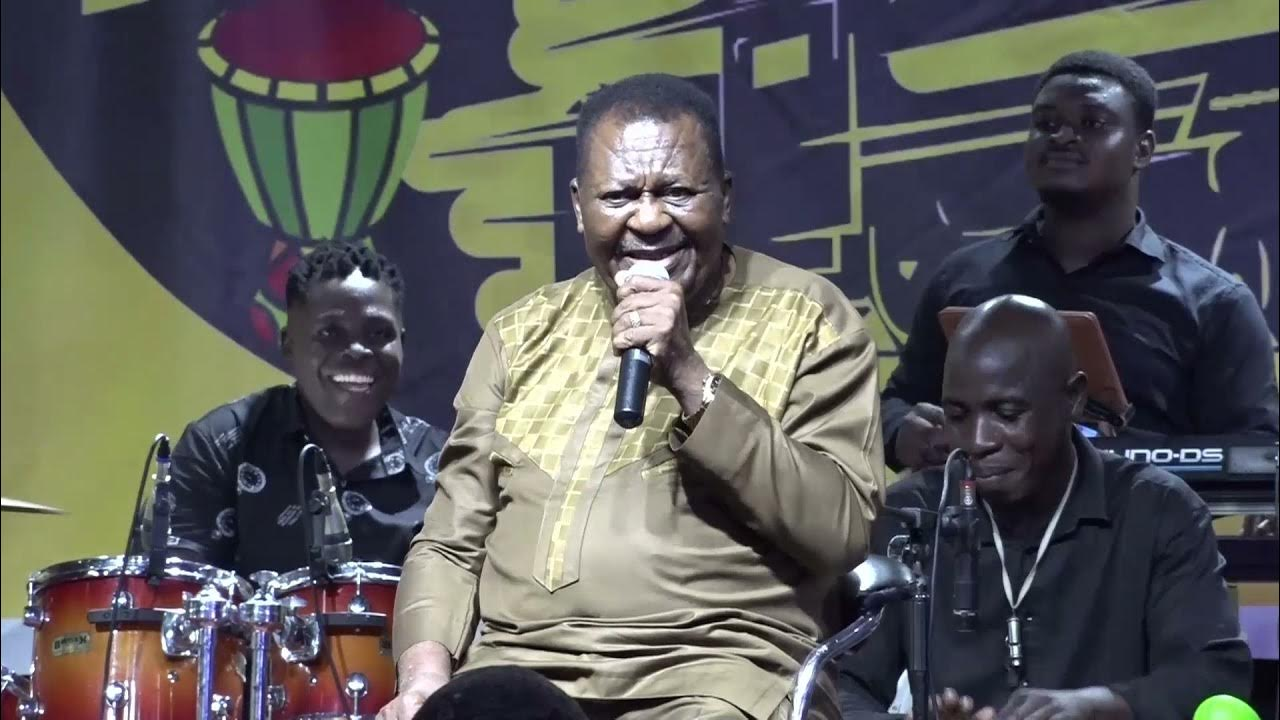
Long before Ghanaian music became a global phenomenon, before Afrobeats dominated international charts and before musicians could promote songs instantly through TikTok, YouTube and Instagram, Ghana had a generation of highlife musicians who entertained, educated and documented society through music.
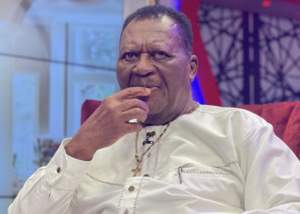
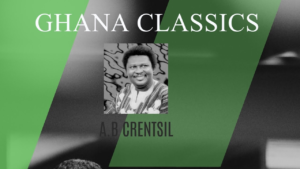
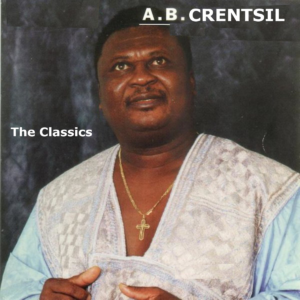
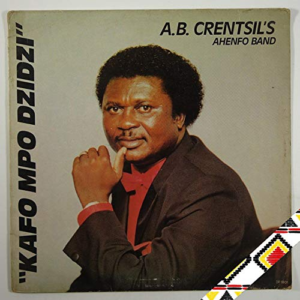
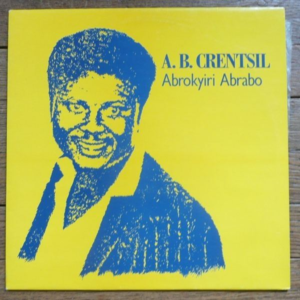
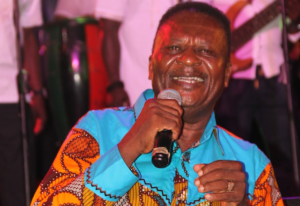
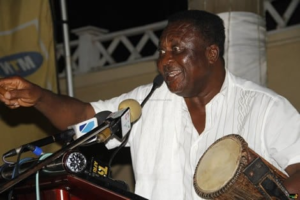
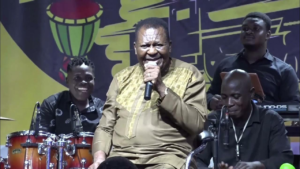
One of the most remarkable among them was A.B. Crentsil, a musician whose name was once synonymous with Ghanaian highlife.
For decades, his songs could be heard at parties, drinking spots, weddings, funerals, homes and social gatherings across the country. He had a remarkable ability to transform ordinary Ghanaian experiences into memorable songs.
Today, however, many young Ghanaians know his music without necessarily knowing the man behind it.
Who Was A.B. Crentsil?
A.B. Crentsil was born Alfred Benjamin Crentsil on January 25, 1943, in Prestea in the Western Region, and became one of the prominent figures in Ghana’s highlife tradition.
He rose to prominence during a period when live bands were the heartbeat of Ghana’s entertainment industry. Unlike today’s musicians, who can record a song in a studio and distribute it worldwide within minutes, musicians of Crentsil’s generation depended heavily on live performances, record production, radio airplay and word-of-mouth promotion.
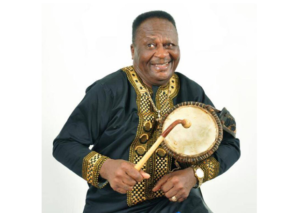
He developed a unique musical identity built around highlife rhythms, humour, storytelling and social commentary.
A major reason Crentsil became so popular was his ability to sing about things ordinary people could relate to.
His songs touched on love, relationships, marriage, money, family, social behaviour, temptation, politics and everyday struggles.
Rather than making his music unnecessarily complicated, he often used simple language and situations familiar to his audience.
That made his songs easy to remember and sing along to.
Some of His Best-Known Songs
Among the songs most strongly associated with A.B. Crentsil is “Angelina,” one of the enduring highlife songs of his career.
The song became a major part of Ghana’s popular music culture and helped cement Crentsil’s reputation as an artiste who could combine humour, storytelling and infectious rhythms.
His other widely remembered recordings include “Juliana,” “Moses,” “Atia,” “Obuoba,” “Papa Samo,” “Akpeteshie,” “Adwoa Yankyera,” “I Don’t Know Why,” and other songs that formed part of his extensive highlife catalogue.
His repertoire was much larger than the few songs that continue to receive occasional radio play today.
“Angelina” and the Crentsil Sound
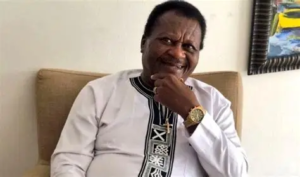
“Angelina” remains particularly important when discussing Crentsil’s legacy.
The song demonstrates several characteristics that made his music distinctive: an entertaining storyline, a memorable rhythm and lyrics that connected with everyday listeners.
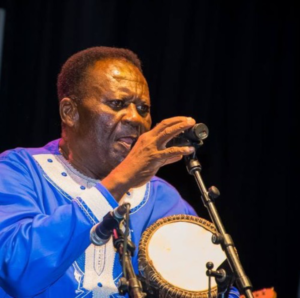
Crentsil understood that a highlife song did not have to be complicated to be powerful.
A simple story, when combined with the right rhythm and delivery, could become a national favourite.
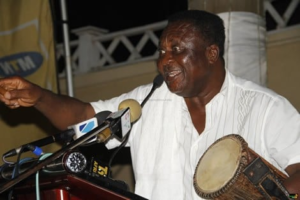
Crentsil was not simply making music for people to dance to.
Like many great Ghanaian highlife musicians, he used music to comment on society.
His songs could poke fun at human behaviour, discuss relationships or highlight social problems.
This made his music something of an informal record of Ghanaian society.
Listening to older highlife recordings today can therefore reveal how people lived, spoke, loved, argued and interacted with one another several decades ago.
The World That Created A.B. Crentsil
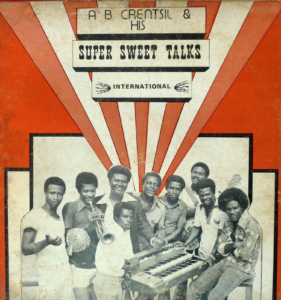
Crentsil’s career belongs to an era when Ghanaian musicians were often inseparable from live bands.
Musicians rehearsed together, travelled to different communities and performed for hours.
There was no social media campaign to announce a new single.
There were no streaming numbers to determine whether a song was successful.
A musician had to win over the audience directly.
The relationship between the band and the crowd was therefore extremely important.
Crentsil’s ability to entertain audiences helped him remain relevant for many years.
One of the most interesting things about Crentsil’s music is that it was not restricted to one particular age group.
Older Ghanaians grew up with his songs, while younger people encountered them through parents, parties, radio programmes and social gatherings.
Some of his songs eventually became cultural references.
Even people who may not have followed his career closely could recognise some of his melodies.
That is the mark of an artiste whose music has entered popular culture.
Why His Music Should Be Preserved
The decline in the popularity of older Ghanaian music presents a serious cultural challenge.
Many recordings from the country’s highlife era are not easily accessible on modern streaming platforms.
Some songs can only be found through old vinyl records, cassettes, private collections, radio archives or recordings shared by enthusiasts.
This means that Ghana could potentially lose part of its musical history if the recordings are not properly preserved and digitised.
Crentsil’s catalogue deserves particular attention because it represents a significant period in the development of Ghanaian popular music.
A.B. Crentsil’s Place in Ghanaian History
When the history of Ghanaian music is written, A.B. Crentsil should not be remembered simply as the man who sang “Angelina.”
He was much more than one hit song.
He was a storyteller, entertainer, bandleader and chronicler of Ghanaian life whose career spanned generations.
His music captured a Ghana that is gradually changing.
The language, social situations, humour and musical arrangements found in his recordings provide today’s listeners with a window into an earlier Ghana.
The Forgotten Question
Perhaps the biggest question is not whether A.B. Crentsil was successful.
He clearly was.
The bigger question is whether Ghana is doing enough to ensure that musicians like him remain known to future generations.
Today’s young artistes are building the next chapter of Ghanaian music.
But every new chapter needs the pages that came before it.
A.B. Crentsil was one of those important pages.
His music deserves to be heard again—not only as nostalgia, but as part of Ghana’s cultural history.
Some A.B. Crentsil songs worth rediscovering
Angelina
Juliana
Moses
Atia
Obuoba
Papa Samo
Akpeteshie
Adwoa Yankyera
I Don’t Know Why
These songs offer only a glimpse into a much larger catalogue that deserves renewed attention from music historians, radio stations, streaming platforms and younger Ghanaian listeners.
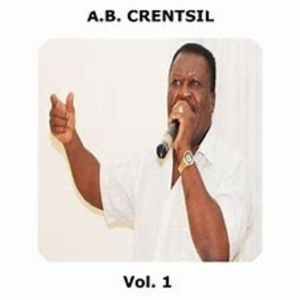
A.B. Crentsil may belong to an older generation, but his music remains part of the Ghanaian story.
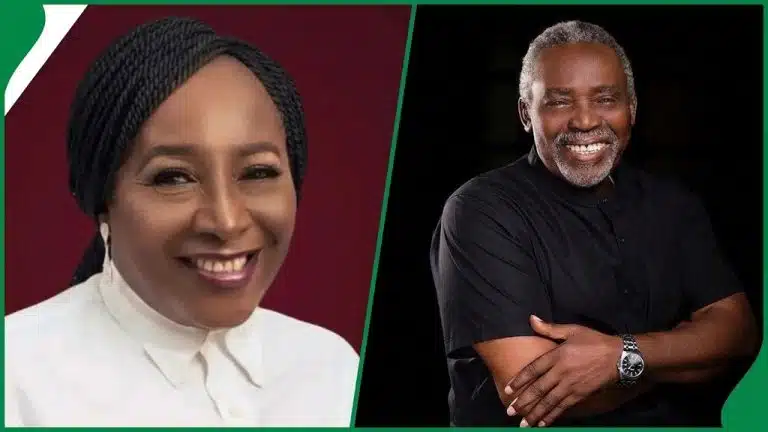
Veteran Nollywood actress Patience Ozokwor has expressed deep concern over the health condition of her colleague, Olu Jacobs, while reflecting on the loss of prominent figures in the Nigerian film industry.
Olu Jacobs’ wife, veteran actress Joke Silva, revealed in 2021 that her husband had been living with dementia with Lewy bodies (DLB), a progressive degenerative brain disease.
Speaking in an interview with Femi Babs TV on YouTube, Ozokwor said Olu Jacobs’ condition saddens her and is something she finds difficult to think about.
The veteran actress also spoke about the thought of losing fellow actor Pete Edochie, admitting that she sometimes imagines how devastated she would feel if he were to pass away before her.
Ozokwor recalled the emotional pain she experienced following the deaths of actors Sam Loco and John Okafor, popularly known as Mr Ibu.
According to her, she deeply values the company and relationships she shares with people, making it particularly difficult for her to deal with the death of colleagues.
“I keep imagining what it would feel like if Pete Edochie passed away before me. I feel so bad about Olu Jacobs’ situation and don’t want to think about it,” she said.
“I cherish people’s company so much. When Sam Loco died, I cried like a baby because he was good with comedy and we were always doing comedy together. I couldn’t fathom his death. It took a lot from me.
“When Ibu died, I felt the same way, but I was controlling myself because I was getting older. When Sam Loco died, I was younger. I was trying to play on my age.”
Source:NijaNews.Com

Ghanaian socialite Efia Odo has strongly criticised a group of women featured on a viral podcast after they advised young women to consider relationships with married men.
The panelists reportedly argued that married men could serve as “destiny helpers”, suggesting that women should not hesitate to engage with them when the opportunity arises.
One of the panelists justified the advice by saying opportunities do not come often and should be embraced when they appear.
“There is a saying that opportunity comes but once. So, when certain opportunities come to your door, grab it with your whole heart.”
She added that some women are destined to meet only one good man in their lifetime.
“Listen, some women are destined to meet one good man. The entire life that you come to spend on this earth, there is just one good person that will come your way.”
The panelist further suggested that some women may eventually meet wealthy or “countless good men,” but if the right opportunity comes through a married man, they should take it.
“Some too will be fortunate to meet countless good men. So, sweetheart, if for you, your good man is married, and then you feel that you want to fit in life, we are suffering. We are praying to God to help us. God can’t come down from heaven to come and help you. Fortunately, yours came through a married man; grab it.”
The comments have sparked widespread outrage online, with Efia Odo leading criticism of the advice.
In a post on X, Efia Odo blasted both the media platform and the panellists, describing the advice as harmful and unnecessary.
“You can tell when someone is speaking from experience. I see why they say women are their worst enemies, cuz why would you give such advice?” she said.

President of the Foundation of Concerned Arts Professionals (FOCAP), Kojo Preko Dankwa has called for President John Dramani Mahama to be officially made an ambassador for Ghana’s creative arts sector, citing his strong interest in the industry and his efforts to promote and support creatives.
According to Preko Dankwa, President Mahama’s frequent references to creative works, comedians, skits, films and other forms of entertainment at public events demonstrate his deep understanding of and affection for the creative sector.
Speaking to KPDonline.com, He said the President often uses public platforms to demonstrate his knowledge of developments within the creative industry, including content he encounters on social media and films he watches.
Preko Dankwa believes these actions are evidence that Mahama has a genuine interest in the sector and could therefore play a larger role in promoting Ghanaian creativity both locally and internationally.
He further pointed to the President’s manifesto commitments and his reported support for veteran actors, musicians and other industry personalities as indications of his desire to improve the welfare of people in the creative space.
A major issue highlighted by Preko Dankwa was the establishment and financing of the Creative Arts Fund.
He argued that although previous governments had made promises concerning the fund, Mahama’s administration had gone further by providing what he described as GH¢40 million in seed funding, with an indication that additional funding could be provided if the initial allocation was properly utilized.
Preko Dankwa said this, in his view, distinguishes Mahama’s approach from previous administrations that promised support for the sector but failed to put money into the fund.
He therefore appealed to the creative industry to consider making Mahama an official ambassador for creative arts.
“If we make him the creative arts ambassador,” he argued, the President could use his position and international engagements to create more opportunities for Ghanaian creatives.
Preko Dankwa also expressed concern that when President Mahama travelled to Jamaica, there was no creative industry representative among the delegation.
He suggested that future presidential delegations could include musicians, writers, sculptors, filmmakers and other creatives who could help promote Ghana’s cultural identity and strengthen the country’s creative diplomacy.
He cited names such as Stonebwoy and Shatta Wale, as well as other creatives, arguing that Ghana has a wide range of talents who could help project the country internationally.
Preko Dankwa further praised what he described as increased recognition of creatives under the current administration, including the appointment of creative professionals to positions within Ghana’s cultural and diplomatic space.
He referenced individuals such as Akofa Edjeani, Dr Abdela and Selom Kwakye, who, according to him, have been given opportunities to represent Ghana abroad.
He also cited the appointment of a creative arts ambassador to Spain as another indication of the administration’s recognition of the sector’s potential in promoting the Ghanaian brand.
Preko Dankwa compared his proposal to former President Nana Addo Dankwa Akufo-Addo’s role in promoting the Beyond the Return initiative, saying the former president personally championed the programmer on international platforms and helped attract members of the diaspora to Ghana.
He believes Mahama could similarly use the presidency to champion the creative sector and ensure that its challenges receive sustained attention.
Among the areas he wants the President to priorities are insurance, housing, welfare and the implementation of policies contained in the government’s manifesto for creatives.
Preko Dankwa ultimately called for Mahama to take on the role of creative arts ambassador in order to help establish stronger structures and systems that could continue functioning even after his administration leaves office.

GTA CEO Maame Efua Houadjeto Honoured at Africa Brain Bank Annual Summit

Conduct thorough, expeditious probe into GH¢70,000 memo — Bagbin urges OSP

Oil Prices rise as prolonged Middle East conflict fuels supply worries



-

 Entertainment1 week ago
Oswald Okaitei Explains the Real Vision Behind Ghana’s Black Star Experience
-
 General News2 weeks ago
GES Urged to Review Student Sexual Misconduct Rule Over Alleged Discrimination Against Boys
-
 General News2 weeks ago
Oti Region Youth Endorse John Boadu, Cite Experience as Key to NPP Victory
-

 Entertainment1 day ago
Mahama Is First President to Put GH¢40m Seed Money into Creative Arts Fund: Kojo Preko Dankwa
-

 General News2 weeks ago
Zanetor and Ayariga Face Parliamentary Vetting Today
-
 General News2 weeks ago
Police Suspend Concrete Mixer Truck Operations in Accra, Tema From August 28
-
 General News2 weeks ago
President Mahama makes further ministerial changes
-
General News2 weeks ago
GES Opens WAEC Portal for 2026 School Placement Data Upload