
Politics
Wontumi Campaign throws full weight behind John Boadu — declares new unity drive for NPP

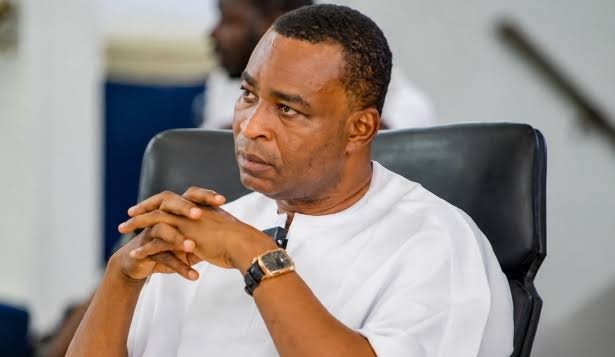
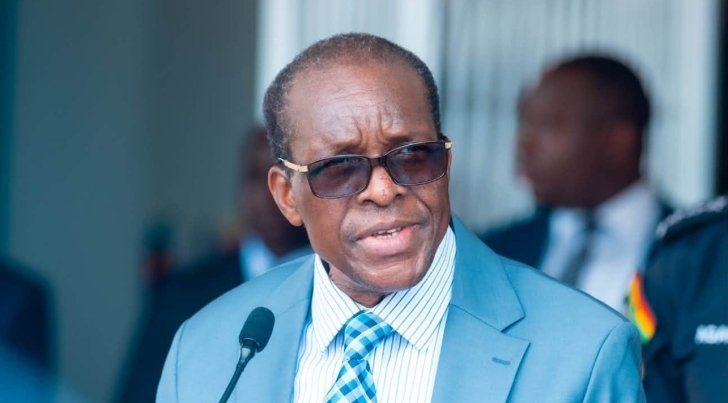
Speaker of Parliament Alban Bagbin has called on the Office of the Special Prosecutor (OSP) to conduct a thorough and expeditious investigation into the controversial GH¢70,000 memorandum circulating in the public domain.
The document, which has generated considerable public attention, has raised questions about an alleged payment reportedly connected to the work of Parliament’s Appointments Committee.
Speaker Bagbin has urged the OSP to establish the facts surrounding the document and determine its authenticity, as well as the circumstances under which it was produced and circulated.
The Speaker’s call comes amid competing claims over the controversial memorandum, with questions being raised about whether the document is genuine or was fabricated.
According to Parliament, the matter is serious enough to warrant a full investigation, particularly given the potential implications for the reputation and integrity of the parliamentary institution.
Bagbin has therefore welcomed the OSP’s involvement and called for the investigation to be conducted thoroughly while ensuring that the process is completed without unnecessary delay.
The investigation is expected to establish the origin of the memorandum, verify its contents and determine whether any wrongdoing occurred.
Parliament has also indicated its readiness to cooperate with the OSP and other relevant investigative authorities to help establish the truth.
The controversy has meanwhile continued to attract public interest, with calls for the facts to be established before any definitive conclusions are drawn.
The outcome of the OSP’s investigation is therefore expected to provide clarity on the disputed GH¢70,000 memorandum and determine whether there is any basis for further action.
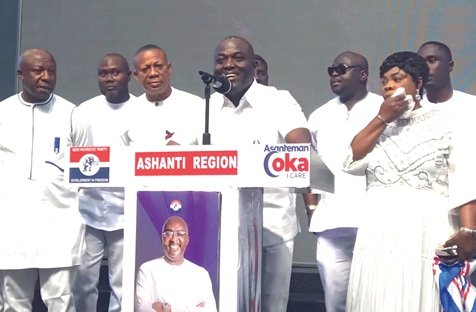
COKA has pledged to run an all-inclusive administration, promising to build a leadership structure where every stakeholder has a voice and an opportunity to contribute.
Speaking on his leadership vision, COKA said inclusiveness would be a major pillar of his administration, with a focus on unity, participation and collective decision-making.
According to him, leadership should not be concentrated in the hands of a few individuals. Instead, all relevant stakeholders must be given the opportunity to participate and contribute meaningfully to the administration.
His commitment comes amid growing discussions about the need for broader participation and stronger collaboration within the political space.
COKA believes an all-inclusive approach will help strengthen unity, improve cooperation and create an environment where different perspectives can be considered in making important decisions.
He further stressed the importance of bringing people together rather than creating divisions, arguing that collective effort is essential to achieving meaningful progress.
The pledge has therefore positioned inclusiveness as a key component of COKA’s proposed administration, as he seeks to convince stakeholders of his leadership approach.

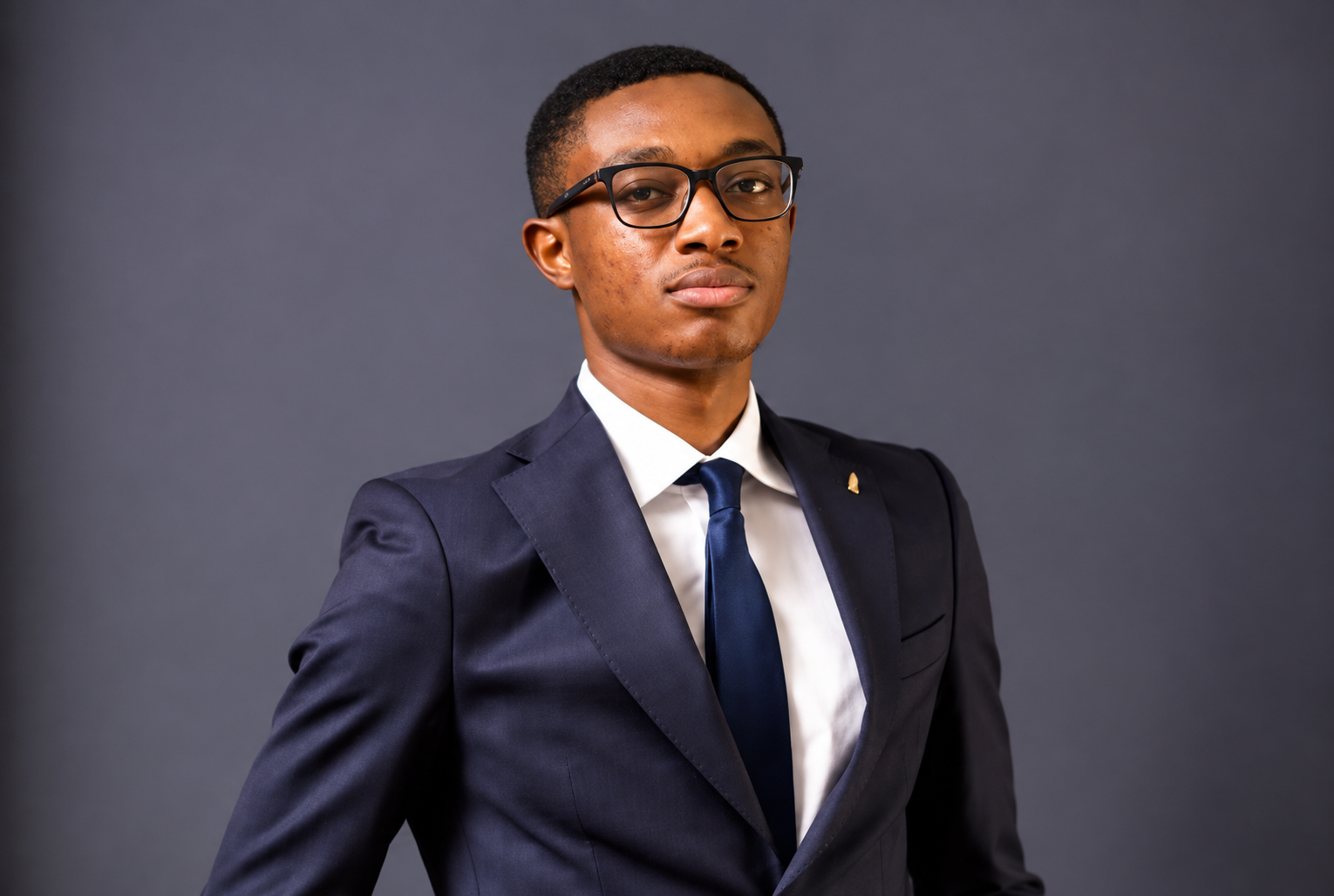
Dear Dr. Ato Forson,
A medium-scale hard-rock mining concession may not cost more than $200 million to acquire. Three such assets , enough to establish genuine, formal, mechanized production, would cost in the neighborhood of $600 million. This is not a marginal sum, but neither is it an unreachable one, by the current standards of moving billions of dollars a year through a single gold-purchasing apparatus called Goldbod. And that is precisely what makes the choice actually so difficult to explain on economic grounds alone.
We have directed billions toward the purchase of galamsey gold that is degrading our water bodies and our arable lands in real time. We have, in effect, constructed a subsidy for the very activity we claim to be formalizing, and we have done so under the banner of reserve accumulation and currency stability. I do not doubt the sincerity of that objective. I doubt very much whether this is the instrument that achieves it at a cost the nation can actually bear, and whether the accounting being used to justify it reflects the true price being paid.
It is worth asking what else that money could have built. More than 1,200 schools in this country still hold class under trees. Millions of our citizens live in conditions the data insists on calling multidimensional poverty, a term with the unfortunate property of making deprivation sound abstract.
Dr. Ato, there is no version of development economics, however heterodox, in which capital allocated to subsidizing informal ore extraction outranks capital allocated to a child’s first classroom. Economic history will offer only little comfort to those who believe unprocessed mineral exports are a foundation for prosperity. No economy has ever ascended to durable, high-income status on the strength of raw commodity exports alone.
South Africa may be the standing rebuke to that hope. A country with among the deepest mineral endowments on the continent, and still contending with levels of structural inequality that a century of extraction did remarkably little to resolve. Wealth pulled from the ground rather proved a persistent tendency not to reach the people standing on it.
Australia, Canada, and China each extract far more gold annually than we do. Not one of them would describe its economy, or permit itself to be described, as a gold exporter. Mr. Minister, that is the empirical signature of diversification and it is proof that when a nation’s economic identity collapses into a single raw commodity, what you are observing is not strength but the absence of it. It is a structural fragility being readied for a season.
Real, cumulative national development has always rested THE CAPABILITIES of a nation’s people. India did not become a $200B/year exporter of IT and software services by discovering a mineral. It became one by investing, deliberately and over decades, in human capital, in education, in the institutions that let talent compound. That is the harder path. It is also the only one with a track record of arriving anywhere durable.
To degrade our rivers and our farmland for a short-term foreign exchange gain is not a defensible trade-off, least of all when better alternatives sit in plain view, unfunded. So I put the question plainly, because I believe it deserves a plain answer.
Is this a failure of quantitative rigor in how the policies are designed, or is it simply that our leadership lacks the patience for genuine national development demands? Because on the numbers alone, this does not add up and a policy that does not add up is not a strategy but simply a bet. It is a bet made with our country’s patrimony, on someone else’s watch. Don’t supervise this.
Respectfully,
Hubert
Investment Research Analyst
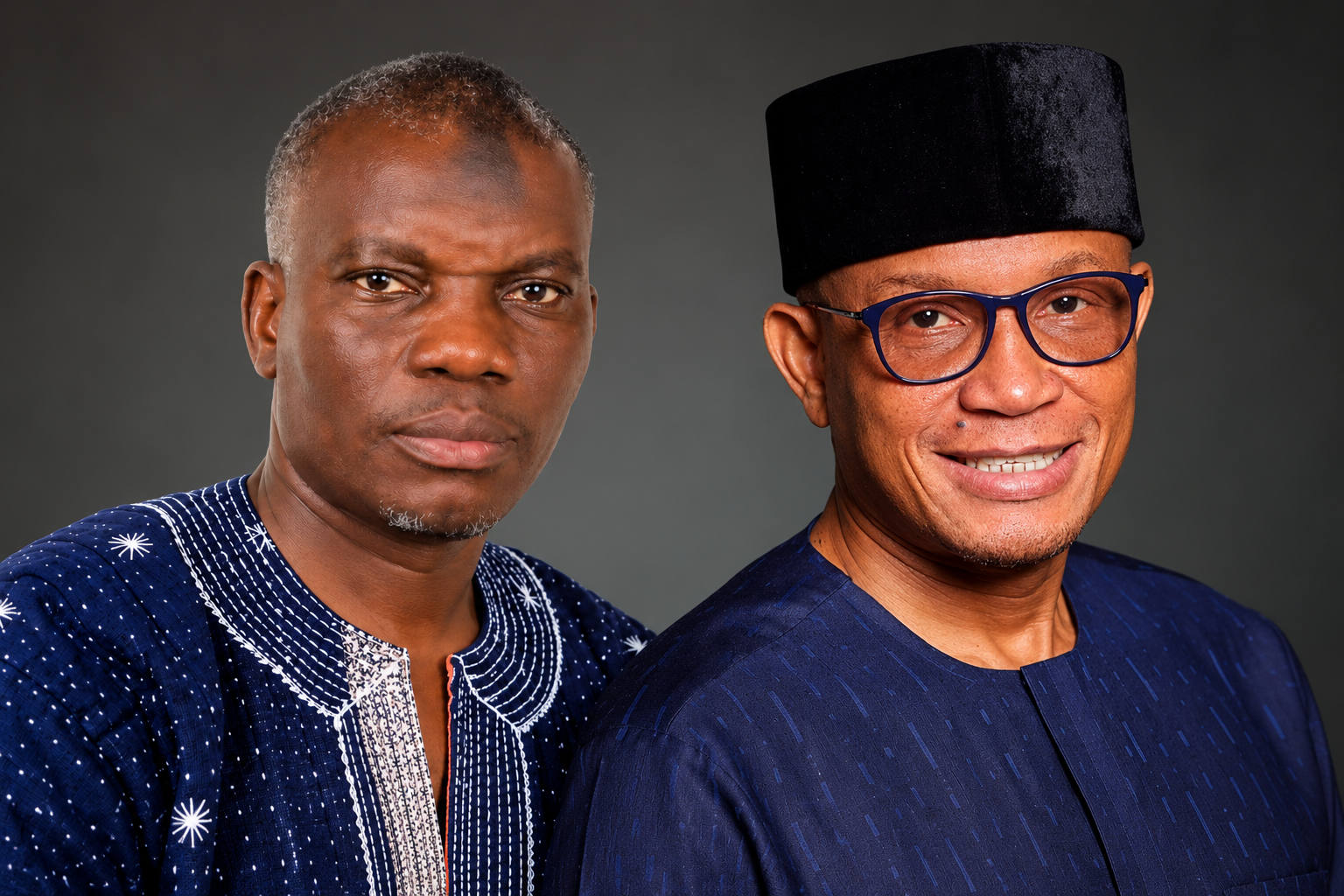
National Democratic Congress (NDC) Director of Elections and IT, Mahdi Gibril, has launched a strong response to comments attributed to former New Patriotic Party (NPP) minister, Mustapha Hamid, over the NDC’s growing attraction for academics and professionals.
In an interview on Kessben Maakye show in Accra, Gibril argued that the NPP’s criticism of academics who have joined or supported the NDC reflects what he described as a lack of respect for intellectuals within the party.
According to him, the NPP appears to assume that they are intellectuals but they are not.
They presumed people associated with the NDC do not read or possess the intellectual capacity to engage in serious political discourse.
He questioned whether the NDC, during its earlier years in government, appointed only people from the streets as ministers, arguing that the party has consistently provided opportunities for young people and professionals to rise through the ranks.
Gibril cited the emergence of young NDC figures, including Sammy Gyamfi, Adudzi Tamakloe, Kombat and other professionals, as evidence of what he described as the party’s willingness to give young people opportunities to serve both in the party and government. He added that the aforementioned young people would never have gotten the opportunity they now have to serve if they were in NPP in spite of their distinction in government.
He further argued that political appointments under the NDC are not necessarily determined by family background or longstanding party connections.
“If you don’t have a birth certificate with a barcode, you will never enjoy any position in the NPP government,” Gibril is quoted as saying, no wonder they queried Hon. Okudzeto Ablakwa during his vetting as deputy minister of information in 2008 , if he has ever gotten working experience, what he considers excessive scrutiny of individuals seeking opportunities to work in government.
He also questioned the performance of NPP members with academic credentials who served in government, asking what their educational qualifications ultimately translated into during their tenure.
In one of his sharpest remarks, Gibril stated: “Education does not erase stupidity.”
He added that, in his view, the most ignorant person is one who believes they are educated but lacks genuine knowledge.
Gibril further accused the NPP of allowing “ignorance and arrogance” to influence its political approach, questioning whether the party expected every Ghanaian voter to hold a university degree before being considered capable of making political choices.
He also warned young people against blindly following Hamid’s political outlook, suggesting that doing so could limit their opportunities to excel.
The NDC official concluded with another jab at the NPP, arguing that if the party wants to be mischievous they don’t speak in English but in Twi so they can be loud.

Conduct thorough, expeditious probe into GH¢70,000 memo — Bagbin urges OSP

Oil Prices rise as prolonged Middle East conflict fuels supply worries

We’ll run an all-inclusive administration — COKA pledges as he outlines leadership vision



-

 Entertainment1 week ago
Oswald Okaitei Explains the Real Vision Behind Ghana’s Black Star Experience
-
 General News2 weeks ago
GES Urged to Review Student Sexual Misconduct Rule Over Alleged Discrimination Against Boys
-
 General News2 weeks ago
Oti Region Youth Endorse John Boadu, Cite Experience as Key to NPP Victory
-

 Entertainment1 day ago
Mahama Is First President to Put GH¢40m Seed Money into Creative Arts Fund: Kojo Preko Dankwa
-

 General News2 weeks ago
Zanetor and Ayariga Face Parliamentary Vetting Today
-
 General News2 weeks ago
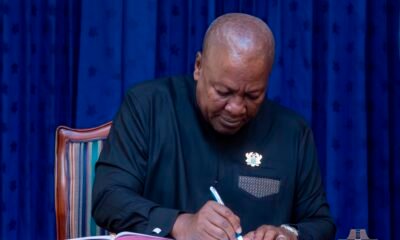
President Mahama makes further ministerial changes
-
 General News2 weeks ago
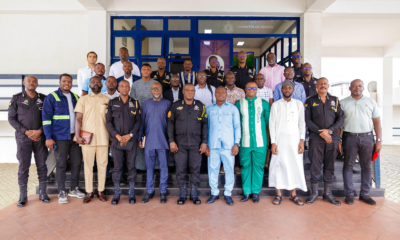
Police Suspend Concrete Mixer Truck Operations in Accra, Tema From August 28
-
General News2 weeks ago
GES Opens WAEC Portal for 2026 School Placement Data Upload