
General News
Iran War Has Led to U.S. Munitions Shortfalls, Pentagon Inspector General Confirms

By Angel No Lie | KPD Online | September 16, 2026
WASHINGTON — A new Pentagon inspector general report has confirmed that the U.S. military’s war with Iran has produced strategic shortages in some munitions inventories and exposed bottlenecks in the American defense-industrial base responsible for replacing them.


What the Pentagon watchdog found
The report identifies several areas where the defense-industrial base faces difficulty increasing production quickly.
Among the persistent constraints are:
- Solid rocket motor production
- Availability of high-grade explosives and propellants
- Recruitment of skilled manufacturing workers
- The time required to expand production capacity
- Procurement and production lead times for sophisticated weapons
The Pentagon is working to streamline procurement and production processes and to stockpile critical materials and components, according to the inspector general. However, the report cautions that expanding the industrial base requires significant lead time.
The findings do not mean that the U.S. military has run out of ammunition. Rather, they indicate that inventories of certain weapons have fallen below levels considered strategically desirable and that rebuilding them will take time.
Advanced missile inventories under pressure
The issue is particularly significant for expensive precision weapons and missile-defense interceptors.
The Congressional Budget Office, in a separate report released September 15, estimated that the United States had spent about $38 billion on the conflict through August 1. CBO estimated that replacing expended munitions would cost approximately $21.7 billion, including about $13.1 billion for interceptors and $7.3 billion for land-attack cruise missiles.
CBO also said the United States had used between one-half and two-thirds of its inventory of certain interceptors since June 2025, taking into account both the Iran conflict and other operations. It estimated that rebuilding those inventories could take at least five years.
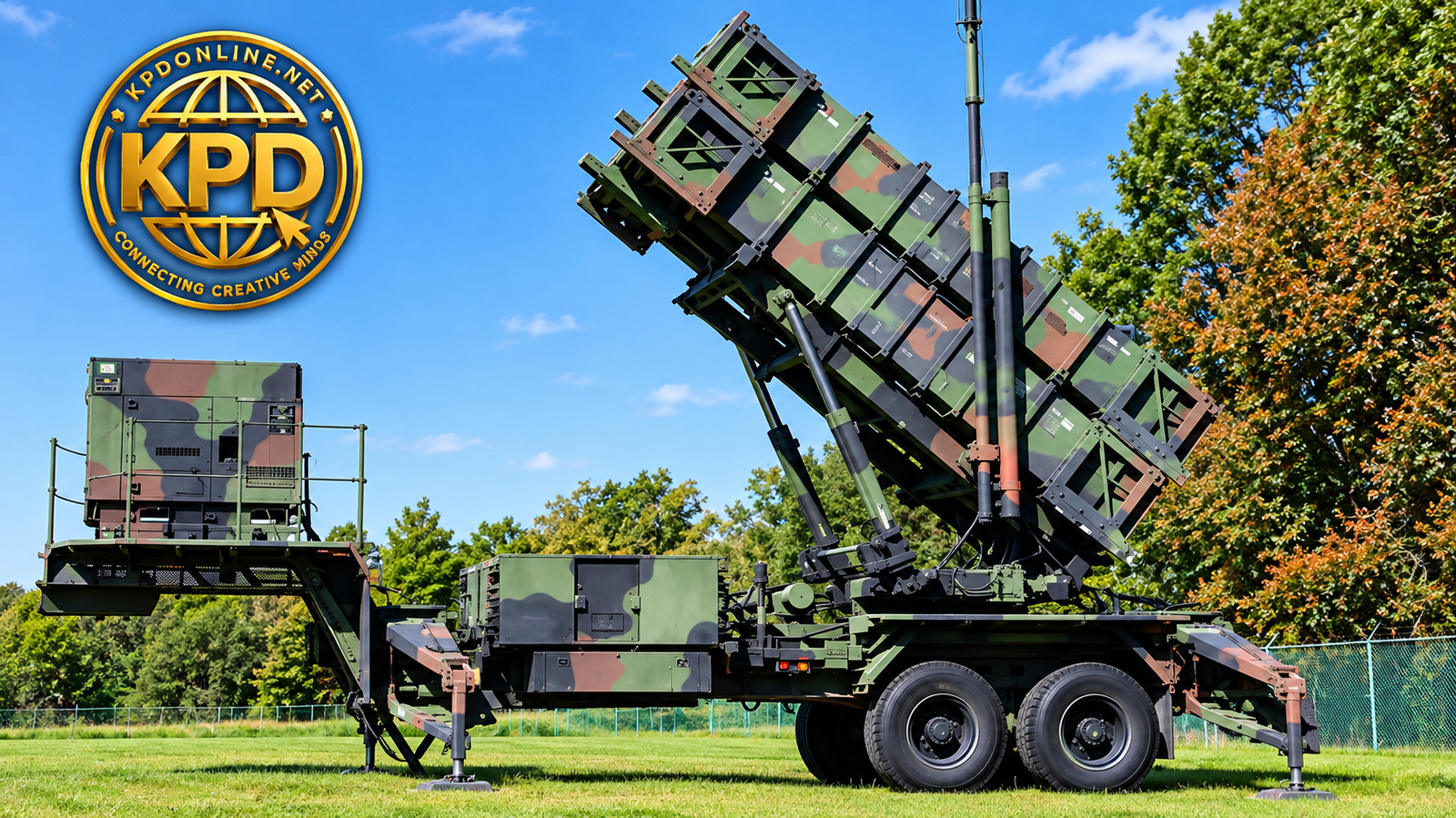
The assessment is particularly relevant to systems such as Patriot and THAAD interceptors, which are designed to defend against ballistic and other missile threats, as well as long-range weapons including Tomahawk cruise missiles.


War has also damaged U.S. military infrastructure
The inspector general’s report goes beyond weapons inventories.
Iranian attacks damaged or destroyed hundreds of buildings and other structures at U.S. military installations across the Middle East, according to the watchdog’s assessment. Facilities in Kuwait, Bahrain, Qatar, the United Arab Emirates, Saudi Arabia, Iraq, Oman and Jordan were among those affected.
The report also recorded damage to U.S. diplomatic facilities in Iraq, Kuwait, Saudi Arabia and the UAE, with reported damage of approximately $184 million.
Military equipment was also lost or damaged. The report documented damage involving aircraft including F-15E fighters, an F-35A, KC-135 refueling aircraft and helicopters, while up to 30 MQ-9 Reaper drones were reported destroyed or damaged.


A broader cost is emerging
The munitions shortage is part of a wider financial and logistical burden.
The CBO’s September 15 assessment put the Defense Department’s cost of the conflict at approximately $38 billion through August 1. It said monthly costs could run between roughly $2 billion and $3 billion, depending on the intensity of combat.
CBO also noted that its estimate does not include every federal cost associated with the conflict and that the Defense Department did not provide requested information to the budget office, meaning the estimates carry uncertainty.
The report’s assessment of the munitions drawdown is therefore separate from the Pentagon inspector general’s June 30 accounting: the IG reported $33.4 billion in costs through June 30, while CBO subsequently estimated approximately $38 billion through August 1 using its own methodology.
Pentagon response and continuing debate
The findings have generated renewed debate over the condition of America’s weapons stockpiles.
President Donald Trump has publicly maintained that the United States has substantial weapons supplies and that production is being increased. Pentagon officials have also disputed descriptions suggesting that the U.S. military is unable to conduct required operations. Reuters reported that a Pentagon spokesperson said the military had what it needed to conduct strikes when directed.
The inspector general’s finding is more specific: certain inventories have experienced strategic shortfalls, while the defense industry faces constraints in replacing them.
Those positions are not necessarily mutually exclusive. A military can retain the ability to conduct current operations while simultaneously having inventories below desired levels or facing a lengthy process to restore them.
Why the findings matter
The reports raise questions about how quickly the United States can rebuild sophisticated weapons inventories after a high-intensity conflict.
The issue is particularly important because many advanced weapons cannot simply be replaced by increasing orders overnight. Production depends on specialized factories, components, explosives, propulsion systems, skilled labor and lengthy manufacturing and testing processes.
CBO’s assessment indicates that the consequences could extend beyond the Iran conflict, because lower interceptor inventories reduce the margin available for responding to another major missile threat while production catches up.
At the same time, the Pentagon says it is working to accelerate procurement and expand production capacity.
Key figures
| Measure | Reported figure |
|---|---|
| Pentagon IG reporting period | Feb. 28–June 30, 2026 |
| Operation Epic Fury cost through June 30 | $33.4 billion |
| Munitions expenditure through June 30 | $22.3 billion |
| CBO estimated DoD cost through Aug. 1 | $38 billion |
| CBO estimated munitions replacement cost | $21.7 billion |
| Potential ongoing monthly cost | $2–3 billion |
| Estimated rebuilding period for certain depleted interceptor inventories | At least 5 years |
The bottom line
The Pentagon inspector general’s report provides the clearest official confirmation so far that the Iran conflict has drawn down U.S. munitions inventories and exposed weaknesses in the capacity to rapidly replace some advanced weapons.
It does not establish that the U.S. military is incapable of continuing operations. Instead, it documents a different problem: the gap between wartime consumption and the speed at which the defense industry can rebuild certain inventories.
The Pentagon’s challenge now is to replenish those stocks while maintaining current military commitments and addressing the industrial bottlenecks identified by its own watchdog.
Source documents: The primary reference for this report is the Department of War Office of Inspector General’s Operation Epic Fury Lead Inspector General report to Congress, covering the period through June 30, 2026. Official Pentagon Inspector General report The Congressional Budget Office’s subsequent cost assessment was published September 15, 2026. Congressional Budget Office — Estimating the Cost of Combat Operations Against Iran
Image note: For publication, use properly licensed editorial or U.S. government/DVIDS photographs and retain the original photographer/agency credit.














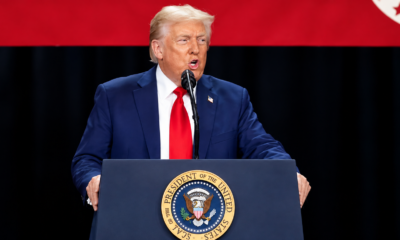


By Angel No Lie | KPD Online | September 16, 2026 | Caracas
CARACAS, Venezuela — Venezuelan opposition leader María Corina Machado is considering returning to Venezuela, but the timing of her homecoming has become a sensitive issue as the administration of U.S. President Donald Trump appears reluctant to see her return immediately, according to opposition sources and political analysts cited by Reuters.


A complicated return
Machado’s possible return comes at a pivotal moment for Venezuela. Former President Nicolás Maduro was removed from power in January, after which the United States backed an interim political arrangement led by Delcy Rodríguez.
Washington has subsequently supported talks intended to reshape Venezuela’s political system ahead of eventual elections. Machado’s political movement, however, has not been included in those negotiations.

The situation has left Machado facing a difficult political calculation: returning could allow her to rebuild a direct presence inside Venezuela, while doing so without U.S. backing could create friction with Washington and the interim authorities.
Reuters reported that U.S. officials have privately encouraged Machado to delay her return, while sources familiar with her plans say she could travel first to the United States before eventually going back to Venezuela.

Machado’s political standing
Machado remains one of the most prominent figures in Venezuela’s opposition. However, Reuters reported that her approval rating among Venezuelan political figures fell from 72% in July to 53% in August, according to polling cited in its report.
The decline comes as some Venezuelans express frustration with the slow pace of political change following Maduro’s removal and uncertainty over the country’s future political arrangements.
Machado’s supporters argue that her return is important to maintaining pressure for competitive elections. Some Venezuelans interviewed by Reuters have also said they believe her presence inside the country would strengthen the opposition’s position.

Washington’s position
The U.S. position has evolved over the course of 2026.
Earlier in the year, Machado publicly said she wanted to return as soon as possible. In March, she announced plans to return within weeks, but the timetable did not materialize.
In July, a senior U.S. State Department official told Congress that Washington would not obstruct Machado’s return, while also saying that work was needed to ensure she would not be arrested when she came back.
The latest reporting indicates that the administration’s immediate concern is the effect Machado’s return could have on the U.S.-backed transition process. Reuters reported that Washington fears her presence could disrupt current efforts to establish a new political framework.
What comes next
Machado has said she wants Venezuelans to have the opportunity to choose their government through elections. The United States and Venezuela’s interim authorities, meanwhile, are pursuing their own negotiations over the country’s political future.
Her return would therefore carry significance beyond the personal decision of an exiled opposition leader. It could affect opposition coordination, negotiations with the interim government and the debate over how and when Venezuela holds elections.
For now, Machado remains outside Venezuela, with her precise timetable for returning still uncertain.

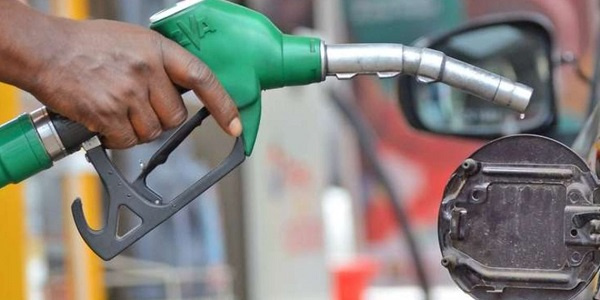
Motorists across Ghana are facing new fuel prices following the latest adjustment in petroleum product prices, with Star Oil announcing revised rates effective Wednesday, September 16, 2026.
The new prices took effect from 8:00 a.m. on Wednesday across Star Oil outlets.
Under the latest adjustment, Super petrol is selling at GH¢16.77 per litre, while diesel is priced at GH¢17.77 per litre. The company has also listed RON 95 at GH¢18.97 per litre.
The announcement by Star Oil comes after the National Petroleum Authority (NPA) increased the price floors for petroleum products for the second pricing window of September.
The NPA has raised the minimum price for petrol from GH¢14.53 to GH¢16.00 per litre, representing an increase of GH¢1.47 per litre.
The price floor for diesel has also gone up from GH¢15.60 to GH¢16.77 per litre, reflecting an increase of GH¢1.17 per litre.
For Liquefied Petroleum Gas (LPG), the minimum price has been adjusted from GH¢10.85 to GH¢10.97 per kilogramme, an increase of GH¢0.12 per kilogramme.
The NPA sets price floors for deregulated petroleum products during each pricing window. These floors serve as minimum benchmarks, while Oil Marketing Companies (OMCs) determine their pump prices based on factors including their operating costs and prevailing market conditions.
Star Oil’s latest notice confirms the prices applicable at its outlets from the stated effective time, although actual pump prices may vary among different fuel stations depending on their pricing arrangements.
The increase is expected to put additional pressure on motorists, transport operators and businesses that depend heavily on fuel. Households and commercial operators using LPG could also experience higher energy costs.
The latest domestic adjustment comes amid movements in international crude oil prices and other developments in the global petroleum market, which can affect the cost of petroleum products imported and sold in Ghana.

By Angel No Lie | KPD Online | September 16, 2026 | The Hague / Pristina
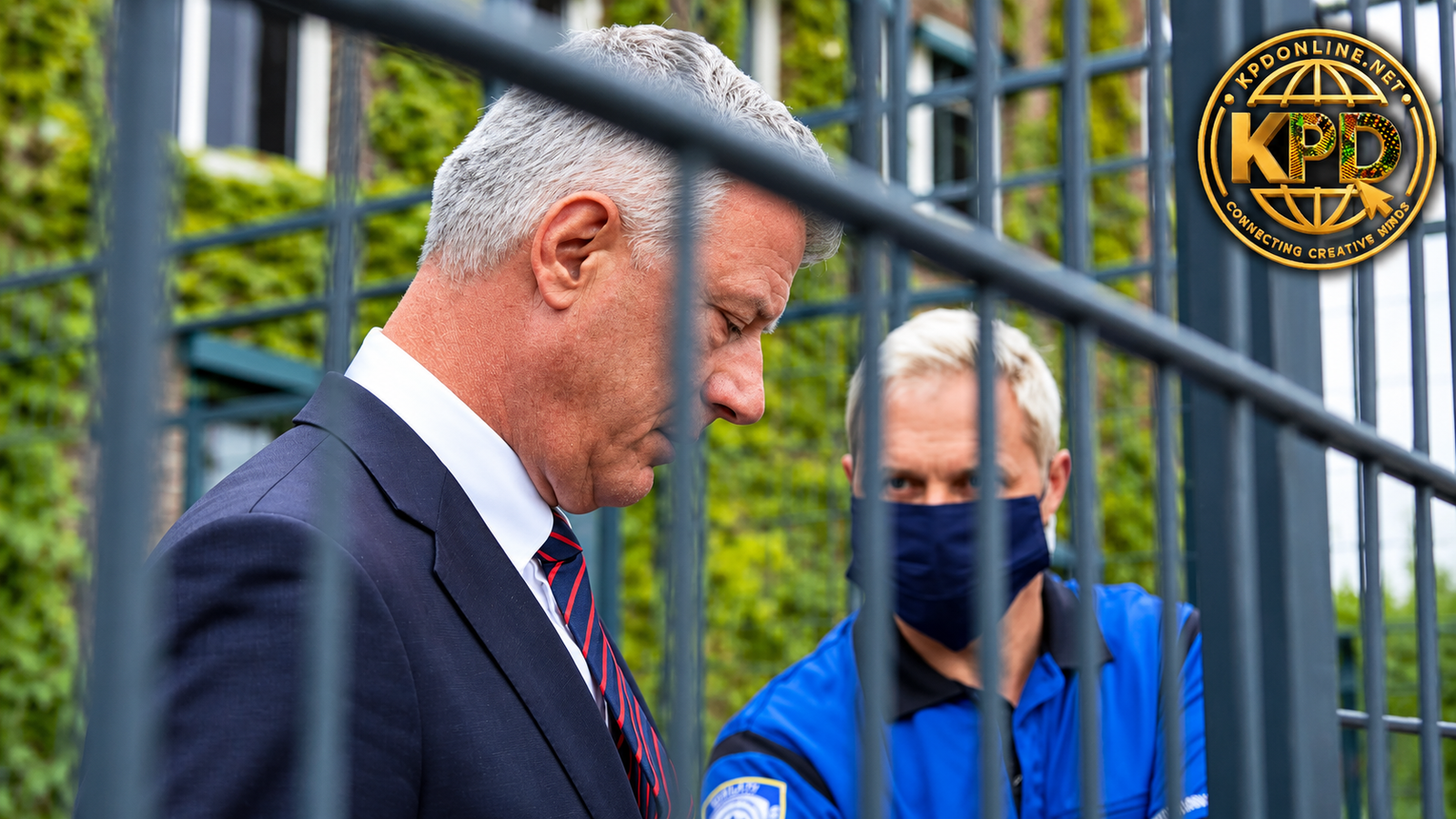
THE HAGUE, Netherlands — Former Kosovo President Hashim Thaçi has been sentenced to 25 years in prison after a Kosovo Specialist Chambers trial in The Hague found him guilty of four war crimes committed during the 1998–99 Kosovo conflict.


Court finds Thaçi criminally responsible
According to the verdict reported by Reuters, the court found Thaçi responsible for the murder of 96 people, the illegal detention of 385 people, torture involving 303 people, and cruel treatment of 49 people.
The court’s findings related to what prosecutors described as a joint criminal enterprise targeting people regarded as opponents of the KLA. Prosecutors had sought a sentence of 45 years.
However, the court acquitted Thaçi and his co-defendants of several crimes against humanity charges, citing insufficient evidence to establish those allegations to the required legal standard.

Court finds Thaçi criminally responsible
According to the verdict reported by Reuters, the court found Thaçi responsible for the murder of 96 people, the illegal detention of 385 people, torture involving 303 people, and cruel treatment of 49 people.
The court’s findings related to what prosecutors described as a joint criminal enterprise targeting people regarded as opponents of the KLA. Prosecutors had sought a sentence of 45 years.
However, the court acquitted Thaçi and his co-defendants of several crimes against humanity charges, citing insufficient evidence to establish those allegations to the required legal standard.

From guerrilla commander to Kosovo president
Thaçi emerged as one of the most prominent figures of the Kosovo independence movement during the 1990s. He was a senior figure in the KLA during the conflict with Serbian forces and later became an important participant in international peace negotiations.
He subsequently entered politics, serving as Kosovo’s prime minister before becoming president. Kosovo declared independence from Serbia in 2008.
His political career was interrupted in 2020, when he resigned as president after the Specialist Prosecutor’s Office confirmed an indictment against him. He was subsequently transferred to The Hague to face trial.

Four defendants in the case
Thaçi was tried alongside three other former senior KLA figures: Kadri Veseli, Rexhep Selimi and Jakup Krasniqi.
The Kosovo Specialist Chambers says the case concerned alleged crimes committed between at least March 1998 and September 1999 in several locations in Kosovo and in northern Albania. The indictment included allegations involving civilians and people who were not taking part in the conflict.
The trial began in April 2023. The court’s official case record says 134 witnesses testified, while evidentiary proceedings concluded in December 2025. Closing statements were held in February 2026.

Reaction in Kosovo
The verdict has generated strong reactions in Kosovo, where Thaçi remains an important figure in the country’s modern political history.
Supporters gathered in Pristina ahead of the judgment, while demonstrations were also reported following the verdict. Reuters reported that Thaçi supporters briefly clashed with police in The Hague.
For many supporters, Thaçi and other former KLA commanders remain associated with Kosovo’s struggle against Serbian rule. The proceedings have therefore been closely followed in Kosovo and neighboring Serbia, where the legacy of the 1998–99 conflict remains politically sensitive.


Thaçi expected to appeal
Thaçi has consistently denied the allegations against him. Following Wednesday’s judgment, he is expected to appeal the conviction and sentence.
The case was heard by the Kosovo Specialist Chambers, a judicial institution based in The Hague that was established to investigate and prosecute allegations of serious crimes connected to the Kosovo conflict.
The court’s judgment represents a major legal development in the long-running effort to establish individual accountability for crimes committed during and after the Kosovo war.
The verdict does not conclude the case if an appeal is filed, meaning the legal proceedings could continue before an appeals panel.
The information in this report reflects the judgment and reporting available on September 16, 2026.
By Angel No Lie
September 16, 2026 | Washington, D.C.
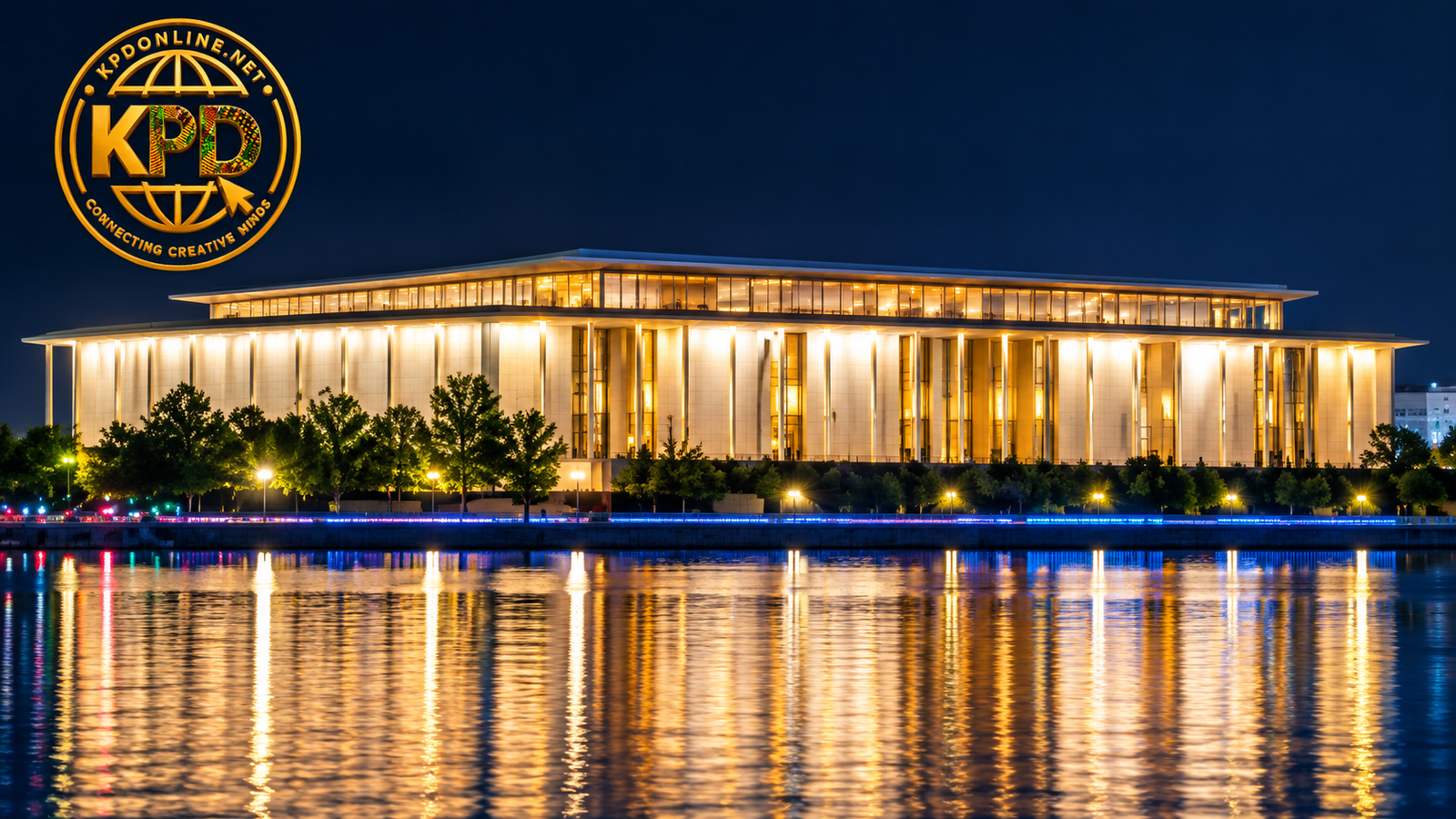
WASHINGTON, D.C. — The Kennedy Center is facing an uncertain future after its board voted to shut down most of the performing arts complex for renovations, hours after a federal judge again blocked efforts to place President Donald Trump’s name on the building.


Court blocks Trump name
The latest dispute is part of a months-long legal battle over the identity and governance of the Kennedy Center, which was established as a memorial to former President John F. Kennedy.
Judge Cooper wrote that the board could not install memorials honoring Trump or others without congressional authorization. The ruling also prevents the board from proceeding with plans to rename the plaza surrounding the center after Trump.
Trump’s name had previously been added to the building’s exterior, but workers removed it in June following an earlier court order. The façade has since remained partly covered by scaffolding and a white tarp.

Trump links renovations to naming dispute
Trump has argued that the Kennedy Center requires extensive repairs and has warned that renovation work should not proceed unless the legal dispute over his name is resolved in his favor.
According to Reuters, the proposed renovation project has a congressional allocation of about $257 million. Trump said in a social-media post that he would wait for the appeals process before allowing reconstruction and renovation work to begin.
The president has also said he has contributed $17 million to an endowment intended to support the institution.

Board votes to close
The Kennedy Center board subsequently voted to shut down most of the facility for renovations. Reuters reported that the proposed closure could last up to two years.
The board has warned that the institution is facing serious financial problems and could struggle to meet payroll and maintenance obligations. Its supporters have also pointed to deteriorating infrastructure, including a recent ceiling collapse inside the complex.
Trump has described the condition of the building as dangerous and has argued that major reconstruction is necessary.
However, the dispute over the name has complicated the renovation plans. The board has argued that Trump’s continued involvement and financial support are important to the center’s survival, while opponents of the renaming effort maintain that Congress—not the board—has authority over changes to the memorial’s identity.

A dispute that has divided the institution
The controversy intensified after Trump became chairman of the Kennedy Center board and allies on the board voted to place his name on the building.
The center originally opened in 1971 and has served as one of America’s most prominent performing-arts institutions. It hosts major theatrical, musical and dance productions as well as the annual Kennedy Center Honors.
The naming controversy has also coincided with departures and cancellations by some artists and arts organizations. Reuters reported that revenue at the institution has fallen sharply, while the Washington National Opera and National Symphony Orchestra have had to find alternative venues for performances.

Justice Department appeals
The Justice Department has appealed the latest court decision. Under Judge Cooper’s order, any future attempt to install an inscription or acknowledgment of Trump would require advance notice and congressional authorization.
The outcome of the appeal could therefore have significant consequences for both the renovation plans and the ongoing dispute over the Kennedy Center’s name.
For now, the center faces two intertwined challenges: how to finance and carry out major repairs to an aging landmark, and how to resolve the legal fight over whether President Trump’s name can appear on a building legally designated as a memorial to John F. Kennedy.
The situation remains subject to further court proceedings and possible appeals.
Sources: Associated Press, Reuters, court reporting and publicly reported statements from the Kennedy Center and Trump administration.

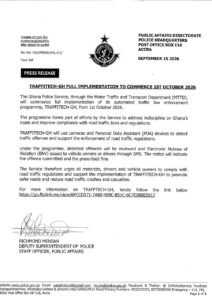
The Ghana Police Service has announced that it will commence the full implementation of its automated traffic law enforcement programme, TRAFFITECH-GH, from October 1, 2026.
The programme, being implemented through the Motor Traffic and Transport Department (MTTD), is part of efforts by the Police Service to address indiscipline on Ghana’s roads and improve compliance with road traffic laws and regulations.
According to a press release issued by the Public Affairs Directorate of the Ghana Police Service on Tuesday, September 15, 2026, TRAFFITECH-GH will rely on technology to detect traffic offences and support the enforcement of road traffic regulations.
Under the programme, cameras and Personal Data Assistant (PDA) devices will be used to detect traffic offences committed by motorists.
The Police Service said offences detected through the system will subsequently be reviewed before enforcement action is taken.
Once an offence has been confirmed, an Electronic Notice of Violation (ENV) will be issued to the affected vehicle owner or driver through SMS.
The electronic notice will contain details of the traffic offence committed as well as the prescribed fine applicable to the violation.
The Police have also published further operational information indicating that the broader system can use digital traffic-monitoring equipment to detect violations, with captured information subjected to validation before notices are issued.
The Ghana Police Service has urged all motorists, drivers and vehicle owners to comply with road traffic regulations ahead of the full rollout.
It is also calling on road users to support the implementation of TRAFFITECH-GH as part of efforts to promote safer roads.
According to the Service, the programme is intended to help reduce road traffic crashes and casualties while improving adherence to traffic laws.
The September 15 press release was signed by Deputy Superintendent of Police Richmond Mensah, Staff Officer at the Public Affairs Directorate.
The Police Service has directed members of the public seeking more information on TRAFFITECH-GH to access the information provided through its official programme link. The Ghana Police Service also has information on TRAFFITECH-GH on its official website.
TRAFFITECH-GH will therefore move into full implementation on October 1, 2026, marking a shift toward greater use of automated technology in the enforcement of traffic regulations in Ghana.

Black Sherif’s Sun Sherif EP Climbs to No. 3 in Nigeria

Venezuela Opposition Leader Machado Weighs Return Home Amid U.S. Reticence

Fuel prices rise across Ghana as new pump prices take effect



-

 Entertainment1 week ago
Mahama Is First President to Put GH¢40m Seed Money into Creative Arts Fund: Kojo Preko Dankwa
-

 Culinary1 week ago
The Green Heart of Ghanaian Cuisine: Celebrating Nkontomire and the Art of Abom
-
 General News2 weeks ago
Don’t Punish Them Retrospectively – Educationist Challenges New CSSPS Placement Rule
-

 General News2 weeks ago
OSP Opens Preliminary Investigation into Alleged GH¢70,000 Payment Linked to Parliament’s Vetting
-
 Entertainment1 week ago
Government Repatriates Musician Barosky from UK
-
 Business2 weeks ago
TOR & GOIL Explore Further Opportunities for Strategic Collaboration
-

 Entertainment1 week ago
Keche Supports Street Vendor with GH¢3,000 After She Struggles to Make Sales
-

 Entertainment2 weeks ago
Stonebwoy Contributed to Kobby Kyei’s First Car Purchase