
Entertainment
Keche Supports Street Vendor with GH¢3,000 After She Struggles to Make Sales


Ghanaian music duo Keche has extended support to a street vendor at Gomoa Fetteh after noticing that she had struggled to sell her products throughout the night.
In a video shared online, the musicians said they spotted the woman while performing on stage and realised she had been selling for several hours without much success.
According to the duo, the vendor had been selling from 4 p.m. until almost 4 a.m., but many of her items remained unsold.
After noticing her situation, Keche decided to support her business with GH¢3,000.
“She’s been selling from 4 p.m. till almost 4 a.m. When we saw her, the things had not been bought, so we thought to support her with 3k to support her business,” the duo explained in the video.
The musicians later invited the vendor onto the stage and asked her how much the items she was selling cost.
During the interaction, Keche Joshua jokingly commented, “They don’t even serve good food,” as they engaged with the woman.
However, the vendor appeared unable to mention the exact price of the products.
Keche then told her they would buy all the toffees she had brought with her. After purchasing the sweets, the duo continued their performance and threw the toffees into the crowd for fans to catch.
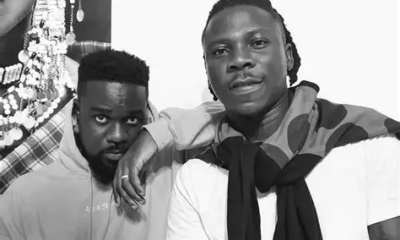














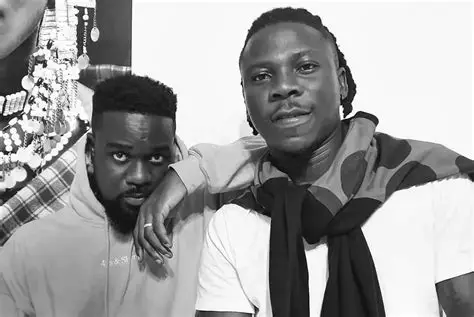
Ghanaian rapper Sarkodie has responded to concerns and accusations raised by fellow musician Stonebwoy over their relationship, social media posts and alleged tensions between the two artistes.
In a lengthy statement posted on his X page, Sarkodie denied deliberately targeting Stonebwoy with any of his recent social media posts and questioned why the dancehall artiste interpreted them as being directed at him.
Sarkodie said the first question he asked Stonebwoy when they spoke on the phone was, “What is your problem?”
He explained that he has never made a social media post intended to shade Stonebwoy and does not allow fans to determine the meaning of his posts based on their own interpretations.
According to Sarkodie, if Stonebwoy connected himself to the post, that should make him examine why he felt the message was directed at him.
He added that he was only responding publicly because the concerns were coming directly from Stonebwoy.
Sarkodie also maintained that he does not take most issues in the entertainment industry personally because he has real-life situations that require his attention.
He said he had already told Stonebwoy during their phone conversation that nobody is under an obligation to forgive or forget someone if they do not want to.
However, he stressed that people also have the right to decide independently how they deal with situations and relationships.
According to Sarkodie, the only common objective the two musicians may have is to succeed together when possible, but if that does not happen, he is equally comfortable with it.
He explained that people have different ways of responding to situations, noting that while he may overlook certain things, there are others he believes require a response.
Sarkodie said this difference in approach should not automatically be interpreted as hostility.
He also pointed to his actions towards Stonebwoy as evidence that he has no personal problem with him.
“If I had any issues with you, I wouldn’t have been the one to pick up the phone, call you, and invite you to my RAH show,” Sarkodie wrote on X.
He was referring to his invitation to Stonebwoy to be part of his Royal Albert Hall show in the United Kingdom.
Sarkodie further addressed concerns surrounding Stonebwoy’s relationships with people who have allegedly disrespected him.
He explained that although Stonebwoy may associate with such individuals, he would never automatically conclude that Stonebwoy supports their actions.
The rapper questioned why Stonebwoy appeared to expect the same consideration from him when it came to his own relationships and associations.
Sarkodie said Stonebwoy’s concerns were not new, revealing that similar misunderstandings had occurred in the past.
He claimed that whenever Stonebwoy expressed such feelings, he made the effort to reach out, speak with him and resolve the matter privately.
He also noted that despite previous disagreements, he had continued to support Stonebwoy publicly, including celebrating his achievements and reaching out to discuss possible performances together.
Sarkodie therefore urged Stonebwoy not to attach meanings to his statements that were never intended.
“So there’s really no need to twist my words or make them mean something they don’t,” he stated in the X post.
He ended his statement with a blunt message to Stonebwoy:
“And my G, you don’t need to fk with me. I’m pretty sure I add no value to your life to even worry about me.”**
The latest disagreement reportedly followed a series of social media posts by Sarkodie after Stonebwoy’s BhimFest concert at the OVO Arena Wembley in London.
One of Sarkodie’s posts featured a video showing an amputee attempting to kick another person.
Although Stonebwoy was not mentioned by name, some fans and industry observers interpreted the post as a possible indirect message aimed at him, particularly because Stonebwoy’s leg and knee condition has previously been the subject of public discussion and mockery.
Sarkodie later shared another message on X on September 7, 2026, cautioning artistes against allowing fans to create unnecessary rivalries between musicians.
“To the artistes: just because a fan shs on another brand to elevate you doesn’t mean they love you more. Be careful about entertaining that energy,” he wrote.
He added that some people deliberately fuel conflicts because they are interested in engagement and personal gain.
Stonebwoy subsequently reacted to Sarkodie’s posts and accused the rapper of hypocrisy.
He recalled that following Sarkodie’s Royal Albert Hall performance, he personally called the rapper the next day to congratulate him.
According to Stonebwoy, the two spoke for approximately 10 minutes during that conversation.
Stonebwoy also referred to the period following his own OVO Arena Wembley performance, claiming that Sarkodie subsequently shared another video on social media that he believed contained an indirect message aimed at him.
“After my OVO, you posted the second video on social media… Whatever message you meant to send across, only you can explain,” Stonebwoy said.
Stonebwoy explained that despite his concerns about the posts, he still contacted Sarkodie because he wanted clarification.
He said Sarkodie returned his call almost immediately, and although he initially missed it, he later called back.
The two musicians reportedly had an extended conversation lasting more than an hour, during which they discussed the music industry, their individual approaches to situations and their differing perspectives.
Stonebwoy said he came away from the conversation believing that Sarkodie did not think artistes should necessarily be expected to maintain certain principles if doing so did not benefit them.
The disagreement later intensified when Stonebwoy addressed the issue during a live social media session.
During the session, he accused Sarkodie of disrespect and alleged that he had been subjected to inhumane treatment.
Stonebwoy also raised accusations of hypocrisy and betrayal while discussing his grievances against the rapper.
His comments generated significant reactions online, with fans of both musicians debating the history of their relationship and whether Sarkodie’s social media posts were indeed directed at Stonebwoy.
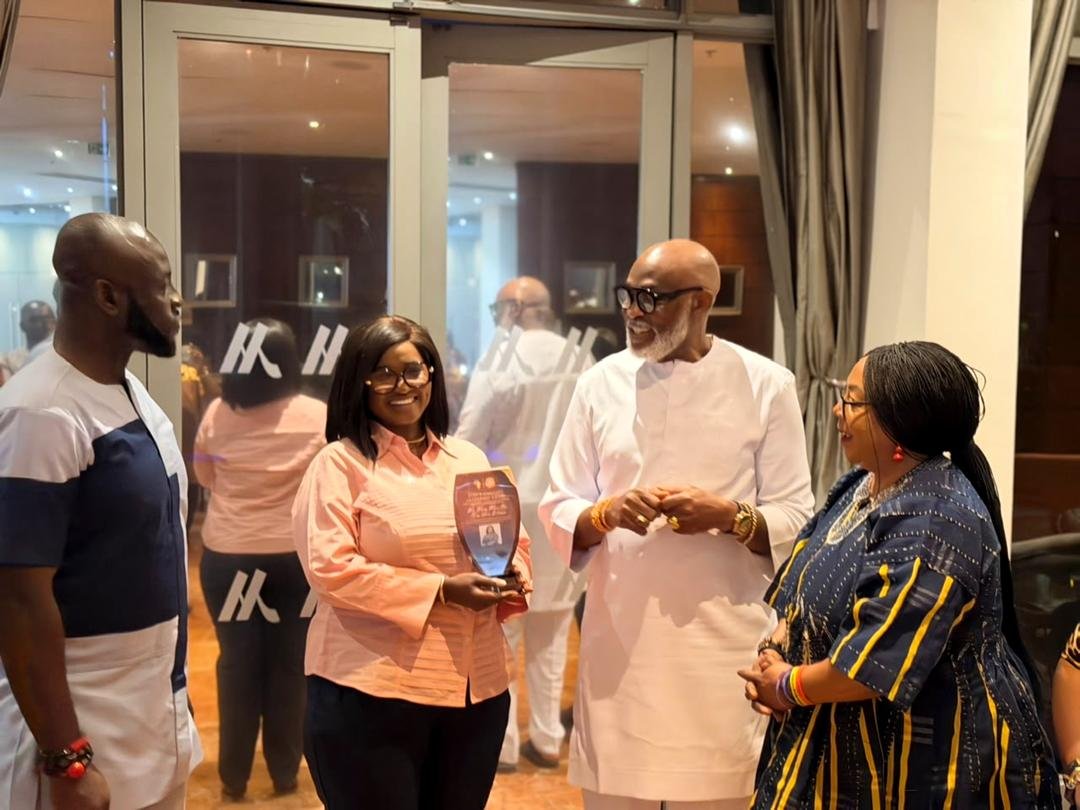
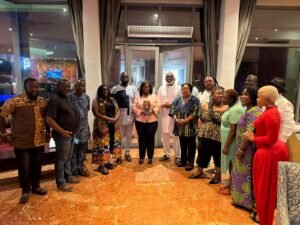
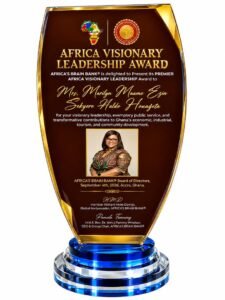
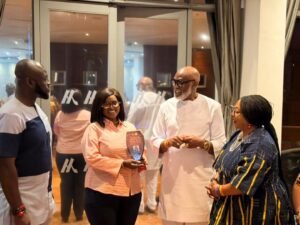
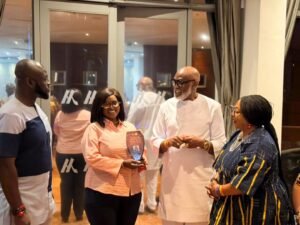
The Chief Executive Officer of the Ghana Tourism Authority (GTA), Maame Efua Houadjeto, has been honoured at the 7th Africa Brain Bank Annual Summit and Awards in Accra.
Mrs Houadjeto received the Africa Visionary Leadership Award in recognition of what organisers described as her visionary leadership, exemplary public service and transformative contributions to Ghana’s economic, industrial, tourism and community development.
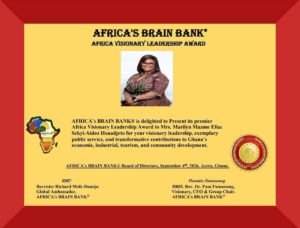
The award was presented during the summit held from September 3 to September 8, 2026, at the Marriott Hotel in Accra.
The event brought together business leaders, investors, government officials and professionals from several sectors, including healthcare, tourism, pharmaceuticals, construction, finance, technology, logistics, real estate and infrastructure.
As part of the annual gathering, the organisers also held a Charity Ball and Medical City Ground-breaking ceremony, aimed at engaging members of the African diaspora to contribute their expertise, investments, professional networks and philanthropic support towards Ghana’s development while reconnecting with the country’s cultural and historical heritage.
Reacting to the honour, Mrs Houadjeto expressed appreciation to the organisers and dedicated the award to the management and staff of the Ghana Tourism Authority.
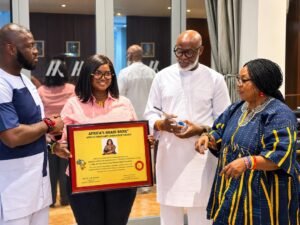
“I am appreciative of the honour done to me by the organisers, but this award is dedicated to the supportive, dedicated and hardworking management and staff of the Ghana Tourism Authority,” she said.
Africa’s Brain Bank describes itself as a repository of African intellect, providing a platform for Africans to contribute their expertise, experience, talent and knowledge towards the continent’s development.
The organisation seeks to bring together leaders and professionals from different fields who share a common interest in advancing Africa’s economic development. Through recurring events and forums across the world, Africa’s Brain Bank promotes the exchange of ideas, policy insights, resources and expertise aimed at helping reshape the future of the continent.
The honour adds to the recognition of Mrs Houadjeto’s leadership at the Ghana Tourism Authority as the institution continues efforts to promote Ghana’s tourism industry and strengthen its contribution to national development
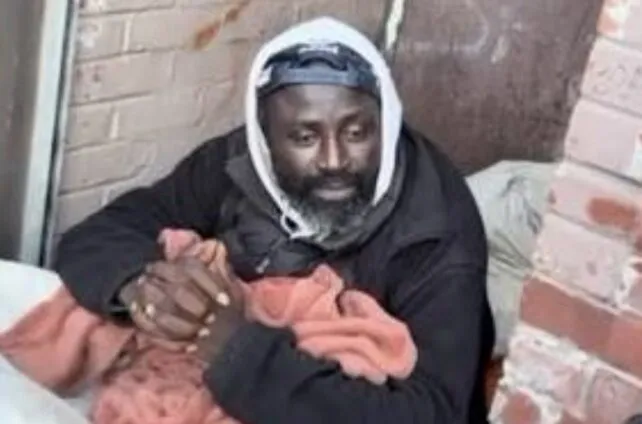
Foreign Affairs Minister Samuel Okudzeto Ablakwa has confirmed that Ghanaian Highlife musician Barosky has been brought back to Ghana from the United Kingdom following concerns about his difficult situation.
The musician was repatriated to Ghana on Monday, September 7, 2026, with the Ministry of Foreign Affairs covering the cost of his return.
Mr Ablakwa said the government will also provide Barosky with psychosocial support and financial assistance to help him settle back into life in Ghana.
He expressed gratitude to Ghana’s High Commission in the UK for coordinating the repatriation, as well as individuals, particularly Nana Romeo, who helped bring attention to the musician’s plight.
Barosky had reportedly been living in difficult conditions in Manchester for several months before his situation attracted public attention.
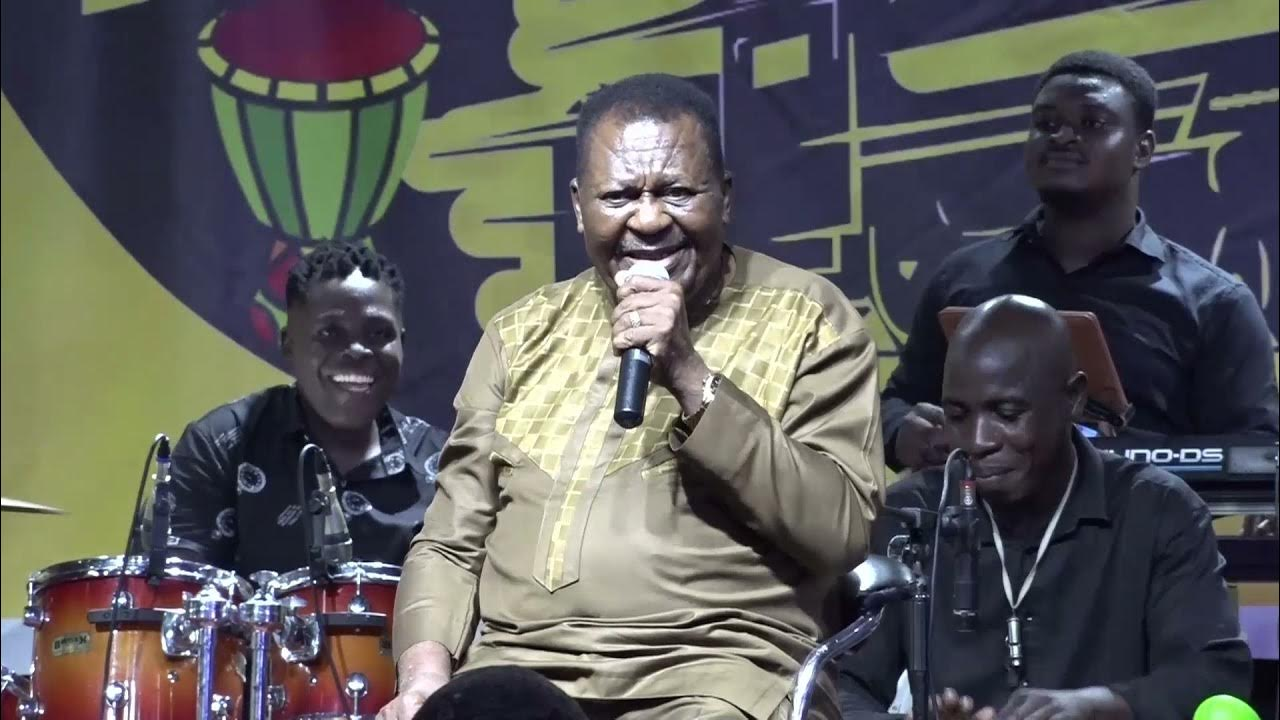
Long before Ghanaian music became a global phenomenon, before Afrobeats dominated international charts and before musicians could promote songs instantly through TikTok, YouTube and Instagram, Ghana had a generation of highlife musicians who entertained, educated and documented society through music.
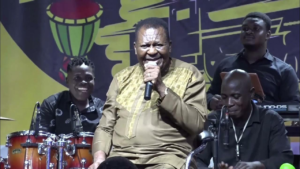
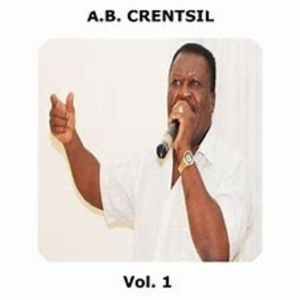
One of the most remarkable among them was A.B. Crentsil, a musician whose name was once synonymous with Ghanaian highlife.
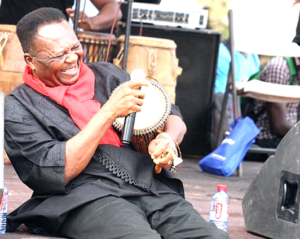
For decades, his songs could be heard at parties, drinking spots, weddings, funerals, homes and social gatherings across the country. He had a remarkable ability to transform ordinary Ghanaian experiences into memorable songs.
Today, however, many young Ghanaians know his music without necessarily knowing the man behind it.
Who Was A.B. Crentsil?
A.B. Crentsil was born Alfred Benjamin Crentsil on January 25, 1943, in Prestea in the Western Region, and became one of the prominent figures in Ghana’s highlife tradition.
He rose to prominence during a period when live bands were the heartbeat of Ghana’s entertainment industry. Unlike today’s musicians, who can record a song in a studio and distribute it worldwide within minutes, musicians of Crentsil’s generation depended heavily on live performances, record production, radio airplay and word-of-mouth promotion.
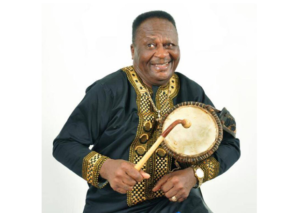
He developed a unique musical identity built around highlife rhythms, humour, storytelling and social commentary.
A major reason Crentsil became so popular was his ability to sing about things ordinary people could relate to.
His songs touched on love, relationships, marriage, money, family, social behaviour, temptation, politics and everyday struggles.
Rather than making his music unnecessarily complicated, he often used simple language and situations familiar to his audience.
That made his songs easy to remember and sing along to.
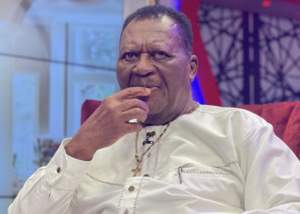
Some of His Best-Known Songs
Among the songs most strongly associated with A.B. Crentsil is “Angelina,” one of the enduring highlife songs of his career.
The song became a major part of Ghana’s popular music culture and helped cement Crentsil’s reputation as an artiste who could combine humour, storytelling and infectious rhythms.
His other widely remembered recordings include “Juliana,” “Moses,” “Atia,” “Obuoba,” “Papa Samo,” “Akpeteshie,” “Adwoa Yankyera,” “I Don’t Know Why,” and other songs that formed part of his extensive highlife catalogue.
His repertoire was much larger than the few songs that continue to receive occasional radio play today.
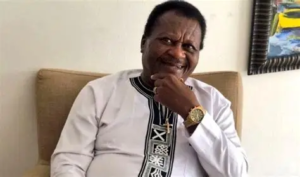
“Angelina” and the Crentsil Sound
“Angelina” remains particularly important when discussing Crentsil’s legacy.
The song demonstrates several characteristics that made his music distinctive: an entertaining storyline, a memorable rhythm and lyrics that connected with everyday listeners.
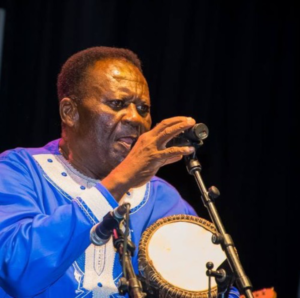
Crentsil understood that a highlife song did not have to be complicated to be powerful.
A simple story, when combined with the right rhythm and delivery, could become a national favourite.
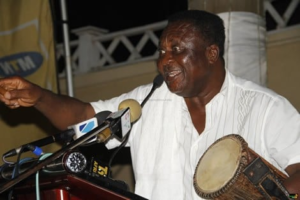
Crentsil was not simply making music for people to dance to.
Like many great Ghanaian highlife musicians, he used music to comment on society.
His songs could poke fun at human behaviour, discuss relationships or highlight social problems.
This made his music something of an informal record of Ghanaian society.
Listening to older highlife recordings today can therefore reveal how people lived, spoke, loved, argued and interacted with one another several decades ago.
The World That Created A.B. Crentsil
Crentsil’s career belongs to an era when Ghanaian musicians were often inseparable from live bands.
Musicians rehearsed together, travelled to different communities and performed for hours.
There was no social media campaign to announce a new single.
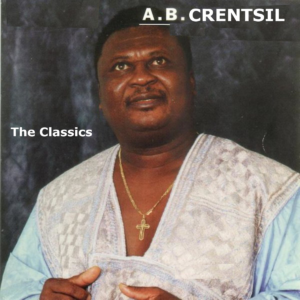
There were no streaming numbers to determine whether a song was successful.
A musician had to win over the audience directly.
The relationship between the band and the crowd was therefore extremely important.
Crentsil’s ability to entertain audiences helped him remain relevant for many years.
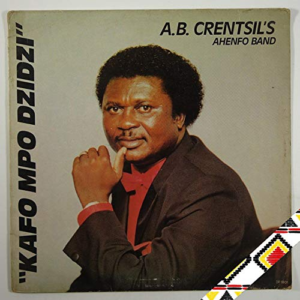
One of the most interesting things about Crentsil’s music is that it was not restricted to one particular age group.
Older Ghanaians grew up with his songs, while younger people encountered them through parents, parties, radio programmes and social gatherings.
Some of his songs eventually became cultural references.
Even people who may not have followed his career closely could recognise some of his melodies.
That is the mark of an artiste whose music has entered popular culture.
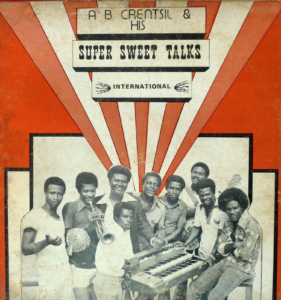
Why His Music Should Be Preserved
The decline in the popularity of older Ghanaian music presents a serious cultural challenge.
Many recordings from the country’s highlife era are not easily accessible on modern streaming platforms.
Some songs can only be found through old vinyl records, cassettes, private collections, radio archives or recordings shared by enthusiasts.
This means that Ghana could potentially lose part of its musical history if the recordings are not properly preserved and digitised.
Crentsil’s catalogue deserves particular attention because it represents a significant period in the development of Ghanaian popular music.
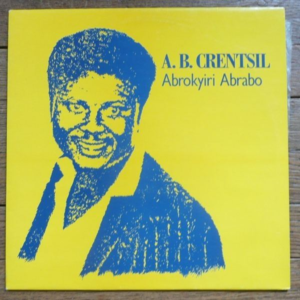
A.B. Crentsil’s Place in Ghanaian History
When the history of Ghanaian music is written, A.B. Crentsil should not be remembered simply as the man who sang “Angelina.”
He was much more than one hit song.
He was a storyteller, entertainer, bandleader and chronicler of Ghanaian life whose career spanned generations.
His music captured a Ghana that is gradually changing.
The language, social situations, humour and musical arrangements found in his recordings provide today’s listeners with a window into an earlier Ghana.
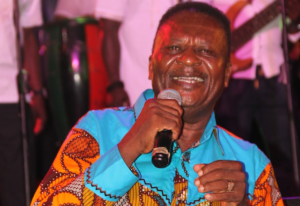
The Forgotten Question
Perhaps the biggest question is not whether A.B. Crentsil was successful.
He clearly was.
The bigger question is whether Ghana is doing enough to ensure that musicians like him remain known to future generations.
Today’s young artistes are building the next chapter of Ghanaian music.
But every new chapter needs the pages that came before it.
A.B. Crentsil was one of those important pages.
His music deserves to be heard again—not only as nostalgia, but as part of Ghana’s cultural history.
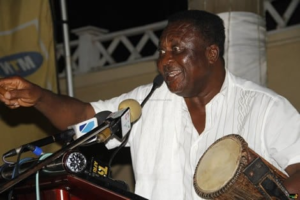
Some A.B. Crentsil songs worth rediscovering
Angelina
Juliana
Moses
Atia
Obuoba
Papa Samo
Akpeteshie
Adwoa Yankyera
I Don’t Know Why
These songs offer only a glimpse into a much larger catalogue that deserves renewed attention from music historians, radio stations, streaming platforms and younger Ghanaian listeners.
A.B. Crentsil may belong to an older generation, but his music remains part of the Ghanaian story.
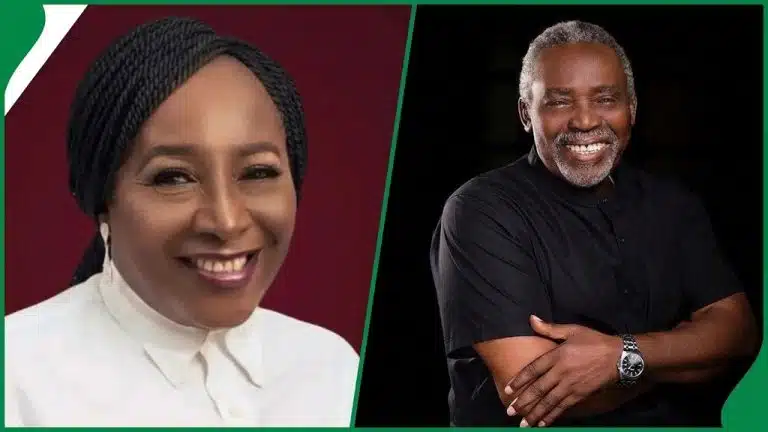
Veteran Nollywood actress Patience Ozokwor has expressed deep concern over the health condition of her colleague, Olu Jacobs, while reflecting on the loss of prominent figures in the Nigerian film industry.
Olu Jacobs’ wife, veteran actress Joke Silva, revealed in 2021 that her husband had been living with dementia with Lewy bodies (DLB), a progressive degenerative brain disease.
Speaking in an interview with Femi Babs TV on YouTube, Ozokwor said Olu Jacobs’ condition saddens her and is something she finds difficult to think about.
The veteran actress also spoke about the thought of losing fellow actor Pete Edochie, admitting that she sometimes imagines how devastated she would feel if he were to pass away before her.
Ozokwor recalled the emotional pain she experienced following the deaths of actors Sam Loco and John Okafor, popularly known as Mr Ibu.
According to her, she deeply values the company and relationships she shares with people, making it particularly difficult for her to deal with the death of colleagues.
“I keep imagining what it would feel like if Pete Edochie passed away before me. I feel so bad about Olu Jacobs’ situation and don’t want to think about it,” she said.
“I cherish people’s company so much. When Sam Loco died, I cried like a baby because he was good with comedy and we were always doing comedy together. I couldn’t fathom his death. It took a lot from me.
“When Ibu died, I felt the same way, but I was controlling myself because I was getting older. When Sam Loco died, I was younger. I was trying to play on my age.”
Source:NijaNews.Com

What Is Your Problem? – Sarkodie Fires Back at Stonebwoy in X Post

Keche Supports Street Vendor with GH¢3,000 After She Struggles to Make Sales

Mahama appoints Dr Abdul-Baasit Aziz-Bamba as Acting Director-General of Value for Money Office



-

 Entertainment1 week ago
Oswald Okaitei Explains the Real Vision Behind Ghana’s Black Star Experience
-
 General News2 weeks ago
GES Urged to Review Student Sexual Misconduct Rule Over Alleged Discrimination Against Boys
-

 Entertainment2 days ago
Mahama Is First President to Put GH¢40m Seed Money into Creative Arts Fund: Kojo Preko Dankwa
-
 General News2 weeks ago
Oti Region Youth Endorse John Boadu, Cite Experience as Key to NPP Victory
-

 General News2 weeks ago
Zanetor and Ayariga Face Parliamentary Vetting Today
-
General News2 weeks ago
GES Opens WAEC Portal for 2026 School Placement Data Upload
-
 General News2 weeks ago
Police Suspend Concrete Mixer Truck Operations in Accra, Tema From August 28
-
 General News2 weeks ago
President Mahama makes further ministerial changes