
Business
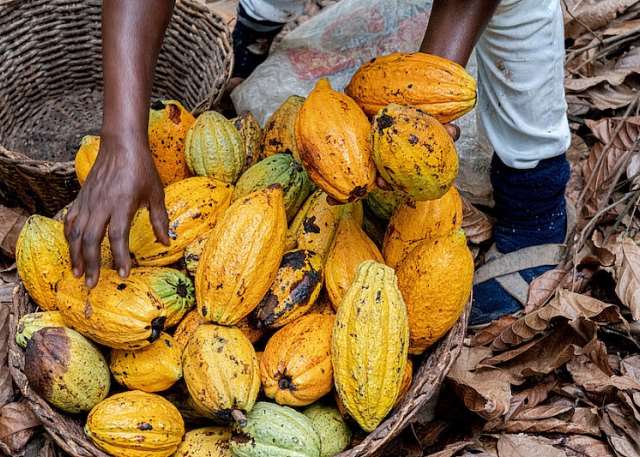
Cocoa Price Cut Sparks Fears Over Environmental Sustainability and Illegal Mining Surge





Business
ECOWAS Bank for Investment and Development Backs Women of Valour as London 2026 Headline Sponsor


Women of Valour (WoV), the globally recognised women’s leadership and storytelling platform founded by award-winning journalist Nana Aba Anamoah, has announced the ECOWAS Bank for Investment and Development (EBID) as the Headline Sponsor for Women of Valour London 2026. The event is scheduled for 7 March 2026.
This partnership brings together two organisations dedicated to advancing women’s leadership, economic inclusion, and social transformation across Africa and the global diaspora. As Headline Sponsor, EBID will be instrumental in supporting the platform and amplifying conversations centredon courage, development, and the pursuit of fearlessness, which is the official theme of Women of Valour London 2026.
Women of Valour is an annual flagship event held in celebration of International Women’s Day, spotlighting women whose stories of courage, resilience, and leadership inspire change across generations. Since its inception, the platform has grown from its origins in Accra to international stages, convening influential voices from media, business, public service, and civil society.
Speaking on the partnership, founder Nana Aba Anamoah noted that EBID’s headline sponsorship reflects a shared commitment to long-term impact. “Women of Valour was created to honour courage and amplify the voices that shape our societies. EBID’s support goes beyond sponsorship. Itrepresents a belief in women as drivers of development and progress, both on the continent and throughout the diaspora.”
Dr. George Agyekum Donkor, President and Chairman of the Board of Directors of EBID, reaffirmed the Bank’s dedication to gender inclusion and development-focused partnerships. “At EBID, we believe that empowering women is fundamental to sustainable development. Our partnership with Women of Valour is especially key in the current context as we prepare to obtain certification for the Gender Equality Seal for Public Institutions,” stated Dr. Donkor.
The announcement comes ahead of the official launch of Women of Valour London 2026, which will be held on February 17, 2026, at the residence of the British High Commissioner to Ghana in Accra. This event will mark the beginning of the global campaign leading up to the London gathering.
About Women of Valour
Women of Valour (WoV) is a leadership and storytelling platform that celebrates women with powerful stories of courage in recognition of International Women’s Day. Founded by Nana Aba Anamoah, WoV brings together influential women from diverse sectors to inspire dialogue, mentorship, and action across borders.
About EBID
The ECOWAS Bank for Investment and Development (EBID) is the Development Finance Institution of the Economic Community of West African States (ECOWAS), mandated to finance projects and programmes that foster regional integration, sustainable development and inclusive economic growth.
The Ghana Reference Rate (GRR), the benchmark used by commercial banks to price loans, declined marginally to 14.58 percent in February 2026, down from 15.68 percent in January.
The reduction reflects improvements in key variables used to compute the rate, including the Monetary Policy Rate, Treasury bill yields, and interbank market rates.
According to market data, the 91-day Treasury bill rate stood at 11.19 percent at the end of January, while the interbank rate averaged 14.91 percent over the same period. The Bank of Ghana’s recent cut in the Monetary Policy Rate to 15.5 percent was a major contributor to the February decline in the GRR.
The GRR was last reviewed downward on January 7, 2026, when it fell from 15.9 percent in December 2025 to 15.68 percent. In December, the rate had declined following a 350-basis-point cut in the Monetary Policy Rate to 18 percent, alongside a modest drop in Treasury bill rates.
Earlier, in November 2025, the GRR edged up slightly to 17.96 percent from 17.86 percent, driven by rising Treasury bill and interbank rates.
Overall, the benchmark rate trended downward through much of 2025, falling sharply from 29.72 percent in January to 19.67 percent by August.
Background to the GRR
The Ghana Reference Rate was introduced in 2017 by the Bank of Ghana in collaboration with the Ghana Association of Banks to serve as a transparent and consistent benchmark for loan pricing.
It replaced the previous base-rate system following extensive consultations, with the aim of promoting fairness and clarity in lending. The maiden GRR, announced in April 2017, stood at 16.82 percent.
Implications for Borrowers
The latest decline in the GRR could ease borrowing costs marginally in the coming month, particularly for customers on variable-rate loans contracted in February 2026.
While borrowers on fixed-rate loans will not benefit from the adjustment, those on variable rates may see slight reductions depending on individual bank pricing models.
Commercial bank lending rates, which averaged around 22 percent in January 2026, could be adjusted downward in line with the new benchmark.
However, the relief comes amid continued tight credit conditions, as liquidity constraints persist due to measures aimed at controlling inflation and stabilising the economy.
President of the Ghana National Chamber of Commerce and Industry, Stephane Miezan, noted that businesses are grappling not only with high borrowing costs but also limited access to credit from commercial banks, a situation he warned has contributed to the collapse of some firms.

The Bank of Ghana (BoG) has announced a series of regulatory and digital infrastructure reforms aimed at strengthening cross-border payments and promoting inclusive economic growth across Africa.
The Second Deputy Governor of the BoG, Matilda Asante Asiedu, disclosed this at the 2026 Africa Prosperity Dialogue held at the Accra International Conference Centre on Wednesday, February 4.
She said the initiatives are designed to address persistent challenges such as payment interoperability gaps, limited regulatory trust, and consumer protection concerns, which continue to hinder intra-African trade and financial integration.
A key intervention, she noted, is the FinTech Passport, a joint framework between the Bank of Ghana and the Bank of Rwanda that allows for cross-border licensing of fintech companies.
The arrangement, she explained, promotes regulatory cooperation and trust among participating countries and could be expanded across the continent to support seamless cross-border payments and trade.
Mrs Asiedu also highlighted the Bank’s Next Generation Digital Public Infrastructure initiative, which is currently piloting multilateral interoperability frameworks, settlement systems, and potential cross-border currency arrangements.
She said these efforts are intended to build a more integrated, efficient, and resilient payment ecosystem for Africa.
In addition, she pointed to the recently enacted Virtual Asset Service Providers Act as a major regulatory milestone that supports emerging digital payment channels while ensuring robust consumer protection and effective risk oversight.
Mrs Asiedu stressed that payment systems are critical national and continental infrastructure, requiring strong cybersecurity safeguards, coordinated regulation, and trusted governance structures.
She added that the broader goal of the reforms is to advance inclusive growth and ensure that Africa’s digital and financial transformation delivers benefits across all sectors of society.

Mahama meets UN Chief, discusses African security & democracy

Hon. Joan Gyan Cudjoe Honoured as Pillar of Community Development at Blackstar Acclamation Award Summit 2025/2026

Aduana FC Coach Cioaba Aristica announces starting lineup ahead of Medeama Clash


-

 Politics2 weeks ago
Prophet Bernard El Bernard Apologises for Failed Prophecy on NPP Primaries
-

 Entertainment1 week ago
Renowned Gospel Music Icon Ron Kenoly Passes On at 81
-

 Entertainment1 week ago
[EDITORIAL] Why Ghana Should Dedicate a Special Day as World Fugu Day: Projecting Culture and Inspiring the Diaspora
-

 Politics5 days ago
President Recalls Ghana’s High Commissioner to Nigeria Over Alleged Vote Inducement
-

 Entertainment1 day ago
We Should not Reduce the Culture and Creative Arts Industry to mere Entertainment – Richardson Commey Fio Laments
-

 General News2 weeks ago
Broadcast Journalist Kojo Preko Dankwa Criticizes Pastors Over Failed Election Prophecies
-

 General News1 week ago
Mahama, Hichilema Hold Bilateral Talks to Deepen Ghana–Zambia Relations
-

 Uncategorized2 weeks ago
Ghana Premier League: Sherif Mohammed late goal earns Vision FC a point against Dreams FC