
General News
Dr Ayew Afriye secures police enquiry bail for Efya Royal

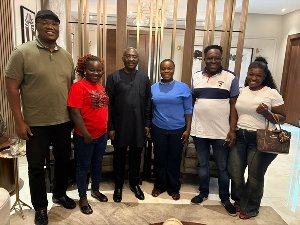
Effiduase-Asokore MP Dr Nana Ayew Afriye has secured police enquiry bail for NPP social media activist Efya Royal following her arrest over an alleged social media post linked to anonymous commentator “Ghana Jollof”.
Efya Royal was granted bail in the sum of GH¢20,000 after spending time in police custody, bringing temporary relief to her family, supporters and members of the New Patriotic Party (NPP) who had raised concerns about her detention.
Ayew Afriye steps in
The MP, together with NPP Director of Legal Services Gary Nimako, reportedly spent several hours at the Cantonments Police Station on Monday, working into the night to secure the activist’s release.
Their intervention followed growing public attention over Efya Royal’s arrest and uncertainty surrounding her whereabouts.
The activist had reportedly been arrested over allegations that she shared a post originally published by the TikToker known as “Ghana Jollof.” Police subsequently confirmed that she was in custody.
A case Ayew Afriye strongly opposed
The development is not entirely new for Dr Ayew Afriye.
Days before the bail was secured, the MP had criticised the decision by security authorities to involve Efya Royal in efforts to establish the identity and whereabouts of Ghana Jollof.
He described the move as “the height of absurdity”, arguing that serious intelligence operations should rely on cyber-intelligence, digital forensics and established investigative procedures.
According to the MP, Ghana Jollof had repeatedly stated that her face had never been publicly displayed, making it difficult to understand how Efya Royal could assist investigators simply through physical identification.
‘Leave Efya Royal alone’
Ayew Afriye argued that involving an activist because of perceived political or social connections could set a troubling precedent.
He urged the security agencies to conduct their own investigations and use modern digital tools rather than relying on individuals who, according to him, had no official connection to the anonymous commentator.
His intervention has now been followed by the granting of bail to Efya Royal, although the underlying police enquiry remains ongoing.
COKA also raises alarm
NPP Ashanti Regional Chairman Odeneho Kwaku Appiah, popularly known as COKA, also joined calls for the activist’s release.
COKA urged the National Signals Bureau and the Special Investigation Unit of the Ghana Police Service CID to operate professionally and avoid arresting individuals based on what he described as misconstrued or false identities.
He insisted that Ghana’s security institutions must operate with precision and within the limits of their powers.
Bail is not the end of the investigation
Although Efya Royal is now out on GH¢20,000 police enquiry bail, the development does not necessarily bring the investigation to an end.
Available reports indicate that questions remain over the circumstances of her arrest and the specific allegations being investigated. No formal charge or prosecution timeline has been publicly announced in the sources reviewed.
For now, the immediate battle has been won: Efya Royal is back out of custody, while the police enquiry continues.
General News
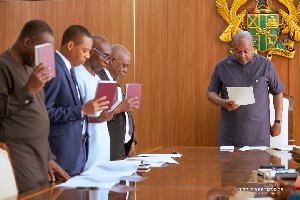
President Mahama tasks Independent Fiscal Council to safeguard Ghana’s economic stability

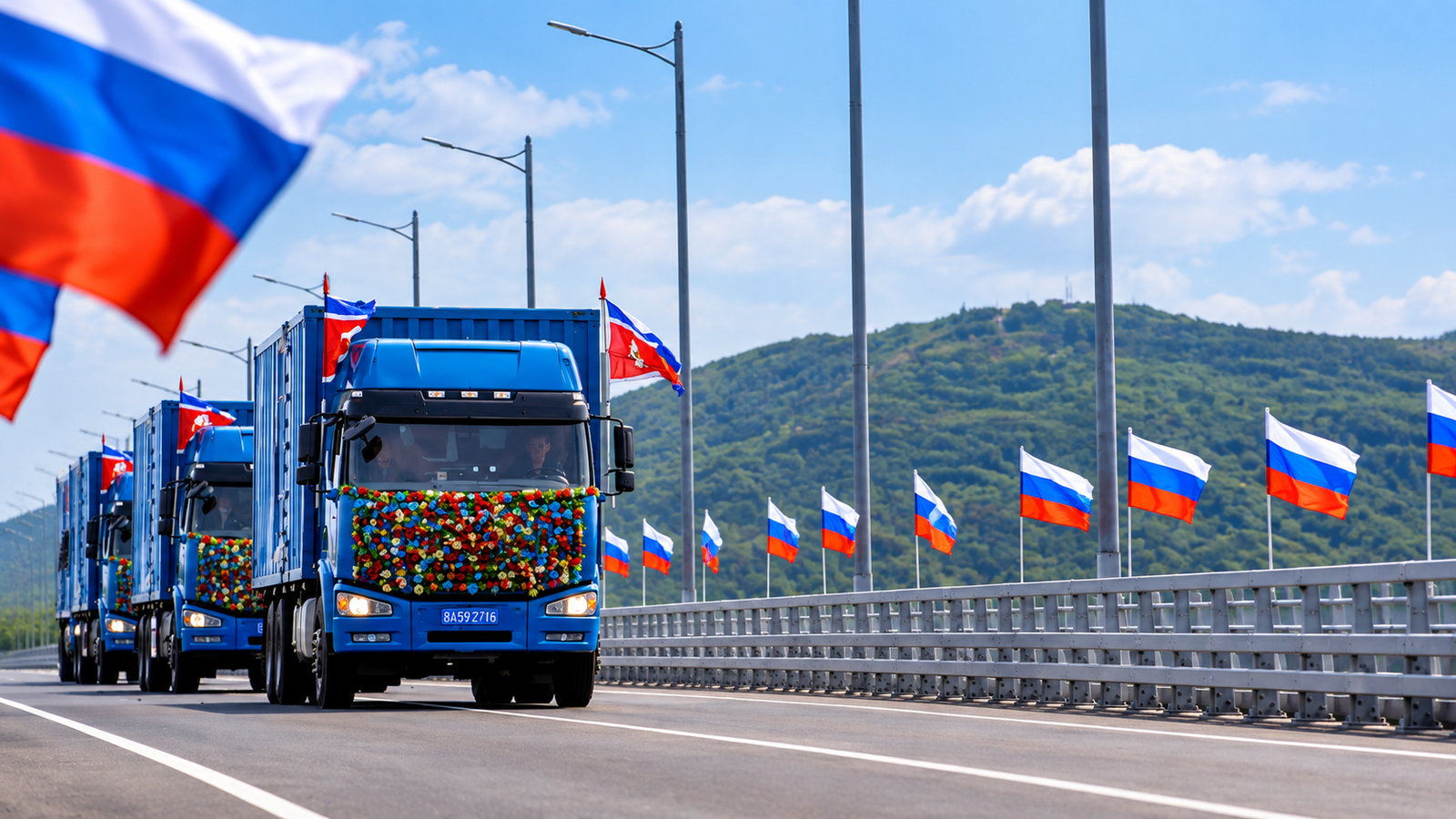
PYONGYANG/MOSCOW — North Korea and Russia have opened their first road bridge connecting the two countries, marking a significant development in bilateral relations and cross-border trade.
The bridge spans the Tumen River, which forms part of the border between North Korea and Russia, and is expected to improve road transportation and strengthen economic ties between the neighbouring countries.
The opening comes as Pyongyang and Moscow continue to deepen their relationship, with both governments seeking to expand cooperation in areas including trade, transportation and infrastructure.
Officials from both sides have described the new crossing as an important step toward increasing connectivity and facilitating the movement of goods and people between the two countries.
The bridge is also expected to provide an alternative to existing rail links between North Korea and Russia, potentially creating new opportunities for commercial exchanges.
The project has attracted international attention because it comes amid increasingly close diplomatic and strategic ties between Moscow and Pyongyang.
While the bridge is primarily presented as an infrastructure and trade project, its opening is also likely to be closely watched for what it signals about the broader relationship between Russia and North Korea.
Both countries have indicated their intention to further strengthen bilateral cooperation, making the new road connection a potentially important symbol of their growing partnership.
General News
3 cheques, 4 witnesses, GH¢49.1 million: How the Republic closed its case against Adu-Boahene
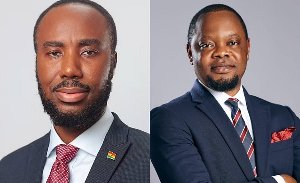
After months of testimony and intense cross-examination, the Republic has closed its case against former National Signals Bureau (NSB) Director-General Kwabena Adu-Boahene and two others, putting its evidence on the alleged GH¢49.1 million financial transaction before the court.
The prosecution’s case has revolved around three cheques totalling GH¢49.1 million, a private company account and evidence from investigators and other witnesses who sought to establish how the funds allegedly moved.
The three cheques at the heart of the case
A central plank of the Republic’s case is that three cheques were issued in 2020 and signed by Adu-Boahene.
According to evidence presented in court, the cheques together amounted to GH¢49.1 million. The prosecution alleges that the funds, which originated from a National Security-related account, were subsequently moved into an account associated with a private company.
The state has sought to establish that the transactions were not ordinary government expenditure but formed part of an alleged scheme to divert public funds.
The account prosecutors say was created for the transaction
One of the most striking pieces of testimony came from an Economic and Organised Crime Office (EOCO) investigator.
The witness told the court that an account was allegedly opened solely to facilitate the diversion of the GH¢49.1 million.
The prosecution’s theory is that the account provided the channel through which the money could be transferred away from its original government-controlled destination.
The defence, however, has challenged aspects of the investigators’ evidence, including questions surrounding the transactions and the ownership or operation of accounts linked to the case.
Four witnesses, one prosecution narrative
Over the course of the trial, the Republic relied on four key witnesses to build its case.
Their evidence covered different aspects of the alleged transactions — from the movement of the money and the cheques to investigations conducted by EOCO and the circumstances surrounding the accounts and companies involved.
The prosecution has used documentary evidence alongside witness testimony to construct what it says is a clear trail of the GH¢49.1 million.
EOCO’s financial trail
EOCO investigators have presented evidence concerning transactions involving millions of Ghana cedis and US dollars.
The prosecution has also relied on bank records and other documents in an attempt to establish what happened to the funds after they were transferred.
One investigator told the court that the three cheques bore the signatures of both the National Security Coordinator and Adu-Boahene, a detail that has become important in the prosecution’s attempt to establish the chain of authorisation.
But the defence has fought back
The Republic’s evidence has not gone unchallenged.
Adu-Boahene’s lawyers have subjected prosecution witnesses to extensive cross-examination, questioning their conclusions, investigative methods and interpretation of the financial records.
The defence has also challenged aspects of the prosecution’s figures and evidence. At one stage, questions were raised about an alleged discrepancy in the state’s calculation of the amount involved.
The cybersecurity equipment question
Another important part of the prosecution’s case concerns an alleged plan to acquire cybersecurity equipment.
The state has disputed the explanation surrounding the intended purchase and has presented evidence suggesting that the alleged procurement did not take place as claimed.
An EOCO investigator also told the court that a document said to relate to the cybersecurity purchase was fake, adding another layer to the prosecution’s case.
The case now moves to the defence
With the Republic having closed its case, the spotlight has shifted to Adu-Boahene and his co-accused.
As of September 8, 2026, the defence was pushing back against the prosecution’s case, with lead counsel Samuel Atta Akyea questioning the timeframe given for the preparation of a no-case submission. The court has subsequently given the defence until September 25 to file its submission.
The defence will now seek to convince the court that the prosecution has not established a case requiring the accused persons to answer.
The big question
After months of evidence, the numbers remain striking: three cheques, four key witnesses and GH¢49.1 million at the centre of the Republic’s case.
But closing the prosecution’s case is not the same as proving guilt.
The court must ultimately determine whether the evidence establishes the alleged offences beyond reasonable doubt — or whether the defence’s challenges to the prosecution’s financial trail create enough doubt to bring the case to an end.
For now, the Republic has put its cards on the table. The next move belongs to Adu-Boahene and his lawyers.
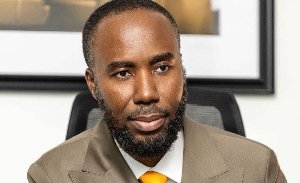
After more than a year of hearings, the prosecution’s case against former National Signals Bureau (NSB) Director-General Kwabena Adu-Boahene has reached a critical stage, with prosecutors presenting financial records, bank transactions and testimony they say establish how GH¢49.1 million in state funds was allegedly diverted and spent.
The trial, which began on July 18, 2025, involves Adu-Boahene, his wife Angela Adjei-Boateng and other accused persons. The accused have denied the charges.
The GH¢49.1 million allegation
At the centre of the case is an alleged diversion of GH¢49.1 million from a government account.
The prosecution says the money belonged to the Government of Ghana and was held in a government agency’s bank account. Deputy Attorney-General Justice Edem Srem-Sai has maintained that there has been no dispute in court over the source of the funds.
According to the prosecution, three cheques intended for a government agency were allegedly deposited into the account of BNC Communications Limited, a private company.
Prosecutors further allege that a new bank account was opened in the name of a private company on the same day the first cheque was issued, with the company’s name allegedly designed to resemble that of a government agency.
How the money was allegedly spent
One of the prosecution’s major claims is that it has traced the movement of the funds after they were allegedly transferred.
Justice Srem-Sai said prosecutors presented bank statements, purchase receipts, ownership documents and other financial records which, according to the state, show how the money was spent over a six-month period.
The prosecution alleges that some of the funds were used to acquire houses in prime locations and luxury vehicles for Adu-Boahene, relatives and associates.
The ‘political campaign’ explanation
Another major point of contention has been the alleged explanation that the money was used to finance political activities ahead of the 2024 elections.
The prosecution has rejected that explanation, with the Deputy Attorney-General telling the public that evidence presented in court contradicts the claim.
The state also alleges that some of the accused initially denied ownership of companies, bank accounts and properties linked to the case but later acknowledged ownership after being confronted with evidence.
Cybersecurity equipment claim
The prosecution has also challenged the explanation that the money was intended for the acquisition of cybersecurity equipment.
According to Justice Srem-Sai, investigators found no evidence that the equipment was ever purchased.
The state further alleges that forged purchase receipts were subsequently created to conceal the fact that the equipment had not been procured. These remain prosecution allegations to be tested through the court process.
The bank account flagged as suspicious
The prosecution says the private account through which the transactions allegedly passed was eventually closed after the bank flagged it as suspicious.
That evidence, together with the financial records and ownership documents tendered before the court, forms part of the state’s attempt to establish a chain linking the alleged diversion of public funds to the acquisition of private assets.
What witnesses have told the court
The prosecution has called witnesses to establish how money allegedly moved between the various accounts.
One early witness, chauffeur and former errand worker Frank Anane Dekpey, told the court that he carried out several banking transactions on instructions from people connected to the accused.
He testified about collecting money from banks, making deposits and withdrawals and delivering funds, including transactions involving Vertex Solutions Limited. The defence also questioned him about his detention and interrogation by EOCO.
Where the case stands now
The prosecution had indicated in July that it was preparing to close its case after presenting what it described as extensive evidence.
However, the case has continued into September, with Adu-Boahene’s lawyers on September 8, 2026 expected to conclude their cross-examination of an EOCO witness.
The prolonged proceedings have therefore moved into a decisive phase: the prosecution is seeking to establish its allegations beyond reasonable doubt, while the defence continues to test the state’s evidence.
For Adu-Boahene and the other accused, the allegations remain just that — allegations — until determined by the court.
After 18 months of testimony and financial evidence, the central question is no longer simply where the GH¢49.1 million came from, but whether the prosecution can ultimately prove that it was unlawfully diverted and used for private benefit.
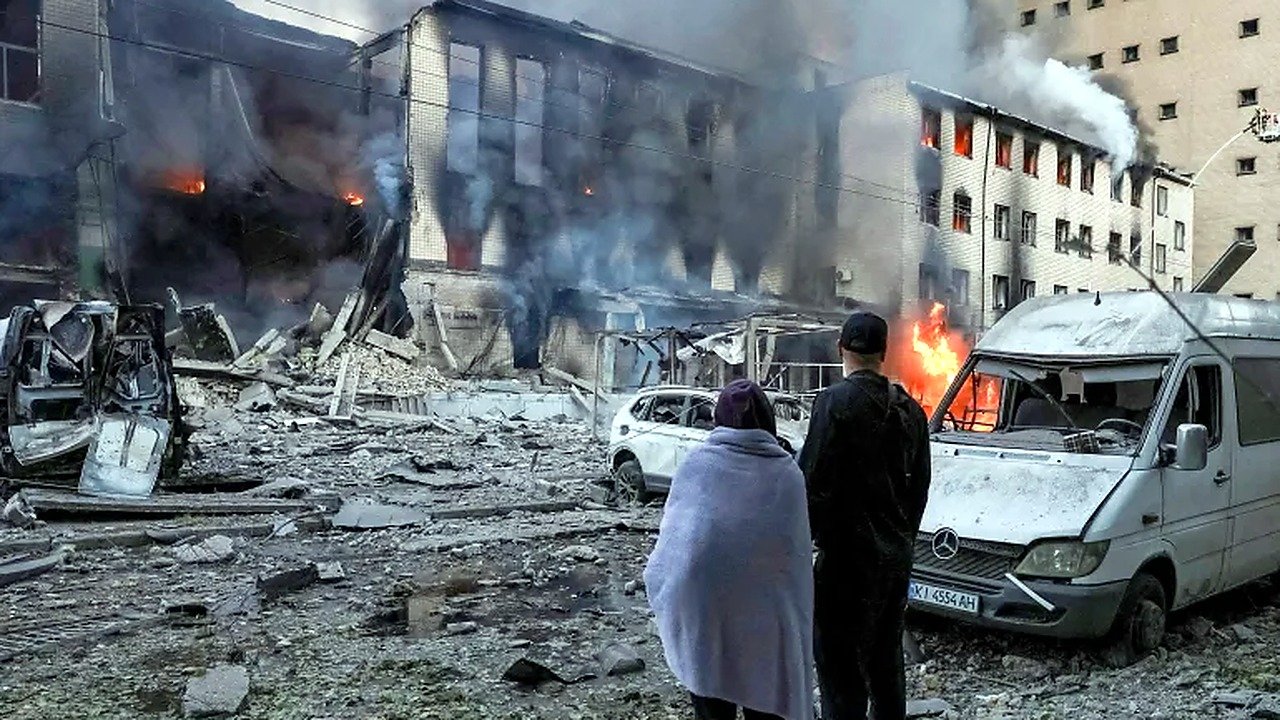
At least two people have been killed following a series of Russian strikes on Kyiv, according to local authorities.
The attacks reportedly caused damage to buildings and infrastructure in parts of the Ukrainian capital, while emergency crews were deployed to affected areas to search for victims and assess the extent of the destruction.
Several other people were also reported to have been injured in the strikes, with authorities warning residents to remain vigilant as the security situation remains tense.
The latest attacks come amid the ongoing Russia-Ukraine war, with both sides continuing to launch strikes despite repeated international calls for an end to the conflict.
Ukrainian officials have condemned the attacks and urged residents to follow safety instructions and seek shelter during air raid alerts.
Further details on the casualties and damage are expected as emergency response teams continue their operations.

Dr Ayew Afriye secures police enquiry bail for Efya Royal

President Mahama tasks Independent Fiscal Council to safeguard Ghana’s economic stability

North Korea and Russia Open First Road Bridge Linking the Two Countries



-

 Entertainment1 week ago
Oswald Okaitei Explains the Real Vision Behind Ghana’s Black Star Experience
-
 General News2 weeks ago
GES Urged to Review Student Sexual Misconduct Rule Over Alleged Discrimination Against Boys
-
 Entertainment1 day ago
Mahama Is First President to Put GH¢40m Seed Money into Creative Arts Fund: Kojo Preko Dankwa
-
 General News2 weeks ago
Oti Region Youth Endorse John Boadu, Cite Experience as Key to NPP Victory
-
 General News2 weeks ago
Zanetor and Ayariga Face Parliamentary Vetting Today
-
General News2 weeks ago
GES Opens WAEC Portal for 2026 School Placement Data Upload
-
 General News2 weeks ago
President Mahama makes further ministerial changes
-
 General News2 weeks ago
Police Suspend Concrete Mixer Truck Operations in Accra, Tema From August 28