
General News
Ghana Records 337,435 People Living with HIV in 2025, New Report Shows

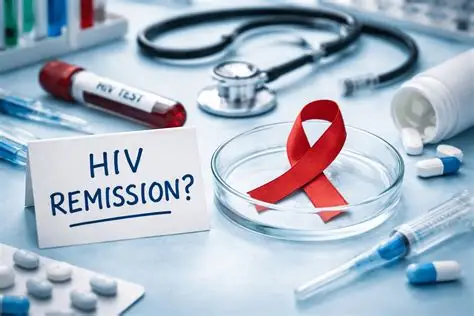
Ghana continues to make progress in the fight against HIV, but the country still faces significant challenges, according to the 2025 National HIV Estimates Fact Sheet. The latest figures show that an estimated 337,435 people are currently living with HIV, while 13,951 new infections and 12,051 AIDS-related deaths were recorded nationwide.
The report indicates that adults aged 15 years and above account for 315,513 people living with HIV, representing the largest share of the epidemic. Children aged 0–14 years account for 21,922 cases, highlighting the continued need to strengthen paediatric HIV prevention and treatment programmes. Young people remain particularly vulnerable, with 33,317 people aged 15–24 years living with HIV.
Although Ghana has made notable strides in reducing mother-to-child transmission of HIV, the report reveals that new infections remain a public health concern. Of the 13,951 new infections, adults aged 15 years and above accounted for 12,724 cases, while 1,227 infections occurred among children under 15 years. Young people aged 15–24 years accounted for 3,835 new infections, demonstrating that adolescents and young adults continue to face a high risk of infection.
The country also recorded 12,051 AIDS-related deaths during the reporting period. Adults accounted for 10,533 deaths, while 1,518 children under 15 years lost their lives to AIDS-related illnesses. The figures suggest that despite improvements in treatment services, many people are still being diagnosed late or are unable to access sustained HIV care.
National HIV prevalence among adults aged 15–49 years stands at 1.4 percent, reflecting a relatively stable epidemic but one that continues to affect thousands of Ghanaians each year. Treatment coverage, however, remains below global targets. The report shows that only 57.6 percent of adults living with HIV are receiving antiretroviral therapy (ART), while 39.6 percent of children are on life-saving treatment.
One of Ghana’s strongest achievements remains the prevention of mother-to-child transmission of HIV. The country has attained 98.9 percent PMTCT coverage, indicating that nearly all pregnant women living with HIV are receiving interventions to prevent transmission to their babies.
The report also measures Ghana’s progress toward the global 95-95-95 targets, which aim for 95 percent of people living with HIV to know their status, 95 percent of those diagnosed to receive treatment, and 95 percent of those on treatment to achieve viral suppression. Ghana has currently achieved 70 percent for HIV status awareness, 81 percent treatment coverage among those diagnosed, and 92 percent viral suppression among those on treatment. While viral suppression rates are encouraging, the data indicate that more work is needed to improve HIV testing and expand treatment access.
The fact sheet also highlights significant variations in HIV prevalence across districts. Some of the highest prevalence rates were recorded in Lower Manya Krobo (5.08%), Korle-Klottey (4.54%), Upper Manya Krobo (3.71%), Accra Metropolitan (3.67%), Tema (3.38%), Berekum (3.35%), Dormaa East (3.27%), and Asokwa (3.25%). These findings underscore the need for targeted prevention and treatment interventions in communities with the highest HIV burden.
Health experts say the new estimates provide critical data for policymakers and health partners to strengthen HIV prevention programmes, increase access to testing and treatment services, and ensure that vulnerable populations—including children, adolescents, and young people—receive the care and support they need. Sustained investment in public education, early diagnosis, and universal access to treatment will be essential if Ghana is to achieve the global goal of ending AIDS as a public health threat by 2030.
General News
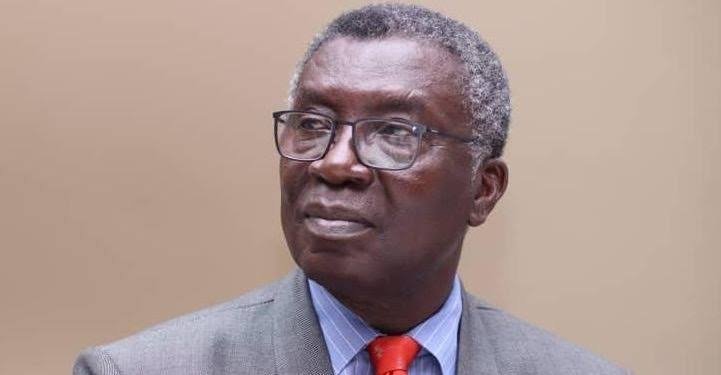
FRIMPONG-BOATENG SPEAKS ON GALAMSEY — ‘ENFORCING ENVIRONMENTAL LAWS CARRIES POLITICAL COST’

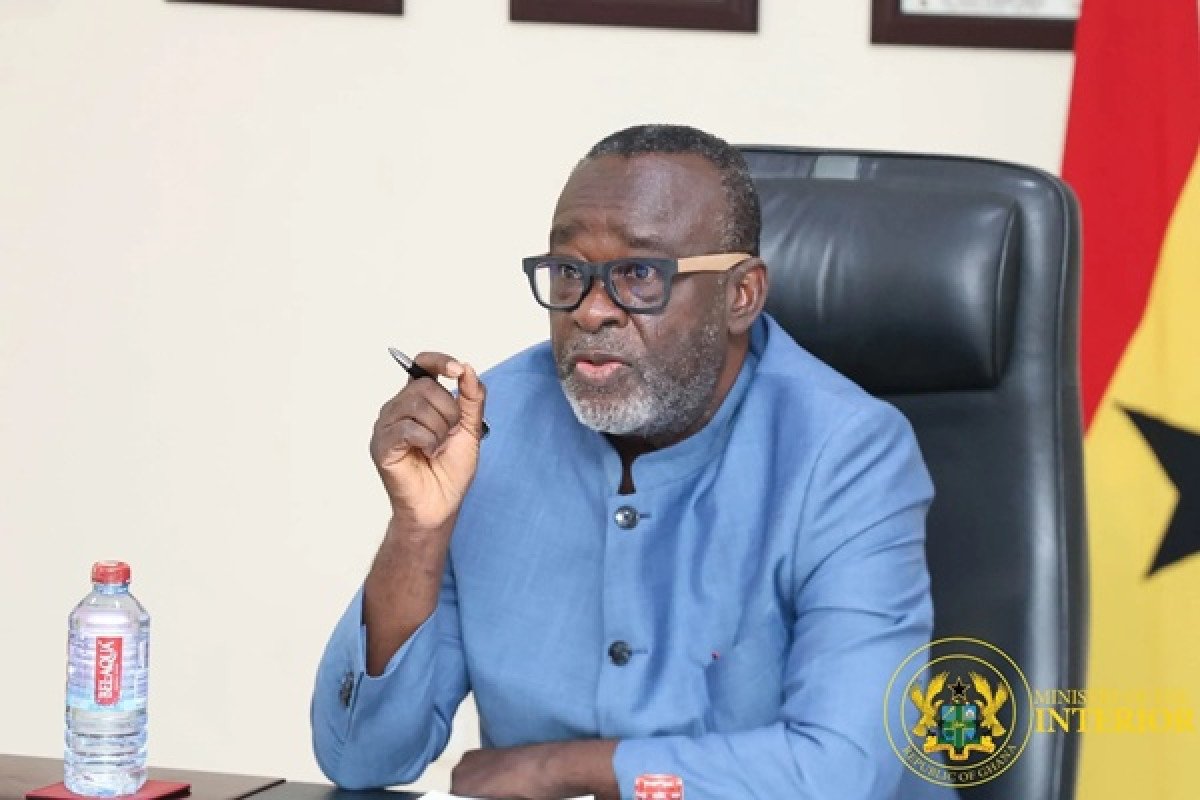
Chief Justice Paul Baffoe-Bonnie has come under intense public scrutiny after remarks about the performance of state institutions triggered concerns over the perceived political neutrality of Ghana’s Judiciary.


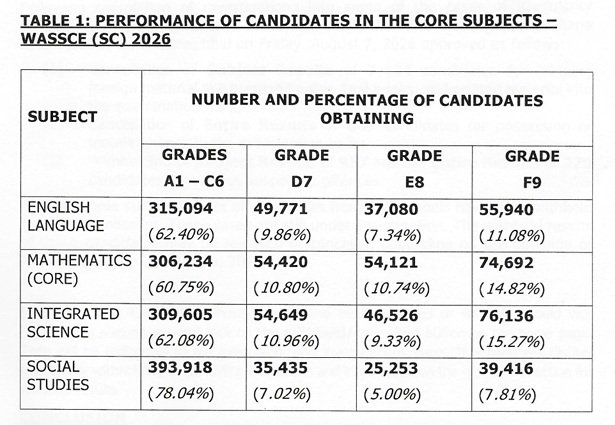
The West African Examinations Council (WAEC) has officially released the provisional results of the 2026 WASSCE for School Candidates, with Social Studies recording the strongest performance among the four core subjects.
WAEC announced the release on September 5, 2026, following the examination which saw 512,862 candidates from 1,022 schools registered to participate. The figure represents an 11.07% increase over the 461,736 candidates who entered for the 2025 examination.
SOCIAL STUDIES LEADS THE CORE SUBJECTS
Social Studies emerged as the best-performing core subject.
A total of 393,918 candidates, representing 78.04%, obtained grades between A1 and C6.
English Language followed with 62.40%, while Integrated Science recorded 62.08%. Core Mathematics saw 60.75% of candidates obtaining A1-C6.
ENGLISH PERFORMANCE CONTINUES TO DROP
One of the major talking points from the results is the continued decline in English Language performance.
WAEC’s four-year analysis shows the proportion of candidates obtaining A1-C6 in English falling from 73.11% in 2023 to 69.42% in 2024, 69.00% in 2025 and 62.30% in 2026.
Meanwhile, Mathematics and Social Studies recorded significant improvement compared with 2025, while Integrated Science also improved.
8,295 CANDIDATES FACE SANCTIONS
The release has also been accompanied by serious examination-malpractice concerns.
WAEC cancelled the entire results of 861 candidates after they were found with mobile phones in examination halls. The Council also cancelled the subject results of 7,434 candidates for bringing foreign materials, including prepared notes and textbooks, into examination halls.
In addition, the subject results of 957 candidates and the entire results of 270 candidates have been withheld over suspected offences.
Results involving candidates from 169 schools have also been withheld over alleged collusion, with investigations ongoing. WAEC says decisions on those cases may be made by October 30, 2026.
HOW CANDIDATES CAN CHECK
WAEC says the results have been hosted online, with school heads receiving login details to access their candidates’ results.
Candidates can also check their individual results through the Council’s official results-checking platform. WAEC has warned the public against fraudsters who claim they can upgrade examination results for money.

FRIMPONG-BOATENG SPEAKS ON GALAMSEY — ‘ENFORCING ENVIRONMENTAL LAWS CARRIES POLITICAL COST’

CHIEF JUSTICE COMMENTS STIR DEBATE — QUESTIONS RAISED OVER JUDICIAL IMPARTIALITY

ACCRA–KUMASI EXPRESSWAY HITS MAJOR MILESTONE — GAF COMPLETES 175.6KM CORRIDOR CLEARING



-

 General News2 weeks ago
Nana Adwoa Tutuwaa Named Global Humanitarian of the Year 2026
-
 General News2 weeks ago
Police Arrest Suspect in GH¢1.1m Fake Gold Scam at Berekum
-
 General News1 week ago
GES Urged to Review Student Sexual Misconduct Rule Over Alleged Discrimination Against Boys
-

 Entertainment6 days ago
Oswald Okaitei Explains the Real Vision Behind Ghana’s Black Star Experience
-
 General News2 weeks ago
OSP Assesses Extortion Allegations Against Afenyo-Markin
-

 Entertainment2 weeks ago
Stonebwoy Is Not My Rival — Shatta Wale Reveals They Live Minutes Apart
-
 Politics2 weeks ago
Stop The Personal Attacks!” — Vitus Azeem Demands Probe Into Sammy Gyamfi–Afenyo-Markin Feud
-

 Entertainment2 weeks ago
Mzbel Says Age Gap Is No Barrier as She Opens Up About 19-Year-Old Admirer