
General News
GTA Cash Reserves Halve to GH¢640,000 Despite Improved Liquidity Ratio


The Ghana Tourism Authority’s (GTA) cash position weakened significantly in 2025, with its cash and cash equivalents falling by more than half despite an improvement in its current ratio.
According to the 2025 State Ownership Report, GTA’s cash and cash equivalents dropped from GH¢1.30 million in 2024 to GH¢640,000 in 2025, representing a 50.77% decline.
The Authority’s operating cash flow also deteriorated during the year, moving from a positive GH¢3.84 million in 2024 to negative GH¢60,000 in 2025.
The figures point to increasing short-term liquidity pressure despite an apparently stronger current ratio.
The GTA’s current ratio improved from 1.18:1 in 2024 to 1.50:1 in 2025.
While the increase suggests an improved capacity to meet short-term obligations, the report noted that the picture is less favorable when cash holdings and operating cash flow are considered.
Net cash generated from operating activities fell from GH¢3.84 million to negative GH¢0.06 million.
Net cash flow from investing activities stood at negative GH¢0.56 million, compared with negative GH¢1.82 million in 2024.
Financing activities also recorded a negative cash flow of approximately GH¢0.03 million.
The Authority’s overall asset position also weakened.
Total assets declined by 10.84%, from GH¢15.78 million in 2024 to GH¢14.07 million in 2025.
Non-current assets fell from GH¢10.45 million to GH¢8.33 million, while total equity declined from GH¢10.19 million to GH¢9.19 million.
The report said the reduction in accumulated funds points to an erosion of the Authority’s financial strength.
Despite the pressure on its cash and assets, the GTA remains relatively lightly leveraged.
Its debt-to-asset ratio improved marginally from 0.36 times to 0.35 times, while total liabilities declined from GH¢5.60 million to GH¢4.87 million.
Trade payables stood at approximately GH¢3.82 million.
The report, however, warned that the Authority’s longer-term stability is being weakened by continuous deficits, declining accumulated funds, a shrinking asset base and the absence of internally generated revenue.

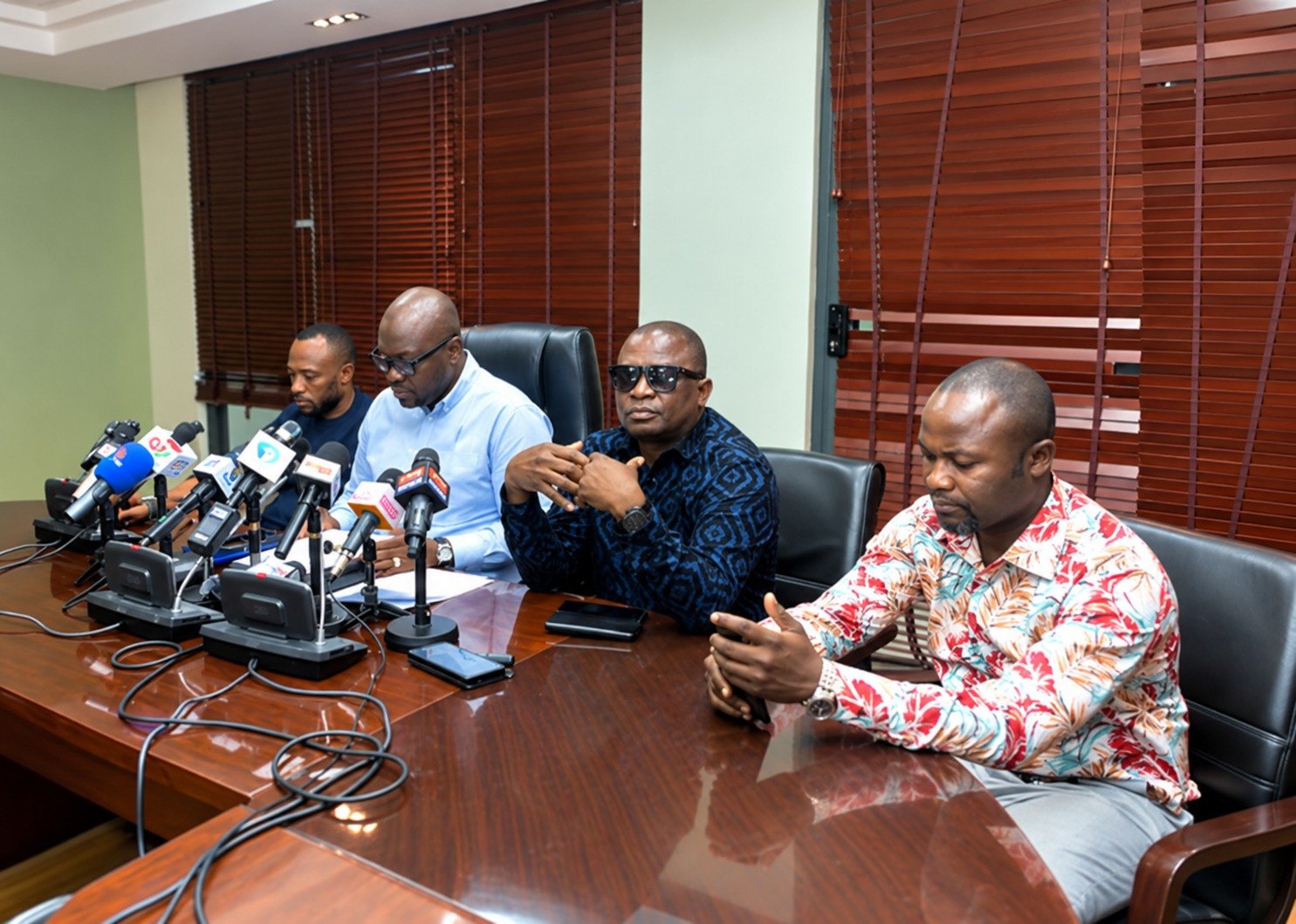
The Minority in Parliament has raised concerns over the government’s implementation of the 24-Hour Economy Market Programme, particularly the decision to demolish some existing markets and public facilities to make way for new projects.
Speaking to the media in Parliament, the Ranking Member of the Local Government Committee and Bantama MP, Francis Asenso-Boakye, called on the government to undertake further consultations and needs assessments before proceeding with the demolition of existing market structures.
According to him, the Minority is not opposed to the construction or modernisation of markets, but believes the government’s approach must be based on the actual needs and development priorities of individual communities.
‘We need proper consultation’
Asenso-Boakye argued that different districts have different development needs and therefore should not be subjected to a uniform market-development model.
He said while some communities may genuinely require new markets, others may need their existing markets rehabilitated, expanded or upgraded.
“Development, especially a market development programme, cannot be one-size-fits-all,” he argued.
The former minister questioned whether adequate needs assessments, feasibility studies and local development plans had been conducted before the projects were rolled out.
Minority questions demolition of existing facilities
The Bantama MP also questioned the rationale behind demolishing existing markets and other public facilities when alternative approaches could potentially achieve the same objective without disrupting traders and communities.
He maintained that government must properly investigate the condition and capacity of existing facilities before deciding to demolish them.
The Minority’s position comes amid growing attention to the government’s 24-hour economy initiative and the construction of markets intended to support economic activity beyond traditional trading hours.
‘Not every district needs a new market’
According to Asenso-Boakye, some districts already have markets under construction, while others may have more urgent needs such as roads, drainage systems, schools, healthcare facilities and sanitation.
He therefore urged the government to engage District Assemblies and other local stakeholders before making decisions on where and how the markets should be developed.
He stressed that District Assemblies are planning authorities within their jurisdictions and should have a meaningful role in determining projects that affect their communities.
Minority calls for review
The Minority is consequently calling for a review of aspects of the 24-Hour Economy Market Programme that involve the demolition of existing structures.
Asenso-Boakye said the government must demonstrate that the projects are supported by proper planning and evidence of need rather than being implemented as a blanket national policy.
He further warned that failure to adequately consult local authorities and affected communities could undermine the principles of decentralisation.
The Minority’s concerns are likely to intensify the debate over how the government’s flagship 24-hour economy policy should be implemented, particularly where existing public assets, traders and local communities are directly affected.
For the Minority, the objective of modernising Ghana’s markets is not in dispute — the concern is whether the government is demolishing first and planning later, rather than allowing proper consultation and evidence-based planning to guide the process.

The Ghana Tourism Authority (GTA) organised and supported a number of major tourism activities in 2025, but its financial statements show a weakening financial position, with declining assets, shrinking cash reserves and continued dependence on external funding.
The 2025 State Ownership Report lists several important events undertaken during the year, including Chocolate Day, Taste 68@68, Kwahu Paragliding, Panafest/Emancipation Day, World Tourism Day, the National Tourism Awards and December in GH.
Despite these activities, the Authority ended the year with GH¢58.26 million in total income and a net deficit of GH¢1 million.
The report’s key figures show that the GTA had GH¢14.07 million in total assets and GH¢9.19 million in total accumulated funds at the end of 2025.
It also recorded zero internally generated funds.
The GTA’s mandate is to regulate, supervise, promote and develop Ghana’s tourism industry.
It is responsible for ensuring sustainable tourism growth, licensing and monitoring tourism enterprises, maintaining industry standards, promoting tourist attractions, safeguarding consumers and collaborating with stakeholders to position Ghana as a leading tourism destination.
Its stated strategic intent is to promote the sustainable development of the tourism industry both within Ghana and internationally.
However, the financial report raises questions about the Authority’s ability to finance its operations independently.
The GTA generated no IGF in either 2024 or 2025.
At the same time, government grants fell dramatically from GH¢43.98 million to GH¢21.39 million.
Although other income increased to GH¢36.87 million, total income still fell by GH¢13.31 million, from GH¢71.57 million to GH¢58.26 million.
The Authority’s total expenditure dropped by 24.11%, from GH¢78.09 million in 2024 to GH¢59.26 million in 2025.
However, personnel expenditure increased by almost GH¢4.4 million, rising from GH¢29.25 million to GH¢33.64 million.
As a result, personnel costs accounted for 57.73% of total income in 2025, compared with 40.88% in 2024.
Service activity expenses, meanwhile, fell from GH¢36.60 million to GH¢12.17 million.
The report said the decline in expenditure was therefore primarily associated with reduced programme and service activities rather than improved efficiency.
The GTA’s cash position weakened considerably during the year.
Cash and cash equivalents declined from GH¢1.30 million to GH¢0.64 million, while operating cash flow moved from a positive GH¢3.84 million to negative GH¢0.06 million.
Total assets also fell by 10.84%, from GH¢15.78 million to GH¢14.07 million.
Total equity declined from GH¢10.19 million to GH¢9.19 million, while liabilities reduced from GH¢5.60 million to GH¢4.87 million.
The debt-to-asset ratio improved marginally from 0.36 to 0.35, suggesting that the Authority remains relatively lightly leveraged.
However, the report said its long-term stability is gradually weakening due to continuous deficits, declining accumulated funds, a shrinking asset base and the lack of internally generated revenue.
The report also states that the Ghana Tourism Authority did not report any quasi-fiscal activities for 2025.
It similarly reported no climate-smart investments during the year.
The Authority is currently headed by Maame Efua Houadjeto, while Gertrude Emefa Donkor serves as Chair of the Governing Board.
The board secretary is Stella Osei, with members including Maame Efua Houadjeto, Yusif Issaka Jajah, Kwame Adu Darko Okyere-Mensuo, Samuel Seth Passah, Joseph Osiakwan, Suweibatu Adam, Afi Amoro, Anthony Bart-Appiah, Bella Korkoe Ayayee Ahu and Darison Baba Al-Hassan. The report indicates the listed board appointments were made in August 2025.
The GTA’s auditors are TRC Consult Chartered Accountants.
The Authority operates under the GTA Act, 2011 (Act 817) and falls under the Ministry of Tourism, Culture and Creative Arts (MOTAC)
The Ghana Tourism Authority (GTA) recorded a significant decline in its total income in 2025, with revenue falling by 18.6% amid a sharp reduction in government funding.
According to the 2025 State Ownership Report, the Authority’s total income dropped from GH¢71.57 million in 2024 to GH¢58.26 million in 2025.
The report attributes the decline largely to a substantial reduction in Government of Ghana (GoG) grants, which fell from GH¢43.98 million in 2024 to GH¢21.39 million in 2025.
Although the Authority’s other income increased from GH¢27.59 million to GH¢36.87 million, the increase was not enough to compensate for the decline in government grants.
The report also revealed that the GTA recorded zero internally generated funds (IGF) in both 2024 and 2025.
This, according to the assessment, points to a structural weakness in the Authority’s ability to independently generate revenue and highlights its continued reliance on external funding sources.
The decline in income was accompanied by a reduction in total expenditure.
GTA’s total expenditure fell from GH¢78.09 million in 2024 to GH¢59.26 million in 2025, representing a 24.11% reduction.
The reduction was mainly driven by a sharp fall in service activity expenses, which declined from GH¢36.60 million to GH¢12.17 million.
However, personnel costs moved in the opposite direction, increasing from GH¢29.25 million to GH¢33.64 million.
The figures suggest that fixed personnel-related costs remained high despite the reduction in the Authority’s operational scale.
The GTA remained in deficit in both years, although the deficit narrowed from GH¢6.52 million in 2024 to GH¢0.99 million in 2025.
The report said the improvement was largely driven by expenditure cuts rather than growth in revenue.
The Authority’s net margin also improved from negative 9.12% in 2024 to negative 1.71% in 2025.
Despite this improvement, the report described the GTA as structurally loss-making and financially dependent on external funding.
The report further highlighted concerns over efficiency, noting that the personnel cost ratio increased from 40.88% of total income in 2024 to 57.73% in 2025.
This means salaries and related personnel costs consumed a substantially larger portion of the Authority’s income.
According to the report, the development suggests declining operational flexibility and worsening cost efficiency.
The GTA’s business model remains centred on the regulation and promotion of tourism enterprises, with its mandate covering the regulation, supervision, promotion and development of Ghana’s tourism industry.
The Authority was established under the Tourism Act, 2011 (Act 817).
Its stated vision is to make Ghana a leading tourism destination in Africa through sustainable tourism development, while its mission is to promote, regulate and develop a sustainable and competitive tourism industry through innovation, partnerships, destination development and inclusive participation.
Residents of the Okere District in the Eastern Region have raised concerns over what they describe as years of persistent and unexplained power outages, despite the district’s proximity to the Akosombo power generation facility.
The concerns have been detailed by Seth Afum A. Dankwah of J. G. Knol Technical Institute, Adukrom-Akuapem, in an account highlighting the impact of prolonged power interruptions on households, schools, healthcare facilities, businesses, security and community activities.
According to Dankwah, he lived in Mampong-Akuapem in the Akuapem North District and commuted to work in the neighbouring Okere District from 2012 until the middle of 2026.
He said the experience exposed him to what he described as a “tale of two towns”, with Mampong often having electricity while Okere, only about 25 minutes away, remained in darkness.
Dankwah said he would frequently leave Mampong with electricity powering homes, radios and household activities, only to arrive in Adukrom and other parts of Okere where residents were experiencing complete power outages.
He has since relocated permanently to Okere and says the situation, which was previously a workplace inconvenience, has now become a daily reality affecting his home and community.
Dankwah said Okere’s electricity challenges did not begin in 2012 but had existed even before he started working in the district.
He argued that the problem had persisted through different governments, District Chief Executives and Electricity Company of Ghana (ECG) district managers, despite repeated promises to address the situation.
He described the persistent outages as having become a permanent feature of life in the district.
According to him, the situation is particularly difficult to understand because Okere is located less than 30 kilometres from Akosombo, where the Volta River is used to generate electricity for Ghana.
Dankwah said Okere District, which includes Adukrom, Abiriw, Dawu, Awukugua, Apirede, Abonse, Aseseeso and Asenema, is geographically close to the Akosombo power generation area.
He said he had been informed that the Adukrom Waterworks receives a dedicated high-tension electricity supply directly from the Akuse corridor through Adelakope and Akorley.
According to him, that line is frequently supplied with power even when large parts of Okere are without electricity.
He explained that the rest of the district, including homes, schools, health facilities and businesses, receives electricity from the Mampong Substation in the Akuapem North District.
Dankwah said Mampong is about 25 minutes away from Okere and questioned why electricity availability in Mampong does not translate into reliable supply for Okere.
He said residents have observed a recurring pattern in which Mampong, Akropong and Mamfe in Akuapem North, as well as Somanya and Odumase in the Krobo area, have electricity while Okere, located between these communities, remains in darkness.
“If your source has light and you who are fed from that source are in darkness, your problem is not generation from Akosombo,” he argued.
He suspects the challenge may instead be linked to local distribution infrastructure, including what he described as undersized and overloaded transformers and a weak, single feeder serving the Mampong-Okere area.
Dankwah noted that Adukrom became the capital of the Okere District in 2018 and has since experienced population growth, expansion of businesses and increased demand for electricity.
He believes the electricity infrastructure serving the district has not kept pace with this growth.
According to him, some transformers are unable to withstand increased demand and frequently trip, leaving communities without power.
He therefore called for a technical assessment of the electricity infrastructure serving Okere to determine the actual cause of the recurring outages.
The power crisis, according to Dankwah, is affecting education across the district.
He questioned how teachers can prepare lesson notes and other teaching materials at night when electricity is unavailable.
He also raised concerns about Junior High School and Senior High School students who require electricity for evening preparation, particularly those preparing for the Basic Education Certificate Examination (BECE) and West African Senior School Certificate Examination (WASSCE).
Teachers, he said, struggle to charge phones and laptops, print worksheets, and carry out other activities requiring electricity.
He also pointed to the situation of Information and Communication Technology (ICT) teachers who sometimes have to teach computing without being able to power computers.
Dankwah said health facilities in Okere also bear the consequences of the outages.
He cited facilities in Adukrom, Abiriw and Aseseeso, saying they are forced to rely on generators whenever the power goes off.
He said the cost of fuel places additional pressure on health facilities that already operate with limited resources.
He also expressed concern about the possible impact of prolonged outages on vaccines and other medical supplies that require refrigeration.
According to him, night-time deliveries sometimes have to be conducted with torchlights, while laboratories may be unable to perform certain tests during power outages.
He further said patients requiring nebulisers and other electricity-dependent medical equipment could be placed in difficult situations when electricity supply is interrupted.
The persistent darkness also has implications for security, Dankwah said.
He mentioned police facilities at Adukrom, Okra Kwadwo and Amanfro as being affected by the outages.
He said the loss of street lighting leaves sections of the district capital in darkness and reduces visibility for security patrols.
According to him, the situation represents a security risk that residents have unfortunately become accustomed to.
Dankwah said the Okere District Assembly also suffers whenever electricity supply is interrupted.
He said the Assembly may be unable to print documents, maintain network connectivity or conduct normal administrative operations.
The Ghana Education Service office at Apirede and the Health Directorate at Dawu are also among the institutions he said are affected.
He further cited Okere Rural Bank, which he said frequently relies on a standby generator.
According to him, the cost of diesel for maintaining power at the bank adds significantly to its operating expenses.
He questioned how Okere can attract businesses and investors when basic electricity supply remains unreliable.
The outages, according to Dankwah, are also taking a financial toll on households.
He said the repeated switching on and off of electricity can damage refrigerators, televisions, microwaves, stabilisers and other electrical appliances.
He added that boarding schools, restaurants and market women who store frozen food also risk losing their goods when freezers remain without power for extended periods.
Families, he said, also struggle to iron school uniforms and use electric cookers to prepare meals when electricity is unavailable.
Some households, according to him, can point to burnt stabilisers, damaged televisions and other appliances which they believe were affected by the unstable supply.
He also complained about the lack of compensation for customers whose appliances are damaged.
Dankwah said the effects of the electricity crisis extend beyond economic and public services to Okere’s social and cultural life.
Churches holding Sunday services, Wednesday and Friday evening programmes, all-night services and crusades often have to rely on generators.
He said the cost of fuel increases the financial burden on churches, while generator noise can interfere with church programmes.
Funerals are also affected, he said, particularly because final funeral rites and family gatherings in Okere often continue into the night.
Without electricity, public address systems, microphones, lighting and other equipment may stop working, forcing bereaved families to spend additional money to hire generators.
Naming ceremonies, weddings, traditional engagements and other social events also face challenges when electricity is unavailable.
Dankwah said food stored for guests can spoil when freezers lose power, while traditional programmes and community gatherings may be disrupted.
He also mentioned traditional authorities and community activities, including Odwira celebrations, where palaces and durbars require electricity for lighting and other arrangements.
He said young people who could otherwise use the evenings for studies, vocational activities or other productive work are sometimes left idle because of the darkness.
“We are not just losing power; we are losing our community life, our togetherness, our culture,” he said.
Dankwah also drew attention to the different ECG arrangements involved in supplying electricity to the area.
He said ECG’s Tema Region, Krobo District in Somanya, controls the major high-tension supply serving the Waterworks, while ECG’s Eastern Region, Mampong District, bills and services domestic and commercial electricity from the Mampong feeder.
He provided the following contacts for the respective ECG operations: Krobo District in Somanya – 050 161 6351, and Mampong District – 020 516 4188.
According to him, this arrangement means that when the Mampong-Okere feeder experiences problems, residents and businesses in Okere bear the consequences.
Dankwah also recounted an experience shared by his colleague, Stephen Atobrah, following a 24-hour power outage in Adukrom-Akuapem.
He said Atobrah contacted ECG about the outage but was reportedly informed that workers were cutting tree branches or logs and needed his assistance to cut the trees to facilitate restoration.
Dankwah questioned the situation, saying customers who pay for electricity should not be expected to provide labour to restore the service.
Dankwah is appealing to ECG Eastern Region and the Public Utilities Regulatory Commission (PURC) to urgently investigate and address the electricity challenges facing Okere.
He is calling for an audit and upgrade of all transformers serving communities on the Mampong feeder.
He also wants the dedicated Mampong-Okere feeder reconstructed and strengthened to improve the reliability of electricity supply to the district.
He further called for the establishment of a rapid-response team dedicated to Okere to ensure that outages are addressed more quickly.
Where load-shedding is unavoidable, he wants ECG to publish a clear timetable so residents, schools, businesses and public institutions can plan around the outages.
He also called for consideration of compensation mechanisms for customers whose appliances are damaged by persistent power interruptions and unstable supply.
Dankwah said that after experiencing the situation for nearly 14 years as a commuter and now as a resident, he believes Okere deserves urgent attention.
He described Okere as a peaceful and developing district that pays its electricity bills and deserves a reliable power supply.
“The power comes from Akosombo, passes through Mampong, to Okere. It passes over Okere to light Accra. It is time it lights Okere regularly too,” he said.
The statement was issued by Seth Afum A. Dankwah, of J. G. Knol Technical Institute, Adukrom-Akuapem, Eastern Region, on September 13, 2026.
The Narcotics Control Commission (NACOC) has arrested three suspects allegedly linked to the activities of Dutch fugitive and suspected international drug trafficker Jos Leijdekkers, popularly known as “Bolle Jos.”
The arrests come amid heightened international scrutiny of Ghana following the seizure of a major cocaine shipment by French authorities.
According to NACOC, the three suspects are believed to have represented and facilitated the activities of Leijdekkers in Ghana. They are currently in the Commission’s custody and assisting investigators as authorities work to establish their alleged roles in the drug-trafficking network.
Arrests follow major cocaine seizure
NACOC said the arrests followed reports of a cocaine shipment seized by French customs, which investigators believe may be connected to a wider international trafficking network.
French customs recently intercepted nearly 3.9 tonnes of cocaine, valued at approximately €225 million, concealed in a container of plastic waste that had arrived at the port of Dunkirk from Ghana.
The shipment contained 167 packages of cocaine, with part of the consignment reportedly destined for Antwerp, Belgium. French authorities have since opened an investigation into the network behind the shipment.
Three suspects now in NACOC custody
NACOC has not publicly disclosed the identities of the three suspects or provided detailed information about their individual roles.
The Commission said, however, that they are assisting investigators as authorities examine their alleged involvement in the activities of Leijdekkers.
The arrests could potentially provide investigators with information about the people, logistics and financial structures allegedly supporting the international drug network in Ghana.
Who is ‘Bolle Jos’?
Jos Leijdekkers, widely known as “Bolle Jos,” is a Dutch fugitive who has been linked to major international cocaine-trafficking operations.
He has previously been convicted in the Netherlands in absentia for large-scale drug trafficking and other serious offences. An international manhunt has followed his movements, with reports placing him in West Africa.
Investigators and international law-enforcement agencies have continued to examine his alleged connections to drug-trafficking networks operating across the region.
NACOC sends strong warning
The latest arrests reinforce NACOC’s position that Ghana will not be allowed to become a safe haven or operational base for international drug-trafficking organisations.
The Commission said it would continue working with both domestic and international law-enforcement partners to disrupt the people, finances and infrastructure supporting the illicit drug trade.
NACOC also stressed that the rights and legal protections of persons under investigation would be respected.
Growing pressure over Ghana’s drug-trafficking links
The arrests come at a time of increasing scrutiny of Ghana’s role in international narcotics trafficking.
The recent French seizure has triggered renewed questions about how such a massive consignment of cocaine could move through an international supply chain before being intercepted abroad.
The case has also intensified calls for Ghanaian authorities to identify and prosecute those responsible for using the country’s logistics networks for international drug trafficking.
Investigation continues
For now, the three suspects remain in NACOC custody while investigations continue.
Their arrest does not establish guilt, and any criminal liability will ultimately depend on evidence gathered by investigators and the outcome of due legal proceedings.
However, the development represents a significant step in Ghana’s efforts to investigate alleged local links to one of the most wanted figures in the international drug trade.
As NACOC and its international partners continue to follow the trail, attention will now turn to what investigators uncover about the alleged “Bolle Jos” network in Ghana — and whether more arrests will follow.

Mahama names 48 Engineer Regiment as major sub-contractor for Accra-Kumasi Expressway

Sista Afia Opens Up About Fear of Becoming a Single Mother

Minority questions demolition of markets under 24-hour economy programme



-

 Entertainment1 week ago
Mahama Is First President to Put GH¢40m Seed Money into Creative Arts Fund: Kojo Preko Dankwa
-

 Entertainment2 weeks ago
Oswald Okaitei Explains the Real Vision Behind Ghana’s Black Star Experience
-
 General News2 weeks ago
COCOBOD Settles GH¢2.3 Billion DDEP Bond Obligations for 2026
-
 General News1 week ago
Don’t Punish Them Retrospectively – Educationist Challenges New CSSPS Placement Rule
-

 Culinary1 week ago
The Green Heart of Ghanaian Cuisine: Celebrating Nkontomire and the Art of Abom
-

 Entertainment6 days ago
Government Repatriates Musician Barosky from UK
-

 Culinary2 weeks ago
Pineapple: The Spiky Tropical Fruit Packed With Sweetness and Nutrients
-

 General News1 week ago
OSP Opens Preliminary Investigation into Alleged GH¢70,000 Payment Linked to Parliament’s Vetting