Connect with us

General News

‘Impunity Is Not Over’ — CAGG Raises Fresh Alarm Over Illegal Mining

Published

on

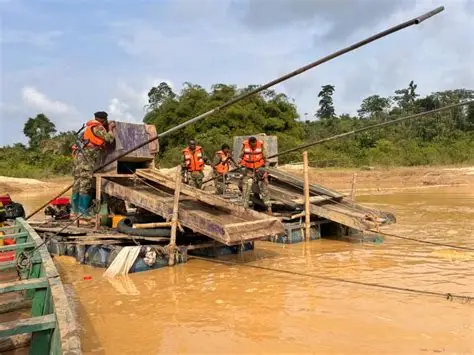
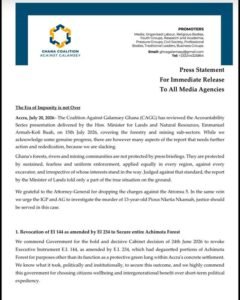
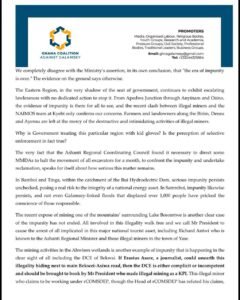
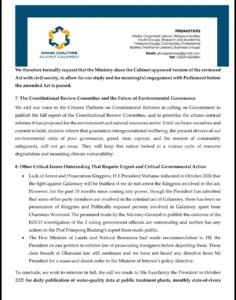
The Ghana Coalition Against Galamsey (CAGG) has dismissed the government’s claim that the “era of impunity is over” in the fight against illegal mining, arguing that widespread galamsey activities across several parts of the country prove that lawlessness remains deeply entrenched.

In a statement issued in Accra on Monday, July 20, the coalition acknowledged what it described as notable progress by the Ministry of Lands and Natural Resources but maintained that enforcement efforts remain inconsistent and inadequate to effectively protect Ghana’s forests, rivers and mining communities.

According to CAGG, the success of the anti-galamsey campaign will not be measured by official announcements but by sustained, impartial enforcement against offenders, regardless of their political or financial influence.

“Ghana’s forests, rivers and mining communities are not protected by press briefings. They are protected by sustained, fearless and uniform enforcement, applied equally in every region, against every excavator, and irrespective of whose interests stand in the way,” the coalition stated.

Achimota Forest Decision Praised

The coalition commended the government for revoking Executive Instrument (E.I.) 144, as amended by E.I. 234, which had removed portions of the Achimota Forest Reserve from protected status. It described the Cabinet’s decision as a significant step toward preserving one of Accra’s most important ecological assets.

CAGG also welcomed the Attorney-General’s decision to withdraw charges against the “Atronsu Five” and urged both the Attorney-General and the Inspector-General of Police to ensure justice for 13-year-old Pious Nketia Nkansah, who was allegedly murdered.

Forest Reserves Still Under Siege

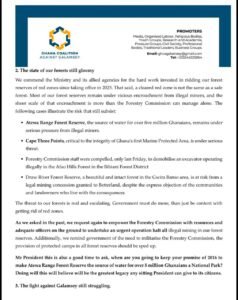
Despite ongoing operations to remove illegal miners from forest reserve “red zones,” the coalition warned that several protected areas remain under serious threat.

It identified the Atewa Range Forest Reserve, Cape Three Points Forest Reserve, Afao Hills Forest Reserve and the Draw River Forest Reserve as hotspots where illegal mining continues to pose a major environmental risk.

To strengthen conservation efforts, CAGG called for increased funding for the Forestry Commission, the establishment of permanent security camps within forest reserves and renewed efforts to fulfil government’s pledge to upgrade Atewa Forest into a national park.

Illegal Mining Continues Across Regions

Rejecting the Ministry’s assertion that impunity has ended, the coalition pointed to continued illegal mining activities in the Eastern, Ashanti, Bono and Western regions.

According to CAGG, illegal mining remains active around the Birim, Densu and Ayensu river basins, near the Bui Hydroelectric Dam, around Lake Bosomtwe and within the Ahwiren wetlands.

The group also questioned what it described as selective enforcement and urged President John Dramani Mahama to ensure that all individuals implicated in illegal mining offences are investigated and prosecuted without fear or favour.

Questions Raised Over NAIMOS

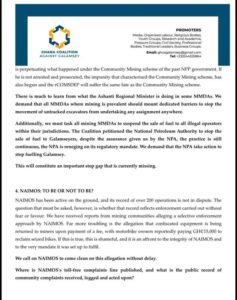
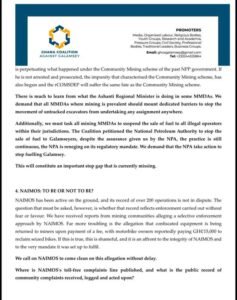
CAGG further expressed concern about the operations of the National Anti-Illegal Mining Operations Secretariat (NAIMOS).

Although it acknowledged the secretariat’s reported record of conducting more than 200 operations, the coalition said allegations of selective enforcement and claims that seized excavators had been returned to offenders after payments deserve immediate investigation.

It urged NAIMOS to publicly respond to the allegations and improve transparency by publishing details of its complaint-handling procedures and enforcement outcomes.

Police and Local Authorities Urged to Do More

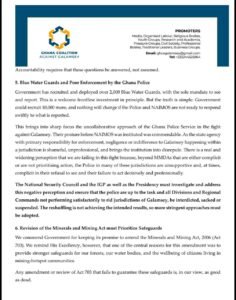
The coalition also criticised what it described as weak enforcement by sections of the Ghana Police Service, arguing that deploying additional Blue Water Guards alone would not solve the galamsey problem unless intelligence gathered from the field results in swift arrests and prosecutions.

It called for tighter supervision of police commanders in mining districts, disciplinary action against officers who fail to enforce the law, stricter regulation of excavator movements and tighter controls over fuel supplies to illegal mining operators.

Coalition Calls for Stronger Reforms

While welcoming government’s plans to amend the Minerals and Mining Act, 2006 (Act 703), CAGG insisted that the revised legislation must provide stronger protection for forests, water bodies and mining communities.

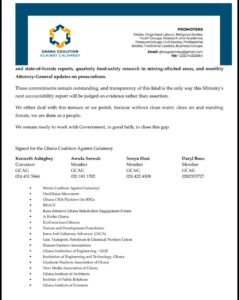
The coalition also called for the publication of the Constitutional Review Committee’s report, the prosecution of alleged galamsey kingpins, greater transparency in environmental governance and the regular release of reports on water quality, forest conditions and prosecutions.

CAGG reaffirmed its willingness to work with the government to strengthen environmental protection but cautioned that failure to decisively tackle illegal mining could have devastating long-term consequences for the country.

“We either deal with this menace or we perish, because without clean water, clean air and standing forests, we are done as a people,” the statement concluded.
General News

FRIMPONG-BOATENG SPEAKS ON GALAMSEY — ‘ENFORCING ENVIRONMENTAL LAWS CARRIES POLITICAL COST’

Published

on

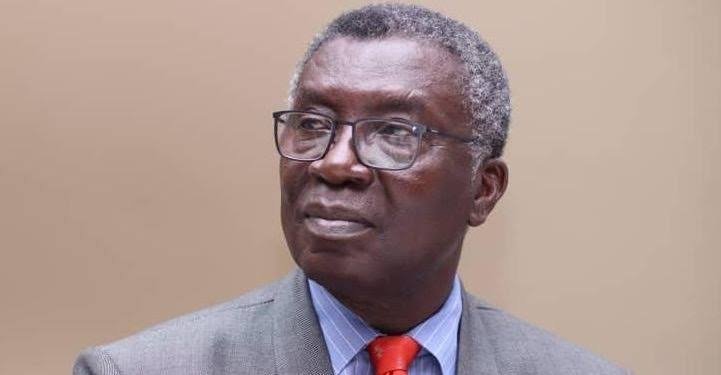
Former Environment Minister Prof. Kwabena Frimpong-Boateng has delivered a blunt assessment of Ghana’s prolonged battle against illegal mining, arguing that political calculations have repeatedly weakened efforts to protect the country’s rivers, forests and farmlands.

Speaking at the Fourth Annual Colloquium of the Department of Political Science Education at the University of Education, Winneba, Prof. Frimpong-Boateng said successive governments had introduced measures to tackle galamsey but struggled to sustain them.

‘THE POLITICAL COST FALLS ON THE ENFORCER’

Prof. Frimpong-Boateng argued that officials who enforce environmental laws often bear the political consequences, while those who fail to act face little or no cost.

He said this imbalance has contributed significantly to Ghana’s difficulty in defeating illegal mining.

“In Ghana, the political cost of enforcing environmental law falls on the enforcer, and the political cost of not enforcing it falls on nobody.”

ANTI-GALAMSEY SYSTEM WAS BUILT — THEN ABANDONED

The former minister recalled measures introduced between 2017 and 2018, including the ban on artisanal and small-scale mining, Operation Vanguard, district-level committees, miner training and systems to monitor mining concessions and excavators.

According to him, the measures initially produced visible results, with parts of the Pra River becoming clear and reports of fish returning to waters previously considered severely degraded.

He argued, however, that many of the safeguards were abandoned after the mining ban was lifted in December 2018.

GH¢21 BILLION? NO — $21 BILLION RESTORATION BILL

Prof. Frimpong-Boateng has also warned about the enormous financial cost of repairing the damage caused by illegal mining and other destructive activities.

He estimates that Ghana could require approximately US$21 billion to reclaim and restore degraded lands, with about 10% of the country’s surface area affected.

CALL FOR A NATIONAL ENVIRONMENTAL COMPACT

The former minister is proposing a National Environmental Compact to protect major environmental policies from being discarded whenever political power changes hands.

Under his proposal, any government seeking to abandon a major environmental commitment would have to explain the decision to Parliament and account for resources already invested in the policy.

He believes creating consequences for policy abandonment would make successive administrations more reluctant to sacrifice long-term environmental protection for short-term political considerations.

‘JAIL THOSE WHO APPROVE ILLEGAL PROJECTS’

Prof. Frimpong-Boateng has further called for personal criminal liability for public officials who approve developments in protected wetlands, watercourses, drainage channels and forest reserves.

His argument is that institutions cannot be imprisoned for unlawful decisions — the individuals responsible for approving them should face accountability.

THE GALAMSEY BATTLE CONTINUES

With Ghana still grappling with polluted water bodies, degraded farmlands and destroyed forest reserves, Prof. Frimpong-Boateng believes the country needs more than political promises and temporary interventions.

His latest intervention has once again shifted attention to the difficult question of political will, enforcement and accountability in Ghana’s fight against galamsey.

For Prof. Frimpong-Boateng, Ghana already knows many of the solutions. The real challenge is whether political leaders will have the courage to enforce them — and keep them in place.

Continue Reading

General News

CHIEF JUSTICE COMMENTS STIR DEBATE — QUESTIONS RAISED OVER JUDICIAL IMPARTIALITY

Published

on

Chief Justice Paul Baffoe-Bonnie has come under intense public scrutiny after remarks about the performance of state institutions triggered concerns over the perceived political neutrality of Ghana’s Judiciary.
The controversy follows comments he made during visits to the Social Security and National Insurance Trust (SSNIT) and the Minerals Income Investment Fund (MIIF) on September 2, where he praised improvements under the current administration while questioning how some institutions had been managed over the previous eight years.

‘WHAT HAVE WE BEEN DOING?’

During his visit to MIIF, the Chief Justice expressed admiration for what he had seen and heard about the performance of some state institutions.

He questioned what Ghana had been doing over the previous eight years, remarks that were interpreted by critics as an implicit comparison between the current NDC administration and the previous NPP government.

His comments have since sparked a wider debate about whether the head of the Judiciary should publicly assess the performance of successive governments.

CDD-GHANA CALLS FOR RESTRAINT

The Ghana Center for Democratic Development (CDD-Ghana) has urged the Chief Justice to exercise the highest possible restraint and discretion in his public engagements.

The organisation warned that comments contrasting the current administration with its predecessor could create a perception of political bias and potentially affect public confidence in the impartiality of the Judiciary.

CRITICS TURN UP THE HEAT

The comments have also attracted criticism from political actors and public commentators.

The NPP has accused the Chief Justice of making political commentary and called on him to resign, while political activist and physician Dr Arthur Kobina Kennedy has argued that the remarks were inappropriate for the head of an independent arm of government.

Former Auditor-General Daniel Yaw Domelevo has also urged the Chief Justice to avoid commenting on political matters that could potentially become subjects of litigation, warning that such statements could create a perception of bias.

JUDICIAL SERVICE RESPONDS

Amid the growing controversy, the Judicial Service has defended the Chief Justice’s intentions.

Judicial Secretary Musah Ahmed said the observations were made “in good faith” and were not intended to undermine judicial independence. The Service further reaffirmed the Chief Justice’s commitment to the integrity and independence of the Judiciary and to justice and equality before the law.

THE BIGGER QUESTION

At the heart of the controversy is a delicate constitutional issue: how far can the head of Ghana’s Judiciary go in publicly commenting on political and governmental performance without creating the appearance of taking sides?

While the Chief Justice’s supporters may view his comments as observations on institutional performance, critics believe the language and comparisons risk blurring the line between judicial leadership and political commentary.

With calls for restraint growing and the Judicial Service standing by the Chief Justice’s intentions, the debate over judicial independence, perception and political neutrality is far from over.

Continue Reading

General News

ACCRA–KUMASI EXPRESSWAY HITS MAJOR MILESTONE — GAF COMPLETES 175.6KM CORRIDOR CLEARING

Published

on

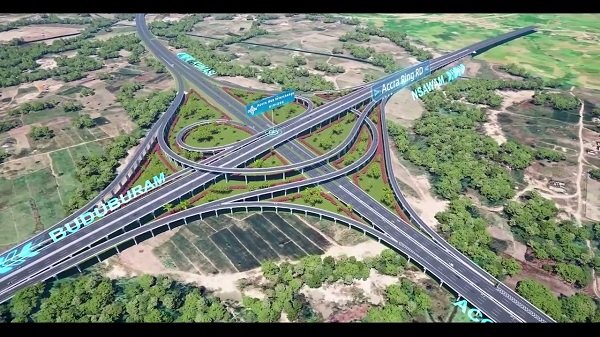
The Ghana Armed Forces has completed the right-of-way clearing for the proposed Accra–Kumasi Expressway, bringing the ambitious six-lane road project a major step closer to construction.

The military engineering team has cleared 175.6 kilometres of the corridor in 19 weeks, beating the original 20-week target by one week.

‘MISSION ACCOMPLISHED’

The completion marks a significant milestone in preparations for one of Ghana’s biggest infrastructure projects.

The Ghana Armed Forces was tasked with clearing the designated corridor to create the required right-of-way ahead of the next stages, including detailed engineering and construction. Defence Minister Kenneth Gilbert Adjei described the achievement simply as: “Mission accomplished.”

FROM 50% TO FULL CLEARING

The progress has been rapid.

As of June 25, only 89.5 kilometres, representing 50.9% of the corridor, had been cleared. By September 3, the figure had risen to 170 kilometres, leaving just six kilometres. The military has now completed the full 175.6-kilometre assignment.

$1.7 BILLION ALREADY SECURED

The government has also announced that US$1.7 billion has been deposited at the Bank of Ghana in a dedicated account for the project.

Finance Minister Dr Cassiel Ato Forson says the full funding required will be ready by the end of 2026 and insists that the project will not be financed through borrowing.

THE BIG ROAD PROJECT

The proposed expressway will stretch 176 kilometres between Accra and Kumasi and is designed as a six-lane, bidirectional highway.

When completed, it is expected to cut travel time between the two cities to roughly two hours, while improving road safety, easing congestion and reducing transportation costs. Plans also include modern interchanges, bridges, intelligent transport systems, electronic tolling, emergency response facilities and rest areas.

NEXT STOP: CONSTRUCTION

With the right-of-way clearing now completed, attention shifts to the next phase of the project.

Government had previously indicated that procurement for the main construction contract would commence in September, following the completion of feasibility studies and detailed engineering designs.

The corridor is cleared. The money is being lined up. The next big question is when the machines will finally move in.

Accra–Kumasi Expressway: Ghana’s mega-road project is edging closer to reality.

Continue Reading

General News

ABLakwa GIVES AIRPORT VIP LOUNGE UPDATE — PROJECT SET FOR COMPLETION BY END OF 2026

Published

on

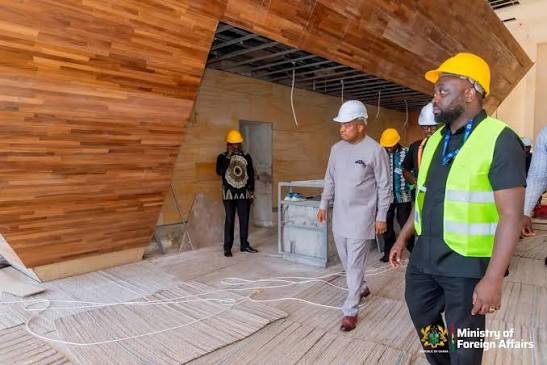
Foreign Affairs Minister Samuel Okudzeto Ablakwa says the ongoing ultramodern VIP Lounge at the Accra International Airport is progressing well and will be completed and handed over before the end of the year.

Ablakwa disclosed the update after inspecting the project on Friday, September 4, 2026, saying he was impressed with the pace and quality of work.

NO TAXPAYER MONEY USED

According to the Minister, the project is being delivered without drawing on taxpayer funds.

He explained that the financing model is based on corporate social responsibility contributions from local Ghanaian businesses, with participating companies paying contractors directly for various aspects of the project.

The Foreign Ministry’s Estate Bureau, he said, is responsible for supervising the works and ensuring that the required standards are maintained.

‘A GREAT SYMBOL OF WHAT CAN BE ACHIEVED’

Ablakwa described the initiative as an example of how private-sector partnerships can support major infrastructure projects without putting additional pressure on the public purse.

He said the arrangement has also allowed the project to proceed without conventional public procurement.

ULTRAMODERN FACILITY TAKING SHAPE

The VIP Lounge is intended to provide an upgraded facility for the reception and handling of dignitaries and other high-profile guests using the Accra International Airport.

Recent images from the project site show construction work nearing completion, with significant progress made on the facility.

HANDOVER EXPECTED THIS YEAR

With work advancing steadily, Ablakwa is confident the facility will be ready before the end of 2026.

The project has therefore become another closely watched development at Ghana’s main international gateway, with attention now turning to the final stages of construction and the eventual handover.

From funding to construction, Ablakwa says the project is moving without taxpayer money — and the new airport VIP experience could soon become a reality.

Continue Reading

General News

WAEC RELEASES 2026 WASSCE RESULTS — OVER 512,000 CANDIDATES GET THEIR RESULTS

Published

on

The West African Examinations Council (WAEC) has officially released the provisional results of the 2026 WASSCE for School Candidates, with Social Studies recording the strongest performance among the four core subjects.

WAEC announced the release on September 5, 2026, following the examination which saw 512,862 candidates from 1,022 schools registered to participate. The figure represents an 11.07% increase over the 461,736 candidates who entered for the 2025 examination.

SOCIAL STUDIES LEADS THE CORE SUBJECTS

Social Studies emerged as the best-performing core subject.

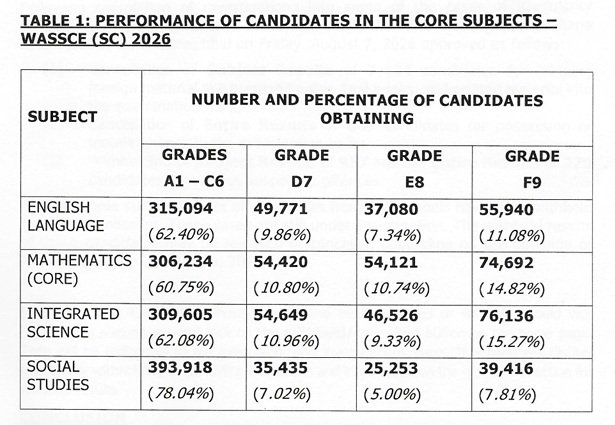
A total of 393,918 candidates, representing 78.04%, obtained grades between A1 and C6.

English Language followed with 62.40%, while Integrated Science recorded 62.08%. Core Mathematics saw 60.75% of candidates obtaining A1-C6.

ENGLISH PERFORMANCE CONTINUES TO DROP

One of the major talking points from the results is the continued decline in English Language performance.

WAEC’s four-year analysis shows the proportion of candidates obtaining A1-C6 in English falling from 73.11% in 2023 to 69.42% in 2024, 69.00% in 2025 and 62.30% in 2026.

Meanwhile, Mathematics and Social Studies recorded significant improvement compared with 2025, while Integrated Science also improved.

8,295 CANDIDATES FACE SANCTIONS

The release has also been accompanied by serious examination-malpractice concerns.

WAEC cancelled the entire results of 861 candidates after they were found with mobile phones in examination halls. The Council also cancelled the subject results of 7,434 candidates for bringing foreign materials, including prepared notes and textbooks, into examination halls.

In addition, the subject results of 957 candidates and the entire results of 270 candidates have been withheld over suspected offences.

Results involving candidates from 169 schools have also been withheld over alleged collusion, with investigations ongoing. WAEC says decisions on those cases may be made by October 30, 2026.

HOW CANDIDATES CAN CHECK

WAEC says the results have been hosted online, with school heads receiving login details to access their candidates’ results.

Candidates can also check their individual results through the Council’s official results-checking platform. WAEC has warned the public against fraudsters who claim they can upgrade examination results for money.

Continue Reading

Trending

Copyright © 2026 KPDOnline. Powered by AfricaBusinessFile