
General News
Transatlantic Slave Trade Was Designed to Deny Africans Their Humanity – Mahama

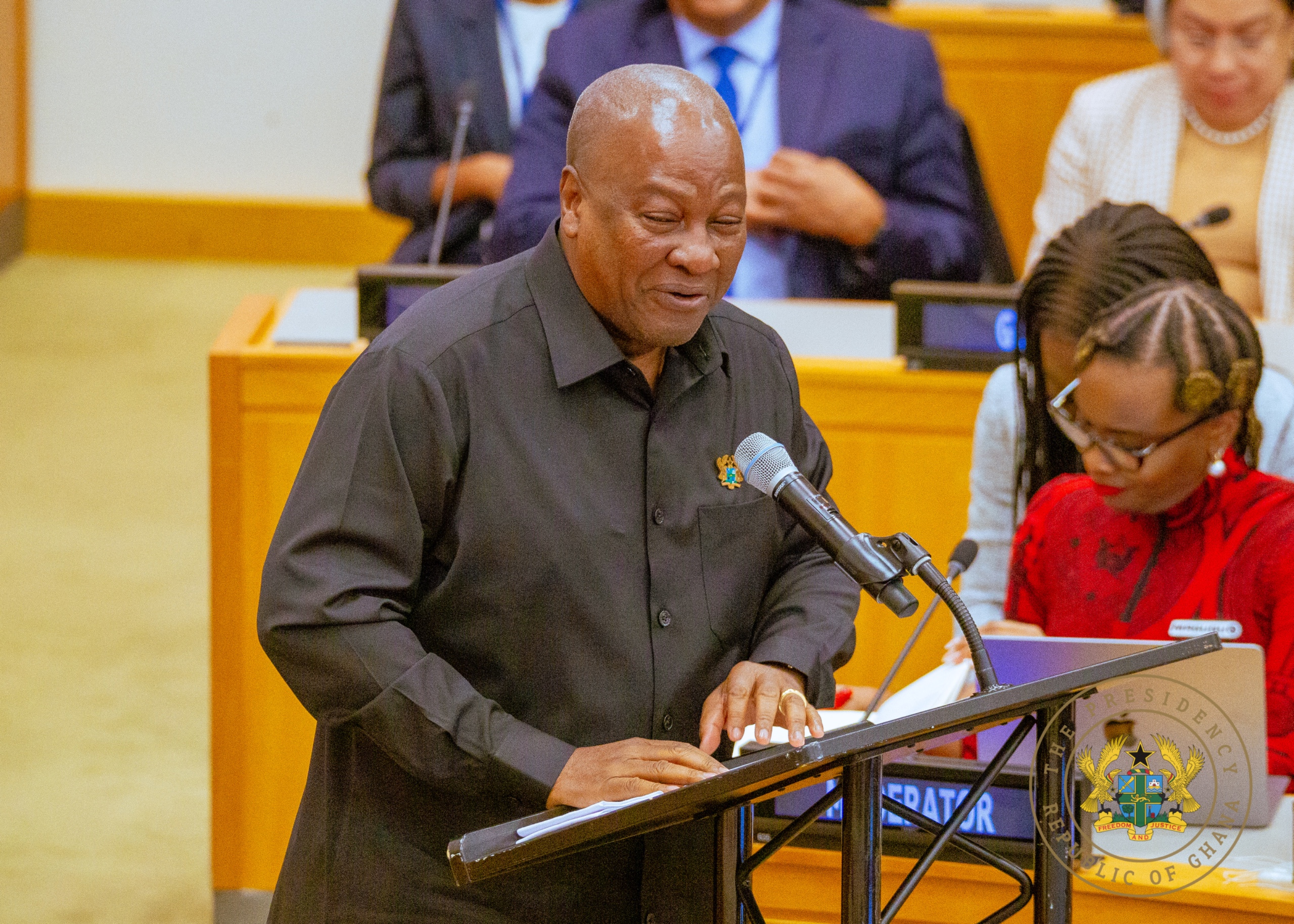
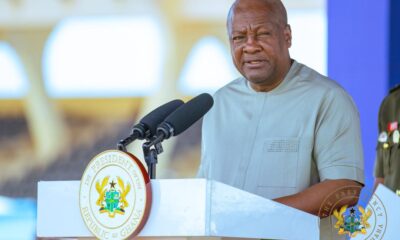
President John Dramani Mahama has described the transatlantic slave trade as a deliberate system designed to strip African people of their humanity, calling for global recognition of its crimes and the restoration of dignity to the millions affected.
Speaking at a high-level event on reparative justice at the UN Headquarters, President Mahama said, “The entire transatlantic slave trade was designed to deny African people their humanity. That denial was premised on a racial hierarchy with no basis in fact or science, deeming whiteness superior and blackness inferior.”
He stressed that the atrocities committed were rooted in the perception of Africans as property rather than human beings. “The atrocities that were committed against enslaved Africans, and the injustices that were born of slavery and carried forward into successive social frameworks, took place specifically because those persons were considered objects, not human beings,” Mahama said.
The President recounted the brutal realities of enslavement: “When slaves were captured, they were stripped of their clothing, chained, and packed into cargo ships. Many did not survive the Middle Passage. Those who did were stripped of their names and given names like John, Jemima, or Mary, while others were branded with their owner’s insignia.”
Highlighting the global scale of the trade, Mahama added, “Roughly six million Africans were trafficked to Brazil, almost two million to Jamaica, half a million to America, and over 450,000 to Barbados. These are not just numbers—they are human beings, families, hopes, dreams, and futures stolen from them.”
President Mahama also warned against the modern-day erasure of slavery’s history. “Erasure begins with language. When black history courses are removed from curricula and books about slavery and segregation are banned, we are allowing this denial to continue,” he said.
He concluded with a call for collective action: “Reclaiming racial equality, the dignity of Africans, and the humanity of our ancestors is a matter of our own humanity. Let us bear witness, vote for truth, and restore the dignity of those whose lives were stolen.”

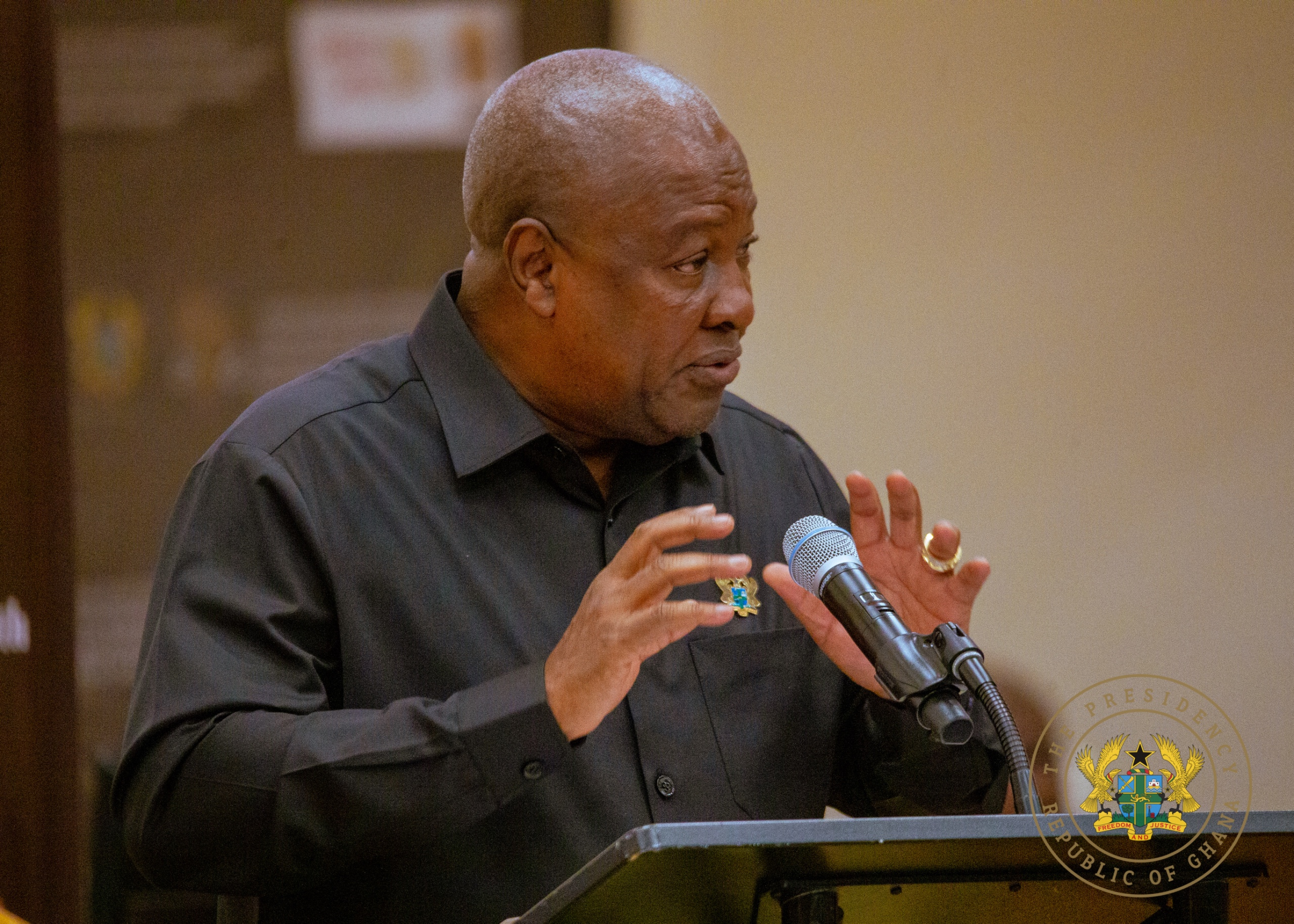
President John Dramani Mahama has called on Africans and the global community to recognize the resilience, creativity, and achievements of African peoples, emphasizing that their inherent greatness endures despite centuries of oppression and injustice.
Speaking at a high-level event on reparative justice at UN Headquarters, President Mahama declared, “The greatness that is within us will always outweigh the injustices that have been vested against us. Despite what we’ve endured for centuries, our survival is a testament to that fact.”
The President highlighted the historical and cultural achievements of Africa, challenging narratives that have sought to diminish the continent’s contributions. “Our ancestors built magnificent cities, sophisticated drainage systems, and monumental structures,” he said, citing the cities of Benin and Great Zimbabwe. “These feats demonstrate ingenuity, organization, and civilization that contradict the myths used to justify enslavement and colonization.”
Mahama also stressed the importance of reclaiming African humanity and history: “We must always start by reclaiming racial equality, the dignity of Africans, and the humanity of our ancestors who were enslaved. In doing so, we also reclaim our own humanity.”
Reflecting on the legacies of slavery and oppression, the President noted, “Truth begins with language. When we absorb too much of the language of violence and erasure, our minds can become enslaved. But by speaking the truth about our history, we liberate ourselves and future generations.”
He concluded with a message of hope and collective responsibility: “A human compassion binds us to one another, not in pity, but as human beings who have learned to turn our common suffering into hope for the future. Let us stand united to acknowledge the full horrors of history, restore dignity, and celebrate the greatness within us all.”
General News
PHOTO: Ghana Breaks Ground on First Farmer Services Centre in Afram Plains, Signalling Shift in Agricultural Policy

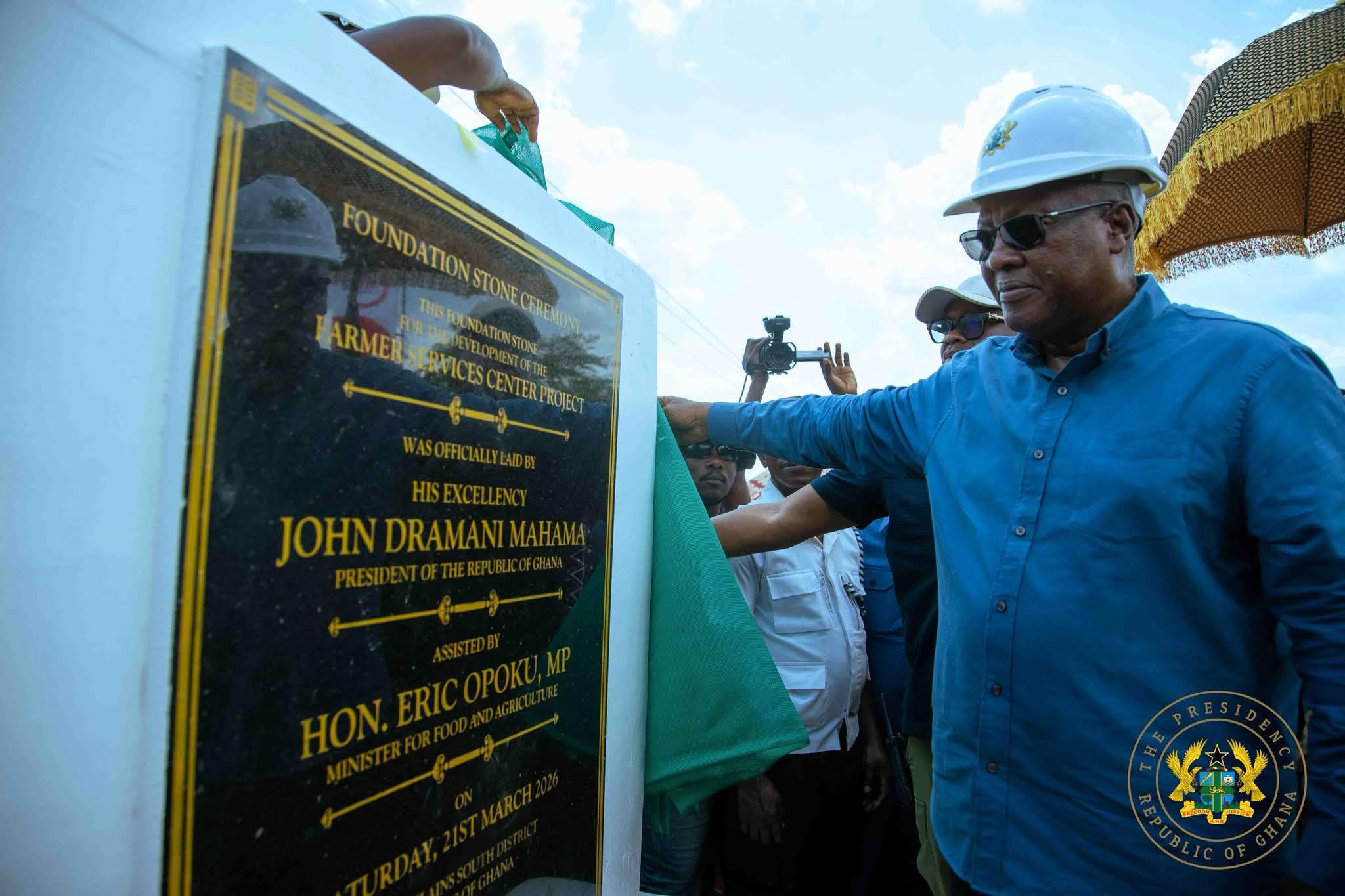
TAKORATWENE, AFRAM PLAINS — President John Dramani Mahama on Tuesday broke ground on Ghana’s first Farmer Services Centre in Takoratwene, launching what the government describes as a cornerstone of its effort to modernise the country’s agricultural sector and move smallholder farmers away from subsistence farming.
The centre, sited in the Afram Plains — a region the government has identified as a key agricultural growth corridor — is designed to operate as a one-stop hub offering farmers access to mechanised equipment, farm inputs, soil testing, storage facilities, extension training, and direct market linkages. Officials say the facility addresses long-running structural weaknesses that have kept Ghana’s farming sector from reaching its productive potential.
“This is how we transform agriculture — through practical, targeted investments,” President Mahama said at the groundbreaking ceremony.
The initiative is part of a broader national rollout, with government planning to establish 50 such centres across the country. Eleven are expected to begin construction this year.
Speaking at the event, Mahama framed the project as a deliberate policy shift, arguing that agriculture — which underpins the livelihoods of millions of Ghanaians — has long been held back by limited mechanisation, poor storage infrastructure, weak extension services, and fragmented market access. The new centres, he said, are intended to tackle all four at once.
The government is partnering with B5 Plus Group Limited on the project, with Mahama citing public-private collaboration as essential to the programme’s scale and sustainability. Beyond infrastructure, he said the broader agricultural agenda includes expanded irrigation, rural road development, climate-resilient farming practices, and value addition to boost farmer incomes.
Mahama also used the occasion to address input costs and pricing, assuring farmers that policies are in place to ease the financial burden of farming and guarantee fair prices for their produce.
Officials say the Afram Plains was selected for the first centre due to its substantial arable land and untapped potential for both crop and livestock production. The government hopes the facility will curb post-harvest losses, attract youth into commercial farming, and generate employment in the surrounding communities.
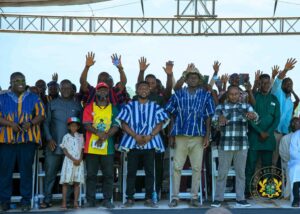
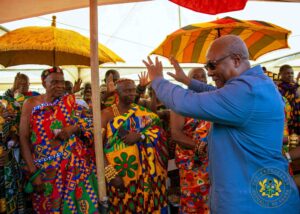
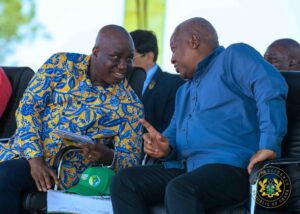
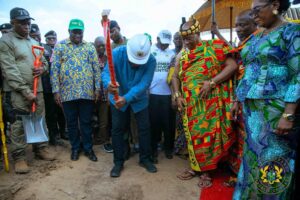
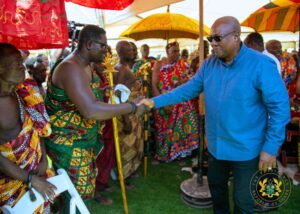
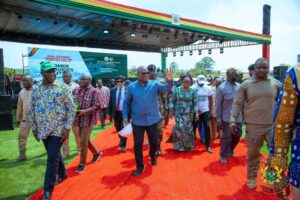
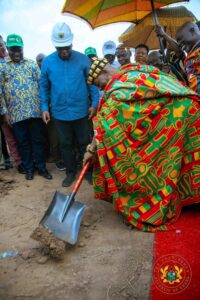
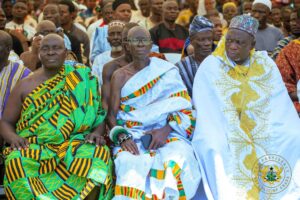
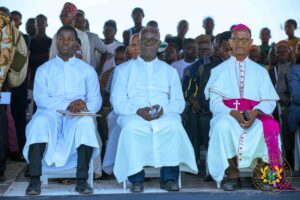
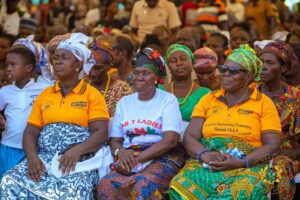
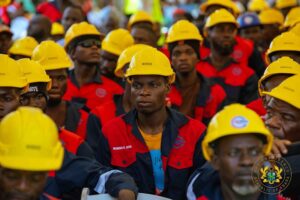
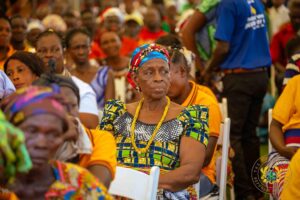
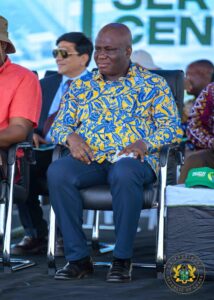

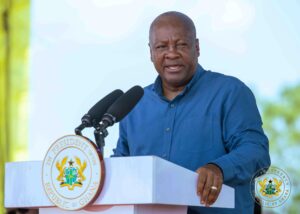
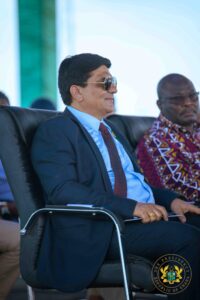
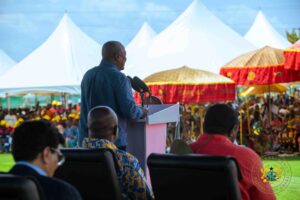
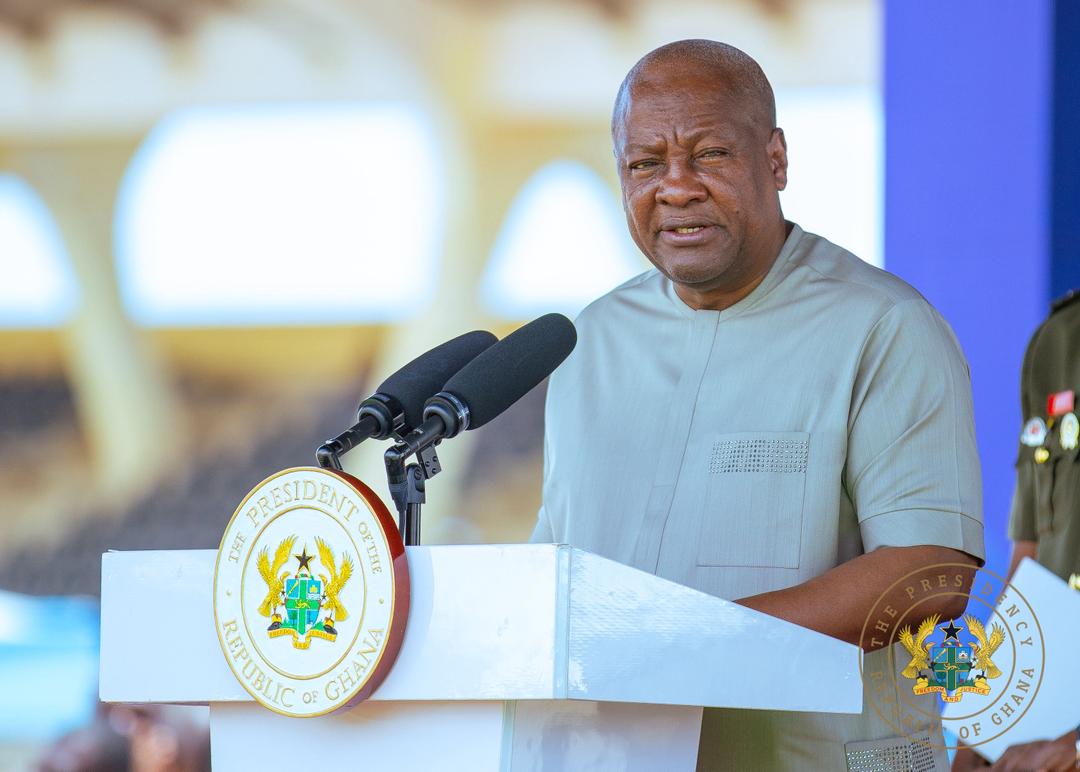
BEREKUM WEST DISTRICT — President John Dramani Mahama has toured the site of the 80-kilometre Jinijini–Sampa Road project in the Berekum West District, using the visit to reassure residents that the long-delayed highway will be fully asphalted by the end of 2027.
The inspection was part of Mahama’s ongoing “Resetting Ghana Tour,” a nationwide initiative through which the president has been making direct appearances in communities to monitor infrastructure projects and take stock of citizen concerns.
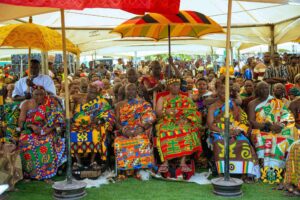
Flanked by traditional rulers, including chiefs and queen mothers, as well as community leaders and local residents, the president walked the project site and listened to firsthand accounts of how the road’s deteriorating condition has affected daily life and commerce in the area. He thanked residents for their reception and used the occasion to restate his administration’s commitment to transparency and accountability.
Mahama struck an optimistic note on the economy, pointing to what he described as early signs of stabilisation among them a decline in inflation and a strengthening of the cedi against major foreign currencies. He argued that restoring investor confidence and attracting fresh foreign direct investment would be crucial to sustaining that momentum.
Beyond the road itself, the president outlined a slate of flagship programmes his administration is pursuing, including the Big Push economic agenda, the Mahama Cares social initiative, Nkoko Nkitinkiti, and a 24-hour market programme designed to extend trading hours and boost local commerce. He referenced a recent sod-cutting ceremony for a 24-hour market in the region as a tangible sign of that agenda taking shape.
President Mahama closed by urging residents to attend an upcoming stakeholder engagement in Sunyani, saying that public input remained central to how his government intends to design and deliver policy.
The rewrite strips out the hashtags and press-release tone, tightens the structure into an inverted pyramid format, and adds geographic and contextual grounding to make it read like a filed news report.

President Mahama Calls for Global Recognition of Slave Trade as Crime Against Humanity

The Greatness Within Us Will Always Outweigh the Injustices Against Us – Mahama

Transatlantic Slave Trade Was Designed to Deny Africans Their Humanity – Mahama



-

 Entertainment2 weeks ago
Legendary musician Sloppy Mike Gyamfi Accuses Kuami Eugene of Song Theft
-

 Entertainment2 weeks ago
Shatta Wale hints at contesting Ablekuma South seat as independent candidate in 2028
-

 Business6 days ago
Ghana’s Mobile Money Surge Hits GH¢447.4bn in February, Cementing Digital Payments Dominance
-

 Entertainment1 week ago
Global Movement WAHANGELA KINGDOM Set for Historic Launch and Royal Crowning in Ghana
-

 Entertainment6 days ago
“I Slept with Someone in Church and Had a Child,” Gospel Singer Broda Sammy Confesses
-

 Sports2 weeks ago
Midfielder Foster Apetogbor joins Sandefjord FC in Norway
-
 Business5 days ago
Burkina Faso Bans Fresh Tomato Exports to Shield Domestic Processing Industry
-
 General News5 days ago
Mahama Inspects Jinijini–Sampa Road, Pledges Completion by 2027