
Uncategorized
“Your Death Completely Shattered Me”: Sarkodie’s Tribute to Daddy Lumba


Sarkodie’s tribute to Daddy Lumba has touched the hearts of many music lovers as the rapper marked the first anniversary of the legendary musician’s passing with an emotional message.
In a post shared on X on July 26, 2026, Sarkodie reflected on the painful moment he received news of Daddy Lumba’s death, revealing that the loss left him completely devastated.
The rapper, who shared a close relationship with the late Highlife icon, said it was difficult for him to accept the heartbreaking reality.
“A year ago today, we heard the heartbreaking news of your passing. I still remember vividly where I was when I received the news. It completely shattered me, and it was so difficult to believe,” Sarkodie wrote.
Sarkodie further revealed that he misses the words of encouragement he regularly received from Daddy Lumba throughout his music career.
According to him, the Highlife legend often sent him messages encouraging him to continue pushing forward and expressing how proud he was of his achievements.
“I miss your texts every now and then, telling me to keep pushing and reminding me how proud you were of me,” he added.
The rapper concluded his tribute by expressing his love and admiration for the late musician, saying Daddy Lumba’s legacy would forever remain alive in the hearts of his fans and loved ones.
“Daddy, we miss you, and you will forever remain in our hearts. May God be with you until we meet again. We love you always,” Sarkodie wrote.
Daddy Lumba, one of Ghana’s greatest Highlife musicians, continues to be remembered for his remarkable contribution to Ghanaian music and his influence on generations of artistes.
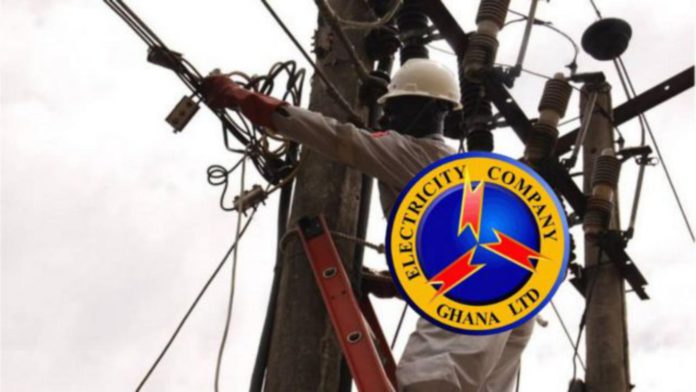
The Electricity Company of Ghana (ECG) has announced planned maintenance works that will result in temporary power outages in parts of the Tema Region on Sunday, August 30, 2026.
According to ECG, the exercise is aimed at improving service delivery and ensuring a more reliable electricity supply.
First Maintenance Exercise
The first outage is scheduled for 10:00 a.m. to 4:00 p.m. on Sunday, August 30.
The affected areas include:
PFC Coldstore
ECG Depot
Wang Heng Cement
Goil Bitumen
Ghacem
Oyoko
Tema Newtown
Unilever
Ken Coldstore
Jon Moore
Tema Kokompe
Mankoadze Foundry
Socatrade
BBC Paints
Irani Brothers
Asempa Coldstore and Surrounding areas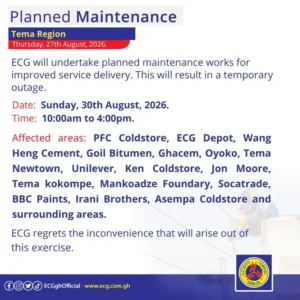
Second Maintenance Exercise
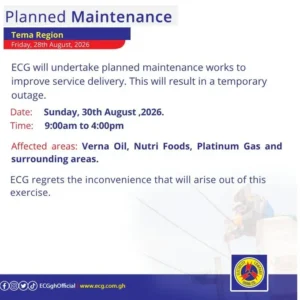
A separate maintenance exercise will take place from 9:00 a.m. to 4:00 p.m. on the same day.
Areas expected to be affected are:
Verna Oil
Nutri Foods
Platinum Gas
Surrounding areas
ECG said the planned interruptions are necessary to facilitate maintenance works and improve electricity service delivery within the Tema Region.
The company has apologised to customers and businesses in the affected areas for the inconvenience the temporary outages may cause.
The New Patriotic Party (NPP) has accused the Ghana Gold Board (GoldBod) of contributing to the worsening illegal mining, popularly known as galamsey, crisis, alleging that the gold purchasing system has failed to adequately distinguish legally produced gold from gold extracted through illegal mining.
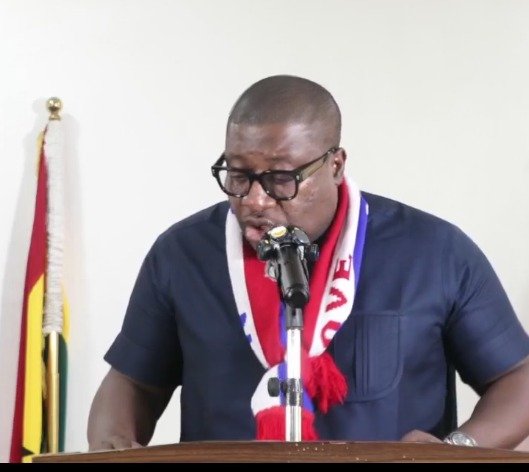
The NPP National Organiser made the allegation during a press engagement on Tuesday, August 25, 2026, arguing that GoldBod’s expanded role in the gold trade has created serious concerns about the source of gold entering the formal trading system.
He claimed that GoldBod currently has extensive powers as a major player in gold purchasing, selling and exporting, yet the country continues to face severe environmental destruction associated with illegal mining.
According to him, GoldBod cannot adequately demonstrate the difference between gold obtained from licensed sources and gold produced by illegal miners who destroy forests, farmlands and water bodies.
He cited comments attributed to GoldBod’s leadership suggesting that some licensed buyers could be involved in activities associated with illegal mining.
The NPP organiser said questions raised by industry stakeholders, including voices from the Chamber of Mines and members of the NPP Parliamentary Minority, had not received satisfactory answers.
He asked why, if GoldBod is not purchasing gold linked to illegal mining, the illegal gold trade remains so widespread.
He also criticised the government for highlighting Ghana’s position as the sixth-largest gold producer globally without adequately addressing the environmental cost of the country’s gold production.
He claimed that more than 60 per cent of Ghana’s water bodies have been polluted by illegal mining and warned that some rivers have become so heavily contaminated that water treatment plants have had to suspend operations.
He further cited projections that the cost of treating polluted water bodies could exceed GH¢17 billion by 2030.
The NPP official also linked galamsey to deaths and public health concerns, saying the country is paying a heavy price through contaminated food, polluted water and environmental degradation.
He accused the governing NDC of abandoning its previous opposition-era posture on illegal mining and said the galamsey situation had become worse under the current administration.
According to him, Ghana cannot celebrate increased gold production while ignoring the destruction of the natural resources that support communities and the national economy.
He therefore called for stronger accountability and greater traceability throughout the gold supply chain to ensure that illegally mined gold does not enter the formal market.
Uncategorized
Afenyo-Markin: GoldBod’s Response Confirms GH¢22bn Loss, Minority Insists on Accountability
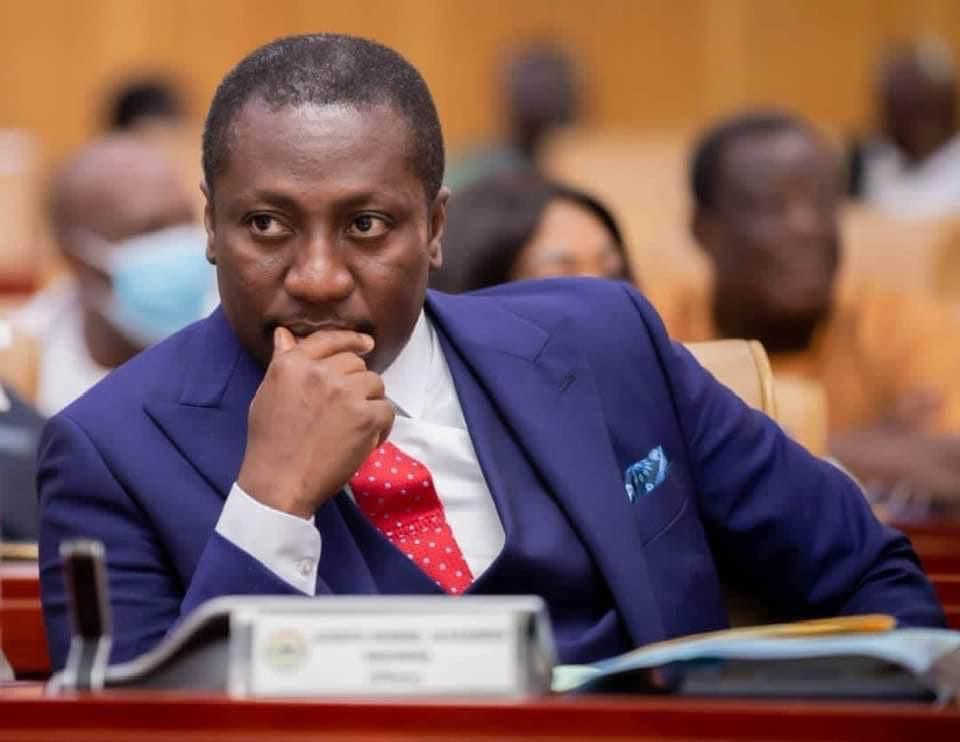
The Minority Caucus in Parliament has rejected the response by the Chief Executive Officer of the Ghana Gold Board (GoldBod), Sammy Gyamfi, to concerns over the institution’s financial and operational performance, insisting that the reported GH¢22 billion loss under the Domestic Gold Purchase Programme (DGPP) must be accounted for.
The Minority Leader, Alexander Kwamena Afenyo-Markin, made the position known in a statement issued on Wednesday, August 19, 2026, a day after the Minority held a press conference on GoldBod’s financial performance and reported losses under the DGPP.
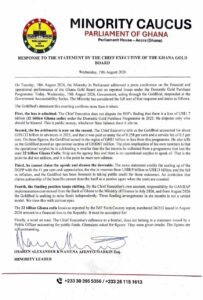
The statement, titled “Response to the Statement by the Chief Executive of the Ghana Gold Board,” said the Minority had considered Mr Gyamfi’s response delivered through the Government Accountability Series and concluded that it raised rather than resolved questions about the programme.
According to Mr Afenyo-Markin, the GoldBod CEO did not dispute the International Monetary Fund’s reported finding that the Domestic Gold Purchase Programme recorded a loss of US$1.7 billion, equivalent to about GH¢22 billion, in 2025.
The Minority Leader argued that Mr Gyamfi’s disagreement centred on who should bear responsibility for the loss, rather than whether the financial loss occurred.
“The GoldBod’s statement this morning confirms more than it rebuts,” the statement said.
Mr Afenyo-Markin stressed that the money involved was public funds and therefore must be accounted for, regardless of which state institution’s balance sheet ultimately bears the loss.
The Minority also challenged GoldBod’s reported operational surplus, pointing to figures provided by Mr Gyamfi regarding the institution’s activities under the programme.
According to the statement, GoldBod accounted for approximately GH¢133 billion in advances in 2025 and was paid an assay fee of 0.258 per cent as well as a service fee of 0.5 per cent.
Based on those figures, the Minority estimated that GoldBod earned approximately GH¢1 billion in fees from the programme.
Mr Afenyo-Markin contrasted this with GoldBod’s reported operational surplus of GH¢907 million, arguing that the surplus was smaller than the fees collected from a programme that, according to the IMF finding cited by the Minority, resulted in a GH¢22 billion loss to the state.
He argued that once the agency fees are removed from the calculation, there would be little or no operational surplus to celebrate.
“Strip out the agency fees, and there is no operational surplus to speak of,” the Minority statement said.
The Minority further accused GoldBod of taking credit for positive economic developments associated with the Domestic Gold Purchase Programme while distancing itself from the programme’s reported losses.
Mr Afenyo-Markin pointed to the reported 41 per cent appreciation of the Ghana cedi against the US dollar, the increase in Ghana’s foreign exchange reserves from US$8.9 billion to US$13 billion, and the decline in inflation.
He said GoldBod had been at the forefront of taking public credit for those outcomes.
However, the Minority Leader argued that an institution that describes itself as a passive agent when costs are considered should not portray itself as an active driver when benefits are being attributed to the programme.
“The same statement credits the scaling up of the DGPP with the 41 per cent cedi appreciation, the rise in reserves from US$8.9 billion to US$13 billion, and the fall in inflation,” the statement noted.
Mr Afenyo-Markin also raised concerns about what he described as changing arrangements for funding the Ghana Accelerated National Reserve Accumulation Plan (GANRAP).
According to the Minority statement, Mr Gyamfi’s own account indicated that responsibility for the cost of implementing GANRAP moved from the Bank of Ghana to the Ministry of Finance in July 2026.
The statement further said that, from August 2026, GoldBod was seeking to raise funds independently.
The Minority Leader questioned the sustainability of what he described as three different funding arrangements within six months, arguing that such changes did not amount to a settled funding model.
The Minority reiterated that the reported GH¢22 billion loss identified in the IMF’s Sixth Country Report must be accounted for.
The statement referred to the IMF report as Sixth Country Report No. 26/213, issued in August 2026, and described the reported amount as a financial loss to the Republic.
“The 22 billion Ghana cedis losses, as reported by the IMF Sixth Country report, numbered 26/213, issued in August 2026, amount to a financial loss to the Republic. It must be accounted for!” the statement said.
The Minority’s position is consistent with its broader demand for GoldBod to account for the full financial implications of its gold-purchasing operations. Reports on the dispute indicate that Afenyo-Markin has questioned why GoldBod should claim credit for foreign-exchange gains associated with the programme while distancing itself from losses linked to the same transactions.
The Minority Leader also criticised the tone of Mr Gyamfi’s response, particularly his reported reference to a “brothel” while addressing the controversy.
Mr Afenyo-Markin said such language was inappropriate for a public official responding to questions concerning public funds.
He argued that Ghanaians had asked for financial figures and explanations and should not be met with insults or personal attacks.
“Ghanaians asked for figures. They were given insults. The figures are still outstanding,” the Minority said in its statement.
The latest exchange deepens the public dispute between the Minority in Parliament and GoldBod CEO Sammy Gyamfi over whether the US$1.7 billion loss reported in connection with the Domestic Gold Purchase Programme should be attributed to GoldBod, the Bank of Ghana, or another part of the state’s financial architecture.
Mr Gyamfi has maintained that the reported loss should not be attributed to GoldBod and has challenged the Minority to identify where the IMF report specifically accuses GoldBod of incurring the loss. He has also said he is prepared to appear before Parliament to answer questions on the matter.

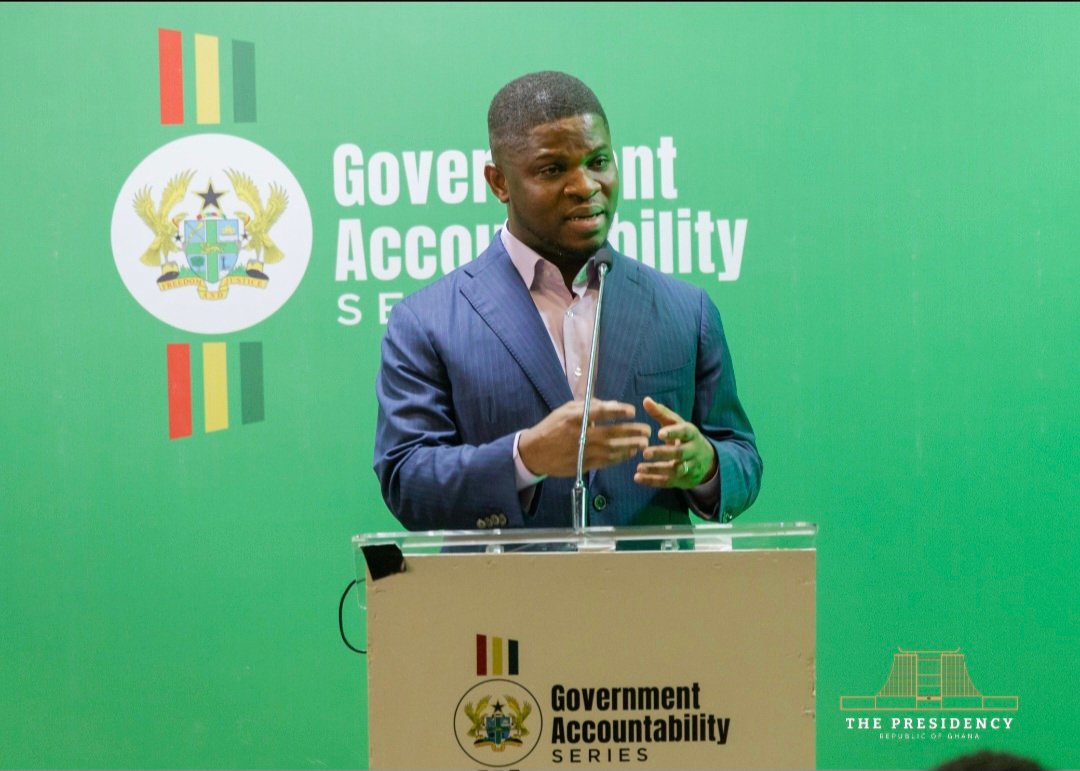
Chief Executive Officer of the Ghana Gold Board (GoldBod), Sammy Gyamfi, has dismissed what he describes as continuing attacks by Minority Leader Alexander Afenyo-Markin, saying they will not distract the institution from its mandate.
Mr Gyamfi characterised the allegations against GoldBod as part of a “desperate smear campaign” driven by what he described as political blackmail and the deliberate recycling of claims without sufficient evidence.
Speaking at Government Accountability Series, he said the Ghanaian public deserved serious discourse based on facts, evidence and truth rather than repeated allegations intended to create a false impression.
“The Ghanaian people deserve serious public discourse founded on facts, evidence, truth, and not endless recycling of fossils in the hope that repetition will lend credibility and turn fiction to facts,” he said.
Mr Gyamfi further accused his critics of using what he described as “sophistry and political blackmail” in pursuit of selfish interests.
He maintained that GoldBod would continue to account transparently for its activities and stewardship, insisting that the institution would remain focused on creating value for Ghanaians from the country’s gold resources.
“GoldBod will remain focused on its mandate. We will continue to account transparently for our stewardship, and we will not be distracted from the important work of creating value for the Ghanaian people from the exploitation of the gold resources of our beloved nation,” he stated.
His comments come amid an ongoing political and public debate over the management of Ghana’s gold resources and allegations surrounding the operations and financial performance of the GoldBod and the Bank of Ghana’s Domestic Gold Purchase Programme.

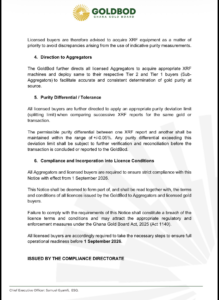
The Ghana Gold Board (GoldBod) has introduced a new mandatory requirement for determining the purity of gold purchased in Ghana, directing all licensed gold buyers and aggregators to adopt X-Ray Fluorescence (XRF) assay as the standard method from September 1, 2026.
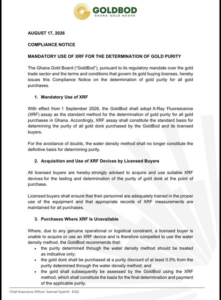
The directive is contained in a Compliance Notice dated August 17, 2026, issued by the Compliance Directorate of GoldBod as part of the Board’s regulatory mandate over Ghana’s gold trade.
Under the new arrangement, XRF assay will become the standard basis for determining the purity of all gold doré purchased by GoldBod and its licensed buyers. The move effectively means the water density method will no longer be accepted as the definitive basis for determining gold purity.
GoldBod has strongly advised all licensed gold buyers to acquire suitable XRF devices for testing and determining the purity of gold doré at the point of purchase.
The Board further requires buyers to ensure that personnel operating the equipment are properly trained and that appropriate records of all XRF measurements are maintained for every purchase.
The requirement is consistent with GoldBod’s existing licensing framework, which provides for appropriate assay and weighing equipment, including XRF analysers certified for precious-metal analysis. Licensed operators are also expected to maintain their equipment properly and keep calibration records.
GoldBod has, however, made provision for situations where a licensed buyer genuinely cannot acquire or use an XRF device because of operational or logistical constraints.
In such circumstances, the water density method may still be used, but the purity obtained through that method will be treated as indicative only, rather than as the final determination.
GoldBod recommends that where the water density method is used, the gold doré should be purchased at a minimum purity discount of 0.5 per cent from the purity determined through the water density test.
The gold will subsequently be assessed by GoldBod using XRF, and the Board’s XRF result will constitute the basis for the final determination of purity and payment for the transaction.
GoldBod has therefore urged licensed buyers to make acquiring XRF equipment a priority to minimise discrepancies associated with indicative purity measurements.
The directive extends beyond individual licensed buyers to licensed aggregators.
GoldBod has directed all licensed aggregators to acquire appropriate XRF machines and deploy them to their respective Tier 2 and Tier 1 buyers, including sub-aggregators.
The objective is to facilitate accurate and consistent determination of gold purity as close as possible to the source of purchase.
The Board has previously indicated that transforming assaying practices within the artisanal and small-scale mining supply chain is important for improving quality control and reducing potential fraud associated with traditional testing methods.
The Compliance Notice also introduces a specific tolerance level for comparing successive XRF reports for the same gold or transaction.
GoldBod has directed licensed buyers to apply an appropriate purity deviation or splitting limit when comparing XRF results.
The permissible difference between one XRF report and another must remain within plus or minus 0.05 per cent (±0.05%).
Where the purity difference exceeds that limit, the transaction must undergo further verification and reconciliation before it is concluded or reported to GoldBod.
GoldBod says the new requirements will become part of the terms and conditions attached to licences issued to licensed aggregators and gold buyers.
All aggregators and licensed buyers are therefore required to ensure strict compliance with the notice from September 1, 2026.
Failure to comply will constitute a breach of the applicable licence terms and conditions and may attract regulatory and enforcement measures under the Ghana Gold Board Act, 2025 (Act 1140).
GoldBod has consequently directed all licensed buyers to take the necessary steps to achieve full operational readiness before the September 1 deadline.
The Compliance Notice was issued by the Compliance Directorate of GoldBod and bears the name of the Chief Executive Officer, Samuel Gyamfi, Esq.
The new XRF requirement forms part of GoldBod’s broader efforts to standardise gold trading, strengthen accountability and improve the accuracy and consistency of gold purity assessments across the licensed buying chain.

Mahama: Big Push road projects to be executed in phases due to funding constraints

Polo Beach files injunction against Labadi Beach Hotel over Jakpa’s threats to demolish club

‘What exactly do authorities do at the port?’ – Netizens fume over €225m cocaine bust abroad



-

 Entertainment5 days ago
Mahama Is First President to Put GH¢40m Seed Money into Creative Arts Fund: Kojo Preko Dankwa
-

 Entertainment2 weeks ago
Oswald Okaitei Explains the Real Vision Behind Ghana’s Black Star Experience
-
 General News2 weeks ago
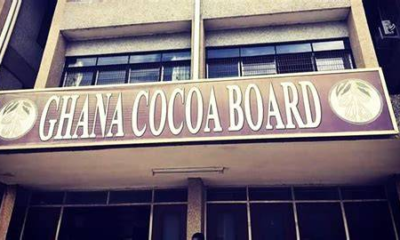
COCOBOD Settles GH¢2.3 Billion DDEP Bond Obligations for 2026
-

 Entertainment2 weeks ago
Joana Gyan Cudjoe Ends Seven-Year Professional Ties with Keche Global
-
 General News1 week ago
Don’t Punish Them Retrospectively – Educationist Challenges New CSSPS Placement Rule
-

 Culinary2 weeks ago
Pineapple: The Spiky Tropical Fruit Packed With Sweetness and Nutrients
-
 General News1 week ago
OSP Opens Preliminary Investigation into Alleged GH¢70,000 Payment Linked to Parliament’s Vetting
-

 Entertainment4 days ago
Government Repatriates Musician Barosky from UK