
Entertainment
Stonebwoy Pays Courtesy Call on British High Commissioner After London Festival

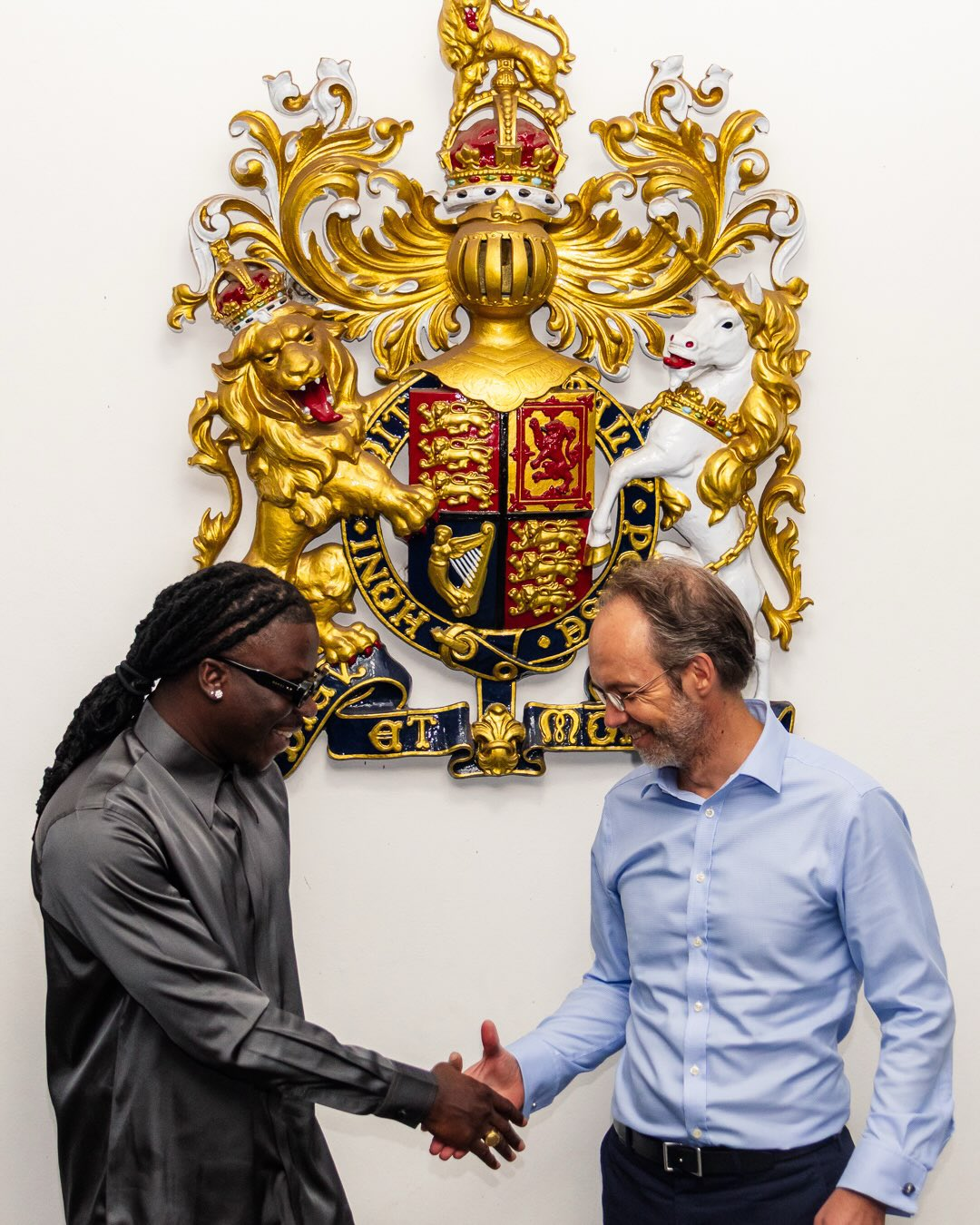
Ghanaian dancehall star Stonebwoy and members of his Burniton Music Group team have paid a courtesy call on the British High Commissioner to Ghana, H.E. Dr Christian Rogg, following the successful debut of BHIM FEST London 2026.

In a post shared on X, the visit follows the staging of the festival in London, marking a new milestone in Stonebwoy’s efforts to expand his musical reach and strengthen his international presence.
Stonebwoy, born Livingstone Etse Satekla, has consistently used his music and live performances to promote Ghanaian culture to audiences beyond the country.
The meeting with Dr Rogg comes as the artiste and his team reflect on the London festival and its significance for the continued growth of the BHIM brand internationally.
BHIM FEST has become an important platform for celebrating Stonebwoy’s music and connecting with his fan base, while also providing opportunities to showcase Ghanaian music and culture to international audiences.
The debut London edition represents another step in the expansion of the festival beyond Ghana.

Ghanaian-British singer Stephanie Benson has encouraged couples to make deliberate efforts to keep their relationships exciting, arguing that romance requires attention and participation from both partners.
In comments reported on October 8, the singer offered advice on ways couples can strengthen their relationships and prevent them from becoming routine.
Her message centred on the idea that partners should not assume affection and intimacy will remain strong without effort. Instead, she encouraged couples to be intentional about how they treat each other and maintain their connection.
The advice included the suggestion that partners may sometimes need to make an effort even when they are not naturally in the mood, as part of keeping a relationship engaging.
The comments have the potential to spark debate about the difference between making an effort in a relationship and feeling pressured to behave in a way that does not reflect one’s emotions.
Healthy relationships require communication, mutual respect and consent. Effort should be shared by both partners rather than becoming the responsibility of only one person.
Benson is known for speaking openly about relationships and personal experiences, alongside her career as a singer. Her public comments on romance often prompt discussion among audiences with different views about marriage and long-term partnerships.
Source: Adomonline
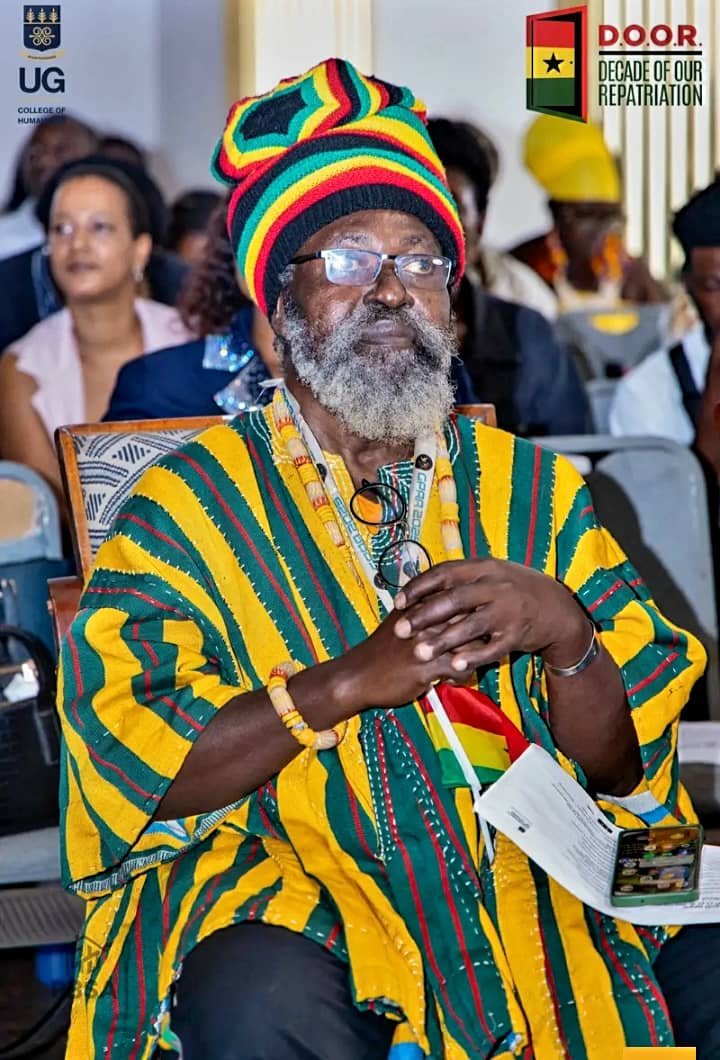
Ghana’s Ministry responsible for tourism, culture and the creative arts has undergone several changes in name and institutional focus since its establishment in 1993, reflecting successive governments’ approaches to tourism development, cultural preservation and the promotion of the country’s creative industries.
In a historical account titled “Ghana: History of the Ministry of Tourism, Culture and Creative Arts,” veteran cultural figure Ras Caleb Appiah-Levi traces the evolution of the ministry, highlighting its establishment, subsequent transformations and the individuals who have led it over the years.
According to him, tourism in Ghana extends beyond travel and leisure, serving as a means of projecting the country’s identity, heritage and cultural values to the international community.
Ministry of Tourism established in 1993
Ras Caleb Appiah-Levi identifies March 23, 1993, as the date the Ministry of Tourism was formally established under Ghana’s Fourth Republic.
He explains that the ministry was carved out of the then Ministry of Trade and Tourism, marking an important step towards treating tourism as a distinct sector capable of contributing to national development, foreign exchange earnings and cultural promotion.
The separation, he argues, reflected a growing recognition that tourism deserved dedicated attention rather than being managed primarily as an extension of trade.
The ministry’s establishment created an institutional framework for developing Ghana’s tourism potential and promoting the country’s attractions, heritage sites and cultural experiences.
Changes in name reflect shifting priorities
Over the years, the ministry has undergone several changes in name and mandate, reflecting different governments’ priorities and their approaches to tourism, culture and national development.
One of the designations was the Ministry of Tourism and Modernisation of the Capital City, under which tourism promotion was linked to the beautification and modernisation of Accra.
Appiah-Levi notes that the approach recognised the importance of the capital as a major point of entry for international visitors, making its appearance and development relevant to Ghana’s tourism image.
The ministry later became known as the Ministry of Tourism and Diaspora Relations, reflecting efforts to strengthen Ghana’s relationship with people of African descent and Ghanaians living abroad.
According to Appiah-Levi, this period helped advance initiatives such as the Joseph Project and laid part of the groundwork for subsequent diaspora-focused programmes, including the Year of Return.
The initiative represented a broader understanding of the diaspora not merely as a source of visitors but as a community with historical, cultural and economic connections to Ghana.
Another significant transition came with the adoption of the name Ministry of Tourism, Culture and Creative Arts.
This change brought tourism, cultural heritage and the creative industries together under one institutional framework. It also reinforced the idea that Ghana’s music, traditional dances, films, fashion and other artistic expressions could serve as tourism products while creating opportunities for employment and investment.
The ministry subsequently operated under the name Ministry of Tourism, Arts and Culture, before the designation Ministry of Tourism, Culture and Creative Arts was restored, according to the historical account.
Appiah-Levi argues that the inclusion of these sectors reflects their interconnected roles in promoting Ghana internationally.
He maintains that the country’s tourism appeal cannot be separated from its cultural heritage, including its castles, traditional textiles, festivals, music and other forms of artistic expression.
Twelve leaders who have headed the ministry
In his account, Appiah-Levi identifies 12 individuals who have led the ministry since its establishment, highlighting their contributions to the development of Ghana’s tourism sector.
The individuals listed are:
- Dr Stephen Ayidiya – Described as a pioneer who helped establish the ministry’s foundations.
- Mrs Vida Amaadi Yeboah – Credited with bringing cultural depth to the ministry’s work.
- Mr. Mike Gizo.
- Mr Jake Obetsebi-Lamptey – Recognised for his role in marketing Ghana as a tourism destination.
- Mr Stephen Asamoah Boateng.
- Mrs Oboshie Sai-Cofie.
- Mrs Elizabeth Ofosu-Adjare.
- Mrs Catherine Ablema Afeku.
- Mrs Barbara Oteng Gyasi.
- Dr Mohammed Awal – Associated with efforts to position tourism as a contributor to economic growth.
- Mr Andrew Egyapa Mercer.
- Ms Abla Dzifa Gomashie – Identified in the account as the current minister responsible for the portfolio.
Appiah-Levi says each administration has contributed to the ministry’s development, with its leadership shaping policies and approaches to tourism promotion, cultural preservation and the creative arts.
The list, however, reflects the author’s account and would require further verification against official ministerial records to establish the precise dates of each person’s tenure and the institutional arrangements during their respective periods in office.
Tourism, culture and creative arts as economic assets
Beyond the ministry’s administrative history, Appiah-Levi argues that tourism, culture and the creative arts should be treated as central components of Ghana’s economic and diplomatic strategy.
He maintains that the sectors offer opportunities to generate foreign exchange, create jobs, attract investment and strengthen the country’s international image.
Ghana’s cultural heritage, traditional festivals, historical landmarks, music, fashion and film industry provide a range of experiences that can attract visitors while creating markets for local businesses and creative professionals.
The integration of tourism and the creative arts also offers opportunities for communities to benefit economically from their cultural resources, provided those resources are protected and promoted sustainably.
For Appiah-Levi, the ministry’s evolution demonstrates a gradual recognition of the relationship between tourism and Ghana’s broader cultural identity.
He argues that the country must move beyond viewing tourism as a seasonal activity and instead develop it as a sustainable contributor to national development.
Call to preserve and promote Ghana’s heritage
Concluding his historical account, Appiah-Levi emphasises the importance of preserving Ghana’s cultural assets, promoting them internationally and ensuring that their economic benefits reach Ghanaians.
He argues that tourism, culture and the creative arts are not peripheral sectors but important instruments of economic development, cultural diplomacy and national identity.
He therefore calls for sustained efforts to protect Ghana’s heritage, strengthen the creative industries and develop tourism opportunities for future generations.
The history of the ministry, as presented in his account, reflects the changing recognition of tourism and culture in national development planning, as well as the continuing challenge of translating Ghana’s rich heritage and creative potential into sustainable economic benefits.

Ghanaian musician Gasmilla has questioned why Azonto has not been formally recognised as a music genre by the people and industry that helped create and popularise it.
Speaking on TV3, the musician, known for his association with the Azonto movement, argued that the dance and its accompanying sound deserve recognition as a distinct genre of music.
“Why is Azonto still not a genre of music recognised by the people it came from? Just make it a genre of music,” he said.
Gasmilla’s comments have brought renewed attention to discussions about the identity, recognition and long-term development of Azonto, a Ghanaian music and dance movement that gained widespread popularity in the early 2010s.
The movement became known for its energetic rhythms, catchy songs and distinctive dance steps, with Ghanaian musicians and dancers helping to spread it beyond the country’s borders. Azonto also became a major part of Ghana’s contemporary pop culture, attracting attention on social media and at music events internationally.
Despite its popularity, Gasmilla’s remarks raise questions about how Ghana’s music industry defines Azonto. While it is widely associated with a dance style and a period of musical success, the musician believes it should also be recognised as a genre in its own right.
Such recognition could help distinguish Azonto’s musical identity and encourage more discussion about how Ghanaians document, promote, and preserve their sounds for future generations.

Ghanaian highlife legend Pat Thomas is set to reach a new generation of international listeners after his classic song Gye Wani, featuring Ebo Taylor, was confirmed for the soundtrack of Grand Theft Auto VI (GTA VI).
The song, originally recorded in 1984, is among the tracks selected for the highly anticipated video game being developed by Rockstar Games.
A post shared on X on October 9, 2026, by an account identified as Complex. Its inclusion places a recording rooted in Ghana’s musical history alongside songs by international stars from different genres and generations.
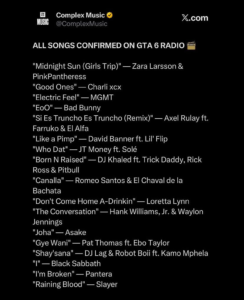
The soundtrack selection includes Zara Larsson and PinkPantheress’ Midnight Sun (Girls Trip), Charli xcx’s Good Ones, MGMT’s Electric Feel, Bad Bunny’s EoO and Asake’s Joha.
Other selections include Romeo Santos and El Chaval de la Bachata’s Canalla, as well as rock songs by Black Sabbath, Pantera and Slayer.
For Ghanaian music, the selection creates an opportunity for highlife to be heard by players who might not otherwise encounter the genre. The game’s international audience could introduce the recording to listeners unfamiliar with the music of Pat Thomas and Ebo Taylor.
Gye Wani also reflects the longevity of Ghanaian highlife, a genre that has continued to influence contemporary African music through its rhythms, instrumentation and vocal traditions.
The song’s appearance in GTA VI connects a recording from more than four decades ago with one of the most anticipated releases in the global gaming industry.
Entertainment
“Mahama Is the Best in Africa” – Nollywood Actor Harry B Anyanwu Praises Ghana President
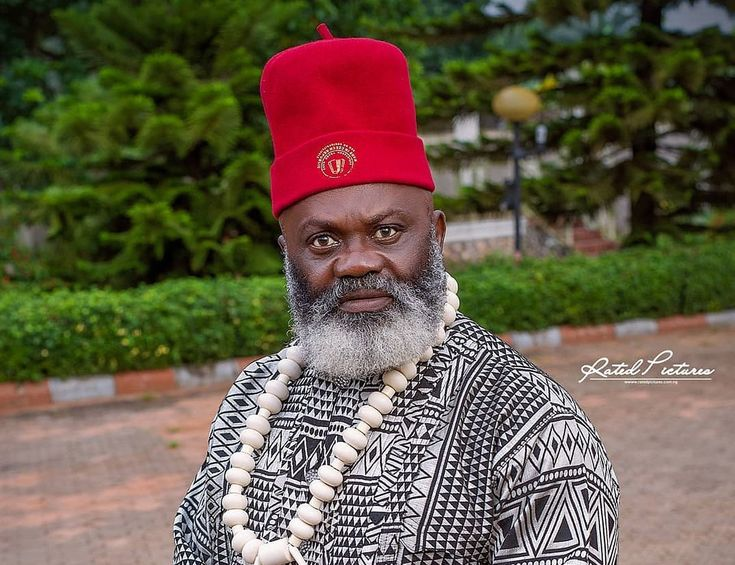
Veteran Nigerian actor and musician Harry B Anyanwu has praised President John Dramani Mahama, describing him as the best president in Africa and encouraging other African leaders to learn from his leadership.
Harry B made the comments while in Ghana to film Kwadwo Nkansah LilWin’s upcoming movie, A Journey to Africa (Nzulezu).
The actor was speaking during filming at Nzulezu in Ghana’s Western Region, where he is working alongside a number of Ghanaian and Nigerian actors on the cross-border movie project.
Harry B said he believed Mahama was doing what other African leaders should be doing and urged them to follow his example.
“Mahama is the best in Africa. He is doing what other presidents are supposed to do; let them copy him; the man is good.”
His comments came as several prominent Nollywood actors joined the production in Ghana.
The cast includes veteran Nigerian actors Kanayo O. Kanayo, Patience Ozokwo, Mike Ezuruonye, Charles Awurum, Zubby Michael, Destiny Etiko and Harry B Anyanwu.
The production is being led by LilWin and is expected to bring together talents from both Ghana and Nigeria while showcasing Ghanaian locations to audiences beyond the country.
During the filming, LilWin also spoke about the possibility of the Nigerian cast meeting President Mahama.
He told the actors that he had considered arranging a visit to Jubilee House, the official seat of Ghana’s presidency, but the distance between Nzulezu and Accra made it difficult to organise an immediate trip.
LilWin said he would instead work towards arranging a meeting between the actors and the President when the cast returns to Ghana for the movie’s premiere.
The proposed meeting would bring the Nigerian actors into direct contact with the President while also highlighting the cultural connection between Ghana and Nigeria through the film industry.
A Journey to Africa (Nzulezu) is LilWin’s second international movie project. His previous film, A Country Called Ghana, also featured several Nigerian actors and was released in 2024.
The new project continues LilWin’s efforts to bring Ghanaian and Nigerian actors together in productions aimed at reaching audiences across Africa and beyond.
The arrival of the Nigerian cast has also renewed conversations about cooperation between Ghana’s Kumawood industry and Nigeria’s Nollywood.
Among the Nigerian stars involved are actors with long-standing careers and large audiences, including Kanayo O. Kanayo, Patience Ozokwo, Mike Ezuruonye, Zubby Michael and Destiny Etiko.
The production is currently taking place at Nzulezu, a well-known stilt settlement in Ghana’s Western Region, as the cast and crew work on the movie.

“Couples Must Put in Effort” — Stephanie Benson Shares Relationship Advice

Stonebwoy Pays Courtesy Call on British High Commissioner After London Festival

Andy Dosty Denies Involvement in Alleged World Cup Visa Scandal

IRAWMA 2025: Shatta Wale Wins 3 Major Awards Including Best Music Video

Samini Secures Promotional Deal with Audiomack for Upcoming Album “THE ORIGIN8A”

AirtelTigo losing GH₵20m monthly; total debts exceed $200million – Sam George


-
 General News1 week ago
Fidelity Bank Chairman Named Ghana’s Topmost Transformational Board Chair 2026
-

 Entertainment1 week ago
Ras Caleb Appiah-Levi Reflects on Death, Wealth and Equality: “Death Neither Knows Rich Nor Poor”
-
 Politics1 week ago
Asiedu Nketiah to Chair Launch of Six NDC Historiographies on Ghana’s Political Journey
-

 General News2 weeks ago
500 widows receive support as Nhyiramma Foundation touches lives at Tutu-Akuapem
-

 General News2 weeks ago
When 5 oranges become mangoes – Teacher’s viral classroom moment sparks fresh debate over teachers’ grievances
-
 Business2 weeks ago
Rev. Dr. Christian Kwetey Kweitsu Honoured for Excellence in Audiology Practice in Kigali
-

 General News2 weeks ago
NDC Chairman hails Kevin Taylor, thanks his father for bringing him into the world
-

 General News2 weeks ago
Ebola Outbreak in DR Congo Expands as Two More Health Zones Report Cases