
Entertainment
Ras Caleb Appiah-Levi Traces History of Ghana’s Tourism Ministry from 1993

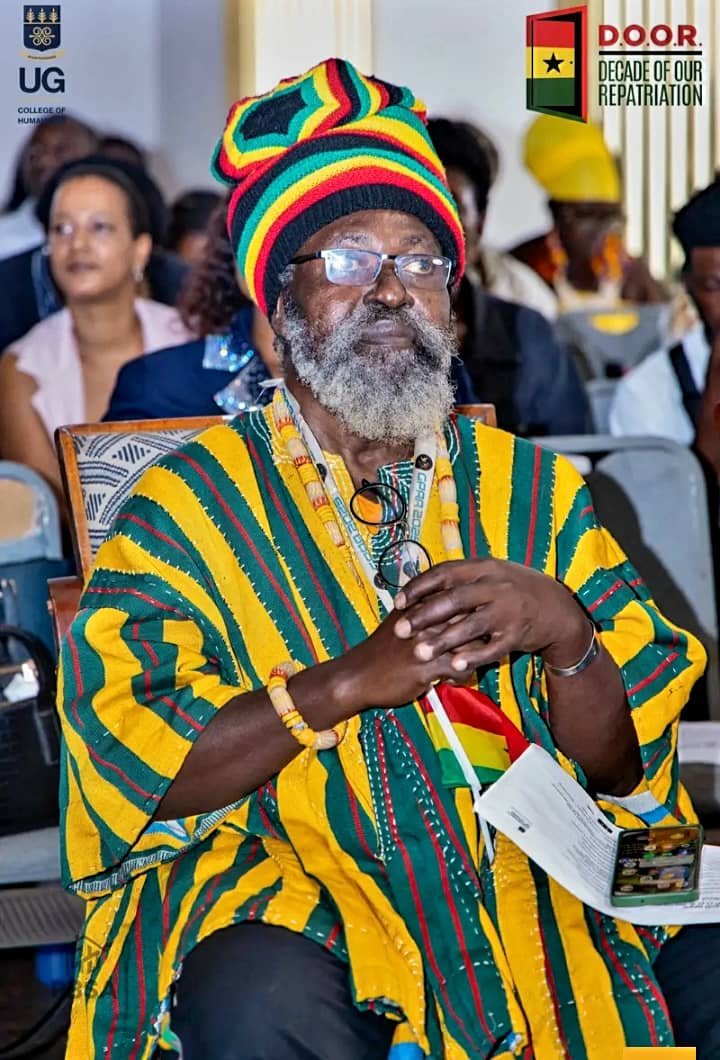
Ghana’s Ministry responsible for tourism, culture and the creative arts has undergone several changes in name and institutional focus since its establishment in 1993, reflecting successive governments’ approaches to tourism development, cultural preservation and the promotion of the country’s creative industries.
In a historical account titled “Ghana: History of the Ministry of Tourism, Culture and Creative Arts,” veteran cultural figure Ras Caleb Appiah-Levi traces the evolution of the ministry, highlighting its establishment, subsequent transformations and the individuals who have led it over the years.
According to him, tourism in Ghana extends beyond travel and leisure, serving as a means of projecting the country’s identity, heritage and cultural values to the international community.
Ministry of Tourism established in 1993
Ras Caleb Appiah-Levi identifies March 23, 1993, as the date the Ministry of Tourism was formally established under Ghana’s Fourth Republic.
He explains that the ministry was carved out of the then Ministry of Trade and Tourism, marking an important step towards treating tourism as a distinct sector capable of contributing to national development, foreign exchange earnings and cultural promotion.
The separation, he argues, reflected a growing recognition that tourism deserved dedicated attention rather than being managed primarily as an extension of trade.
The ministry’s establishment created an institutional framework for developing Ghana’s tourism potential and promoting the country’s attractions, heritage sites and cultural experiences.
Changes in name reflect shifting priorities
Over the years, the ministry has undergone several changes in name and mandate, reflecting different governments’ priorities and their approaches to tourism, culture and national development.
One of the designations was the Ministry of Tourism and Modernisation of the Capital City, under which tourism promotion was linked to the beautification and modernisation of Accra.
Appiah-Levi notes that the approach recognised the importance of the capital as a major point of entry for international visitors, making its appearance and development relevant to Ghana’s tourism image.
The ministry later became known as the Ministry of Tourism and Diaspora Relations, reflecting efforts to strengthen Ghana’s relationship with people of African descent and Ghanaians living abroad.
According to Appiah-Levi, this period helped advance initiatives such as the Joseph Project and laid part of the groundwork for subsequent diaspora-focused programmes, including the Year of Return.
The initiative represented a broader understanding of the diaspora not merely as a source of visitors but as a community with historical, cultural and economic connections to Ghana.
Another significant transition came with the adoption of the name Ministry of Tourism, Culture and Creative Arts.
This change brought tourism, cultural heritage and the creative industries together under one institutional framework. It also reinforced the idea that Ghana’s music, traditional dances, films, fashion and other artistic expressions could serve as tourism products while creating opportunities for employment and investment.
The ministry subsequently operated under the name Ministry of Tourism, Arts and Culture, before the designation Ministry of Tourism, Culture and Creative Arts was restored, according to the historical account.
Appiah-Levi argues that the inclusion of these sectors reflects their interconnected roles in promoting Ghana internationally.
He maintains that the country’s tourism appeal cannot be separated from its cultural heritage, including its castles, traditional textiles, festivals, music and other forms of artistic expression.
Twelve leaders who have headed the ministry
In his account, Appiah-Levi identifies 12 individuals who have led the ministry since its establishment, highlighting their contributions to the development of Ghana’s tourism sector.
The individuals listed are:
- Dr Stephen Ayidiya – Described as a pioneer who helped establish the ministry’s foundations.
- Mrs Vida Amaadi Yeboah – Credited with bringing cultural depth to the ministry’s work.
- Mr. Mike Gizo.
- Mr Jake Obetsebi-Lamptey – Recognised for his role in marketing Ghana as a tourism destination.
- Mr Stephen Asamoah Boateng.
- Mrs Oboshie Sai-Cofie.
- Mrs Elizabeth Ofosu-Adjare.
- Mrs Catherine Ablema Afeku.
- Mrs Barbara Oteng Gyasi.
- Dr Mohammed Awal – Associated with efforts to position tourism as a contributor to economic growth.
- Mr Andrew Egyapa Mercer.
- Ms Abla Dzifa Gomashie – Identified in the account as the current minister responsible for the portfolio.
Appiah-Levi says each administration has contributed to the ministry’s development, with its leadership shaping policies and approaches to tourism promotion, cultural preservation and the creative arts.
The list, however, reflects the author’s account and would require further verification against official ministerial records to establish the precise dates of each person’s tenure and the institutional arrangements during their respective periods in office.
Tourism, culture and creative arts as economic assets
Beyond the ministry’s administrative history, Appiah-Levi argues that tourism, culture and the creative arts should be treated as central components of Ghana’s economic and diplomatic strategy.
He maintains that the sectors offer opportunities to generate foreign exchange, create jobs, attract investment and strengthen the country’s international image.
Ghana’s cultural heritage, traditional festivals, historical landmarks, music, fashion and film industry provide a range of experiences that can attract visitors while creating markets for local businesses and creative professionals.
The integration of tourism and the creative arts also offers opportunities for communities to benefit economically from their cultural resources, provided those resources are protected and promoted sustainably.
For Appiah-Levi, the ministry’s evolution demonstrates a gradual recognition of the relationship between tourism and Ghana’s broader cultural identity.
He argues that the country must move beyond viewing tourism as a seasonal activity and instead develop it as a sustainable contributor to national development.
Call to preserve and promote Ghana’s heritage
Concluding his historical account, Appiah-Levi emphasises the importance of preserving Ghana’s cultural assets, promoting them internationally and ensuring that their economic benefits reach Ghanaians.
He argues that tourism, culture and the creative arts are not peripheral sectors but important instruments of economic development, cultural diplomacy and national identity.
He therefore calls for sustained efforts to protect Ghana’s heritage, strengthen the creative industries and develop tourism opportunities for future generations.
The history of the ministry, as presented in his account, reflects the changing recognition of tourism and culture in national development planning, as well as the continuing challenge of translating Ghana’s rich heritage and creative potential into sustainable economic benefits.













Ghanaian musician Gasmilla has questioned why Azonto has not been formally recognised as a music genre by the people and industry that helped create and popularise it.
Speaking on TV3, the musician, known for his association with the Azonto movement, argued that the dance and its accompanying sound deserve recognition as a distinct genre of music.
“Why is Azonto still not a genre of music recognised by the people it came from? Just make it a genre of music,” he said.
Gasmilla’s comments have brought renewed attention to discussions about the identity, recognition and long-term development of Azonto, a Ghanaian music and dance movement that gained widespread popularity in the early 2010s.
The movement became known for its energetic rhythms, catchy songs and distinctive dance steps, with Ghanaian musicians and dancers helping to spread it beyond the country’s borders. Azonto also became a major part of Ghana’s contemporary pop culture, attracting attention on social media and at music events internationally.
Despite its popularity, Gasmilla’s remarks raise questions about how Ghana’s music industry defines Azonto. While it is widely associated with a dance style and a period of musical success, the musician believes it should also be recognised as a genre in its own right.
Such recognition could help distinguish Azonto’s musical identity and encourage more discussion about how Ghanaians document, promote, and preserve their sounds for future generations.

Ghanaian highlife legend Pat Thomas is set to reach a new generation of international listeners after his classic song Gye Wani, featuring Ebo Taylor, was confirmed for the soundtrack of Grand Theft Auto VI (GTA VI).
The song, originally recorded in 1984, is among the tracks selected for the highly anticipated video game being developed by Rockstar Games.
A post shared on X on October 9, 2026, by an account identified as Complex. Its inclusion places a recording rooted in Ghana’s musical history alongside songs by international stars from different genres and generations.

The soundtrack selection includes Zara Larsson and PinkPantheress’ Midnight Sun (Girls Trip), Charli xcx’s Good Ones, MGMT’s Electric Feel, Bad Bunny’s EoO and Asake’s Joha.
Other selections include Romeo Santos and El Chaval de la Bachata’s Canalla, as well as rock songs by Black Sabbath, Pantera and Slayer.
For Ghanaian music, the selection creates an opportunity for highlife to be heard by players who might not otherwise encounter the genre. The game’s international audience could introduce the recording to listeners unfamiliar with the music of Pat Thomas and Ebo Taylor.
Gye Wani also reflects the longevity of Ghanaian highlife, a genre that has continued to influence contemporary African music through its rhythms, instrumentation and vocal traditions.
The song’s appearance in GTA VI connects a recording from more than four decades ago with one of the most anticipated releases in the global gaming industry.
Entertainment
“Mahama Is the Best in Africa” – Nollywood Actor Harry B Anyanwu Praises Ghana President
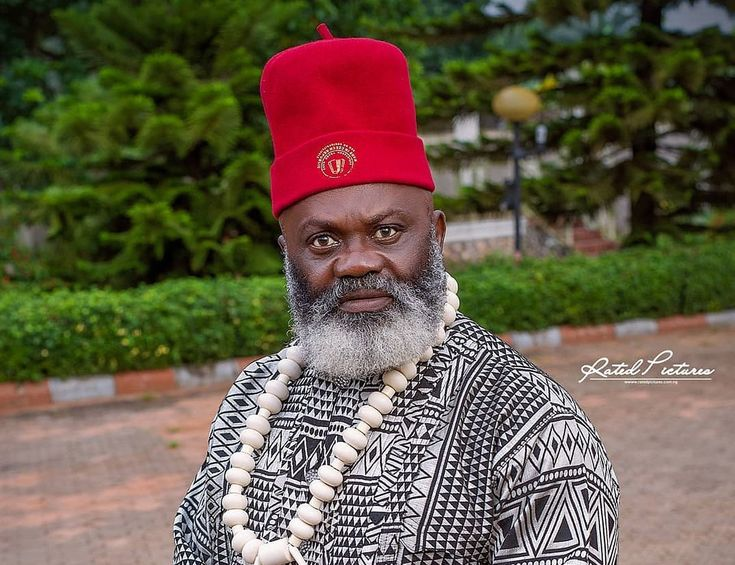
Veteran Nigerian actor and musician Harry B Anyanwu has praised President John Dramani Mahama, describing him as the best president in Africa and encouraging other African leaders to learn from his leadership.
Harry B made the comments while in Ghana to film Kwadwo Nkansah LilWin’s upcoming movie, A Journey to Africa (Nzulezu).
The actor was speaking during filming at Nzulezu in Ghana’s Western Region, where he is working alongside a number of Ghanaian and Nigerian actors on the cross-border movie project.
Harry B said he believed Mahama was doing what other African leaders should be doing and urged them to follow his example.
“Mahama is the best in Africa. He is doing what other presidents are supposed to do; let them copy him; the man is good.”
His comments came as several prominent Nollywood actors joined the production in Ghana.
The cast includes veteran Nigerian actors Kanayo O. Kanayo, Patience Ozokwo, Mike Ezuruonye, Charles Awurum, Zubby Michael, Destiny Etiko and Harry B Anyanwu.
The production is being led by LilWin and is expected to bring together talents from both Ghana and Nigeria while showcasing Ghanaian locations to audiences beyond the country.
During the filming, LilWin also spoke about the possibility of the Nigerian cast meeting President Mahama.
He told the actors that he had considered arranging a visit to Jubilee House, the official seat of Ghana’s presidency, but the distance between Nzulezu and Accra made it difficult to organise an immediate trip.
LilWin said he would instead work towards arranging a meeting between the actors and the President when the cast returns to Ghana for the movie’s premiere.
The proposed meeting would bring the Nigerian actors into direct contact with the President while also highlighting the cultural connection between Ghana and Nigeria through the film industry.
A Journey to Africa (Nzulezu) is LilWin’s second international movie project. His previous film, A Country Called Ghana, also featured several Nigerian actors and was released in 2024.
The new project continues LilWin’s efforts to bring Ghanaian and Nigerian actors together in productions aimed at reaching audiences across Africa and beyond.
The arrival of the Nigerian cast has also renewed conversations about cooperation between Ghana’s Kumawood industry and Nigeria’s Nollywood.
Among the Nigerian stars involved are actors with long-standing careers and large audiences, including Kanayo O. Kanayo, Patience Ozokwo, Mike Ezuruonye, Zubby Michael and Destiny Etiko.
The production is currently taking place at Nzulezu, a well-known stilt settlement in Ghana’s Western Region, as the cast and crew work on the movie.
Entertainment
We Have an Identity Problem – Bisa Kdei Warns Highlife Is Losing Its Identity to Afrobeats

Ghanaian highlife musician Bisa Kdei has raised concerns about the growing identity crisis facing highlife, saying the genre is struggling to maintain its place among younger music audiences as Afrobeats and other contemporary styles continue to dominate the Ghanaian music scene.
According to the Mansa hitmaker, many young Ghanaian musicians are already incorporating highlife elements into their songs but are reluctant to openly describe their music as highlife.
Speaking in an interview on Max TV, Bisa Kdei said the problem was not necessarily a lack of highlife music, but how the genre is being identified and presented to the public.
“We have an identity problem, you know. Even though they are doing highlife, the way to position it or project it is a problem now because of the few genres that have popped up here in Ghana, especially like Afrobeats and whatnot.”
He believes the strong association of highlife with older generations has also made some younger artistes hesitant to attach the genre’s name to their music.
Bisa Kdei explained that some musicians fear their songs will be viewed as outdated if they describe them as highlife.
“People are, let me just say, a bit scared to tag their songs as highlife because most people also think that highlife is for the old.”
For him, changing that perception requires a collective effort from musicians and the wider music industry.
He specifically called on award organisers, radio personalities, DJs and the media to give highlife greater attention and help introduce the genre to a younger generation.
Bisa Kdei believes music awards could play an important role in that process. He suggested that major award schemes should consider creating stronger highlife-focused recognition to encourage more young musicians to embrace the genre.
“Award schemes, we should change a few things in award schemes. We should get the radio, the DJs, the media to talk about highlife more to the young generation.”
He also proposed a Highlife Artiste of the Year category at major award ceremonies, arguing that such recognition could encourage emerging musicians to identify more confidently with the genre.
“If we make it like Highlife Artiste of the Year, it will push a lot of the young ones to do more highlife.”
The musician’s comments come as he prepares to launch a new annual event dedicated to highlife.
Bisa Kdei is set to hold the maiden edition of “The Convention” on December 20, 2026, at the Underbridge Annex in East Legon, Accra.
The event is designed to celebrate Ghana’s highlife heritage and bring together music lovers and highlife enthusiasts for an evening of live music, entertainment and cultural experiences.
Organisers intend for the event to become an annual fixture on Ghana’s entertainment calendar, with the first edition serving as the foundation for future editions. Tickets are already on sale through *714*911# on all mobile networks and via BisaConvention.live.
Bisa Kdei, born Ronald Kwaku Dei Appiah, has spent nearly 15 years in Ghana’s music industry and has built his career largely around highlife.
He became widely known after his breakthrough with the soundtrack Azonto Ghost and went on to release songs including Mansa, Samina, Brother Brother, Over and Asew. His music has also earned him several awards and international recognition.
The singer has previously spoken about the need for Ghanaian musicians to preserve highlife by incorporating elements of the genre into contemporary music.
In an earlier interview, he argued that artistes could perform Afrobeats, dancehall or hip-hop while still retaining highlife elements to ensure that Ghana’s musical identity remains visible.
Beyond his concerns about the genre’s future, Bisa Kdei also opened up about artistes he wished he had worked with.
He mentioned the late highlife musician Daasebre Dwamena as one of the artistes he particularly wanted to collaborate with before his death.
He also revealed that he had hoped to work with Daddy Lumba, another major figure in Ghanaian highlife, before the veteran musician passed away.
Bisa Kdei said he remains open to collaborations with different musicians, stressing that his interest is primarily in creating music rather than limiting himself to particular artistes or styles.
With The Convention now scheduled for December, the musician is putting his advocacy for highlife into a live event that is intended to bring the genre and its audience together in Accra.
Entertainment
Fetu Afahye: The History, Traditions and Cultural Meaning of Cape Coast’s Famous Festival
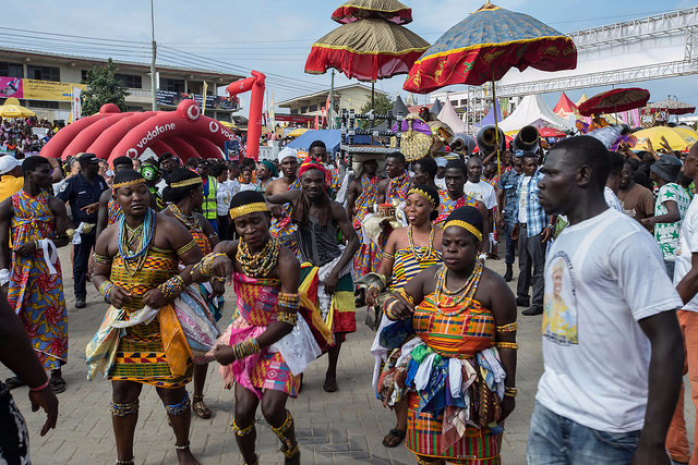
Ghana’s traditional festivals are more than colourful celebrations. They preserve the history of communities, honour ancestors, strengthen traditional institutions and provide opportunities for people to reconnect with their cultural roots.
Among the best-known festivals in the Central Region is Fetu Afahye, celebrated by the chiefs and people of the Oguaa Traditional Area in Cape Coast.
The festival is held every year in September and reaches its climax on the first Saturday of September, when chiefs, queen mothers, Asafo companies, residents and visitors gather for the grand celebration. The National Commission on Culture lists Fetu Afahye as a September festival of Cape Coast, while Visit Ghana identifies the first Saturday of September as its main celebration day.
But behind the colourful durbar, traditional regalia, drumming and dancing is a story of disease, purification, thanksgiving, spirituality and the survival of the Oguaa people.
What does Fetu Afahye mean?
The name Fetu is traditionally associated with the local expression Efin Tu, interpreted as getting rid of or clearing away dirt.
According to the traditional history of the festival, a devastating disease outbreak once affected the Oguaa community. The people turned to their traditional spiritual authorities and sought help from their gods.
The disease eventually came to an end, and the people began observing rituals of purification and thanksgiving.
Visit Ghana describes Fetu Afahye as a commemoration of this purification and an expression of gratitude to the 77 gods of the Oguaa Traditional Area.
The National Commission on Culture similarly says the festival commemorates a historic disease outbreak and is intended to encourage cleanliness and prevent another epidemic from affecting the town.
The connection with the Fetu Kingdom
Fetu Afahye is also associated with the historic Fetu or Effutu kingdom, which was located inland from present-day Cape Coast.
Visit Ghana describes the Fetu kingdom as a 17th-century kingdom located about 19 kilometres inland from Cape Coast.
The name therefore carries historical significance beyond the festival itself.
The history of the Fetu people is connected to the wider movement of Guan-speaking peoples in southern Ghana. Traditional accounts recorded in historical sources describe migrations that eventually resulted in settlements along the Central Region coast.
Cape Coast and Oguaa
Cape Coast is the modern name of the city traditionally known as Oguaa.
Oguaa developed as an important coastal settlement and later became one of the most significant centres of European activity on the Gold Coast.
The city became closely connected with European trade and colonial administration, leaving behind historic structures including Cape Coast Castle.
The cultural history of Oguaa therefore exists alongside a much broader history involving indigenous communities, European trade, colonialism and the transatlantic slave trade.
The National Commission on Culture describes the Central Region as an area where Fante traditions and the legacy of European coastal trade have strongly influenced the region’s identity.
Fetu Afahye as a purification festival
One of the most important meanings of Fetu Afahye is purification.
Before the main celebration, traditional authorities undertake a series of rituals intended to cleanse the community and prepare it for a new traditional year.
This is why the festival should not be understood simply as a durbar or entertainment event.
Its traditional foundation is spiritual.
Visit Ghana explains that Ghanaian festivals generally provide opportunities for communities to remember their ancestors, seek protection and purify their states before entering a new year.
The 77 gods of Oguaa
A major part of the traditional belief surrounding Fetu Afahye is the recognition of the 77 gods of Oguaa.
Traditional authorities perform rituals and pour libations as part of the thanksgiving to these spiritual powers.
The festival therefore reflects the traditional religious structure of the Oguaa people.
The 77 gods are not simply a number mentioned during the celebration; they form part of the spiritual explanation for the community’s relationship with its land, history and traditional institutions.
Visit Ghana specifically identifies the offering of thanks to the 77 gods as an important purpose of Fetu Afahye.
One of the distinctive preparations for Fetu Afahye is the confinement of the Omanhen, the paramount chief of the Oguaa Traditional Area.
The Omanhen traditionally spends about a week in confinement before the major public celebration.
During this period, he is expected to engage in spiritual consultations and traditional activities connected with the preparation of the festival.
Visit Ghana identifies this confinement as one of the important activities preceding Fetu Afahye.
The practice illustrates the central role of the traditional ruler in the spiritual and political life of Oguaa.
The ban on drumming and noise
Before the main celebration begins, restrictions are placed on certain activities.
Traditional accounts of Fetu Afahye describe a period when drumming, dancing, noise-making and merrymaking are prohibited within the traditional area.
Fishing in the Fosu Lagoon is also banned during this period.
These restrictions create a period of quiet and preparation before the festival’s dramatic public celebrations begin.
The contrast is striking: the community moves from silence and restriction to days filled with drumming, dancing, processions and celebration.
Amuntumadeze – the health and cleaning day
Another important feature is Amuntumadeze, traditionally regarded as a day for general cleaning.
Residents clean their homes and surroundings as part of the community’s preparation.
The practice connects the festival’s spiritual idea of purification with physical cleanliness.
This is particularly significant because the traditional history of Fetu Afahye is linked to a devastating disease outbreak.
The National Commission on Culture says the festival is observed partly to keep the town clean and prevent another epidemic.
Thus, the festival’s traditional message has a modern public-health relevance as well.
The Fosu Lagoon
The Fosu Lagoon is central to Fetu Afahye.
The lagoon has traditionally been associated with the spiritual and economic life of Cape Coast.
Fishing communities depend on water resources for their livelihoods, while the lagoon also occupies an important position in the traditional rituals of the festival.
Before fishing resumes, traditional rites are performed.
The Bakatue ceremony
One of the notable activities connected to the festival is Bakatue.
The ceremony involves opening the lagoon to the sea by cutting through the sandbar that separates the two bodies of water.
According to Visit Ghana, the ritual is traditionally associated with allowing fish to enter the lagoon.
The Omanhen pours libation to Nana Fosu, the deity associated with the lagoon.
The paramount chief then casts his fishing net into the lagoon three times.
This signifies the lifting of the traditional ban on fishing.
A successful catch is traditionally regarded as an encouraging sign for the coming season.
Fishermen and the lagoon regatta
The opening of the lagoon also becomes an opportunity for fishermen and community groups to celebrate.
Various fishermen’s groups organise activities on the lagoon, including regattas or boat races.
These activities add a recreational element to the traditional ceremony while maintaining the connection between the festival and the fishing heritage of Cape Coast.
The traditional priests and priestesses
Traditional priests and priestesses have an important role during Fetu Afahye.
One of the most anticipated events takes place during a night vigil around the Fosu Lagoon.
The priests and priestesses invoke the traditional gods through drumming, dancing and ritual performances.
The event attracts large crowds, including young people and visitors.
Visit Ghana describes the night vigil as one of the major attractions of the festival.
Nana Paprat Shrine and Adammba
Another important traditional activity takes place around the Nana Paprat Shrine.
A second vigil is held there, involving rituals and dancing known as Adammba.
The ceremony continues into the following day and forms part of the spiritual preparation for the climax of the festival.
These activities demonstrate that Fetu Afahye consists of a series of ceremonies rather than one single event.
The sacrifice of a bull
Another significant traditional ceremony involves the slaughtering of a bull.
According to Visit Ghana, the Omanhen performs this purification-related ceremony after addressing the people.
The sacrifice forms part of the traditional rites associated with cleansing the community and seeking protection and prosperity.
The seven Asafo companies
The Asafo companies are among the most recognisable groups during Fetu Afahye.
These traditional warrior organisations have historical roles within Akan communities.
They continue to contribute significantly to the public character of the festival through drumming, dancing, processions, regalia and other cultural displays.
The Ghana News Agency reported during the 2023 festival launch that cultural performances were presented by the seven Asafo companies of Oguaa.
Their presence gives the festival a strong connection to the military and social history of the traditional area.
Traditional regalia
Fetu Afahye is also a spectacular display of traditional clothing.
Chiefs and queen mothers appear in elaborate regalia, accompanied by linguists, elders and members of their traditional entourages.
The Asafo companies also display their distinctive clothing and symbols.
These costumes are not simply decorative.
They communicate traditional identity, authority, rank and historical affiliation.
The grand procession
The climax of the festival is marked by a major procession through the community.
Chiefs and traditional groups move through Cape Coast accompanied by music, dancing and other cultural performances.
The procession brings together the spiritual and social aspects of the festival.
After days of preparation and rituals, the entire community is able to participate publicly in the celebration.
The Grand Durbar
The Grand Durbar is one of the most anticipated moments of Fetu Afahye.
Traditional rulers sit in state while their subjects, visitors and invited dignitaries gather to witness the celebration.
The occasion provides a platform for traditional leaders to address the people and reflect on the development of Oguaa.
Recent celebrations have attracted political leaders, business personalities, cultural figures and visitors from outside Cape Coast.
In 2025, the Cape Coast Metropolitan Assembly reported that the festival brought together the Oguaa Traditional Council, chiefs, citizens and visitors for a Grand Durbar at Jubilee Park.
Fetu Afahye and education
The modern festival has increasingly been used to discuss contemporary issues affecting Cape Coast.
For example, the theme of the 2023 Oguaa Fetu Afahye was “Celebrating our Educational Institutions for the Enhancement of Ghana.”
During the launch, Oguaa Omanhen Osabarima Kwesi Atta II urged parents and guardians to invest in the education of their children.
This shows how the festival has evolved into a platform where traditional leadership can address modern development concerns.
The festival and young people
Young people form a major part of the Fetu Afahye audience.
The night activities involving traditional priests and priestesses, cultural performances, music and dancing attract large numbers of young people.
The festival therefore provides younger generations with an opportunity to experience traditional practices that they may not encounter in their everyday lives.
This is important for the preservation of oral traditions, music, dance and indigenous knowledge.
Fetu Afahye and family reunions
The festival also serves as a homecoming occasion.
People from Oguaa who live elsewhere in Ghana or abroad often return to Cape Coast during the celebration.
Families reunite, old friends meet and visitors reconnect with their ancestral home.
Visit Ghana notes that Fetu Afahye provides an opportunity for people to meet old friends and relatives whom they may not have seen for a long time.
Fetu Afahye and tourism
Cape Coast is already one of Ghana’s most important cultural and historical destinations.
The festival adds another major attraction to the city.
Visitors can combine the festival with trips to historic sites and tourist destinations such as Cape Coast Castle.
Elmina Castle, Kakum National Park, Fort William, Fort Amsterdam, Fort PatienceFort Good Hope
Visit Ghana specifically highlights several of these attractions as places visitors can explore around the festival.
The combination of history, culture and tourism gives Fetu Afahye considerable potential for local economic activity.
Hotels, restaurants, transport operators, food vendors, artisans and other businesses can benefit from the influx of visitors.
The festival cannot be separated from Cape Coast’s wider history.
Cape Coast was once the capital of the Gold Coast and became an important centre of European commercial and colonial activity.
Its castles and forts remain reminders of the region’s role in the transatlantic slave trade.
Against that historical background, Fetu Afahye provides an opportunity for the Oguaa people to publicly celebrate an identity that existed before and survived alongside those external influences.
A festival that survived opposition
Fetu Afahye has also experienced periods of opposition.
Wikipedia records that the colonial administration once prohibited the festival and described it negatively as Black Christmas.
The festival nevertheless survived and was eventually revived.
This history illustrates the tension that existed between indigenous religious practices and Christianity and colonial authority during earlier periods of Ghana’s history.
Today, Fetu Afahye continues to be celebrated openly as an important cultural institution.
The return of the festival
The festival underwent a long period of difficulty before its eventual revival.
Wikipedia records that the festival resumed after struggles involving religious and traditional interests, with the period between 1948 and 1996 forming part of this history.
Its survival is therefore significant.
It demonstrates the ability of traditional institutions to adapt while retaining their cultural identity.
Fetu Afahye and the Oguaa traditional year
Another important feature is that Fetu Afahye is regarded as marking the beginning of a new traditional year for the Oguaa people.
The idea is connected with the traditional concept of Afehyia, or the completion and renewal of a cycle of seasons.
The festival therefore looks both backwards and forward.
People remember what has happened during the previous year while seeking blessings and protection for the year ahead.
Christianity and Fetu Afahye
The festival also reflects the coexistence of traditional religion and Christianity in modern Cape Coast.
After the traditional celebrations, an interdenominational Christian service is held as part of the closing activities.
Visit Ghana identifies the closing service as taking place at Chapel Square.
This demonstrates the way modern Ghanaian communities can maintain traditional festivals while also incorporating Christian practices.
The festival continues to evolve.
In 2025, the Centre for National Culture reported that the official launch featured the Oguaa Traditional Council, queen mothers, Christian representatives, civil society organisations and cultural groups.
The launch also introduced the Oguaa Project, an initiative focused on equipping young people with skills and knowledge to contribute to their community.
This shows that Fetu Afahye is increasingly being used not only for cultural preservation but also for youth development and community mobilisation.
The 2026 Fetu Afahye demonstrated the festival’s growing importance as a national cultural event.
The Ghana News Agency reported that Cape Coast hosted the climax of the 62nd Fetu Afahye on September 5, 2026.
The celebration brought together the Oguaa Omanhen Osabarima Kwesi Atta II, Ga Mantse King Tackie Teiko Tsuru II and Yagbonwura Bii-Kunuto Jewu Soale I, creating a meeting of Fante, Ga and Gonja traditional leadership.
GNA reported that the gathering was also connected with discussions around shared histories and reparatory justice relating to the transatlantic slave trade.
This illustrates how traditional festivals can become platforms for conversations about contemporary national and historical issues.
Why Fetu Afahye remains important
Fetu Afahye is much more than a colourful festival held in Cape Coast every September.
It brings together:
History – remembering the disease outbreak and the survival of Oguaa.
Spirituality – honouring the traditional gods and ancestors.
Purification – cleansing the community and preparing for a new year.
Chieftaincy – bringing traditional rulers and their people together.
Fishing – maintaining the historical relationship between Oguaa and the Fosu Lagoon.
Culture – preserving music, dance, clothing and rituals.
Family – bringing people home to reconnect.
Tourism – attracting visitors to Cape Coast and the Central Region.
Development – providing a platform to discuss education, youth and community projects.
For the people of Oguaa, Fetu Afahye is ultimately a celebration of survival, thanksgiving, purification, identity and renewal.
From the quiet period of traditional restrictions to the opening of the Fosu Lagoon, from the rituals at the shrines to the colourful Asafo processions and the final Grand Durbar, each stage tells part of the story of Cape Coast.
And as each generation continues to celebrate it, Fetu Afahye remains a living connection between Oguaa’s past, its present and its future.

Andy Dosty Denies Involvement in Alleged World Cup Visa Scandal

Ras Caleb Appiah-Levi Traces History of Ghana’s Tourism Ministry from 1993

KPDOnline.net Obtains Document Listing More Than Two Media Personalities

IRAWMA 2025: Shatta Wale Wins 3 Major Awards Including Best Music Video

Samini Secures Promotional Deal with Audiomack for Upcoming Album “THE ORIGIN8A”

AirtelTigo losing GH₵20m monthly; total debts exceed $200million – Sam George


-

 General News1 week ago
Fidelity Bank Chairman Named Ghana’s Topmost Transformational Board Chair 2026
-

 Entertainment1 week ago
Ras Caleb Appiah-Levi Reflects on Death, Wealth and Equality: “Death Neither Knows Rich Nor Poor”
-
 Politics1 week ago
Asiedu Nketiah to Chair Launch of Six NDC Historiographies on Ghana’s Political Journey
-

 General News2 weeks ago
500 widows receive support as Nhyiramma Foundation touches lives at Tutu-Akuapem
-

 General News2 weeks ago
When 5 oranges become mangoes – Teacher’s viral classroom moment sparks fresh debate over teachers’ grievances
-
 Business2 weeks ago
Rev. Dr. Christian Kwetey Kweitsu Honoured for Excellence in Audiology Practice in Kigali
-

 General News2 weeks ago
NDC Chairman hails Kevin Taylor, thanks his father for bringing him into the world
-

 General News2 weeks ago
Ebola Outbreak in DR Congo Expands as Two More Health Zones Report Cases