
General News
SONA: Ghana Targets Lower Electricity Costs as Mahama Renegotiates Power Contracts — Mahama

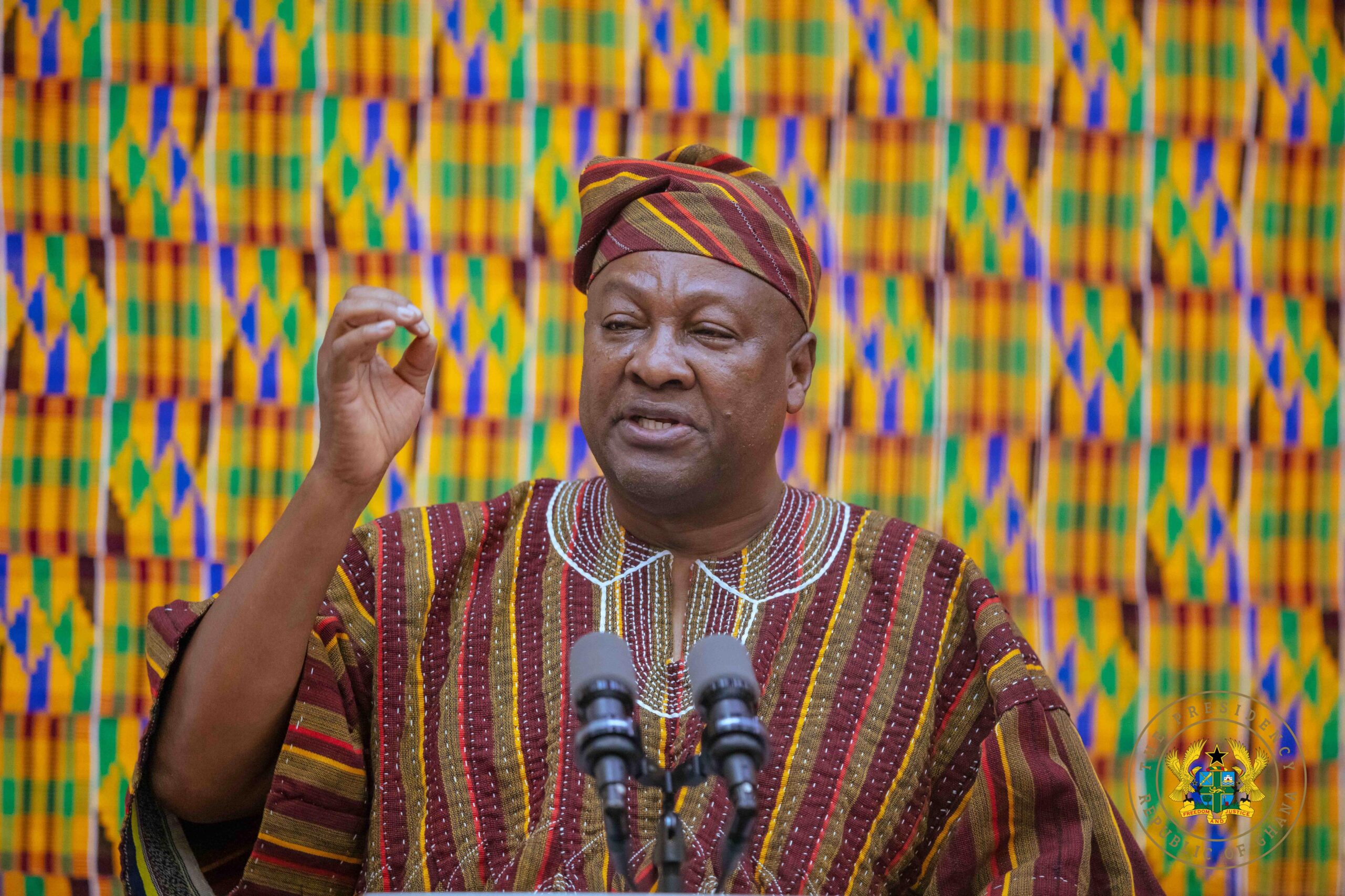
President John Dramani Mahama says government is aggressively pursuing reforms in the energy sector aimed at reducing electricity tariffs, eliminating legacy debts, and ensuring reliable power supply to support economic and industrial growth.
Addressing Parliament, President Mahama announced that government has successfully renegotiated several Power Purchase Agreements (PPAs) with nine Independent Power Producers (IPPs), resulting in significant fiscal savings for the country.
“We are determined to address the high cost of power and ensure that Ghanaian households and industries benefit from affordable electricity,” President Mahama stated.
He disclosed that the renegotiations have already generated immediate financial relief for the state, with about $250 million saved through revised contract arrangements.
“Engagements with the nine independent power producers have resulted in $250 million in immediate savings for the country,” he said.
President Mahama further revealed that the government has also restructured $1.1 billion in legacy energy sector debt, allowing for manageable repayment schedules between 2026 and 2028.
“This administration has successfully restructured $1.1 billion of legacy debt to be paid within a sustainable period from 2026 to 2028,” he explained.
He said the energy sector reforms are guided by a long-term vision to stabilize electricity pricing and remove financial bottlenecks that have historically constrained the sector.
According to the President, the revised agreements will undergo further review before being submitted to Cabinet and subsequently presented to Parliament for ratification.
“These revised agreements will be submitted to Cabinet and will be brought to Parliament for ratification,” he said.
President Mahama added that strengthening domestic gas supply remains central to government’s strategy to lower power generation costs and reduce reliance on expensive liquid fuels.
“By scaling up domestic gas production, we are ensuring reliable nationwide electricity generation while accelerating industrial expansion,” he added.

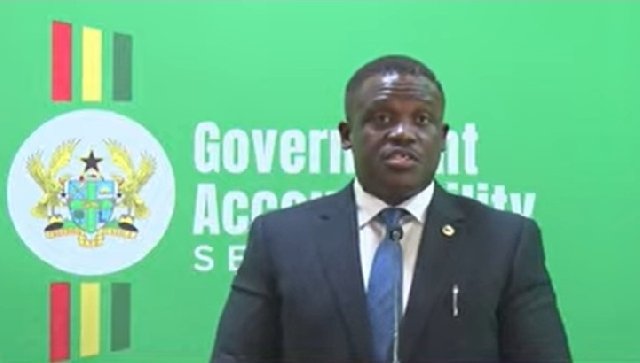
Telecel Ghana has increased its capital investment by 60% between 2023 and 2026 compared with the previous four-year period, Minister for Communication, Digital Technology and Innovations, Samuel Nartey George, has revealed.
Speaking at the Government Accountability Series held at Jubilee House in Accra on Monday, September 7, 2026, Mr George said the increase highlights Telecel Ghana’s growing commitment to expanding and modernising the country’s telecommunications infrastructure.
According to the minister, the company invested approximately $893 million in the four years preceding its transition. Since then, its capital investment has risen to about $1.4 billion and is expected to reach $1.5 billion.
As part of the increased investment, Telecel Ghana is undertaking approximately 2,900 network site upgrades nationwide. The company is also migrating parts of its network from 3G to 4G to provide customers with faster and more reliable mobile broadband services.
Mr George said the ongoing upgrades form part of Telecel Ghana’s wider efforts to modernise its infrastructure, expand network coverage and improve the quality of services provided to customers.
He described the growth in investment as a clear indication of the role private-sector participation plays in developing Ghana’s telecommunications industry.
The minister noted that the increased spending demonstrates that Telecel Ghana is committing significantly more resources to strengthening its network than it did during the preceding four-year period.
The development comes as the government continues efforts to improve Ghana’s telecommunications infrastructure and create an environment that encourages network operators to invest in expanding connectivity and digital services.
Mr George stressed that sustained investment in telecommunications infrastructure remains essential to the growth of Ghana’s digital economy, as reliable and high-quality connectivity is increasingly important to businesses, households and public institutions.
With nearly 2,900 sites currently undergoing upgrades, Telecel Ghana is expected to expand its 4G coverage and improve the speed, quality and availability of mobile connectivity across the country.
Communications, Digital Technology and Innovations Minister Samuel Nartey George has disclosed that illegal mining, popularly known as galamsey, accounts for about 25 per cent of fibre-optic cable cuts recorded across Ghana.
He said the increasing destruction of underground fibre infrastructure by illegal miners poses a serious threat to the stability and reliability of the country’s telecommunications network.
Speaking at the Government Accountability Series on Monday, September 7, Mr George said galamsey has emerged as one of the major causes of fibre network disruptions, alongside road construction and activities by private developers.
According to him, illegal miners frequently damage underground fibre cables while excavating, often without notifying telecommunications companies or the relevant authorities.
“25 per cent of fibre cuts are a result of galamsey. The telecom industry is one of the worst hit by the activities of galamsey operators,” he said.
Mr George explained that while road contractors generally report incidents involving damage to fibre infrastructure, illegal miners often fail to do so, making it difficult for telecommunications companies to respond quickly and restore affected services.
He said the situation was particularly concerning because fibre-optic networks form a critical part of Ghana’s telecommunications infrastructure, carrying large volumes of voice and data traffic across the country.
Any damage to the network, he noted, could disrupt internet connectivity and other communication services, particularly in areas where alternative fibre routes are unavailable.
The Minister further noted that frequent fibre cuts impose high financial costs on telecommunications companies, which must deploy personnel and specialised equipment to locate damaged cables, carry out repairs and restore services.
He warned that the continued destruction of telecommunications infrastructure through illegal mining could undermine the reliability of digital services and worsen network disruptions across the country.
General News
‘May God forgive them’ — Prof. Frimpong-Manso speaks on painful attacks over National Cathedral

Renowned theologian and former General Superintendent of the Assemblies of God, Ghana, Reverend Professor Yaw Frimpong-Manso, has opened up about what he describes as painful attacks and criticism surrounding the controversial National Cathedral project.
The respected clergyman has expressed deep disappointment over the treatment he and others associated with the project have received, saying some of the attacks have been hurtful.
In an emotional reflection, Prof. Frimpong-Manso called for forgiveness, leaving a striking message for those he believes have unfairly criticised or attacked him over the project.
‘May God forgive them’
Prof. Frimpong-Manso did not hide his pain over the criticism.
While discussing the controversy, he appealed to God to forgive those behind what he considers unfair attacks.
His remarks highlight the deeply personal dimension of a debate that has largely centred on the finances, construction and political controversy surrounding the National Cathedral.
From vision to controversy
The National Cathedral was conceived as a major Christian landmark and a symbol of Ghana’s faith and national identity.
However, the project has faced intense public scrutiny over its financing, construction progress and expenditure, with critics repeatedly questioning whether public resources should have been committed to it.
The controversy has continued to generate political and religious debate, placing several prominent figures associated with the initiative under the spotlight.
‘The attacks have been painful’
For Prof. Frimpong-Manso, however, the issue goes beyond political disagreements.
His latest comments suggest that the criticism has taken a personal toll, particularly given his involvement in the broader religious conversation surrounding the project.
Rather than responding with an equally aggressive attack, he chose a more conciliatory message — asking God to forgive those who have caused him pain.
A controversy that refuses to die
The National Cathedral remains one of Ghana’s most fiercely debated public projects.
Supporters continue to view it as an important national Christian monument, while critics have questioned its cost, management and the government’s role in financing it.
The continuing debate has ensured that individuals who supported or championed the project remain under public scrutiny.
A powerful message amid the storm
Prof. Frimpong-Manso’s latest intervention adds an emotional dimension to the long-running National Cathedral controversy.
His response suggests that, despite the criticism and personal attacks, he would rather leave the matter in God’s hands.
“May God forgive them.”
Those few words capture the pain behind his response — and show that the National Cathedral controversy is no longer simply about a building, money or politics. For some of those involved, it has become deeply personal.
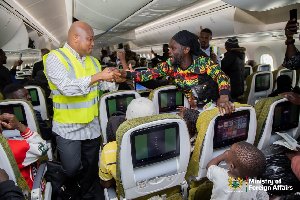
Fresh figures surrounding Ghana’s evacuation of citizens from South Africa have triggered questions over how much the government spent to bring affected Ghanaians home — and how much direct support they received after arrival.
The government, through the Ministry of Foreign Affairs, has been undertaking an evacuation exercise for Ghanaians affected by xenophobic attacks and unrest in parts of South Africa.
Since May 2026, more than 1,300 Ghanaians had been evacuated, with the government assuring returnees of support to help them restart their lives in Ghana.
The eye-catching figures
The latest discussion centres on the cost of the exercise, with reports putting the overall expenditure at about GH¢38 million.
The amount has raised eyebrows, particularly when compared with the financial assistance provided directly to returnees.
Earlier government disclosures indicated that the first phase, involving 926 Ghanaians, cost approximately GH¢5.1 million, while the second phase, which brought another 1,000 people home, cost about GH¢5.5 million.
The government subsequently continued the evacuation, with the final groups also being brought home.
GH¢10 support? Here’s what the figures actually show
The headline figure referring to GH¢10 appears to relate to the broader expenditure calculation rather than suggesting that each evacuee literally received GH¢10 in cash.
Government previously announced a GH¢5,000 reintegration grant for returnees, in addition to GH¢500 for travel and transportation for each person evacuated.
The Ministry has also said the returnees would be assessed according to their skills and aspirations so they could receive appropriate livelihood and employment support.
Government insists it footed the bill
The Foreign Affairs Ministry has been emphatic that Ghana did not rely on financial or material assistance from South Africa to conduct its evacuation.
The government said the exercise was financed by Ghana and Ghanaian partners, meaning Ghana would not be among the countries asked by South Africa to reimburse costs associated with repatriating foreign nationals.
That clarification became necessary after reports emerged that South Africa was seeking reimbursement from some countries for expenses incurred in repatriating their nationals.
More than 1,300 Ghanaians brought home
By August 4, the Ministry announced that another 150 Ghanaians had arrived safely in Accra, pushing the total number evacuated from South Africa since May to 1,324.
The government described the evacuation as part of its responsibility to protect Ghanaian citizens abroad, particularly amid reports of xenophobic attacks.
Returnees were received at the Kotoka International Airport and were promised assistance with reintegration.
The bigger question
While the government says human life is invaluable and no cost should stand in the way of protecting Ghanaians, the figures have inevitably placed the financial side of the operation under the spotlight.
How much was ultimately spent on flights, buses, logistics, accommodation and other evacuation arrangements?
How much came from the government, and how much came from private-sector partners?
And, perhaps most importantly, how much did each returning Ghanaian actually receive to rebuild their lives?
The Foreign Affairs Ministry has indicated that it will provide a comprehensive account of expenditure and donations received later in the year.
For now, the evacuation may have brought hundreds of distressed Ghanaians safely home — but the millions spent on the operation are likely to remain a subject of intense public scrutiny.

A devastating case of jealousy, suspicion and violence has ended with a Texas man receiving a 50-year prison sentence after killing his Ghanaian-American wife in a brutal shooting.
What began with a suspicion of infidelity ultimately turned into a deadly confrontation, leaving a young mother dead and a family shattered.
The case has once again raised disturbing questions about how unchecked jealousy and accusations of cheating can escalate into irreversible violence.
A deadly suspicion
The victim, Alexis Walls, was killed in February 2025 at a residence in Bryan, Texas.
Her partner, Brandon Dickerson, later admitted killing her and was sentenced to 50 years in prison after pleading guilty to murder.
According to court records cited in reports on the case, Dickerson told investigators that he shot Walls because he believed she was cheating on him.
But the suspicion would have a devastating consequence.
15 gunshots
Investigators determined that Walls had been shot 15 times.
The fatal shooting happened inside the couple’s home while their 18-month-old child was also present.
The child was unharmed physically, but the circumstances surrounding the mother’s death have left an indelible mark on the family.
After the shooting, Dickerson himself called emergency services and reported that he had killed the mother of his child.
When police arrived at the residence at about 1 a.m., Walls was already dead.
A mother’s life cut short
Walls was described in reports as a loving mother whose life was violently taken away.
Her death has left her family to pick up the pieces while her child is now being raised by her parents.
The circumstances have made the case particularly heartbreaking: a dispute rooted in a suspicion of infidelity ended with a mother losing her life and a child losing the chance to grow up with her.
50 years behind bars
Dickerson was arrested after the killing and subsequently faced a murder charge.
In February 2026, he pleaded guilty to the murder of Walls.
A judge then sentenced him to 50 years in prison, bringing a major chapter in the case to a close.
The sentence means Dickerson will spend decades behind bars for a crime that prosecutors say destroyed a family.
When suspicion turns deadly
The tragedy has also reignited concerns about the dangers of possessiveness and relationship-related violence.
An accusation of cheating — whether true or false — can never justify violence.
In this case, a suspicion became a fatal decision, with the consequences extending far beyond the two adults involved.
Fifteen gunshots. One devastated family. One child left without a mother — and a 50-year prison sentence for a man whose jealousy ended in murder.
What began as suspicion ended in tragedy, leaving behind a painful reminder of how quickly relationship conflict can spiral into irreversible violence.

Telecel Ghana Raises Capital Investment by 60%, Upgrades Nearly 2,900 Sites

Efia Odo Slams Women Over Advice to Date Married Men
Galamsey Responsible for 25% of Fibre Cuts in Ghana: Sam George



-

 Entertainment1 week ago
Oswald Okaitei Explains the Real Vision Behind Ghana’s Black Star Experience
-
 General News2 weeks ago
GES Urged to Review Student Sexual Misconduct Rule Over Alleged Discrimination Against Boys
-
 General News2 weeks ago
OSP Assesses Extortion Allegations Against Afenyo-Markin
-
 Politics2 weeks ago
Stop The Personal Attacks!” — Vitus Azeem Demands Probe Into Sammy Gyamfi–Afenyo-Markin Feud
-
 Entertainment2 weeks ago
Stonebwoy Is Not My Rival — Shatta Wale Reveals They Live Minutes Apart
-
 Politics2 weeks ago
Swallow Your Pride and Apologize – Cape Coast Mayor Fires At Afenyo-Markin Over Sammy Gyamfi Claims
-
 General News2 weeks ago
Oti Region Youth Endorse John Boadu, Cite Experience as Key to NPP Victory
-
 General News2 weeks ago
Zanetor and Ayariga Face Parliamentary Vetting Today