
General News
Sam George Defends New SIM Registration Drive, Cites Consumer Protection and Security Concerns


The Minister for Communication, Digital Technology and Innovation, Sam Nartey George, has defended the government’s decision to undertake a new SIM registration exercise, emphasizing that the initiative is focused on safeguarding consumers and improving national security systems.
Speaking to stakeholders, the Minister highlighted significant flaws in the current SIM database, warning that inaccuracies have placed innocent individuals at risk. He explained that cases of identity theft and data errors have led to situations where people are wrongly implicated in criminal activities.
According to him, security agencies have raised concerns about the credibility of existing data. He noted that law enforcement authorities often rely on SIM registration records to identify suspects, but inconsistencies in the database have resulted in wrongful arrests.
“The Minister for the Interior, who also serves as the Minister for National Security, has consistently called for a more reliable SIM register,” he said, adding that in some instances, cloned Ghana Cards have been used to register SIM cards linked to criminal acts.
Mr. George stressed that the new registration exercise is not driven by procurement interests, but rather by the urgent need to build an accurate and secure system. He pointed out that the government’s priority is to establish a credible database that protects users while providing dependable information to security agencies.
“At the core of this exercise is consumer protection and user confidence,” he stated, contrasting the current approach with previous registration efforts, which he suggested were overly focused on procurement processes.
The Minister further indicated that the government aims to develop a system jointly managed by the National Communications Authority (NCA) and the National Identification Authority (NIA), ensuring long-term reliability and accountability.
He expressed confidence that, if properly implemented, the new SIM registration exercise would be the last of its kind, ultimately restoring public trust and reducing cases of identity misuse.



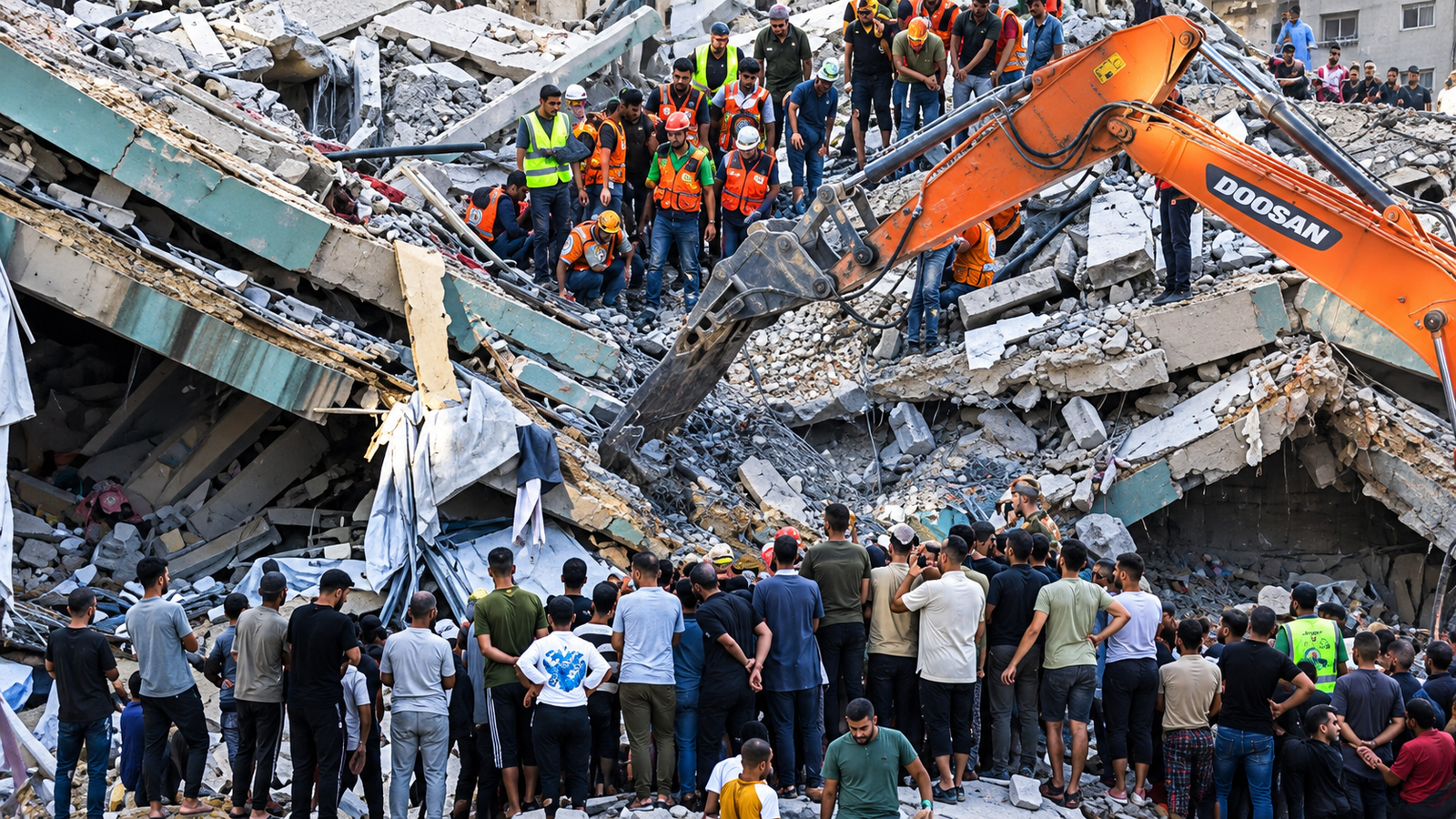
Gaza City — 16 September 2026
Overview
At least 21 Palestinians, including eight children, were killed when a war-damaged residential building collapsed in Gaza City, according to Palestinian rescue officials and medical sources cited by international news organizations. Dozens of other people were reportedly trapped beneath the rubble as emergency crews continued searching the site on Wednesday, September 16.
The disaster occurred in an environment where large numbers of displaced Palestinians are living in buildings that were damaged during the war. The collapse has renewed concerns about the safety of structures across Gaza and the difficulties faced by rescue teams working with limited heavy equipment.

The collapse
The building was a multi-storey residential structure in western Gaza City. Reports differ slightly on its precise description, with Reuters describing it as a seven-storey building, while other reports have described it as six storeys. It had previously suffered serious damage during Israeli military operations.
According to Gaza Civil Defence officials, displaced families had been living inside the structure despite its damaged condition. The building reportedly housed several families who had limited alternatives for shelter.
The collapse occurred overnight while residents were inside. Rescue workers subsequently searched through large quantities of concrete, twisted metal and other debris for survivors.

Children among the dead
The casualty figures changed as rescuers recovered additional victims.
The Associated Press reported at least 21 deaths, including 11 children, while other early reports put the number of children among those killed at five or eight. The figures were still developing as rescue operations continued.
This discrepancy is important in reporting a developing disaster: the death toll and demographic breakdown can change as bodies are recovered and hospitals reconcile their records.
At least 14 people were reported injured in the earlier casualty updates. Dozens—and in some reports nearly 100 people—were believed to be missing or potentially trapped beneath the rubble.

Rescue operation
Emergency crews faced major difficulties reaching people beneath the collapsed structure.
Reports from Reuters and other outlets said rescue workers lacked sufficient heavy machinery and, in some places, were forced to work with basic tools or their hands. UN personnel and Egypt’s relief agency were also reported to be assisting rescue efforts.
The shortage of equipment is particularly significant because concrete slabs from multi-storey buildings can weigh several tonnes. Attempting to remove them without cranes, excavators and cutting equipment can considerably slow the search for survivors.
Gaza’s Civil Defence has warned that many other damaged structures remain dangerous.

A wider structural-safety crisis
The collapse is not an isolated structural problem.
Gaza’s rescue authorities estimate that about 2,000 damaged buildings remain occupied or potentially at risk of collapse. Tens of thousands of Palestinians are reported to be living in or around damaged structures because safer housing and adequate shelter remain scarce.
The problem is particularly acute for displaced families. Some families have reportedly returned to damaged buildings because tents and other temporary shelters do not adequately protect them from weather conditions, while the availability of alternative housing is extremely limited.
UN officials have also warned about the approaching winter and the possibility that deteriorating structures could pose additional risks.

Why were people living in a damaged building?
The circumstances highlight the difficult choices facing Gaza’s displaced population.
According to Palestinian officials and residents cited by news organizations, people have continued to occupy partially damaged buildings because they have few alternatives. Some families reportedly believed that remaining inside a standing structure offered greater protection from rain and other weather conditions than temporary shelters.
The building’s previous damage meant that its structural integrity was already compromised. However, the precise technical cause of the final collapse has not been independently established in the immediate aftermath.
That distinction matters: the building had previously been damaged during the war, but the available reports do not establish through an independent structural investigation exactly what caused the final failure.
Reconstruction and access to equipment
The disaster has also drawn attention to the wider reconstruction crisis in Gaza.
Reuters reported that UN and Palestinian officials attributed the shortage of heavy machinery partly to restrictions affecting the entry of equipment into Gaza. Israel has said restrictions are necessary to prevent materials and equipment from being diverted to armed groups.
The result is a difficult operational environment for civil-defence teams: damaged buildings remain standing but unstable, while rescuers may lack the machinery needed both to demolish them safely and to recover people trapped inside.
The ceasefire context
The collapse comes amid a fragile ceasefire that has reduced, but not eliminated, violence in Gaza.
Reuters reported that more than 1,300 Palestinians had been killed in Gaza since the ceasefire took effect, according to Gaza health officials, while Israel reported the deaths of four soldiers during the same period. Both Israel and Hamas have accused the other of violating the ceasefire.
The building collapse demonstrates that the physical consequences of the war continue even when active fighting decreases. Structures damaged months or years earlier can remain dangerous, while displaced people continue to live among damaged infrastructure.
Key facts at a glance
| Issue | Current information |
|---|---|
| Location | Gaza City, Gaza Strip |
| Date | 16 September 2026 |
| Incident | Collapse of a war-damaged residential building |
| Reported deaths | At least 21 in AP/Independent reporting |
| Children reported killed | Reports vary; the requested figure of eight is reported by The Independent |
| Injured | At least 14 in early reports |
| Missing/trapped | Dozens; some estimates approached 100 |
| Previous building damage | Reported to have occurred during the war |
| Rescue difficulties | Severe shortage of heavy machinery and equipment |
| Wider risk | Gaza Civil Defence estimates roughly 2,000 damaged buildings may be at risk |
The casualty figures are developing and should be treated as provisional. Different news organizations and authorities have reported different numbers as rescuers continue recovering victims.
Independent assessment
The immediate facts point to two overlapping humanitarian emergencies: a deadly building collapse and a broader shortage of safe accommodation for displaced families.
The collapse itself occurred in a structure that had already been damaged during the war. The continuing use of such structures reflects the lack of sufficient safe housing and shelter options. At the same time, the limited availability of rescue equipment has complicated efforts to determine how many people remain trapped and to recover victims.
Further investigation would be required to establish the precise structural mechanism that caused the building to fail and whether additional factors contributed to its collapse.
For now, the most immediate concern remains the people still missing beneath the rubble and the safety of residents occupying other damaged structures across Gaza.
Sources: Reuters, Associated Press, The Independent, Al Jazeera and other international reporting published on 16 September 2026.
Image note: The accompanying images are illustrative rescue-scene photographs from Gaza and are not necessarily photographs of the specific building involved in this incident.

By Angel No Lie | KPD Online | September 16, 2026
Washington, D.C. / International
Executive Summary
U.S. federal authorities have accused a network linked to Russian intelligence services of organizing a campaign of targeted killings and attacks against people regarded by Moscow as opponents, including individuals in the United States and people in European countries supporting Ukraine.
The allegations were made public on 15 September 2026, when the U.S. Department of Justice announced charges against five people it says were working with Russian intelligence services. Prosecutors allege that the network recruited people to conduct surveillance and carry out killings, while also planning attacks against civilian and military infrastructure in European countries aligned with Ukraine.
The allegations remain allegations: the five defendants are at large, and the Justice Department itself notes that an indictment is not proof of guilt and that defendants are presumed innocent unless proven guilty in court.

FBI Director Kash Patel to Move HQ From Dilapidated Hoover Building to Ronald Reagan Building Amid Removal Predictions | DeepNewz US Gov Appointments
What the United States alleges
According to the unsealed indictment, the alleged Russian Intelligence Services network has operated since at least 2024. U.S. prosecutors say its activities initially focused on Russian dissidents and defectors but increasingly included individuals and countries perceived as supportive of Ukraine.
The case centers on five defendants:
- Yuri Khrameev, 63, described by prosecutors as a former Russian intelligence colonel.
- Kirill Khrameev, 27, described as an officer in Russia’s Federal Security Service, or FSB.
- Oemis Romagoza Durruthy, 35, a Cuban national living in Russia.
- Yaidel Delgado Suarez, 35, a Cuban national whom prosecutors describe as a recruiter.
- Angel Eduardo Castro, 22, a Venezuelan national.
All five face a charge of conspiracy to finance terrorism. Three—Yuri Khrameev, Suarez and Castro—also face conspiracy-to-commit-murder-for-hire charges.

Department of Justice in Washington DC USA
An alleged assassination plot in Washington
One of the most significant allegations concerns a Russian dissident whom the network believed was living in the United States.
Prosecutors allege that a U.S.-based individual was recruited during the summer of 2026 to conduct surveillance of the intended victim. According to the indictment, the individual received locations connected with the target and was offered between $1,000 and $1,500 for surveillance work.
After photographs and videos were provided to the alleged recruiters, prosecutors say the individual was offered $40,000 to kill the dissident. The person refused to carry out the killing, after which the alleged recruiters sought other people who might undertake the operation.
The FBI said its Washington and New York offices, together with other agencies, disrupted the alleged operation before the planned killing occurred.

EU-Weinexport nach Russland fällt auf 20-Jahres-Tief | wein.plus Wein-Nachrichten
A second alleged target in Lithuania
The indictment describes an earlier operation involving a person in Lithuania.
U.S. prosecutors allege that in 2025, Kirill Khrameev recruited an American to travel to the Lithuanian target’s purported address and take photographs. After the surveillance was completed, Yuri Khrameev allegedly offered the individual approximately $25,000 to kill the target.
The recruit declined. Prosecutors say the alleged recruiter subsequently proposed other forms of sabotage, including attacks against property and infrastructure.
This allegation is significant because it illustrates the broader pattern described by U.S. prosecutors: the alleged network was not limited to Russian dissidents but also sought to target people and infrastructure in countries supporting Ukraine.
European dimension
The U.S. indictment also alleges that members of the network helped organize operations in Europe.
Prosecutors say Durruthy coordinated travel and logistics connected to alleged attacks in Prague in 2024 and Lithuania later that year. The Justice Department characterizes these activities as part of a wider effort involving attacks against civilian and military infrastructure in countries aligned with or perceived to be aligned with Ukraine.
The allegations come amid broader Western concerns about Russian intelligence activity in Europe.
An Associated Press investigation published in May reported that Western intelligence officials had linked a series of suspected assassination and sabotage operations to Russian security services. Those cases included alleged plots involving Ukrainian supporters, Russian activists and people connected to Ukraine’s war effort.
Why the case matters
The allegations extend beyond the traditional battlefield in Ukraine.
If the U.S. allegations are substantiated in court, they would indicate an effort to use recruited intermediaries—including people with no obvious connection to Russian intelligence—to conduct surveillance, killings and acts of sabotage abroad.
That approach can provide intelligence services with distance from the people carrying out an operation, while making investigations more difficult. The U.S. indictment alleges that recruiters offered money to individuals in the United States and Europe rather than personally carrying out every operation.
The case therefore illustrates a broader security problem facing countries supporting Ukraine: the conflict’s effects can extend beyond conventional military operations in Ukrainian territory.
Russia’s response
The allegations have been disputed by Russia.
Reuters reported on 16 September that Kremlin spokesman Dmitry Peskov dismissed the allegations pending what he described as credible evidence. Russia has previously denied involvement in killings and attempted killings of opponents abroad.
That means the central allegation—that the defendants were acting on behalf of Russian intelligence services—remains a matter to be established through evidence and legal proceedings rather than simply accepted on the basis of the charges.
What is established and what remains alleged
| Issue | Current information |
|---|---|
| Five people charged in the U.S. | Established: U.S. prosecutors unsealed charges on 15 September 2026. |
| Russian intelligence connection | U.S. allegation: prosecutors say the defendants worked for or with Russian intelligence services. |
| Planned killing in Washington | U.S. allegation: a recruit allegedly conducted surveillance and was offered $40,000 for the killing. |
| Killing actually carried out in that operation | No: the recruited U.S. resident declined to carry out the killing, according to prosecutors. |
| Earlier Lithuania operation | U.S. allegation: a recruit was allegedly offered about $25,000 to kill a target there. |
| Russian government responsibility | Contested: U.S. authorities attribute the network to Russian intelligence; Russia has rejected the allegations. |
| Criminal guilt of defendants | Not established: the defendants remain at large and are presumed innocent unless proven guilty. |
Broader context
The allegations are part of an increasingly international security environment surrounding Russia’s war against Ukraine. Western officials have previously accused Russian intelligence-linked networks of conducting sabotage, arson, surveillance and assassination operations across Europe.
In May 2026, the Associated Press reported that intelligence officials from several Western countries believed Russia had increased efforts to target opponents and supporters of Ukraine since the beginning of Russia’s full-scale invasion of Ukraine in 2022. The report also documented alleged plots in France, Lithuania, Germany and Poland.
The latest U.S. case is notable because alleged operations reached into U.S. territory itself, according to the indictment.
Conclusion
The U.S. Justice Department’s case presents an allegation of a Russian intelligence-linked network that sought to recruit people overseas to conduct surveillance, assassinations and attacks against individuals and infrastructure associated with countries supporting Ukraine.
The most immediate alleged operation involved surveillance of a Russian dissident in the United States and an offer of $40,000 for the person’s killing. Prosecutors say that operation was disrupted before the assassination occurred.
The allegations are serious but remain subject to judicial scrutiny. The five defendants have not been convicted, and Russia disputes the U.S. account. The forthcoming legal proceedings and any additional evidence will be important in determining which elements of the U.S. government’s allegations can ultimately be established.
Primary sources: U.S. Department of Justice indictment announcement; Associated Press reporting; Reuters reporting.
Image sources shown above include Wikimedia Commons and Getty Images search results; the FBI headquarters image is identified as CC BY 2.0 on Wikimedia Commons.

By Angel No Lie | KPD Online | September 16, 2026
U.S. President Donald Trump is returning to North Carolina on Wednesday to campaign for Republican Senate candidate Michael Whatley, as Republicans work to consolidate support ahead of the November 2026 midterm elections.
The visit is Trump’s first major campaign appearance since the Republican Party’s midterm convention and forms part of his effort to make the congressional elections a referendum on his presidency. Whatley, a former Republican National Committee chairman, is seeking the Senate seat being vacated by Republican Senator Thom Tillis.

Donald Trump campaigns in North Carolina ahead of the 2026 midterm elections.
Focus on voters who backed Trump in 2024
North Carolina was one of the closely contested states in the 2024 presidential election, when Trump won the state. The current Senate campaign is putting particular attention on voters who supported Trump in that election but have not necessarily committed to the Republican Senate nominee.
An August Elon University poll cited by Reuters found that 72% of North Carolina voters who said they voted for Trump in 2024 supported Whatley, while 10% supported Democratic candidate Roy Cooper and 14% remained undecided. Among voters who said they backed Kamala Harris in 2024, 93% supported Cooper.
The figures illustrate a distinction between presidential and down-ballot voting: some people who supported Trump in 2024 are not automatically supporting the Republican Senate candidate in 2026.

Republican Senate candidate Michael Whatley is seeking to consolidate support among voters who backed Trump in 2024.
Focus on voters who backed Trump in 2024
North Carolina was one of the closely contested states in the 2024 presidential election, when Trump won the state. The current Senate campaign is putting particular attention on voters who supported Trump in that election but have not necessarily committed to the Republican Senate nominee.
An August Elon University poll cited by Reuters found that 72% of North Carolina voters who said they voted for Trump in 2024 supported Whatley, while 10% supported Democratic candidate Roy Cooper and 14% remained undecided. Among voters who said they backed Kamala Harris in 2024, 93% supported Cooper.
The figures illustrate a distinction between presidential and down-ballot voting: some people who supported Trump in 2024 are not automatically supporting the Republican Senate candidate in 2026.

North Carolina’s large unaffiliated electorate remains a major focus of the 2026 Senate campaign.
Affordability emerges as a central issue
Economic conditions are another major theme of the campaign.
Reuters reported that concerns about affordability are affecting Trump’s support among some moderate voters, while gasoline prices have become a prominent issue. The national average price for regular gasoline was reported at $4.33 per gallon on September 15, while diesel reached $6.27, according to AAA figures cited by Reuters.
Trump has continued to emphasize issues including crime and immigration, while the Whatley campaign has sought to connect those issues to the broader Republican agenda.
North Carolina’s unaffiliated voters
Unaffiliated voters are particularly important in North Carolina. Reuters reported that they make up approximately 40% of the state’s registered electorate, making them the largest registration category.
The state’s political balance means campaigns from both parties are seeking support beyond their traditional bases. The discussion has consequently focused on issues such as household costs, the economy and the performance of the Trump administration.
North Carolina’s State Board of Elections reported that more than 5.7 million people voted in the state’s 2024 general election, underscoring the size of the electorate involved in the state’s political contests.
Polling snapshot
A recent Elon University poll cited by Reuters put Cooper at 49% and Whatley at 38% among likely voters. The same survey found that 54% of North Carolina respondents disapproved of Trump’s job performance, while 31% approved. These are measurements from a particular survey and date, rather than forecasts of the eventual election result.
Nationally, a Reuters/Ipsos poll conducted during the previous week put Trump’s approval rating at 35%, compared with 33% in the preceding survey. The poll also found Democrats ahead of Republicans 44% to 37% on its generic congressional ballot question.
Trump makes the midterms personal
Trump has urged Republicans to approach the 2026 elections as a judgment on his administration, telling Republicans at last week’s convention to “pretend that I’m on the ballot,” despite not being a candidate in the November elections.
His North Carolina appearance reflects that strategy, with Trump using his national profile to campaign for candidates running in competitive states.
Democrats, meanwhile, are also seeking to make the Senate contest about Trump’s record and policies. The competing approaches mean the North Carolina race is being fought not only around the individual candidates but also around voters’ assessments of the administration’s economic and domestic policies.
What to watch
The North Carolina campaign is likely to continue focusing on several groups of voters: Republicans who supported Trump in 2024, unaffiliated voters, and voters whose concerns are centered on inflation, fuel prices and household affordability.
The state’s official election calendar lists October 9, 2026, as the voter-registration deadline and October 15–31 as the in-person early-voting period for the November general election.
For the Republican campaign, Trump’s appearance provides an opportunity to mobilize his existing supporters while addressing concerns among voters who supported him previously but remain undecided about the Senate contest.
By Angel No Lie | KPD Online | September 16, 2026
The United States has announced new visa restrictions targeting certain South African nationals whom Washington accuses of being responsible for or supporting policies involving race-based discrimination, uncompensated land seizures and the incitement of violence against minority ethnic or racial groups.
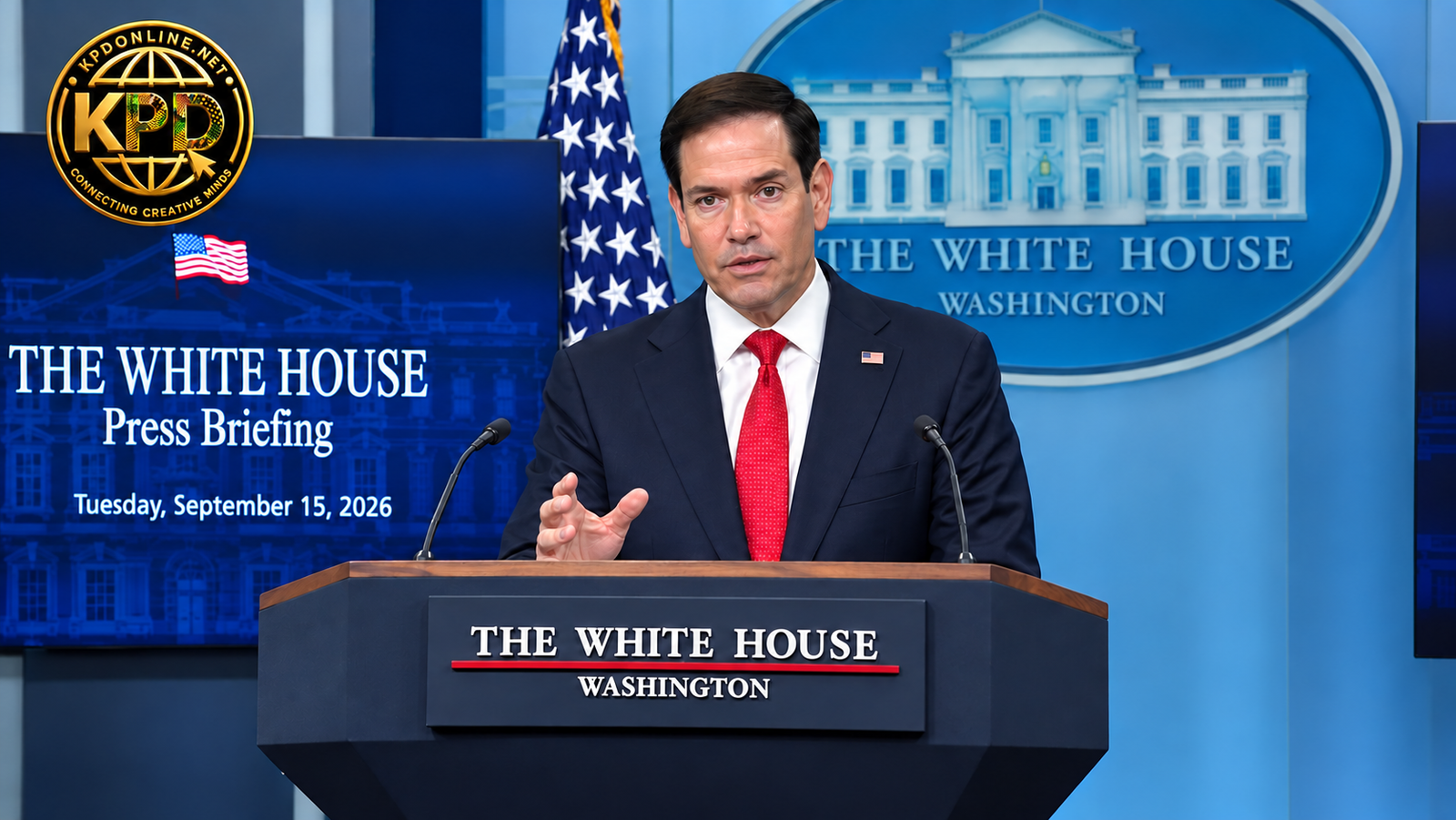
U.S. Secretary of State Marco Rubio announced the policy on September 15, saying the restrictions would apply to foreign nationals involved in the enactment or implementation of policies that meet the criteria outlined by Washington. The policy was issued under Section 212(a)(3)(C) of the U.S. Immigration and Nationality Act, which allows the secretary of state to restrict entry when an individual’s presence could have potentially serious adverse foreign-policy consequences for the United States.

U.S. Secretary of State Marco Rubio announced new visa restrictions targeting certain South African nationals.
Washington’s concerns
The U.S. State Department said its concerns include South African legislation and policies relating to land expropriation without compensation, race-based discrimination and what it describes as incitement of imminent violence against minority groups.
Washington has also raised concerns about violence and crime affecting South Africa’s rural communities and has argued that some policies intended to address racial inequality disproportionately affect the country’s white minority, particularly Afrikaners.
The new policy does not identify specific South African officials who are currently subject to the restrictions. Reuters reported that the announcement instead establishes a framework under which individuals can face visa restrictions based on their involvement in the policies identified by Washington.

South African President Cyril Ramaphosa has defended the country’s land and racial-equality policies.
Pretoria rejects Washington’s characterization
South Africa has rejected the U.S. government’s characterization of its policies, arguing that measures involving land reform and racial equality are intended to address the economic and social inequalities created by colonialism and apartheid.
South African officials have also disputed claims that white South Africans are being systematically persecuted, saying the country’s laws and policies should be considered within the broader historical context of apartheid and the continuing inequalities that followed it. Reuters reported on September 16 that Pretoria accused Washington of relying on representations that mischaracterize South Africa’s domestic policies.

The new restrictions add to growing diplomatic tensions between Washington and Pretoria.
Land reform at the centre of dispute
Land ownership has become one of the most contentious issues in relations between Washington and Pretoria.
The U.S. administration has focused particular attention on South Africa’s policy of allowing land expropriation under certain circumstances without compensation. South African authorities maintain that the policy is part of efforts to address historic land dispossession and does not amount to a general programme of confiscating property from white South Africans.
The disagreement has increasingly affected diplomatic relations between the two countries.
Wider deterioration in US-South Africa relations
The visa restrictions are the latest in a series of disputes between Washington and Pretoria. The Trump administration has previously taken measures affecting U.S.-South Africa relations, including reductions in U.S. assistance and other diplomatic actions.
The two governments have also disagreed over South Africa’s foreign policy, including its legal case against Israel at the International Court of Justice.
The latest visa announcement therefore extends a dispute that now encompasses immigration, land policy, racial equality, foreign policy and diplomatic relations.
What happens next?
The U.S. State Department has not publicly released a list of individuals affected by the new restrictions. The policy could therefore have a broader effect than the specific officials who may eventually be identified.
Washington has urged the South African government to address the concerns behind the restrictions, while Pretoria has emphasized its sovereign right to formulate domestic legislation and has called for continued diplomatic engagement.
The announcement marks another escalation in relations between the United States and South Africa, with the practical impact of the new visa policy likely to depend on how Washington applies the restrictions and whether the two governments can resolve their disagreements through diplomatic channels.
Source note: This report is based on the September 15–16, 2026 U.S. State Department announcement and reporting by Reuters and AP. The allegations concerning discrimination are presented as claims by the U.S. administration; South Africa disputes their characterization.
By Angel No Lie | KPD Online | September 16, 2026
KYIV, Ukraine — September 16, 2026: A Russian drone strike hit a passenger bus in southeastern Ukraine on Wednesday, killing five people and injuring at least seven others, according to Ukrainian regional officials.
The attack occurred in the Nikopol district of Dnipropetrovsk region, an area near the front line that has been repeatedly targeted during the war. Regional Governor Oleksandr Hanzha said the vehicle was a scheduled passenger bus.

Five Killed in Bus Attack
According to Ukrainian authorities, the five people killed were four men and one woman. Seven other people were injured and taken for medical treatment. Images released by Ukrainian officials showed a white minibus with shattered windows following the strike.
Mykola Lukashuk, head of the Dnipropetrovsk regional council, said the bus was carrying people travelling on their normal daily journeys. Russia had not immediately issued a public comment on the specific attack when the reports were published.
Both Moscow and Kyiv have repeatedly denied deliberately targeting civilians during the war.

Passenger Train Also Hit
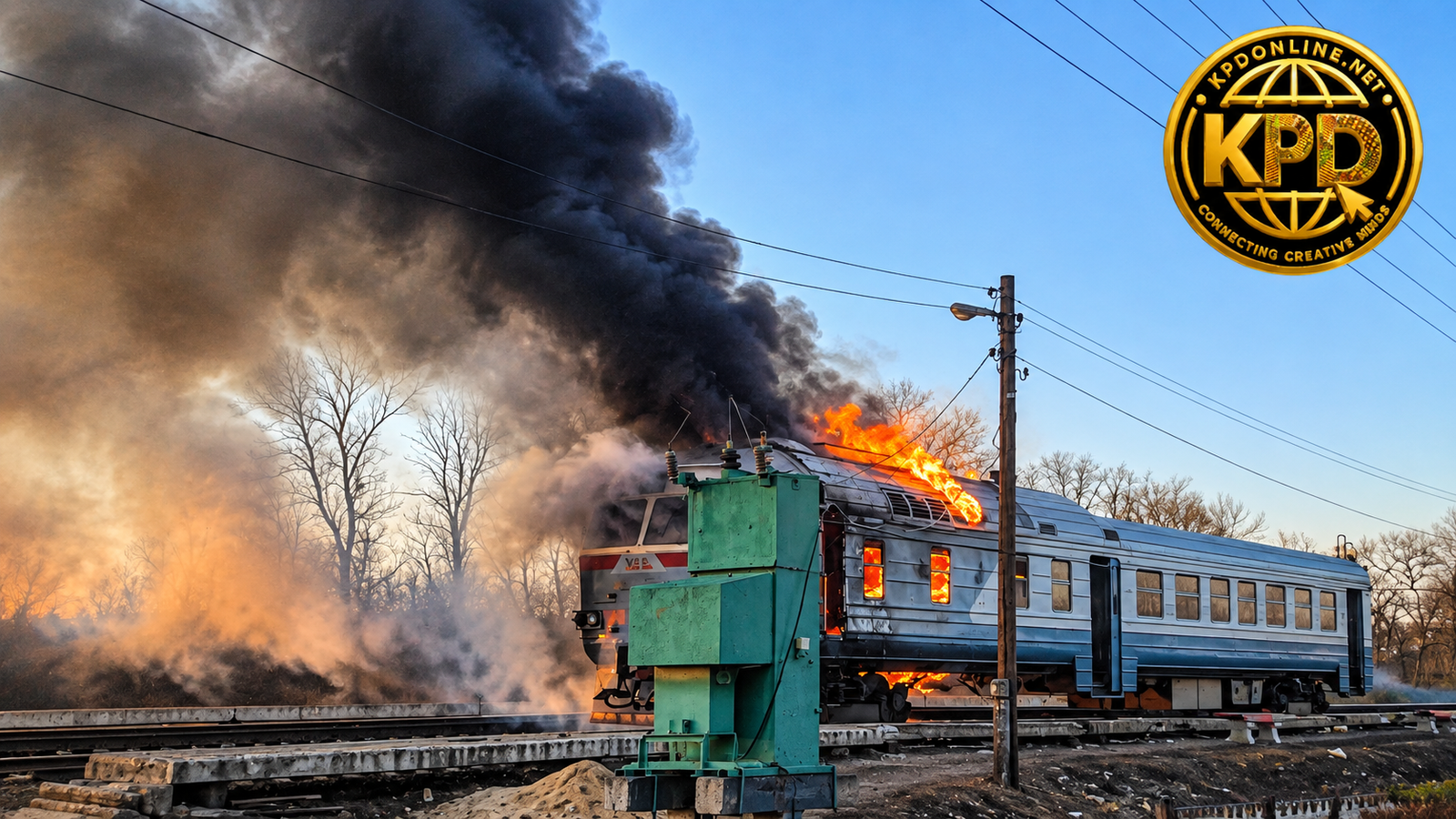
A separate Russian drone attack struck a passenger train in Ukraine’s southern Mykolaiv region, according to Ukrainian officials.
The train was carrying 168 passengers and crew members. Acting regional governor Heorhii Reshetilov said everyone aboard was evacuated safely and no injuries were reported. He also said the train came under additional drone attacks after the initial strike.
Ukrainian President Volodymyr Zelenskyy also said a locomotive near Kovel, close to the Polish border, was struck.

Rail Network Under Increasing Pressure
The latest incidents come amid repeated attacks on Ukraine’s railway infrastructure, which has become a crucial means of transportation since the country’s airspace was closed following Russia’s full-scale invasion in 2022.
According to Ukraine’s state railway operator, Russian attacks have damaged 120 passenger railcars, 304 locomotives and 43 railway stations during 2026. The operator said approximately 1,700 railway facilities had been attacked since the beginning of the year.
Ukraine’s Foreign Minister Andrii Sybiha accused Russia of deliberately attacking transportation infrastructure, while Russia has not publicly accepted responsibility for the specific passenger-bus attack reported Wednesday.
The attacks come as both sides continue using drones extensively against military, industrial, energy and transportation targets.
Civilian Casualties Continue to Rise
The United Nations Human Rights Monitoring Mission in Ukraine reported that at least 1,396 civilians were killed and 7,978 wounded during the first six months of 2026, representing an increase compared with the same period in 2025. The monitoring mission also recorded civilian casualties inside Russia resulting from Ukrainian attacks.
The latest strikes underscore the continuing risks faced by civilians and transport workers as the Russia-Ukraine war enters another period of intensified drone warfare.

Nkatenkwan: The Timeless Ghanaian Peanut Soup That Brings Every Meal to Life

Eight Children Among 21 Killed After War-Damaged Gaza Building Collapses

U.S. Accuses Russia of Plotting Killings of Ukrainian Allies Overseas



-

 Entertainment1 week ago
Mahama Is First President to Put GH¢40m Seed Money into Creative Arts Fund: Kojo Preko Dankwa
-

 Culinary1 week ago
The Green Heart of Ghanaian Cuisine: Celebrating Nkontomire and the Art of Abom
-

 General News2 weeks ago
Don’t Punish Them Retrospectively – Educationist Challenges New CSSPS Placement Rule
-

 General News2 weeks ago
OSP Opens Preliminary Investigation into Alleged GH¢70,000 Payment Linked to Parliament’s Vetting
-

 Entertainment1 week ago
Government Repatriates Musician Barosky from UK
-

 Business2 weeks ago
TOR & GOIL Explore Further Opportunities for Strategic Collaboration
-

 Entertainment1 week ago
Keche Supports Street Vendor with GH¢3,000 After She Struggles to Make Sales
-

 General News2 days ago
GTA’s Financial Strength Weakens Despite 2025 Tourism Activities