
Politics
Anyidoho Accuses Mahama of Nurturing Hate Speech Peddlers Amid Growing New Media Concerns

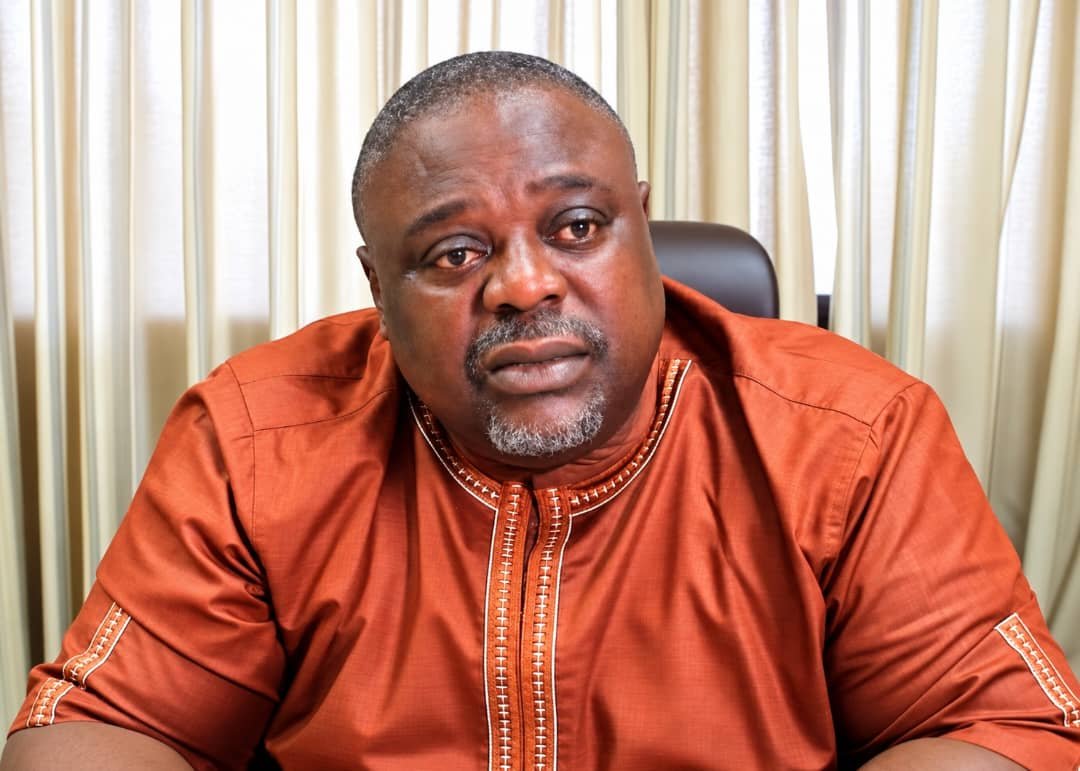
Founder and President of the Atta Mills Institute, Samuel Koku Anyidoho, has accused President John Dramani Mahama of helping to nurture a political environment in which individuals who engage in insults and abusive political commentary have flourished.
Expressing concern about Ghana’s increasingly hostile social-media space on Kessben Maakye show in Accra, Anyidiho said the nature of communication on new media had become alarming and is threatening the country’s social fibre.
“What is happening in the new media is very scary,” Anyidoho said, arguing that the manner in which communication is being “spewed out” is destroying the moral fibre of society.
He maintained that political disagreements should not turn citizens into enemies and warned against allowing abusive behaviour to become an accepted feature of Ghanaian politics.
His criticism comes amid a national debate over President Mahama’s approach to hate speech and abusive content online. Meanwhile, the President has asked the Ghana Journalists Association (GJA) and Media Foundation for West Africa (MFWA) to facilitate a national conversation and develop a roadmap for addressing harmful online content while protecting freedom of expression.
Anyidoho, however, questioned whether institutional dialogue alone would address what he sees as the root of the problem. He argued that politicians and political actors must confront individuals within their own circles who engage in abusive commentary rather than merely condemning the wider phenomenon.
He specifically referenced US-based commentator Kevin Taylor, questioning what he sees as inconsistent responses to political insults. President Mahama recently said he had never met or spoken with Taylor and indicated that he would raise concerns about Taylor’s alleged insults through his father, whom the President knows.
Anyidoho further questioned the distinction between people who openly show their faces while making insulting comments and anonymous social-media users who engage in similar conduct.
President Mahama, during an engagement with Ghanaians in New York, said he personally does not mind being insulted but expressed concern about anonymous users who publish vile content. He also acknowledged that police arrests over some insults could go too far and called for Ghanaians to collectively determine how new media should be regulated.
Anyidoho argued that freedom of expression should not become an excuse to malign others or destroy reputations. He also rejected the argument that abusive political commentary is justified simply because opponents engage in similar conduct.
“If you can hire people to insult and malign others for your gain, then you must be ready for the repercussions,” he stated.
He also urged Ghanaians to take an active interest in governance rather than leaving national affairs entirely in the hands of political leaders.
“We must all be part of the governance of the country and not leave it for the government alone to think for us,” he said.
Anyidoho’s comments add to a wider political debate over how Ghana should tackle online abuse, misinformation and hate speech without undermining constitutionally protected political criticism and freedom of expression.

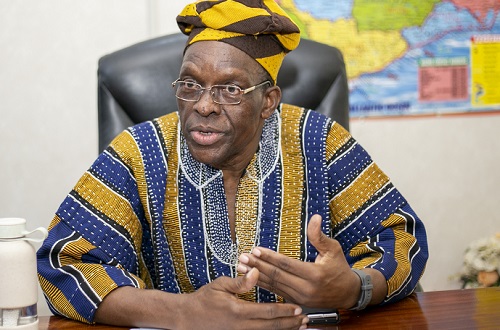
Speaker of Parliament Alban Bagbin has called for caution in Ghana’s growing debate over social media regulation, warning that freedom of expression should not be used to justify threats, incitement, deliberate misinformation or the abuse of others.
Bagbin made the remarks on Tuesday, September 29, 2026, when Parliament resumed for an emergency sitting.
According to the Speaker, Ghana’s discussions on how to regulate social media and tackle misinformation must be guided by a balance between protecting citizens’ right to express themselves and ensuring that people are held accountable for harmful conduct online.
His comments come at a time when there is renewed national debate over the regulation of social media platforms, particularly TikTok.
The debate follows concerns raised by President John Dramani Mahama about the increasing spread of misinformation, insults and other forms of harmful content on social media.
President Mahama has called for a national stakeholder dialogue to determine how Ghana should respond to the growing influence of TikTok and other emerging media platforms.
The President has, however, stressed the need to ensure that any regulatory measures adopted do not infringe on the constitutional right to freedom of expression.
To facilitate the discussions, President Mahama tasked the Ghana Journalists Association (GJA) and the Media Foundation for West Africa (MFWA) with bringing together relevant stakeholders to deliberate on the issue.
Speaking in Parliament, Speaker Bagbin welcomed the President’s initiative and urged those involved in the national conversation to approach the matter with openness, moderation and broad participation.
He stressed that efforts to address harmful online content must not be turned into a means of silencing people who criticise government officials or hold public authorities accountable.
“The national conversation should, in my view, be broad, inclusive, and measured,” Bagbin said.
He cautioned that the discussion should neither be used to suppress dissent nor to protect public officials from legitimate criticism.
At the same time, he noted that concerns about freedom of expression should not be used to defend threats, incitement, deliberate falsehoods or irresponsible attacks against other people.
Bagbin said the approach proposed by President Mahama recognises the need to maintain this delicate balance between protecting free speech and addressing abuses associated with social media.
President Mahama had earlier addressed the issue during a Town Hall Meeting with Ghanaians in New York, where he acknowledged the challenges involved in regulating new media platforms without undermining freedom of expression.
The President said Ghana must collectively decide how it wants to respond to the growing influence of platforms such as TikTok.
He also raised the question of whether the country’s existing mechanisms for dealing with harmful online content are sufficient to address the challenges posed by new media.
The ongoing debate is therefore expected to bring together media organisations, civil society groups, technology stakeholders, government representatives and other relevant actors to consider possible approaches to social media regulation while preserving the right to free expression.

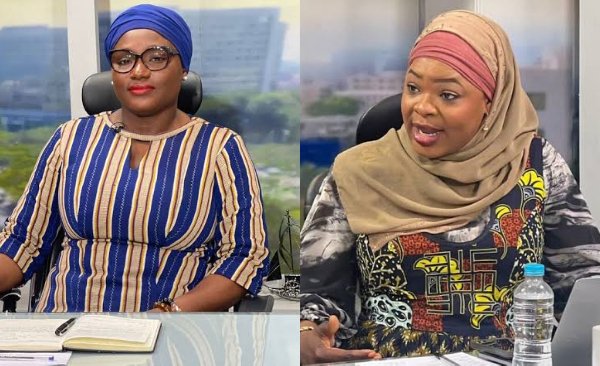
A heated exchange erupted on live television between New Patriotic Party (NPP) communications team member Lawuratu Musah-Saaka and Deputy Presidential Spokesperson Shamima Muslim during a discussion on the prices of goods and services in Ghana.
The two political communicators engaged in a fiery back-and-forth during the Good Morning Ghana programme on Metro TV as they debated whether the prices of essential commodities had actually declined under the John Dramani Mahama administration.
The discussion quickly turned tense after Shamima Muslim accused some NPP communicators of engaging in what she described as “jandam propaganda” in an attempt to discredit the government’s economic record.
According to Shamima, despite claims by some opposition communicators that prices continue to rise, there have been reductions in the prices of several goods on the market.
She cited agricultural products and comments from market women as evidence of what she described as marginal reductions in prices.
However, Musah-Saaka strongly pushed back against the argument, insisting that the reality being experienced by ordinary Ghanaians was different from the narrative being presented by the government.
She particularly took issue with Shamima’s description of NPP communicators, arguing that the debate should focus on the facts rather than personal attacks.
“Shamima can sit here and use all kinds of adjectives on me. Call me dishonest. But, fundamentally, it takes one to know one,” Musah-Saaka retorted.
The NPP communicator maintained that prices had not fallen across all markets and challenged the government’s position with examples of commodities whose prices, she said, remained high.
She mentioned kenkey, claiming that the popular Ghanaian staple could cost as much as GH¢7 in some locations.
That claim immediately drew a strong response from Shamima Muslim, who disputed the figure and insisted that ordinary consumers were not paying GH¢7 for kenkey everywhere in the country.
The disagreement intensified as both women attempted to defend their respective positions, resulting in a heated exchange that eventually forced the programme host to intervene.
The confrontation has since attracted attention because of the contrasting positions of the two communicators, with the discussion highlighting the wider political debate over the cost of living and whether recent economic developments are translating into lower prices for ordinary Ghanaians.
While the government and its representatives have pointed to reductions in some commodity prices as evidence of improving economic conditions, opposition communicators continue to argue that many households are still struggling with elevated living costs.
The live-TV confrontation between Musah-Saaka and Shamima therefore provided another glimpse into the increasingly intense political debate over Ghana’s economic performance and the everyday experiences of consumers.
The exchange also underscored how discussions about economic indicators can quickly become politically charged, particularly when government claims of improvement are measured against the experiences of consumers at markets and shops across the country.
The National Democratic Congress (NDC) has announced the opening of nominations for its 2026 Regional Executive Elections, with the process scheduled to begin on Tuesday, October 6, 2026.
The announcement was contained in a press release issued by the party’s National Secretariat on September 29, 2026, as part of the electoral timetable previously released by the party.
Aspirants to Begin Nomination Process
The NDC said the opening of nominations marks an important stage in the party’s electoral process and encouraged members interested in contesting the various Regional Executive positions to take advantage of the prescribed period.
The party did not provide specific closing dates for nominations in the press release but stated that the process would proceed in accordance with the general timetable earlier issued on August 5, 2026.
Payment Rules Announced
The party has also outlined how payments for the picking of nomination forms and filing must be made.
According to the NDC, all such payments must be made strictly through its online portal, Mobile Money across all networks, or Visa and MasterCard.
The party said bank payments and bank drafts will not be accepted.
Membership Dues Must Be Fully Paid
The NDC further stated that aspirants, proposers, seconders and endorsers must all be members in good standing of the party.
They are also required to have fully settled their membership dues.
Members with outstanding arrears have been directed to settle them through the party’s designated payment channels before participating in the nomination process.
NDC Urges Peaceful Elections
As preparations begin, the party has called on all aspirants and members to conduct themselves with discipline, decorum and respect for the NDC’s democratic values.
The National Secretariat said it is counting on the cooperation and support of members to ensure that the electoral process is transparent, peaceful, orderly and successful.
The notice was signed by Barbara Serwaa Asamoah, Deputy General Secretary, for the General Secretary of the NDC.
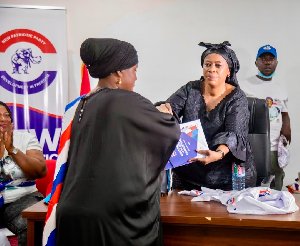
Outgoing National Women’s Organiser of the New Patriotic Party (NPP), Kate Gyamfua, has endorsed her deputy, Hajia Safia Mohammed, to succeed her as the next leader of the party’s Women’s Wing.
Ms Gyamfua, who has decided not to seek re-election, said she believes Hajia Safia has the experience, temperament and organisational skills required to take over the position.
Speaking on Peace FM’s The Platform, she said: “I will be vacating my seat, and the one who can take over, do the work, and do it even better is Safia Mohammed.”
‘She Has the Experience’
Kate Gyamfua said Hajia Safia’s years of service within the NPP have prepared her for the national position.
She noted that Safia progressed through the party’s structures, including the youth wing and regional women’s leadership, before becoming Deputy National Women’s Organiser.
According to her, the position requires someone with tact, experience and a strong understanding of the party’s grassroots structures.
Ms Gyamfua also said Safia informed her personally about her intention to contest the position after she decided to step aside.
She subsequently communicated Safia’s candidature to the 16 Regional Women’s Organisers, who she said agreed to support her.
‘NPP Needs New Faces’
Explaining why she believes the party needs new leadership, Kate Gyamfua said the NPP must reconnect with its grassroots following its defeat in the 2024 general election.
She argued that the party’s current circumstances require new faces capable of rebuilding relationships with members and supporters.
“The NPP needs new faces to lead it into 2028,” she said, while describing Safia as “clean and presentable to the people.”
Safia Faces Competition
Hajia Safia Mohammed is contesting the National Women’s Organiser position alongside Mavis Hawa Koomson. Earlier records of the race also listed Perpetual Ekua Lomokie Akwada among the aspirants.
The latest ballot positions show Safia at number one, with Hawa Koomson at number two.
The NPP’s National Officers’ Elections are scheduled for October 3, 2026, in Kumasi, where delegates will vote on several national executive positions.
For Kate Gyamfua, however, her preferred successor is clear: she wants Safia Mohammed to take charge of the NPP Women’s Wing and build on the work of the current leadership.
Politics
Cocoa Farmers Now Receive 71.18% of World Market Price as Producer Price Rises to GH¢2,650 Per Bag

The Head of Public Affairs at the Ghana Cocoa Board (COCOBOD), Jerome K. Sam, has defended the adjustment of Ghana’s cocoa producer price, stressing that the government remains committed to improving the welfare of cocoa farmers despite fluctuations on the international market.
Speaking on the new cocoa price at Kessben Maakye show in Accra, Sam said farmers are currently receiving about 71.18% amounting to Ghc 2,650, of the world market price, with portions of the remaining proceeds going to buyers and other industry-related commitments.
According to him, cocoa farmers were consulted and involved in discussions leading to the determination of the new producer price. He noted that while the government would be pleased to pay farmers as much as they demand, cocoa pricing is also influenced by prevailing international market conditions.
He further highlighted the government’s support for farmers, including the restoration of free fertilizer distribution, agrochemicals and spraying equipment, among other interventions aimed at reducing production costs and improving yields.
Sam said the cocoa sector has contributed significantly to Ghana’s economy over the years, making the welfare of farmers a major concern for the government.
He also explained that international cocoa prices fluctuate frequently, sometimes within hours, making it necessary to adopt strategies that protect farmers from sudden market shocks. According to him, the Free-On-Board (FOB) pricing arrangement is intended to help stabilize returns and secure a reasonable producer price.
Addressing comparisons with neighbouring Côte d’Ivoire, Sam said the difference in producer prices is approximately GH¢1,100 to the benefit of Ghanaian farmers, adding that Ghana’s pricing and support measures should be considered alongside the benefits provided to farmers.
He further disclosed that the government is strategically planning cocoa sales rather than selling the country’s entire projected crop at once, with the aim of securing better value for farmers. In lieu of this, he acknowledged the farmers collaborations and excitement based on the fact that the government has given then respect by involving then in critical decision making concerning the cocoa sector.
Sam also responded to criticism from the Minority, New Patriotic Party (NPP) over the producer price, saying COCOBOD remains committed to engaging farmers and consulting them on key decisions affecting cocoa production and marketing.

Bagbin cautions against using free speech to justify online threats and misinformation

TRAFFITECH-GH Full Rollout Moved to November 1

Speeding and Running a Red Light? Traffitech-GH Can Issue Separate Tickets



-
 General News1 week ago
Two political parties, one lesson: Afuntummireku and Tikro Nkɔ Agyina for Ghana
-

 Culinary1 week ago
Kofi Brokeman: The Simple Ghanaian Snack That Has Stood the Test of Time
-

 General News7 days ago
Free Speech, False Publication and Presidential Criticism in Ghana: Where Does the Law Draw the Line?
-
 General News1 week ago
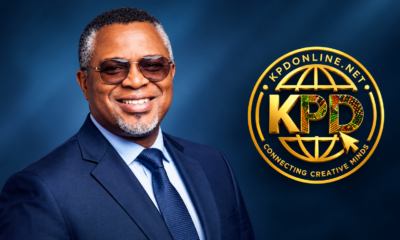
Rev. Dr. Christian Kwetey Kweitsu Set for International Recognition at 100 Most Influential Persons Awards in Kigali
-
 General News2 weeks ago
Bost Energies Made GH¢684 Million Profit: Why Use The NPA Bill, 2026 To Weaken Its Operations?
-

 Entertainment1 week ago
Can’t Anything Good Come Out of Ghana? – Ras Caleb Appiah-Levi Fires Back at Critics
-
 General News7 days ago
Don’t Expect Concerts When People Can’t Afford Food – Rex Omar on Black Star Experience
-
 General News1 week ago
Shatta Wale Urges UPSA Students to Turn Ideas into Sustainable Ventures