
General News
Atlantic Lithium Reaffirms Commitment to Local Jobs as Ewoyaa Project Nears Ratification

By Sarah Adwoa Akuetteh:
Atlantic Lithium Ghana Limited says it remains committed to prioritising local employment at its Ewoyaa Lithium Project in the Mfantseman Municipality as the company edges closer to the final stages of regulatory approvals.
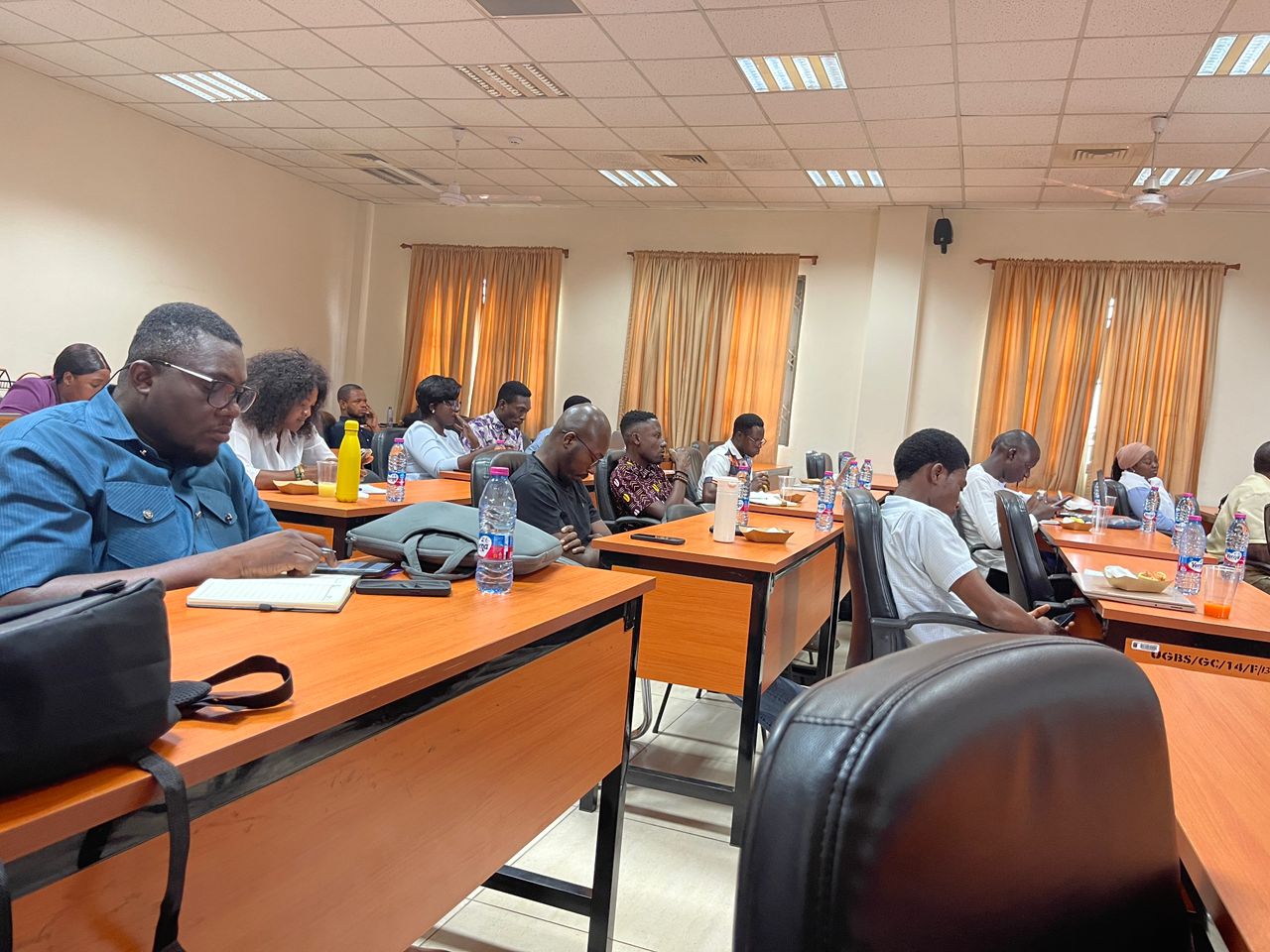
Speaking on the sidelines of the October session of the African Extractive Media Fellowship training in Accra, the company’s General Manager, Ahmed Salim, disclosed that as of October 2024, the project had a workforce of about 100 people, but the number currently stands at 67. He attributed the adjustment to the evolving stages of project development.
According to Mr. Salim, Atlantic Lithium has so far invested more than GH¢68 million in project development, reaffirming its commitment to ensuring that the residents of Ewoyaa and surrounding communities benefit directly from employment opportunities once full operations commence.
“Our primary objective is to ensure that the local communities are the first to benefit when the mine becomes operational. Employment creation for residents remains a top priority,” he said.
His remarks come after the Member of Parliament for Mfantseman, Dr. Ebenezer Prince Arhin, called on the company to prioritise the hiring of local residents in its workforce plans.
Although the company is yet to begin full-scale operations, Mr. Salim revealed that Atlantic Lithium has already started contributing to national revenue through taxes. In 2024 alone, the firm paid about GH¢19.63 million in taxes, including GH¢11.37 million in Pay-As-You-Earn (PAYE), GH¢4.34 million in annual mineral rights, GH¢3.45 million in withholding tax, and GH¢458,000 in annual ground rent.
“We have not yet started production, but we are already paying our fair share of taxes. Once we begin production and make profit, we will start paying dividends,” Mr. Salim explained.
The Ewoyaa project, located near Saltpond in the Central Region, is Ghana’s first major lithium mining initiative a development seen as crucial to positioning the country as a key player in the global electric vehicle and battery value chain.
Currently, the project has received several regulatory approvals including the Environmental Permit, Mine Operating Permit, Water Use Permit, and Land Use Change Certificate. However, Parliamentary ratification of the mining lease remains outstanding.
The company has outlined its next key priorities, which include securing parliamentary ratification, finalising a Strategic Project Investment with the Minerals Income Investment Fund (MIIF), making a Final Investment Decision (FID), and commencing land compensation and ground-breaking activities.
Mr. Salim expressed optimism that the long-awaited parliamentary approval would be secured before the end of the year, paving the way for construction to begin.
“We are hopeful that once ratification is achieved, we can move quickly to begin land compensation and ultimately break ground,” he noted.
If approved, the Ewoyaa Lithium Project is expected to generate significant employment opportunities, boost local infrastructure, and contribute to Ghana’s ambition of becoming a key hub for battery minerals in West Africa.

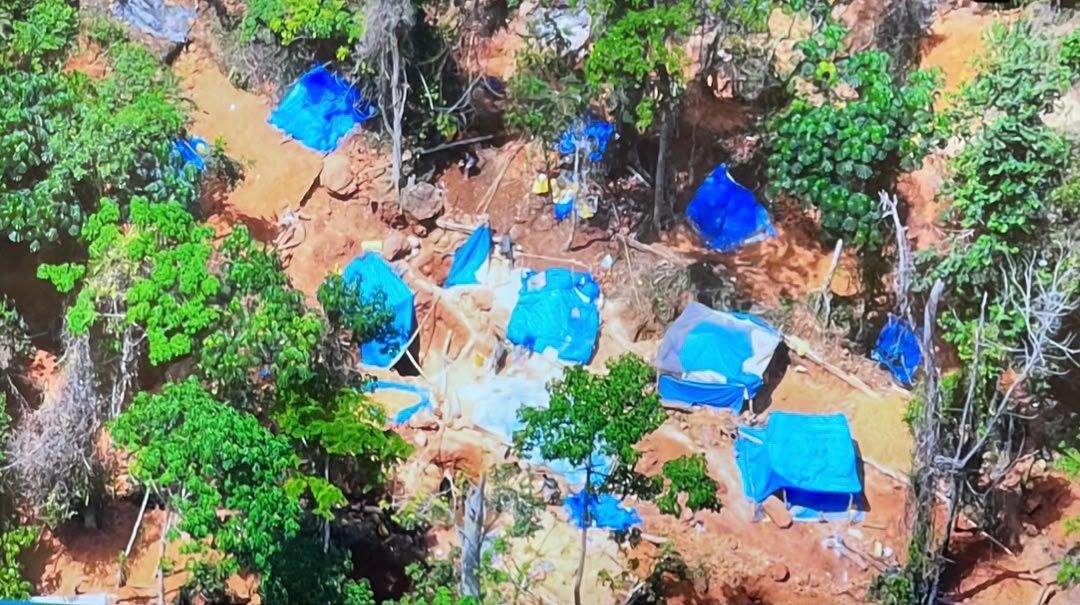
Environmental group A Rocha Ghana has raised the alarm over what it describes as an unprecedented and escalating illegal mining crisis in the Atewa Range Forest Reserve, warning that continued delays in taking decisive action could result in the permanent destruction of the forest.
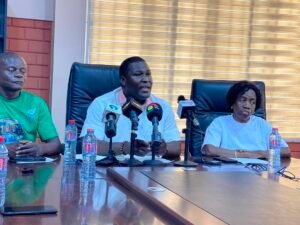
National Deputy Director of A Rocha Ghana, Daryl Bosu, said the scale of illegal mining now being recorded within the reserve requires an urgent and coordinated national response.
Mr Bosu made the remarks at a press conference in Accra organised by A Rocha Ghana in partnership with Eco Conscious Citizens and the Concerned Citizens of Atewa Landscape.
He said information gathered from court records, Forestry Commission correspondence, operational reports and field documentation indicates that the reserve is coming under increasing pressure, with agencies responsible for protecting it facing growing challenges.
“We can lose the forest if we delay in taking very decisive actions as a matter of urgency,” he cautioned.
A Rocha Ghana said illegal mining has spread to several areas of the reserve, including around the headwaters of the Wankobi Stream.
The organisation said field assessments have identified excavated mining pits, areas where forest vegetation has been stripped, polluted streams, makeshift camps and abandoned mining equipment.
It also expressed concern about the security risks facing Forestry Commission personnel and other security agencies operating within the reserve.
According to A Rocha Ghana, a March 2, 2026 communication from Kyebi Forest District Manager Owusu Ameyaw reported an influx of illegal miners into the Sagyimase/Asikam section of the reserve.
The communication indicated that 60 people had been arrested, but illegal mining activities continued despite the arrests.
The organisation also cited a February operation involving 55 police officers, saying the operation was allegedly compromised by an information leak.
Only five people were arrested during that operation, according to A Rocha Ghana.
The environmental group said the growing activities have also exposed forest guards to danger.
It reported that two forest officers were held hostage by illegal miners and were later rescued after police reinforcements arrived.
A Rocha Ghana further said recent operations conducted by the National Anti-Illegal Mining Operations Secretariat (NAIMOS) had resulted in arrests and the seizure of mining equipment and weapons.
Among the items seized were an excavator, drilling machines, dynamite, a pump-action shotgun and ammunition.
The organisation believes the incidents demonstrate that the problem is no longer simply about isolated illegal mining activities but reflects wider challenges with enforcement and the protection of the reserve.
The Atewa Range Forest Reserve was gazetted in 1926, meaning 2026 marks 100 years since it was placed under protected status.
The reserve covers approximately 26,300 hectares and serves as the source of the Ayensu, Densu and Birim rivers, in addition to more than 99 streams.
A Rocha Ghana said the forest’s role in supplying and regulating water makes its protection crucial to the water security of millions of Ghanaians.
The reserve is also recognised for its rich biodiversity, with hundreds of bird, mammal, amphibian and plant species found within it.
Some of these species are considered threatened with global extinction.
The organisation said the consequences of continued destruction would therefore go beyond the loss of trees and forest cover.
According to A Rocha Ghana, illegal mining poses threats to water resources, biodiversity, climate resilience and the cultural heritage of the Akyem Abuakwa Traditional Area.
A Rocha Ghana is now calling on the government to upgrade the Atewa Range Forest Reserve into a National Park, arguing that the current protection regime is no longer sufficient to deal with the scale of illegal mining.
The organisation is also demanding a permanent and adequately resourced joint security task force to protect the reserve.
It wants the Forestry Commission to receive additional personnel and improved logistical support to enable officers to effectively patrol and protect the forest.
The group is also calling for the speedy prosecution of persons arrested for illegal mining.
It has proposed the establishment of a dedicated court for illegal mining cases in the Eastern Region to help speed up the prosecution of offenders.
A Rocha Ghana is further calling for investigations into alleged leaks of information about planned anti-galamsey operations and possible official complicity.
The group has also urged the government to abandon any plans to undertake bauxite mining in Atewa.
Beyond enforcement, A Rocha Ghana believes the forest can be used to generate economic opportunities without destroying its ecological value.
The organisation has proposed what it calls the Atewa Green Option, which includes eco-tourism, agroforestry, climate finance, land restoration and sustainable value chains.
It said studies have indicated that protecting and restoring Atewa could deliver greater long-term economic benefits than mining while creating jobs for communities around the forest.
A Rocha Ghana estimates that tourism alone could generate more than US$5 million annually, while thousands of jobs could be created through tourism-related activities and other green businesses.
The organisation said the escalating galamsey threat is particularly worrying as Ghana marks a century since Atewa was first gazetted as a forest reserve.
A Rocha Ghana recalled the contribution of Nana Sir Ofori Atta I, whose leadership played an important role in the decision to protect the forest in 1926.
It also noted the continued opposition of the Okyenhene and the Akyem Abuakwa Traditional Area to mining in Atewa.
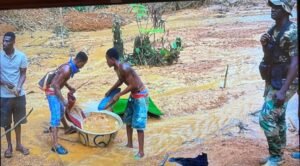
Mr Bosu said A Rocha Ghana would continue its campaign for stronger protection of the reserve, including its call for the forest to be declared a National Park.
The organisation maintains that Ghana must now make a clear choice between allowing illegal mining to further degrade Atewa and protecting the forest as a critical ecological asset for present and future generations.
By Sarah Adwoa Akuetteh
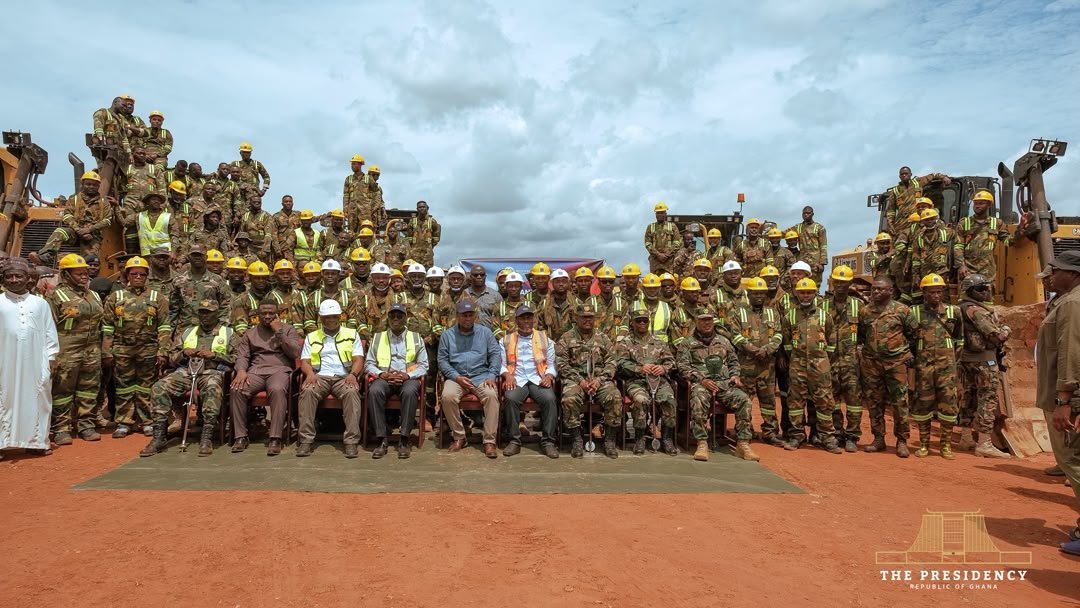
President John Dramani Mahama has directed the Ghana Armed Forces (GAF), particularly the Engineers Regiment, to participate in the construction of the Accra-Kumasi Expressway.
The directive follows the successful completion of the clearing of the project’s Right-of-Way by the Armed Forces, a task the President said was completed ahead of schedule.
Speaking at the official handover of the cleared Right-of-Way at Kwaso, near Ejisu in the Ashanti Region, on Monday, September 14, 2026, President Mahama said the military’s performance had demonstrated its capacity to contribute meaningfully to Ghana’s infrastructure development.
The Ghana Armed Forces was tasked in April 2026 to clear the roadway and undertake early works for the project within 20 weeks.
However, the Engineers Regiment completed the assignment in 19 weeks, clearing 175.6 kilometres of the planned route from Ablekuma in the Greater Accra Region to Sewua in the Ashanti Region.
“Within 19 weeks, 175.6 kilometres of road passing through virgin forests, crossing rivers and streams, our Ghana Armed Forces can today announce to all of us, as they say in military jargon, mission accomplished,” he said.
Following the successful exercise, President Mahama said he had instructed the Minister of Roads and Highways to incorporate the Engineers Regiment as a major subcontractor to the main contractor for the construction of the expressway.
“There are further tasks that I will give the Engineers Regiment because of the state of your mobilisation on this road. It only makes sense that you must participate in the construction of the expressway,” President Mahama said.
“I’ve asked the Minister of Roads and Highways to incorporate the Engineers Regiment of the Ghana Armed Forces as the major subcontractor to the contractor on this Accra-Kumasi Expressway,” he added.
Military to Clear Greater Accra Orbital Road
President Mahama further tasked the Ghana Armed Forces to undertake preparatory works on another major road project.
He said the Minister of Roads and Highways had been directed to deploy the Engineers Regiment to establish and clear the Right-of-Way for the proposed Greater Accra Orbital Road.
The President said the military’s involvement in major infrastructure projects would extend beyond the Accra-Kumasi Expressway to other areas, including road construction, bridge construction and agriculture.
He also directed the Roads and Highways Ministry to involve the Armed Forces in the installation of steel bridges across the country.
“We have a lot of steel components that we imported to bridge various streams and rivers across the country,” he said.
“I’ve asked the Minister of Roads and Highways to identify all the sites that need steel bridges and I’ve asked him to involve the Ghana Armed Forces to install these steel bridges across the length and breadth of this country,” he added.
Mahama Defends Military’s Capacity
President Mahama said the decision to involve the Armed Forces in infrastructure development was based on confidence in their technical capacity and past performance.
He recalled the role played by the military during the PNDC era in opening up parts of the Afram Plains when civilian contractors were unable to undertake the road works.
“The Ghana Armed Forces are capable and I have absolute trust in their ability to help this country in its infrastructure development,” he said.
He added that the government would increasingly involve the military in civilian development activities where its expertise could be effectively deployed.
“As time goes, we’re going to involve you more in civilian activities, road construction, buildings, agriculture, and many other tasks that we will give you,” President Mahama said.
Expressway Construction Expected Before Christmas
President Mahama said the government expects construction of the 198.7-kilometre, six-lane Accra-Kumasi Expressway to begin before Christmas.
He disclosed that US$2 billion had been set aside for the project and was being held in a special account at the Bank of Ghana.
The President said the funding was Ghana’s own money and had not been sourced through external borrowing.
He also expressed confidence that the availability of funds would ensure that certified payments to the contractor would be made promptly once construction begins.
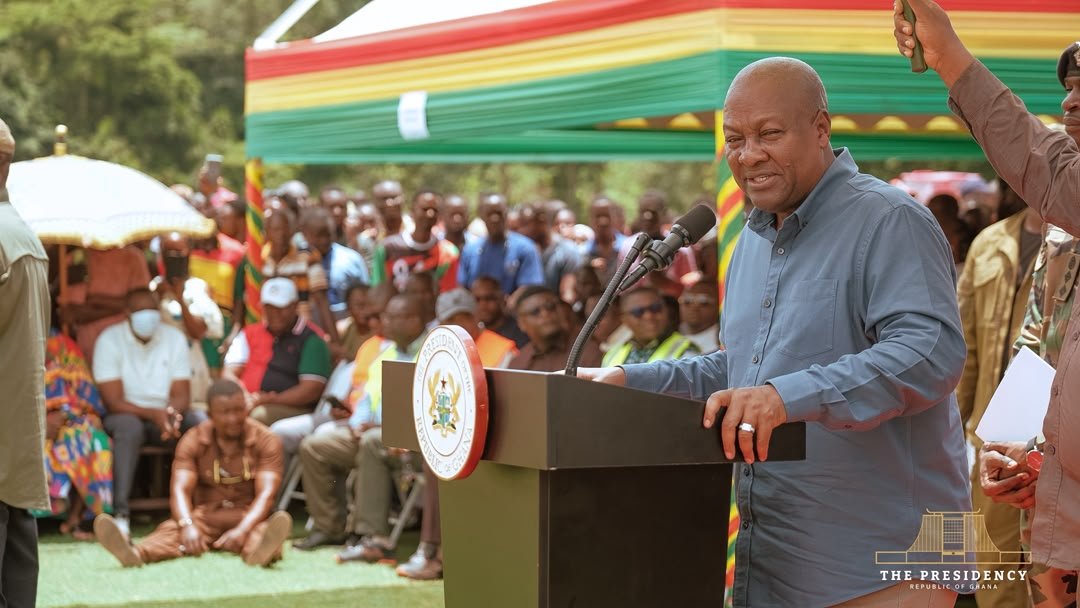
President John Dramani Mahama has announced that US$2 billion has been secured to finance the construction of the Accra-Kumasi Expressway.
According to the President, the funds are already available in a special account at the Bank of Ghana, ensuring that financing will not delay the implementation of the major road project.
President Mahama made the announcement on Monday, September 14, 2026, during the official handover of the cleared Right-of-Way for the Accra-Kumasi Expressway at Kwaso, near Ejisu in the Ashanti Region.
He said the government had deliberately secured the financing from domestic resources rather than relying on external borrowing.
“Let me announce that the Minister of Finance has put aside two billion dollars for financing this Accra-Kumasi Expressway. The money is ready. It is sitting in a special account at the Bank of Ghana,” President Mahama said.
He assured prospective contractors that once construction begins, certified payments would be made promptly.
“So when this project starts, money is not going to be the problem. All certificates presented by the contractor will be paid instantly and so there will be no problem with that,” he added.
‘We have not gone to borrow’
President Mahama stressed that the US$2 billion constitutes Ghana’s own resources and was not raised through external borrowing.
“This is our own money. We have not gone to borrow money from anywhere. This money is the money of the taxpayers of Ghana,” he said.
He added that the Finance Minister had assured him that the full financing required for the completion of the project would be available by the end of 2026.
“So far, two billion is in the account. By the end of the year, we’ll have the full amount for the completion of the Accra-Kumasi Expressway,” he said.
Construction expected before Christmas
The President also expressed confidence that construction of the expressway would commence before Christmas.
He said the government had already advertised an Expression of Interest for companies interested in undertaking the construction and would proceed with pre-qualification before selecting the contractor.
“It is my expectation that we will return here before the end of the year and come and cut the sod for work on the Accra-Kumasi Expressway to start,” President Mahama said.
He later reiterated that the groundbreaking ceremony would take place before Christmas, describing it as a special Christmas present for traditional leaders and the people of Ghana.
198.7km six-lane expressway
The Accra-Kumasi Expressway is planned as a 198.7-kilometre, six-lane highway connecting Ghana’s two largest cities.
President Mahama said the project would significantly reduce the distance and travel time between Accra and Kumasi.
He noted that the existing Accra-Kumasi Highway covers about 270 kilometres, meaning the new expressway would cut almost 70 kilometres from the journey.
According to him, motorists travelling at an average speed of 100 kilometres per hour could complete the journey in about two hours, compared with the current five to six hours required on the existing highway.
The expressway will also feature eight interchanges, four rest stops, tow trucks and CCTV cameras to improve safety and convenience for motorists.
President Mahama said the project is part of his broader vision to develop efficient transportation corridors capable of facilitating the movement of people and goods and stimulating economic growth across Ghana.
General News
Accra-Kumasi Expressway: GAF completes 175.6km right-of-way clearance , hands over to gov’t

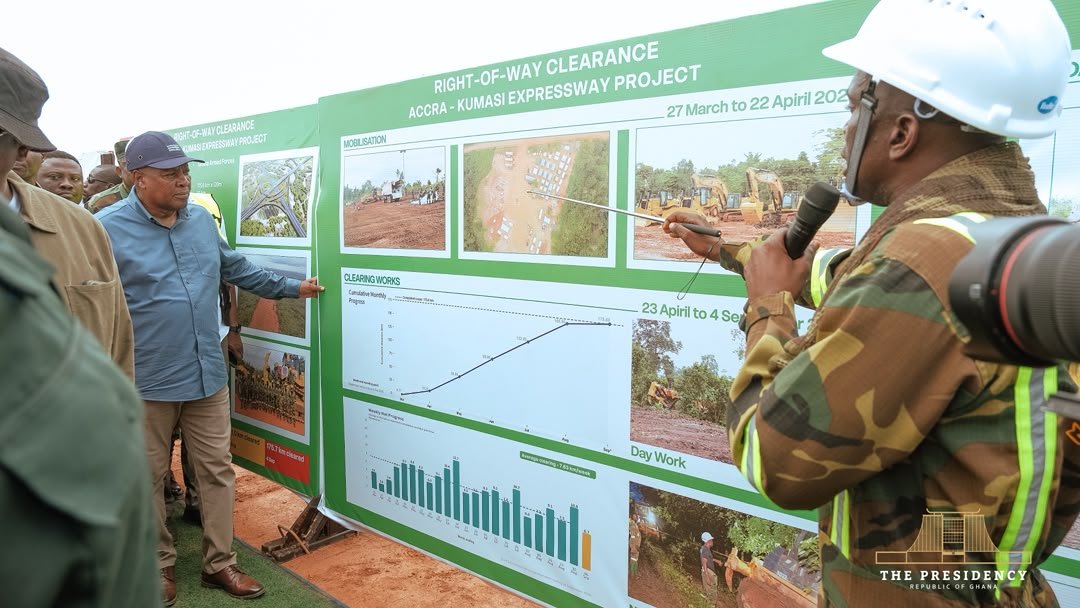
The Ghana Armed Forces (GAF) has completed the clearing of the Right-of-Way for the Accra-Kumasi Expressway and formally handed over the cleared corridor to the Government of Ghana.
The achievement marks a major step towards the construction of the planned 198.7-kilometre, six-lane expressway, which is expected to improve connectivity between Ghana’s two largest cities.
The Engineers Regiment of the Ghana Armed Forces cleared 175.6 kilometres of the project corridor, stretching from Ablekuma in the Greater Accra Region to Sewua in the Ashanti Region.
The exercise, which involved difficult terrain, forests, rivers and streams, was completed in 19 weeks—one week ahead of the 20-week deadline set by President John Dramani Mahama.
President Mahama received the handover on Monday, September 14, 2026, at Kwaso near Ejisu in the Ashanti Region.
He praised the military engineers for completing what he described as a demanding national assignment ahead of schedule.
“Within 19 weeks, 175.6 kilometres of road passing through virgin forests, crossing rivers and streams, our Ghana Armed Forces can today announce to all of us, as they say in military jargon, mission accomplished,” the President said.
GAF to support construction
Following the successful completion of the Right-of-Way clearance, President Mahama said the Engineers Regiment would be given a further role in the actual construction of the expressway.
He directed the Minister of Roads and Highways to incorporate the Engineers Regiment as a major subcontractor to the main contractor for the project.
President Mahama said the decision was justified by the military’s expertise and its successful mobilisation for the preparatory works.
He also tasked the Armed Forces with clearing the Right-of-Way for the proposed Greater Accra Orbital Road.
The military is further expected to assist with the installation of steel bridges at locations across the country.
“I’ve asked the Minister of Roads and Highways to identify all the sites that need steel bridges, and I’ve asked him to involve the Ghana Armed Forces to install these steel bridges across the length and breadth of this country,” President Mahama said.
National honour for Engineers Regiment
President Mahama announced that the Engineers Regiment would be recognised for its achievement at the next National Honours ceremony.
He said the ceremony, which is expected to form part of activities marking Ghana’s 70th anniversary of independence, would see the Engineers Regiment receive the Order of the Companion of the Volta.
The President said the honour was intended to reflect the nation’s appreciation for the military’s contribution to the project.
He also expressed confidence in the capacity of the Ghana Armed Forces to contribute to Ghana’s infrastructure development.
“The Ghana Armed Forces are capable and I have absolute trust in their ability to help this country in its infrastructure development,” he said.
Construction expected before Christmas
With the Right-of-Way now cleared, President Mahama said the government expects construction of the expressway to commence before Christmas 2026.
The government has already opened the process for selecting a contractor through an Expression of Interest, with pre-qualification and contractor selection expected to follow.
The President also announced that US$2 billion had been set aside to finance the project, with the funds held in a special account at the Bank of Ghana.
He said the funding would ensure that payment would not become a constraint once construction begins.
The completed expressway is expected to reduce travel time between Accra and Kumasi significantly, with President Mahama projecting that motorists could make the journey in about two hours at an average speed of 100 kilometres per hour.
The project will include eight interchanges, four rest stops, tow trucks and CCTV cameras, forming part of the government’s broader vision to develop modern transport corridors across Ghana.


The Ghana Police Service has rescued a 30-year-old man, Bismarck Amo, who was allegedly kidnapped, tortured and subjected to extortion after a dispute over money.
Four suspects have been arrested in connection with the incident, while police have launched a manhunt for a senior military officer allegedly linked to the case and other accomplices who are still at large.
The dramatic rescue followed an intelligence-led operation by the Central North Regional Police Command, supported by personnel from the CID Headquarters, the Ashanti Regional Police Intelligence Department and other specialised units.
The operation, code-named “Operation Rescue the Victim and Arrest the Perpetrators,” was directly coordinated by the Inspector-General of Police, Christian Tetteh Yohonu, according to the police.
Four suspects arrested
Police identified the four suspects in custody as Mavis Badu Acheampong, 42, a teacher at Kumasi Girls Senior High School; Charles Doku, 53, a security guard; Oteng Baffour, 31, an electrician; and Kenneth Opoku Kwarteng, alias “Culture,” also a teacher at Kumasi Girls Senior High School.
The police said all four are currently assisting with investigations and are being processed for court.
How the alleged kidnapping unfolded
According to preliminary police investigations, the incident began after Amo allegedly defrauded Mavis Badu Acheampong of an unspecified amount of money.
Police said Acheampong subsequently allegedly connived with her husband, described as a senior military officer who is currently outside the country, to lure Amo from his residence in Assin Fosu to Kumasi.
Upon his arrival, police alleged that Amo was forcibly kidnapped with the assistance of Doku, Baffour and other accomplices who are currently at large.
Five days of alleged torture
Police said Amo was held hostage at a private residence belonging to Mavis Badu Acheampong from September 6 to September 11, 2026.
During the period, he was allegedly subjected to severe torture despite his family paying GH¢19,500 as ransom.
The police further alleged that the suspects used their own mobile phones to communicate with the victim’s family in an attempt to avoid detection and conceal their digital footprints.
‘They threatened to kill him’
The police account describes disturbing acts of alleged brutality against the victim.
According to the statement, Amo was stripped naked, tied with a nylon rope and brutally beaten, resulting in serious injuries to his head and genital area.
Police said the alleged attackers also recorded videos of the abuse and sent them to the victim’s family while demanding money.
The suspects allegedly demanded a total of GH¢45,000, which they claimed was meant to cover the amount they said Amo had defrauded and expenses incurred in locating him.
After receiving GH¢19,500 through mobile money transfers, the suspects allegedly demanded another GH¢30,500, threatening to kill Amo if the additional money was not paid.
Police launch rescue operation
The victim’s family reported the incident to the Regional CID in Assin Fosu on September 8, after paying the initial ransom but discovering that Amo was still being held.
Police said the rescue operation was immediately activated following the complaint.
On September 11, investigators reportedly closed in on the suspected kidnappers as they attempted to move Amo to another undisclosed location.
According to the police, the suspects instructed a driver to dump the victim by the roadside.
However, tactical police teams intercepted the operation and rescued Amo.
Victim found covered in blood
Police said Amo was found partially unconscious, covered in severe bruises and drenched in blood when officers rescued him.
He was immediately rushed to a medical facility, where he remains admitted under police escort and is receiving treatment for his physical injuries and psychological trauma.
Manhunt launched for military officer, other accomplices
While four suspects have been arrested, police said their investigation is far from over.
The Ghana Police Service has launched a manhunt for the senior military officer allegedly involved in the incident, as well as other suspected accomplices who remain at large.
The police said the arrested suspects are being processed for court and will face the full rigours of the law.
Police issue stern warning
The Police Administration used the case to warn members of the public against taking the law into their own hands, regardless of the nature of a grievance or financial dispute.
The police stressed that kidnapping, torture and extortion are serious criminal offences and assured the public that its intelligence and specialised units would continue to pursue individuals involved in organised criminal activities.
The dramatic rescue of Bismarck Amo has once again highlighted the dangers of resolving financial disputes through violence, while the ongoing manhunt is expected to shed further light on the alleged network behind the kidnapping.
As investigations continue, police say further updates will be provided as more information becomes available.

Bernice Offei battled dementia for years before her death – former manager reveals

A Rocha Ghana Raises Alarm Over Escalating Galamsey Activities in Atewa Forest

Should Students Be Allowed to Choose More of Their Subjects?



-

 Entertainment1 week ago
Mahama Is First President to Put GH¢40m Seed Money into Creative Arts Fund: Kojo Preko Dankwa
-
 General News2 weeks ago
COCOBOD Settles GH¢2.3 Billion DDEP Bond Obligations for 2026
-
 General News2 weeks ago
Don’t Punish Them Retrospectively – Educationist Challenges New CSSPS Placement Rule
-

 Culinary1 week ago
The Green Heart of Ghanaian Cuisine: Celebrating Nkontomire and the Art of Abom
-

 Entertainment7 days ago
Government Repatriates Musician Barosky from UK
-
 General News2 weeks ago
OSP Opens Preliminary Investigation into Alleged GH¢70,000 Payment Linked to Parliament’s Vetting
-

 Culinary2 weeks ago
Pineapple: The Spiky Tropical Fruit Packed With Sweetness and Nutrients
-

 Entertainment2 weeks ago
Ras Caleb Appiah-Levi: Hate Me for the Truth That I Represent