
Entertainment
Ras Caleb Appiah-Levi: Hate Me for the Truth That I Represent




















President John Dramani Mahama has ordered the immediate dissolution of the governing boards of nine state-owned institutions, the Presidency has announced.
The decision, communicated on Wednesday, September 2, 2026, affects institutions operating in several strategic areas of Ghana’s economy, including petroleum, mining, banking, housing, infrastructure, postal services and sports.

The institutions whose boards have been dissolved are:
Prestea Sankofa Gold Limited
Bulk Oil Storage and Transportation Company Limited (BOST)
Volta Aluminium Company Limited (VALCO)
Consolidated Bank Ghana Limited (CBG)
Ghana Post Company Limited
Road Maintenance Trust Fund
TDC Ghana Limited
Ghana National Petroleum Corporation (GNPC)
National Sports Authority (NSA)
In a statement, the Presidency directed the respective sector ministers to take all necessary measures to implement the decision.
The ministers are required to carry out the process in line with the applicable laws and the governing instruments of each institution.
The Presidency, however, clarified that the dissolution of the boards should not be interpreted as the permanent removal of the governing structures of the affected institutions.
According to the statement, the boards will be reconstituted at a later date, after which new members will be appointed to provide oversight and governance for the institutions.
The move is expected to pave the way for fresh leadership and new board compositions across the nine state-owned entities.

Ghanaian veteran actress Irene Opare has revealed that dancehall star Shatta Wale is her favourite male artiste, praising his personality, music and exceptional charisma.
Speaking in an interview captured by Seancity TV, the actress said she admires Shatta Wale because of what she described as his authenticity and ability to command attention.
“My favourite male artiste is Shatta Wale. I like everything about Shatta Wale, and he is a real guy,” she said.
Irene Opare explained that while acting remains one of her greatest passions, music plays a major role in her daily life. She said she regularly listens to music and dances whenever she is at home.
“I love doing movies, but I love music. Movies are my passion, but music is my thing. On a regular day, if you find me at home, you will see me playing music and dancing,” she stated.
The veteran actress also drew a comparison between Shatta Wale and Ghana’s late former President Jerry John Rawlings, particularly when it comes to charisma.
According to Irene, both personalities possess a rare ability to attract people’s attention, even from individuals who may not necessarily like them.
“Shatta is like the late JJ Rawlings for me, and they have charisma,” she explained.
She argued that Shatta Wale’s charisma is so powerful that even someone who dislikes him could become excited upon seeing him in person.
Irene illustrated her point by saying that a person who strongly dislikes the musician could still rush to meet him if they saw him approaching, simply because of the excitement surrounding his presence.
“If you hate Shatta, whether maybe he has insulted your mother or father and you hear that he is coming down the road, you will run to go and see him. You will go and shake his hand, and that’s the charisma I’m talking about. Take it or leave it,” she noted.
Beyond his personality, Irene Opare also praised Shatta Wale’s music, revealing that she enjoys his songs generally but has a particular favourite.
She named “On God” as the Shatta Wale song she loves the most, describing it as a spiritually powerful song.
“I love all his songs, but ‘On God’ is my favourite. That song feels like a spirit when you’re singing it. It’s gospel music, and it’s like you’re talking to God,” she added.

Gospel musician Ohemaa Mercy has opened up about a painful chapter in her life that inspired her hit song, “Se Abotare Twen Me.”
Speaking in an interview on Joy Prime, the award-winning singer revealed that the song was born out of a difficult period characterised by humiliation, disappointment and financial struggles.
According to Ohemaa Mercy, the experience remains deeply emotional for her, and performing the song often takes her back to the difficult moments that inspired its message.
She recalled an incident when she was in a classroom, and a creditor arrived to demand money she owed.
“I remember when I was in a classroom. I was owing someone, and the person came around to collect the money. I had to leave the classroom, and while leaving, one of my shoes got torn, so I had to carry one of them,” she recounted.
Ohemaa Mercy said the situation became even more embarrassing when a man intervened and pleaded with the woman demanding the money to spare her further humiliation.
The man, she said, promised to settle the debt, allowing her to leave the situation.
After the incident, Ohemaa Mercy returned to her office in tears, overwhelmed by the experience.
She said it was during that emotional moment that she heard what she described as a loud, divine voice giving her a message of hope.
“I heard this loud voice that said, ‘Be calm and wait on me because I don’t break my promises like they assume I do,’” she recalled.
The gospel singer said the experience was one of the most difficult seasons of her life and remains unforgettable.
“It is something I will remember for the rest of my life. It wasn’t easy. It was a season of disgrace and disappointment, but this is a message God gave me, and honestly, it has transformed many lives,” she stated.
Ohemaa Mercy explained that the message became her source of strength as she navigated the difficult period.
She said she continued to encourage herself and held on to the message until she eventually received further direction.
“I had to encourage myself because that message really spoke to me. Until God unveiled me, that was the only message I carried to the studio,” she said.
She further disclosed that renowned Ghanaian musician and producer Nacee later helped transform the message and experience into powerful songs.
“Lo and behold, Nacee helped me write all those powerful songs,” she added.
For Ohemaa Mercy, “Se Abotare Twen Me” is therefore more than just a gospel song. It represents a personal testimony of hardship, faith, perseverance and hope, which she believes has continued to touch and transform the lives of many people.

Ghanaian media personality Cynthia Tima Yeboah, popularly known as Tima Kumkum, has revealed that she has been separated from her husband, Dominic Duodu, since April 2025, as their second marriage goes through divorce proceedings.
Mr Dominic Duodu has taken to Instagram to share a cryptic message about his decision to remain silent during the difficult period.
In a post shared on his Instagram page, Dominic explained that his silence should not be mistaken for having nothing to say.
“Silence isn’t empty; it’s full of answers,” he wrote.
He added that he had deliberately stepped away from social media and the noise surrounding controversies, saying the decision had helped him find peace, heal and gain clarity.
“I stepped away from all the noise, and peace looked like this today, lost in the green, found in myself,” he stated.
Dominic concluded his message with a reflection on the therapeutic value of nature.
“Sometimes nature is the only therapy you need,” he added.
His post comes shortly after Tima Kumkum opened up about the end of her second marriage, confirming that the couple have been separated for more than a year.
Entertainment
Nearly 30 Years On, Tupac Shakur’s Murder Finally Ends in a Guilty Verdict30 Years On, Tupac Shakur’s Murder Finally Ends in a Guilty Verdict
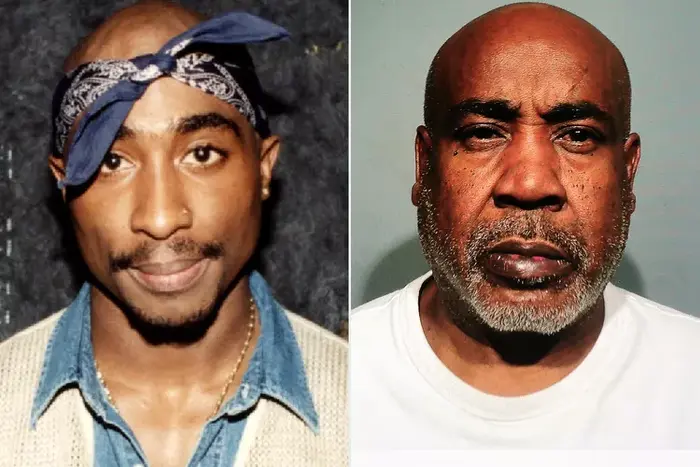
Nearly 30 years after Tupac Shakur was fatally shot in Las Vegas, a Nevada jury has found former gang member Duane “Keffe D” Davis guilty of murder in connection with the killing.
Davis, 63, was convicted of murder with a deadly weapon for his role in the September 7, 1996, shooting that claimed the life of one of hip-hop’s most influential figures.
The verdict marks a significant breakthrough in a case that remained unresolved for almost three decades and generated countless theories about who was behind Shakur’s death.
Prosecutors did not allege that Davis was the gunman. Instead, they told jurors that he organised the attack and supplied the firearm used in the shooting.
How the deadly confrontation began
According to prosecutors, the events that led to Shakur’s death began earlier that night when Orlando Anderson, Davis’ nephew and a member of the South Side Compton Crips, was involved in a physical confrontation with Shakur and members of the rapper’s entourage in Las Vegas.
Investigators and prosecutors have long linked the shooting to the confrontation, arguing that it prompted members of Anderson’s group to seek revenge.
The prosecution’s case was that Davis helped organise the retaliation and was inside the white Cadillac from which gunfire was directed at Shakur’s vehicle.
Anderson had been considered a person of interest in the case for years but was never charged. He died in 1998.
A major part of the prosecution’s case centred on statements Davis made over several years about the shooting.
Davis has repeatedly acknowledged that he was inside the Cadillac when the shots were fired.
His statements included information given during a 2008 confidential police interview. That interview was originally connected to an investigation into the murder of another major rapper, Christopher Wallace, popularly known as The Notorious B.I.G.
Davis also described his alleged involvement in his 2019 memoir, Compton Street Legend, as well as during interviews and other public appearances.
Prosecutors argued that these accounts amounted to admissions that Davis played a leading role in the attack.
During closing arguments, prosecutor Binu Palal described Davis as the person directing events, telling jurors that he had repeatedly portrayed himself as the leader of the South Side Crips.
Palal also argued that Davis’ position inside the vehicle when the shooting occurred demonstrated his responsibility for the attack.
Davis’ lawyers rejected the prosecution’s interpretation of his statements.
Defence attorney Michael Sanft argued that Davis had a history of exaggerating his involvement in notorious events to build his reputation and profit from books, interviews and media appearances.
The defence urged jurors to view Davis’ accounts as gang-related bravado rather than credible confessions to murder.
Sanft told the jury that there was no proof establishing Davis’ responsibility for Shakur’s death.
The jury ultimately disagreed and returned a guilty verdict after a relatively brief period of deliberation.
Davis showed little visible emotion as the verdict was read in court.
Shakur’s relatives, however, reacted emotionally, with members of the family holding hands, embracing and crying following the decision.
Outside the courthouse, fans of the late rapper gathered to mark the development, with some celebrating the conviction while others expressed their emotions over the decades-long wait for a verdict.
Shakur was only 25 when he was killed. By then, he had already become one of the most prominent figures in hip-hop.
His music and influence continued to grow after his death, with the rapper eventually selling more than 75 million records worldwide.
The case had remained one of the most prominent unsolved murders in music history.
Shakur’s killing occurred during an era marked by intense tensions within hip-hop, particularly the rivalry between East Coast and West Coast rap communities. Gang affiliations involving the Bloods and Crips also formed part of the wider backdrop surrounding the feud.
For years, the absence of an arrest or conviction fuelled speculation about the identities and motives of those responsible.
Davis’ conviction is now the first successful prosecution directly connected to Shakur’s murder.
Following the verdict, Shakur’s sister embraced one of the prosecutors as members of the family continued to process the outcome.
Davis is due back in court on October 13 for sentencing.
Before leaving the courtroom, he asked Judge Carli Kierny about recovering some of his personal belongings, including his phone.
He also made clear that he intends to challenge the verdict.
“I would like to appeal this matter,” Davis told the judge.
Judge Kierny informed him that he could pursue an appeal following sentencing.
The conviction brings a major legal development to a murder that has remained etched in hip-hop history since the night Tupac Shakur was shot in Las Vegas in 1996.
Source:Pulse

Mahama Dissolves Boards of Nine State-Owned Institutions

Government Plans Major Evacuation of Jamestown Waste to Adipa Landfill in Nsawam

13 Killed, 5 Critically Injured in Sege-Ada Highway Crash



-

 General News1 week ago
Nana Adwoa Tutuwaa Named Global Humanitarian of the Year 2026
-

 Entertainment2 weeks ago
Interfaith Tourism World Club Calls for Faith-Based Tolerance to Strengthen National Peace
-

 General News5 days ago
GES Urged to Review Student Sexual Misconduct Rule Over Alleged Discrimination Against Boys
-

 Education2 weeks ago
Cybersecurity Education in Schools: Should Students Learn Online Safety?
-

 General News2 weeks ago
Assemblies of God Ghana Clears Headquarters Loan, Slashes Overdraft by GH¢3.2m
-

 General News1 week ago
Police Arrest Suspect in GH¢1.1m Fake Gold Scam at Berekum
-

 General News2 weeks ago
LMI Holdings: The Ghanaian Company Chosen to Revive the Saglemi Housing Project
-

 Entertainment1 week ago
Stonebwoy Is Not My Rival — Shatta Wale Reveals They Live Minutes Apart