
Politics
Eastern Region Polling Station Executives Rally Behind Dr China for NPP General Secretary

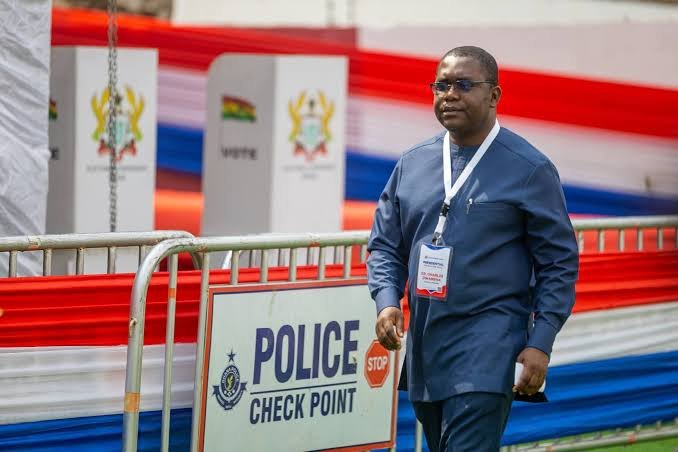
They say his ideas, grassroots-focused policies can strengthen party for 2028
Polling station executives and grassroots activists of the New Patriotic Party (NPP) in the Eastern Region are calling on party delegates to support Dr. Charles Dwamena, popularly known as Dr China, in the upcoming contest for the position of General Secretary.
According to the executives, Dr Dwamena’s proposed policies, organisational experience and emphasis on strengthening the party’s grassroots structures make his campaign particularly relevant as the NPP prepares for the 2028 general elections.
The call comes as Dr Dwamena contests the General Secretary position alongside incumbent Justin Frimpong Kodua, Eugene Boakye Antwi and Sylvester Tetteh. The NPP is scheduled to hold its national executive elections on October 3, 2026.
The Eastern Region executives, as reported by supporters of the campaign, believe the next General Secretary must be capable of translating policy ideas into practical programmes that reach polling-station and constituency levels.
They point particularly to Dr Dwamena’s proposed “WILD + S” strategy, which focuses on welfare, communication, research, digital solutions, discipline and security.
Dr Dwamena has also proposed strengthening the party’s communication capacity by training executives at various levels to become effective communicators, while developing digital communication infrastructure across the regions and constituencies.
The executives are also highlighting proposals concerning the welfare and capacity of polling-station executives.
Dr Dwamena has spoken about initiatives including a political mentorship programme, business incubation, human-resource empowerment, an accident insurance scheme and a proposed pension arrangement for polling-station executives.
He has also outlined plans to strengthen structures from polling stations through electoral areas, constituencies and regional offices.
Supporters argue that such policies could help improve the relationship between the party’s national leadership and its grassroots base.
They therefore want Eastern Region delegates to rally behind what they describe as a “new ideas, stronger structures” approach to the General Secretary position.
Focus on 2028
The campaign is taking place against the backdrop of the NPP’s stated objective of rebuilding its structures and preparing for the 2028 elections.
NPP flagbearer Dr Mahamudu Bawumia has said the party’s reorganisation is intended to strengthen its membership and structures as part of preparations to return to power in 2028.
Dr Dwamena has similarly said his vision is to help rebuild the party and restore what he describes as the love and confidence of its rank and file, with the ultimate objective of helping Dr Bawumia lead the NPP into the 2028 election.
His campaign platform identifies leadership restoration, decisive leadership, research-driven decision-making, an enabling environment for executives and stronger grassroots engagement among its key priorities.
Dr Chales Dwamena
The Eastern Region polling-station executives backing his candidature are consequently urging their colleagues to examine the competing visions for the party and consider what they believe can best strengthen the organisation ahead of the next general election.
For them, the General Secretary contest is not simply about occupying a national office, but about how the NPP rebuilds its structures, reconnects with its grassroots and organises itself for the 2028 electoral cycle.
Politics
‘Don’t reward bitter tongues’ – Bagbin warns political parties against promoting abusive rhetoric
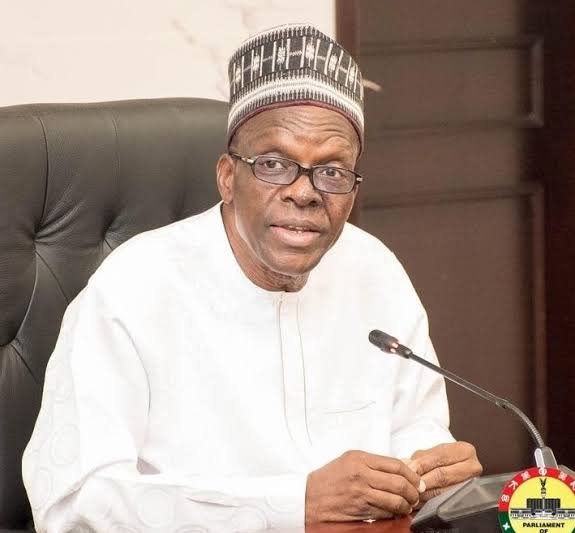
The Speaker of Parliament, Alban Bagbin, has urged the leadership of Ghana’s political parties to stop rewarding politicians who gain recognition through abusive or inflammatory language, warning that such practices encourage others to adopt similar behaviour.
According to him, political parties have a responsibility to shape the quality of political discourse by ensuring that individuals are not rewarded or elevated simply because of the provocative nature of their rhetoric.
Speaking at Parliament’s emergency sitting on Tuesday, September 29, 2026, he said political disagreements could be vigorous without becoming destructive.
“I add this to both political parties’ leaders. Don’t reward only bitter tongues,” Mr Bagbin said.
“That is what I have observed up to date. That encourages others to copy that because that is how they will be recognised.”
He said political party leaders must demonstrate through their conduct that public recognition should not be tied to abusive language or personal attacks.
The Speaker’s comments formed part of a broader call for higher standards of public discourse, amid concerns over the increasing use of insults, threats and other abusive language in Ghana’s political and social conversations.
He said Parliament itself must also examine the conduct of its members and lead by example.
“Leadership in this matter cannot simply consist of asking citizens to moderate their language,” Mr Bagbin said.
“It requires those who occupy positions of public trust to demonstrate by their own conduct that political disagreements can be vigorous without becoming destructive.”
Mr Bagbin said Ghana’s democratic stability depended not only on institutions such as Parliament, the courts and elections, but also on a political culture that allowed citizens to disagree without treating opponents as enemies.
He warned that the cumulative effect of inflammatory language and conduct could deepen divisions and threaten the quality of democratic engagement.
“Our democracy is too valuable to be endangered by a political culture in which insults replace arguments, abuse replaces persuasion, and opponents are treated as enemies,” he said.
He urged political leaders to help reverse that trend and create a political culture based on discipline, decency and substantive debate.
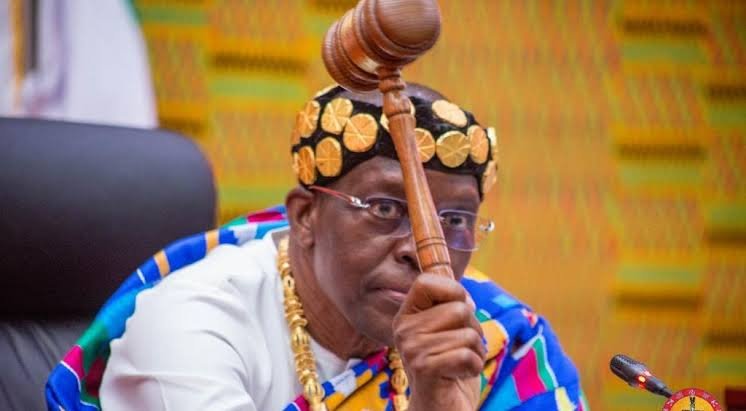
The Speaker of Parliament, Alban Bagbin, has urged the leadership of Ghana’s political parties to stop rewarding politicians who gain recognition through abusive or inflammatory language, warning that such practices encourage others to adopt similar behaviour.
According to him, political parties have a responsibility to shape the quality of political discourse by ensuring that individuals are not rewarded or elevated simply because of the provocative nature of their rhetoric.
Speaking at Parliament’s emergency sitting on Tuesday, September 29, 2026, he said political disagreements could be vigorous without becoming destructive.
“I add this to both political parties’ leaders. Don’t reward only bitter tongues,” Mr Bagbin said.
“That is what I have observed up to date. That encourages others to copy that because that is how they will be recognised.”
He said political party leaders must demonstrate through their conduct that public recognition should not be tied to abusive language or personal attacks.
The Speaker’s comments formed part of a broader call for higher standards of public discourse, amid concerns over the increasing use of insults, threats and other abusive language in Ghana’s political and social conversations.
He said Parliament itself must also examine the conduct of its members and lead by example.
“Leadership in this matter cannot simply consist of asking citizens to moderate their language,” Mr Bagbin said.
“It requires those who occupy positions of public trust to demonstrate by their own conduct that political disagreements can be vigorous without becoming destructive.”
Mr Bagbin said Ghana’s democratic stability depended not only on institutions such as Parliament, the courts and elections, but also on a political culture that allowed citizens to disagree without treating opponents as enemies.
He warned that the cumulative effect of inflammatory language and conduct could deepen divisions and threaten the quality of democratic engagement.
“Our democracy is too valuable to be endangered by a political culture in which insults replace arguments, abuse replaces persuasion, and opponents are treated as enemies,” he said.
He urged political leaders to help reverse that trend and create a political culture based on discipline, decency and substantive debate.

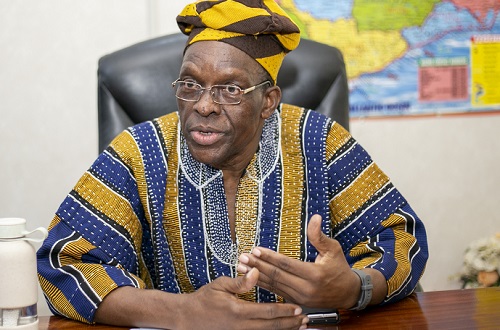
Speaker of Parliament Alban Bagbin has called for caution in Ghana’s growing debate over social media regulation, warning that freedom of expression should not be used to justify threats, incitement, deliberate misinformation or the abuse of others.
Bagbin made the remarks on Tuesday, September 29, 2026, when Parliament resumed for an emergency sitting.
According to the Speaker, Ghana’s discussions on how to regulate social media and tackle misinformation must be guided by a balance between protecting citizens’ right to express themselves and ensuring that people are held accountable for harmful conduct online.
His comments come at a time when there is renewed national debate over the regulation of social media platforms, particularly TikTok.
The debate follows concerns raised by President John Dramani Mahama about the increasing spread of misinformation, insults and other forms of harmful content on social media.
President Mahama has called for a national stakeholder dialogue to determine how Ghana should respond to the growing influence of TikTok and other emerging media platforms.
The President has, however, stressed the need to ensure that any regulatory measures adopted do not infringe on the constitutional right to freedom of expression.
To facilitate the discussions, President Mahama tasked the Ghana Journalists Association (GJA) and the Media Foundation for West Africa (MFWA) with bringing together relevant stakeholders to deliberate on the issue.
Speaking in Parliament, Speaker Bagbin welcomed the President’s initiative and urged those involved in the national conversation to approach the matter with openness, moderation and broad participation.
He stressed that efforts to address harmful online content must not be turned into a means of silencing people who criticise government officials or hold public authorities accountable.
“The national conversation should, in my view, be broad, inclusive, and measured,” Bagbin said.
He cautioned that the discussion should neither be used to suppress dissent nor to protect public officials from legitimate criticism.
At the same time, he noted that concerns about freedom of expression should not be used to defend threats, incitement, deliberate falsehoods or irresponsible attacks against other people.
Bagbin said the approach proposed by President Mahama recognises the need to maintain this delicate balance between protecting free speech and addressing abuses associated with social media.
President Mahama had earlier addressed the issue during a Town Hall Meeting with Ghanaians in New York, where he acknowledged the challenges involved in regulating new media platforms without undermining freedom of expression.
The President said Ghana must collectively decide how it wants to respond to the growing influence of platforms such as TikTok.
He also raised the question of whether the country’s existing mechanisms for dealing with harmful online content are sufficient to address the challenges posed by new media.
The ongoing debate is therefore expected to bring together media organisations, civil society groups, technology stakeholders, government representatives and other relevant actors to consider possible approaches to social media regulation while preserving the right to free expression.
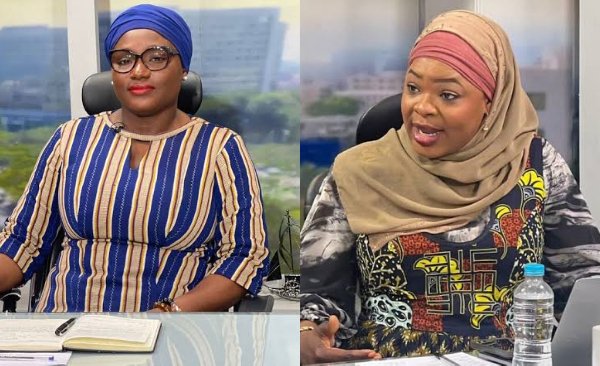
A heated exchange erupted on live television between New Patriotic Party (NPP) communications team member Lawuratu Musah-Saaka and Deputy Presidential Spokesperson Shamima Muslim during a discussion on the prices of goods and services in Ghana.
The two political communicators engaged in a fiery back-and-forth during the Good Morning Ghana programme on Metro TV as they debated whether the prices of essential commodities had actually declined under the John Dramani Mahama administration.
The discussion quickly turned tense after Shamima Muslim accused some NPP communicators of engaging in what she described as “jandam propaganda” in an attempt to discredit the government’s economic record.
According to Shamima, despite claims by some opposition communicators that prices continue to rise, there have been reductions in the prices of several goods on the market.
She cited agricultural products and comments from market women as evidence of what she described as marginal reductions in prices.
However, Musah-Saaka strongly pushed back against the argument, insisting that the reality being experienced by ordinary Ghanaians was different from the narrative being presented by the government.
She particularly took issue with Shamima’s description of NPP communicators, arguing that the debate should focus on the facts rather than personal attacks.
“Shamima can sit here and use all kinds of adjectives on me. Call me dishonest. But, fundamentally, it takes one to know one,” Musah-Saaka retorted.
The NPP communicator maintained that prices had not fallen across all markets and challenged the government’s position with examples of commodities whose prices, she said, remained high.
She mentioned kenkey, claiming that the popular Ghanaian staple could cost as much as GH¢7 in some locations.
That claim immediately drew a strong response from Shamima Muslim, who disputed the figure and insisted that ordinary consumers were not paying GH¢7 for kenkey everywhere in the country.
The disagreement intensified as both women attempted to defend their respective positions, resulting in a heated exchange that eventually forced the programme host to intervene.
The confrontation has since attracted attention because of the contrasting positions of the two communicators, with the discussion highlighting the wider political debate over the cost of living and whether recent economic developments are translating into lower prices for ordinary Ghanaians.
While the government and its representatives have pointed to reductions in some commodity prices as evidence of improving economic conditions, opposition communicators continue to argue that many households are still struggling with elevated living costs.
The live-TV confrontation between Musah-Saaka and Shamima therefore provided another glimpse into the increasingly intense political debate over Ghana’s economic performance and the everyday experiences of consumers.
The exchange also underscored how discussions about economic indicators can quickly become politically charged, particularly when government claims of improvement are measured against the experiences of consumers at markets and shops across the country.
The National Democratic Congress (NDC) has announced the opening of nominations for its 2026 Regional Executive Elections, with the process scheduled to begin on Tuesday, October 6, 2026.
The announcement was contained in a press release issued by the party’s National Secretariat on September 29, 2026, as part of the electoral timetable previously released by the party.
Aspirants to Begin Nomination Process
The NDC said the opening of nominations marks an important stage in the party’s electoral process and encouraged members interested in contesting the various Regional Executive positions to take advantage of the prescribed period.
The party did not provide specific closing dates for nominations in the press release but stated that the process would proceed in accordance with the general timetable earlier issued on August 5, 2026.
Payment Rules Announced
The party has also outlined how payments for the picking of nomination forms and filing must be made.
According to the NDC, all such payments must be made strictly through its online portal, Mobile Money across all networks, or Visa and MasterCard.
The party said bank payments and bank drafts will not be accepted.
Membership Dues Must Be Fully Paid
The NDC further stated that aspirants, proposers, seconders and endorsers must all be members in good standing of the party.
They are also required to have fully settled their membership dues.
Members with outstanding arrears have been directed to settle them through the party’s designated payment channels before participating in the nomination process.
NDC Urges Peaceful Elections
As preparations begin, the party has called on all aspirants and members to conduct themselves with discipline, decorum and respect for the NDC’s democratic values.
The National Secretariat said it is counting on the cooperation and support of members to ensure that the electoral process is transparent, peaceful, orderly and successful.
The notice was signed by Barbara Serwaa Asamoah, Deputy General Secretary, for the General Secretary of the NDC.

‘Disband the Black Stars, sack the GFA’ — Calls for two-year FIFA ban to rebuild Ghana team

Ballon d’Or race tightens as Lamine Yamal moves to the top of latest power rankings

‘Don’t reward bitter tongues’ – Bagbin warns political parties against promoting abusive rhetoric



-
 General News1 week ago
Two political parties, one lesson: Afuntummireku and Tikro Nkɔ Agyina for Ghana
-

 Culinary1 week ago
Kofi Brokeman: The Simple Ghanaian Snack That Has Stood the Test of Time
-

 General News7 days ago
Free Speech, False Publication and Presidential Criticism in Ghana: Where Does the Law Draw the Line?
-
 General News1 week ago
Rev. Dr. Christian Kwetey Kweitsu Set for International Recognition at 100 Most Influential Persons Awards in Kigali
-
 General News2 weeks ago
Bost Energies Made GH¢684 Million Profit: Why Use The NPA Bill, 2026 To Weaken Its Operations?
-
 Entertainment1 week ago
Can’t Anything Good Come Out of Ghana? – Ras Caleb Appiah-Levi Fires Back at Critics
-
 General News7 days ago
Don’t Expect Concerts When People Can’t Afford Food – Rex Omar on Black Star Experience
-

 Entertainment2 weeks ago
30 Old Ghanaian Songs That Defined Generations