
General News
EOCO Declares Emmanuel Ababio Wanted Over Alleged Fraud

The EOCO Declares Emmanuel Ababio Wanted notice has been issued by the Economic and Organised Crime Office (EOCO), which is seeking public assistance to locate a suspect linked to alleged offences of defrauding by false pretences.
In a public announcement, EOCO has called on members of the public to provide credible information that could assist in locating Ababio.
Anyone with information regarding his whereabouts is encouraged to report to the EOCO Head Office, which is located adjacent to the Old Parliament House on Barnes Road in Accra, any of the agency’s regional offices, or the nearest police station.
EOCO has also provided dedicated contact numbers for confidential tips. Individuals can call 0579723314 or 0579709066 to share any information that may aid in the investigation.
The agency stated that Emmanuel Ababio is wanted in connection with offences of defrauding by false pretenses and urged the public to cooperate with law enforcement to facilitate his arrest. The Economic and Organised Crime Office (EOCO) has issued a wanted notice for Emmanuel Ababio, a suspect linked to alleged offences of defrauding by false pretences.














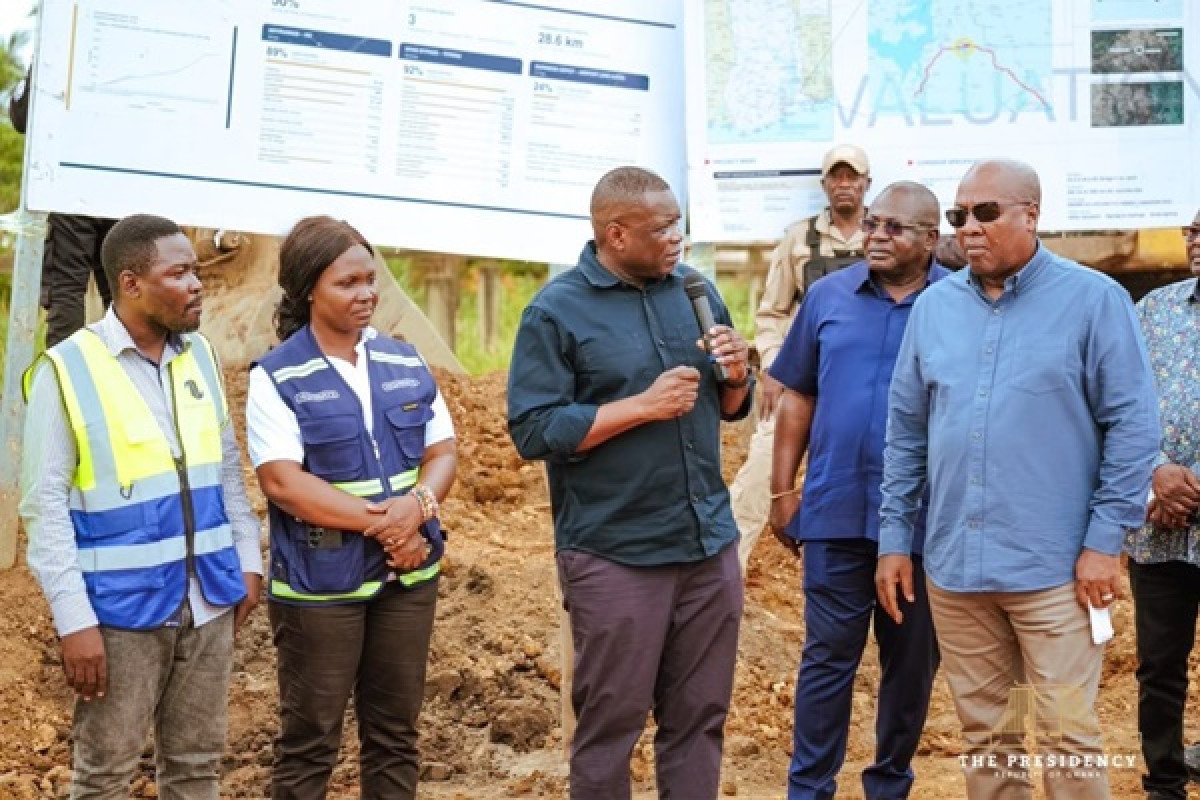
President John Dramani Mahama has explained that the government’s ambitious Big Push road programme will be implemented in phases because the country does not have the financial capacity to tackle all road projects at the same time.
The President acknowledged growing expectations from communities across the country for roads to be fixed but stressed that government must work within available resources.
His comments come as the administration pushes ahead with its flagship infrastructure programme, which is aimed at addressing Ghana’s long-standing road infrastructure deficit.
‘We cannot fix every road at once’
President Mahama reportedly explained that many communities expect their roads to be addressed immediately, but government has to prioritise projects because of budgetary constraints.
The approach, he said, is to implement the Big Push in stages rather than attempting to execute every project simultaneously.
This means some roads will receive attention earlier, while others will have to wait for subsequent phases as funding becomes available.
Major roads to receive priority
Under the phased strategy, government is expected to prioritise major arterial roads and projects considered critical to transportation, economic activity and connectivity.
The objective is to ensure that available resources are channelled into projects with significant national and regional impact rather than spreading funding too thinly across numerous projects.
The strategy is also intended to allow government to maintain focus on completing projects instead of creating a situation where numerous roads are started but left unfinished.
Big Push comes with huge expectations
The Big Push programme has generated considerable expectations since the Mahama administration made road infrastructure a major component of its development agenda.
The programme covers road construction and rehabilitation across different parts of the country, with government seeking to address roads that have remained in poor condition for years.
According to Ghana’s 2026 Budget, road contracts worth GH¢63 billion had been awarded under the Big Push, with the projects estimated to generate about 490,000 jobs.
Funding remains a major challenge
The President’s latest explanation highlights the financial reality facing the programme.
While the demand for better roads remains enormous, government has to balance infrastructure spending with other competing national priorities.
The phased approach therefore allows the administration to match the implementation of projects with available funding.
Rather than promising that every road will be fixed immediately, Mahama is asking Ghanaians to expect a gradual rollout based on priorities and resources.
Government promises quality and durable roads
The administration has also sought to distinguish the Big Push from the practice of starting numerous projects without completing them.
The emphasis, according to reports, is on delivering roads that are properly constructed and durable.
The government’s position is that available funds must be used efficiently to produce infrastructure that can serve communities and businesses for years.
The road ahead
President Mahama’s comments are likely to generate mixed reactions, particularly from communities that have been waiting for road projects promised under the Big Push.
For residents dealing with deteriorating roads, the expectation remains that government will translate its infrastructure plans into visible improvements.
But with funding constraints limiting how quickly the programme can move, the government is now making its implementation strategy clear: not every road can be fixed at once, and the Big Push will have to move in phases.
The success of the strategy will ultimately depend on whether government can secure and sustain the financing needed to move projects from one phase to the next — and, most importantly, complete them.
General News
Polo Beach files injunction against Labadi Beach Hotel over Jakpa’s threats to demolish club

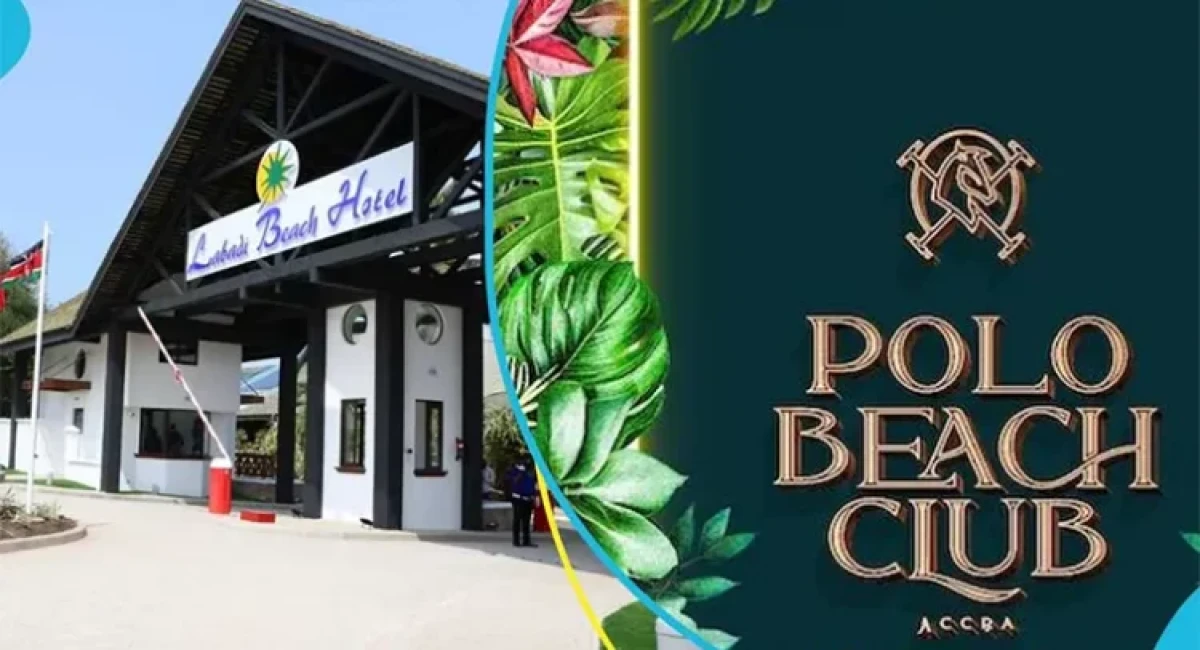
A major legal showdown is brewing over a prime beachfront property in Accra after Spartan Ives Limited, operators of the renowned Polo Beach Club, filed an application for an injunction to stop the Labadi Beach Hotel from allegedly moving ahead with plans to demolish the club.
The application, filed before the High Court in Accra, also seeks to restrain Richard Jakpa, Director of Special Operations at the National Security Secretariat, and anyone acting under his authority from interfering with the club pending the determination of the substantive land dispute.
According to court documents cited by the Daily Guide, the dispute centres on ownership and occupation of beachfront land at Labadi. The substantive case was initiated by Labadi Beach Hotel and remains pending before the court.
Polo Beach raises alarm over alleged demolition threat
In an affidavit supporting the injunction application, Polo Beach Club alleges that Jakpa informed its officials and lawyer that the Labadi Beach Hotel wanted the club demolished.
The club claims Jakpa described the proposed demolition as “non-negotiable and irreversible”, despite being informed that the underlying land dispute was already before the court.
According to the affidavit, Jakpa allegedly rejected suggestions that the parties should allow the court to determine the matter and indicated that the demolition would proceed based on his own assessment.
Polo Beach is now asking the court to intervene before any physical action is taken.
The land dispute at the centre of the fight
Labadi Beach Hotel reportedly argues that the entire Labadi beachfront falls within an Executive Instrument and is therefore owned by the Government of Ghana.
The hotel also reportedly contends that the beachfront constitutes a buffer zone between the sea and adjoining land and that Polo Beach Club was constructed without the necessary building permit.
Polo Beach Club has strongly denied these assertions.
The club says it holds a 20-year lease from the La Stool, has made substantial payments towards the lease and obtained building and operating permits from the La Dade-Kotopon Municipal Assembly.
‘How can the hotel claim government land?’
Polo Beach Club has questioned the consistency of Labadi Beach Hotel’s position.
According to the club’s court application, the hotel has itself allegedly leased or rented adjoining beachfront space from the La Stool over the years and made payments to the traditional authority, including payments as recently as 2023.
The club therefore argues that it is difficult to reconcile the hotel’s alleged position that the entire beachfront is government land with its own dealings concerning adjoining beachfront property.
These claims remain matters for the court to determine.
‘Small compensation’ enters the dispute
The situation took another turn after the hotel reportedly appointed a consultant to enter the Polo Beach Club premises and conduct a valuation.
According to the affidavit, the valuation was intended to determine a proposed “small compensation” that could be offered to the club in connection with the proposed demolition.
Polo Beach says it fears that refusing to cooperate with the valuation could lead to an immediate demolition.
The club is therefore urging the court to prevent any party from obtaining through administrative action what it is seeking through the ongoing litigation.
Club says it is worth GH¢41.3 million
Polo Beach Club has also placed a substantial value on the property and its operations.
The club reportedly estimates its market value at approximately GH¢41.3 million, with a forced-sale value of about GH¢30.975 million.
It further says it employs more than 100 people and has developed into a major tourism and events destination, attracting international visitors and celebrities.
The club also says it has undertaken works to protect portions of the beachfront, including measures aimed at addressing tidal flooding.
Court asked to stop demolition
Polo Beach Club’s application is seeking an urgent injunction restraining Labadi Beach Hotel, its agents and assigns, as well as Jakpa and persons acting under his authority, from taking steps to demolish or interfere with the club.
The club argues that allowing a demolition before the substantive case is determined could render the court proceedings meaningless.
It is therefore asking the court to preserve the existing situation until the legal battle over the land is resolved.
A potentially explosive beachfront battle
The dispute has now escalated beyond a conventional land disagreement, with the alleged demolition threat bringing the matter into sharper focus.
At stake are not only questions surrounding ownership and development rights but also the future of a prominent beachfront business, the livelihoods of its workers and the authority of the court to determine the underlying dispute.
For now, the substantive case remains before the High Court, while Polo Beach Club is seeking urgent judicial protection against what it describes as a looming demolition.
The court’s decision on the injunction could therefore determine whether the club remains standing while the much bigger battle over the disputed beachfront land continues.
General News
‘What exactly do authorities do at the port?’ – Netizens fume over €225m cocaine bust abroad
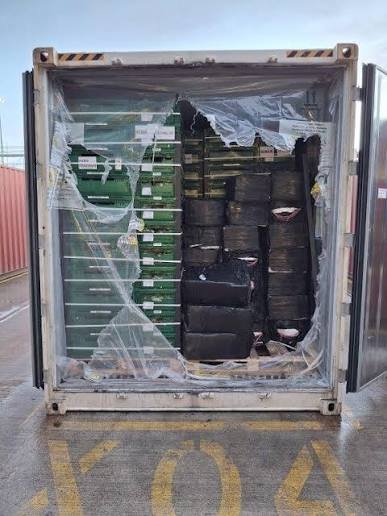
Questions are being raised online over Ghana’s port security and anti-narcotics enforcement after French authorities intercepted nearly 3.9 tonnes of cocaine valued at about €225 million in a container that had arrived from Ghana.
The massive consignment was discovered at the port of Dunkirk in France, where customs officers found 167 parcels of cocaine concealed among plastic waste inside the container. The shipment was reportedly destined, at least in part, for Antwerp in Belgium.
The development has triggered an angry reaction from some Ghanaians online, with questions being directed at authorities over how such a huge quantity of narcotics could leave Ghana concealed in an ordinary commercial shipment.
‘What exactly do authorities do at the port?’
The seizure has sparked intense debate on social media, with some netizens questioning the effectiveness of checks on containers leaving Ghanaian ports.
For critics, the sheer size of the consignment has raised concerns about whether Ghana’s port surveillance systems are sufficiently equipped to detect sophisticated attempts to move narcotics through maritime cargo.
The questions have become even louder because the cocaine was only intercepted after the container reached France.
However, the fact that a shipment originated from Ghana does not by itself establish that Ghanaian authorities, port officials or Ghanaian citizens were involved in the trafficking. The identities and roles of those behind the shipment remain subject to investigation.
Nearly four tonnes hidden in plastic waste
French customs said the cocaine was concealed in eight sacks containing 167 parcels, hidden among bags of recycled plastic.
The container was inspected by France’s Dunkirk Port External Surveillance Brigade. According to French customs, a specialist drug-detection dog marked the container, after which officers used a mobile X-ray scanner before conducting a physical search that uncovered the cocaine.
The drugs were subsequently destroyed.
French prosecutors have opened an investigation into the shipment, with the case handed to France’s anti-narcotics office to identify the criminal network allegedly responsible.
Ghana’s drug trafficking reputation under scrutiny
The latest seizure comes amid growing concern about international drug consignments linked to Ghana.
Assin South MP and Ranking Member on Parliament’s Defence and Interior Committee, Rev. John Ntim Fordjour, has warned that Ghana is increasingly being perceived internationally as a “cocaine coast” following a series of major seizures connected to consignments allegedly originating from the country.
He has questioned why several major international drug seizures have not resulted in high-profile arrests and prosecutions of the alleged masterminds.
His concerns have now gained renewed attention following the Dunkirk seizure.
What happens next?
The French investigation is expected to focus on tracing the shipment, identifying the individuals and organisations involved and determining how the cocaine entered the commercial supply chain.
French authorities say the investigation includes suspected organised importation of narcotics and participation in a criminal association, offences that can attract prison sentences of up to 10 years.
The case could also intensify scrutiny of Ghana’s port security architecture and the systems used to inspect containers involved in international trade.
A fresh challenge for Ghana
For many Ghanaians, the central concern is no longer simply the quantity of cocaine seized abroad but how such a shipment managed to move through an international supply chain before being detected.
The €225 million bust has therefore reopened a difficult conversation about port surveillance, intelligence-sharing, container screening and the fight against organised drug trafficking.
And as the French authorities work to identify the criminal network behind the consignment, the pressure is likely to mount on Ghanaian authorities to demonstrate that the country’s ports are not being exploited as gateways for international narcotics trafficking.

A Ghanaian student studying at a university in the United Kingdom has reportedly raised serious concerns over alleged stalking, harassment and an apparent breach of her online account.
The student’s allegations have raised questions about her safety and privacy, particularly over claims that someone may have gained unauthorised access to her account.
Student raises alarm over alleged harassment
According to the allegations, the student has been dealing with what she describes as persistent harassment and stalking.
The situation reportedly goes beyond unwanted contact, with the student also alleging that her digital account was compromised.
The claims have heightened concerns about the growing intersection between physical harassment and online security, especially among students living away from home.
Account breach adds another layer
The alleged breach of the student’s account has made the situation particularly troubling.
Unauthorised access to personal accounts can potentially expose private conversations, photographs, personal information and other sensitive material.
For students studying abroad, such an incident can be especially distressing because of the challenges associated with navigating unfamiliar institutional and legal systems.
Concerns over student safety
The allegations have also brought renewed attention to the responsibility of universities to provide safe environments for students and appropriate channels for reporting harassment and other forms of misconduct.
Universities generally have disciplinary procedures covering harassment and inappropriate electronic conduct. For example, university conduct frameworks can treat harassment and unauthorised use of information systems as disciplinary matters.
Investigation needed
At this stage, the allegations should be treated as claims rather than established facts.
Any investigation by the university, police or relevant authorities would be expected to establish what happened, identify those responsible if wrongdoing is confirmed, and determine whether any criminal or disciplinary offences were committed.
The student’s case highlights the importance of taking stalking, harassment and digital-account breaches seriously, particularly when they occur together.
For the Ghanaian student, the immediate concern remains ensuring her safety, protecting her digital accounts and securing appropriate support while the allegations are investigated.

A businessman who spent hundreds of thousands of dollars on his former girlfriend has suffered a major legal setback after a court rejected his attempt to recover the money following the collapse of their relationship.
The CEO reportedly sought to reclaim about $369,000 that he had spent on his former partner during their relationship.
However, the court ruled against his attempt, leaving him unable to recover the substantial amount he had sought.
A relationship turns into a legal battle
What began as a romantic relationship eventually ended up in court after the businessman sought to make his former girlfriend pay back money he had spent on her.
According to the case, the man had made substantial financial expenditures during the relationship.
After the relationship ended, however, he pursued legal action in an attempt to recover the money.
The court was ultimately unconvinced that the circumstances justified ordering the woman to repay the amount.
‘Determined to extract a price’
Reports surrounding the case indicate that the man was determined to extract a financial price from his former girlfriend after their relationship broke down.
The dispute subsequently moved beyond the personal sphere and became a legal contest over whether money spent during a romantic relationship could later be reclaimed.
The court’s decision has now brought the businessman’s attempt to recover the $369,000 to an unsuccessful end.
Expensive lesson after breakup
The case has sparked interest because of the enormous amount involved and the unusual circumstances surrounding the claim.
It also highlights the potential legal complications that can arise when substantial sums of money are spent during romantic relationships without clear agreements regarding whether such payments are gifts, loans or investments.
In the absence of an enforceable obligation to repay, money voluntarily spent on a partner may not automatically become recoverable simply because the relationship later ends.
Court battle ends in defeat
For the CEO, what may have been a costly romantic relationship has now also become an expensive legal battle.
His attempt to recover the money has failed, meaning the $369,000 he sought to reclaim will not be returned to him through the court action.
The case has consequently raised a simple but striking question: when a relationship ends, can expensive gifts and financial support be reclaimed?
In this case, the court’s answer has left the businessman with a very costly lesson.

‘You can’t stop what God has ordained for Bawumia’ – Ghana Muslim Forum blasts Rev. Owusu Bempah

‘We are our own worst enemies’ – Dr Yaw Adutwum reacts to 2026 WASSCE results

‘I’m very committed to agriculture’ – Bawumia empathizes with farmers unable to sell their produce



-

 Entertainment6 days ago
Mahama Is First President to Put GH¢40m Seed Money into Creative Arts Fund: Kojo Preko Dankwa
-

 Entertainment2 weeks ago
Oswald Okaitei Explains the Real Vision Behind Ghana’s Black Star Experience
-
 General News2 weeks ago
COCOBOD Settles GH¢2.3 Billion DDEP Bond Obligations for 2026
-

 Entertainment2 weeks ago
Joana Gyan Cudjoe Ends Seven-Year Professional Ties with Keche Global
-
 General News1 week ago
Don’t Punish Them Retrospectively – Educationist Challenges New CSSPS Placement Rule
-

 Culinary2 weeks ago
Pineapple: The Spiky Tropical Fruit Packed With Sweetness and Nutrients
-

 General News1 week ago
OSP Opens Preliminary Investigation into Alleged GH¢70,000 Payment Linked to Parliament’s Vetting
-

 Entertainment5 days ago
Government Repatriates Musician Barosky from UK