
Entertainment
GTA Launches Blue Ghana Initiative to Tackle Beach Pollution After Devastating Accra Floods


















Entertainment
Fetu Afahye: The History, Traditions and Cultural Meaning of Cape Coast’s Famous Festival
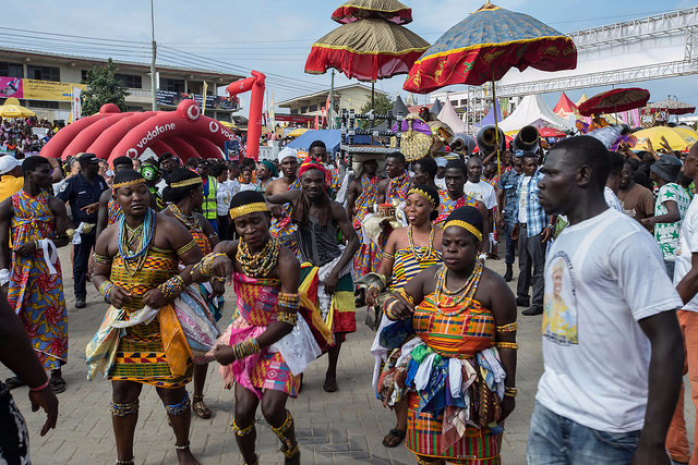
Ghana’s traditional festivals are more than colourful celebrations. They preserve the history of communities, honour ancestors, strengthen traditional institutions and provide opportunities for people to reconnect with their cultural roots.
Among the best-known festivals in the Central Region is Fetu Afahye, celebrated by the chiefs and people of the Oguaa Traditional Area in Cape Coast.
The festival is held every year in September and reaches its climax on the first Saturday of September, when chiefs, queen mothers, Asafo companies, residents and visitors gather for the grand celebration. The National Commission on Culture lists Fetu Afahye as a September festival of Cape Coast, while Visit Ghana identifies the first Saturday of September as its main celebration day.
But behind the colourful durbar, traditional regalia, drumming and dancing is a story of disease, purification, thanksgiving, spirituality and the survival of the Oguaa people.
What does Fetu Afahye mean?
The name Fetu is traditionally associated with the local expression Efin Tu, interpreted as getting rid of or clearing away dirt.
According to the traditional history of the festival, a devastating disease outbreak once affected the Oguaa community. The people turned to their traditional spiritual authorities and sought help from their gods.
The disease eventually came to an end, and the people began observing rituals of purification and thanksgiving.
Visit Ghana describes Fetu Afahye as a commemoration of this purification and an expression of gratitude to the 77 gods of the Oguaa Traditional Area.
The National Commission on Culture similarly says the festival commemorates a historic disease outbreak and is intended to encourage cleanliness and prevent another epidemic from affecting the town.
The connection with the Fetu Kingdom
Fetu Afahye is also associated with the historic Fetu or Effutu kingdom, which was located inland from present-day Cape Coast.
Visit Ghana describes the Fetu kingdom as a 17th-century kingdom located about 19 kilometres inland from Cape Coast.
The name therefore carries historical significance beyond the festival itself.
The history of the Fetu people is connected to the wider movement of Guan-speaking peoples in southern Ghana. Traditional accounts recorded in historical sources describe migrations that eventually resulted in settlements along the Central Region coast.
Cape Coast and Oguaa
Cape Coast is the modern name of the city traditionally known as Oguaa.
Oguaa developed as an important coastal settlement and later became one of the most significant centres of European activity on the Gold Coast.
The city became closely connected with European trade and colonial administration, leaving behind historic structures including Cape Coast Castle.
The cultural history of Oguaa therefore exists alongside a much broader history involving indigenous communities, European trade, colonialism and the transatlantic slave trade.
The National Commission on Culture describes the Central Region as an area where Fante traditions and the legacy of European coastal trade have strongly influenced the region’s identity.
Fetu Afahye as a purification festival
One of the most important meanings of Fetu Afahye is purification.
Before the main celebration, traditional authorities undertake a series of rituals intended to cleanse the community and prepare it for a new traditional year.
This is why the festival should not be understood simply as a durbar or entertainment event.
Its traditional foundation is spiritual.
Visit Ghana explains that Ghanaian festivals generally provide opportunities for communities to remember their ancestors, seek protection and purify their states before entering a new year.
The 77 gods of Oguaa
A major part of the traditional belief surrounding Fetu Afahye is the recognition of the 77 gods of Oguaa.
Traditional authorities perform rituals and pour libations as part of the thanksgiving to these spiritual powers.
The festival therefore reflects the traditional religious structure of the Oguaa people.
The 77 gods are not simply a number mentioned during the celebration; they form part of the spiritual explanation for the community’s relationship with its land, history and traditional institutions.
Visit Ghana specifically identifies the offering of thanks to the 77 gods as an important purpose of Fetu Afahye.
One of the distinctive preparations for Fetu Afahye is the confinement of the Omanhen, the paramount chief of the Oguaa Traditional Area.
The Omanhen traditionally spends about a week in confinement before the major public celebration.
During this period, he is expected to engage in spiritual consultations and traditional activities connected with the preparation of the festival.
Visit Ghana identifies this confinement as one of the important activities preceding Fetu Afahye.
The practice illustrates the central role of the traditional ruler in the spiritual and political life of Oguaa.
The ban on drumming and noise
Before the main celebration begins, restrictions are placed on certain activities.
Traditional accounts of Fetu Afahye describe a period when drumming, dancing, noise-making and merrymaking are prohibited within the traditional area.
Fishing in the Fosu Lagoon is also banned during this period.
These restrictions create a period of quiet and preparation before the festival’s dramatic public celebrations begin.
The contrast is striking: the community moves from silence and restriction to days filled with drumming, dancing, processions and celebration.
Amuntumadeze – the health and cleaning day
Another important feature is Amuntumadeze, traditionally regarded as a day for general cleaning.
Residents clean their homes and surroundings as part of the community’s preparation.
The practice connects the festival’s spiritual idea of purification with physical cleanliness.
This is particularly significant because the traditional history of Fetu Afahye is linked to a devastating disease outbreak.
The National Commission on Culture says the festival is observed partly to keep the town clean and prevent another epidemic.
Thus, the festival’s traditional message has a modern public-health relevance as well.
The Fosu Lagoon
The Fosu Lagoon is central to Fetu Afahye.
The lagoon has traditionally been associated with the spiritual and economic life of Cape Coast.
Fishing communities depend on water resources for their livelihoods, while the lagoon also occupies an important position in the traditional rituals of the festival.
Before fishing resumes, traditional rites are performed.
The Bakatue ceremony
One of the notable activities connected to the festival is Bakatue.
The ceremony involves opening the lagoon to the sea by cutting through the sandbar that separates the two bodies of water.
According to Visit Ghana, the ritual is traditionally associated with allowing fish to enter the lagoon.
The Omanhen pours libation to Nana Fosu, the deity associated with the lagoon.
The paramount chief then casts his fishing net into the lagoon three times.
This signifies the lifting of the traditional ban on fishing.
A successful catch is traditionally regarded as an encouraging sign for the coming season.
Fishermen and the lagoon regatta
The opening of the lagoon also becomes an opportunity for fishermen and community groups to celebrate.
Various fishermen’s groups organise activities on the lagoon, including regattas or boat races.
These activities add a recreational element to the traditional ceremony while maintaining the connection between the festival and the fishing heritage of Cape Coast.
The traditional priests and priestesses
Traditional priests and priestesses have an important role during Fetu Afahye.
One of the most anticipated events takes place during a night vigil around the Fosu Lagoon.
The priests and priestesses invoke the traditional gods through drumming, dancing and ritual performances.
The event attracts large crowds, including young people and visitors.
Visit Ghana describes the night vigil as one of the major attractions of the festival.
Nana Paprat Shrine and Adammba
Another important traditional activity takes place around the Nana Paprat Shrine.
A second vigil is held there, involving rituals and dancing known as Adammba.
The ceremony continues into the following day and forms part of the spiritual preparation for the climax of the festival.
These activities demonstrate that Fetu Afahye consists of a series of ceremonies rather than one single event.
The sacrifice of a bull
Another significant traditional ceremony involves the slaughtering of a bull.
According to Visit Ghana, the Omanhen performs this purification-related ceremony after addressing the people.
The sacrifice forms part of the traditional rites associated with cleansing the community and seeking protection and prosperity.
The seven Asafo companies
The Asafo companies are among the most recognisable groups during Fetu Afahye.
These traditional warrior organisations have historical roles within Akan communities.
They continue to contribute significantly to the public character of the festival through drumming, dancing, processions, regalia and other cultural displays.
The Ghana News Agency reported during the 2023 festival launch that cultural performances were presented by the seven Asafo companies of Oguaa.
Their presence gives the festival a strong connection to the military and social history of the traditional area.
Traditional regalia
Fetu Afahye is also a spectacular display of traditional clothing.
Chiefs and queen mothers appear in elaborate regalia, accompanied by linguists, elders and members of their traditional entourages.
The Asafo companies also display their distinctive clothing and symbols.
These costumes are not simply decorative.
They communicate traditional identity, authority, rank and historical affiliation.
The grand procession
The climax of the festival is marked by a major procession through the community.
Chiefs and traditional groups move through Cape Coast accompanied by music, dancing and other cultural performances.
The procession brings together the spiritual and social aspects of the festival.
After days of preparation and rituals, the entire community is able to participate publicly in the celebration.
The Grand Durbar
The Grand Durbar is one of the most anticipated moments of Fetu Afahye.
Traditional rulers sit in state while their subjects, visitors and invited dignitaries gather to witness the celebration.
The occasion provides a platform for traditional leaders to address the people and reflect on the development of Oguaa.
Recent celebrations have attracted political leaders, business personalities, cultural figures and visitors from outside Cape Coast.
In 2025, the Cape Coast Metropolitan Assembly reported that the festival brought together the Oguaa Traditional Council, chiefs, citizens and visitors for a Grand Durbar at Jubilee Park.
Fetu Afahye and education
The modern festival has increasingly been used to discuss contemporary issues affecting Cape Coast.
For example, the theme of the 2023 Oguaa Fetu Afahye was “Celebrating our Educational Institutions for the Enhancement of Ghana.”
During the launch, Oguaa Omanhen Osabarima Kwesi Atta II urged parents and guardians to invest in the education of their children.
This shows how the festival has evolved into a platform where traditional leadership can address modern development concerns.
The festival and young people
Young people form a major part of the Fetu Afahye audience.
The night activities involving traditional priests and priestesses, cultural performances, music and dancing attract large numbers of young people.
The festival therefore provides younger generations with an opportunity to experience traditional practices that they may not encounter in their everyday lives.
This is important for the preservation of oral traditions, music, dance and indigenous knowledge.
Fetu Afahye and family reunions
The festival also serves as a homecoming occasion.
People from Oguaa who live elsewhere in Ghana or abroad often return to Cape Coast during the celebration.
Families reunite, old friends meet and visitors reconnect with their ancestral home.
Visit Ghana notes that Fetu Afahye provides an opportunity for people to meet old friends and relatives whom they may not have seen for a long time.
Fetu Afahye and tourism
Cape Coast is already one of Ghana’s most important cultural and historical destinations.
The festival adds another major attraction to the city.
Visitors can combine the festival with trips to historic sites and tourist destinations such as Cape Coast Castle.
Elmina Castle, Kakum National Park, Fort William, Fort Amsterdam, Fort PatienceFort Good Hope
Visit Ghana specifically highlights several of these attractions as places visitors can explore around the festival.
The combination of history, culture and tourism gives Fetu Afahye considerable potential for local economic activity.
Hotels, restaurants, transport operators, food vendors, artisans and other businesses can benefit from the influx of visitors.
The festival cannot be separated from Cape Coast’s wider history.
Cape Coast was once the capital of the Gold Coast and became an important centre of European commercial and colonial activity.
Its castles and forts remain reminders of the region’s role in the transatlantic slave trade.
Against that historical background, Fetu Afahye provides an opportunity for the Oguaa people to publicly celebrate an identity that existed before and survived alongside those external influences.
A festival that survived opposition
Fetu Afahye has also experienced periods of opposition.
Wikipedia records that the colonial administration once prohibited the festival and described it negatively as Black Christmas.
The festival nevertheless survived and was eventually revived.
This history illustrates the tension that existed between indigenous religious practices and Christianity and colonial authority during earlier periods of Ghana’s history.
Today, Fetu Afahye continues to be celebrated openly as an important cultural institution.
The return of the festival
The festival underwent a long period of difficulty before its eventual revival.
Wikipedia records that the festival resumed after struggles involving religious and traditional interests, with the period between 1948 and 1996 forming part of this history.
Its survival is therefore significant.
It demonstrates the ability of traditional institutions to adapt while retaining their cultural identity.
Fetu Afahye and the Oguaa traditional year
Another important feature is that Fetu Afahye is regarded as marking the beginning of a new traditional year for the Oguaa people.
The idea is connected with the traditional concept of Afehyia, or the completion and renewal of a cycle of seasons.
The festival therefore looks both backwards and forward.
People remember what has happened during the previous year while seeking blessings and protection for the year ahead.
Christianity and Fetu Afahye
The festival also reflects the coexistence of traditional religion and Christianity in modern Cape Coast.
After the traditional celebrations, an interdenominational Christian service is held as part of the closing activities.
Visit Ghana identifies the closing service as taking place at Chapel Square.
This demonstrates the way modern Ghanaian communities can maintain traditional festivals while also incorporating Christian practices.
The festival continues to evolve.
In 2025, the Centre for National Culture reported that the official launch featured the Oguaa Traditional Council, queen mothers, Christian representatives, civil society organisations and cultural groups.
The launch also introduced the Oguaa Project, an initiative focused on equipping young people with skills and knowledge to contribute to their community.
This shows that Fetu Afahye is increasingly being used not only for cultural preservation but also for youth development and community mobilisation.
The 2026 Fetu Afahye demonstrated the festival’s growing importance as a national cultural event.
The Ghana News Agency reported that Cape Coast hosted the climax of the 62nd Fetu Afahye on September 5, 2026.
The celebration brought together the Oguaa Omanhen Osabarima Kwesi Atta II, Ga Mantse King Tackie Teiko Tsuru II and Yagbonwura Bii-Kunuto Jewu Soale I, creating a meeting of Fante, Ga and Gonja traditional leadership.
GNA reported that the gathering was also connected with discussions around shared histories and reparatory justice relating to the transatlantic slave trade.
This illustrates how traditional festivals can become platforms for conversations about contemporary national and historical issues.
Why Fetu Afahye remains important
Fetu Afahye is much more than a colourful festival held in Cape Coast every September.
It brings together:
History – remembering the disease outbreak and the survival of Oguaa.
Spirituality – honouring the traditional gods and ancestors.
Purification – cleansing the community and preparing for a new year.
Chieftaincy – bringing traditional rulers and their people together.
Fishing – maintaining the historical relationship between Oguaa and the Fosu Lagoon.
Culture – preserving music, dance, clothing and rituals.
Family – bringing people home to reconnect.
Tourism – attracting visitors to Cape Coast and the Central Region.
Development – providing a platform to discuss education, youth and community projects.
For the people of Oguaa, Fetu Afahye is ultimately a celebration of survival, thanksgiving, purification, identity and renewal.
From the quiet period of traditional restrictions to the opening of the Fosu Lagoon, from the rituals at the shrines to the colourful Asafo processions and the final Grand Durbar, each stage tells part of the story of Cape Coast.
And as each generation continues to celebrate it, Fetu Afahye remains a living connection between Oguaa’s past, its present and its future.
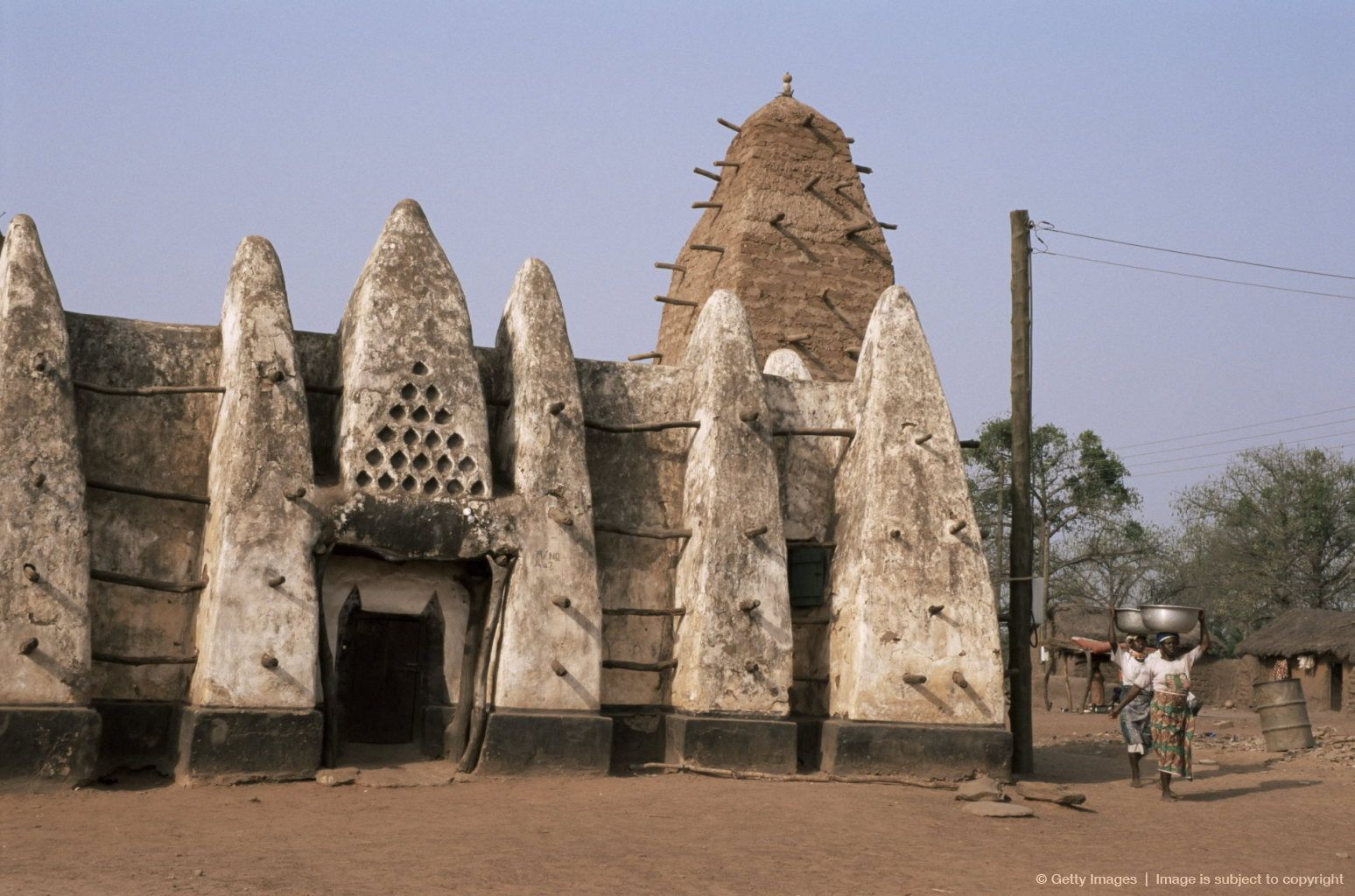
Ghana does not have a shortage of tourist attractions.
From castles and forts to waterfalls, forests, beaches, botanical gardens, traditional festivals and historic sites, the country has an extraordinary collection of places capable of attracting visitors.
The bigger question is what happens after the attraction has been discovered.
Who maintains it?
Who develops it?
Who makes it accessible?
Who tells its story?
Who ensures that a visitor who comes today will want to return tomorrow?
These questions have become increasingly important as concerns about the condition of some tourism and heritage sites continue to surface.
Ghana’s own medium-term development plan identifies several problems affecting tourism sites, including inadequate visitor facilities, poor roads, weak signage, limited interpretation, inadequate conservation funding and maintenance challenges. It also acknowledges that some heritage structures face deterioration.
For a country seeking to make tourism a major contributor to the economy, these challenges raise a difficult question:
Are Ghana’s tourism assets being managed well enough to match their potential?
The attractions are there, but the experience matters
Ghana’s tourism strength is obvious.
The country has internationally recognised heritage sites, national parks, beaches and cultural attractions.
In 2025, Ghana recorded 1,306,962 international tourist arrivals, generating about US$4.34 billion in revenue, according to figures presented by Tourism Minister Abla Dzifa Gomashie. Domestic tourism visits also increased from 1.68 million in 2024 to 1.79 million in 2025.
Those figures demonstrate that people are travelling to Ghana.
But tourism is not only about how many people arrive.
It is also about what visitors experience when they get here.
A tourist may be interested in visiting a historic site, but poor roads, inadequate facilities, inconsistent storytelling, weak maintenance or a lack of activities can affect whether that person recommends the destination or returns.
The ministry itself has acknowledged the problems
In October 2026, Tourism Minister Abla Dzifa Gomashie visited attractions including the Aburi Botanical Gardens, Aburi Craft Village and Papaye Recreation Village.
During the visit, she called for improved maintenance, continuous investment and more consistent historical interpretation at tourism sites.
She also acknowledged that tourism development requires cooperation between institutions because some attractions do not fall directly under the Ministry’s management.
The Minister further pointed to poor road access as one of the issues affecting tourist destinations and said roads requiring urgent attention had been submitted for consideration under government infrastructure plans.
That raises an important distinction.
The Tourism Ministry cannot personally repair every road, maintain every attraction or manage every historic site.
But it is responsible for policy direction, coordination, advocacy and oversight within the tourism sector.
That is where the question of performance becomes relevant.
Critics say the sector needs more than workshops
The strongest criticism of the Minister has come from within Ghana’s creative and tourism conversation.
Ghanaian broadcaster Austine Woode publicly criticised Abla Dzifa Gomashie’s performance during a Joy FM Showbiz Roundtable in August 2026.
He argued that the Ministry had not yet produced enough tangible interventions that would significantly affect people working in the industry.
Woode specifically raised concerns about the stalled Kumasi theatre project and questioned whether enough practical work was being done to move the sector forward.
He described the Minister as having “failed” in his assessment and argued that stakeholder engagements and workshops needed to translate into visible results.
Those are his views, not an established fact that the Minister has failed.
But they raise a legitimate public-interest question:
How should the performance of a Tourism Minister be measured?
Is tourism promotion enough?
Ghana has become increasingly skilled at promoting its attractions.
There are tourism campaigns, festivals, exhibitions, international engagements and destination-marketing initiatives.
The Ministry says it has adopted a domestic-first, global-next strategy aimed at encouraging Ghanaians to explore their own country while strengthening Ghana’s international tourism appeal.
The Ministry has also highlighted initiatives including the Ghana Tourism Marketplace, Ghana Tourism Investment Platform, Afro Gastro Festival and other programmes.
It has pointed to Ghana’s first Tourism Satellite Account, the UNESCO Culture|2030 Indicators Programme and Ghana’s successful bid to host the 70th Session of the UN Tourism Commission for Africa in 2027 as part of its work.
But promotion can only take tourism so far.
If a destination is promoted heavily but visitors arrive to poor roads, inadequate toilets, weak signage or deteriorating facilities, the marketing can create expectations that the destination struggles to meet.
The problem of heritage sites
Ghana’s castles and forts are among its most important tourism assets.
They are also sites of enormous historical importance.
Yet the government has acknowledged concerns surrounding encroachment and the condition of heritage areas.
In August 2026, Minister Gomashie called for illegal structures around forts and castles to be removed, warning that encroachment threatens the beauty, integrity and long-term preservation of the sites.
She also said stronger engagement with surrounding communities was necessary because residents needed to understand why protecting the sites mattered.
This highlights another challenge.
Heritage protection is not simply about putting a fence around a monument.
It requires communities, traditional authorities, local assemblies, tourism agencies and central government to work together.
Ghana cannot afford to let attractions become photographs of what they used to be
A tourist attraction should not only be famous because of its history.
It must be capable of functioning as a visitor destination today.
That means basic facilities.
Clean surroundings.
Safe access.
Clear information.
Professional guides.
Good customer service.
Interesting activities.
Reliable transportation.
Proper maintenance.
And a reason for visitors to stay longer or return.
The NDPC’s tourism development document identifies many of these weaknesses, including inadequate washrooms, restaurants and accommodation at some sites, poor access roads, gaps in signage and interpretation, insufficient conservation funding and weak maintenance and service standards.
These are not merely aesthetic concerns.
They can directly affect tourism revenue and local employment.
The Tourism Minister’s defence is that the problems are bigger than the Ministry
There is also a case to be made for the Ministry.
Tourism does not operate in isolation.
Roads belong to the broader infrastructure system.
Some attractions are managed by agencies outside the Ministry.
Private businesses operate hotels, restaurants and transport services.
Local assemblies have responsibilities.
Traditional authorities control or influence land and community matters.
The Minister has therefore argued that tourism development requires cooperation across institutions.
She has also said that road improvements to tourism sites have been raised with the government and that investment and infrastructure development remain priorities.
This means judging the Ministry’s performance requires separating what it directly controls from what depends on other agencies.
But accountability cannot stop at explanations
That is where the debate becomes important.
It is understandable that a Tourism Minister cannot personally fix every problem in Ghana’s tourism industry.
However, the public can reasonably ask what measurable improvements should occur during a minister’s tenure.
How many neglected sites have been restored?
How many attractions have received new facilities?
How many roads to major tourist destinations have actually improved?
How many heritage sites have been protected from encroachment?
How many jobs have been created?
How much more are local communities earning from tourism?
How many visitors are staying longer?
How many destinations outside the traditional tourism hotspots are attracting significant numbers?
These are the questions that can turn political promises into measurable accountability.
Ghana’s tourism numbers tell only part of the story
The 2025 tourism figures provide encouraging evidence of demand.
But visitor numbers alone cannot tell the entire story.
A country can attract more tourists while some attractions remain poorly maintained.
It can generate billions in tourism receipts while individual communities around tourist sites receive limited economic benefits.
It can promote dozens of destinations while visitors continue to concentrate around a small number of major attractions.
Indeed, the Tourism Minister reported that the 10 most visited attractions accounted for almost 77 per cent of domestic tourism site visits in 2025.
That concentration itself raises a question:
What is being done to turn Ghana’s lesser-known attractions into viable destinations?
The real test may be what happens outside Accra
Tourism has the potential to spread economic activity beyond the country’s major urban centres.
A well-developed attraction can create opportunities for tour guides, food vendors, hotels, transport operators, artisans, farmers and small businesses.
But that only happens when visitors actually come.
And visitors need a reason to come.
That requires investment in the entire tourism chain—not just the attraction itself.
A waterfall without proper access may remain a beautiful secret.
A historic site without interpretation may leave visitors informed only by what they already knew.
A cultural destination without accommodation may become a short stop rather than a multi-day experience.
So, has the Tourism Minister failed?
That conclusion should not be presented as an established fact.
There are documented achievements and measurable tourism growth, including increased international arrivals, higher tourism receipts, growth in domestic visits and new policy initiatives.
At the same time, there are documented structural problems involving infrastructure, maintenance, conservation, accessibility and visitor experience.
And there is public criticism from industry voices, including Austine Woode, who argues that the Ministry needs to deliver more tangible results.
The fairest question, therefore, may not be simply whether Abla Dzifa Gomashie has failed.
It is this:
Has the Ministry’s work so far been enough to close the gap between Ghana’s enormous tourism potential and the actual experience offered at many of its destinations?
That is a question the Minister, tourism agencies and stakeholders will ultimately have to answer through results.
Because Ghana does not lack attractions.
It does not lack history.
It does not lack culture.
It does not lack natural beauty.
What Ghana needs is the ability to turn those assets into well-maintained, accessible, properly managed and economically productive destinations.
Until that gap is closed, the country’s tourism story will continue to contain an uncomfortable contradiction:
Ghana has the attractions tourists want to see—but too many of them still need the investment, maintenance and management required to make the experience match the promise.
Entertainment
The Mystery of Ghana’s Abandoned Buildings: Who Is Responsible and Why Are They Still Standing?
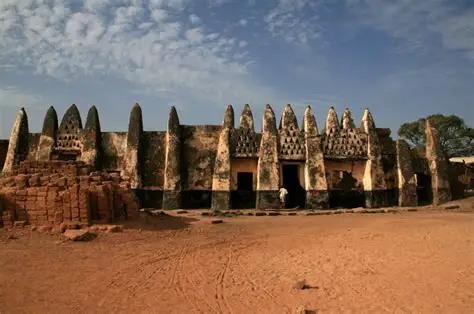
Across Ghana, there are buildings that once represented ambition, wealth, public service, education, industry and even national pride.
Today, some of them stand quietly behind overgrown weeds, broken windows, rusted gates and cracked walls.
Some were once offices. Others were schools, hotels, factories, government properties, residential buildings or important landmarks.
For many Ghanaians, the question is simple: How does a building that was once valuable end up abandoned for years?
But behind Ghana’s abandoned buildings is a much bigger story than what meets the eye.
It involves ownership, maintenance, funding, land disputes, changing government priorities, planning, safety regulations and, in some cases, the failure to decide what should happen to old properties.
And when the buildings have historical or tourism value, another institution enters the conversation—the Ministry of Tourism, Culture and Creative Arts.
But should every abandoned building be blamed on the Tourism Ministry?
The answer is no.
That is because responsibility for Ghana’s buildings is divided among different institutions depending on who owns the property, what the building is used for and whether it has historical or heritage significance.
It starts with ownership.
One of the biggest reasons abandoned buildings can remain untouched for years is that ownership is not always straightforward.
A privately owned building is primarily the responsibility of its owner.
Government property brings in government institutions.
Public buildings and government-owned properties fall within the broader responsibilities of the Ministry of Works, Housing and Water Resources, while the Public Works Department plays a role in the construction, maintenance and rehabilitation of government buildings and infrastructure.
This means that when Ghanaians see an old government building deteriorating, the first question should not automatically be, “Where is the Tourism Minister?”
The first question should be: Who owns this building and which institution has responsibility for it?
That question can sometimes be surprisingly difficult to answer.
The maintenance problem
Buildings do not become abandoned overnight.
A small leak becomes a damaged ceiling.
A broken window is left unrepaired.
Paint begins to peel.
Water enters the structure.
Electrical systems deteriorate.
The surrounding land becomes overgrown.
Eventually, a building that could have been repaired relatively cheaply becomes an expensive rehabilitation project.
The Ministry of Works, Housing and Water Resources officially identifies the maintenance and protection of public property and infrastructure among its responsibilities.
The Public Works Department also states that it handles the design, construction and maintenance of public buildings, including the renovation and rehabilitation of government properties.
Yet funding remains a major part of the problem.
A 2021 inspection of state bungalows by then Works and Housing Minister Francis Asenso-Boakye found some government residences in poor condition because of inadequate maintenance. He appealed for funding to support their upkeep.
The problem, therefore, is not simply that Ghana has abandoned buildings.
It is also that maintenance has often been treated as something to address after deterioration has already become serious.
Some buildings have a different story.y
Not every old building is simply an abandoned property.
Some are part of Ghana’s history.
They may be connected to colonial administration, independence, education, traditional communities, important personalities, religious history, architecture or major events.
This is where the tourism and heritage conversation becomes important.
Ghana’s heritage institutions are responsible for protecting significant historical properties, while the Ministry of Tourism, Culture and Creative Arts provides policy direction for the sector.
The Ghana Museums and Monuments Board, for example, is the custodian of Ghana’s tangible cultural heritage.
In December 2025, the Board temporarily closed Fort Apollonia, Fort St. Anthony, Fort Orange, James Fort and Ussher Fort because of maintenance, safety assessments and conservation work.
That decision showed the difficult balance between keeping heritage sites open for tourism and protecting them from further deterioration.
When an abandoned building becomes a tourism problem
This is where the issue becomes more complicated.
An old building may have no tourism value at all.
But another may have enormous potential.
Imagine a historic building in the middle of Accra that tells the story of a particular period in Ghana’s history.
Instead of remaining locked and deteriorating, it could potentially become a museum, cultural centre, creative hub, boutique hotel, research centre or heritage attraction.
The challenge is determining which buildings deserve preservation and how they can be economically sustained.
Preservation without funding can leave a building deteriorating.
Commercialisation without historical sensitivity can destroy the very character that makes the building valuable.
That is why the debate requires more than demolition or renovation.
So where does the Tourism Ministry come in?
The Ministry of Tourism, Culture and Creative Arts has increasingly placed heritage preservation on its agenda.
Tourism Minister Abla Dzifa Gomashie has repeatedly spoken about the need to protect Ghana’s built heritage.
In 2025, she urged architects to become more involved in protecting historic buildings and warned that Ghana risked losing important heritage through neglect and inadequate professional intervention.
In August 2026, she also supported efforts to preserve and restore Osu Castle through discussions involving Danish partners. She stressed that heritage preservation should not only be about maintaining physical structures but also about telling Ghana’s history properly.
The government has also launched a five-year Ghana-Korea Heritage Project aimed at strengthening the conservation and climate resilience of Ghana’s forts and castles.
The project focuses on historic sites threatened by coastal erosion and climate change, while also building technical capacity for heritage preservation.
These are important interventions.
But they also raise another question.
Is this enough?
That is where the public debate begins.
Ghana does not only have famous castles and forts.
There are old schools, houses, theatres, government properties, railway-related structures, industrial buildings, colonial-era architecture and other landmarks scattered across the country.
Some are known to the public.
Others are slowly disappearing without much attention.
The Ministry itself has acknowledged that the tourism and heritage sector faces challenges including inadequate funding and dilapidated infrastructure. In a June 2026 engagement with Parliament’s Select Committee on Trade, Industry and Tourism, the Ministry highlighted delayed budgetary allocations, logistical constraints and dilapidated infrastructure among the challenges confronting the sector.
That makes the abandoned-building debate bigger than one minister.
It is a question of national priorities.
What happens when nobody acts?
The danger is that an abandoned building eventually reaches a point where restoration becomes much more expensive—or impossible.
In some cases, the structure becomes unsafe.
In March 2026, following the collapse of the Experimental School at Accra Newtown, the Deputy Minister for the Interior urged the public to report unsafe structures and called for stricter enforcement of building regulations.
An abandoned building is therefore not merely an eyesore.
It can become a public safety issue.
It can also become an environmental problem, a security concern and a missed economic opportunity.
Could abandoned buildings become tourist attractions?
Perhaps.
But not every abandoned building should become a tourist site.
The first step should be identifying buildings with genuine historical, architectural, cultural or social value.
Experts could then assess their structural condition, ownership, historical importance, restoration cost and possible future use.
Some could become museums.
Others could become cultural centres.
Some could be converted into creative spaces.
Others may simply need to be demolished if they are beyond safe restoration.
The important thing is to make a deliberate decision rather than allowing buildings to remain in limbo for decades.
Ghana’s heritage is bigger than castles.
Ghana’s tourism story has often been associated with beaches, waterfalls, wildlife, festivals, forts and castles.
But the country’s architecture is also part of its history.
An old building can tell a story that a newly constructed tourist facility cannot reproduce.
The design, materials, location and memories attached to it can provide visitors with a different understanding of Ghana.
That is why the question of abandoned buildings deserves attention from tourism authorities, local assemblies, architects, historians, property owners and communities.
The Ministry should not carry the blame alone—but it cannot stay out of the conversation.n
It would be unfair to blame the Tourism Ministry for every abandoned building in Ghana.
A privately owned property, a government bungalow and a protected heritage building do not fall under the same responsibility.
But where an abandoned building has significant cultural or historical value, the Tourism Ministry and heritage agencies cannot completely look away.
The responsibility should instead be shared.
The Works Ministry and Public Works Department have responsibilities around public buildings and infrastructure.
Metropolitan, municipal and district assemblies have planning and local governance responsibilities.
Property owners have obligations concerning their buildings.
Heritage institutions have responsibilities for protected historical assets.
And the Tourism Ministry has a role in ensuring that buildings with genuine heritage and tourism potential are identified, protected and integrated into the country’s tourism strategy.
The real mystery
Perhaps the real mystery of Ghana’s abandoned buildings is not why they were abandoned.
It is why some remain abandoned even after everyone knows they are there.
Who owns them?
Who is supposed to maintain them?
How much would restoration cost?
Are they historically important?
Can they be reused?
Who should pay?
And if restoration is impossible, who has the authority to make the final decision?
Until those questions are answered, Ghana’s abandoned buildings will continue to stand as silent reminders of unfinished plans.
And for the Tourism Ministry, the challenge is not to take responsibility for every neglected structure in the country.
It is to make sure that the buildings that carry Ghana’s history are not allowed to disappear simply because nobody acted early enough.
Entertainment
Ebony Reigns: The Life, Music, Controversies and Lasting Legacy of Ghana’s 90s Bad Gyal

Priscilla Opoku-Kwarteng, popularly known as Ebony Reigns, lived only 20 years, but within the short period she spent in Ghana’s music industry, she achieved what many artistes spend decades trying to accomplish.
She arrived on the music scene as a young, relatively unknown singer, faced criticism over her image and lyrics, released a string of songs that dominated Ghanaian airwaves, built a recognisable brand and eventually became the first female artiste to win the overall Artiste of the Year award at the Ghana Music Awards.
Then, just as her career seemed to enter its biggest chapter, it ended abruptly.
Ebony died in a road crash on February 8, 2018, while returning to Accra from Sunyani after visiting her mother.
She was only days away from turning 21.
Yet years after her death, her songs continue to stream, play at parties, and be remembered by Ghanaians, while academics continue to study the cultural questions raised by her music, image, and public persona.

Who was Ebony Reigns?
Ebony was born Priscilla Opoku-Kwarteng on February 16, 1997.
She was the daughter of Nana Opoku Kwarteng, popularly known as Starboy Kwarteng, and Beatrice Oppong Martin.
She grew up in Accra and was affectionately called Nana Hemaa or Ohemaa by people close to her.
Her family roots were associated with the Brong-Ahafo area, although she was raised in the capital.
She attended Seven Great Princess Academy in Dansoman for her basic education before continuing to Methodist Girls’ High School at Mamfe in the Eastern Region.
It was during her teenage years that music began to take over her ambitions.
Rather than completing senior high school, she decided to pursue music professionally.
Her decision was risky.
At the time, she was a teenager attempting to enter an industry where established musicians already dominated the attention of the public.
But she believed music was the path she wanted to follow.

The teenager who chose music over school
Ebony’s decision to leave school became an important part of her story.
She had already begun nurturing her interest in music while she was still in school.
Eventually, she made the decision to leave formal education and concentrate on becoming a musician.
A University of Cape Coast study on Ebony describes this as part of her attempt to remake herself and establish an identity through music.
The research is particularly useful because it looks beyond the celebrity image and examines how Ebony’s music and public persona reflected aspects of contemporary Ghanaian youth culture.
Her choice was controversial, but it ultimately became the beginning of a career that would change Ghana’s female music landscape.
Ebony’s breakthrough was closely connected to music entrepreneur Bullet, formerly of the duo Ruff n Smooth.
In 2015, Bullet discovered the young singer and signed her to RuffTown Records.
The label became the home from which Ebony’s career would take off.
At the time, she was not yet a household name.
She had to establish herself one song at a time.
Her first major step came with her debut single, Dancefloor.

Dancefloor — the beginning
Ebony released “Dancefloor” in December 2015.
The song announced the arrival of a new female voice in Ghanaian music.
It did not immediately make her one of the country’s biggest stars, but it gave her the platform she needed.
The song eventually earned her a nomination in the Unsung category at the 2016 Ghana Music Awards.
For a new artiste, the nomination was an important signal that the industry was beginning to notice her.
But Ebony had not yet released the song that would transform her career.

Then came Kupe
In March 2016, Ebony released Kupe.
That song changed everything.
“Kupe” became one of the songs that established her as a major young artiste in Ghana.
It also introduced listeners to the personality that would become central to the Ebony brand.
She was bold, confident, and outspoken.
And she did not appear interested in fitting comfortably into the traditional expectations placed on female Ghanaian performers.
The song became a major hit and helped move Ebony from an emerging artiste into the national spotlight.

The birth of the 90s Bad Gyal
Ebony eventually embraced the identity of the 90s Bad Gyal.
The name was more than a nickname.
It became part of her branding.
She presented herself as a young woman who was confident, independent and unwilling to apologise for her personality.
Her clothing, dance moves, music videos and lyrics all formed part of this image.
That image attracted a huge following.
But it also attracted criticism.
Some members of the public believed her appearance and performances were too provocative, particularly for a young Ghanaian woman.
Others argued that Ebony was simply exercising artistic freedom and creating a character that allowed her to stand apart from her competitors.
Academic research has since treated this tension as an important part of understanding Ebony’s cultural impact.

Why Ebony became controversial
Ebony’s popularity was not based only on music.
Her appearance became part of the national conversation.
Her revealing outfits and sexually suggestive lyrics were frequently discussed in the Ghanaian media.
She was criticised by some religious figures, parents and commentators who felt that she was setting a bad example for young girls.
Others defended her.
For them, Ebony represented a young woman exercising control over her image and refusing to conform to expectations about how female artistes should dress or behave.
This created a strange contradiction.
The same public that criticised her was also consuming her music.
Her songs were everywhere.
Her videos were being watched.
Her performances were attracting large crowds.
And her name was constantly appearing in the media.
A University of Cape Coast study describes this contradiction as central to Ebony’s public reception: she was simultaneously criticised as an unacceptable role model and celebrated for her music and distinctive persona.
Poison takes her even higher
After “Kupe,” Ebony continued releasing songs that strengthened her position.
One of the biggest was Poison.
The song helped establish her as one of Ghana’s most recognisable young female performers.
By this stage, Ebony’s voice, fashion and performance style were becoming difficult to ignore.
She had moved beyond being simply another new singer.
She was becoming a brand.
Sponsor and another major hit
Ebony’s next major success was Sponsor.
The song became one of her signature records.
It was heavily played on radio and at social gatherings and helped maintain her dominance over Ghana’s music conversation.
By 2017, songs such as Sponsor, Poison, Kupe, Date Ur Fada, Hustle and Maame Hw3 were regularly heard across the country.
Spotify’s current catalogue also continues to list Date Ur Fada, Sponsor, Hustle, Poison and Maame Hw3 among Ebony’s most-streamed recordings, showing that her music has continued to find listeners years after her death.

Date Ur Fada
“Date Ur Fada” became another song strongly associated with Ebony’s identity.
The song was playful, provocative and deliberately different from the more conservative expectations surrounding female performers.
Its popularity demonstrated Ebony’s understanding of her audience.
She knew how to create songs that generated conversation.
Even people who criticised the lyrics often knew the words.
That ability to dominate conversation became one of her greatest strengths as an entertainer.

Hustle
Hustle was another important record.
The song demonstrated that Ebony could use wordplay and a commercially accessible sound while maintaining the personality that had become central to her brand.
Academic research on contemporary Ghanaian women’s music has since examined “Hustle” as part of a wider discussion about women’s agency, sexuality, work and self-expression in popular music.

The deeper meaning of Maame Hw3
Perhaps the song that most clearly showed another side of Ebony was Maame Hw3. Translated roughly as Mother, look, the song addressed domestic violence and the plight of women in abusive relationships.
It was a significant departure from the image of Ebony as simply the provocative “90s Bad Gyal.”
The song allowed her to address a social issue.
Its music video also helped communicate the message.
Ghana’s academic literature has subsequently examined Maame Hw3 through the lens of womanism, female self-expression and liberation.
A 2023 peer-reviewed study concluded that the song raises issues relating to women’s liberation, relationships and social behaviour.
That aspect of Ebony’s catalogue is important because it demonstrates that her music could carry social commentary alongside entertainment.

Aseda
Ebony also released Aseda, a song with a more reflective and grateful tone.
The song became another popular recording associated with her short career.
It showed that her catalogue was not limited entirely to provocative dancehall records.
She could move between different moods and themes.
Although Ebony was frequently described as a dancehall artiste, her music drew from several Ghanaian and international styles.
Her recordings incorporated elements of dancehall, Afropop, highlife and hiplife.
Her voice was often placed prominently over relatively sparse productions driven by bass, percussion and keyboard sounds.
The University of Cape Coast research into her music describes this production style as characteristic of contemporary Ghanaian dancehall and popular music.
This flexibility helped her reach a wide audience.

Her debut album: Bonyfied
In 2017, Ebony released her debut album, Bonyfied.
The album consolidated the success she had built through her singles.
It became a major part of the story of her rise.
By the end of 2017, Ebony was no longer simply a promising young artiste.
She was one of the biggest names in Ghanaian music.
Her album would eventually become even more significant after her death.
2017: The year Ebony took over
The year 2017 was arguably the defining year of Ebony’s career.
She was everywhere.
Her songs dominated radio.
Her videos attracted attention.
She performed at major events.
Her image became a regular subject of public discussion.
And she continued releasing music while other established artistes competed for the same audience.
Graphic Showbiz later described her as an artiste whose brand had become so powerful that she controlled conversations across Ghanaian society.

She was not afraid of criticism
One of Ebony’s defining characteristics was her apparent willingness to ignore criticism.
She understood that her image would not be accepted by everyone.
But instead of abandoning it, she used the controversy to strengthen her identity.
This became an important part of the “Ebony Reigns” brand.
The public knew what to expect when she appeared.
The clothes.
The confidence.
The dancehall sound.
The attitude.
The stage presence.
Everything formed part of a recognisable identity.

Ebony’s stage presence
Her popularity was not based only on recorded music.
She was also known for her performances.
She had a distinctive stage presence and a style of movement that helped her connect with audiences.
Graphic Showbiz described her stagecraft as one of the elements that helped distinguish her from her contemporaries.
Her performances reinforced the idea that Ebony was not simply a singer.
She was an entertainer.
Her relationship with her father
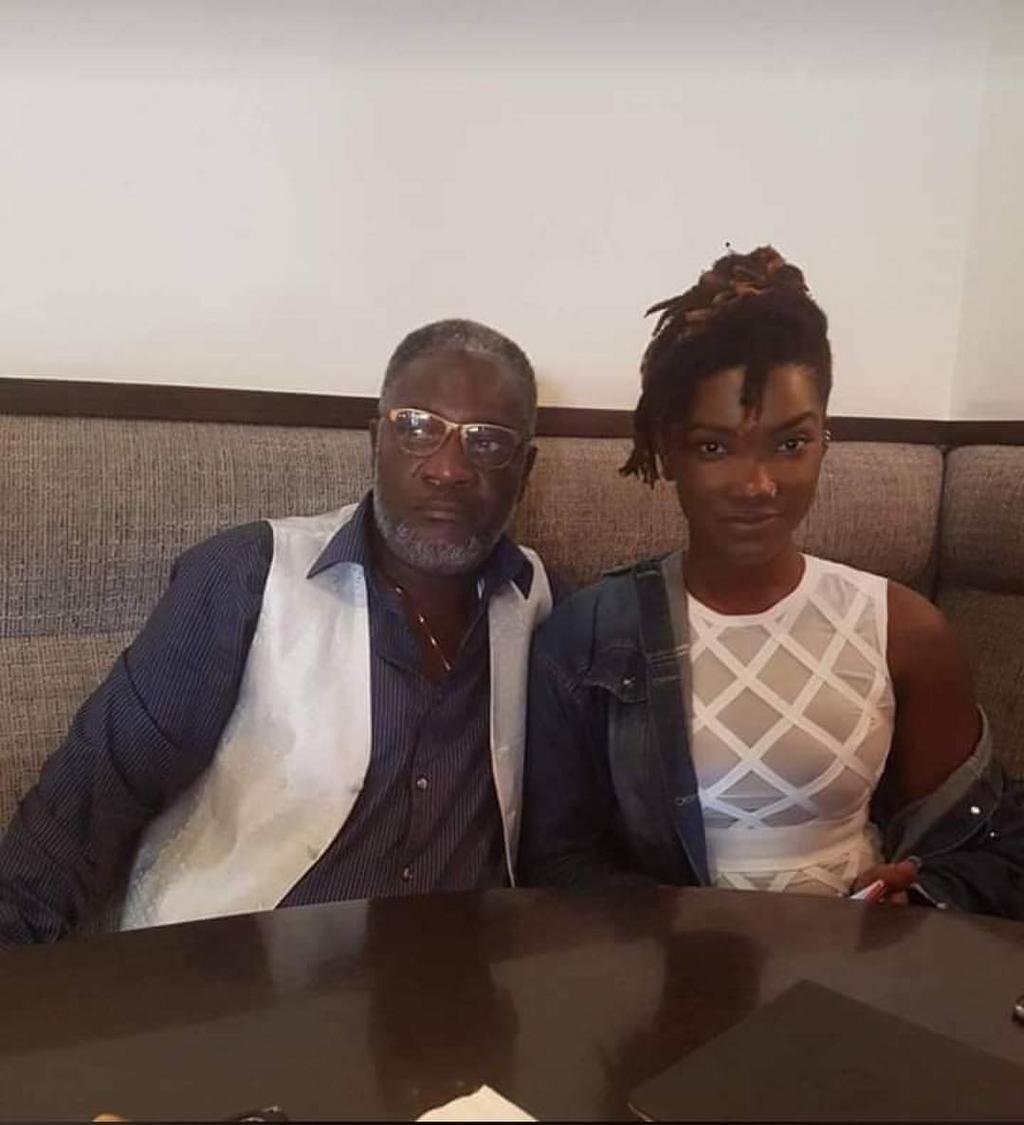
Ebony’s father, Nana Opoku Kwarteng, was closely involved in her career and became one of the most visible members of her family after her death.
Images from the period show Ebony with her father during the filming of the video for “Sponsor.”
He later became an important voice in preserving her memory and speaking publicly about his daughter.
MyJoyOnline has documented his visits to Ebony’s grave with other members of the family during later anniversaries of her death.
The tragedy that shocked Ghana
On February 8, 2018, Ghana woke up to devastating news.
Ebony Reigns had died in a road accident.
She had been travelling from Sunyani towards Kumasi and Accra after visiting her mother.
The vehicle in which she was travelling was involved in a collision with a VIP bus on the Sunyani-Kumasi road.
Ebony died alongside her friend Franky Kuri and military officer Lance Corporal Francis Atsu Vondee.
The driver survived.
Ebony was only 20 years old and was just eight days away from her 21st birthday.
A career that ended just before a new chapter
The tragedy was made even more painful because Ebony’s career was still expanding.
According to her father, she had a visa and was preparing to travel to Europe for a music tour.
The international trip was expected to help introduce her music to a wider audience.
Instead, her career ended before she could make that next step.
It was a painful reminder of how quickly fame and life can change.
The shock across Ghana
Ebony’s death generated an extraordinary reaction.
Fans who had followed her music mourned.
Celebrities paid tribute.
Politicians expressed condolences.
People who had previously criticised her music also joined the national mourning.
Her one-week observance in Dansoman attracted thousands of people.
The event was described as more than a traditional mourning ceremony; it became a public celebration of her short but remarkable life.
Ebony’s funeral
Ebony was buried on March 24, 2018, following a funeral service at the forecourt of the State House in Accra.
She was later laid to rest at the Osu Cemetery.
Her funeral attracted musicians, entertainment personalities, government officials, religious leaders, family members and thousands of fans.
Songs such as Sponsor, Maame Hw3, Kupe and Aseda were central to the atmosphere surrounding her farewell.

The awards that came after her death
One of the most remarkable chapters in Ebony’s story came after her burial.
On April 14, 2018, less than three months after her death, Ebony made Ghanaian music history.
At the 19th Vodafone Ghana Music Awards, she was crowned Artiste of the Year.
She also won:
Album of the Year – Bonyfied
Afro Pop Song of the Year – Sponsor
Her manager, Bullet, won Songwriter of the Year for Maame Hwe.
The first female Artiste of the Year
Ebony’s Artiste of the Year victory was historic.
She became the first female artiste to win the overall Artiste of the Year category at the Ghana Music Awards.
She had competed against major names including Joe Mettle, Sarkodie, Shatta Wale and Stonebwoy.
The significance of the victory was heightened by the fact that she was not alive to receive it herself.
Her parents and management team accepted the awards on her behalf.

The irony of her biggest achievement
There was a painful irony surrounding the award.
Ebony had spent the previous year battling criticism and proving that she deserved to be taken seriously.
By the time the biggest recognition arrived, she was gone.
But the award confirmed what her supporters had argued throughout 2017: Ebony had become one of Ghana’s most important music acts.
Her death did not erase her achievement.
If anything, it made the achievement even more symbolic.
Tributes at the Ghana Music Awards
The 2018 awards ceremony also became a major tribute to Ebony.
Artists performed some of her songs in her memory.
MzVee performed Date Ur Fada.
Akosua Agyapong, Adina and Efya were also involved in performances paying tribute to the late singer.
The ceremony demonstrated the extent to which her absence had affected Ghana’s music community.
Nana Hemaa — the industry remembers her
Four years after her death, the Ministry of Tourism, Arts and Culture, MUSIGA and GHAMRO organised an all-star tribute to Ebony.
The tribute, titled Nana Hemaa, featured female artistes including Adina, MzVee, Efya, Freda Rhymz, eShun, Feli Nuna and Adomaa.
The event was significant because many of the women involved had been part of the generation of artistes Ebony influenced or inspired.
It demonstrated that her impact had extended beyond the songs she recorded.
Her music survived her
Ebony’s death did not stop her music from reaching new audiences.
Her catalogue continues to be available on streaming platforms.
Spotify currently lists songs including Date Ur Fada, Sponsor, Hustle, Poison and Maame Hw3 among her most popular recordings.
Her debut album Bonyfied remains part of her recorded legacy.
This is important because music consumption has changed dramatically since 2018.
A song that once depended on radio and television can now reach listeners years after an artiste’s death.
John 8:7 and the continuation of her catalogue
Ebony’s posthumous catalogue also continued to grow.
In 2021, Bullet released John 8:7, featuring Wendy Shay, using previously recorded material associated with Ebony.
The release allowed fans to hear new Ebony material years after her passing.
It also demonstrated how the RuffTown team attempted to preserve and extend her musical legacy.
Why Ebony remains culturally important
Ebony’s importance is not simply that she died young.
Many young musicians have died before reaching their full potential.
What makes Ebony different is the speed and scale of her rise.
She entered the mainstream around 2016.
By 2017, she had become one of Ghana’s biggest music stars.
By April 2018, after her death, she had become the first woman to win Ghana’s biggest overall music award.
That happened in a career that lasted only a few years.
She changed conversations about female artistes
Ebony’s career also contributed to a wider conversation about female musicians in Ghana.
Women in the industry have often faced expectations concerning how they should dress, behave and perform.
Ebony openly challenged many of those expectations.
That did not make everyone comfortable.
But it forced the public to discuss questions around:
Who decides how a female artiste should look?
Can a woman use sexuality as part of her artistic identity?
Where should society draw the line between entertainment and morality?
Can provocative music still carry a meaningful social message?
Ebony’s career did not provide simple answers to these questions.
Instead, it forced them into the public conversation.
Academic researchers continue to examine those issues through her music.
Maame Hw3 changed the conversation
The importance of Maame Hw3 is particularly clear in retrospect.
The same artiste who was heavily criticised for provocative performances produced a song addressing domestic abuse.
That contrast demonstrated that Ebony could not easily be placed into one category.
She could be provocative and socially conscious.
She could make party songs and songs about serious social issues.
She could be controversial and commercially successful at the same time.
That complexity is part of what made her interesting.

Ebony as a symbol of youth culture
A University of Cape Coast study describes Ebony’s public persona as representing aspects of contemporary urban youth culture.
Her confidence, fashion, lyrics and rejection of traditional expectations reflected the attitudes of some young Ghanaians who wanted greater freedom to define themselves.
This is one reason her music attracted such a strong youth following.
She was not presenting herself as an older person telling young people how to behave.
She was one of them.
She was young, outspoken and experimenting with her identity in public.
Ebony’s influence can also be seen in the generations of young female musicians who followed.
She demonstrated that a young Ghanaian woman could build an enormous commercial music brand around dancehall and Afropop.
She showed that female artistes could create strong visual identities.
She showed that controversy could become part of a marketing strategy.
And she proved that a female artiste could compete directly with Ghana’s biggest male stars for the overall top prize.
Her 2018 Artiste of the Year victory remains one of the most important milestones in the history of Ghanaian female music.

Her legacy seven years later
In 2025, seven years after her death, Radio Univers at the University of Ghana revisited Ebony’s career.
The station noted that her influence remained visible and highlighted the continuing popularity of songs such as Kupe, Sponsor, Date Ur Fada, and Hustle.
The tribute also described her as an artiste who had redefined aspects of Ghana’s music industry through her lyrics, style and stage presence.
That continuing interest shows that Ebony has not disappeared from Ghana’s cultural memory.
Ebony’s family has continued marking anniversaries of her death.
In 2020, her father and sister visited her grave at Osu Cemetery on the second anniversary of her passing.
In 2022, her parents and other family members again visited the gravesite on the fourth anniversary.
These visits have become part of the family’s ongoing remembrance of the young woman they lost.
The music she left behind
Although her career was short, Ebony left behind a catalogue that continues to be associated with an important period in Ghanaian pop music.
Some of her best-known songs include: Dancefloor, Kupe, Poison, Sponsor, Hustle, Date Ur Fada, Maame Hw3Aseda
Her album Bonyfied remains the defining album of her career.
She also appeared on collaborations and had additional material released after her death.
What Ebony never got to do
Perhaps the saddest part of Ebony’s story is the list of things she never got the opportunity to accomplish.
She never got to see how far her music could travel internationally.
She never got to experience the full impact of winning Artiste of the Year.
She never got to turn 21.
She never got to release the many albums that might have followed Bonyfied.
She never got to see the young female artistes who would later enter the industry and draw inspiration from her.
And she never got to see how technology would continue introducing her music to new listeners.
Her career ended just as it was beginning to reach another level.

The woman behind the brand
It is easy, years later, to remember Ebony only as the bold woman in music videos.
But behind the 90s Bad Gyal image was a young woman who had dreams, a family, friends and ambitions.
She was a daughter, a sister and friend.
A young woman trying to establish herself in a difficult industry.
Her rapid transformation from an aspiring teenager into a national star happened in only a few years.
That makes her story both inspiring and heartbreaking.
Why Ebony’s story still matters
Ebony Reigns should not be remembered only because she died young.
She should be remembered because she changed the conversation.
She entered Ghana’s music industry at a young age and refused to disappear into the crowd.
She created a recognisable identity.
She released music that dominated the airwaves.
She addressed social issues.
She challenged traditional expectations of female performers.
She became a major commercial force.
And she made history at the Ghana Music Awards.
Her career may have lasted only about three years, but its influence has lasted much longer.
A legacy bigger than her age
Ebony was 20 when she died.
Yet her achievements were already those of an established artiste.
She had a hit catalogue.
A successful debut album.
A loyal fan base.
Major industry recognition.
International ambitions.
And a historic Artiste of the Year award.
That is why her death remains one of the most painful moments in Ghanaian entertainment history.
She did not simply leave behind unfinished plans.
She left behind a career that had already begun changing the industry.
The legacy of the 90s Bad Gyal
Years after her death, Ebony’s name still appears whenever discussions turn to Ghana’s most influential female musicians.
Her songs continue to play.
Her image remains familiar.
Her story is still studied.
Her family continues to honour her.
Musicians continue to pay tribute to her.
And young listeners who were children or had not yet been born when she became famous can still discover her through streaming platforms.
That is perhaps the clearest definition of legacy.
A musician’s life ends, but the music keeps moving.
Ebony Reigns may have left Ghana’s music industry in February 2018, but she never really left the country’s musical memory.
From Dancefloor to Kupe, Poison, Sponsor, Hustle, Date Ur Fada, Maame Hw3 and Aseda, she compressed an extraordinary musical journey into a remarkably short life.
She became the first female Artiste of the Year at the Ghana Music Awards.
She challenged ideas about how a female artiste should look and behave.
She used music to address issues such as domestic violence.
She created a brand that was impossible to ignore.
And she left behind a story that continues to provoke admiration, debate and nostalgia.
Ebony Reigns did not live long enough to see the full extent of her potential. But she lived long enough to leave a mark.
And in Ghanaian music, that mark remains.



The Ghana Police Service has confirmed that Harold Norman, husband of fashion personality Rosemond Akua Adobea, popularly known as Nana Akua Addo, could not appear before court on Wednesday, October 7, after being admitted to hospital.
Norman was expected to be arraigned in connection with allegations of domestic abuse made against him by his wife. The Criminal Investigations Department (CID) said his lawyer notified investigators that he had been hospitalised and was therefore unable to attend the scheduled court proceedings.
The Police said officers from the Domestic Violence and Victim Support Unit (DOVVSU) subsequently visited the hospital to verify the claim. Investigators are also monitoring the situation and are expected to ensure that Norman appears before court immediately after his discharge.
The development follows a petition Nana Akua submitted to the Director-General of the CID on August 20, 2026. According to the Police, she alleged that her husband had subjected her to physical, emotional and economic abuse.
Police investigations also established that a case involving the couple had previously been handled by DOVVSU at the Lakeside and Ministries Police Stations in July.
Norman was arrested at his residence on August 27 to assist with investigations. After giving a caution statement, he was granted police enquiry bail with two sureties on August 29 while investigations continued.
The Police have also disclosed that they are working with the Ministry of Gender, Children and Social Protection to provide social welfare support for Nana Akua and her children.
The case has attracted significant public attention following the circulation of videos and images on social media. Norman’s lawyers have separately denied allegations against their client and urged the media to exercise caution in reporting matters that are before investigators and the courts.
The Police have maintained that the allegations remain subject to investigation and have reiterated their commitment to handling domestic violence complaints professionally and fairly.

Fetu Afahye: The History, Traditions and Cultural Meaning of Cape Coast’s Famous Festival

Ghana’s Forgotten Tourist Assets: Is the Tourism Ministry Doing Enough to Save Them?

Assafuah Reveals GTA Directors’ Concerns Over World Cup Activation Programme



-

 General News1 week ago
Fidelity Bank Chairman Named Ghana’s Topmost Transformational Board Chair 2026
-

 Technology2 weeks ago
Rolls-Royce Expands Aviation Business with Major Philippine Airlines Engine Agreement
-

 Entertainment2 weeks ago
Ras Caleb assesses institutions under the Tourism Ministry, highlighting key roles.
-

 Entertainment2 weeks ago
Ras Caleb Appiah-Levi: The musician, Pan-Africanist and organiser whose career spans four decades
-

 Entertainment1 week ago
Ras Caleb Appiah-Levi Reflects on Death, Wealth and Equality: “Death Neither Knows Rich Nor Poor”
-

 Business2 weeks ago
Rev. Dr. Christian Kwetey Kweitsu Honoured for Excellence in Audiology Practice in Kigali
-
 General News2 weeks ago
Sudan Chemical Weapons Allegations: UN Signals Readiness for Possible Investigation
-

 Politics6 days ago
Asiedu Nketiah to Chair Launch of Six NDC Historiographies on Ghana’s Political Journey