
General News
Police Deploy Reinforcements as Violence Erupts in New Winneba; 3 Dead, 15 Injured

The Ghana Police Service has brought under control violent clashes that erupted in the New Winneba Township in the Central Region on Tuesday, September 1, 2026.
According to the Police, the incident occurred at about 10:40 a.m. when about 300 irate persons from Gomoa Oguakrom, Gomoa Yenkuadze and Gomoa Pomadze reportedly stormed New Winneba.
The group, according to the Police, was armed with guns, stones, cutlasses and sticks and attacked natives in the township, including individuals at stores and residences.
The attacks resulted in damage to properties and left several people injured.
The Police Service said about 15 injured victims have been transported to the Trauma and Specialist Hospital in Winneba for medical attention.
Among the injured is a police officer who was caught up in the violence.

The Police also confirmed that three people have died in connection with the incident.
In response to the violence, personnel from the Winneba Divisional Police Headquarters and Agona Swedru District Patrols have been deployed to the affected areas to restore and maintain peace.
The Inspector-General of Police (IGP) has further ordered the deployment of a reinforcement team from the National Police Headquarters to strengthen security in New Winneba.
The reinforcement includes two armoured vehicles, which have been deployed to support the police operation and prevent further escalation.
The Police said the situation is currently under control, while security personnel remain deployed to safeguard lives and property.
The Police Service has assured the public that further details concerning the incident will be communicated later.
The statement was issued by the Public Affairs Unit of the Central Region Police Command and signed by Chief Inspector Isaac Evans Ettie.









General News
At Least Seven Injured in Shooting Over Land Dispute at Gomoa Oguaakrom and New Winneba

At least seven people, including a police officer, have sustained injuries following a shooting incident involving residents of Gomoa Oguaakrom and New Winneba in the Central Region.
The incident reportedly occurred in the early hours of Tuesday and is believed to have stemmed from a longstanding land dispute between residents of the two communities.
The injured police officer is stationed at the New Winneba Police Station.
According to reports, some residents of Gomoa Oguaakrom, who claim ownership of portions of land within New Winneba, entered the community and allegedly opened fire.
The group is also reported to have attempted to lock up some shops in the area. Their actions reportedly met resistance from residents of New Winneba, resulting in a confrontation.
The situation subsequently escalated into an exchange of gunfire between the two sides, leaving several people injured.
Amid the shooting, some residents reportedly fled their homes and businesses to seek safety as tension gripped the community.
The police have since increased their presence in the area as security personnel work to restore calm and prevent further escalation.
The exact circumstances surrounding the incident remain unclear. Police are yet to officially confirm the number of casualties or provide details on the condition of those injured.
Investigations are ongoing, with further information expected as the security authorities establish the full circumstances surrounding the clash.
Source:myjoyonline
The Ghana Cocoa Board (COCOBOD) has settled GH¢2,306,202,372.09 owed to bondholders whose securities were affected by the Government’s Domestic Debt Exchange Programme (DDEP).
The payment, announced by COCOBOD’s Public Affairs Department on Tuesday, September 1, 2026, completes the Board’s mandatory payment obligations to holders of DDEP-affected bonds for the 2026 financial year.
The latest settlement brings COCOBOD’s total payments to DDEP bondholders for the year to GH¢2,682,582,282.18.
According to COCOBOD, the GH¢2.306 billion payment represents the latest settlement made to investors holding securities affected by the DDEP.
The payment follows an earlier GH¢376,325,910.09 coupon payment made in March 2026.
Combined, the two payments bring the total amount paid by COCOBOD to DDEP bondholders during 2026 to:
GH¢2,682,582,282.18
COCOBOD said the payments constitute the fulfilment of its mandatory obligations to investors whose bonds were brought under the Domestic Debt Exchange Programme.
The latest DDEP settlement follows another major payment made by COCOBOD in July 2026.
In July, the Board paid GH¢162 million in full to individual holders of Cocoa Bills who did not participate in the Domestic Debt Exchange Programme.
COCOBOD explained that the GH¢162 million represented the full settlement of outstanding obligations to the affected non-DDEP Cocoa Bill holders.
These obligations had remained outstanding following the implementation of the DDEP in 2023, with the Board previously citing financial constraints as one of the factors that contributed to the delay in settling them.
Beneficiaries of the July payment were advised to contact their respective fund managers to access their funds.
With the payment completed, COCOBOD said its outstanding obligations to the affected non-DDEP Cocoa Bill holders had been fully cleared.
COCOBOD said the payments are part of its broader efforts to strengthen responsible financial management and systematically settle its outstanding financial obligations.
The Board said the settlements form part of measures aimed at improving the financial sustainability of Ghana’s cocoa sector, under the guidance of the Ministry of Finance.
The cocoa regulator has been undertaking some reforms to improve its financial position, strengthen its balance sheet and address legacy liabilities accumulated over the years.
The latest payment therefore represents another step in COCOBOD’s efforts to regularise its financial obligations and improve the management of its liabilities.
The settlement comes amid ongoing reforms within Ghana’s cocoa sector aimed at putting COCOBOD on a stronger financial footing.
In February 2026, the Board outlined wider reforms designed to improve its balance sheet and address legacy financial liabilities.
The measures form part of efforts to ensure that COCOBOD is better positioned to meet its financial commitments while continuing to support the production, financing and development of Ghana’s cocoa industry.
The completion of the 2026 DDEP payments also provides an important milestone in the Board’s efforts to clear outstanding obligations to investors.
Full breakdown of COCOBOD’s 2026 payments
COCOBOD’s payments relating to its outstanding obligations in 2026 are as follows:
March 2026:
GH¢376,325,910.09 paid as a coupon to DDEP bondholders.
July 2026:
GH¢162 million paid in full to individual holders of non-DDEP Cocoa Bills.
September 2026:
GH¢2,306,202,372.09 paid to holders of DDEP-affected bonds.
Total paid to DDEP bondholders in 2026:
GH¢2,682,582,282.18
Total non-DDEP Cocoa Bill obligations settled:
GH¢162 million
COCOBOD said the completion of these payments underscores its continued commitment to meeting legitimate financial obligations to investors while supporting the long-term sustainability of Ghana’s cocoa industry.
The Board further indicated that the settlements form part of its ongoing efforts to strengthen financial discipline, address legacy obligations and contribute to restoring confidence in the financial management of the cocoa sector.
The statement was issued by the Public Affairs Department, Ghana Cocoa Board (COCOBOD)
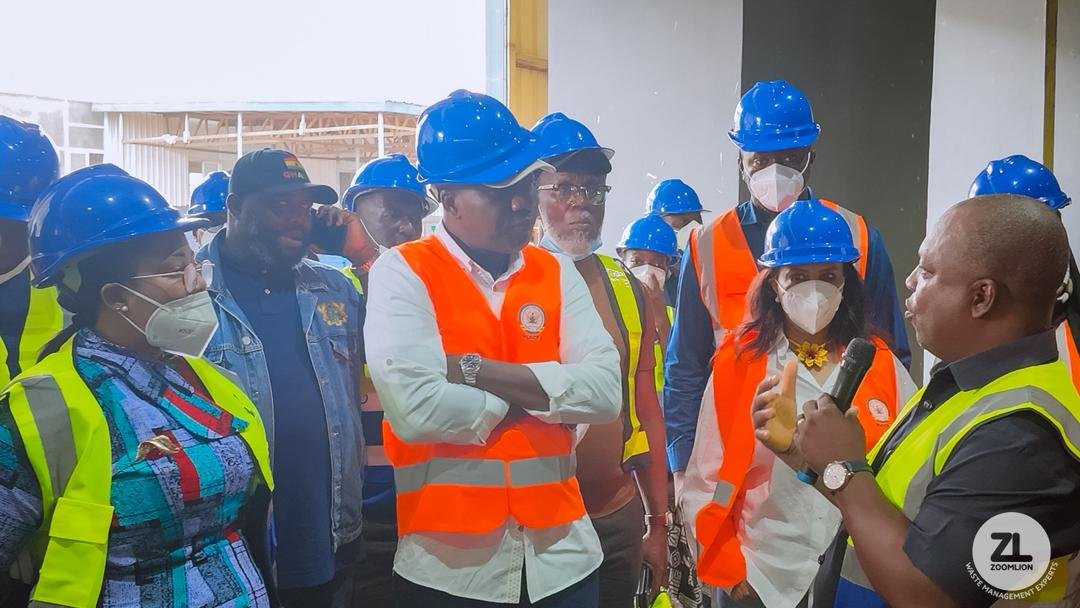
Minister for Local Government, Chieftaincy and Religious Affairs, Mahama Ayariga, has called for a comprehensive overhaul of Ghana’s waste management system, warning that significant gaps exist across the collection, transportation, treatment and final disposal of waste.
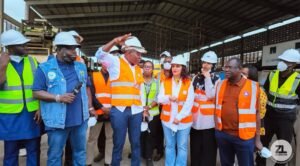
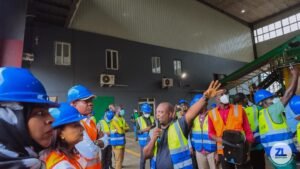
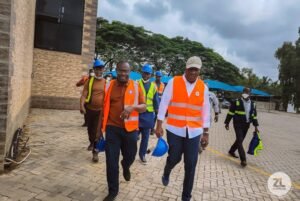
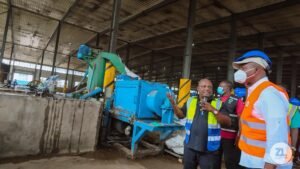
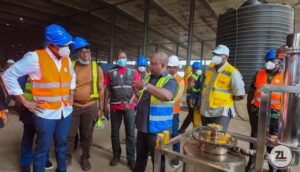
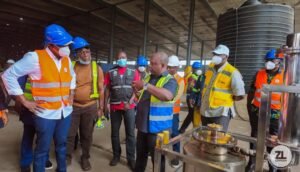
The Minister made the call on Tuesday, September 1, 2026, after touring key waste management facilities in the Greater Accra Region to assess challenges within the sector and explore opportunities for investment in sanitation infrastructure.
The tour covered the Accra Compost and Recycling Plant (ACARP), the Achimota Waste Transfer Station, the Jamestown Waste Transfer Station, all subsidiaries of the Jospong Group of Companies (JGC), as well as the Kpone landfill site.
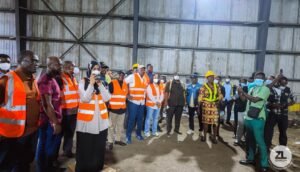
The engagement also included officials from the Arab Bank for Economic Development in Africa (BADEA) and formed part of Mr Ayariga’s early engagements with stakeholders following his appointment as Minister.
He was accompanied by the Mayor of Accra, Michael Allotey, officials from the Ministry, representatives of the Accra Metropolitan Assembly (AMA) and other dignitaries.

Speaking after the tour, Mr Ayariga said the situation observed in Accra demonstrated the need to review Ghana’s entire waste management chain.
“There are clearly a lot of gaps in terms of the systems that we have for collecting and managing waste,” he said.
According to him, the government must first address challenges at the point where waste is generated, particularly households.
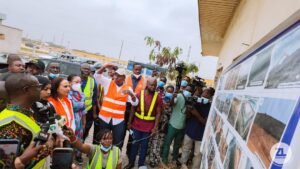
He noted that most households do not properly separate waste before disposal, making subsequent processes such as recycling and composting more difficult.
Mr Ayariga said the government would work towards establishing systems that encourage residents to separate waste at source.
He said households should be provided with appropriate bins and receptacles to enable different forms of waste to be sorted before collection.
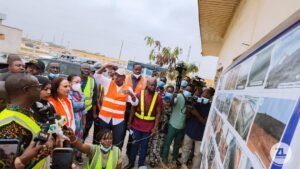
“From the homes where the waste is generated, we don’t separate it. We must put in place a system for separating it right from the homes,” he said.
He added that proper receptacles would also make it easier to collect and transport waste efficiently.
The Minister further identified the transportation of waste as another major area requiring reform.
He said transfer stations should be strategically located closer to communities to reduce the distances waste trucks travel.
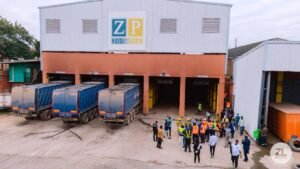
According to him, treatment and composting facilities should also be positioned closer to major urban centres.
“We must overhaul the system of transporting the waste to the transfer stations. We must bring the transfer stations closer to our communities,” he said.
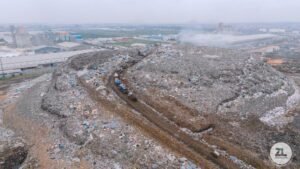
He added that treatment and composting centres must also be brought closer to cities.
Mr Ayariga stressed that Ghana already possesses much of the technology and infrastructure required to improve waste management, but said organisational challenges remain a major obstacle.
“The infrastructure, the technology to do all this is available. A lot of it is organisational,” he noted.
The Minister said the facility tour was also intended to provide government with information needed to mobilise investment into the waste management sector.
He disclosed that the government was exploring possible financing support from BADEA to strengthen infrastructure across the waste management value chain.
The tour was undertaken alongside BADEA’s Vice President for Operations and Secretary General, Dr Fatima Elsheikh.
Mr Ayariga said the government was interested in mobilising resources for all stages of waste management, including collection, transportation, treatment, recycling and final disposal.
“This will serve as the basis for planning and seeking investment,” he said.
Mr Ayariga said the challenges observed in Accra were not unique to the capital but likely reflected conditions in other major cities across Ghana.
He indicated that similar infrastructure and organisational challenges could be found in cities such as Kumasi and Takoradi.

“What we’ve seen here, I believe, is just a microcosm of the infrastructure across the country,” he said.
A key proposal raised by the Minister was the implementation of the polluter-pays principle, under which individuals, households and properties that generate waste would contribute towards the cost of managing it.
Mr Ayariga argued that those who generate waste should take responsibility for the cost associated with its collection and management.
“I believe in the principle of the polluter pays. If you pollute, you pay for the management of the pollution,” he said.
He stressed that every property should contribute a fair share towards waste management.
“Every property must pay its fair share of the cost of managing the waste,” he added.
However, the Minister assured residents that government would simultaneously seek to make waste management more efficient and reduce the financial burden on households.
Mr Ayariga attributed the relatively high cost of waste collection partly to inefficiencies in the current system.
He explained that long distances travelled by waste trucks, coupled with high operational expenses for private waste collectors, ultimately increase the fees paid by households.
He said improved organisation of the system could potentially reduce household waste management costs significantly.
“If we organise it well, we could reduce the cost per household of waste management by even 50 per cent,” he said.
According to him, the high cost currently experienced by households is partly the result of an inefficiently managed system.
The Minister also pledged that government would ensure accountability and transparency in the management of resources mobilised for the waste sector.
He assured residents that they would be able to see how funds contributed towards waste management are utilised.
“We promise to be accountable. We promise to be efficient. We promise to be transparent, so that you see exactly how your resources are being used,” he said.
Dr Fatima Elsheikh of BADEA expressed satisfaction with the government’s determination to improve waste management in Ghana.

She said waste should not be regarded solely as an environmental problem, arguing that the sector could generate employment, improve livelihoods and contribute to economic development.
“Waste is not about actual waste. It’s actually about the employment opportunities that it gives people a livelihood,” she said.
Dr Elsheikh also noted that improving sanitation would enhance Accra’s attractiveness as a major business and economic centre on the African continent.
“Accra is not the capital of Ghana only. It’s one of the hubs of Africa,” she said.
She subsequently expressed BADEA’s willingness to support Ghana’s efforts to develop a more sustainable waste management system.
“We’ll be happy to contribute as a development bank,” she said.
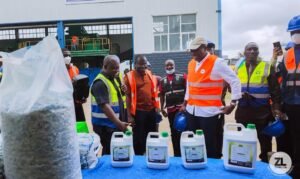
The bank, she added, was prepared to work with the Ghanaian government as it seeks to address the country’s waste management challenges and build a more sustainable sanitation system.
General News
Graduates With Disabilities Petition Minority Leader Over Unemployment, Threaten Fresh Picketing
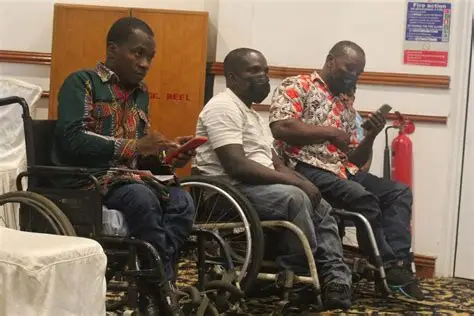
The Coalition of Unemployed Graduates with Disabilities has petitioned the Minority Leader of Parliament, Hon. Alexander Kwamina Afenyo-Markin, demanding urgent and sustainable employment opportunities for qualified graduates with disabilities.
The coalition says its members are not seeking charity but are demanding what they describe as their fundamental right to work and contribute to Ghana’s development.
The petition, dated Wednesday, September 2, 2026, highlights the plight of tertiary-educated persons with disabilities who have obtained degrees in fields including Law, Administration, Education, Information Technology and other areas, but have remained unemployed for years.
According to the coalition, many of its members have invested their limited resources and energy in acquiring tertiary education, only to encounter systemic barriers when seeking employment.
The coalition said it issued a one-month ultimatum to the Government of Ghana on February 9, 2026, demanding a workable roadmap for the employment of graduates with disabilities.
It said the ultimatum has expired without what it considers a satisfactory and concrete government plan to address the situation.
The group argues that educating citizens and subsequently denying them opportunities to work and contribute to national development amounts to a waste of human capital and economic potential.
The coalition referenced the 2021 Population and Housing Census, stating that approximately 8% of Ghana’s population, representing more than 2.1 million people, live with a disability.
It further claimed that while Ghana’s national unemployment rate is around 13%, unemployment among persons with disabilities remains significantly higher.
The group also cited figures suggesting that only 27% of working-age persons with disabilities are employed, compared with more than 56% of persons without disabilities.
It said hundreds of qualified graduates with disabilities have remained unemployed for more than 10 years despite possessing the requisite qualifications.
The coalition said it has engaged the Ministry of Gender, Children and Social Protection and the Ministry of Employment and Labour Relations, but claimed that the engagements have not produced any substantially hopeful outcome.
It also recalled a series of demonstrations and picketing exercises, including a recent protest at the Jubilee House, where it said government representatives promised to absorb some of its members into the public sector.
According to the coalition, the promise led to a temporary suspension of its protest after assurances that its leadership would meet President John Dramani Mahama within the following week to find a solution.
However, the group said its subsequent attempts to contact the senior presidential staffer who received its petition on behalf of the government have gone unanswered.
The coalition also raised concerns about recruitment practices in the public sector, alleging that qualified persons with disabilities are frequently overlooked because of misconceptions about their abilities.
It cited the recent Ghana Education Service recruitment exercise, during which about 7,000 teachers were recruited.
According to the coalition, it worked with the Ghana Federation of Disability Organisations to submit a list of 200 qualified potential teachers with disabilities, but claimed that none of the members on the list was selected.
The group argued that this situation demonstrates the challenges faced by qualified PWDs despite existing legal protections.
The petition anchored the coalition’s demands on Ghana’s legal and international obligations, including Article 29 of the 1992 Constitution, which provides protections for persons with disabilities.
It also cited the Persons with Disability Act, 2006 (Act 715), which provides a legal framework for the rights of persons with disabilities, including provisions relating to employment support and incentives for employers.
The coalition further referenced the United Nations Convention on the Rights of Persons with Disabilities (CRPD), which Ghana ratified in 2012.
It specifically cited Article 27, which recognises the right of persons with disabilities to work on an equal basis with others in an open, inclusive and accessible labour market.
Key demands
The coalition is asking the Minority Leader to intervene and compel government to provide an immediate roadmap for addressing the backlog of unemployed tertiary-educated persons with disabilities.
Among its demands are:
- The immediate recruitment of the current backlog of approximately 400 unemployed tertiary-educated persons with disabilities into the public sector.
- Full implementation of employment quotas for persons with disabilities in government institutions.
- Incentives for private-sector employers who recruit persons with disabilities.
- An end to discriminatory and systemic barriers in recruitment processes.
- The issuance of an Executive Instrument or policy directive reserving a specific percentage of recruitment opportunities in Metropolitan, Municipal and District Assemblies (MMDAs) and State-Owned Enterprises (SOEs) for qualified persons with disabilities.
- A concrete and actionable government employment plan to address the unemployment crisis among graduates with disabilities.
The coalition stressed that its objective is not welfare or charity but access to dignified employment and the opportunity to earn an income through its members’ skills and qualifications.
The coalition has also warned that it will resume demonstrations if the government fails to take concrete action.
It said that if its engagement through the Minority Leader does not produce positive results, members will embark on another picketing exercise after September 15, 2026.
The group warned that the planned protest will not be suspended until its demands are addressed, regardless of assurances that may be offered by government.
“Our disability is not an inability,” the coalition said, arguing that persons with disabilities possess perspectives and skills capable of enriching Ghana’s workforce.
The petition was signed by Gilbert Boateng Agyare, Convener, and Felix Baah, President of the Coalition.
The coalition provided contact numbers for its leadership, with Gilbert Boateng Agyare reachable on 0244061940 and Felix Baah on 0544295020.
The Coalition of Unemployed Graduates with Disabilities is scheduled to hold a press conference with Minority Leader Alexander Afenyo-Markin on Thursday, September 3, 2026, following the presentation of the petition.
The engagement is expected to provide an opportunity for the coalition to further explain its concerns and for the Minority Leader to respond to their demands.

The Traders Advocacy Group Ghana (TAGG) has called on the government and relevant port authorities to urgently review what it describes as excessive and unjustifiable charges imposed on Ghanaian traders and importers at the country’s ports.
In a press statement dated September 1, 2026, TAGG said Ghanaian traders and importers have spent nearly two years engaging relevant authorities, attending meetings and following due processes in an effort to address concerns over rising port-related charges.
The group, however, said despite these engagements and repeated promises of relief, the burden on businesses continues to increase.
“Enough is enough,” TAGG declared, calling for immediate intervention by the government, the Ministry of Transport, the Ghana Shippers Authority, shipping lines and other institutions responsible for port regulation.
According to the traders’ group, the Ghana Shippers Authority previously engaged stakeholders over administrative charges imposed by shipping lines.
TAGG said it understood that GH¢550 had been agreed upon as the applicable amount following those engagements. However, the group expressed concern that the figure was subsequently increased to GH¢720.
The group is demanding answers over who authorized the increase, why it was considered necessary and whose interests the decision serves.
TAGG stressed that it is not opposed to legitimate import duties or lawful taxes owed to the state. Its concern, it said, is with charges it considers excessive, unfair and inconsistent with efforts to reduce the cost of doing business in Ghana.
The group also criticised the Minister for Transport, arguing that the Ministry has a responsibility to ensure institutions under its supervision protect the national interest and enforce Ghana’s laws and regulations.
TAGG said government cannot simultaneously promise to reduce the cost of doing business while allowing additional financial burdens to be imposed on traders and importers.
The group warned that traders cannot absorb unlimited additional costs and that if the charges remain, they will eventually be reflected in the prices of imported goods.
It questioned:
- What charges are being imposed at the ports?
- What administrative fees are being collected?
- What shipping-related levies are being applied?
- Why are businesses being required to absorb costs considered excessive?
- Why should ordinary Ghanaians ultimately pay for decisions made in offices and boardrooms?
TAGG also rejected what it described as attempts to justify excessive charges through the possibility of job losses at shipping companies.
While acknowledging the importance of protecting Ghanaian workers, the group said the threat of job losses should not become a means of imposing what it considers unjustified costs on traders, importers and consumers.
TAGG called on the President and government to intervene immediately and ensure that excessive port charges are reviewed.
It also asked the Ministry of Transport to enforce the law and demonstrate decisive leadership in protecting Ghanaian businesses and urged the Ghana Shippers Authority to stand firmly by its mandate and protect the interests of Ghanaian shippers.
Shipping lines, according to TAGG, must also respect Ghana’s laws, regulations and lawful directives.
The group said it was “tired of endless meetings,” promises and being told to wait, insisting that what is now required is action.
Beyond port charges, TAGG also raised concerns about what it described as a broader transportation crisis affecting traders, workers and ordinary Ghanaians.
The group said thousands of people are stranded at markets and transport terminals every day, particularly between 4:00 p.m. and 8:00 p.m., as they struggle to find vehicles to return home after work.
TAGG said it had previously submitted a proposal to the Presidency, which was recognised and forwarded to the Ministry of Transport.
Among its proposals was a 50% reduction in import duties on commercial vehicles for a specified period, aimed at encouraging private-sector investment and increasing the number of commercial vehicles.
The group said meaningful action on the transport crisis remains outstanding.
TAGG further argued that public officials must deliver results rather than excuses.
The group maintained that if government-appointed officials are unable to effectively address persistent problems directly affecting the livelihoods of Ghanaians, their competence and performance should be reviewed.
It specifically defended its description of the transport minister as incompetent, saying the assessment was based on what it considers the Minister’s continued failure to adequately address serious and persistent challenges affecting Ghanaian traders and workers
TAGG said its position is straightforward: traders and importers want action rather than excuses.
It warned that if nothing is done, Ghanaian consumers will ultimately bear the cost through higher prices of goods, adding that responsibility for preventing such an outcome rest with the government and authorities responsible for regulating the sector.
The group concluded by stating that the people of Ghana deserve fairness, traders deserve relief, importers deserve justice and consumers deserve protection.
The statement was signed by TAGG President David Kwadwo Amoateng, General Secretary Nana Pokua, Vice President Mr. Samuel Asare Addo, Deputy Secretary Juliet Kusi, Treasurer Mrs. Irene Victoria Odoom, Protocol Officer Abraham Yao Fianu, and National Organizer Daniel Fosu.

Tima Kumkum’s Husband Breaks Silence Amid Divorce

Police Deploy Reinforcements as Violence Erupts in New Winneba; 3 Dead, 15 Injured

Nearly 30 Years On, Tupac Shakur’s Murder Finally Ends in a Guilty Verdict30 Years On, Tupac Shakur’s Murder Finally Ends in a Guilty Verdict



-

 General News1 week ago
Nana Adwoa Tutuwaa Named Global Humanitarian of the Year 2026
-

 Entertainment2 weeks ago
Interfaith Tourism World Club Calls for Faith-Based Tolerance to Strengthen National Peace
-

 Education2 weeks ago
Cybersecurity Education in Schools: Should Students Learn Online Safety?
-
 General News1 week ago
Assemblies of God Ghana Clears Headquarters Loan, Slashes Overdraft by GH¢3.2m
-
 General News2 weeks ago
LMI Holdings: The Ghanaian Company Chosen to Revive the Saglemi Housing Project
-
 General News4 days ago
GES Urged to Review Student Sexual Misconduct Rule Over Alleged Discrimination Against Boys
-
 General News1 week ago
OSP Assesses Extortion Allegations Against Afenyo-Markin
-
 General News2 weeks ago
Energy Analyst Calls on GRIDCo to Explain Recurring Power Outages